
The Organizational Zoo Understanding behaviour Laurel Sutton Creative
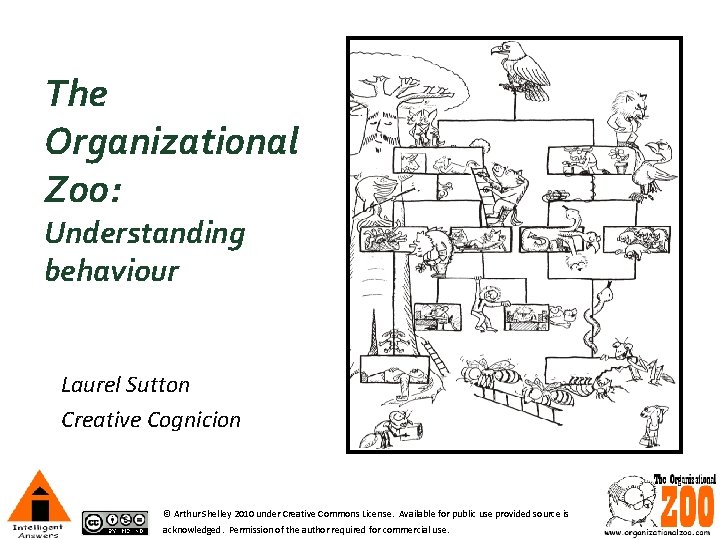
The Organizational Zoo: Understanding behaviour Laurel Sutton Creative Cognicion © Arthur Shelley 2010 under Creative Commons License. Available for public use provided source is acknowledged. Permission of the author required for commercial use.

Welcome to the zoo! • • Introduction Meet the animals Behaviour exercises Conclusion & discussion

Why is behaviour important to your business? Confidence Inspiring Investing Trustworthy Engaging Visioning Strategic Navigation Futuring Intelligence Passion Networked Brand Resonance Drives Outcomes Challenging Humility Deep Design Social Awareness Partnering Risk taking Communicating Knowledge Sharing Innovative Change Integration Advocacy Persistence Self Awareness Coaching Aggression Thinking Decision making Self Development Reciprocity Risk Awareness Saying YES! Saying NO! Mentoring Collaborating. Enthusiasm Observing Curiosity Listening Trusting
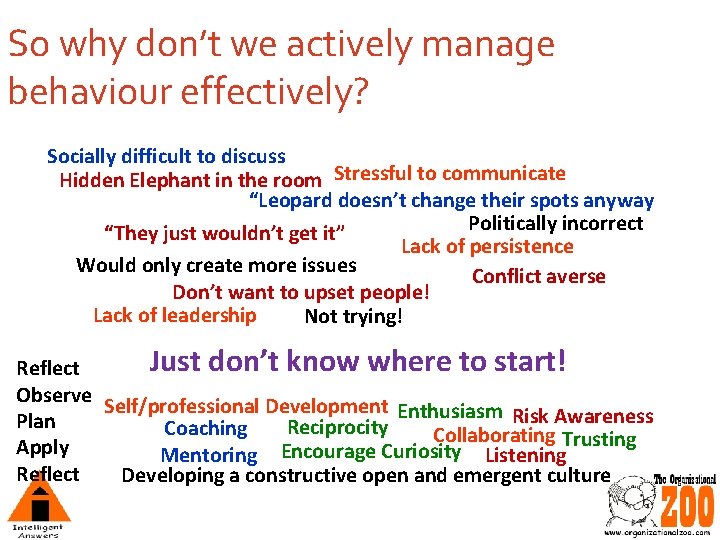
So why don’t we actively manage behaviour effectively? Socially difficult to discuss Hidden Elephant in the room Stressful to communicate “Leopard doesn’t change their spots anyway Politically incorrect “They just wouldn’t get it” Lack of persistence Would only create more issues Conflict averse Don’t want to upset people! Lack of leadership Not trying! Just don’t know where to start! Reflect Observe Self/professional Development Enthusiasm Risk Awareness Plan Reciprocity Coaching Collaborating Trusting Apply Mentoring Encourage Curiosity Listening Reflect Developing a constructive open and emergent culture

Metaphor for Behaviour • Modern organisations are like zoos: – Unnatural environments – Different animals in small cages – Forced to interact (sometimes against their will) – This causes stress! • Would it help if you could understand a little more about how this zoo works?

Let’s meet some of the animals

Ant • Basic hard worker • Great work ethic • Gets on with it

Bee • • • Collaborative Communicative Hard-working Loyal Assumes specific role Everything for the hive
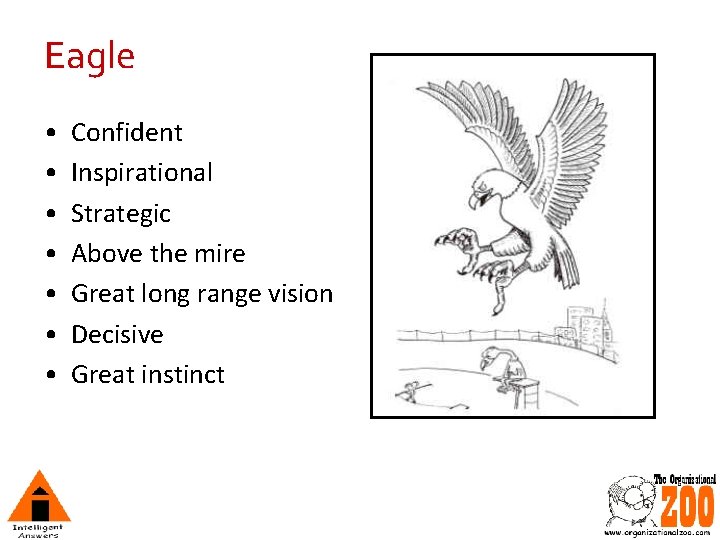
Eagle • • Confident Inspirational Strategic Above the mire Great long range vision Decisive Great instinct
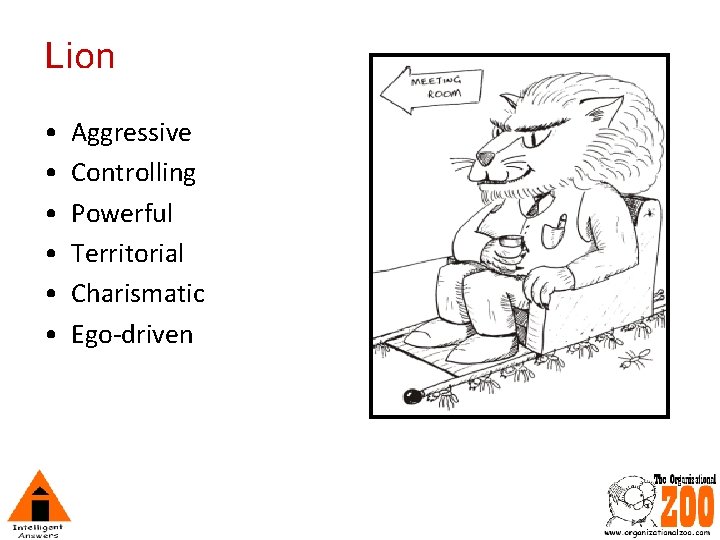
Lion • • • Aggressive Controlling Powerful Territorial Charismatic Ego-driven
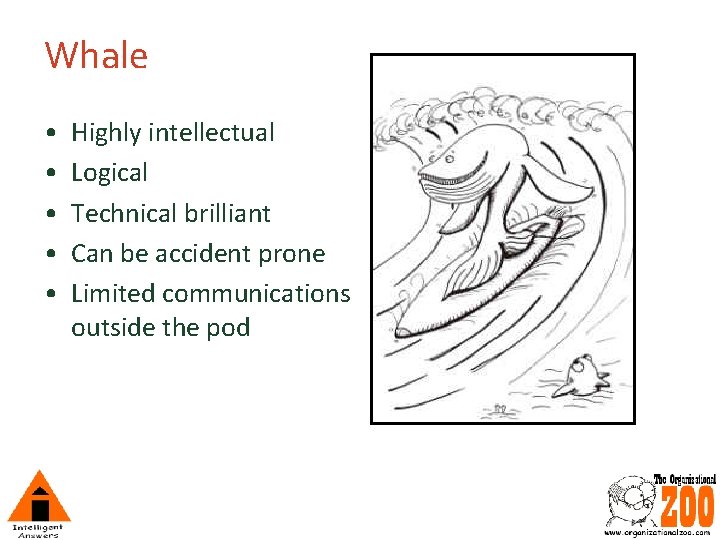
Whale • • • Highly intellectual Logical Technical brilliant Can be accident prone Limited communications outside the pod
• Using metaphor is a safe way of looking at behaviours • Part of this is about your own behaviours. • Let’s explore this a bit more

How can we use this? • • Coaching Team Dynamics Conflict Resolution Developing Organizational Values

Behaviour is your choice The more versatile you can be and the better you understand relate to others, the more successful you will be
Behaviour is your choice • We can choose how we behave • We behave differently depending on the circumstances • Understanding behaviour is vital for productivity and success
KM Leader behaviour • As a KM you are a leader, you need to be able to influence people, change behaviours, collaborate, inspire & understand your own behaviour. • How do these behaviours form our culture? • How does our behaviour impact our team? • Is your behaviour the way you want it to be?
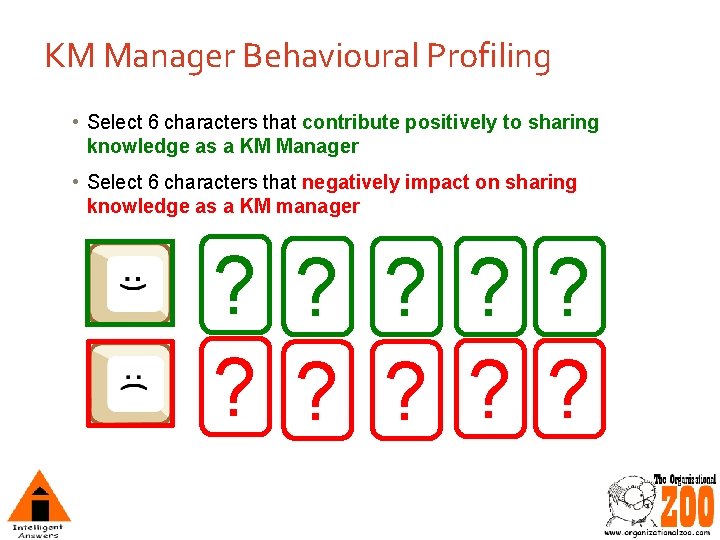
KM Manager Behavioural Profiling • Select 6 characters that contribute positively to sharing knowledge as a KM Manager • Select 6 characters that negatively impact on sharing knowledge as a KM manager ? ? ? ? ? © Arthur Shelley 2011 under Creative Commons License. Available for public use provided source is acknowledged. Permission of the author required for commercial use.
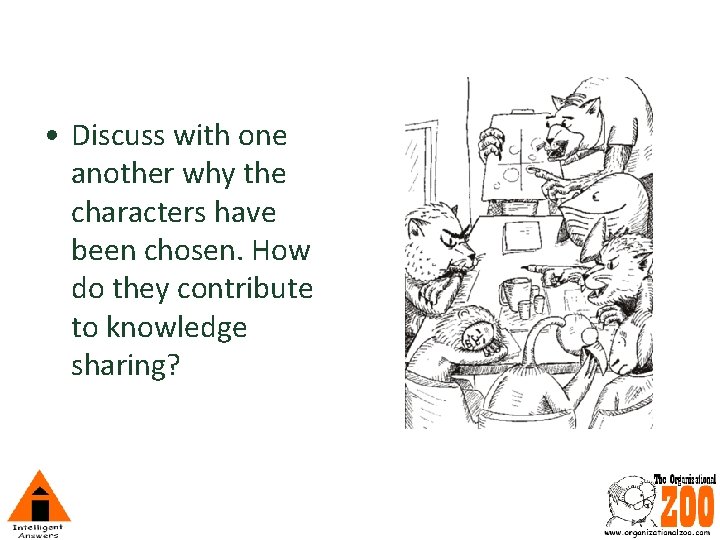
• Discuss with one another why the characters have been chosen. How do they contribute to knowledge sharing?
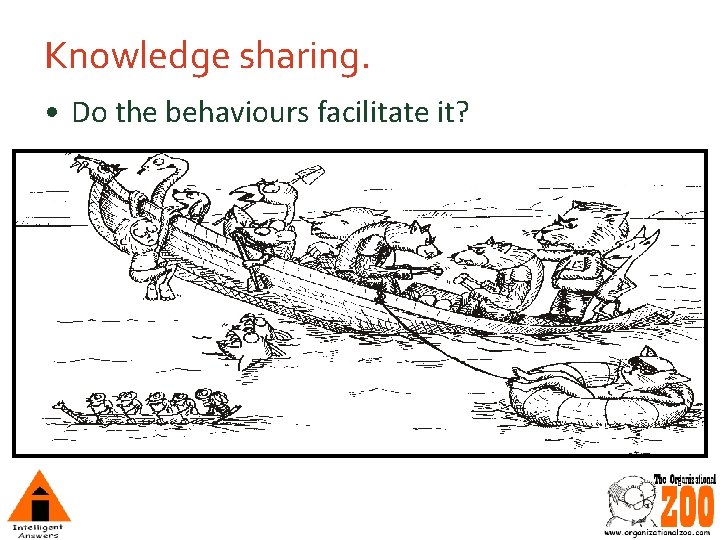
Knowledge sharing. • Do the behaviours facilitate it?
• Walk around and look what others have got & stated • Discuss similarities and differences • Ask why and exchange ideas and perspectives.
• Now have a look at the profile you did before coming here. • Are there similarities and differences? • Are there aspects you would consciously want to change to obtain a more productive outcome? • If you are comfortable share this with someone else.
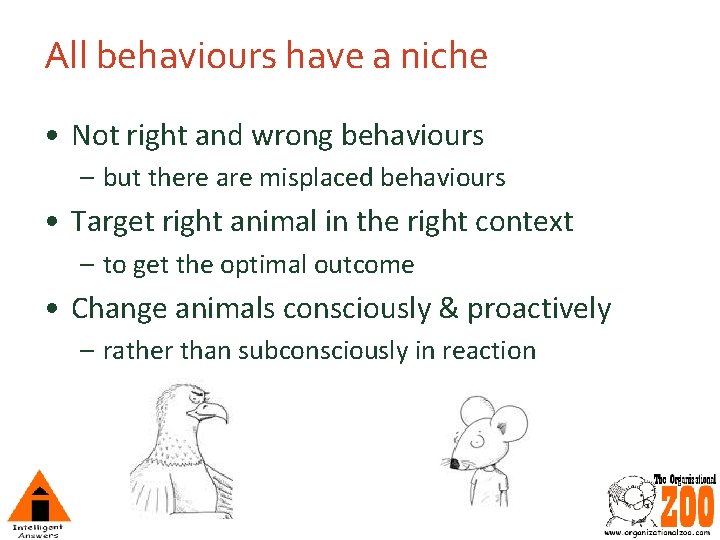
All behaviours have a niche • Not right and wrong behaviours – but there are misplaced behaviours • Target right animal in the right context – to get the optimal outcome • Change animals consciously & proactively – rather than subconsciously in reaction
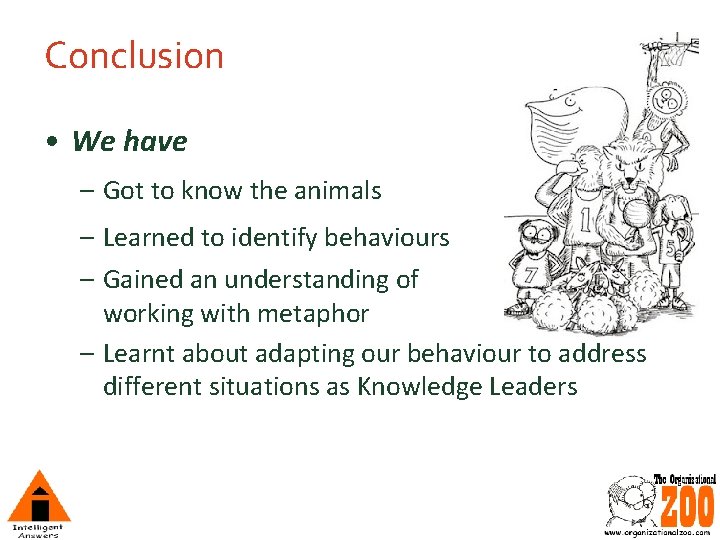
Conclusion • We have – Got to know the animals – Learned to identify behaviours – Gained an understanding of working with metaphor – Learnt about adapting our behaviour to address different situations as Knowledge Leaders
Thanks for your attention! Laurel Sutton Laurel. sutton@cre-ativ-cognicion. com. au
• Thanks to: • Members of OZAN – an international professional development group collaborating on the application of metaphor to enhance orgnaizational performance • Arthur Shelley of Intelligent Answers.
Further information: • Laurel Sutton Creative Cognicion • Laurel. sutton@cre-ativ-cognicion. com. au Skype laurel 3211 • OZAN via Organizational Zoo website • Arthur Shelley arthur@organizationalzoo. com
- Slides: 26