
THE ORGANIZATIONAL CULTURE THE MANAGER The Manager Omnipotent



- Slides: 12
THE ORGANIZATIONAL CULTURE & THE MANAGER
The Manager: Omnipotent or Symbolic? Omnipotent View of Management Managers are directly responsible for an organization’s success or failure. The quality of the organization is determined by the quality of its managers. Managers are held accountable for an organization’s performance yet it is difficult to attribute good or poor performance directly to their influence on the organization.
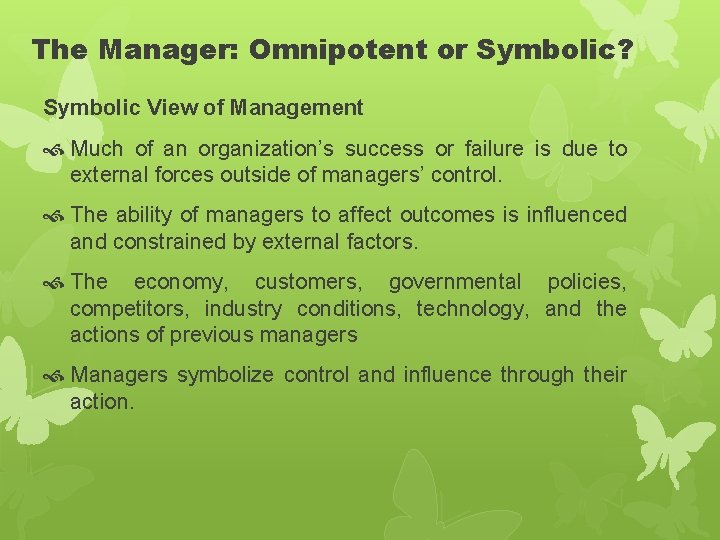
The Manager: Omnipotent or Symbolic? Symbolic View of Management Much of an organization’s success or failure is due to external forces outside of managers’ control. The ability of managers to affect outcomes is influenced and constrained by external factors. The economy, customers, governmental policies, competitors, industry conditions, technology, and the actions of previous managers Managers symbolize control and influence through their action.
Parameters of Managerial Discretion
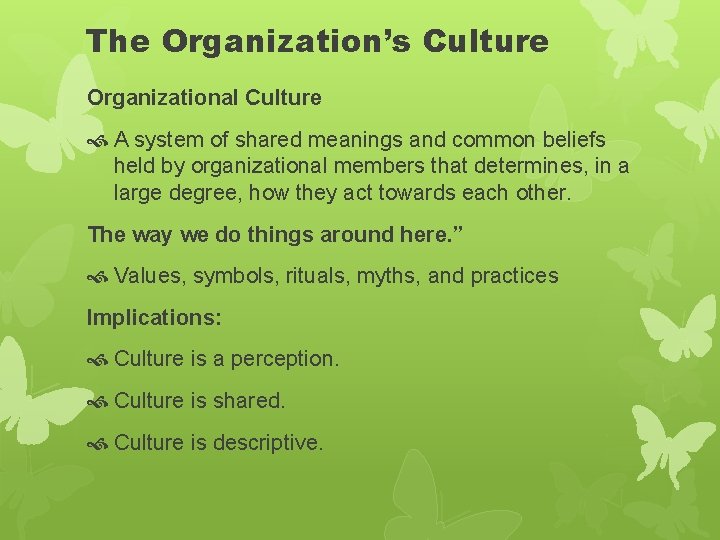
The Organization’s Culture Organizational Culture A system of shared meanings and common beliefs held by organizational members that determines, in a large degree, how they act towards each other. The way we do things around here. ” Values, symbols, rituals, myths, and practices Implications: Culture is a perception. Culture is shared. Culture is descriptive.
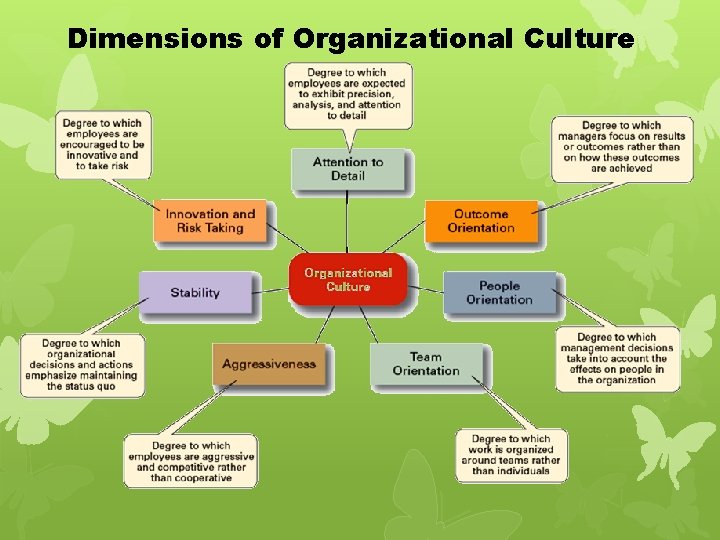
Dimensions of Organizational Culture
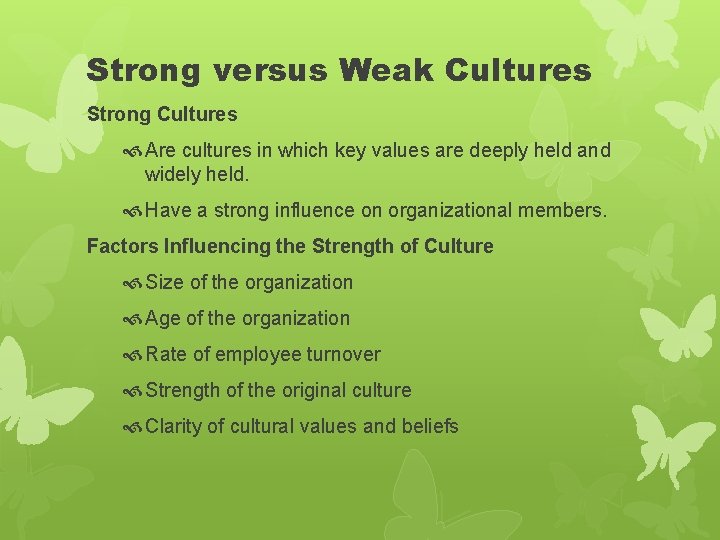
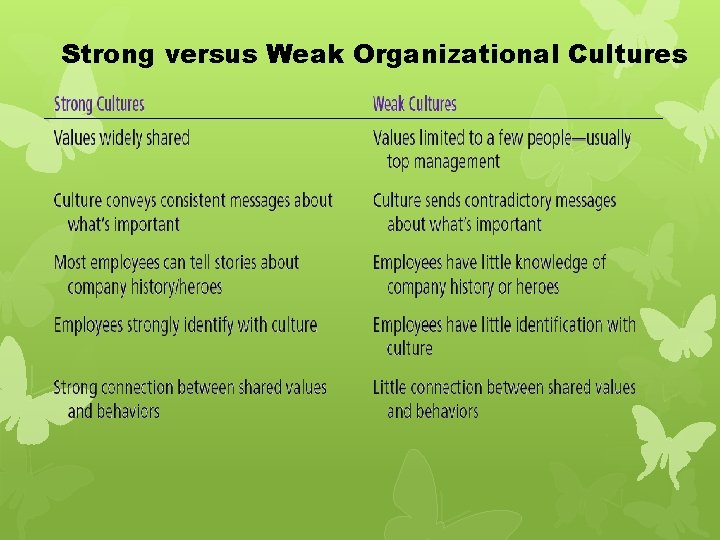
Strong versus Weak Cultures Strong Cultures Are cultures in which key values are deeply held and widely held. Have a strong influence on organizational members. Factors Influencing the Strength of Culture Size of the organization Age of the organization Rate of employee turnover Strength of the original culture Clarity of cultural values and beliefs
Benefits of a Strong Culture Creates a stronger employee commitment to the organization. Aids in the recruitment and socialization of new employees. Fosters higher organizational performance by instilling and promoting employee initiative.
Organizational Culture Sources of Organizational Culture The organization’s founder Vision and mission Past practices of the organization The way things have been done The behavior of top management Continuation of the Organizational Culture Recruitment of like-minded employees who “fit” Socialization of new employees to help them adapt to the culture
Strong versus Weak Organizational Cultures
How Employees Learn Culture Stories Narratives of significant events or actions of people that convey the spirit of the organization Rituals Repetitive sequences of activities that express and reinforce the values of the organization Material Symbols Physical assets distinguishing the organization Language Acronyms and jargon of terms, phrases, and word meanings specific to an organization
How Culture Affects Managers Cultural Constraints on Managers Whatever managerial actions the organization recognizes as proper or improper on its behalf Whatever organizational activities the organization values and encourages The overall strength or weakness of the organizational culture