
The Organization of Earth Organism Populations Organ Systems



- Slides: 31
The Organization of Earth
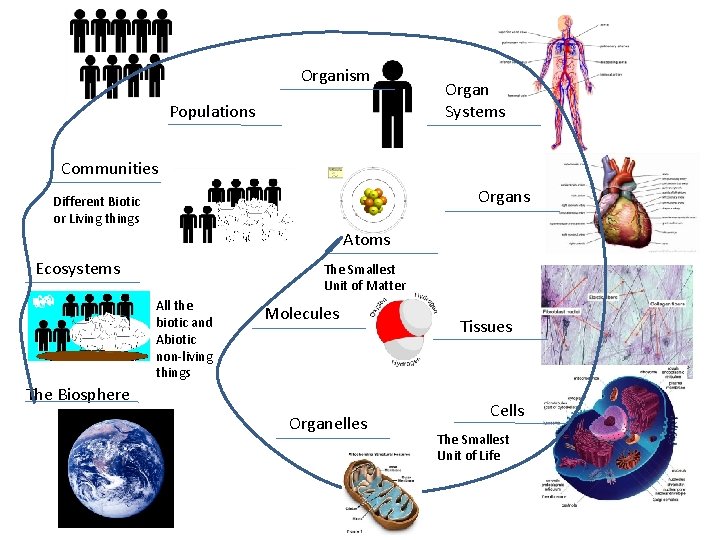
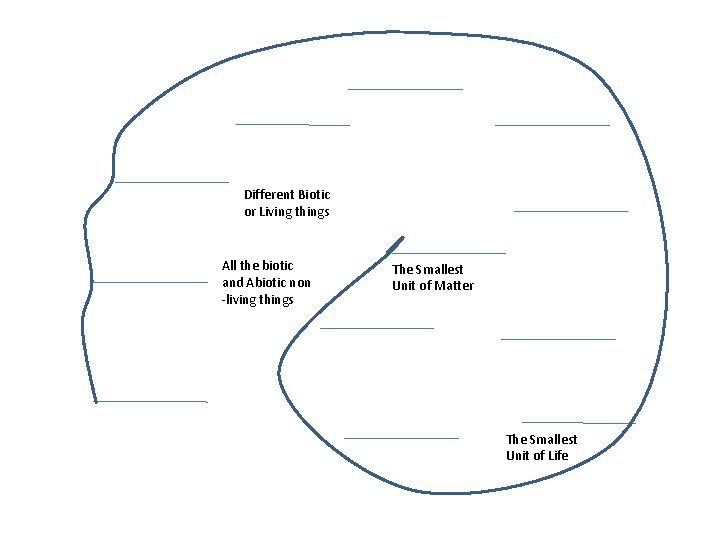
Organism Populations Organ Systems Communities Organs Different Biotic or Living things Atoms Ecosystems The Smallest Unit of Matter All the biotic and Abiotic non-living things Molecules The Biosphere Organelles Tissues Cells The Smallest Unit of Life
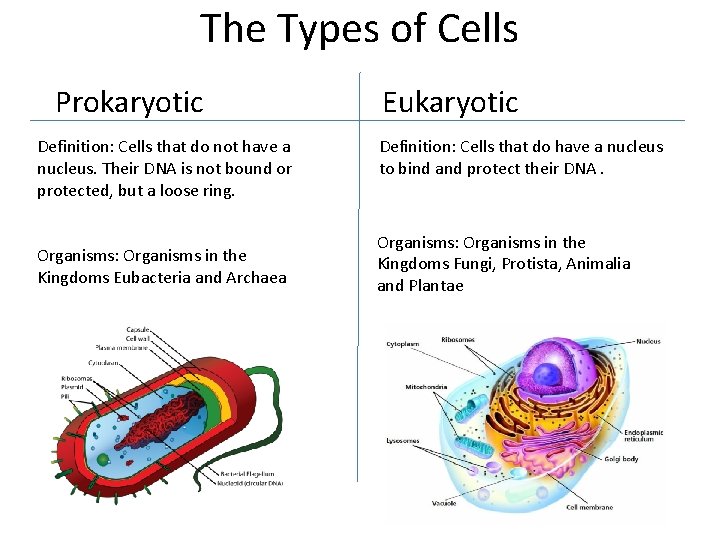
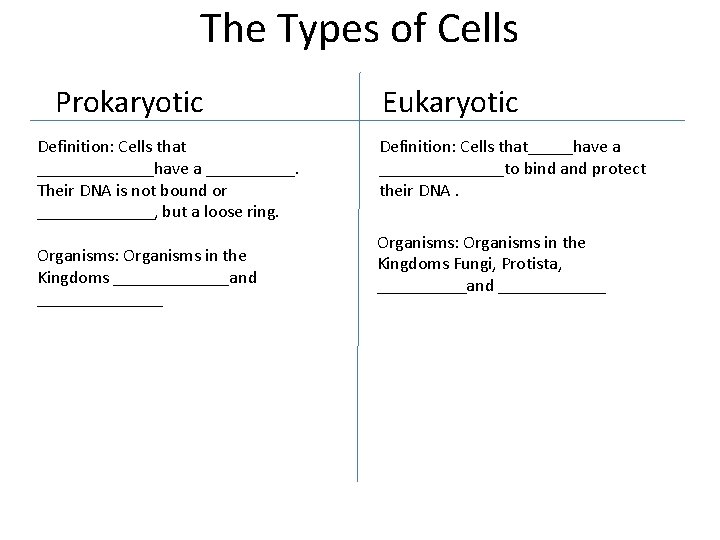
The Types of Cells Prokaryotic Definition: Cells that do not have a nucleus. Their DNA is not bound or protected, but a loose ring. Organisms: Organisms in the Kingdoms Eubacteria and Archaea Eukaryotic Definition: Cells that do have a nucleus to bind and protect their DNA. Organisms: Organisms in the Kingdoms Fungi, Protista, Animalia and Plantae
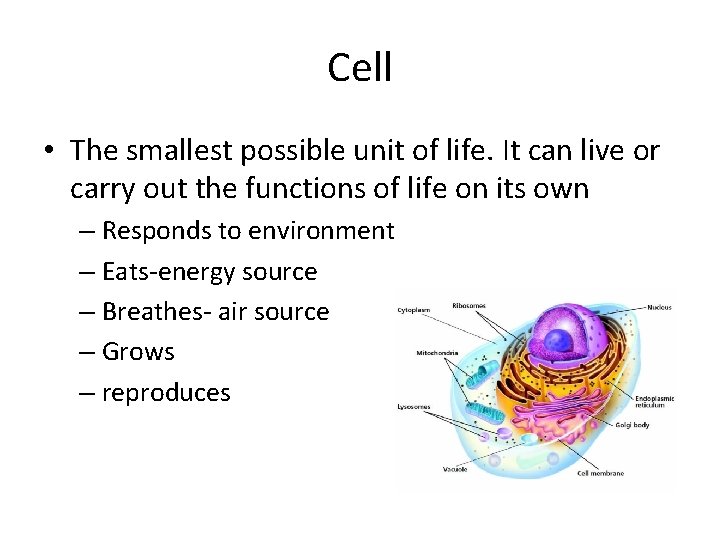
Cell • The smallest possible unit of life. It can live or carry out the functions of life on its own – Responds to environment – Eats-energy source – Breathes- air source – Grows – reproduces
The Cell Theory • The Cell theory says 3 things: 1. The cell is the basic unit of life in all living things 2. All cells must come from existing cells 3. All organisms (living things) are composed of 1 or more cells
DAY 2 VOCAB
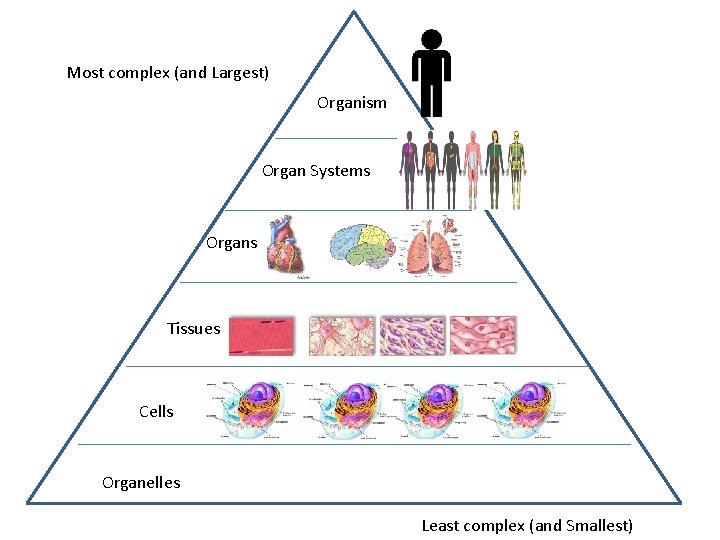
Most complex (and Largest) Organism Organ Systems Organs Tissues Cells Organelles Least complex (and Smallest)
Multicellular • When an organism is made of many cells and can divide cells into groups to perform special functions
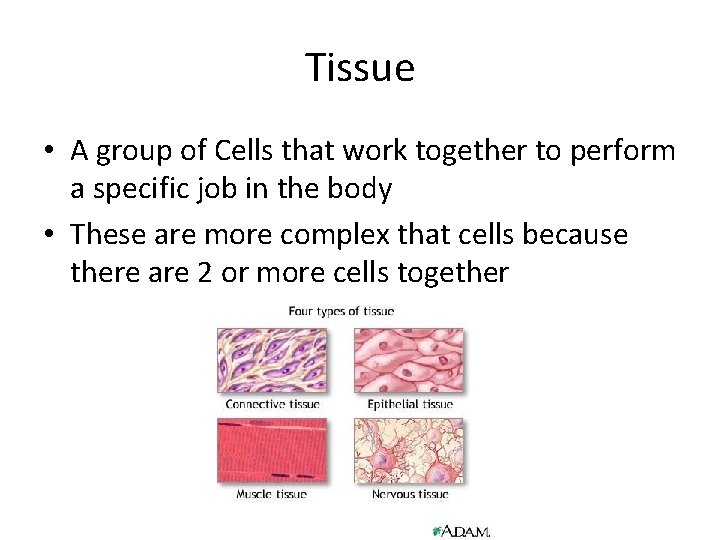
Tissue • A group of Cells that work together to perform a specific job in the body • These are more complex that cells because there are 2 or more cells together
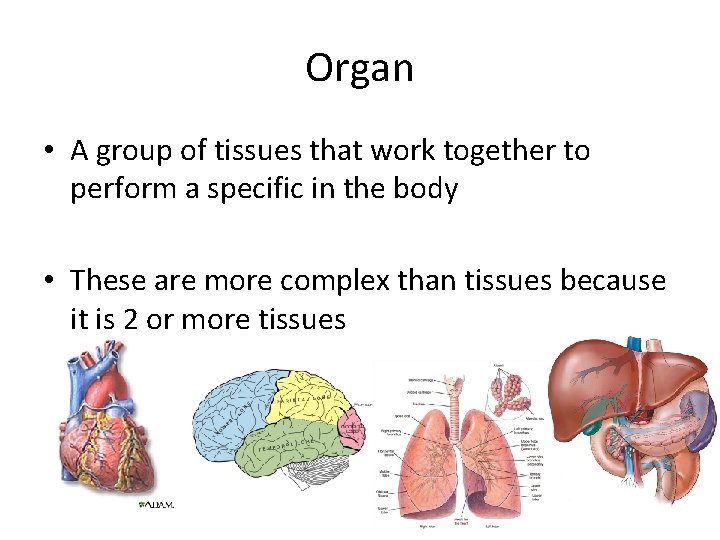
Organ • A group of tissues that work together to perform a specific in the body • These are more complex than tissues because it is 2 or more tissues
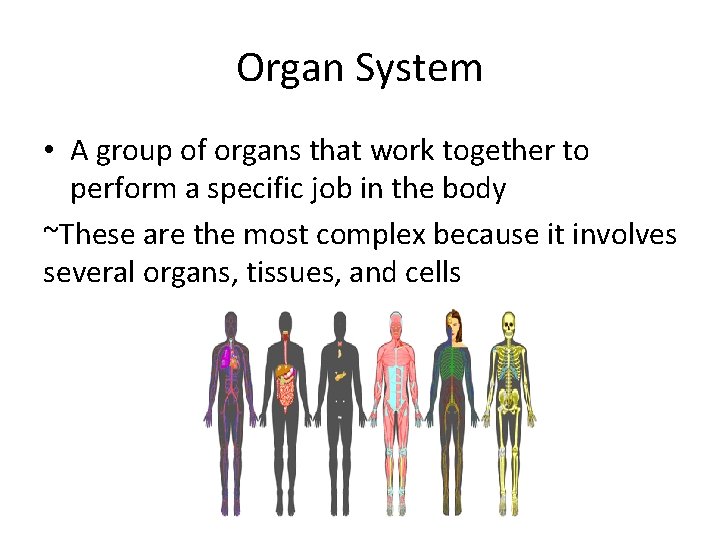
Organ System • A group of organs that work together to perform a specific job in the body ~These are the most complex because it involves several organs, tissues, and cells
Osmosis and the Cell DAY 3
Remember Diffusion? • Diffusion is the concentration of particles from a high concentration to a low concentration • The atoms/ molecules/particles want to be as spaced out from each other as possible • This happens naturally!
What organelle? • Which organelle is responsible for monitoring what comes in and out of the cell? • The Cell Membrane
Osmosis • Osmosis is simply diffusion of water through a membrane • Water diffuses through a membrane to make particles spaced out from each other • Cells do Osmosis through their membranesthe cell membrane. They want to control the amount of particles/nutrients, and other item that go in and out of them.
Add to back of notes Cell in a Hypertonic Solution: Cell in a Hypotonic Solution: Cell in an Isotonic Solution:
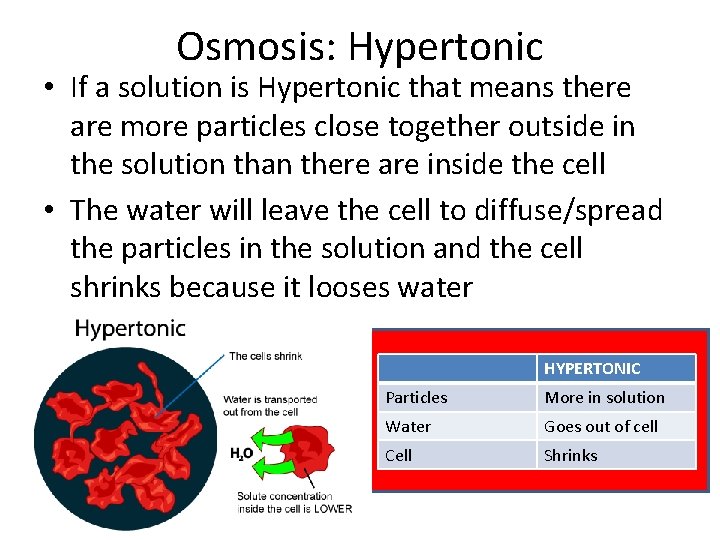
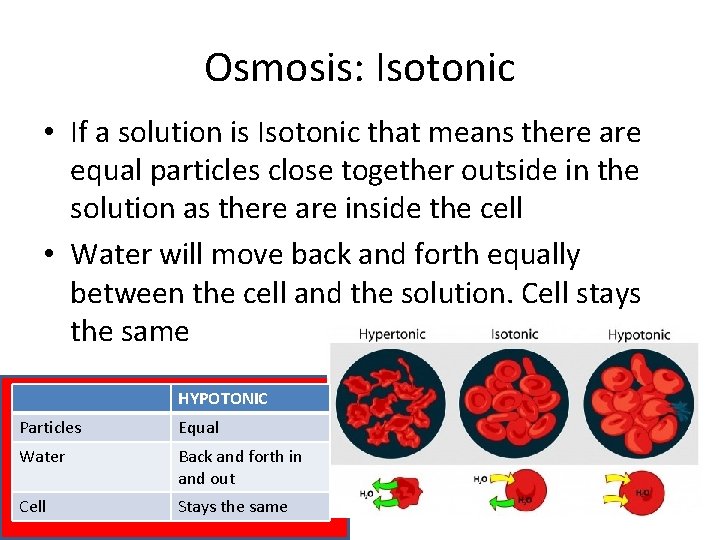
Osmosis: Hypertonic • If a solution is Hypertonic that means there are more particles close together outside in the solution than there are inside the cell • The water will leave the cell to diffuse/spread the particles in the solution and the cell shrinks because it looses water HYPERTONIC Particles More in solution Water Goes out of cell Cell Shrinks
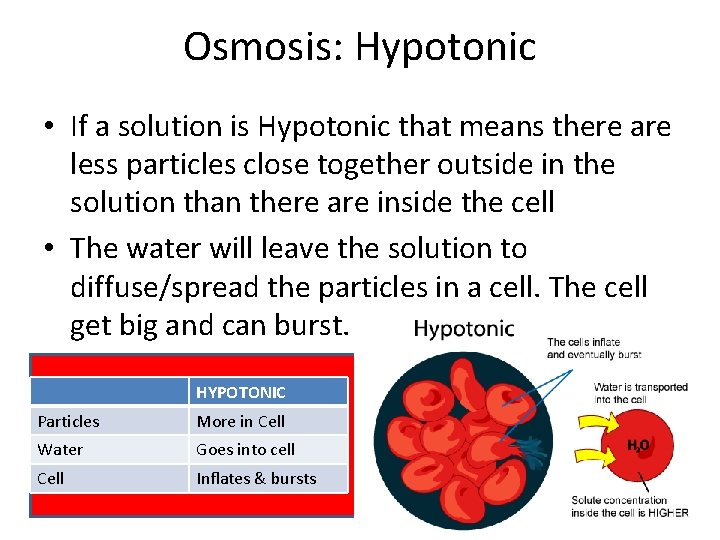
Osmosis: Hypotonic • If a solution is Hypotonic that means there are less particles close together outside in the solution than there are inside the cell • The water will leave the solution to diffuse/spread the particles in a cell. The cell get big and can burst. HYPOTONIC Particles More in Cell Water Goes into cell Cell Inflates & bursts
Osmosis: Isotonic • If a solution is Isotonic that means there are equal particles close together outside in the solution as there are inside the cell • Water will move back and forth equally between the cell and the solution. Cell stays the same HYPOTONIC Particles Equal Water Back and forth in and out Cell Stays the same
Osmosis Lab • An egg is simply 1 giant cell! • We are going to watch osmosis through a cell membrane in class!!!!!!
Reproduction DAY 4
Sexual reproduction • A form of reproduction that involves the fusion of both male and female cells (gametes) to create unique and different offspring. DNA exchange takes place
Asexual reproduction • A form of reproduction where only one parent is needed, and the offspring is an exact or identical copy of the parent. There is no exchange of DNA and no variety
Types of Asexual Reproduction: Binary Fission • When one cell splits into 2 parts and each new cell contains identical copies of DNA http: //www. youtube. com/watch? v=rg. LJrvo. X_qo
Types of asexual reproduction: Budding • The formation of a growth of an organism that can separate and become a new individual organism
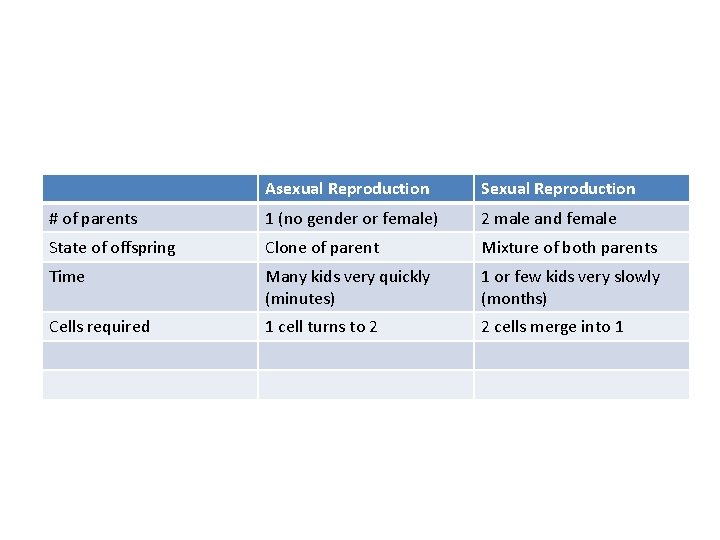
Asexual Reproduction Sexual Reproduction # of parents 1 (no gender or female) 2 male and female State of offspring Clone of parent Mixture of both parents Time Many kids very quickly (minutes) 1 or few kids very slowly (months) Cells required 1 cell turns to 2 2 cells merge into 1
Why be asexual? • Fast reproduction • Don’t have to spend time or energy looking for a mate • If you live in a place without a lot of mate options you don’t have to worry if you can reproduce
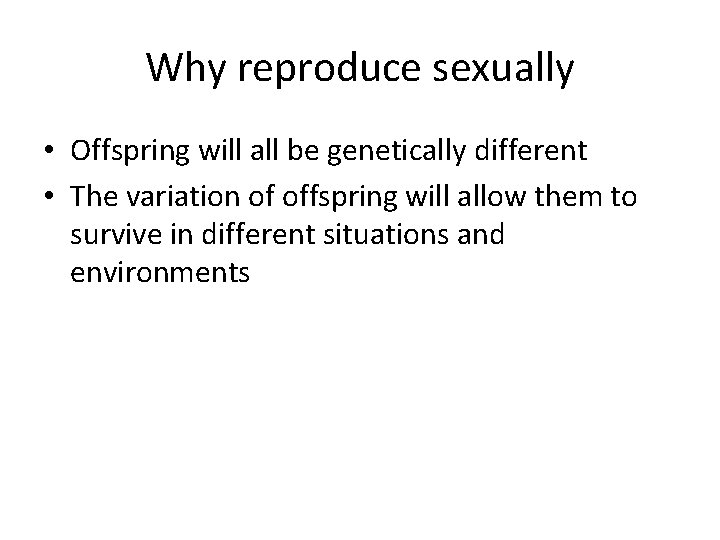
Why reproduce sexually • Offspring will all be genetically different • The variation of offspring will allow them to survive in different situations and environments
The Types of Cells
The Types of Cells Prokaryotic Definition: Cells that _______have a _____. Their DNA is not bound or _______, but a loose ring. Organisms: Organisms in the Kingdoms _______and _______ Eukaryotic Definition: Cells that_____have a _______to bind and protect their DNA. Organisms: Organisms in the Kingdoms Fungi, Protista, _____and ______
Different Biotic or Living things All the biotic and Abiotic non -living things The Smallest Unit of Matter The Smallest Unit of Life