
The Oregon Framework for Teacher and Administrator Evaluation
![Guiding Questions 1. What does it mean to be [INSERT DESCRIPTOR] in your observations?](https://slidetodoc.com/presentation_image/176c13d6991f9d3fea244878ff96712f/image-14.jpg "Guiding Questions 1. What does it mean to be [INSERT DESCRIPTOR] in your observations?")

- Slides: 33
The Oregon Framework for Teacher and Administrator Evaluation and Support Systems April Regionals: Observations and Feedback __________ 2013
Observations and Feedback This training describes expectations for observations (inside and outside the classroom), the collection and organization of observation evidence, as well as the sharing of timely, constructive feedback to educators. 2
Agenda • Connecting • Learning – Part II • Wrap-Up 3
Intended Outcomes At the end of this session, participants will be able to: • Describe the role of observation as a methodology for gathering evidence of educator performance; • Delineate best practices for conducting high-quality short, frequent, observations; and • Craft timely, targeted feedback that is evidence-based and grounded in the Standards of effective practice. 4
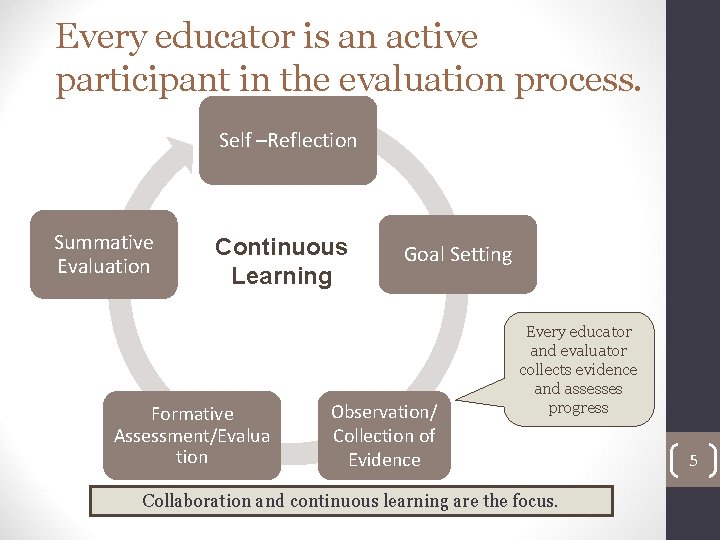
Every educator is an active participant in the evaluation process. Self –Reflection Summative Evaluation Continuous Learning Formative Assessment/Evalua tion Goal Setting Observation/ Collection of Evidence Every educator and evaluator collects evidence and assesses progress Collaboration and continuous learning are the focus. 5
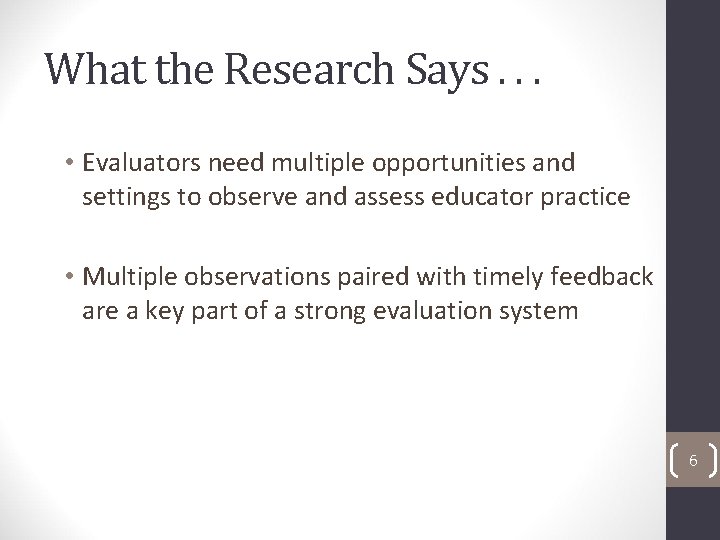
What the Research Says. . . • Evaluators need multiple opportunities and settings to observe and assess educator practice • Multiple observations paired with timely feedback are a key part of a strong evaluation system 6
Voices on Observation Handout 1: Studies link classroom observations to student achievement , by Stephen Sawchuck Handout 2: Mini-Observations – Seven Decision Points for Principals, by Kim Marshall 7
Active Reading • Underline statements you find to be important takeaways or themes from the article • Circle one word or phrase that represents the key takeaway or theme 8
Making Connections • What are the key messages and ideas in the two articles with regard to observations and feedback? • What are some best practices for observations and feedback? 9
Learning
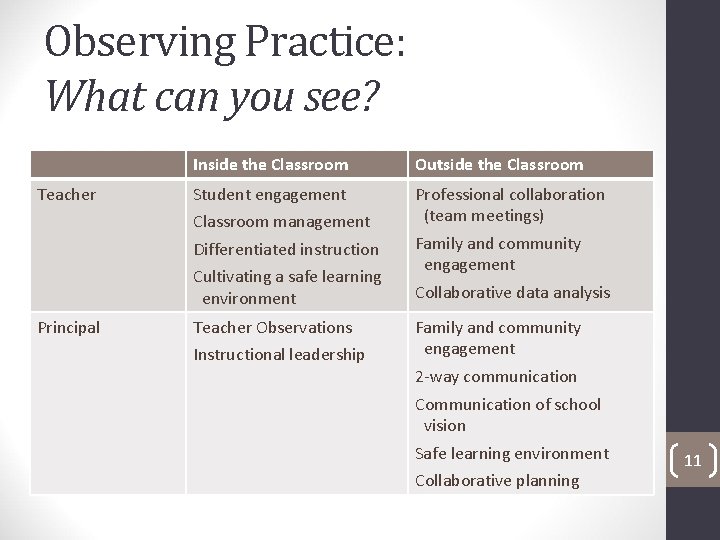
Observing Practice: What can you see? Teacher Inside the Classroom Outside the Classroom Student engagement Professional collaboration (team meetings) Classroom management Differentiated instruction Cultivating a safe learning environment Principal Teacher Observations Instructional leadership Family and community engagement Collaborative data analysis Family and community engagement 2 -way communication Communication of school vision Safe learning environment Collaborative planning 11
Observation Techniques • What are the current observation protocols within your district? • What are the pros and cons given the new Oregon Framework requirements? • How does current practice align with the research? 12
Principles of Brief Observations • Frequent • Focused • Varied • Useful and Timely Feedback 13
Guiding Questions 1. What does it mean to be [INSERT DESCRIPTOR] in your observations? 2. How does this principle of high-quality observations better support the improvement of teaching and learning? 14
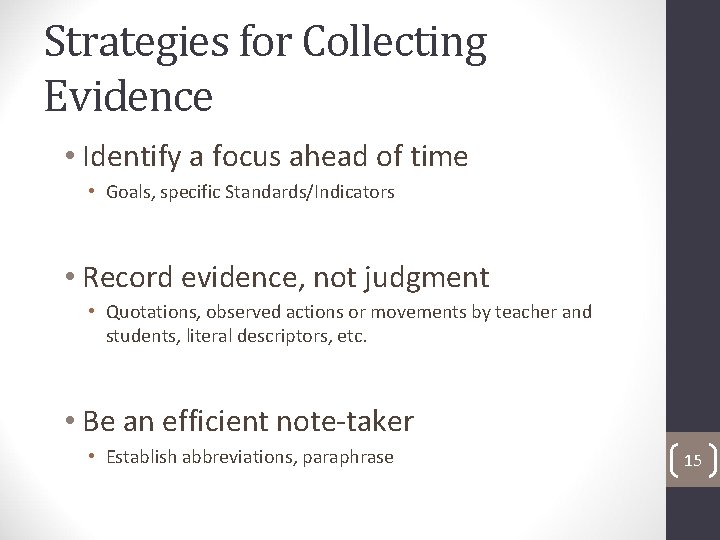
Strategies for Collecting Evidence • Identify a focus ahead of time • Goals, specific Standards/Indicators • Record evidence, not judgment • Quotations, observed actions or movements by teacher and students, literal descriptors, etc. • Be an efficient note-taker • Establish abbreviations, paraphrase 15
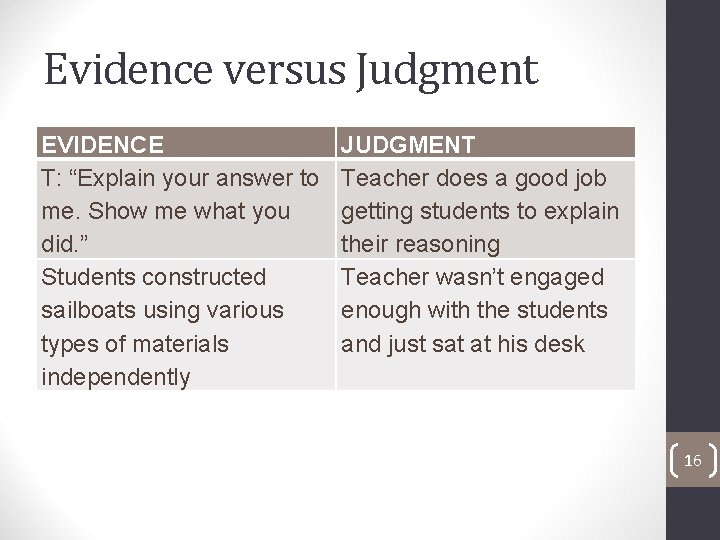
Evidence versus Judgment EVIDENCE T: “Explain your answer to me. Show me what you did. ” Students constructed sailboats using various types of materials independently JUDGMENT Teacher does a good job getting students to explain their reasoning Teacher wasn’t engaged enough with the students and just sat at his desk 16
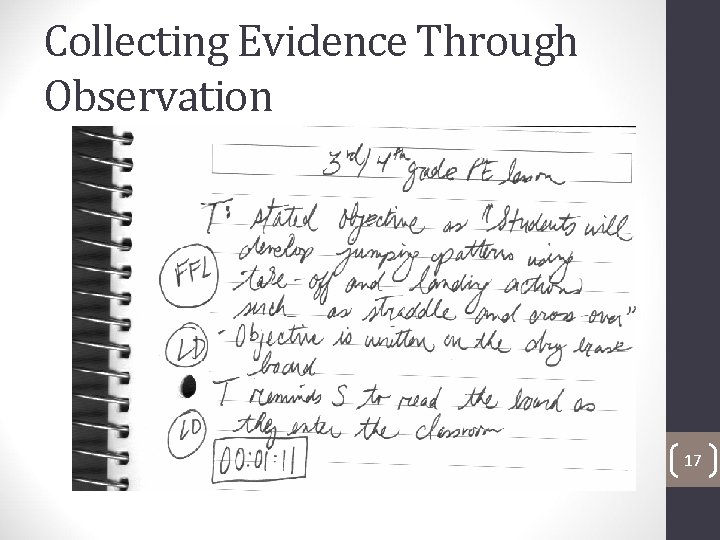
Collecting Evidence Through Observation 17
Video I Background • Kelli teaches 4 th grade • A math lesson is in progress • Kelli’s goals focus on: 1. Improving students’ understanding of place value and properties of operations in order to perform multi-digit arithmetic (Standard 4. NBT. 4 -6); and 2. Using instructional practices that engage all students during independent or small group work time (Danielson 3(c), Marshall C. j). http: //www. youtube. com/watch? v=d. Rcz. DWKhwlg&feature=youtu. be 18
Recording Evidence From An Observation • Compare/discuss the notes on the completed Observation Evidence Collection Form to evidence you collected • Identify points of agreement as well as evidence that was not included 19
Small Group Guiding Questions • Did you see the same things Kelli’s principal saw? • What did her principal miss that you noticed? • What evidence did you see related to Kelli’s second goal, on a collaborative learning environment? • Did you notice any evidence related to her first goal, or other standards and indicators? 20
Observation Debrief • What evidence did you see related to Kelli’s second goal, on a collaborative learning environment? • Did you see the same things her principal saw? • What did her principal miss that you noticed? • What evidence did you see of other Standards, Indicators or goals? 21
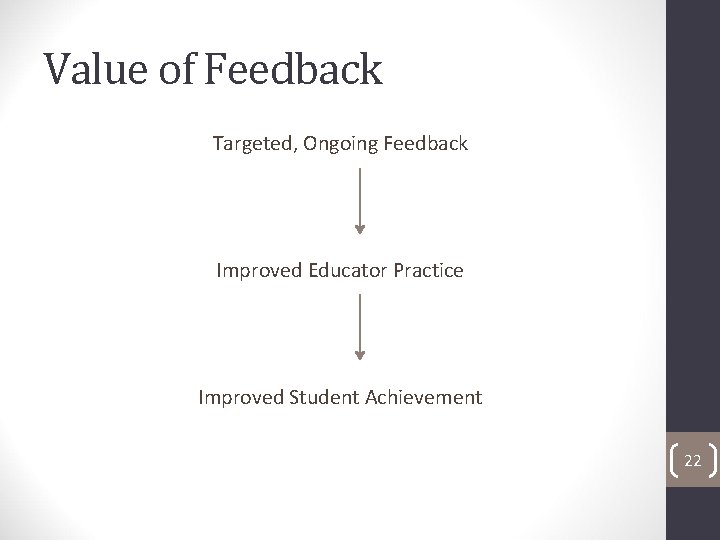
Value of Feedback Targeted, Ongoing Feedback Improved Educator Practice Improved Student Achievement 22
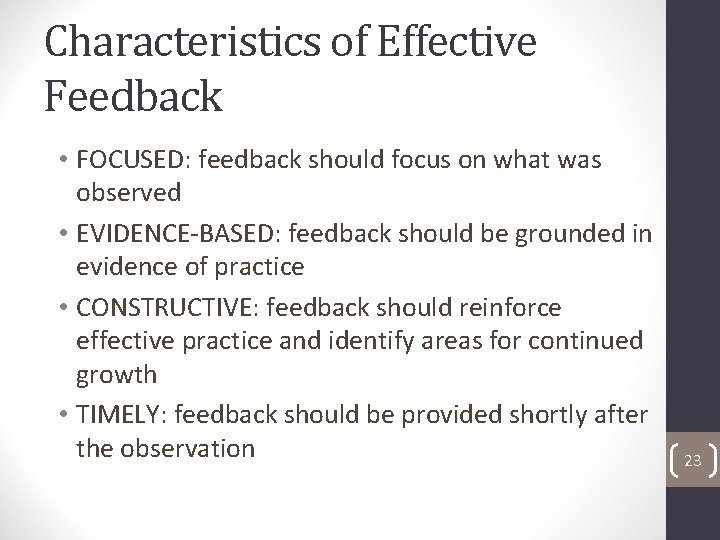
Characteristics of Effective Feedback • FOCUSED: feedback should focus on what was observed • EVIDENCE-BASED: feedback should be grounded in evidence of practice • CONSTRUCTIVE: feedback should reinforce effective practice and identify areas for continued growth • TIMELY: feedback should be provided shortly after the observation 23
Constructing Feedback Kelli’s Goal: Using instructional practices that engage all students during independent or small group work time (student engagement and collaborative learning environment. ). Using your observation notes and the rubric: • Draft two points of feedback for Kelli • Focus on feedback that is • Focused • Evidence-based, and • Constructive 24
Feedback for Kelli • Focused, evidence based and constructive feedback: • Choice was imbedded in the use of the 100’s chart, what are other approaches students could have used to arrive at the answer other than using the 100’s chart? • The student were seated by gender, was there a specific reasoning behind the selection of these groups? • Enron had difficulty finding his materials for the lesson, in retrospect what are some other ways for him to become engaged more quickly without interrupting the class? 25
Learning – Part II
Video II Background • Chuck teaches 10 th grade physics • Chuck is a 3 rd year teacher • Chuck’s goals focus on: • Helping students to analyze, interpret and communicate results of scientific investigations and translate numerical or technical information into words. • Creating a safe and collaborative learning environment (Danielson 2 a, 2 c, 2 d, 3 c) http: //www. youtube. com/watch? v=Ax. Bavxl. DC 9 s 27
Aligning Evidence to Standards and Indicators • Review your notes with a partner • Work together to assign each evidence statement to a Standard and Indicator, using the full Teacher Rubric in your handout packet. 28
Evidence of Chuck’s Goals During the video observation, what evidence did you see of: § Helping students to analyze, interpret and communicate results of scientific investigations and translate numerical or technical information into words. § Creating a safe and collaborative learning environment 29
Draft Feedback for Chuck Draft feedback for Chuck based on the evidence you recorded Come to consensus with your table on two to three pieces of feedback for Chuck 30
Wrap-Up
Collaborative Design Leadership Teams • Discuss and plan what an annual schedule of observations might look like in your district context. • Consider the number of evaluators, number of teachers, and number of school days. • Consider setting deadlines for completing the first observation of all teachers. • Consider having evaluators set a goal for observation completion. 32
Feedback and Questions • Please take a moment to complete the feedback form being handed out. We appreciate your feedback! • Questions? 33