
The Opto Coupler or Opto Isolator OptoCoupler is
- Slides: 6
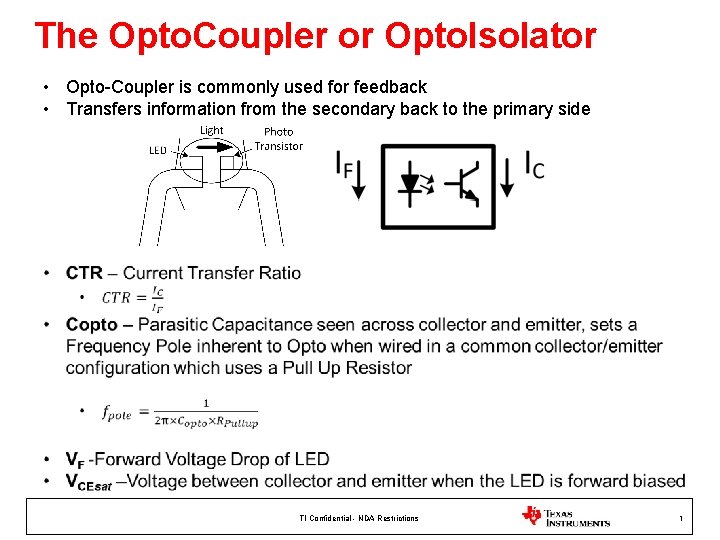
The Opto. Coupler or Opto. Isolator • Opto-Coupler is commonly used for feedback • Transfers information from the secondary back to the primary side TI Confidential - NDA Restrictions 1
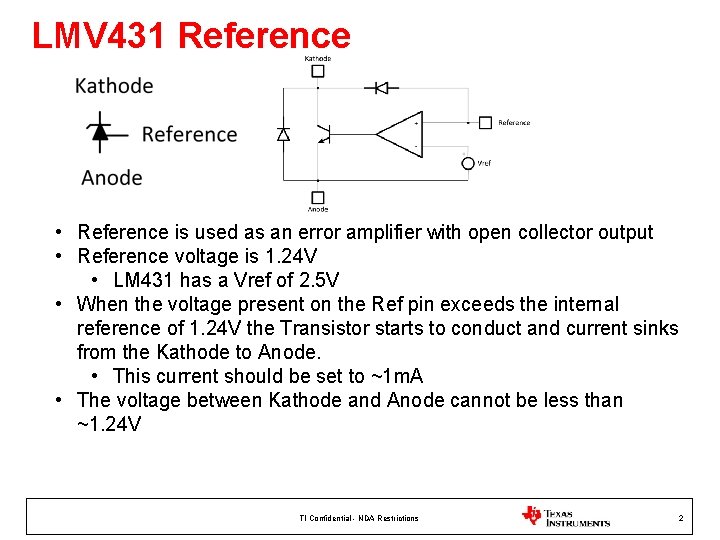
LMV 431 Reference • Reference is used as an error amplifier with open collector output • Reference voltage is 1. 24 V • LM 431 has a Vref of 2. 5 V • When the voltage present on the Ref pin exceeds the internal reference of 1. 24 V the Transistor starts to conduct and current sinks from the Kathode to Anode. • This current should be set to ~1 m. A • The voltage between Kathode and Anode cannot be less than ~1. 24 V TI Confidential - NDA Restrictions 2
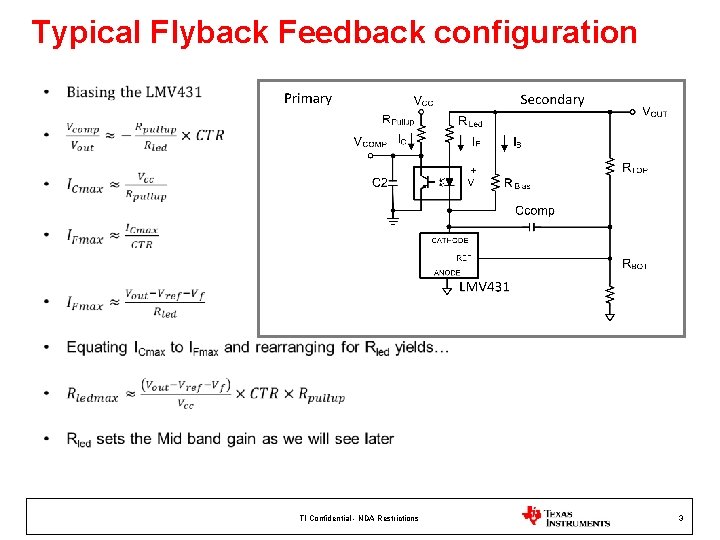
Typical Flyback Feedback configuration TI Confidential - NDA Restrictions 3
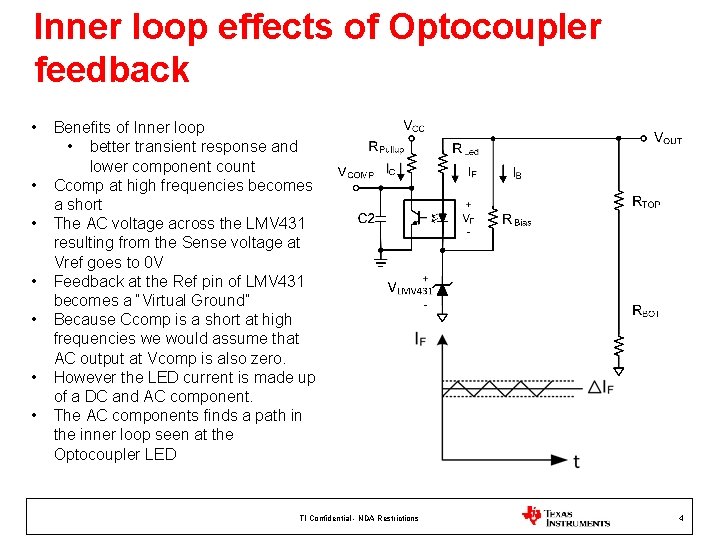
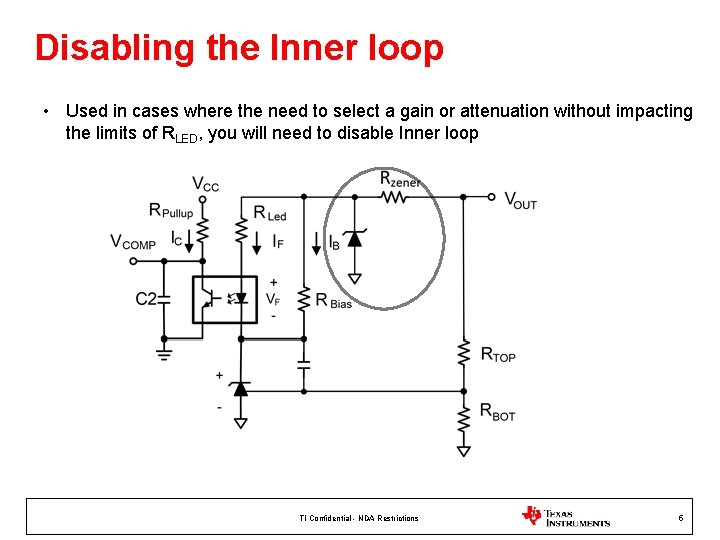
Inner loop effects of Optocoupler feedback • • Benefits of Inner loop • better transient response and lower component count Ccomp at high frequencies becomes a short The AC voltage across the LMV 431 resulting from the Sense voltage at Vref goes to 0 V Feedback at the Ref pin of LMV 431 becomes a “Virtual Ground” Because Ccomp is a short at high frequencies we would assume that AC output at Vcomp is also zero. However the LED current is made up of a DC and AC component. The AC components finds a path in the inner loop seen at the Optocoupler LED TI Confidential - NDA Restrictions 4
Disabling the Inner loop • Used in cases where the need to select a gain or attenuation without impacting the limits of RLED, you will need to disable Inner loop TI Confidential - NDA Restrictions 5
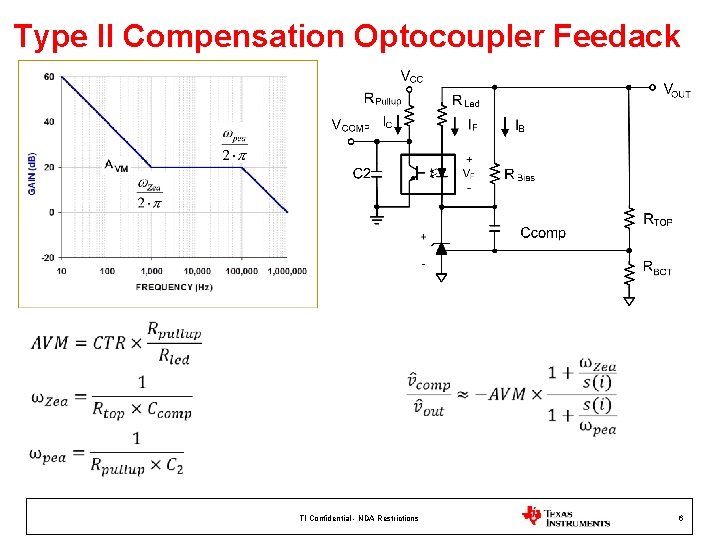
Type II Compensation Optocoupler Feedack TI Confidential - NDA Restrictions 6