
The Operon Model Bacteria adapt to changes in
The Operon Model
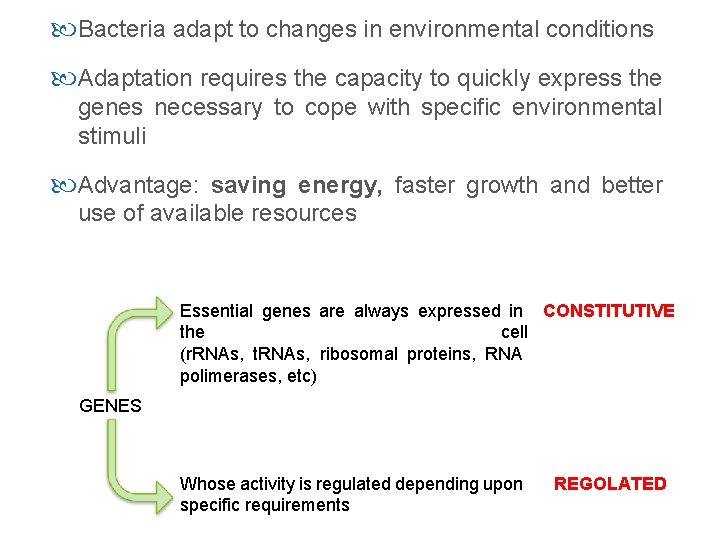
Bacteria adapt to changes in environmental conditions Adaptation requires the capacity to quickly express the genes necessary to cope with specific environmental stimuli Advantage: saving energy, faster growth and better use of available resources Essential genes are always expressed in CONSTITUTIVE the cell (r. RNAs, t. RNAs, ribosomal proteins, RNA polimerases, etc) GENES Whose activity is regulated depending upon specific requirements REGOLATED
To regulate gene expression 1. Bacterias must recognize the environmental conditions in which activate or repress specific genes. 2. Bacterias must be able to activate or repress specific genes or set of genes coordinately.
Control of proteins to use sugars Bacterias can use different sugars as carbon and energy sources (glucose, lactose, arabinose, xylose, etc. ) The proteins required for sugar metabolism include Those favouring sugars uptake in the cell Those catalyzing the sugars degradation.
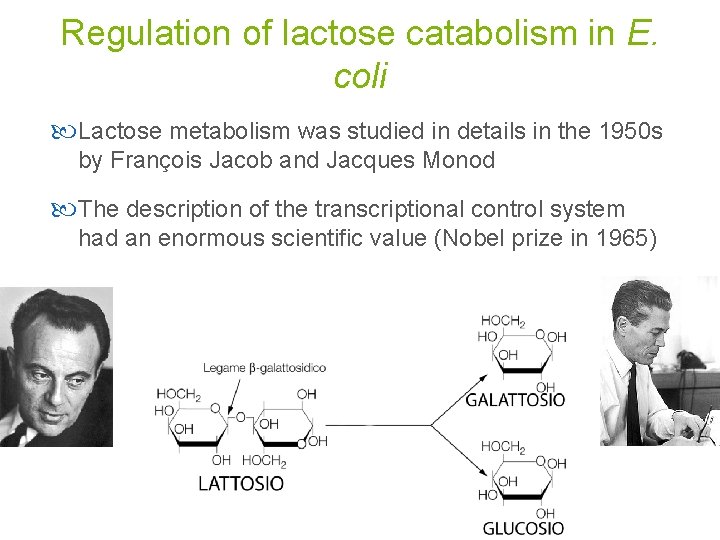
Regulation of lactose catabolism in E. coli Lactose metabolism was studied in details in the 1950 s by François Jacob and Jacques Monod The description of the transcriptional control system had an enormous scientific value (Nobel prize in 1965)
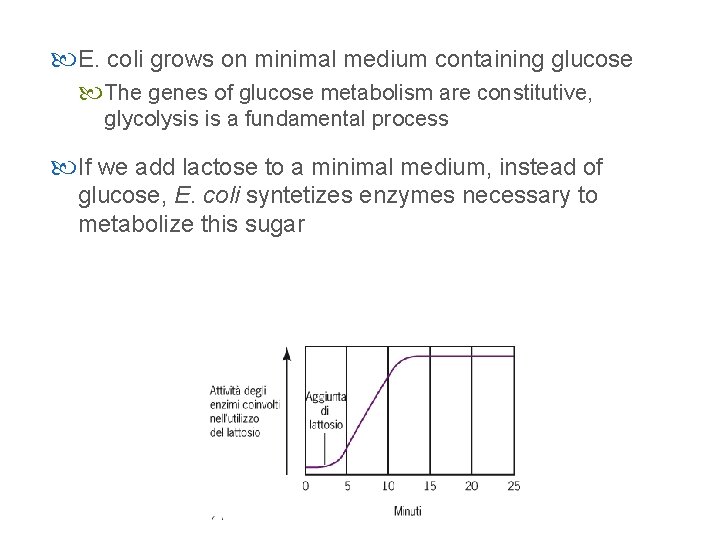
E. coli grows on minimal medium containing glucose The genes of glucose metabolism are constitutive, glycolysis is a fundamental process If we add lactose to a minimal medium, instead of glucose, E. coli syntetizes enzymes necessary to metabolize this sugar
Enzymes induced by lactose b-galactosidase (gene lac. Z) Divides lactose in galactose and glucose Catalizes isomerization of lactose to allolactose Lactose permease (gene lac. Y) Enhance cellular lactose uptake b-galactoside transacetylase (gene lac. A) trasfers an acetyl group to b-galactosides. These are structural genes
Mutations in the 3 structural genes (lac. Z, lac. Y e lac. A) mutations in lac. Z−, lac. Y−, lac. A− were mapped with classic techniques; The 3 genes are strictly linked: lac. Z−lac. Y−lac. A The 3 genes are transcribed in one m. RNA (polycistronic or polygenic). Mutations affecting regulation of all 3 structural genes Constitutive Mutants The structural genes are always expressed, in the presence or absence of lactose Mutants blocking the expression of structural genes even in the presence of lactose
Mapping of constitutive mutants Two classes: 1 a class: mapping on a small region upstream of lac. Z called Operator (lac. O) 2 a class: mapping upstream of Operator in a gene called lac. I, coding for a repressor

Structure of the genomic region The term OPERON indicates a cluster of genes with related functions and regulated in a coordinated manner
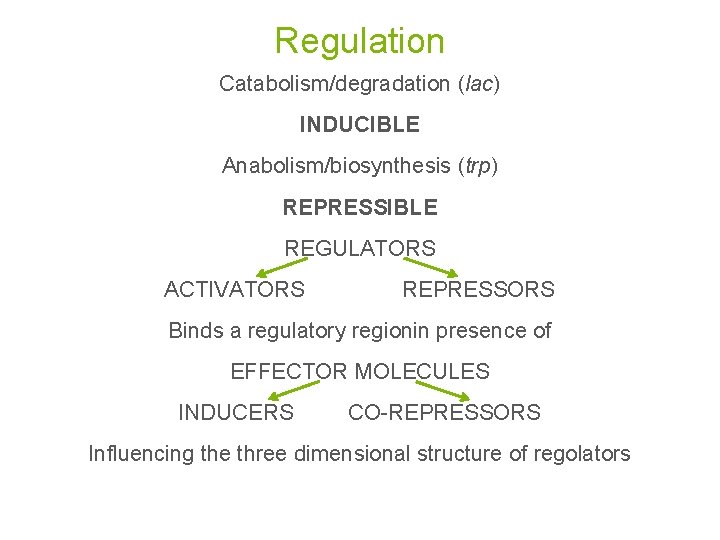
Regulation Catabolism/degradation (lac) INDUCIBLE Anabolism/biosynthesis (trp) REPRESSIBLE REGULATORS ACTIVATORS REPRESSORS Binds a regulatory regionin presence of EFFECTOR MOLECULES INDUCERS CO-REPRESSORS Influencing the three dimensional structure of regolators

Inducible systems: POSITIVE REGULATION
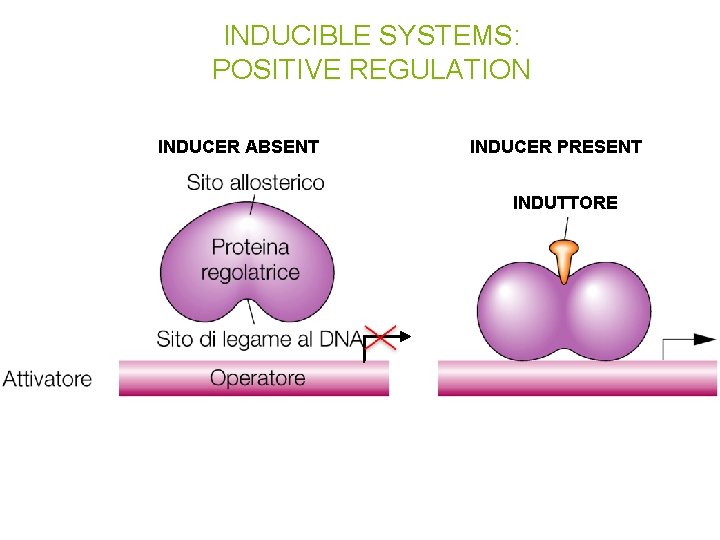
INDUCIBLE SYSTEMS: POSITIVE REGULATION INDUCER ABSENT INDUCER PRESENT INDUTTORE
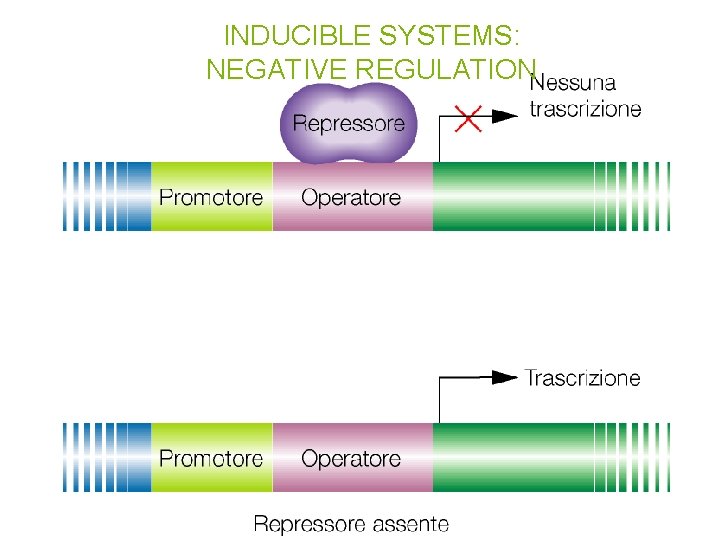
INDUCIBLE SYSTEMS: NEGATIVE REGULATION
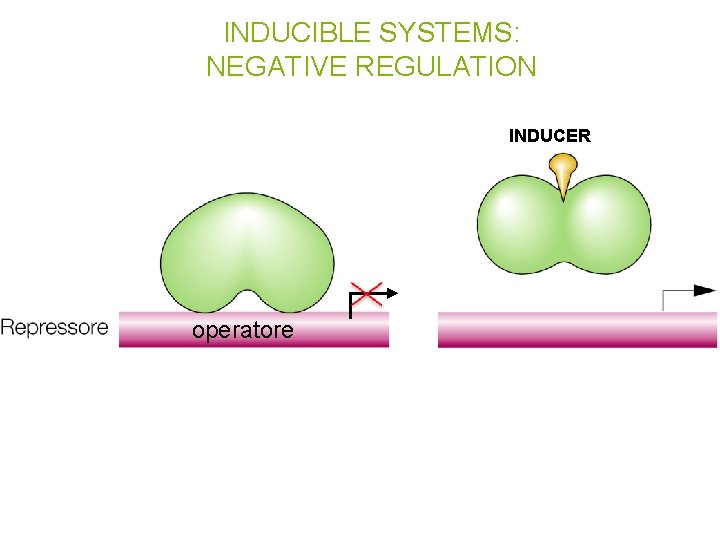
INDUCIBLE SYSTEMS: NEGATIVE REGULATION INDUCER operatore
To define the role of each component of the Operon, Jacob and Monod used partially diploid strains They used F’ strains carrying operon genes on the F factor They could define dominant and recessive mutations They made hypothesis on the role of each operon region
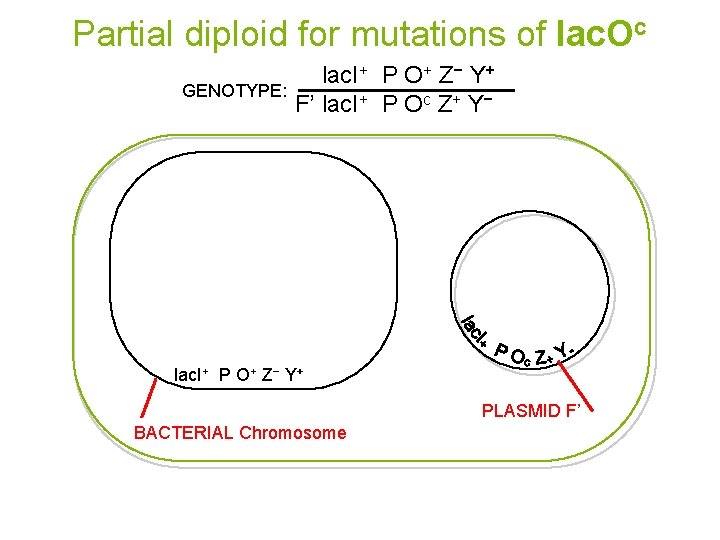
Partial diploid for mutations of lac. Oc GENOTYPE: lac. I+ P O+ Z− Y+ F’ lac. I+ P Oc Z+ Y− lac. I+ P O+ Z− Y+ PLASMID F’ BACTERIAL Chromosome
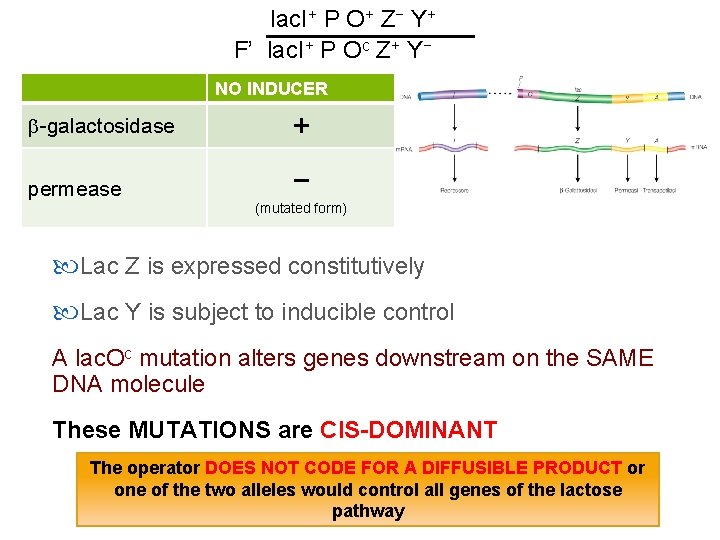
lac. I+ P O+ Z− Y+ F’ lac. I+ P Oc Z+ Y− NO INDUCER CON INDUTTORE b-galactosidase + + permease − + (mutated form) Lac Z is expressed constitutively Lac Y is subject to inducible control A lac. Oc mutation alters genes downstream on the SAME DNA molecule These MUTATIONS are CIS-DOMINANT The operator DOES NOT CODE FOR A DIFFUSIBLE PRODUCT or one of the two alleles would control all genes of the lactose pathway
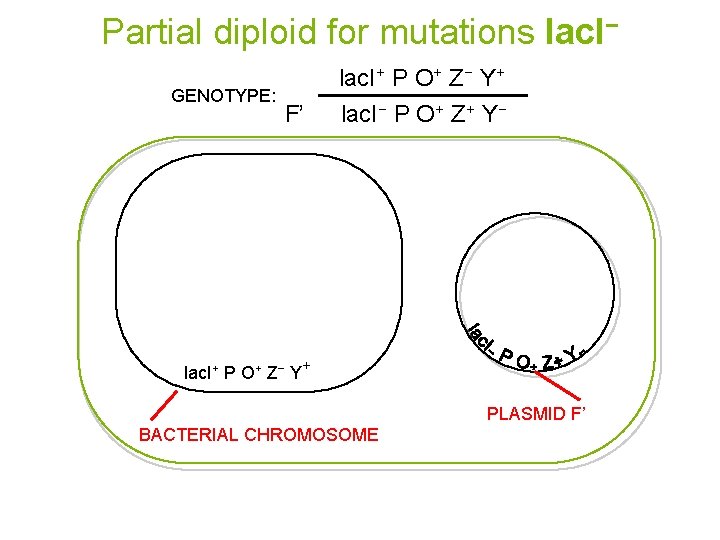
Partial diploid for mutations lac. I− GENOTYPE: lac. I+ P O+ Z− Y+ F’ lac. I− P O+ Z+ Y− lac. I+ P O+ Z− Y+ PLASMID F’ BACTERIAL CHROMOSOME
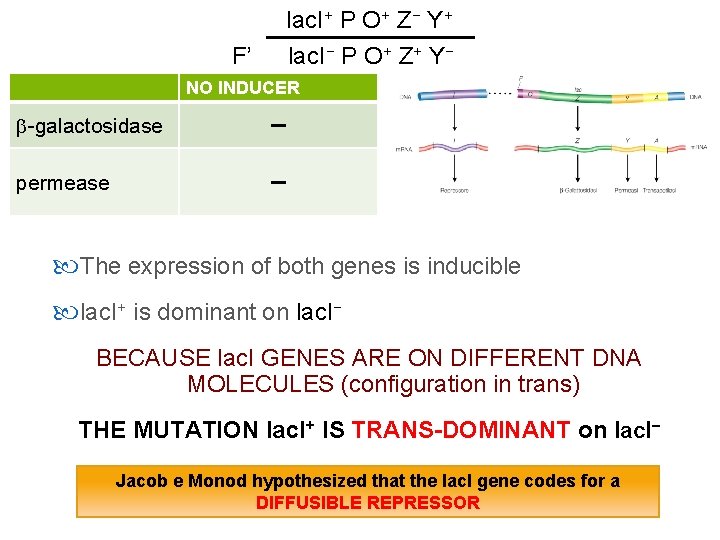
lac. I+ P O+ Z− Y+ F’ lac. I− P O+ Z+ Y− NO INDUCER b-galactosidase − permease − The expression of both genes is inducible lac. I+ is dominant on lac. I− BECAUSE lac. I GENES ARE ON DIFFERENT DNA MOLECULES (configuration in trans) THE MUTATION lac. I+ IS TRANS-DOMINANT on lac. I− Jacob e Monod hypothesized that the lac. I gene codes for a DIFFUSIBLE REPRESSOR
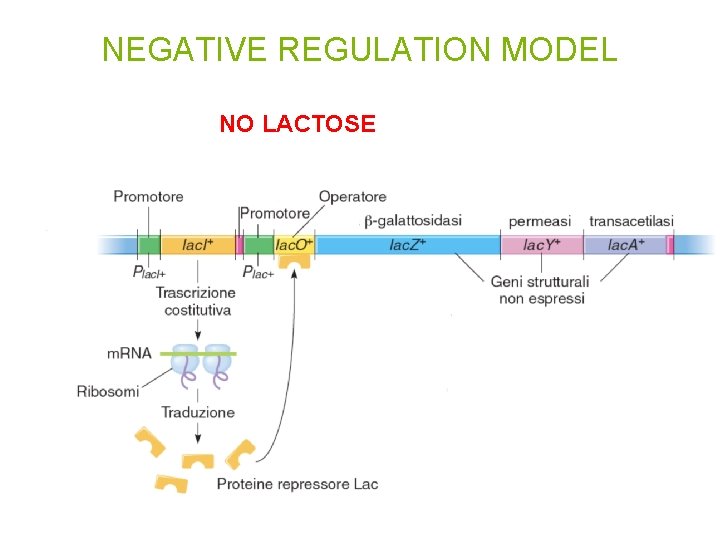
NEGATIVE REGULATION MODEL NO LACTOSE
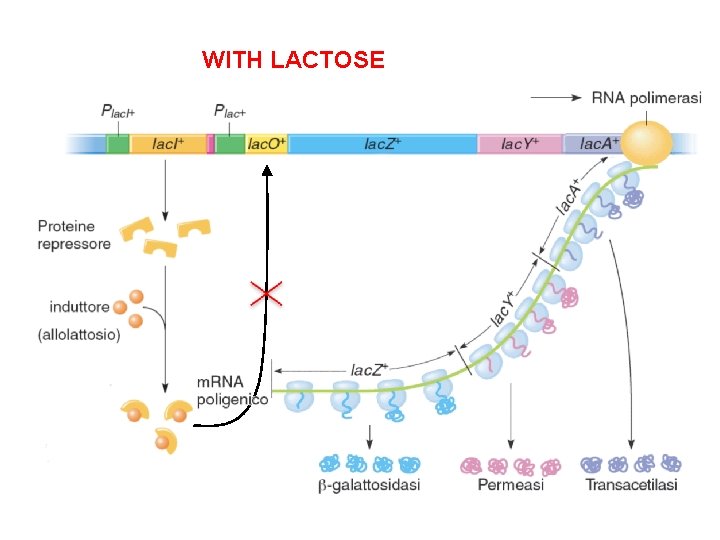
WITH LACTOSE
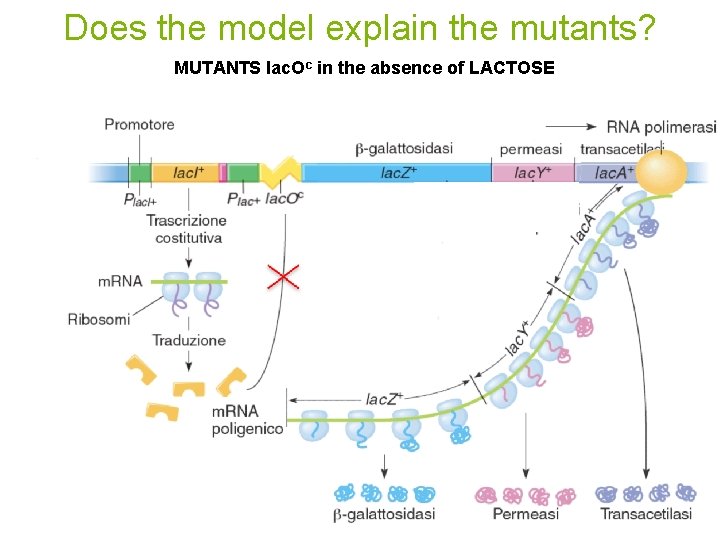
Does the model explain the mutants? MUTANTS lac. Oc in the absence of LACTOSE
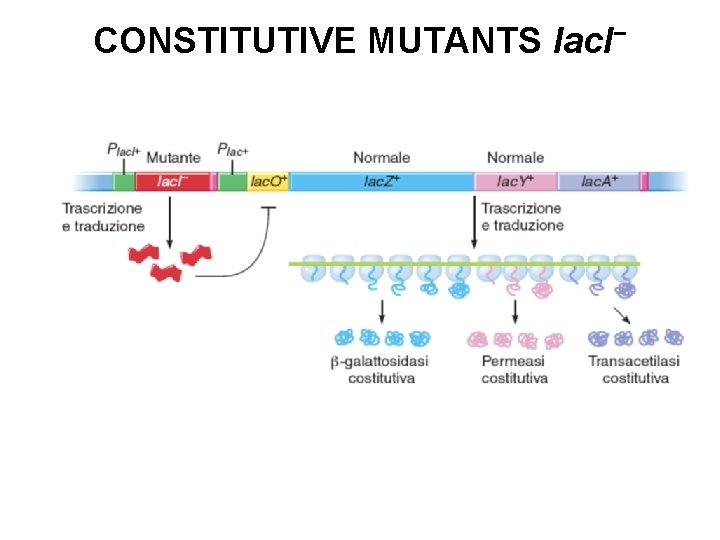
CONSTITUTIVE MUTANTS lac. I−
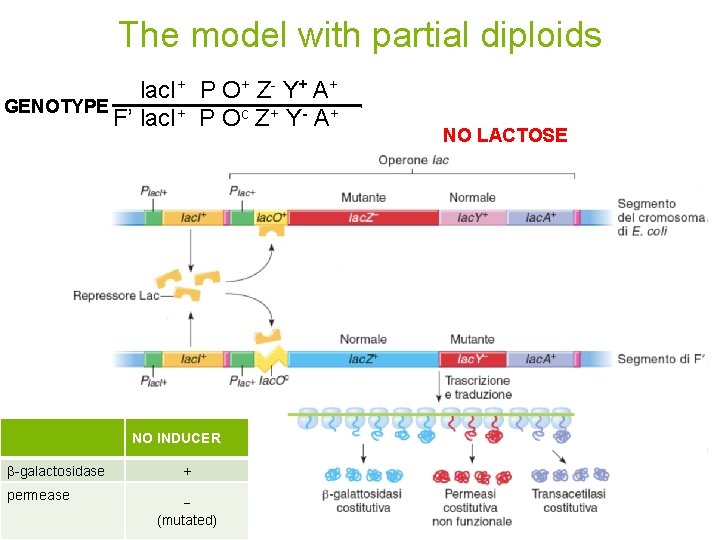
The model with partial diploids lac. I+ P O+ Z- Y+ A+ GENOTYPE F’ lac. I+ P Oc Z+ Y- A+ NO INDUCER b-galactosidase permease + − (mutated) NO LACTOSE
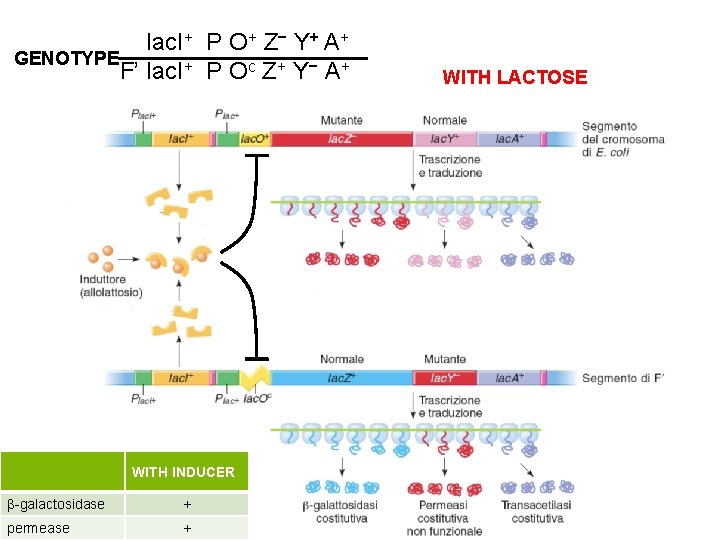
lac. I+ P O+ Z− Y+ A+ GENOTYPE F’ lac. I+ P Oc Z+ Y− A+ WITH INDUCER b-galactosidase + permease + WITH LACTOSE
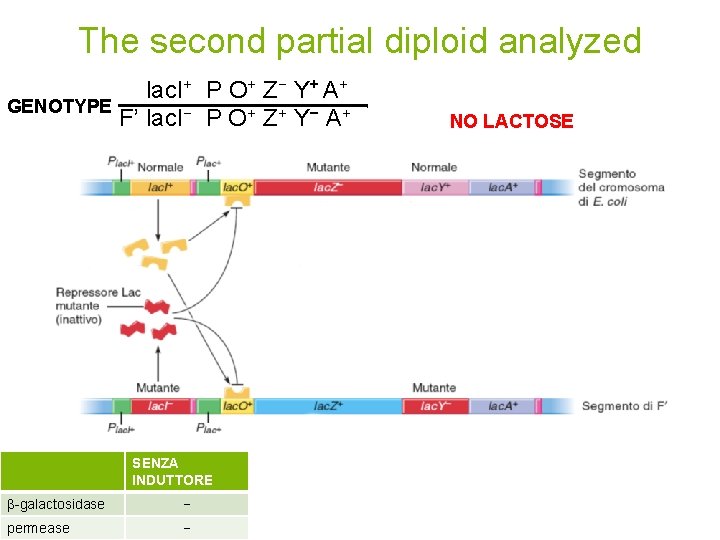
The second partial diploid analyzed GENOTYPE lac. I+ P O+ Z− Y+ A+ F’ lac. I− P O+ Z+ Y− A+ SENZA INDUTTORE b-galactosidase − permease − NO LACTOSE
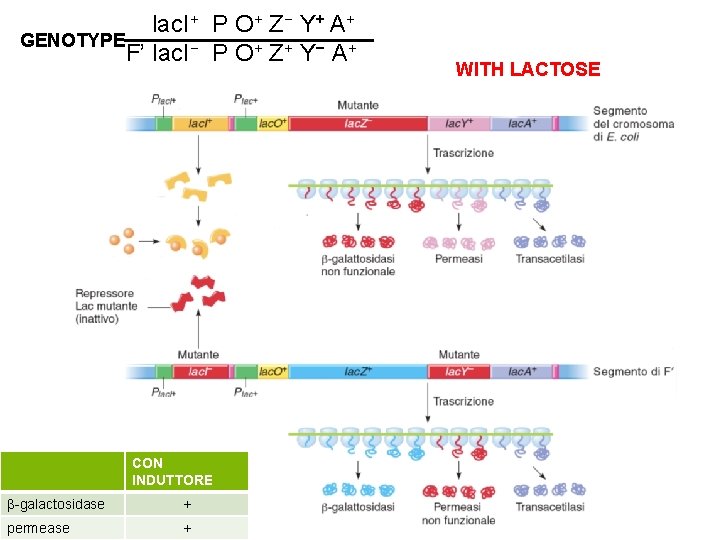
lac. I+ P O+ Z− Y+ A+ GENOTYPE F’ lac. I− P O+ Z+ Y− A+ CON INDUTTORE b-galactosidase + permease + WITH LACTOSE
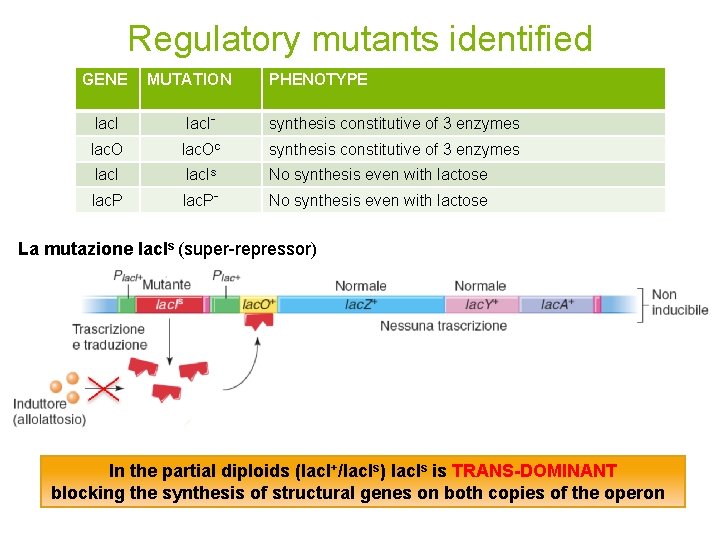
Regulatory mutants identified GENE MUTATION PHENOTYPE lac. I- synthesis constitutive of 3 enzymes lac. Oc synthesis constitutive of 3 enzymes lac. Is No synthesis even with lactose lac. P- No synthesis even with lactose La mutazione lac. Is (super-repressor) In the partial diploids (lac. I+/lac. Is) lac. Is is TRANS-DOMINANT blocking the synthesis of structural genes on both copies of the operon
The lactose operon has also a positive regulatory system This enables that lactose operon genes are expressed at high levles ONLY if lactose is the ONLY carbon source and in the absence of glucose Glucose is preferred because it can be directly available for glycolysis The other sugars must be converted into glucose to be used These conversions require energy
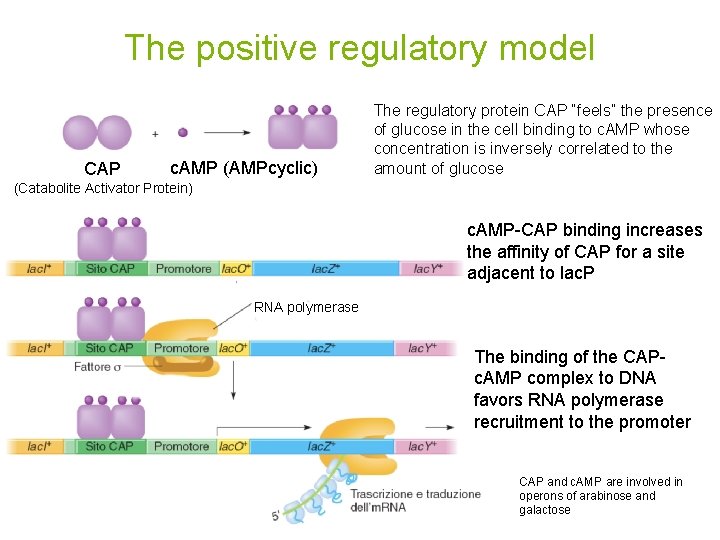
The positive regulatory model CAP c. AMP (AMPcyclic) The regulatory protein CAP “feels” the presence of glucose in the cell binding to c. AMP whose concentration is inversely correlated to the amount of glucose (Catabolite Activator Protein) c. AMP-CAP binding increases the affinity of CAP for a site adjacent to lac. P RNA polymerase The binding of the CAPc. AMP complex to DNA favors RNA polymerase recruitment to the promoter CAP and c. AMP are involved in operons of arabinose and galactose
Operons are very common in prokaryotes Allowing: Regulation of multiple genes involved in the same metabolism at the same time Maintenance of the correct ratios of transcripts Quick response to environmental stimuli Other examples: tryptophan arabinose
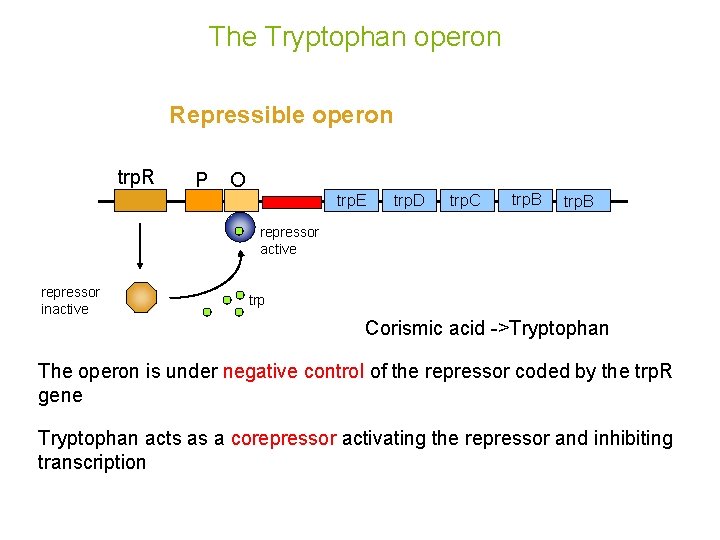
The Tryptophan operon Repressible operon trp. R P O trp. E trp. D trp. C trp. B repressor active repressor inactive trp Corismic acid ->Tryptophan The operon is under negative control of the repressor coded by the trp. R gene Tryptophan acts as a corepressor activating the repressor and inhibiting transcription
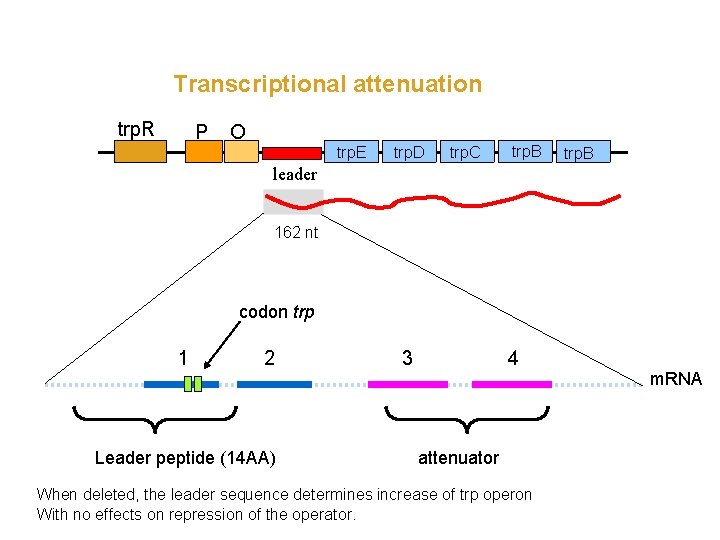
Transcriptional attenuation trp. R P O trp. E trp. D trp. C trp. B leader 162 nt codon trp 1 2 Leader peptide (14 AA) 3 4 attenuator When deleted, the leader sequence determines increase of trp operon With no effects on repression of the operator. m. RNA
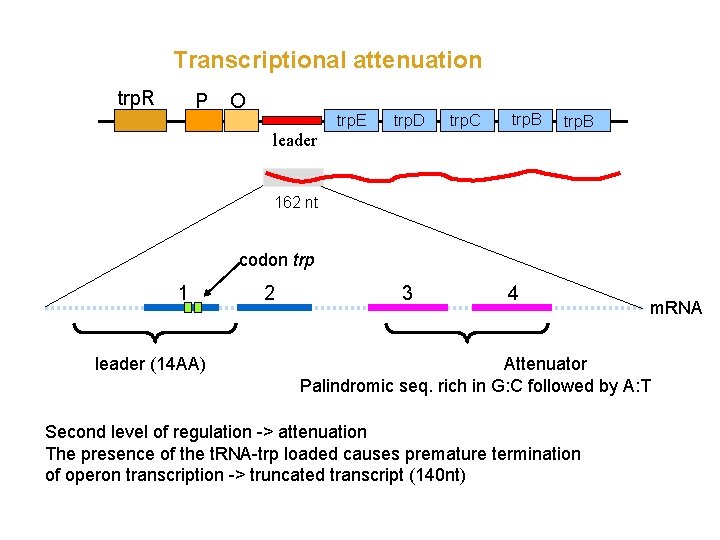
Transcriptional attenuation trp. R P O leader trp. E trp. D trp. C trp. B 162 nt codon trp 1 leader (14 AA) 2 3 4 m. RNA Attenuator Palindromic seq. rich in G: C followed by A: T Second level of regulation -> attenuation The presence of the t. RNA-trp loaded causes premature termination of operon transcription -> truncated transcript (140 nt)
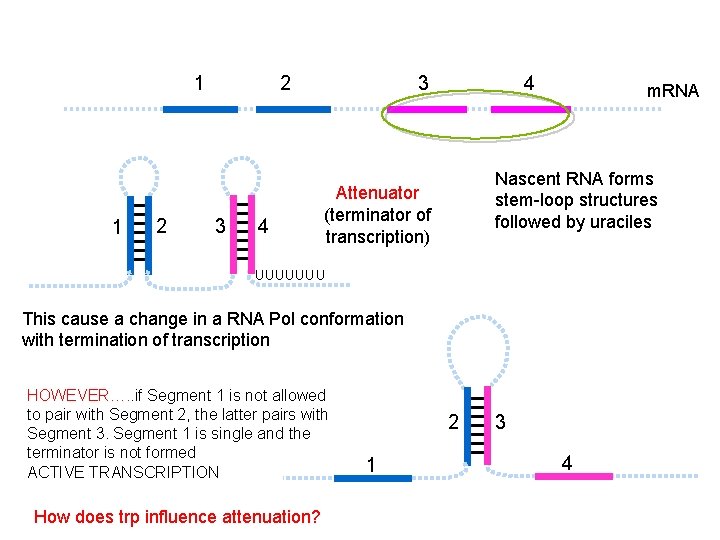
1 1 2 2 3 4 m. RNA Nascent RNA forms stem-loop structures followed by uraciles Attenuator (terminator of transcription) UUUUUUU This cause a change in a RNA Pol conformation with termination of transcription HOWEVER…. . if Segment 1 is not allowed to pair with Segment 2, the latter pairs with Segment 3. Segment 1 is single and the terminator is not formed ACTIVE TRANSCRIPTION How does trp influence attenuation? 2 1 3 4
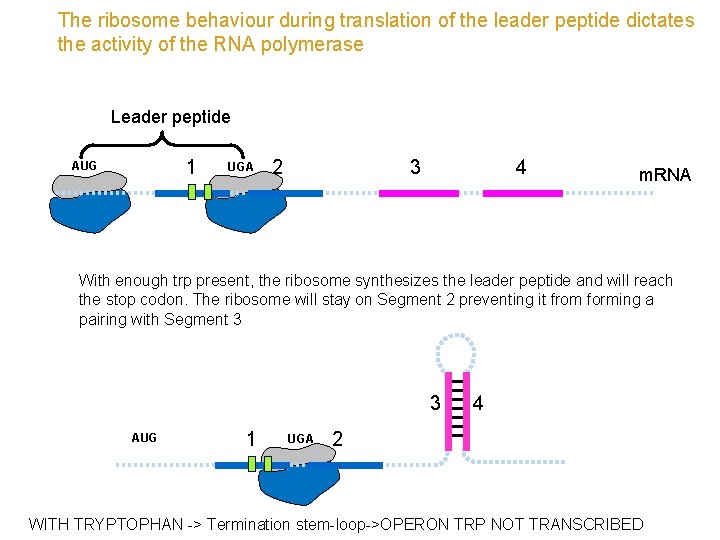
The ribosome behaviour during translation of the leader peptide dictates the activity of the RNA polymerase Leader peptide 1 AUG UGA 2 3 4 m. RNA With enough trp present, the ribosome synthesizes the leader peptide and will reach the stop codon. The ribosome will stay on Segment 2 preventing it from forming a pairing with Segment 3 3 AUG 1 UGA 4 2 WITH TRYPTOPHAN -> Termination stem-loop->OPERON TRP NOT TRANSCRIBED
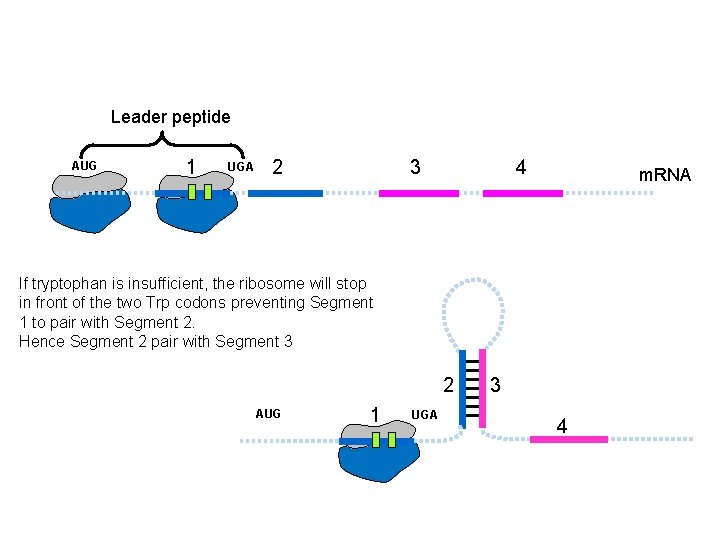
Leader peptide AUG 1 UGA 2 3 4 m. RNA If tryptophan is insufficient, the ribosome will stop in front of the two Trp codons preventing Segment 1 to pair with Segment 2. Hence Segment 2 pair with Segment 3 2 AUG 1 UGA 3 4
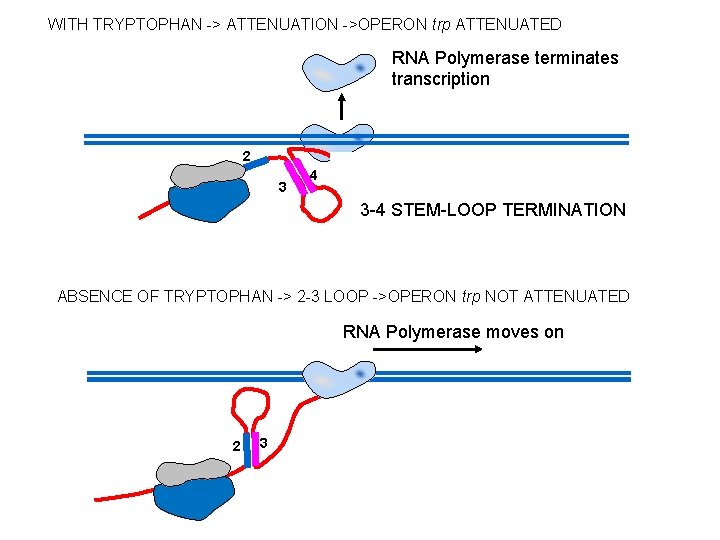
WITH TRYPTOPHAN -> ATTENUATION ->OPERON trp ATTENUATED RNA Polymerase terminates transcription 2 3 4 3 -4 STEM-LOOP TERMINATION ABSENCE OF TRYPTOPHAN -> 2 -3 LOOP ->OPERON trp NOT ATTENUATED RNA Polymerase moves on 2 3
Acting together, repression and attenuation coordinates the speed of synthesis of aminoacids biosynthetic enzymes with aminoacids availability and the global protein synthesis speed. When trp is present at high concentrations, RNA polymerases not inhibited by the repressor are unlikely to move beyond the attenuator sequence. Repression reduces transcription about 70 -fold and attenuation reduces it further 8 -10 -fold: when both operates together, transcription can be reduced some 600 -fold. SYNERGISTIC EFFECT Attenuation has a role in the regulation of biosynthesis of many aminoacids
- Slides: 40