
The Open University Maths Dept Some Psychology of
- Slides: 20
The Open University Maths Dept (Some) Psychology of Learning & Doing Mathematics 1 Promoting Mathematical Thinking University of Oxford Dept of Education Oxford N 1 A § 3 2017
Seeing & Believeing 2
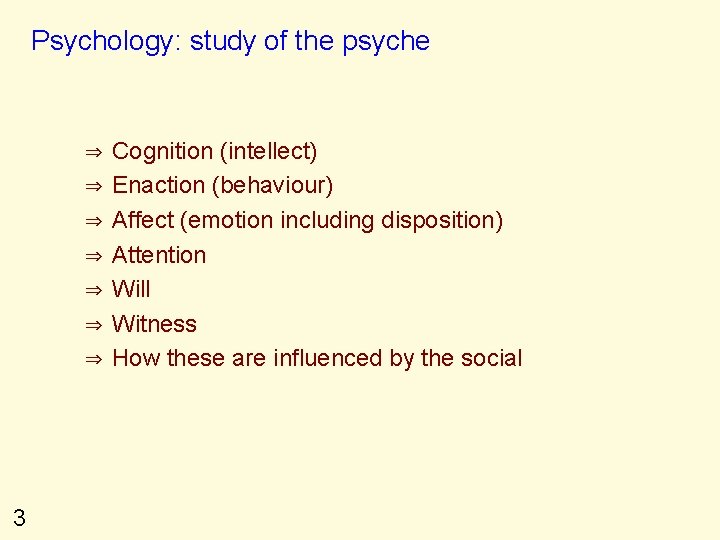
Psychology: study of the psyche ⇒ ⇒ ⇒ ⇒ 3 Cognition (intellect) Enaction (behaviour) Affect (emotion including disposition) Attention Will Witness How these are influenced by the social
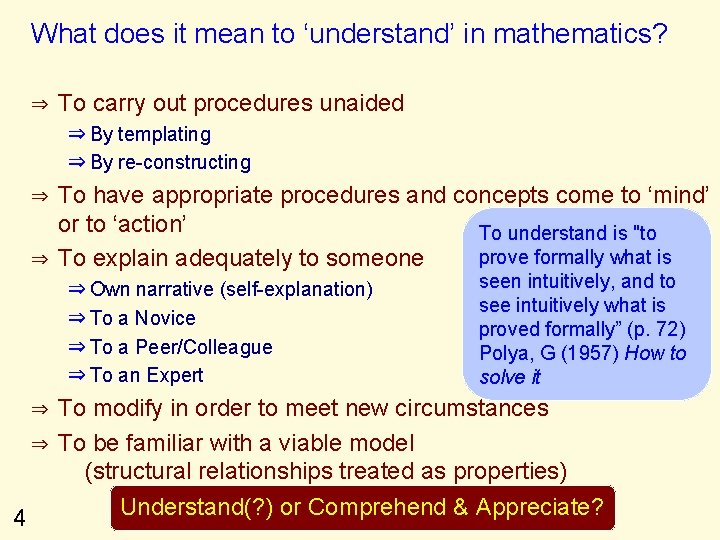
What does it mean to ‘understand’ in mathematics? ⇒ To carry out procedures unaided ⇒ By templating ⇒ By re-constructing ⇒ ⇒ To have appropriate procedures and concepts come to ‘mind’ or to ‘action’ To understand is "to prove formally what is To explain adequately to someone ⇒ Own narrative (self-explanation) ⇒ To a Novice ⇒ To a Peer/Colleague ⇒ To an Expert ⇒ ⇒ 4 seen intuitively, and to see intuitively what is proved formally” (p. 72) Polya, G (1957) How to solve it To modify in order to meet new circumstances To be familiar with a viable model (structural relationships treated as properties) Understand(? ) or Comprehend & Appreciate?
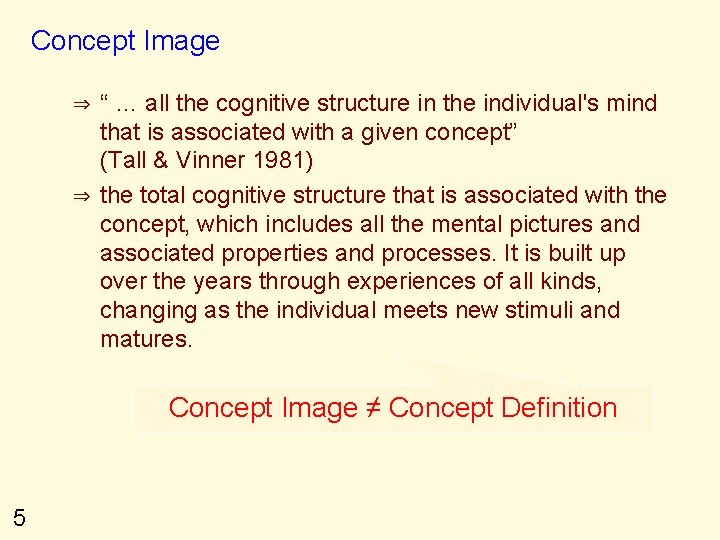
Concept Image ⇒ ⇒ “ … all the cognitive structure in the individual's mind that is associated with a given concept” (Tall & Vinner 1981) the total cognitive structure that is associated with the concept, which includes all the mental pictures and associated properties and processes. It is built up over the years through experiences of all kinds, changing as the individual meets new stimuli and matures. Concept Image ≠ Concept Definition 5
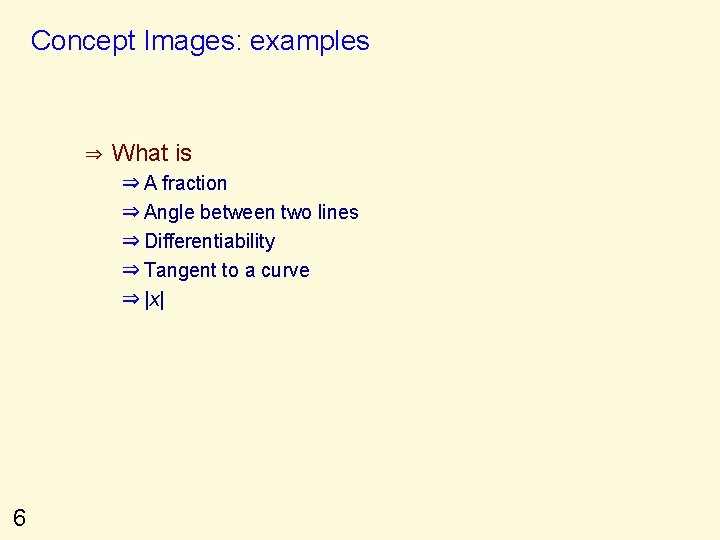
Concept Images: examples ⇒ What is ⇒ A fraction ⇒ Angle between two lines ⇒ Differentiability ⇒ Tangent to a curve ⇒ |x| 6
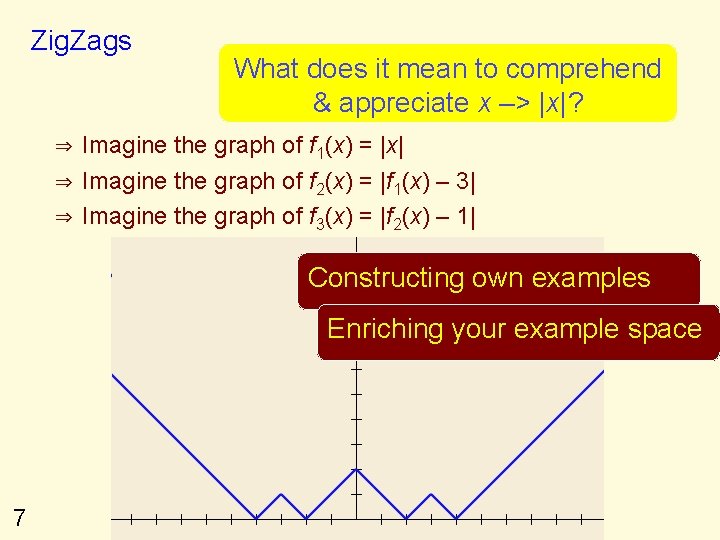
Zig. Zags ⇒ ⇒ ⇒ What does it mean to comprehend & appreciate x –> |x|? Imagine the graph of f 1(x) = |x| Imagine the graph of f 2(x) = |f 1(x) – 3| Imagine the graph of f 3(x) = |f 2(x) – 1| Constructing own examples Enriching your example space 7
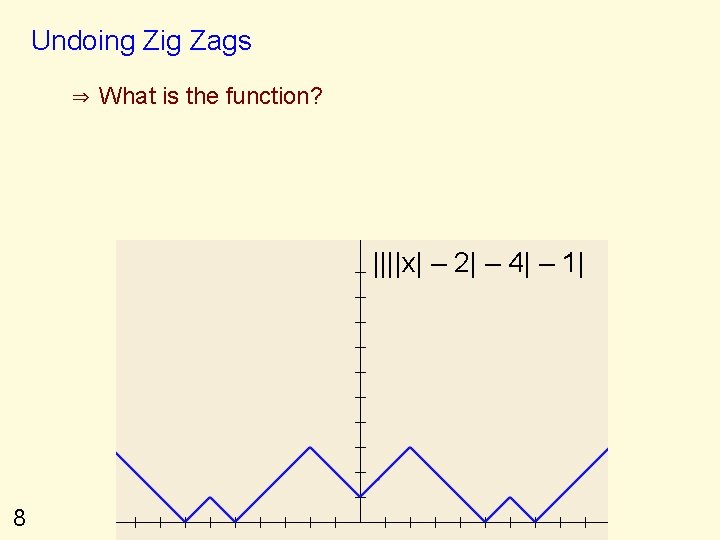
Undoing Zig Zags ⇒ What is the function? ||||x| – 2| – 4| – 1| 8
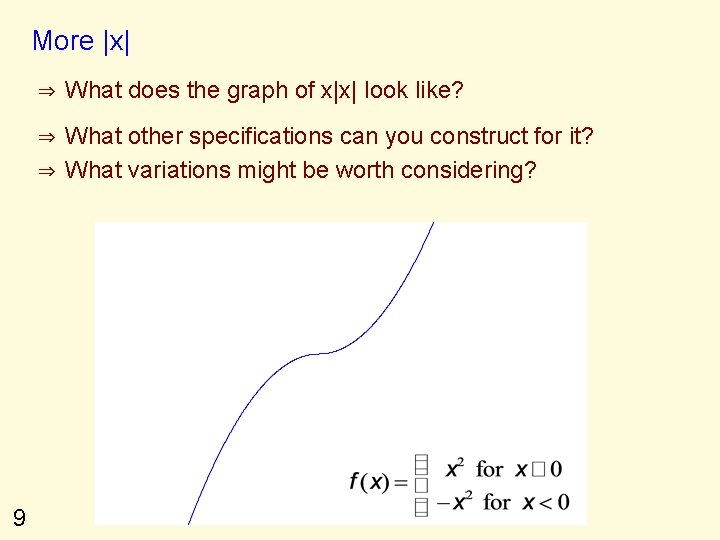
More |x| ⇒ What does the graph of x|x| look like? ⇒ What other specifications can you construct for it? What variations might be worth considering? ⇒ 9
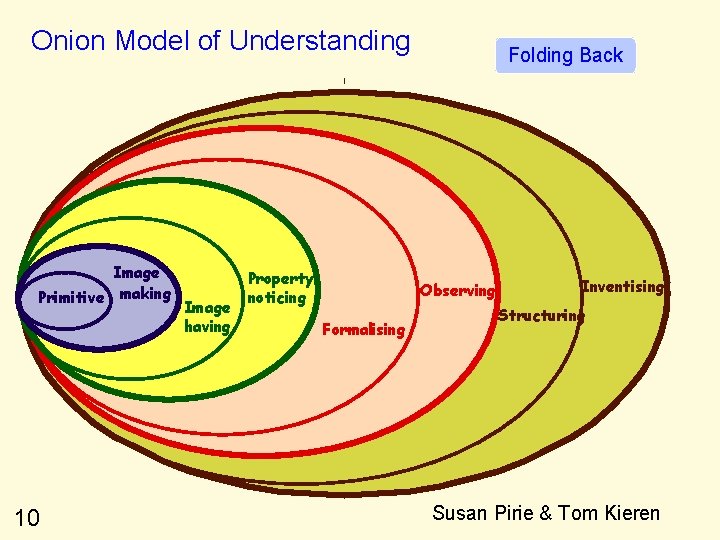
Onion Model of Understanding Image Primitive making 10 Image having Property noticing Folding Back Observing Formalising Inventising Structuring Susan Pirie & Tom Kieren
Templating & Re-Constructing ⇒ ⇒ ⇒ 11 Instrumental & Relational Understanding (Skemp 1971) Following a Template & Reconstructing to Meet Circumstances Procedural & Conceptual Formal & Intuitive insight/comprehension Trained Behaviour & Educated Awareness
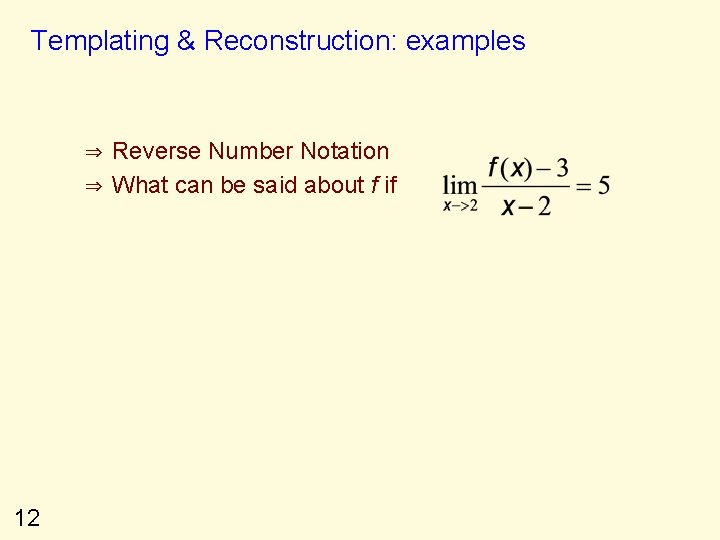
Templating & Reconstruction: examples ⇒ ⇒ 12 Reverse Number Notation What can be said about f if
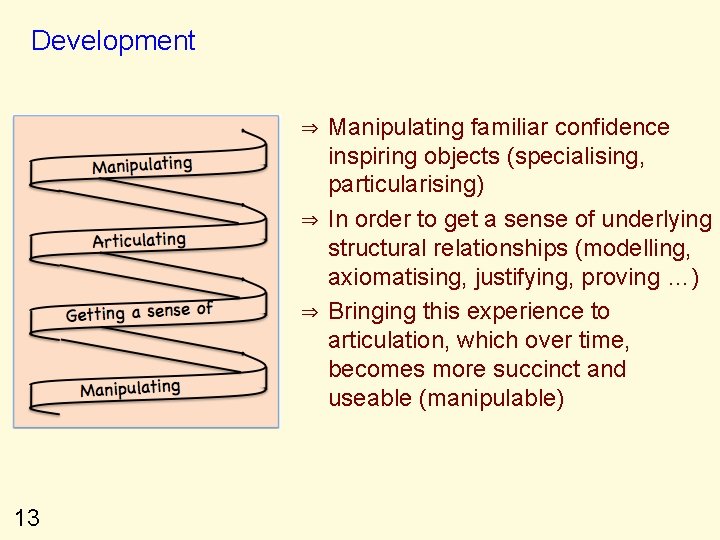
Development ⇒ ⇒ ⇒ 13 Manipulating familiar confidence inspiring objects (specialising, particularising) In order to get a sense of underlying structural relationships (modelling, axiomatising, justifying, proving …) Bringing this experience to articulation, which over time, becomes more succinct and useable (manipulable)
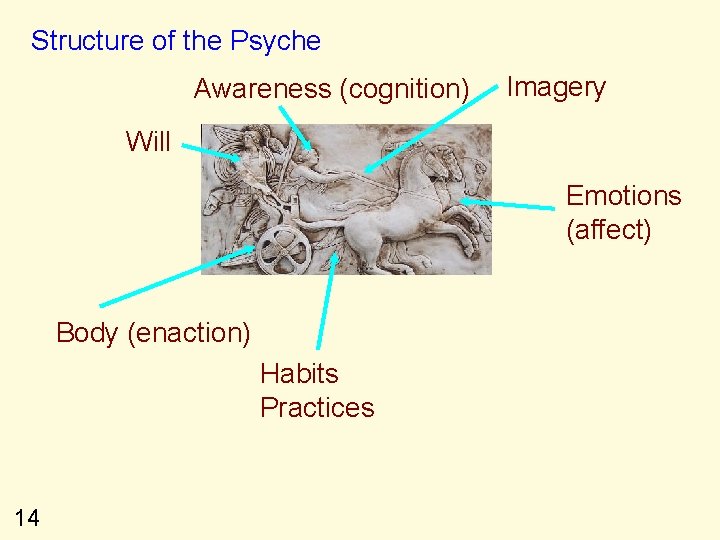
Structure of the Psyche Awareness (cognition) Imagery Will Emotions (affect) Body (enaction) Habits Practices 14
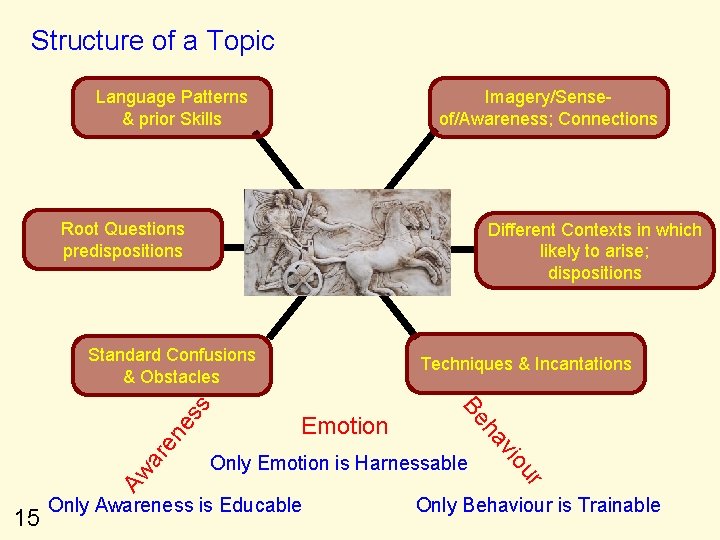
Structure of a Topic Language Patterns & prior Skills Imagery/Senseof/Awareness; Connections Root Questions predispositions Different Contexts in which likely to arise; dispositions es en ar Only Emotion is Harnessable Only Awareness is Educable ur Aw Emotion vio 15 Techniques & Incantations ha Be s Standard Confusions & Obstacles Only Behaviour is Trainable
Coming to Know in Mathematics ⇒ ⇒ ⇒ 16 Observing What strikes us (disturbance revealing expectation ) Probing and elucidating underlying structure (Modelling, Axiomatising, Proving)
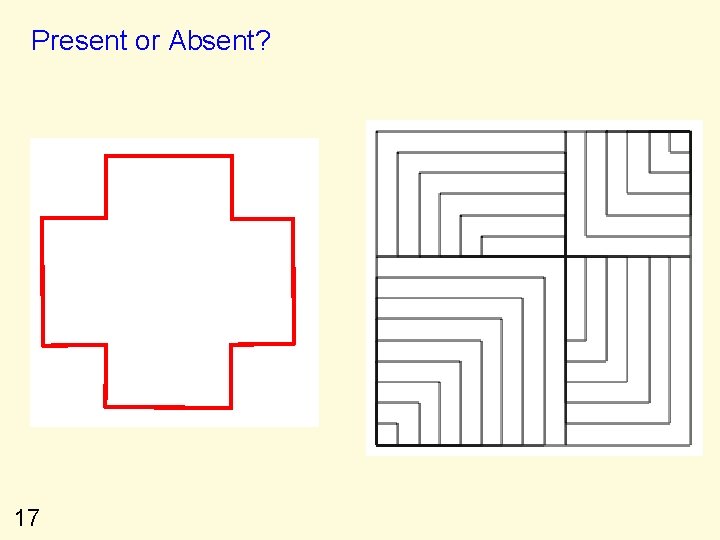
Present or Absent? 17
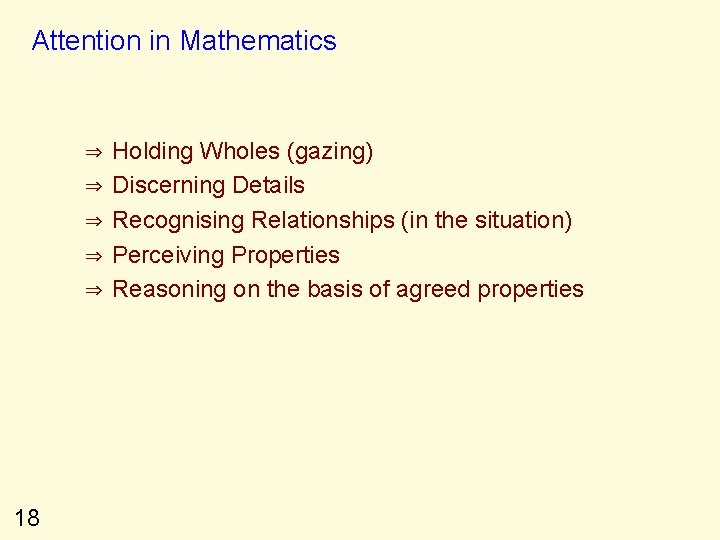
Attention in Mathematics ⇒ ⇒ ⇒ 18 Holding Wholes (gazing) Discerning Details Recognising Relationships (in the situation) Perceiving Properties Reasoning on the basis of agreed properties
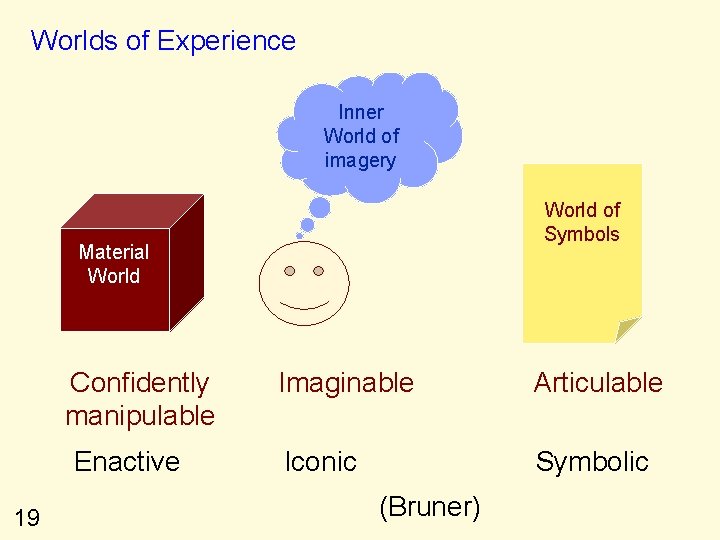
Worlds of Experience Inner World of imagery World of Symbols Material World Confidently manipulable Enactive 19 Imaginable Articulable Iconic Symbolic (Bruner)
Summary ⇒ ⇒ ⇒ Concept Image & Concept Definition Templating & Reconstructing Awareness (ability to act) – Emotion – Behaviour ⇒ Only awareness is educable ⇒ Only behaviour is trainable ⇒ Only emotion is harnessable ⇒ ⇒ ⇒ 20 Structure of a Topic Onion model of coming to understand Manipulating – Getting-a-sense-of – Articulating Enactive – Iconic – Symbolic modes or worlds Attention: ⇒ Gazing (holding wholes) – Discerning Details ⇒ Recognising Relationships – Perceiving Properties ⇒ Reasoning on the basis of agreed properties