
The ontology of the operating room Modeling medical
- Slides: 21
The ontology of the operating room Modeling medical records for the HIPAA-Aware EAD NHPRC Conference October 2006 C. Arnott Smith © 2006
The medical record: A capsule history l Ancestors of the modern record ¡ ¡ l Electronic? Not yet ¡ ¡ ¡ l Case records (19 th c. ) Bedside chart Physician order Financial ledger 10% penetrance in best studies 21% of systems capture >75% of information 75% of systems are hybrid International and federal standards enroute
What it contains l Conglomeration of clinical documents ¡ Voice dictation ¡ Primarily qualitative, narrative text l Typical cancer patient record (2001): ¡ 80% = 6 unique document types ¡ Average of 68 documents/patient l Structure little-studied l Focus here: OR Notes
Definitions l “Loosely structured document” ¡ “documents that have much in common” (Essin, 1993) ¡ Contain elements (document parts)
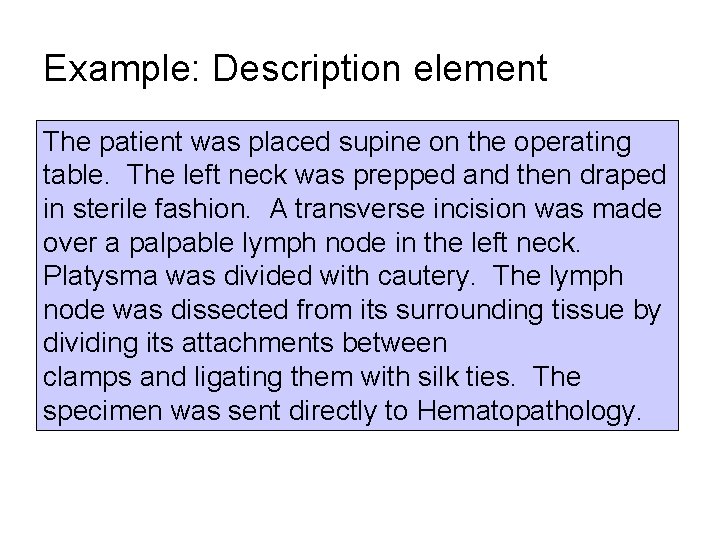
Example: Description element The patient was placed supine on the operating table. The left neck was prepped and then draped in sterile fashion. A transverse incision was made over a palpable lymph node in the left neck. Platysma was divided with cautery. The lymph node was dissected from its surrounding tissue by dividing its attachments between clamps and ligating them with silk ties. The specimen was sent directly to Hematopathology.
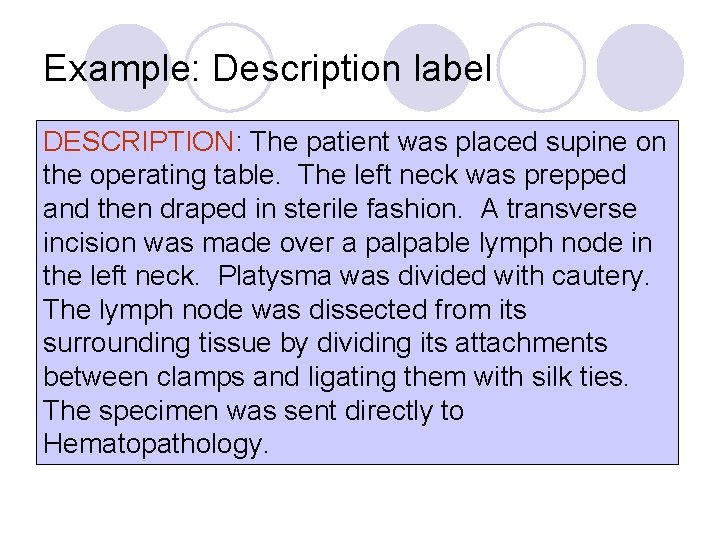
Example: Description label DESCRIPTION: The patient was placed supine on the operating table. The left neck was prepped and then draped in sterile fashion. A transverse incision was made over a palpable lymph node in the left neck. Platysma was divided with cautery. The lymph node was dissected from its surrounding tissue by dividing its attachments between clamps and ligating them with silk ties. The specimen was sent directly to Hematopathology.
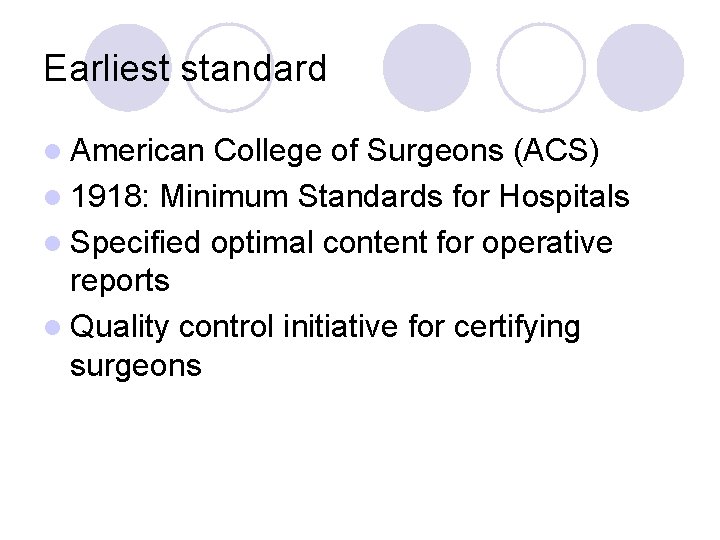
Earliest standard l American College of Surgeons (ACS) l 1918: Minimum Standards for Hospitals l Specified optimal content for operative reports l Quality control initiative for certifying surgeons
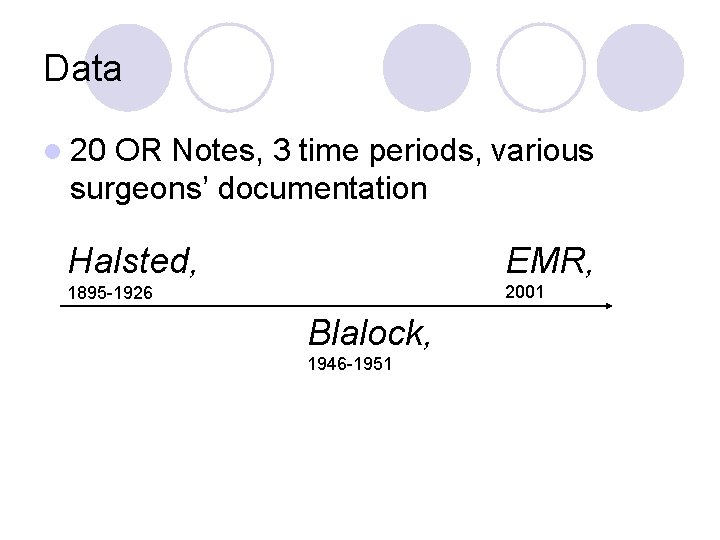
Data l 20 OR Notes, 3 time periods, various surgeons’ documentation Halsted, EMR, 1895 -1926 2001 Blalock, 1946 -1951
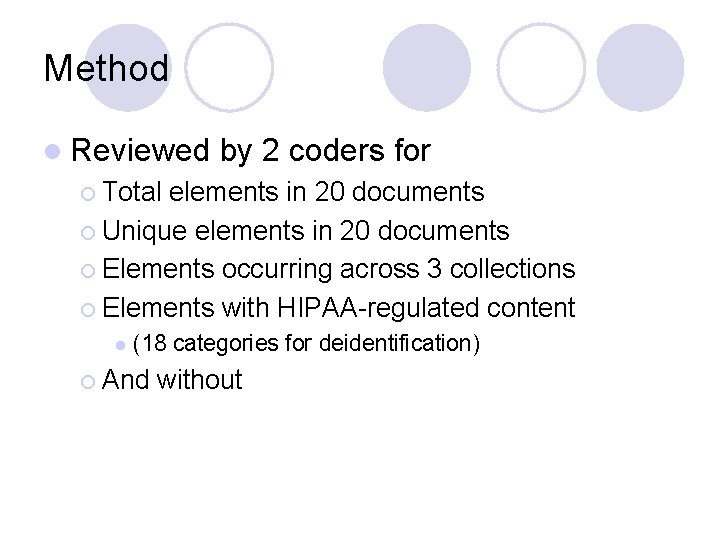
Method l Reviewed by 2 coders for ¡ Total elements in 20 documents ¡ Unique elements in 20 documents ¡ Elements occurring across 3 collections ¡ Elements with HIPAA-regulated content l (18 categories for deidentification) ¡ And without
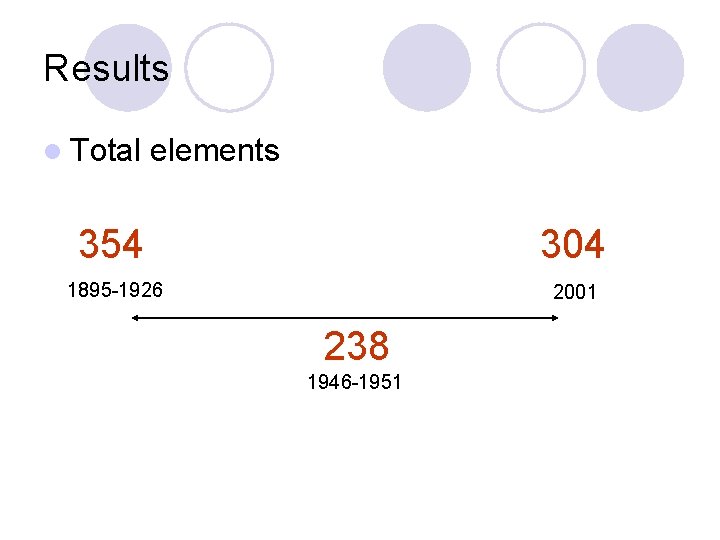
Results l Total elements 354 304 1895 -1926 2001 238 1946 -1951
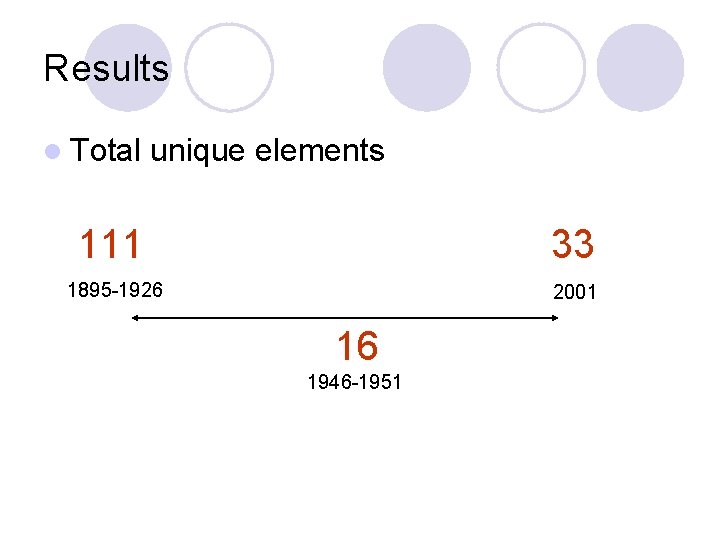
Results l Total unique elements 111 33 1895 -1926 2001 16 1946 -1951
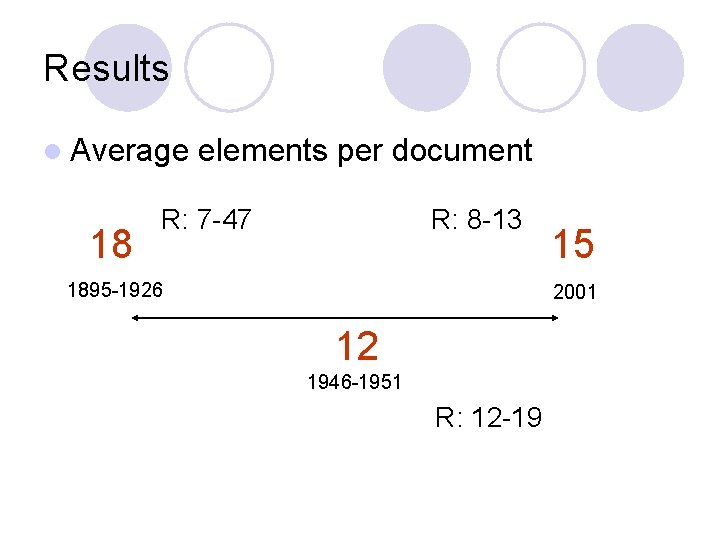
Results l Average 18 elements per document R: 7 -47 R: 8 -13 1895 -1926 15 2001 12 1946 -1951 R: 12 -19
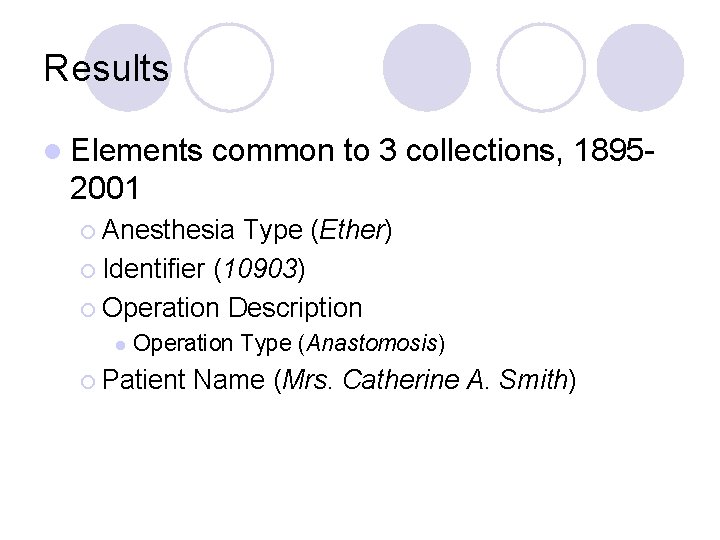
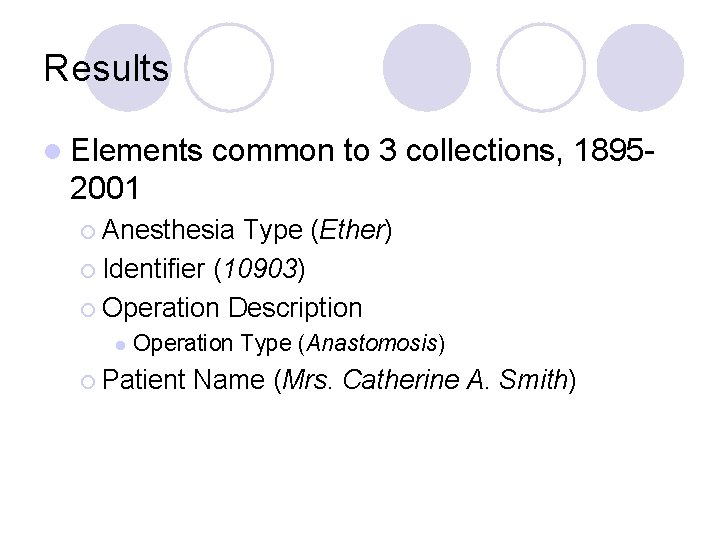
Results l Elements common to 3 collections, 1895 - 2001 ¡ Anesthesia Type (Ether) ¡ Identifier (10903) ¡ Operation Description l Operation Type (Anastomosis) ¡ Patient Name (Mrs. Catherine A. Smith)
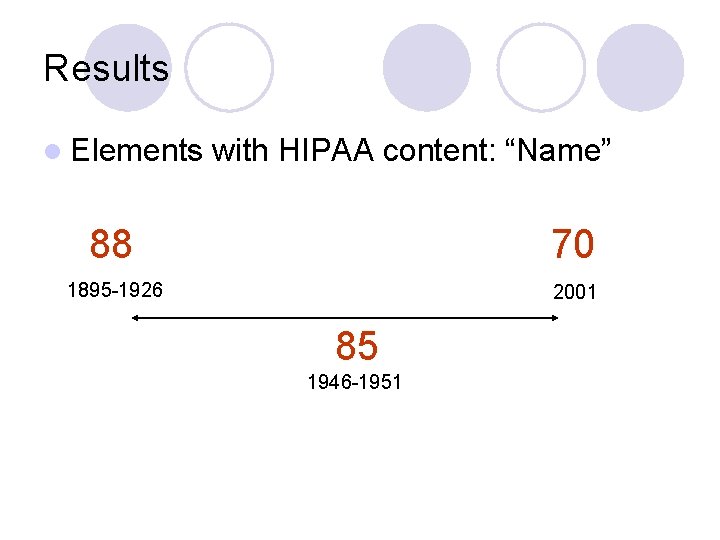
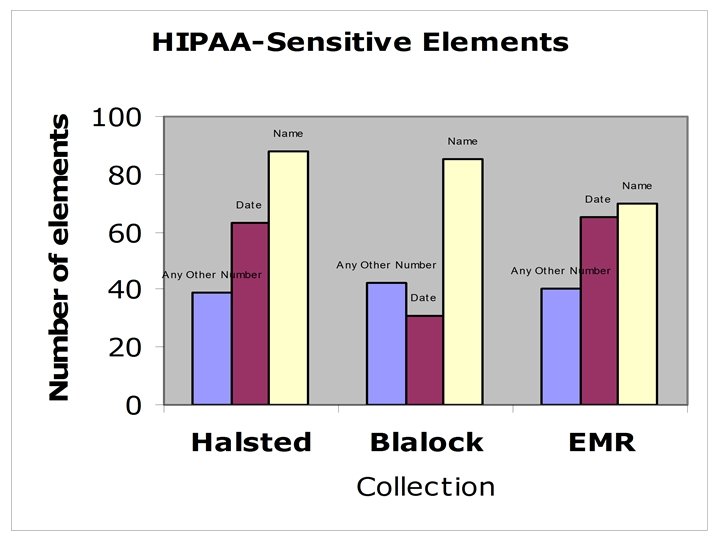
Results l Elements with HIPAA content: “Name” 88 70 1895 -1926 2001 85 1946 -1951
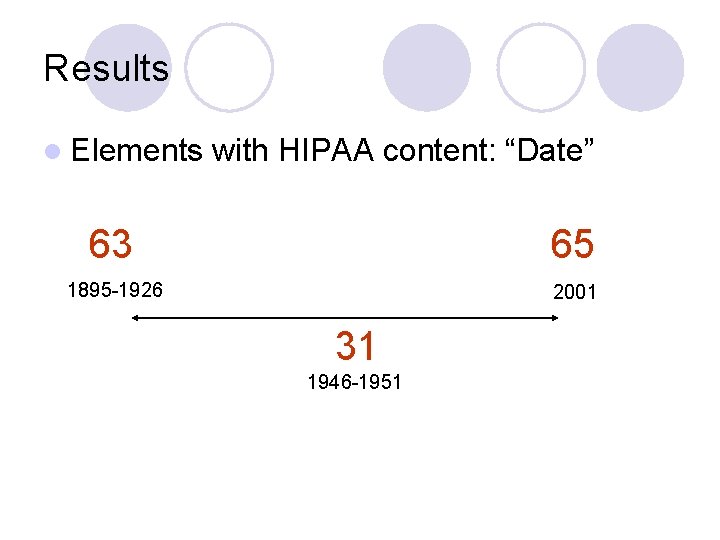
Results l Elements with HIPAA content: “Date” 63 65 1895 -1926 2001 31 1946 -1951
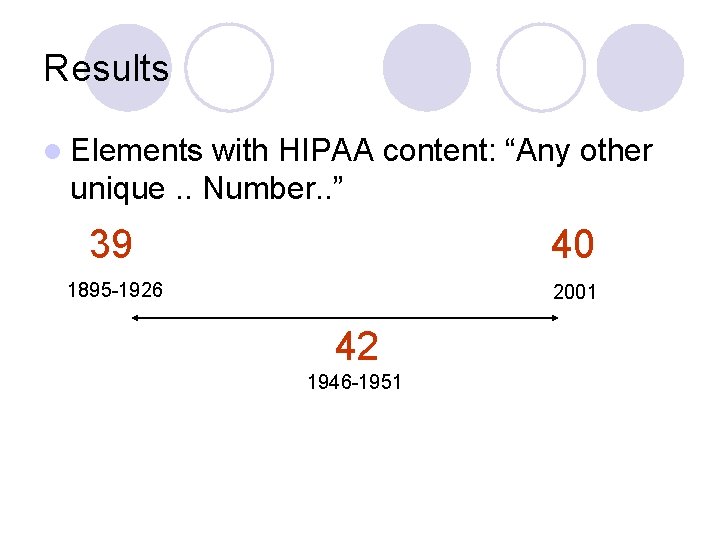
Results l Elements with HIPAA content: “Any other unique. . Number. . ” 39 40 1895 -1926 2001 42 1946 -1951
Results
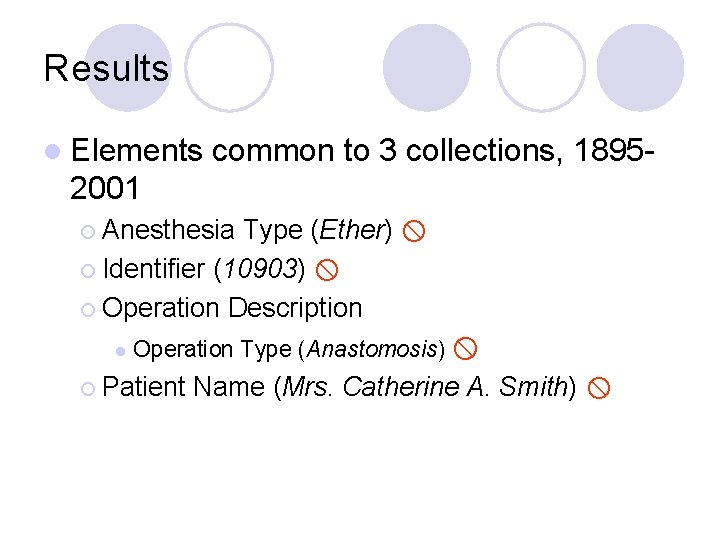
Results l Elements common to 3 collections, 1895 - 2001 ¡ Anesthesia Type (Ether) ¡ Identifier (10903) ¡ Operation Description l Operation Type (Anastomosis) ¡ Patient Name (Mrs. Catherine A. Smith)
Results l Elements common to 3 collections, 1895 - 2001 ¡ Anesthesia Type (Ether) ¡ Identifier (10903) ¡ Operation Description l Operation Type (Anastomosis) ¡ Patient Name (Mrs. Catherine A. Smith)
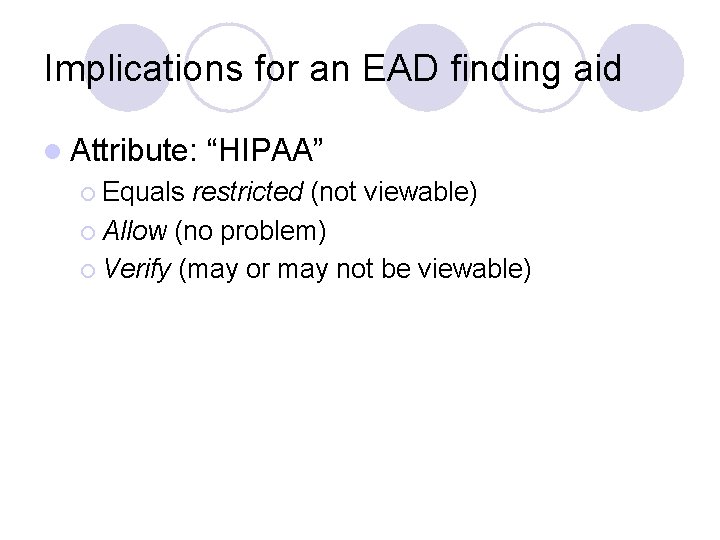
Implications for an EAD finding aid l Attribute: ¡ Equals “HIPAA” restricted (not viewable) ¡ Allow (no problem) ¡ Verify (may or may not be viewable)
Catherine Arnott Smith, Ph. D Assistant Professor School of Library and Information Studies University of Wisconsin-Madison casmith 24@wisc. edu