
The Old Regime France Notion of Privilege in


- Slides: 49
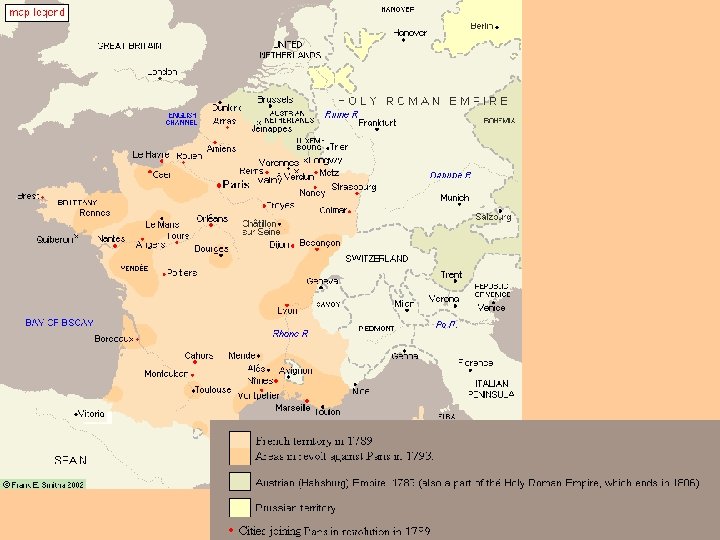
The Old Regime – France Notion of Privilege in govt. 27 million 3 Estates
1 st Estate – Clergy • 130, 000 /27 mil. • 10% land • Exempt from taxes
2 nd Estate – Nobility • • 400, 000 / 27 mil. 25 -30% land Control industry Highest govt. positions (military / law / church) • Exempt from taille and most other taxes • Nobility of Robe • Nobility of Sword
3 rd Estate - Commoners • • Peasants alone =75 -80% of pop 35 -40% of land Over ½ own no land still owe feudal dues Skilled artisans and craftspeople Bourgeoisie – 2. 3 million 20 -25% of land Merchants / bankers / industrialists /doctors / public office/ lawyers etc. • Excluded from social and political privileges enjoyed by nobles
Salons • Bourgeois and nobles mix and discuss Enlightenment ideas • Bourgeois and Aristocracy compete for power in govt.
18 th Century Problems
1. Prices and Unemployment • Prices rise faster than wages (65% - 22%) • Rents rise 140% • Bread prices rise – ½ salary (3/4 of diet) – Bad harvests • Manufacturing depression – Unemployment in cities – 1/3 of population is below poverty level • Lords try to revive long forgotten taxes on peasants
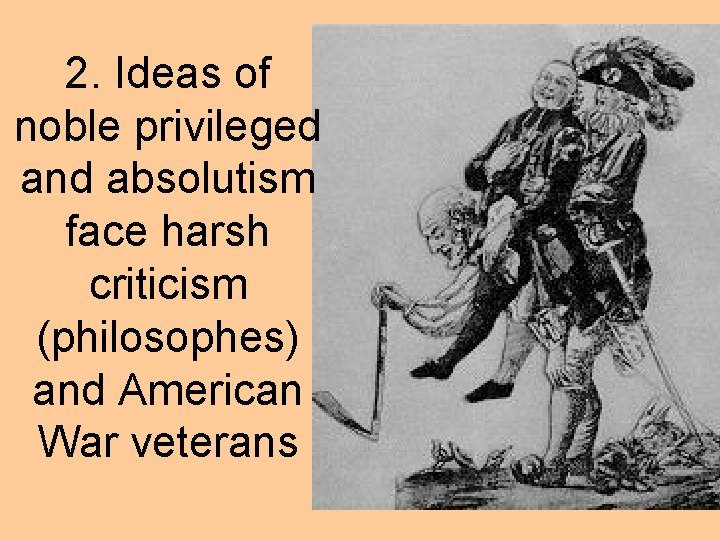
2. Ideas of noble privileged and absolutism face harsh criticism (philosophes) and American War veterans
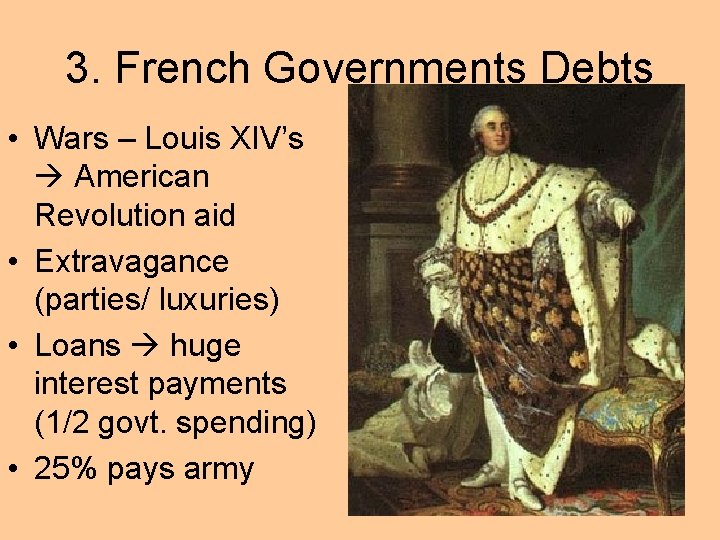
3. French Governments Debts • Wars – Louis XIV’s American Revolution aid • Extravagance (parties/ luxuries) • Loans huge interest payments (1/2 govt. spending) • 25% pays army
• Calonne – director of finances – urges Louis XVI to reform tax system • -dismissed • Jacques Necker – urged paring down spending on extravagances - dismissed • Parlements (Provincial Bodies) and Assembly of Notables (Nobles / Magistrates) refuse to cooperate with govt. s attempts at tax reform
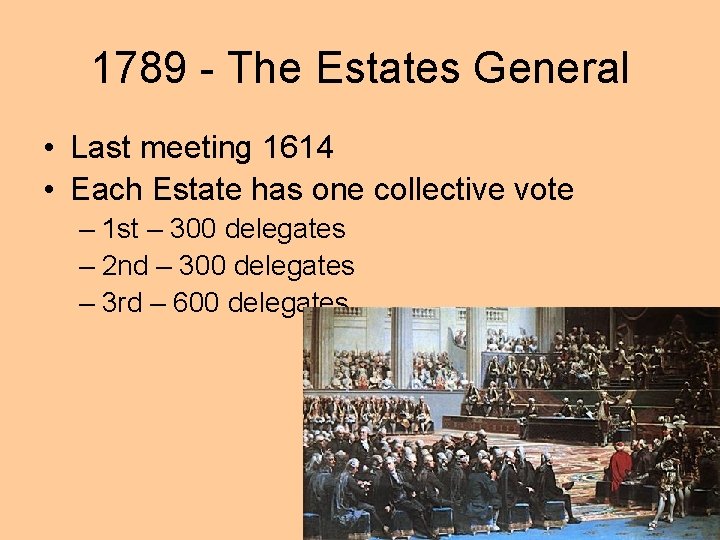
1789 - The Estates General • Last meeting 1614 • Each Estate has one collective vote – 1 st – 300 delegates – 2 nd – 300 delegates – 3 rd – 600 delegates
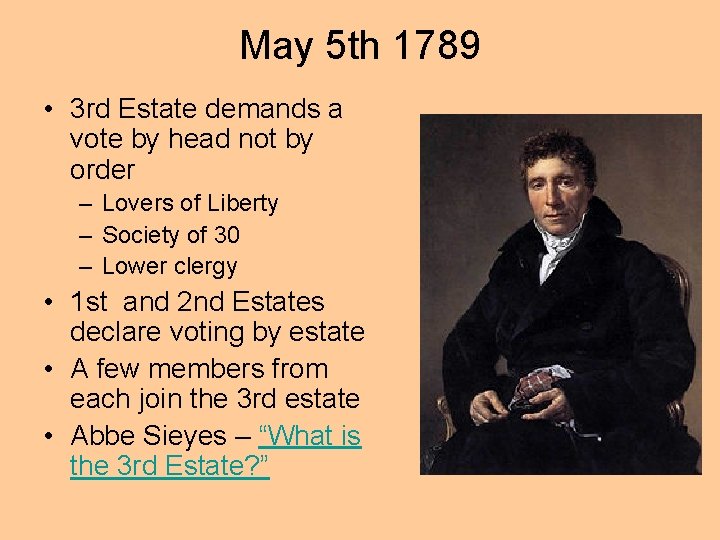
May 5 th 1789 • 3 rd Estate demands a vote by head not by order – Lovers of Liberty – Society of 30 – Lower clergy • 1 st and 2 nd Estates declare voting by estate • A few members from each join the 3 rd estate • Abbe Sieyes – “What is the 3 rd Estate? ”
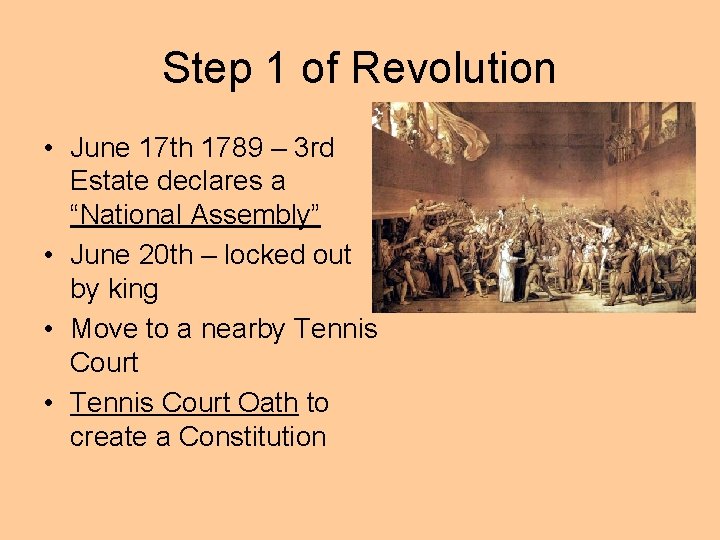
Step 1 of Revolution • June 17 th 1789 – 3 rd Estate declares a “National Assembly” • June 20 th – locked out by king • Move to a nearby Tennis Court • Tennis Court Oath to create a Constitution
Kings Response • Fears a 3 rd estate constitution • Sends delegates from 1 st and 2 nd estates to National Assembly • Orders 18, 000 soldiers into Paris to keep order
People’s Response “First Wave” of Revolution – Bastille – Great Fear
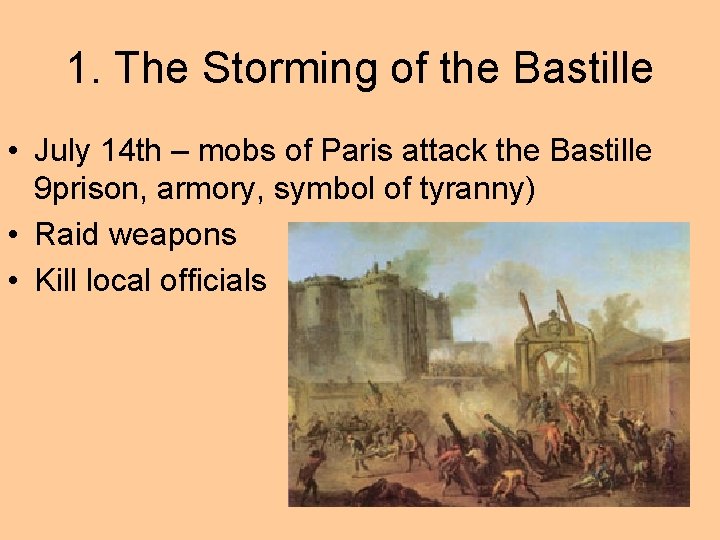
1. The Storming of the Bastille • July 14 th – mobs of Paris attack the Bastille 9 prison, armory, symbol of tyranny) • Raid weapons • Kill local officials
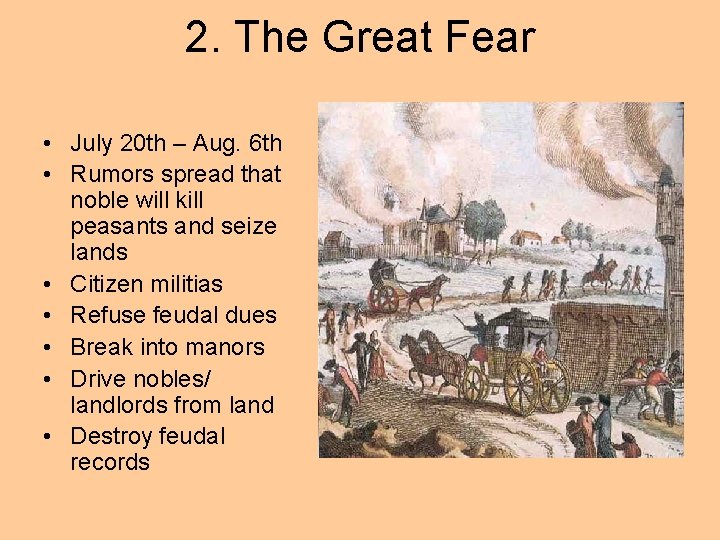
2. The Great Fear • July 20 th – Aug. 6 th • Rumors spread that noble will kill peasants and seize lands • Citizen militias • Refuse feudal dues • Break into manors • Drive nobles/ landlords from land • Destroy feudal records
Cahiers • Grievances written by the 3 rd Estate that they wanted reformed
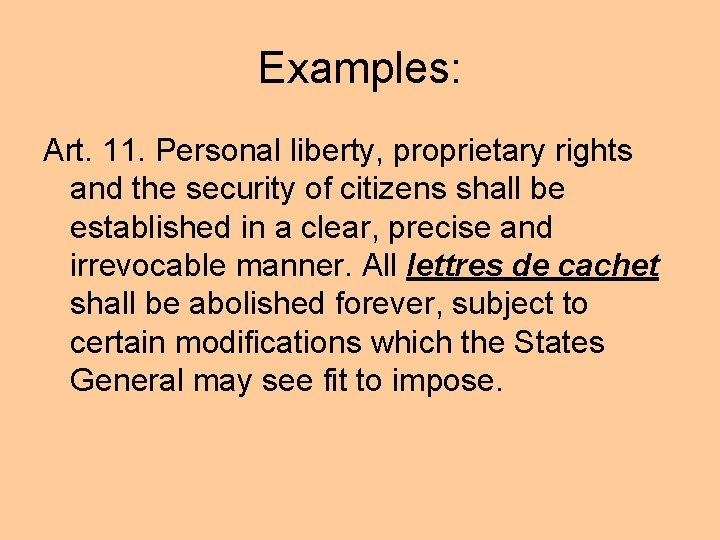
Examples: Art. 11. Personal liberty, proprietary rights and the security of citizens shall be established in a clear, precise and irrevocable manner. All lettres de cachet shall be abolished forever, subject to certain modifications which the States General may see fit to impose.
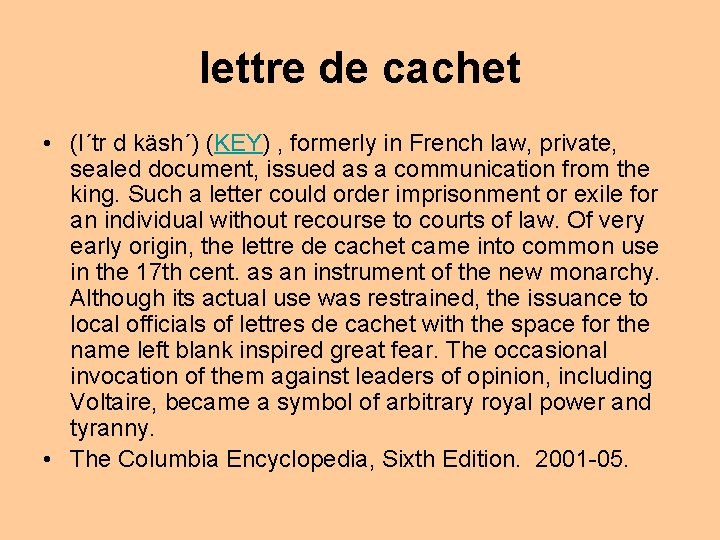
lettre de cachet • (l´tr d käsh´) (KEY) , formerly in French law, private, sealed document, issued as a communication from the king. Such a letter could order imprisonment or exile for an individual without recourse to courts of law. Of very early origin, the lettre de cachet came into common use in the 17 th cent. as an instrument of the new monarchy. Although its actual use was restrained, the issuance to local officials of lettres de cachet with the space for the name left blank inspired great fear. The occasional invocation of them against leaders of opinion, including Voltaire, became a symbol of arbitrary royal power and tyranny. • The Columbia Encyclopedia, Sixth Edition. 2001 -05.
• Art. 12. And to remove forever the possibility of injury to the personal and proprietary rights of Frenchmen, the jury system shall be introduced in all criminal cases, and in civil cases for the determination of fact, in all the courts of the realm. • Art. 15. A wider liberty of the press shall be accorded, with this provision alone: that all manuscripts sent to the printer shall be signed by the author, who shall be obliged to disclose his identity and bear the responsibility of his work; • Art. 21. No tax shall be legal unless accepted by the representatives of the people and sanctioned by the king. • Art. 22. Since all Frenchmen receive the same advantage from the government, and are equally interested in its maintenance, they ought to be placed upon the same footing in the matter of taxation. • Art. 23. All taxes now in operation are contrary to these principles and for the most part vexatious, oppressive and humiliating to the people. They ought to be abolished as soon as possible, and replaced by others common to the three orders and to all classes of citizens, without exception.
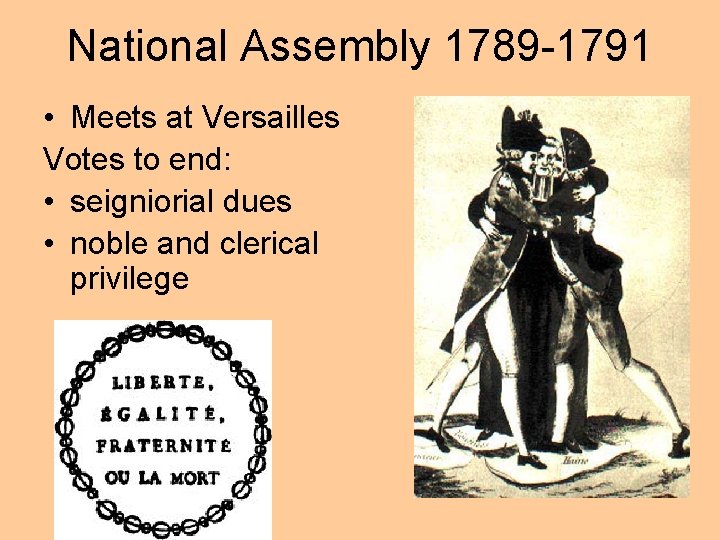
National Assembly 1789 -1791 • Meets at Versailles Votes to end: • seigniorial dues • noble and clerical privilege
Declaration of the Rights of Man and of the Citizen – August 26 th 1789 • • Access to govt. office based on talent Equality for men under law Restriction of king’s powers Freedom of speech Citizen participation in govt. Leaves out the ladies Olympe de Gouge write Do. Ro. W &FC – ignored by NA King ignores all changes by NA
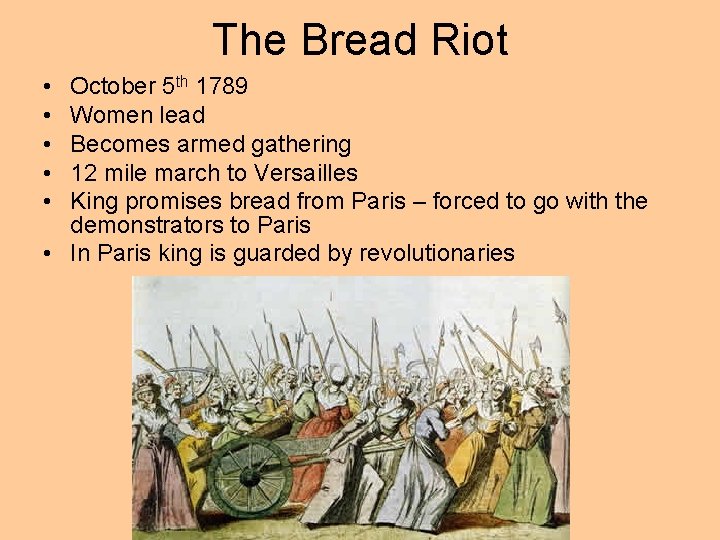
The Bread Riot • • • October 5 th 1789 Women lead Becomes armed gathering 12 mile march to Versailles King promises bread from Paris – forced to go with the demonstrators to Paris • In Paris king is guarded by revolutionaries
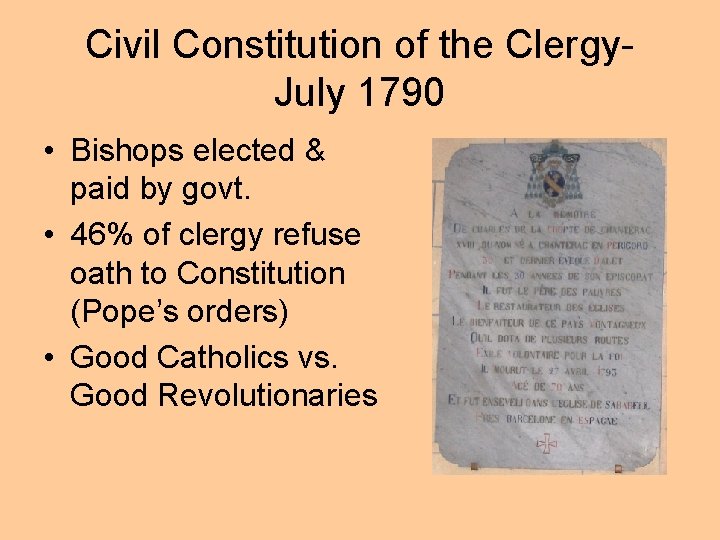
Civil Constitution of the Clergy. July 1790 • Bishops elected & paid by govt. • 46% of clergy refuse oath to Constitution (Pope’s orders) • Good Catholics vs. Good Revolutionaries
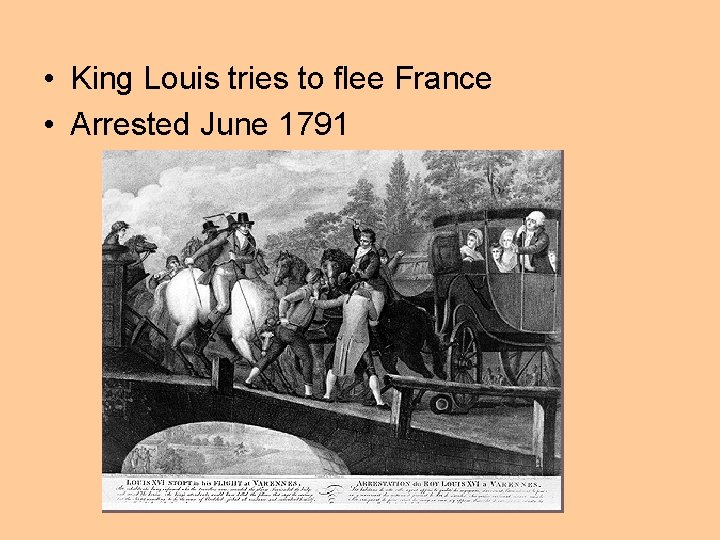
• King Louis tries to flee France • Arrested June 1791
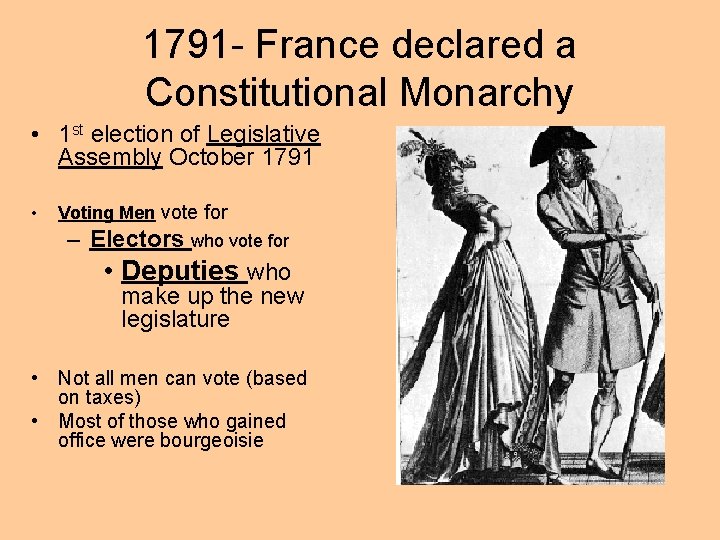
1791 - France declared a Constitutional Monarchy • 1 st election of Legislative Assembly October 1791 • Voting Men vote for – Electors who vote for • Deputies who make up the new legislature • Not all men can vote (based on taxes) • Most of those who gained office were bourgeoisie
Foreign Relations • Declaration of Pillnitz – Aug 1791 – Count of Artois (later Charles X) – Emperor Leopold of Aus. – King Frederick II of Prus. – Called for monarchies of Europe to help the king of France strengthen the monarchy • Legislative Assembly declares war on Austria 1792 • Other nations follow
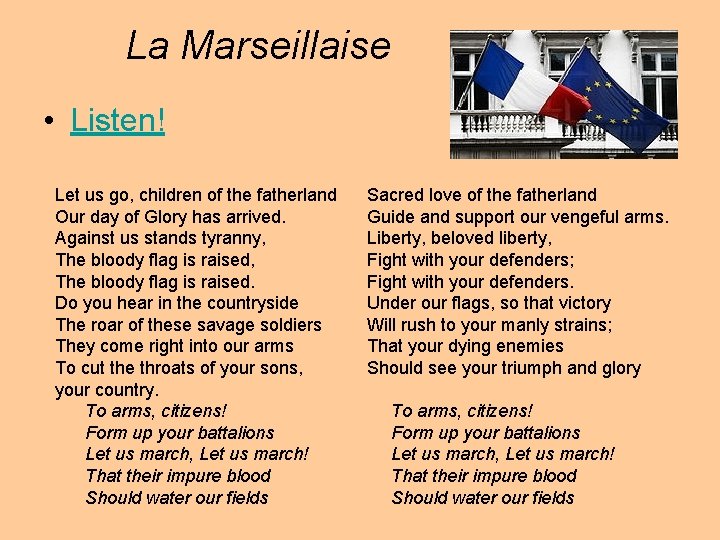
La Marseillaise • Listen! Let us go, children of the fatherland Our day of Glory has arrived. Against us stands tyranny, The bloody flag is raised. Do you hear in the countryside The roar of these savage soldiers They come right into our arms To cut the throats of your sons, your country. To arms, citizens! Form up your battalions Let us march, Let us march! That their impure blood Should water our fields Sacred love of the fatherland Guide and support our vengeful arms. Liberty, beloved liberty, Fight with your defenders; Fight with your defenders. Under our flags, so that victory Will rush to your manly strains; That your dying enemies Should see your triumph and glory To arms, citizens! Form up your battalions Let us march, Let us march! That their impure blood Should water our fields
Interested Factions
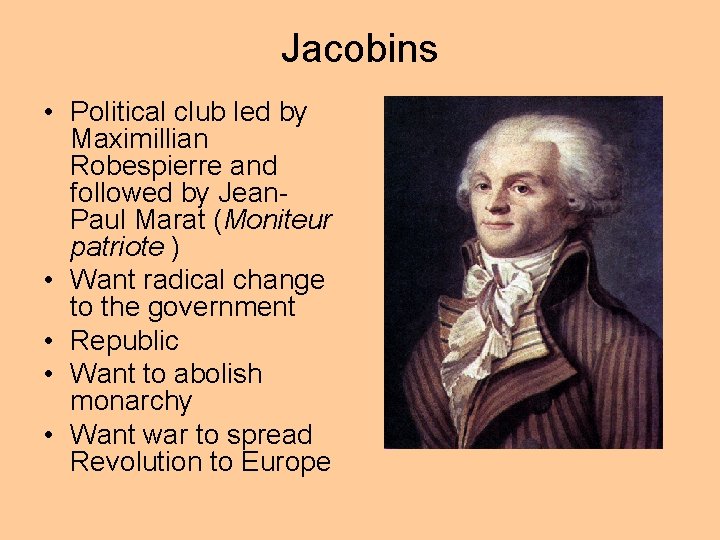
Jacobins • Political club led by Maximillian Robespierre and followed by Jean. Paul Marat (Moniteur patriote ) • Want radical change to the government • Republic • Want to abolish monarchy • Want war to spread Revolution to Europe
Girondins • Moderates • Favor compromise / parliamentary democracy with a constitutional monarchy • Tend to come from country sides
Émigrés • Nobles who have fled France • Hope the war will bring back old regime
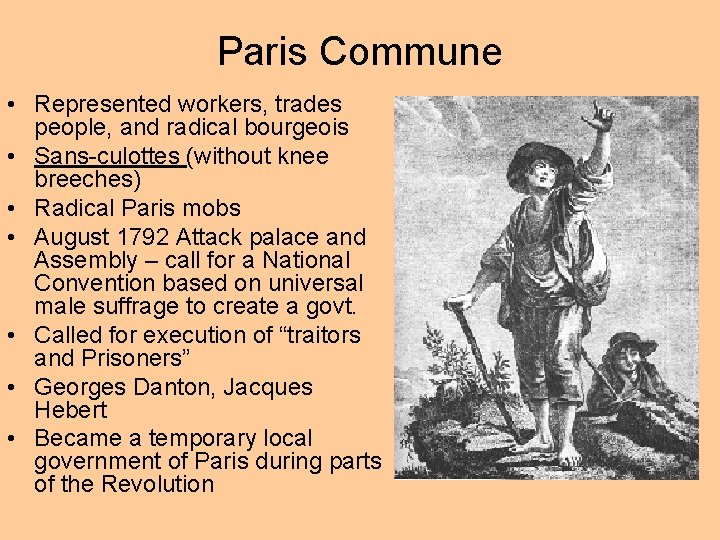
Paris Commune • Represented workers, trades people, and radical bourgeois • Sans-culottes (without knee breeches) • Radical Paris mobs • August 1792 Attack palace and Assembly – call for a National Convention based on universal male suffrage to create a govt. • Called for execution of “traitors and Prisoners” • Georges Danton, Jacques Hebert • Became a temporary local government of Paris during parts of the Revolution
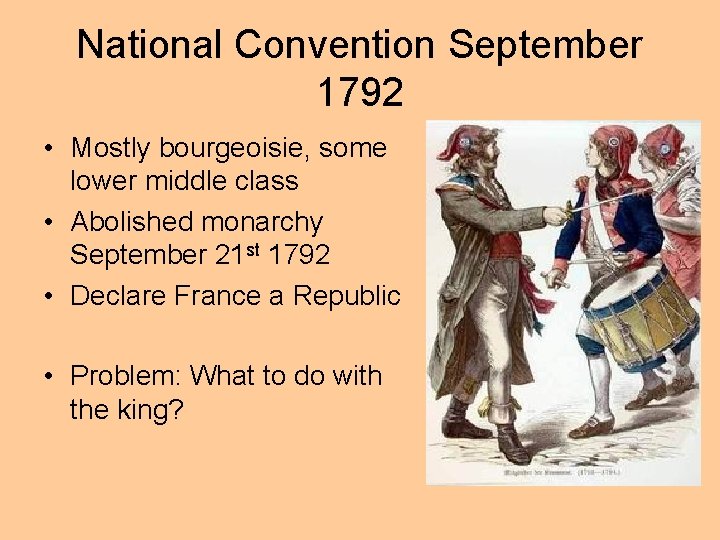
National Convention September 1792 • Mostly bourgeoisie, some lower middle class • Abolished monarchy September 21 st 1792 • Declare France a Republic • Problem: What to do with the king?
The Mountain and the Plain • Groupings of the deputies • benches in front of the convention president, were known as the Plain and occupied by moderates • Benches on his left were ranked more steeply The Jacobins took these seats - resembling a mountain. • Mountain acknowledged Robespierre as its leader.
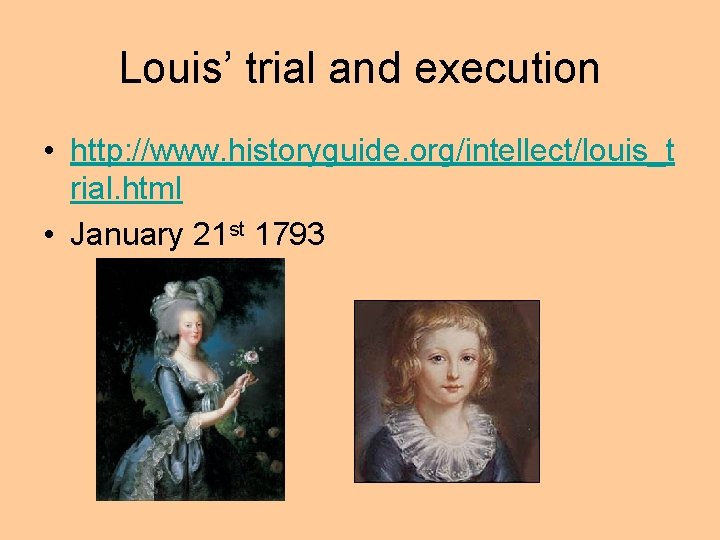
Louis’ trial and execution • http: //www. historyguide. org/intellect/louis_t rial. html • January 21 st 1793
June 1793 • Paris Commune invades convention and arrests / executes leading Girondins • Many in countryside revolt (Vendee in packet) • Countries in arms against France: Aus. Prus. Sp. Port. Brit. Neth.
The Committee of Public Safety (Danton / Robespierre) • 1793 -94 • Goal 1 : fight enemies without and within – Conscription, anonymous spies largest army in Europe • Goal 2: Create a “republic of virtue” – Virtuous citizens, universal education, slavery abolished • Goal 3: Wipe out old French traditions based on Church and Monarchy – Republican Calendar – Temples of Reason
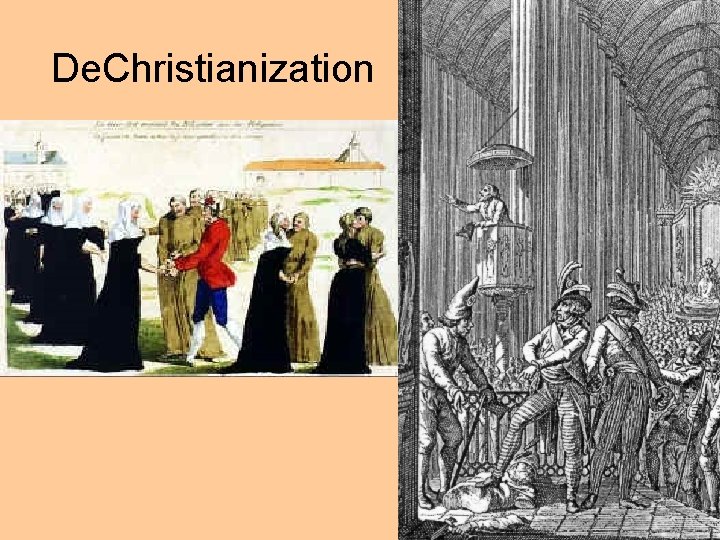
De. Christianization
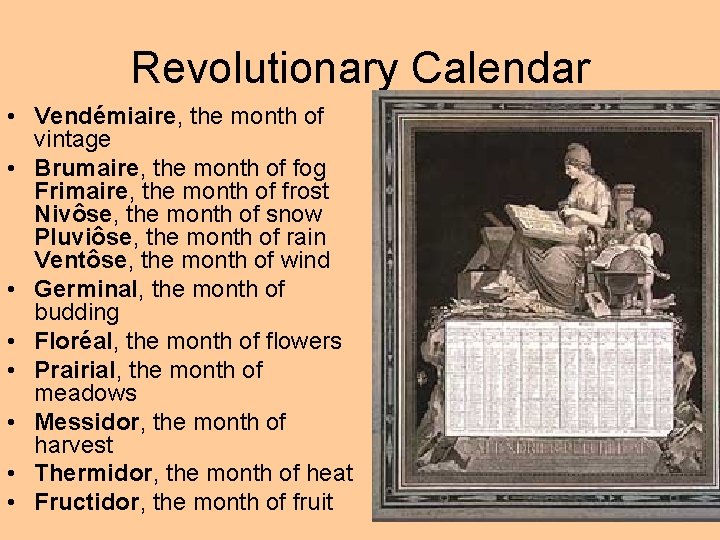
Revolutionary Calendar • Vendémiaire, the month of vintage • Brumaire, the month of fog Frimaire, the month of frost Nivôse, the month of snow Pluviôse, the month of rain Ventôse, the month of wind • Germinal, the month of budding • Floréal, the month of flowers • Prairial, the month of meadows • Messidor, the month of harvest • Thermidor, the month of heat • Fructidor, the month of fruit
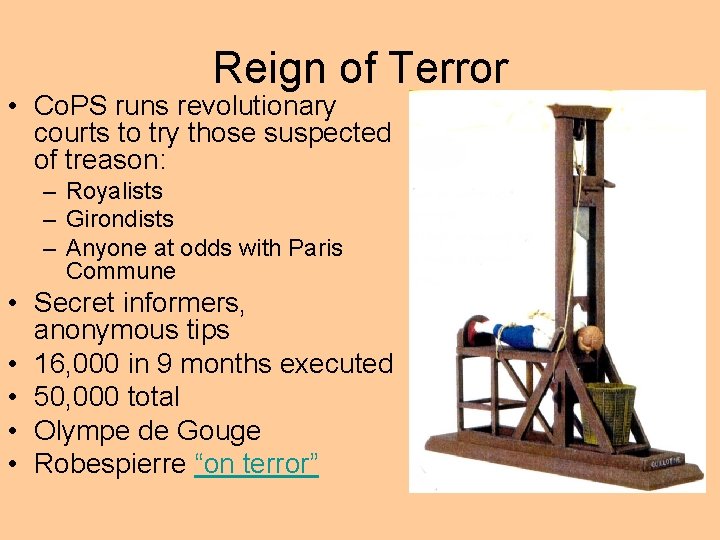
Reign of Terror • Co. PS runs revolutionary courts to try those suspected of treason: – Royalists – Girondists – Anyone at odds with Paris Commune • Secret informers, anonymous tips • 16, 000 in 9 months executed • 50, 000 total • Olympe de Gouge • Robespierre “on terror”
Victims • • • 8% nobles 25% middle class 6 % clergy 60% peasants http: //www. unitedstreaming. com/search/as set. Detail. cfm? guid. Asset. ID=645800 A 00 B 13 -4161 -91 D 4 -D 316 C 1 AB 628 C
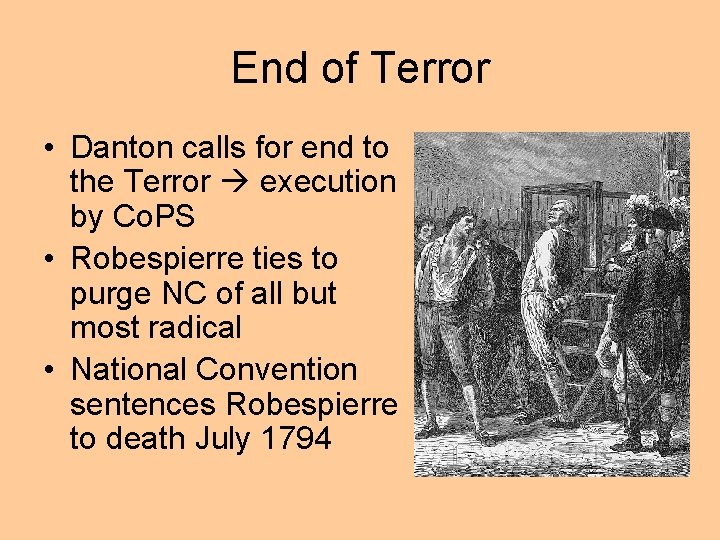
End of Terror • Danton calls for end to the Terror execution by Co. PS • Robespierre ties to purge NC of all but most radical • National Convention sentences Robespierre to death July 1794
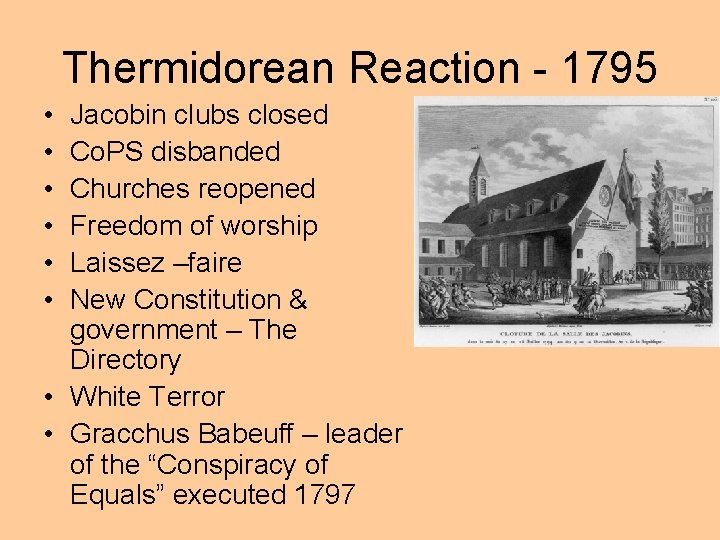
Thermidorean Reaction - 1795 • • • Jacobin clubs closed Co. PS disbanded Churches reopened Freedom of worship Laissez –faire New Constitution & government – The Directory • White Terror • Gracchus Babeuff – leader of the “Conspiracy of Equals” executed 1797
Constitution of 1795 • 2 Houses • Council of 500 - initiate legislation • Elders (250) accept or reject and elect the 5 Directors • These reps are chosen by Electors (30, 000) who are chosen by male taxpayers over 21
Problems • Perceived as decadent by radicals • Not reactionary enough by royalists • Rebellion against it put down by Napoleon Bonaparte 1795 • Continues war • Unable to solve economic problems in France • Napoleon overthrows Directory 1799 • “I am the revolution!” “The revolution is over!”
The Consulate!