
The Oil Industry Produced by Peter Hollamby This

The Oil Industry Produced by Peter Hollamby. This presentation includes Flash animations running within Power. Point. For this to work the following will need to be installed on the PC: Macromedia Flash from www. macromedia. com/downloads/ Swiff Player from www. globfx. com/products/swfplayer/ An avi format video clip is also included. 1
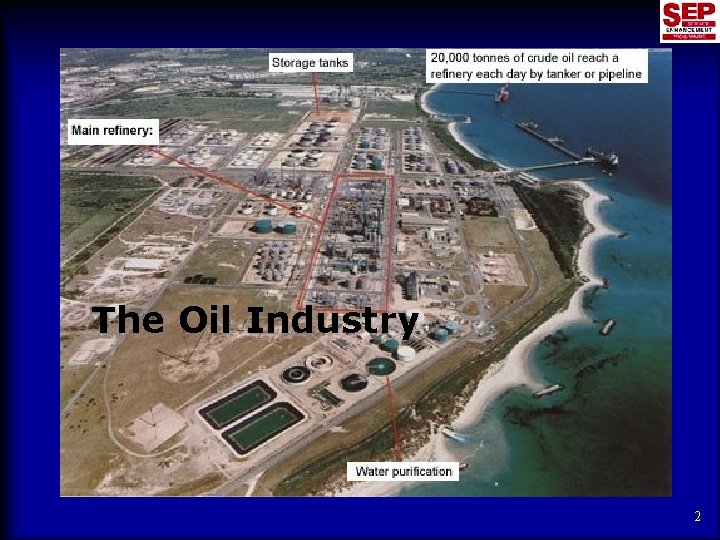
Left-click the mouse once to start The Oil Industry 2
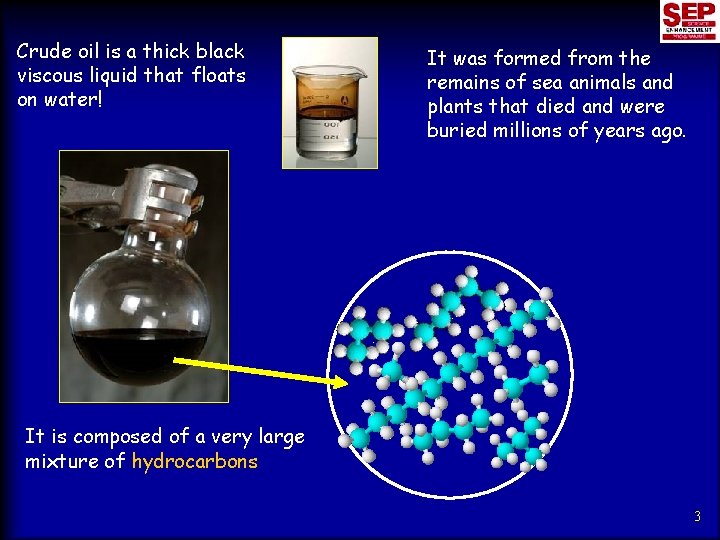
Crude oil is a thick black viscous liquid that floats on water! It was formed from the remains of sea animals and plants that died and were buried millions of years ago. It is composed of a very large mixture of hydrocarbons 3
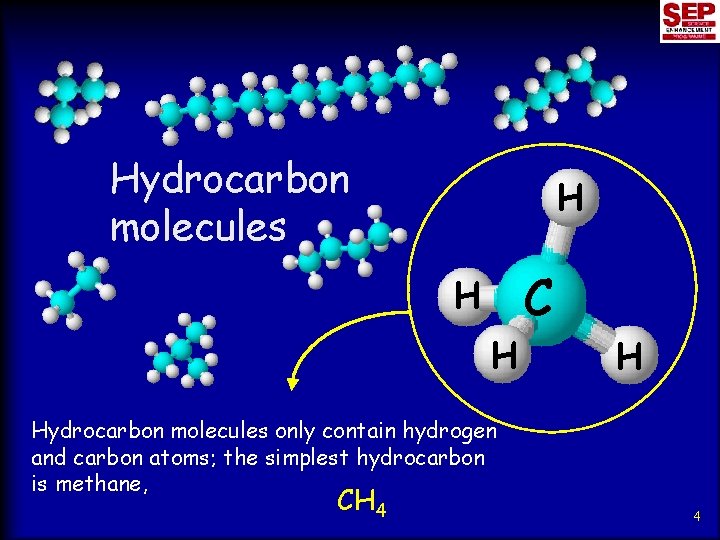
Hydrocarbon molecules H H H C H Hydrocarbon molecules only contain hydrogen and carbon atoms; the simplest hydrocarbon is methane, CH 4 4
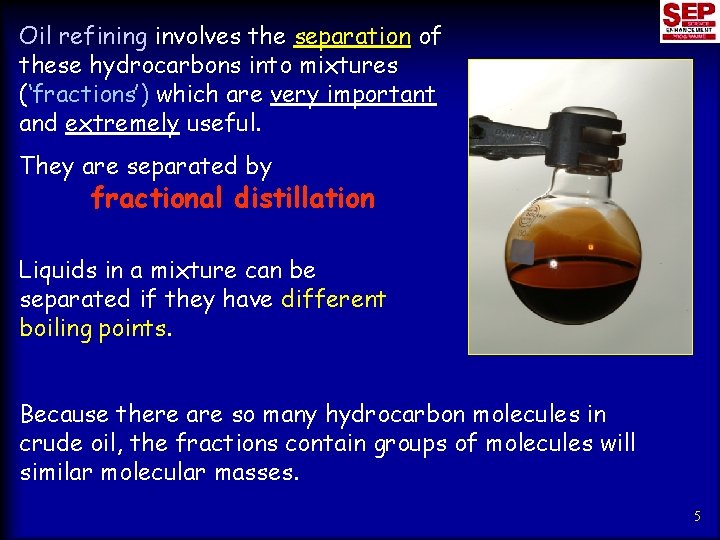
Oil refining involves the separation of these hydrocarbons into mixtures (‘fractions’) which are very important and extremely useful. They are separated by fractional distillation Liquids in a mixture can be separated if they have different boiling points. Because there are so many hydrocarbon molecules in crude oil, the fractions contain groups of molecules will similar molecular masses. 5
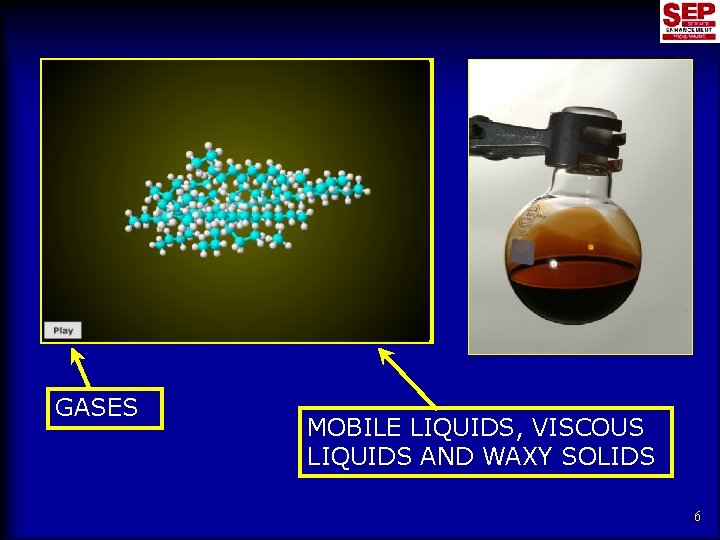
GASES MOBILE LIQUIDS, VISCOUS LIQUIDS AND WAXY SOLIDS 6
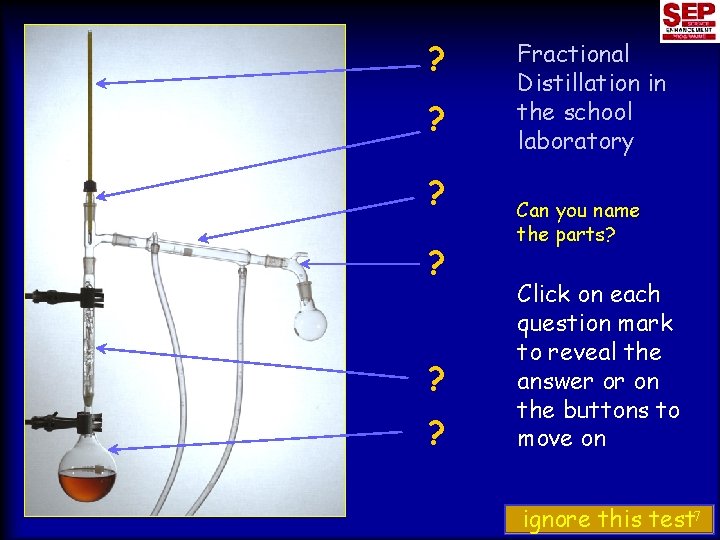
? ? ? Fractional Distillation in the school laboratory Can you name the parts? Click on each question mark to reveal the answer or on the buttons to move on ignore this test 7
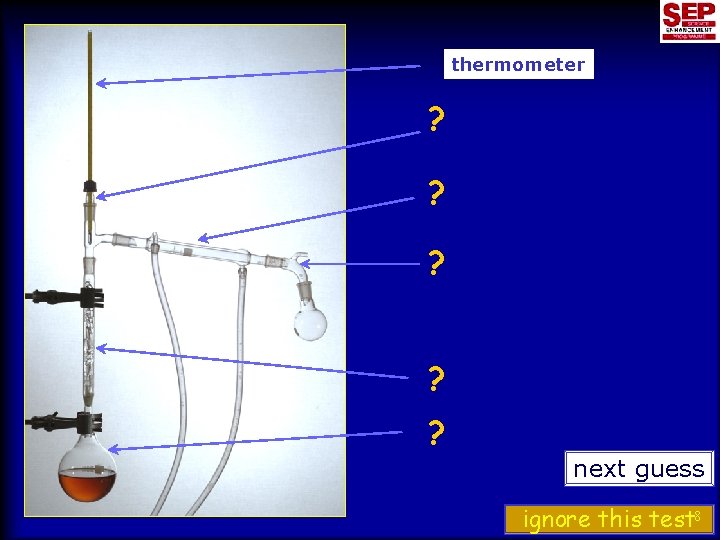
thermometer ? ? ? next guess ignore this test 8
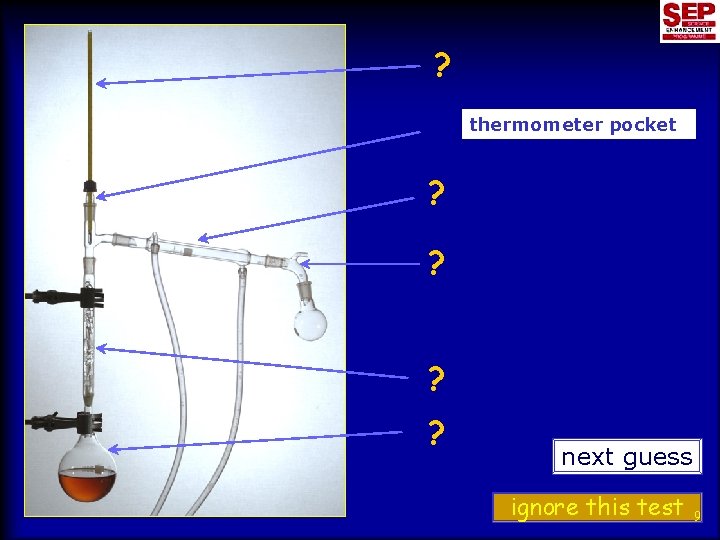
? thermometer pocket ? ? next guess ignore this test 9
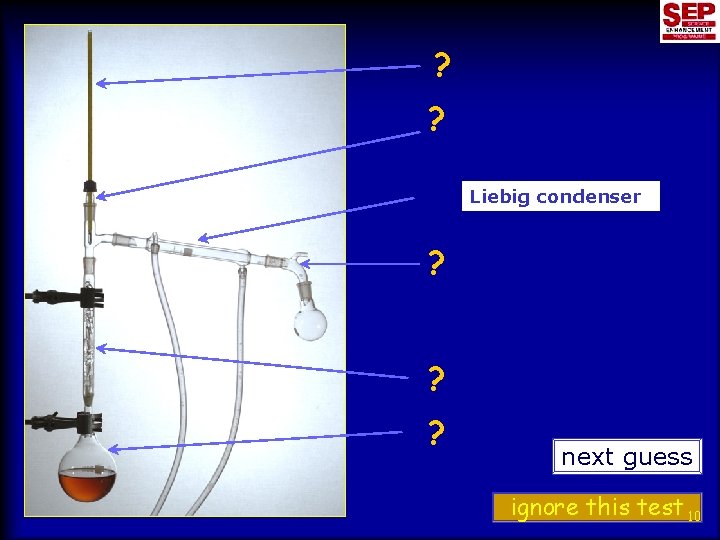
? ? Liebig condenser ? ? ? next guess ignore this test 10
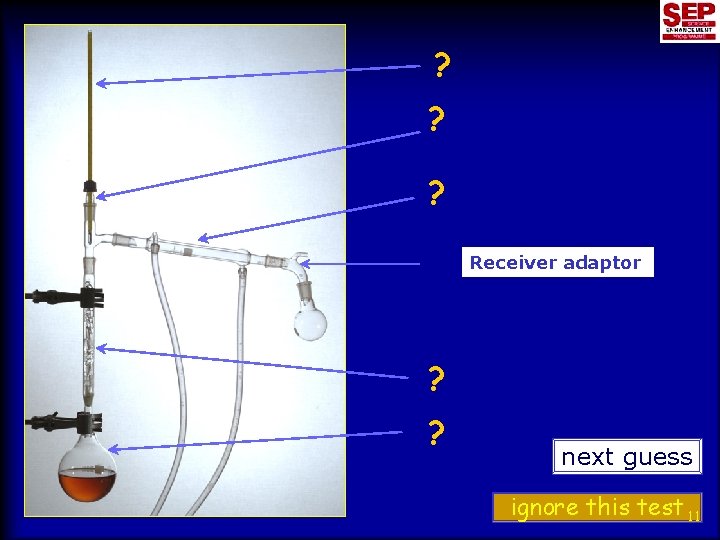
? ? ? Receiver adaptor ? ? next guess ignore this test 11
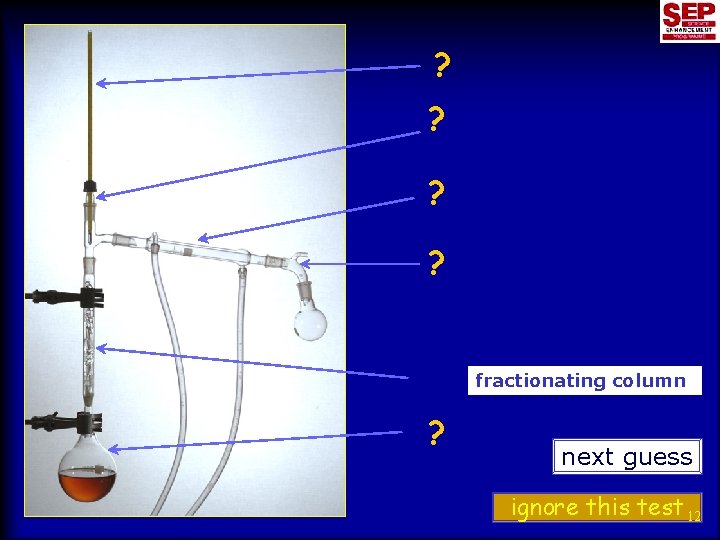
? ? fractionating column ? next guess ignore this test 12
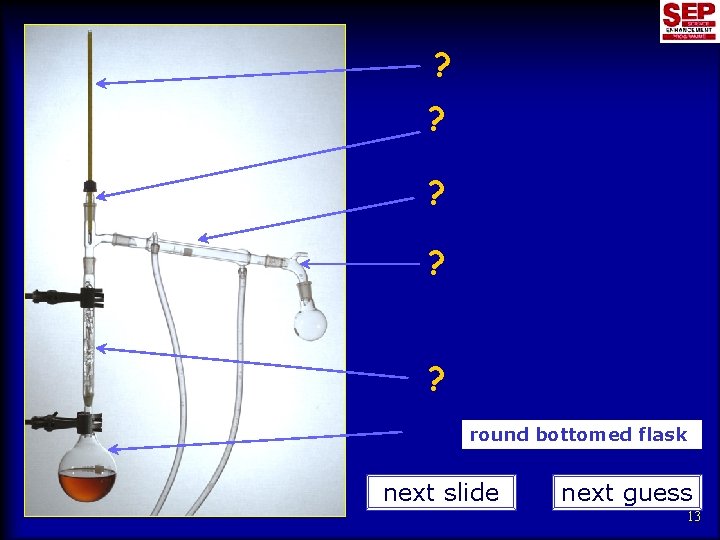
? ? ? round bottomed flask next slide next guess 13
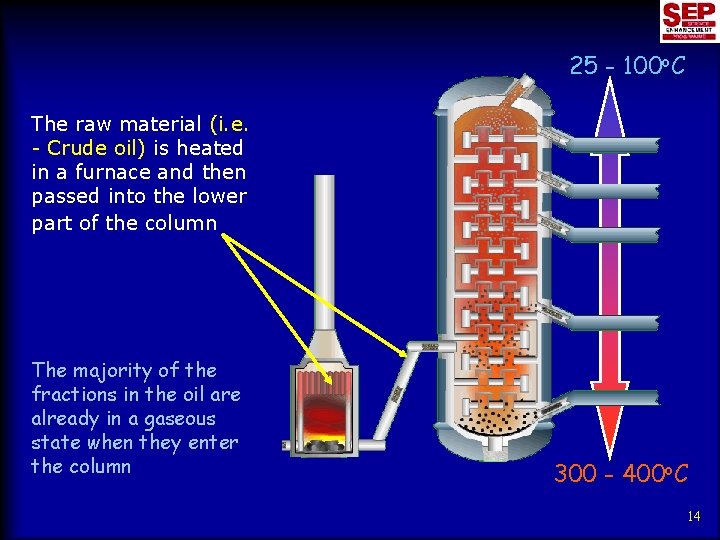
25 - 100 o. C The raw material (i. e. - Crude oil) is heated in a furnace and then passed into the lower part of the column The majority of the fractions in the oil are already in a gaseous state when they enter the column 300 - 400 o. C 14
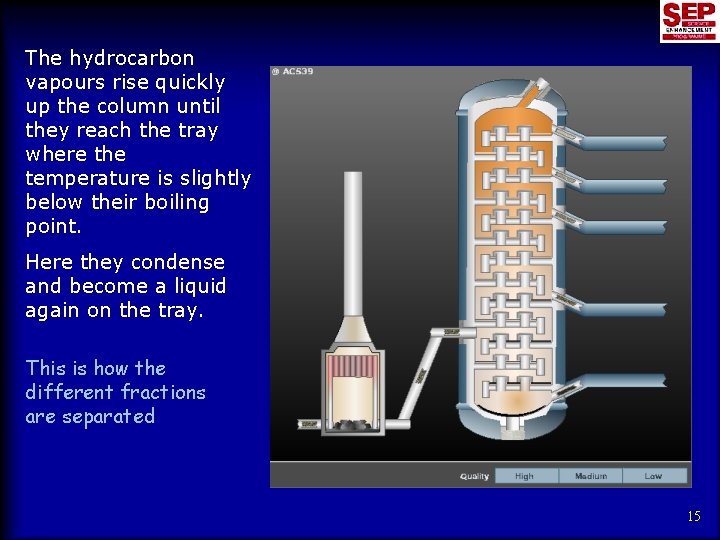
The hydrocarbon vapours rise quickly up the column until they reach the tray where the temperature is slightly below their boiling point. Here they condense and become a liquid again on the tray. This is how the different fractions are separated 15
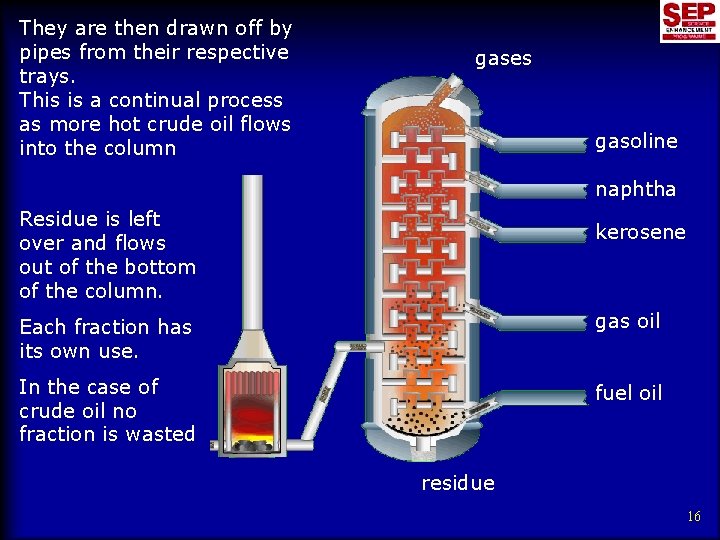
They are then drawn off by pipes from their respective trays. This is a continual process as more hot crude oil flows into the column gases gasoline naphtha Residue is left over and flows out of the bottom of the column. kerosene Each fraction has its own use. gas oil In the case of crude oil no fraction is wasted fuel oil residue 16
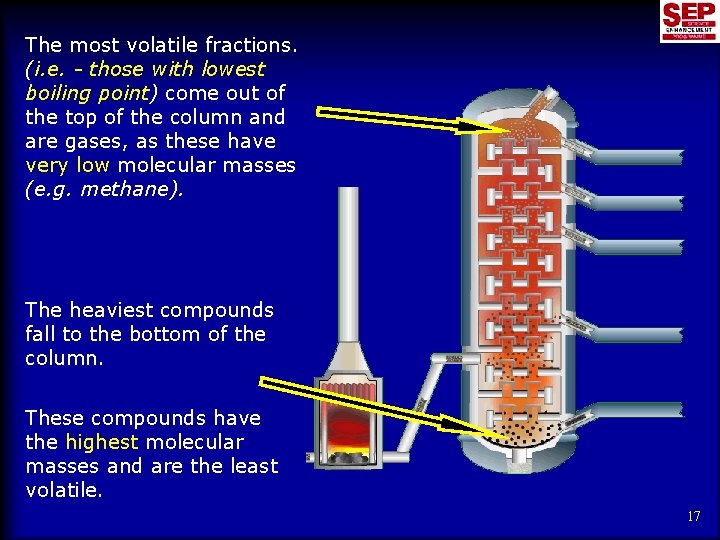
The most volatile fractions. (i. e. - those with lowest boiling point) come out of the top of the column and are gases, as these have very low molecular masses (e. g. methane). The heaviest compounds fall to the bottom of the column. These compounds have the highest molecular masses and are the least volatile. 17
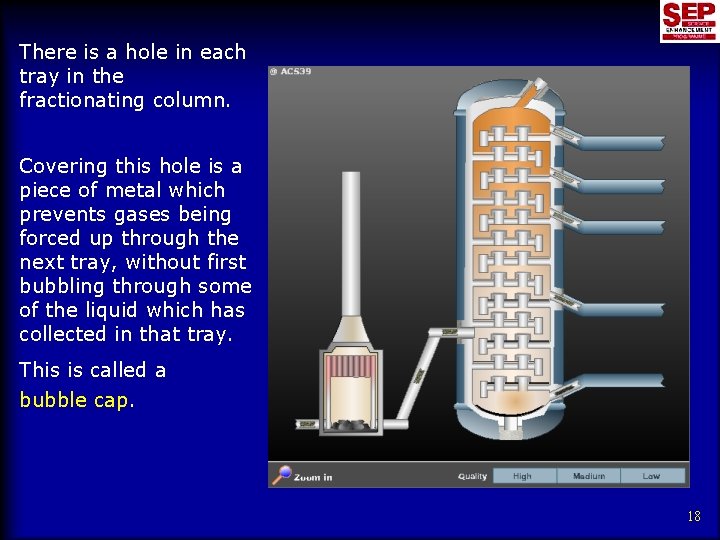
There is a hole in each tray in the fractionating column. Covering this hole is a piece of metal which prevents gases being forced up through the next tray, without first bubbling through some of the liquid which has collected in that tray. This is called a bubble cap. 18
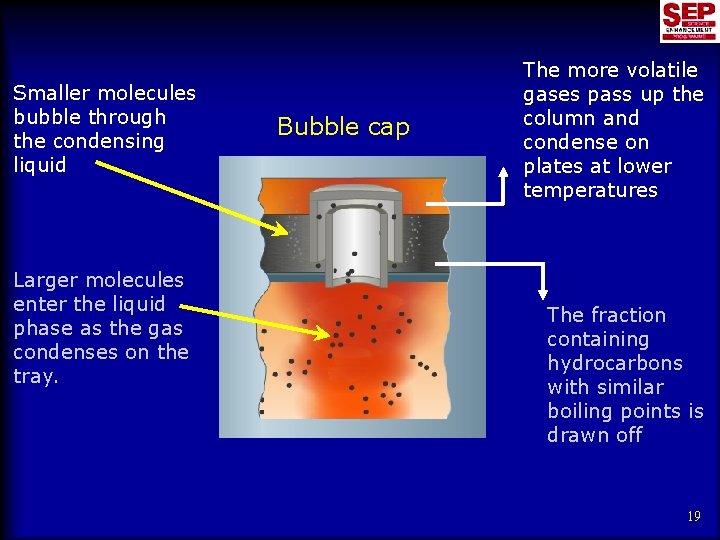
Smaller molecules bubble through the condensing liquid Larger molecules enter the liquid phase as the gas condenses on the tray. Bubble cap The more volatile gases pass up the column and condense on plates at lower temperatures The fraction containing hydrocarbons with similar boiling points is drawn off 19
To watch a movie on fractional distillation, click on the box below 20
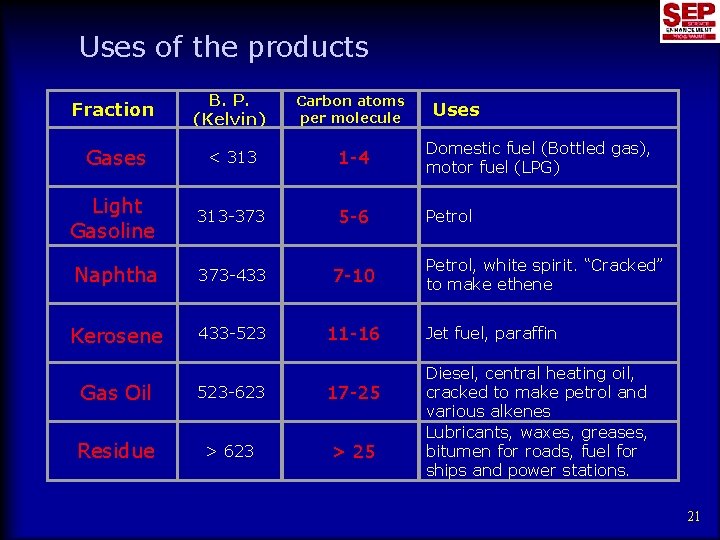
Uses of the products Fraction B. P. (Kelvin) Carbon atoms per molecule Gases < 313 1 -4 Domestic fuel (Bottled gas), motor fuel (LPG) 313 -373 5 -6 Petrol Naphtha 373 -433 7 -10 Kerosene 433 -523 11 -16 Light Gasoline Gas Oil Residue 523 -623 17 -25 > 623 > 25 Uses Petrol, white spirit. “Cracked” to make ethene Jet fuel, paraffin Diesel, central heating oil, cracked to make petrol and various alkenes Lubricants, waxes, greases, bitumen for roads, fuel for ships and power stations. 21
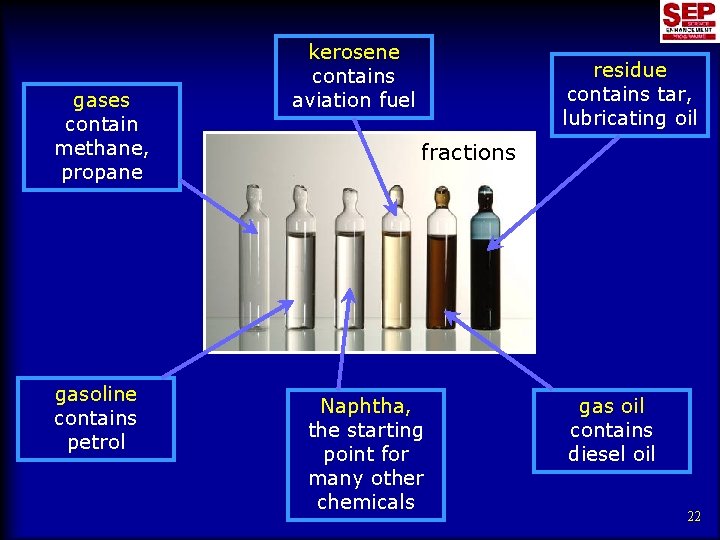
gases contain methane, propane gasoline contains petrol kerosene contains aviation fuel residue contains tar, lubricating oil fractions Naphtha, the starting point for many other chemicals gas oil contains diesel oil 22
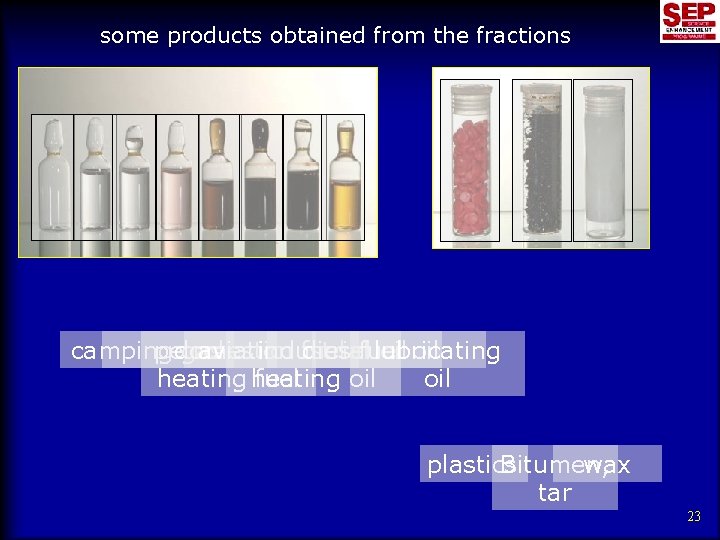
some products obtained from the fractions camping gas petrol domestic aviation fuel industrial diesel oil fuel oil lubricating heating fuel heating oil plastics wax Bitumen, tar 23
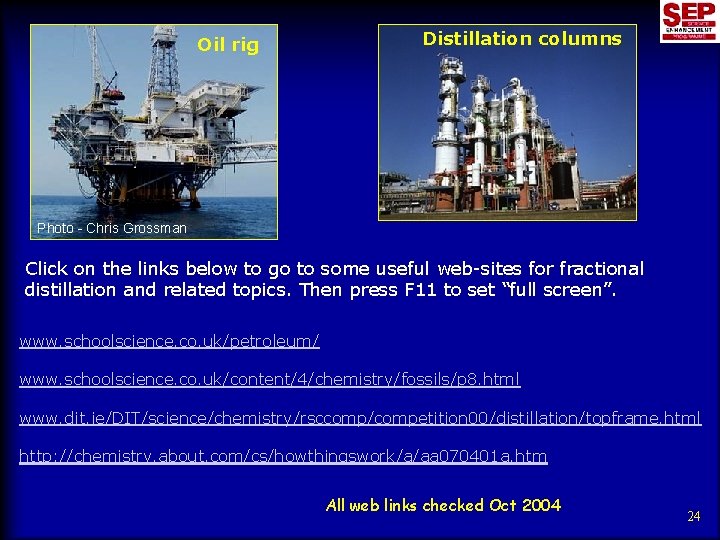
Oil rig Distillation columns Photo - Chris Grossman Click on the links below to go to some useful web-sites for fractional distillation and related topics. Then press F 11 to set “full screen”. www. schoolscience. co. uk/petroleum/ www. schoolscience. co. uk/content/4/chemistry/fossils/p 8. html www. dit. ie/DIT/science/chemistry/rsccomp/competition 00/distillation/topframe. html http: //chemistry. about. com/cs/howthingswork/a/aa 070401 a. htm All web links checked Oct 2004 24
- Slides: 24