
The Odyssey An Epic Poem by Homer The
The Odyssey An Epic Poem by Homer
The Iliad and the Odyssey These are the titles of two epic poems written between 700 and 600 B. C. E. They are believed to be the work of a blind poet, Homer. However, most people believe that Homer only recorded the poems and was not the original creator. At this time, most people couldn’t read or write. For entertainment, men called bards or minstrels travelled from city to city telling stories about warriors and gods. Homer was one of these bards.
The Iliad and The Odyssey The Iliad tells the story of the Trojan War, which occurred roughly between 1194– 1184 B. C. (Part 1) The Odyssey tells the story of a warrior named Odysseus as he journeys home to Ithaca. (Part 2)
Gods and Goddesses The Greeks were polytheistic; they believed in many gods and goddesses. These gods and goddesses lived on Mount Olympus (think of the Disney movie Hercules) and often behaved worse than humans. They were generally selfish and vindictive, traits that got Odysseus into trouble. Greeks also believed in Muses, nine daughters of Zeus, that gave inspiration to poets, musicians, and artists.
Key Gods/Goddesses Athena-goddess of wisdom who helps Odysseus Poseidon-god of the sea/sea travel who works against Odysseus Zeus-king of gods and men who presides on Mount Olympus Hermes-messenger of the gods
Key Mythical Beings Calypso-sea nymph who falls in love with Odysseus Polyphemus- Cyclops (one-eyed giant) who is Poseidon’s son Circe-beautiful witch-goddess Tiresias-blind Theban (from the city of Thebes) prophet who lives in the Underworld
Setting Ancient Greece Circa 1100 B. C. Just after the Trojan War
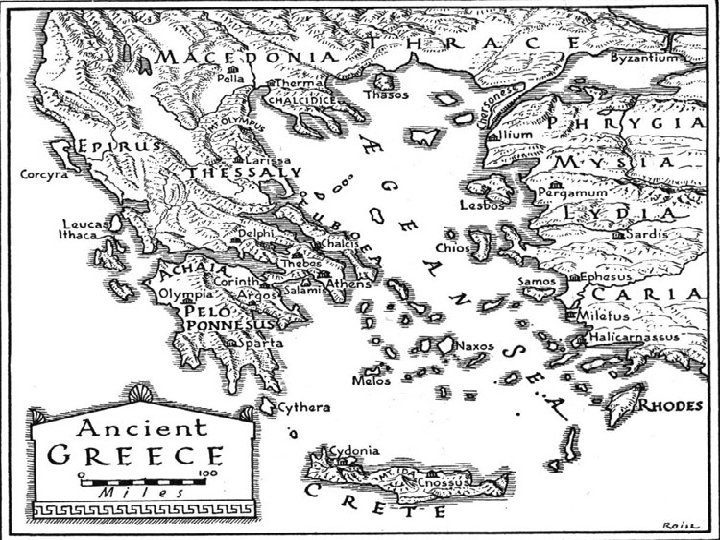
Map of Ancient Greece
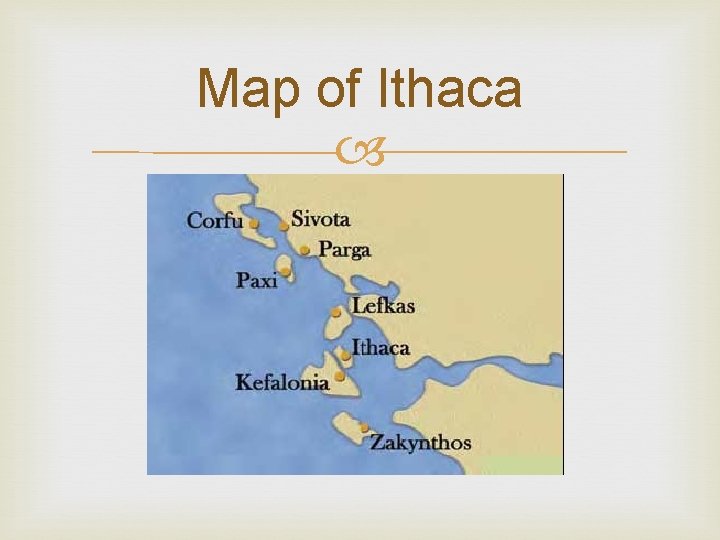
Map of Ithaca
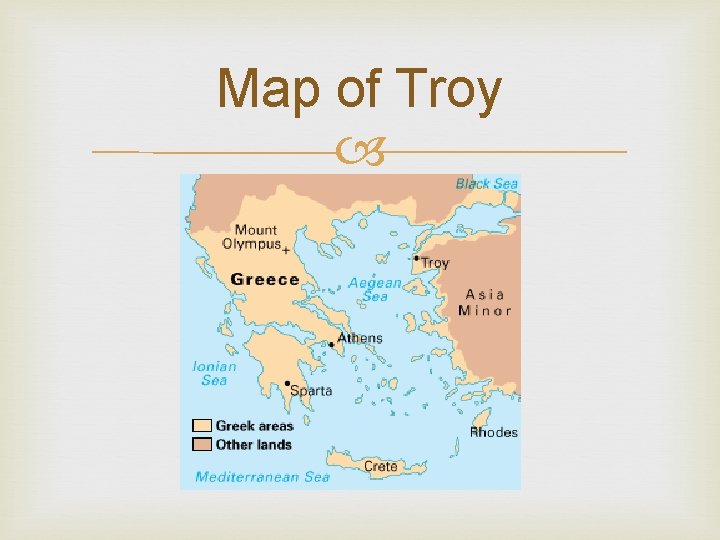
Map of Troy
Greek Cities At the time of the story, Greece did not have a central government. Instead, many different men held power over smaller areas of land. In times of crisis the cities would form armies and fight together against a common enemy (like the Trojans). However, they often fought amongst themselves too. These small kingdoms were the forerunners of the Greek city-states like Sparta and Athens.
The Epic Form Epic—is a long narrative poem that relates important events in the history or folklore of the culture that produced it. Epic hero—is a larger-than-life figure who embodies traits that the culture values (physical strength, bravery, high birth, fame, and battle and leadership skills)
The Epic Form Opening invocation to the Muse Starting the story en media res (in the middle of the action) Lofty style (elegant language) Objective tone (the poet is not emotionally involved) Meter (a fixed rhythmic pattern) Epithet (a characterizing phrase for a person, place, or thing) Epic simile (a long comparison over many lines)
How to Read an Epic Poem Epic poetry is lengthy narrative poem, ordinarily concerning a serious subject containing details of heroic deeds and events significant to a culture or nation. Each indented line indicates a new poetic stanza, or group of lines. Stanzas break up the story into manageable parts for analysis. When you read aloud, pause using normal punctuation. But when you come to the end of a line, only pause if there is punctuation. If there is no punctuation at the end of a line, continue reading like normal.
How to Read an Epic Poem The story is divided into sections called Books. The editor has added in line numbers on the left of the text. These will help you keep up if you get lost. We are reading an abbreviated version, so the editor of our textbook skipped certain parts and summarized them for us in italics. This means that things written in italics were not originally in the story.
Troy
Any Questions? This is a very complicated story! So if you’re having trouble keeping up or understanding, ask for help.
- Slides: 17