
The Odyssey An Epic by Homer Pages 830
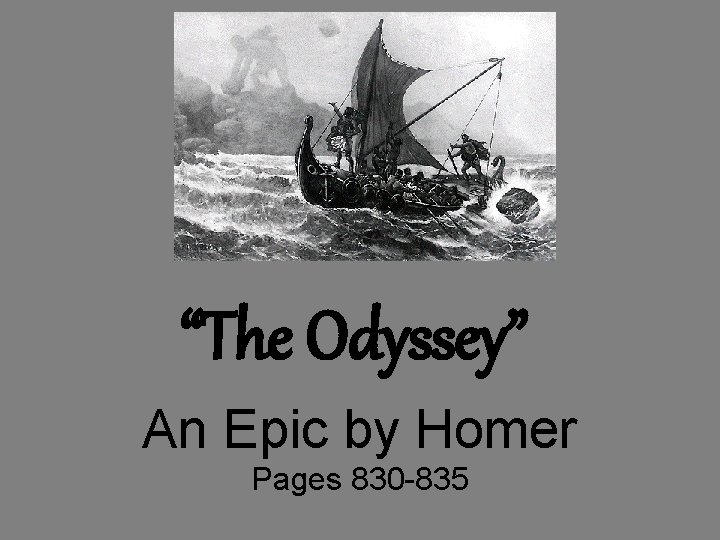
“The Odyssey” An Epic by Homer Pages 830 -835
Epic Vocabulary • Epic: a long narrative poem written about a serious subject. • Myth: a traditional story of anonymous origin that deals with gods, goddesses, heroes, and supernatural events. • Epic Hero: central character in an epic. He is driven by his desire to save his country or its people during a time of crisis. • Archetype: a thing, person, or pattern of circumstances that appears repeatedly in literature.
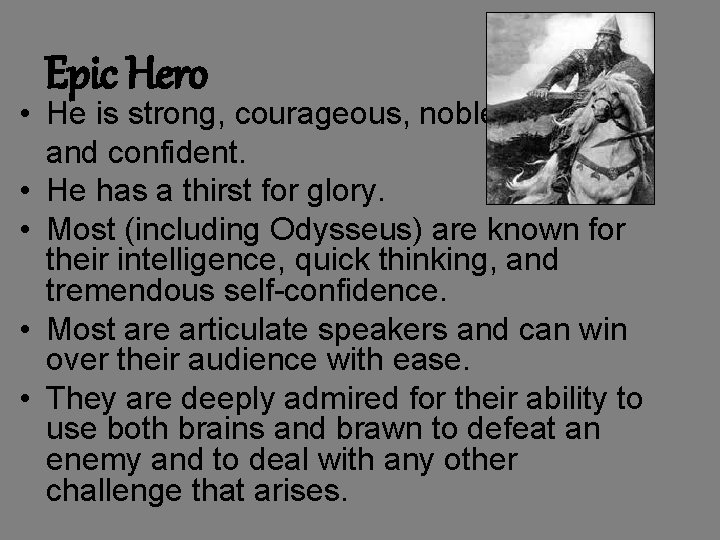
Epic Hero • He is strong, courageous, noble and confident. • He has a thirst for glory. • Most (including Odysseus) are known for their intelligence, quick thinking, and tremendous self-confidence. • Most are articulate speakers and can win over their audience with ease. • They are deeply admired for their ability to use both brains and brawn to defeat an enemy and to deal with any other challenge that arises.
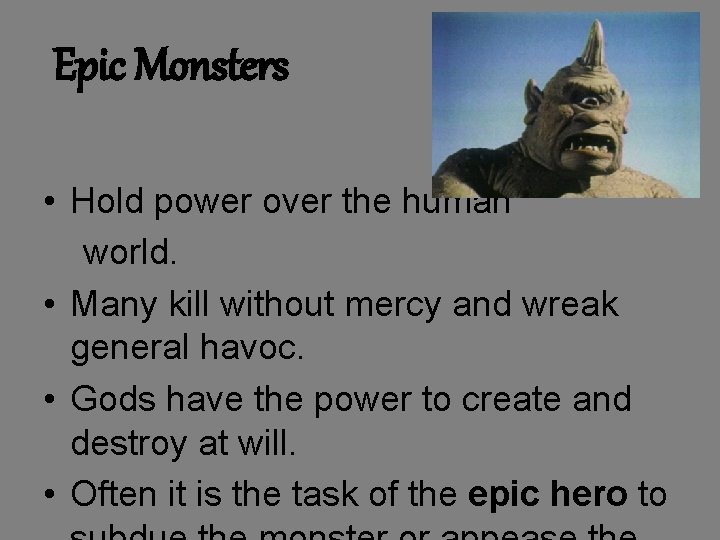
Epic Monsters • Hold power over the human world. • Many kill without mercy and wreak general havoc. • Gods have the power to create and destroy at will. • Often it is the task of the epic hero to
The Art of Oral Poetry • Greek singers recited their poems so that long syllables and short syllables alternated in a regular pattern. • Rhythm was the key…certain phrases worked better than others because they fit in rhythmically in a line of poetry. • Many times the poet uses refrains or lines repeated over and over for effect (this was because it made it easier to
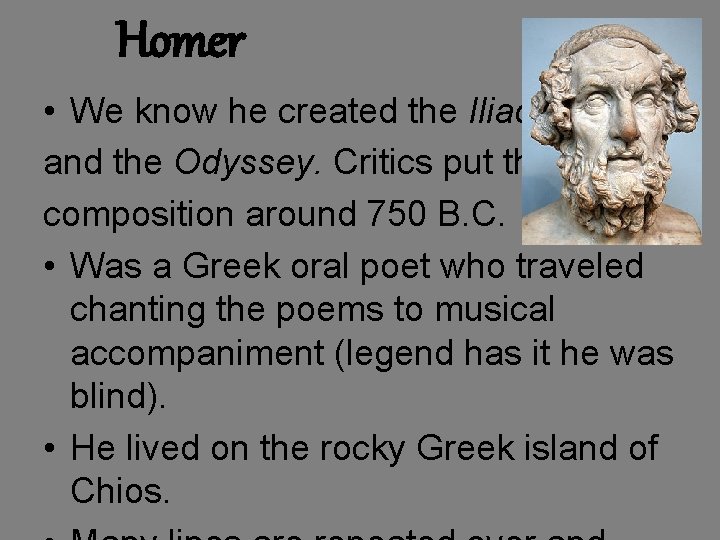
Homer • We know he created the Iliad and the Odyssey. Critics put their composition around 750 B. C. • Was a Greek oral poet who traveled chanting the poems to musical accompaniment (legend has it he was blind). • He lived on the rocky Greek island of Chios.
Homer Continued • He recited them over 2, 700 years ago some time before 700 B. C. • This was the time when the Greeks were developing an alphabet and beginning to write things down on paper called papyrus. • His works were written down LONG after his death. • His epics include famous people from history as well as from legend, myth, and
The Epic • • Long narrative poem Speaker is the narrator who tells the story. Setting is expansive. Main character is a hero or is capable of being heroic. • The action includes extraordinary or superhuman deeds. • Gods or supernatural beings take a part or interest in the action. • Purpose is to teach and inspire the
Epic Narration • Narrated in predictable ways – In an invocation, the poet-narrator begins by stating the tale’s subject and asking for poetic inspiration from a guiding spirit (Muse). – Narrator begins by telling the tale “in the middle of things” describing what is happening after certain important events have already
Epic Narration Continued – Includes speeches by principal characters (including gods and antagonists of the epic hero---who reveal their personalities) – Narrator’s tone and style are formal rather than conversational. – Use of figurative language makes the narrative vivid and exciting for listeners and readers.
Vocabulary • Figurative Language: language that uses figures of speech such as hyperbole, metaphors, similes, and personification. • Epic (Homeric) Simile: extends a comparison with elaborate details that can fill several lines • Epithet: a common epic element that allows the reader to quickly identify the character. Many times they are used over and over in the
- Slides: 11