
The ODA modernisation process Private Sector Instruments Nerea

- Slides: 20
The ODA modernisation process: Private Sector Instruments Nerea Craviotto ncraviotto@eurodad. org, @Nerea. Craviotto
Content • Brief intro to the OECD – DAC role • The ODA modernisation process • A look into Private Sector Instruments: • The unique role of ODA • What reported data on PSIs does and does not tell us? • Implications and key issues at stake • They way forward
OECD Development Assistance Committee (DAC) 27/05/2021
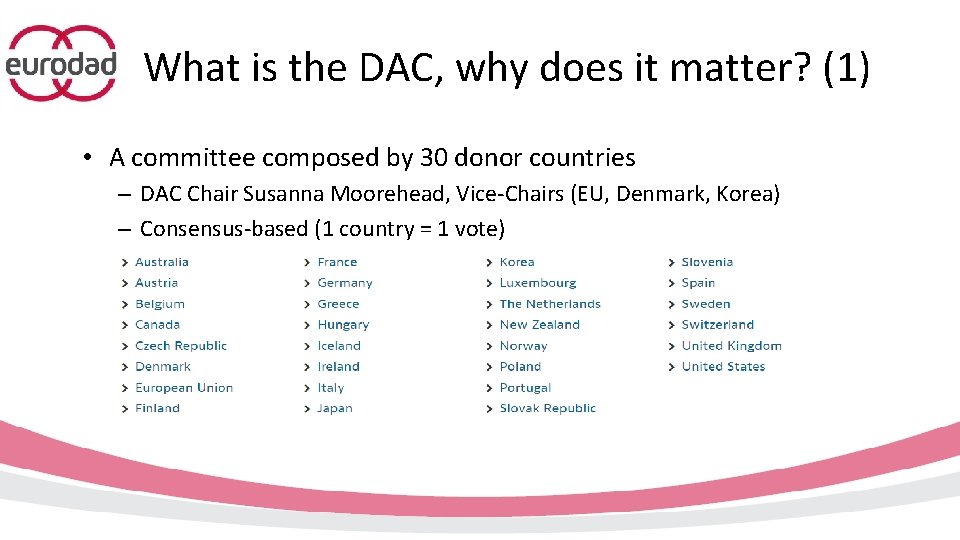
What is the DAC, why does it matter? (1) • A committee composed by 30 donor countries – DAC Chair Susanna Moorehead, Vice-Chairs (EU, Denmark, Korea) – Consensus-based (1 country = 1 vote)
What is the DAC, why does it matter? (2) An influential institution vis à vis development cooperation, why? – Sets definition and rules for ODA DAC ODA definition: “Flows to countries and territories on the DAC List of ODA Recipients and to multilateral development institutions which are: Ø provided by official agencies, including state and local governments, or by their executive agencies; Ø is administered with the promotion of the economic development and welfare of developing countries as its main objective; Ø and is concessional in character. ’ – Detailed reporting instructions on ODA elgibility – Ensure donors are playing by the same rules when counting against the 0. 7% target
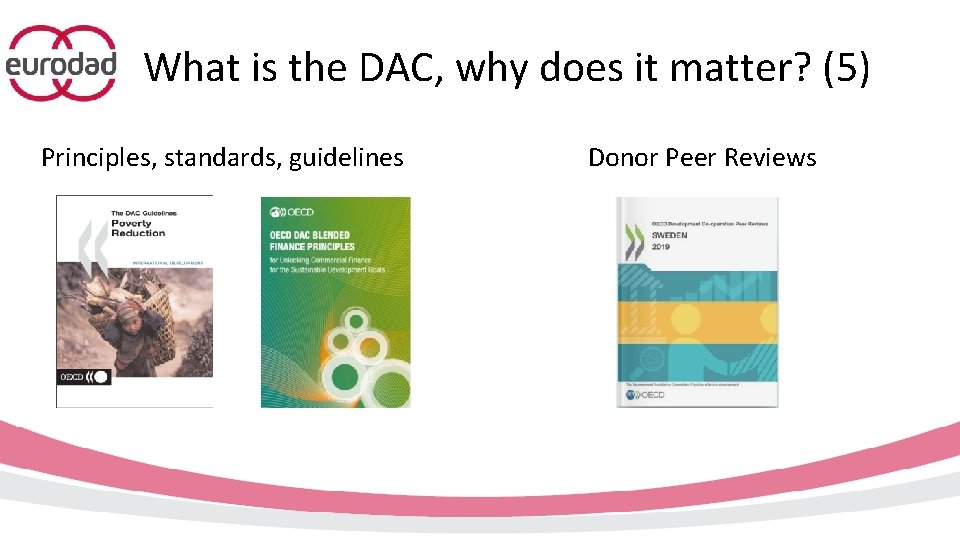
What is the DAC, why does it matter? (5) Principles, standards, guidelines Donor Peer Reviews
The ODA modernisation process 27/05/2021
ODA Official Development Assistance (ODA) plays a fundamental role in an increasingly complex and expanding development finance landscape. Given its mandate and concessional character, ODA is uniquely placed to support the needs of the poorest and most vulnerable people in the world. The most recent events, an notably the Covid-19 pandemic, make ODA’s role even more crucial.
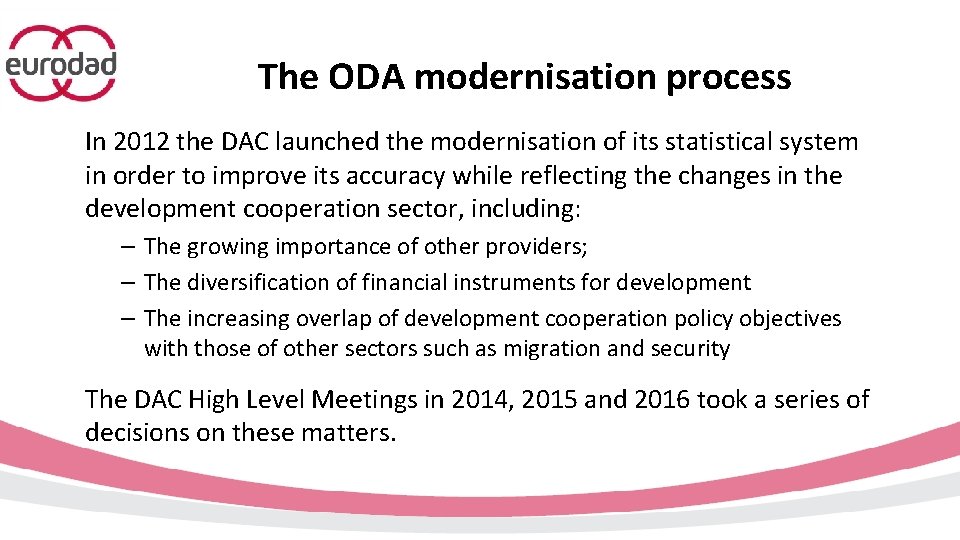
The ODA modernisation process In 2012 the DAC launched the modernisation of its statistical system in order to improve its accuracy while reflecting the changes in the development cooperation sector, including: – The growing importance of other providers; – The diversification of financial instruments for development – The increasing overlap of development cooperation policy objectives with those of other sectors such as migration and security The DAC High Level Meetings in 2014, 2015 and 2016 took a series of decisions on these matters.
The ODA modernisation process: PSIs “to urgently undertake further work to reflect in ODA the effort of the official sector in catalysing private sector investment in effective development”, underlining the explicit wish by DAC members “to encourage the use of ODA to mobilise additional private sector resources for development”. DAC HLM Communiqué 2014
What is PSI data from 2018 and 2019 telling us? 27/05/2021
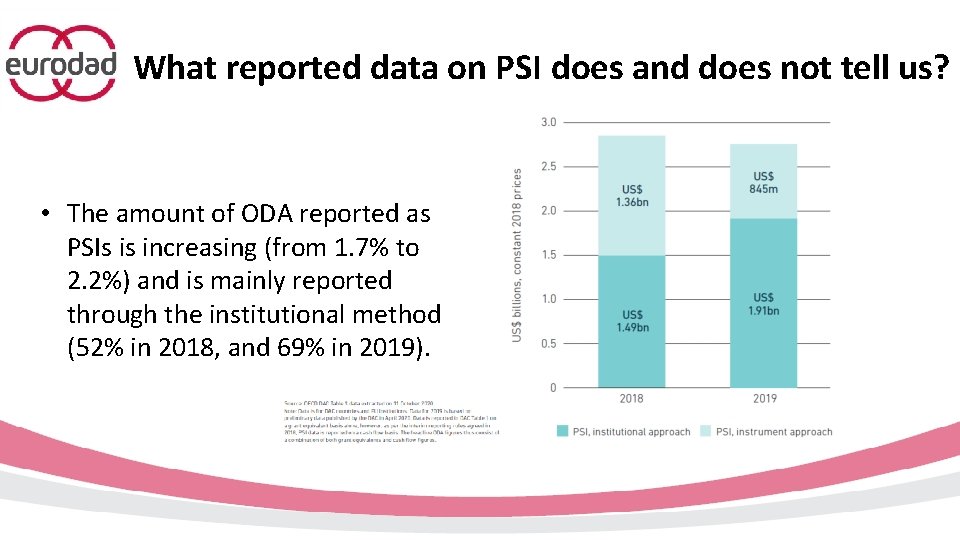
What reported data on PSI does and does not tell us? • The amount of ODA reported as PSIs is increasing (from 1. 7% to 2. 2%) and is mainly reported through the institutional method (52% in 2018, and 69% in 2019).
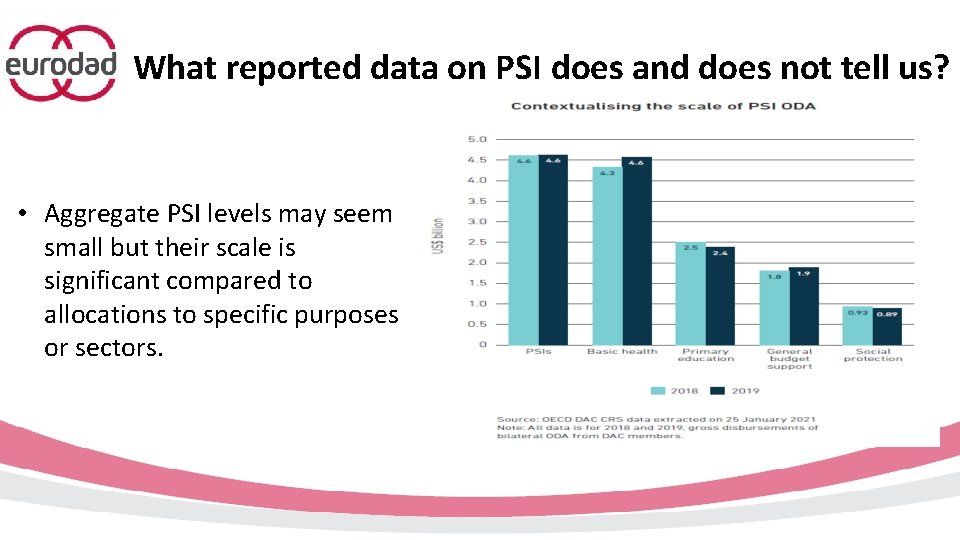
What reported data on PSI does and does not tell us? • Aggregate PSI levels may seem small but their scale is significant compared to allocations to specific purposes or sectors.
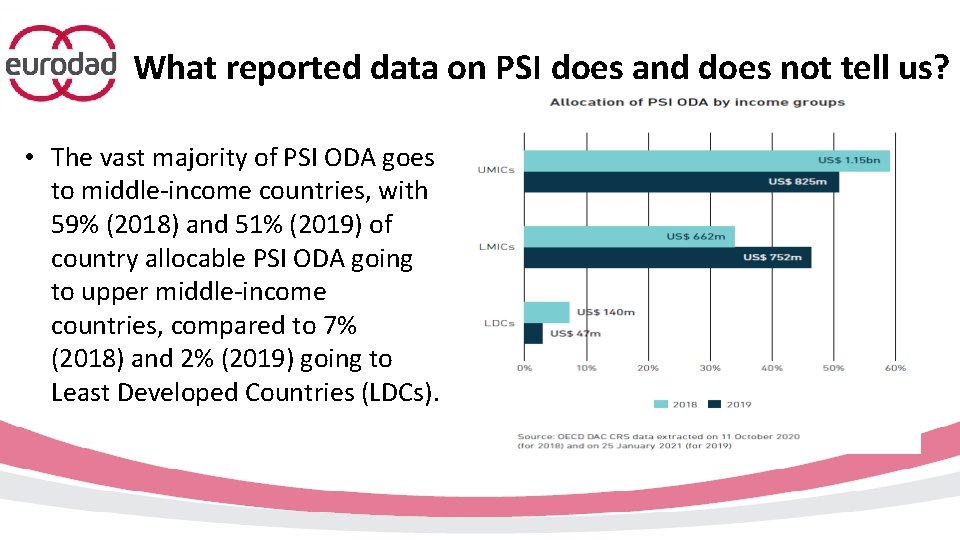
What reported data on PSI does and does not tell us? • The vast majority of PSI ODA goes to middle-income countries, with 59% (2018) and 51% (2019) of country allocable PSI ODA going to upper middle-income countries, compared to 7% (2018) and 2% (2019) going to Least Developed Countries (LDCs).
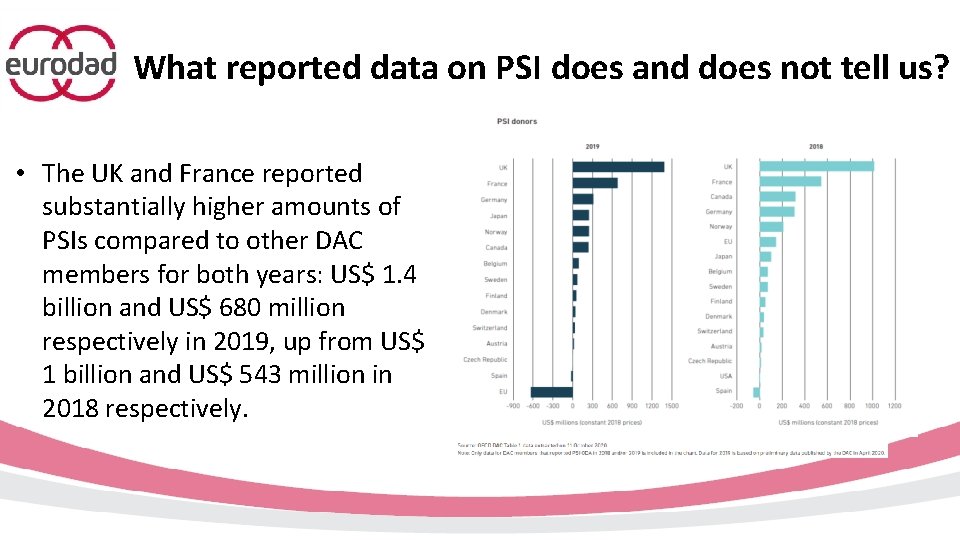
What reported data on PSI does and does not tell us? • The UK and France reported substantially higher amounts of PSIs compared to other DAC members for both years: US$ 1. 4 billion and US$ 680 million respectively in 2019, up from US$ 1 billion and US$ 543 million in 2018 respectively.
What reported data on PSI does and does not tell us? • Additionality – both in financial terms and in terms of value – is a key rationale for channeling aid through PSIs. Although between 2018 and 2019 the number of DAC members reporting the type of additionality increased from six (2018) to ten (2019), still a third of PSI ODA (US$ 1. 5 billion) in 2019 was left unreported in terms of which type of additionality the PSI initiative was bringing. • Even in cases where donors reported additional information describing their PSIs initiatives, this information was limited and nonspecific; • Development additionality - where information exists, it is limited and lacks sufficient detail to clarify the grounds on which development additionality is claimed.
Why is it important to keep the PSI in our CSOs agendas? 27/05/2021
PSIs: Key issues at stake • The dilution of the distinctive role and value of ODA compared to other types of development finance; • Compromised transparency and accountability standards; • The credibility of ODA statistics. Additionally, depending on the outcome of the pending decisions around how to calculate the grant equivalent of PSIs, there is a risk of diverting scarce ODA resources away from uses for which evidence of impact exists and which ODA is better placed to serve.
CSOs priorities going forward • The donor community needs to provide evidence that justifies the inclusion of PSIs in ODA. While the evidence is insufficient, we can only advocate for PSIs to be reported as Other Official Flows. • Maintain the spotlight on the continued need for non-PSI ODA and remind the donor community about the longstanding commitment to provide 0. 7% of Gross National Income (GNI) as ODA, on concessional terms. Such target cannot be reached through tweaking ODA statistics but by real steps; • Continue advocating to ensure ODA is allocated to its most effective use. Notably, public investment in key social, economic and governance areas is a precondition for private sector development and private investment; • Contribute to nuancing the conversation; • Call for an external review of the whole ODA modernisation process and its impact on the quantity and quality of ODA.
THANK YOU!!