
The Ocean Labeling the Ocean Zones Add the
The Ocean
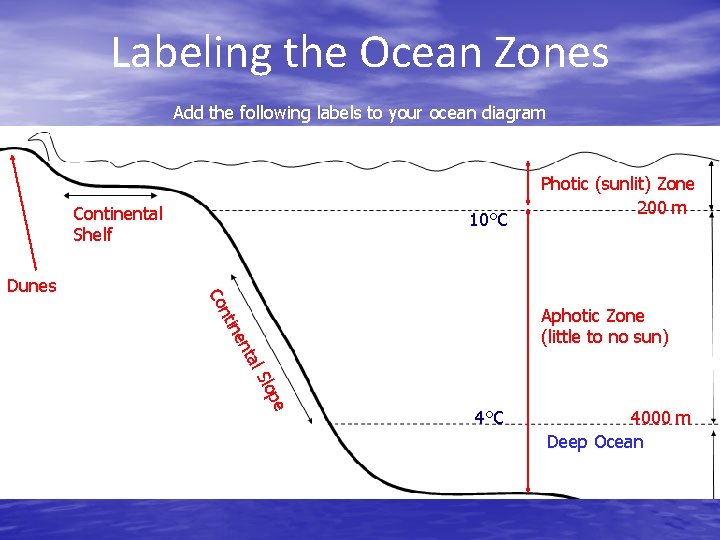
Labeling the Ocean Zones Add the following labels to your ocean diagram Continental Shelf n Co Dunes 10°C Photic (sunlit) Zone 200 m tal en tin Aphotic Zone (little to no sun) p Slo e 4°C 4000 m Deep Ocean
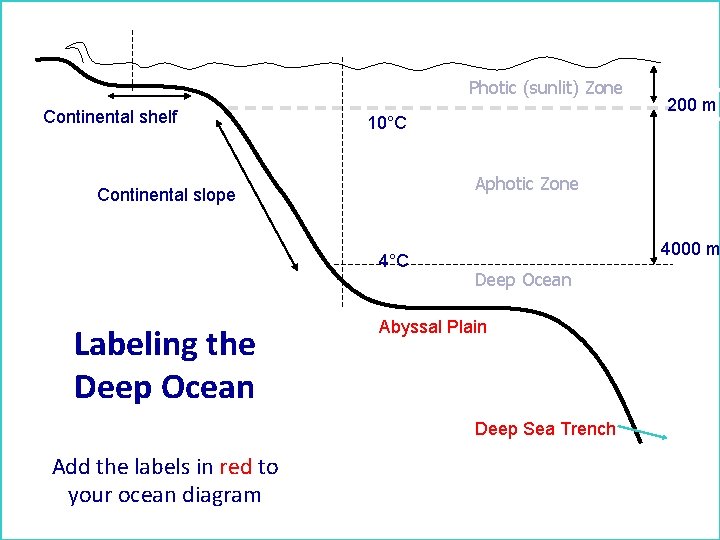
Photic (sunlit) Zone Continental shelf 10°C Aphotic Zone Continental slope 4°C Labeling the Deep Ocean 4000 m Deep Ocean Abyssal Plain Deep Sea Trench Add the labels in red to your ocean diagram 200 m
What is the ocean? • The ocean is a dynamic system in which many chemical, biological, and physical changes are taking place – The ocean is the largest reservoir for water and HEAT on the surface of the Earth
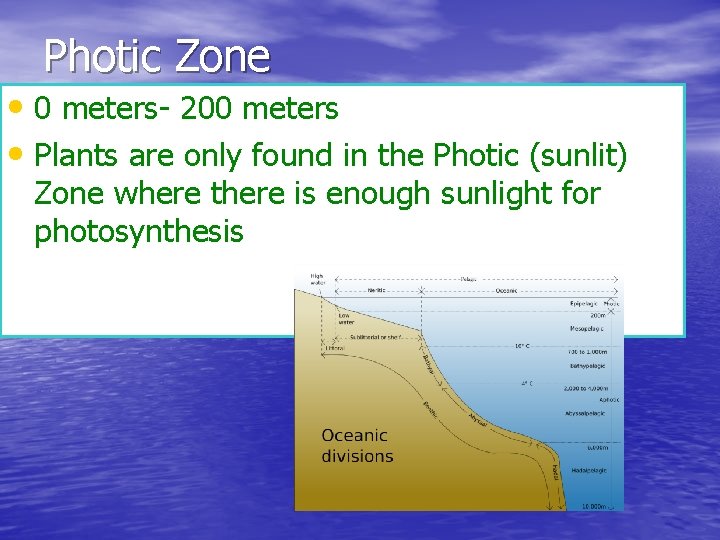
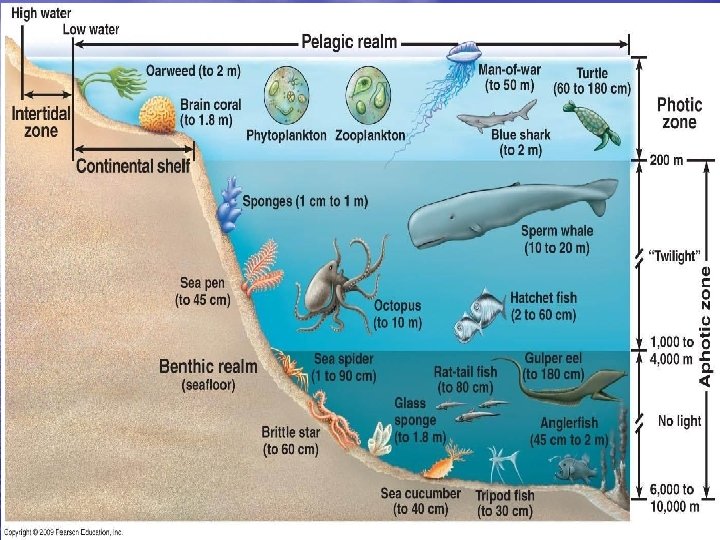
Photic Zone • 0 meters- 200 meters • Plants are only found in the Photic (sunlit) Zone where there is enough sunlight for photosynthesis
• Aphotic Zone – the part of the ocean with little to no sunlight • 200 meters – 4, 000 meters • The deep ocean has long been of interest to scientists – In order to understand the deep ocean, scientists must gain access to very specific parts of it • Observation tools include human-occupied submersibles, remote-controlled vehicles and autonomous robots
• Abyssal Plain is an underwater plain on the deep ocean floor • 4, 000 meters – 6, 000 Meters • Total Darkness, organisms living here must have special adaptations
• Deep Sea Trench - also called oceanic trench, any long, narrow, steep-sided depression in the ocean bottom • 6, 000 Meters and below • Site of hydrothermal vents • Organisms include vampire squid and chemosynthetic plankton
Vertical Zonation Patterns Categorizing plants and animals into zones based on their arrangement in the habitat and how much sunlight is available
Ocean Ecosystem All the living things and the physical environment that make up the area of an ocean
Nutrients Chemicals that organisms need to live and grow; substances taken in from an organism’s environment that are used in an organism’s metabolism
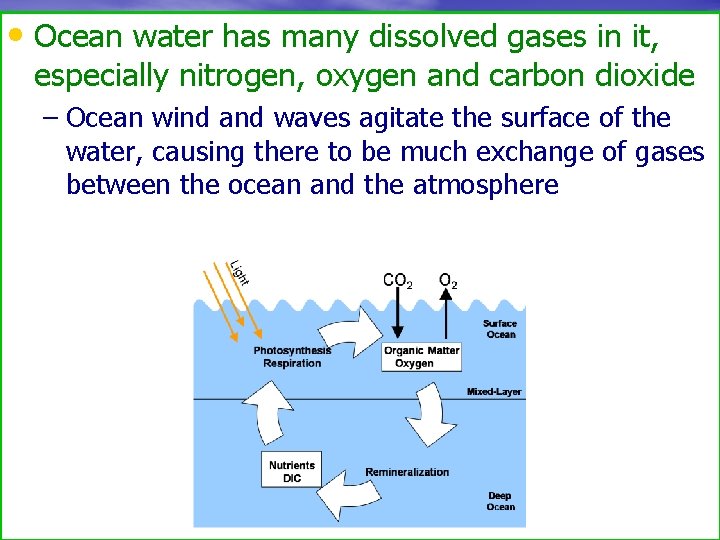
• Ocean water has many dissolved gases in it, especially nitrogen, oxygen and carbon dioxide – Ocean wind and waves agitate the surface of the water, causing there to be much exchange of gases between the ocean and the atmosphere
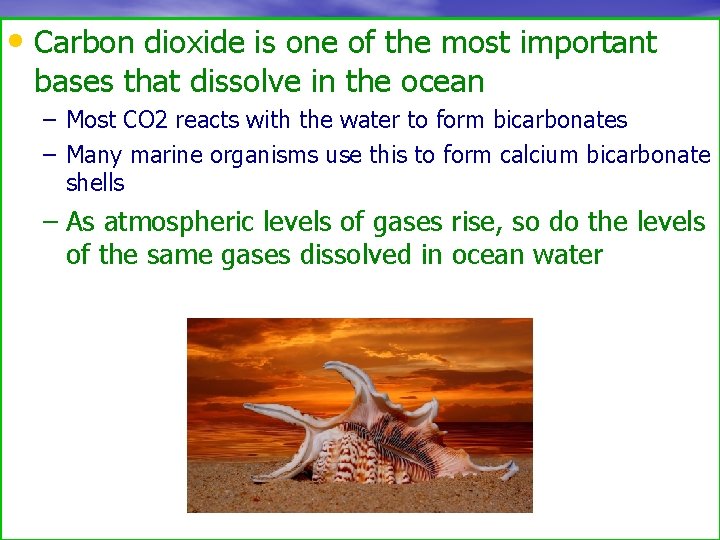
• Carbon dioxide is one of the most important bases that dissolve in the ocean – Most CO 2 reacts with the water to form bicarbonates – Many marine organisms use this to form calcium bicarbonate shells – As atmospheric levels of gases rise, so do the levels of the same gases dissolved in ocean water
Minerals Naturally occurring substance that is required by living organisms as part of their dietary nutritional intake
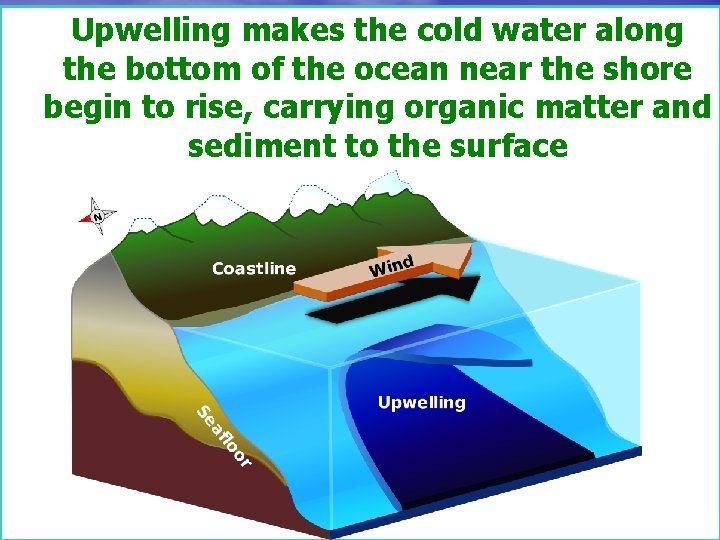
Upwelling makes the cold water along the bottom of the ocean near the shore begin to rise, carrying organic matter and sediment to the surface
Upwelling • Phytoplankton use the nutrients from upwelling • This attracts organisms that eat phytoplankton • This attracts their consumers in return • As a result, areas of upwelling tend to be areas of rich biological activity, providing resources to a great diversity of ocean organisms – Approximately half of the fish caught in the world come from areas where there is upwelling
Deep Ocean Ecosystems • At one time, scientists thought that life could not exist on the deep ocean floor – This was proven incorrect in 1977 • Organisms living on the deep ocean floor can withstand tremendous pressure, high temperatures, utter darkness and toxic chemicals • Many microbes have evolved chemosynthetic (instead of photosynthetic) processes to be able to create food using the dissolved chemicals in ocean water
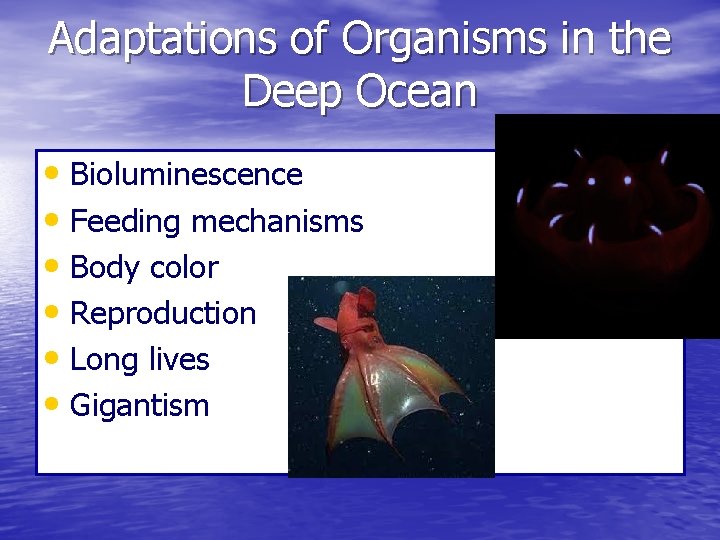
Adaptations of Organisms in the Deep Ocean • Bioluminescence • Feeding mechanisms • Body color • Reproduction • Long lives • Gigantism
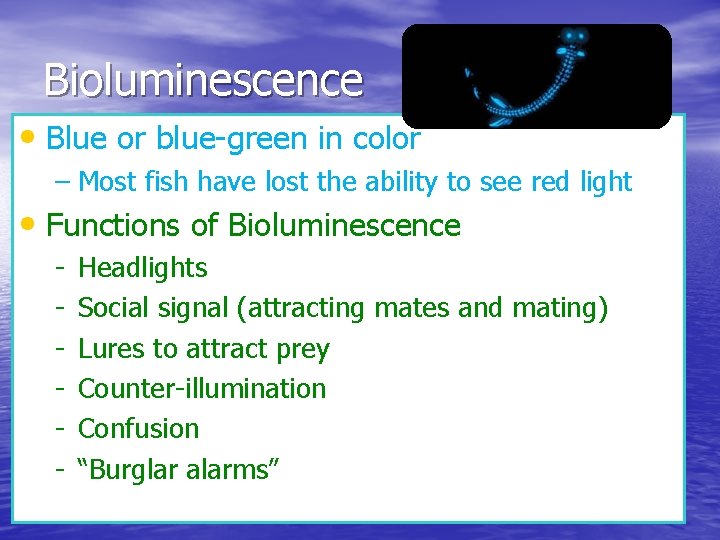
Bioluminescence • Blue or blue-green in color – Most fish have lost the ability to see red light • Functions of Bioluminescence - Headlights Social signal (attracting mates and mating) Lures to attract prey Counter-illumination Confusion “Burglar alarms”
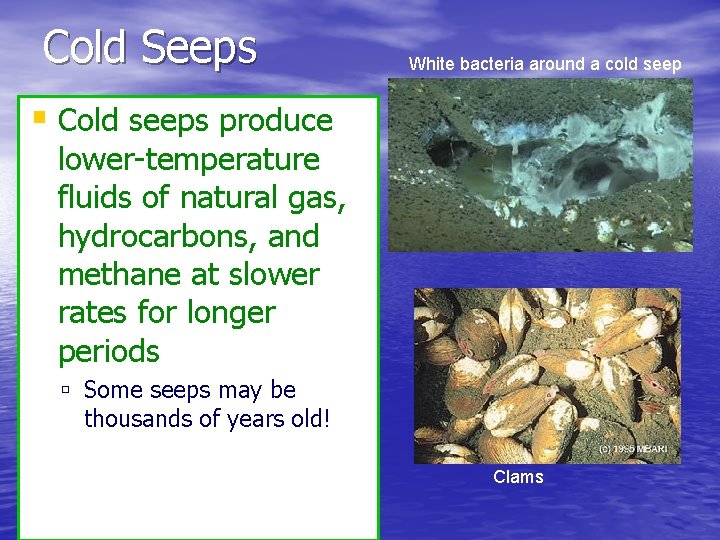
Cold Seeps White bacteria around a cold seep Cold seeps produce lower-temperature fluids of natural gas, hydrocarbons, and methane at slower rates for longer periods Some seeps may be thousands of years old! Clams
Chemosynthetic Some bacteria and plankton make food by taking in chemicals from cold seeps and hydrothermal vents and turning it into food It’s like photosynthesis, but with chemicals instead of sunlight!
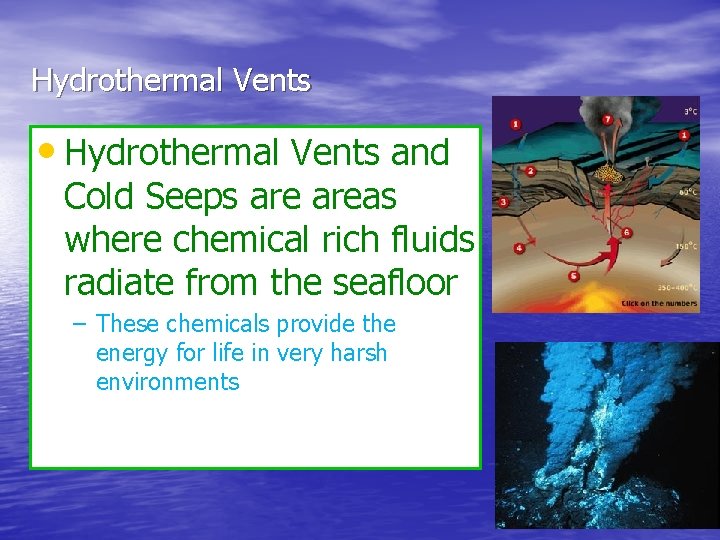
Hydrothermal Vents • Hydrothermal Vents and Cold Seeps areas where chemical rich fluids radiate from the seafloor – These chemicals provide the energy for life in very harsh environments
• Photic Zone – the top part of the ocean with sunlight • This is the only zone that has plants (no sunlight = no plants • The Photic Zone contains most of the biodiversity of the ocean
- Slides: 24