
The Ocean Habitat The largest habitat on Earth
The Ocean Habitat The largest habitat on Earth: makes up to 97 % of all livable space on Earth
Land Influenced Zones • Better known as: The Neritic Zone • Shallow area of ocean water in which land has an impact • Coastal zones of the ocean • Usually with 3 -5 miles of coastline of Continents
Land Un-Influenced Zones • Better known as the: Pelagic zone • Open ocean • Land has no effect or little impact • Majority of the oceans’ habitat
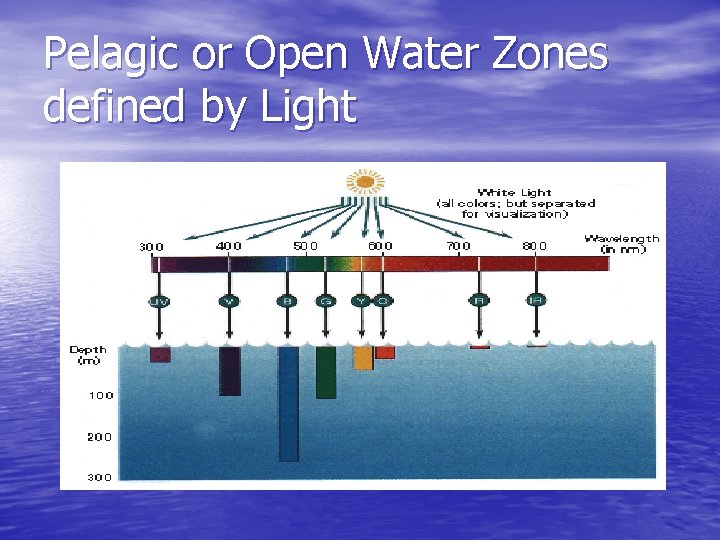
Pelagic or Open Water Zones defined by Light

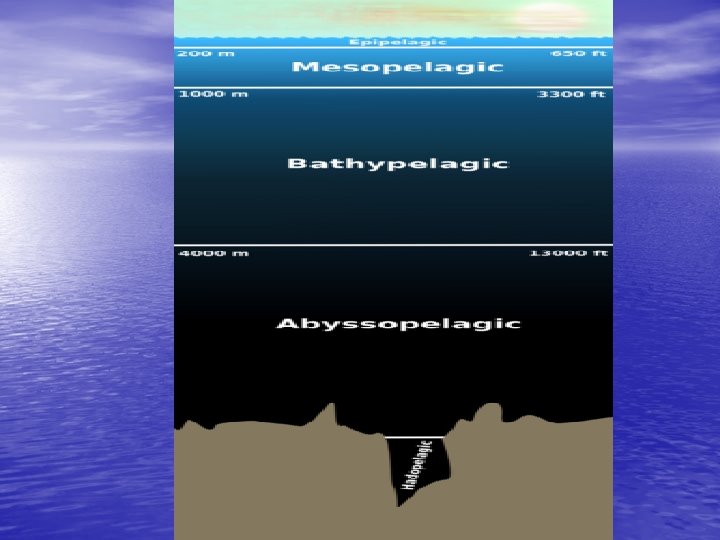
Pelagic Zones • Epipelagic Zone— 0 -200 meters in depth • (all colors visible at first) • Mesopelagic Zone— 200 -1000 meters • (twilight zone: light and dark; no color) • Bathypelagic Zone— 1000 -4000 meters • (no sunlight visible from this depth and below) • Abyssopelagic Zone— 4000 -6000 meters • Hadalpelagic Zone— 6000 -10000 meters

Epipelagic zone adaptations • Countershading • Concealment (dermesal (dwelling near the bottom) or vegetal (around plants) ) • Disruptive-stripes or dots • Advertisement • Mimicry-can mimic other animals • Transparent
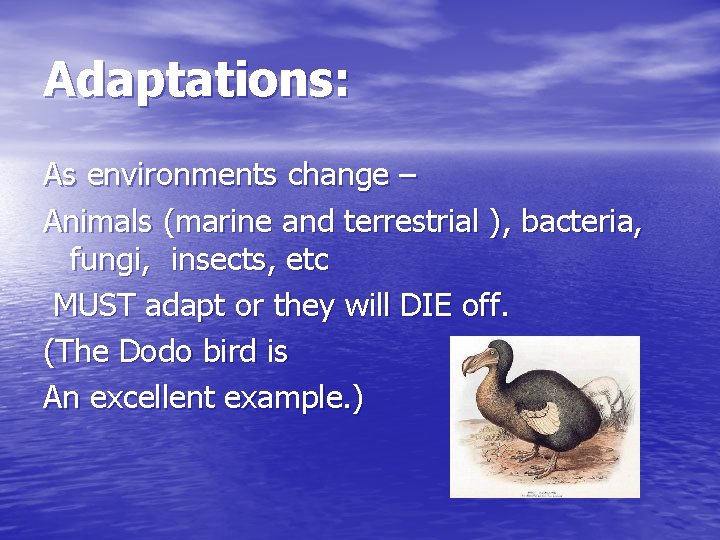
Adaptations: As environments change – Animals (marine and terrestrial ), bacteria, fungi, insects, etc MUST adapt or they will DIE off. (The Dodo bird is An excellent example. )
Variations in species can help (or hurt) an animals chance to survive Variations can allow -Animals adapt better to a new environment. - Allow an animal to blend into it’s environment. - Provide a greater opportunity for an animal to reproduce. (party time !)
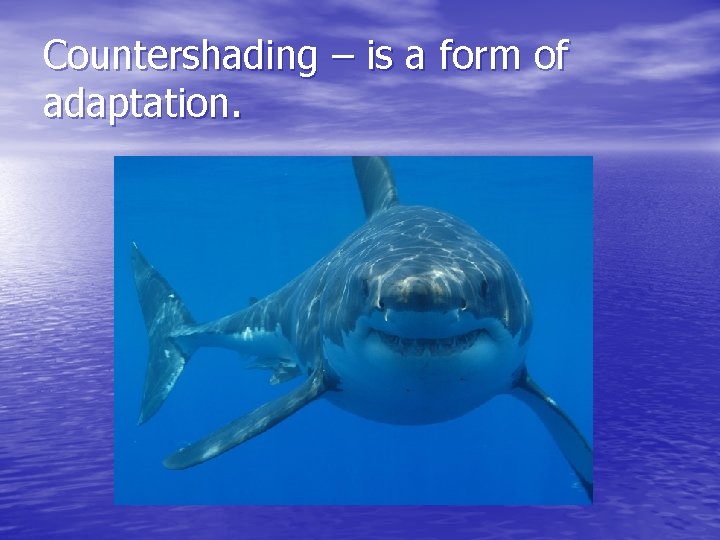
Countershading – is a form of adaptation.
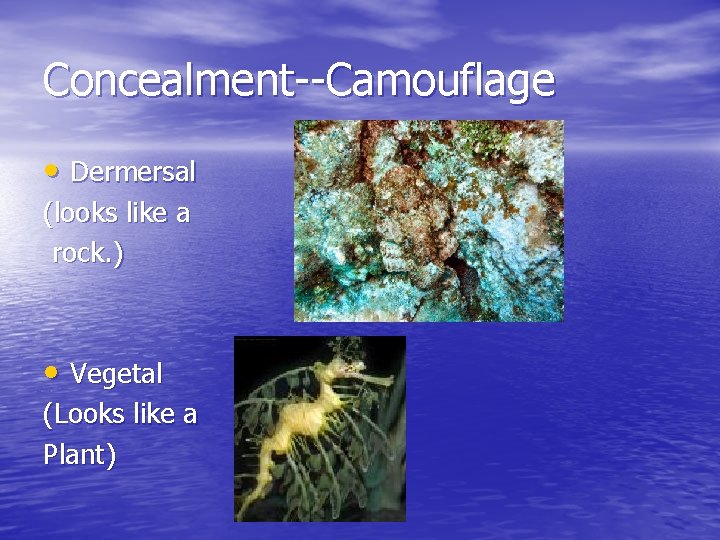
Concealment--Camouflage • Dermersal (looks like a rock. ) • Vegetal (Looks like a Plant)

Disruptive Patterns—such as stripes or dots- allow the fish to con
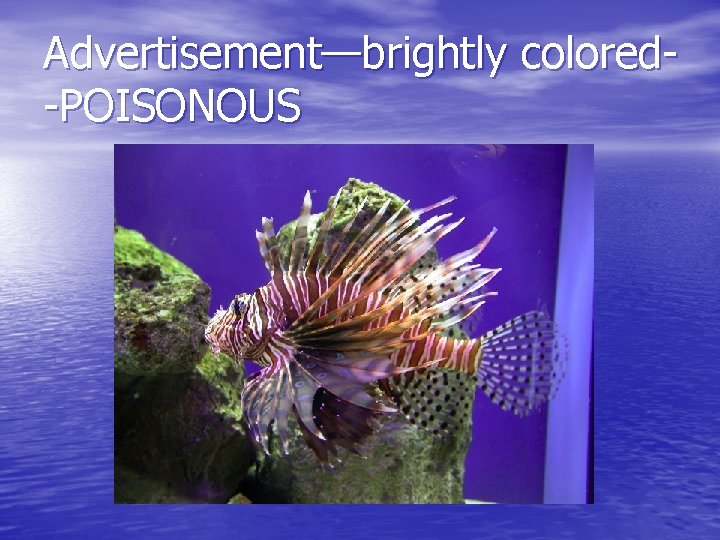
Advertisement—brightly colored-POISONOUS
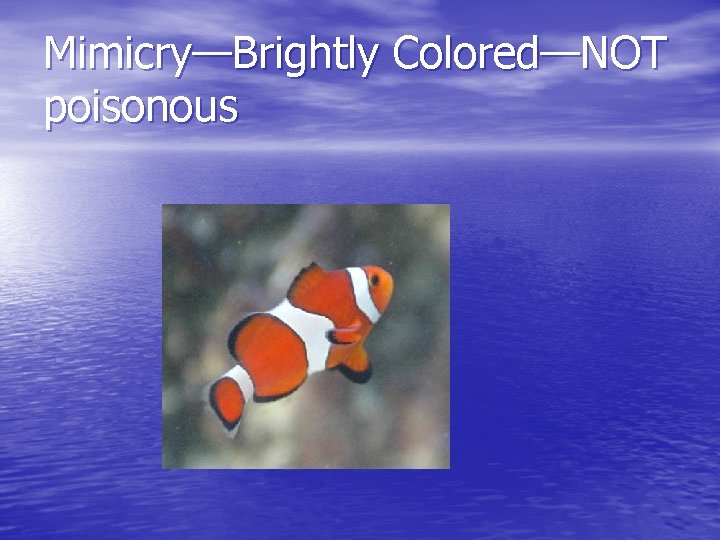
Mimicry—Brightly Colored—NOT poisonous
Epipelagic Adaptations • Body Form—Streamed-lined • Musculature-Strong Swimmers • Size-All sizes found here • Eyes-Well developed/large
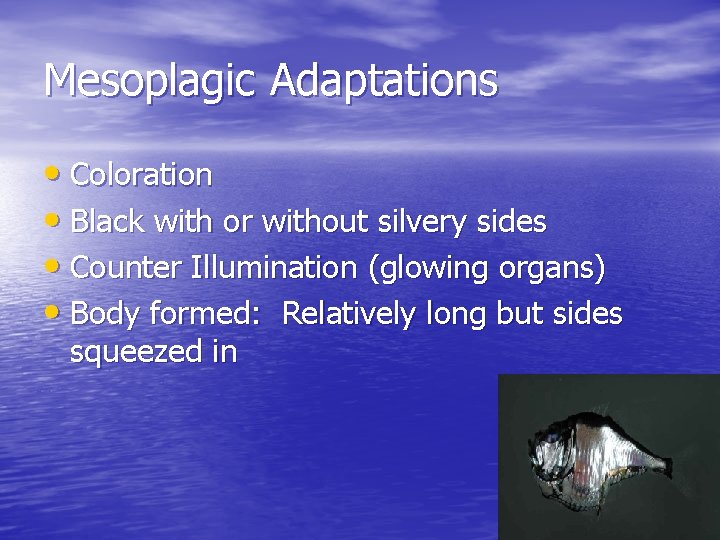
Mesoplagic Adaptations • Coloration • Black with or without silvery sides • Counter Illumination (glowing organs) • Body formed: Relatively long but sides squeezed in

Mesopelagic Adaptations • Musculature: Moderately strong swimmers some weak • Eyes: Very Large Sensitive eyes
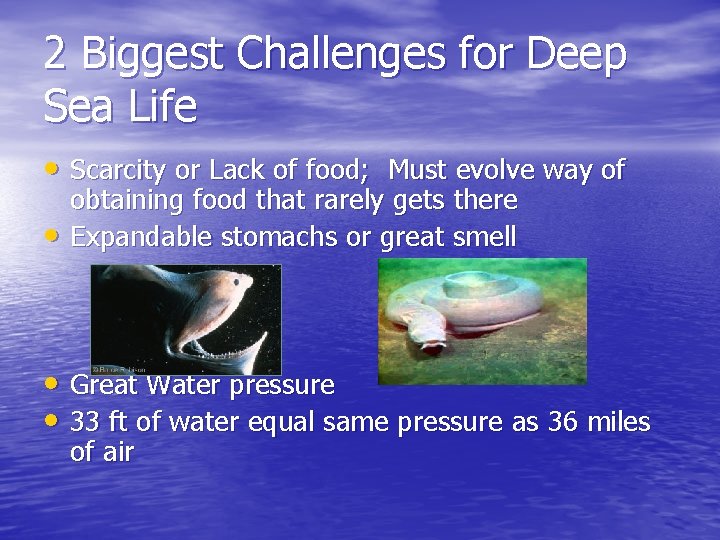
2 Biggest Challenges for Deep Sea Life • Scarcity or Lack of food; Must evolve way of • obtaining food that rarely gets there Expandable stomachs or great smell • Great Water pressure • 33 ft of water equal same pressure as 36 miles of air

Deep Pelagic Adaptations (Bathypelagic-Hadalpelagic) • Color: Black or red – Bioluminscence-attract prey at times (organs glow)
Deep Pelagic Adaptations (Bathypelagic-Hadalpelagic) • Shape-Globular (round shape)—Large Head • Musculature: Weak swimmers mainly • Fins modified as sensory organs • Size-Most small but some are large • Eyes-Small or absent (eyes if using bioluminescence)
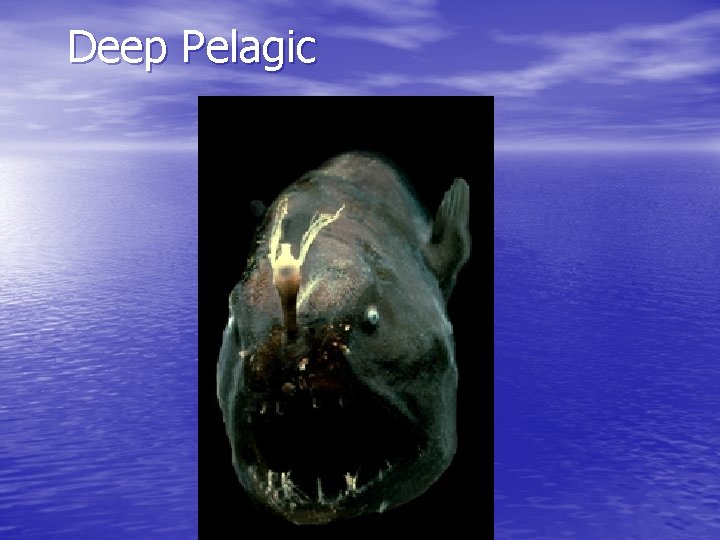
Deep Pelagic
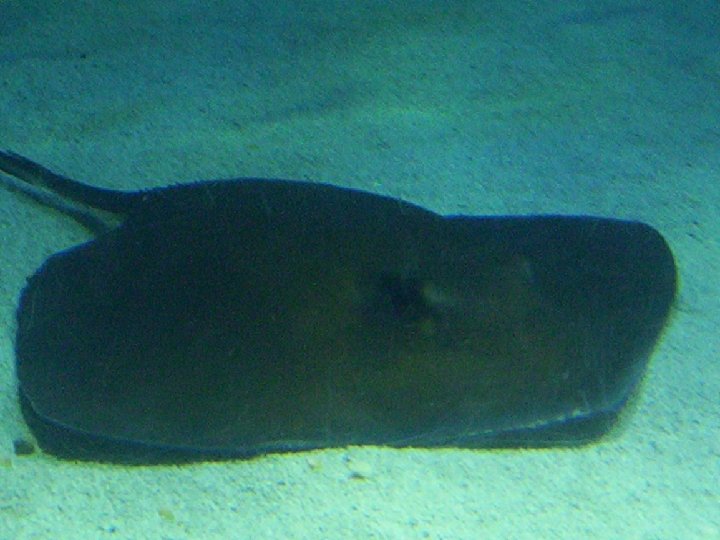
Benthic Zone—Life in the sand • Coloration: Black or Brown • Shape Elongated or flattened • Strong Muscles (to borrow in sand) • Size: Relatively Large • Eyes: Small
- Slides: 24