
The Ocean General Circulation satellite Mean Circulation in
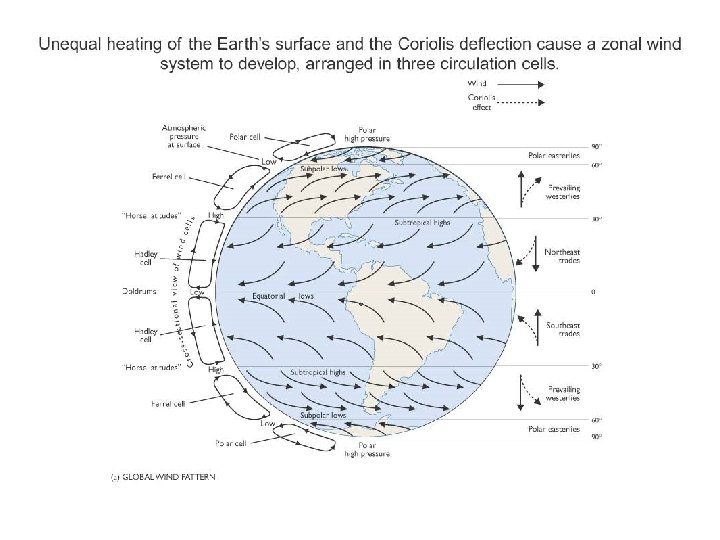
- Slides: 36
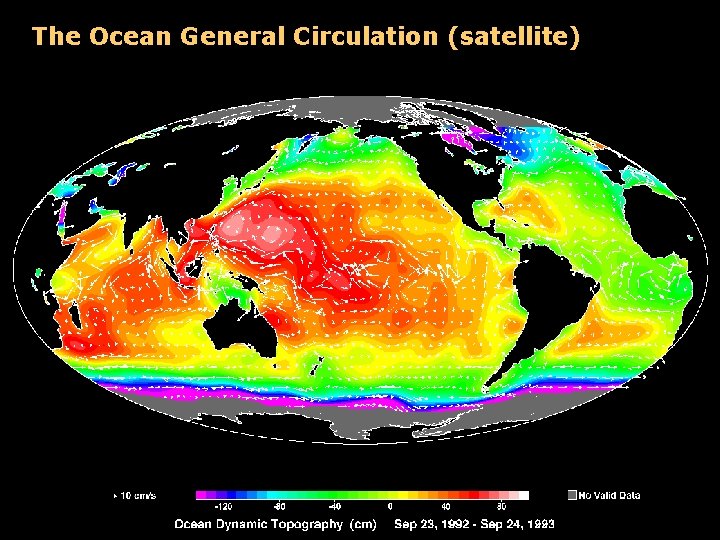
The Ocean General Circulation (satellite)
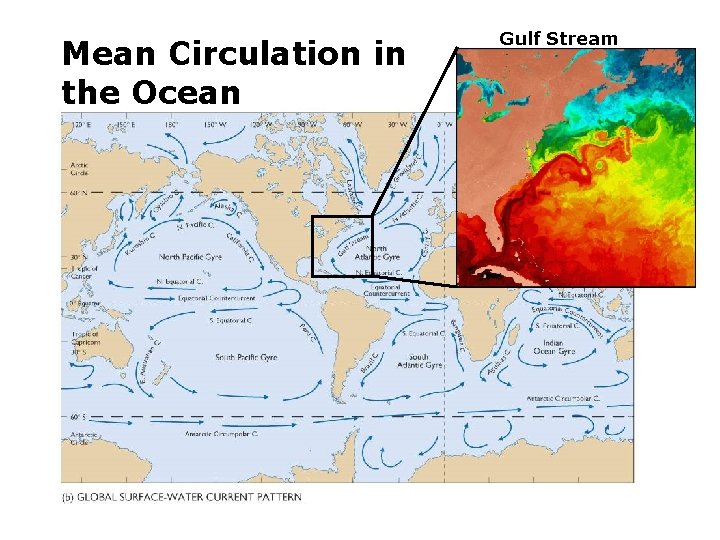
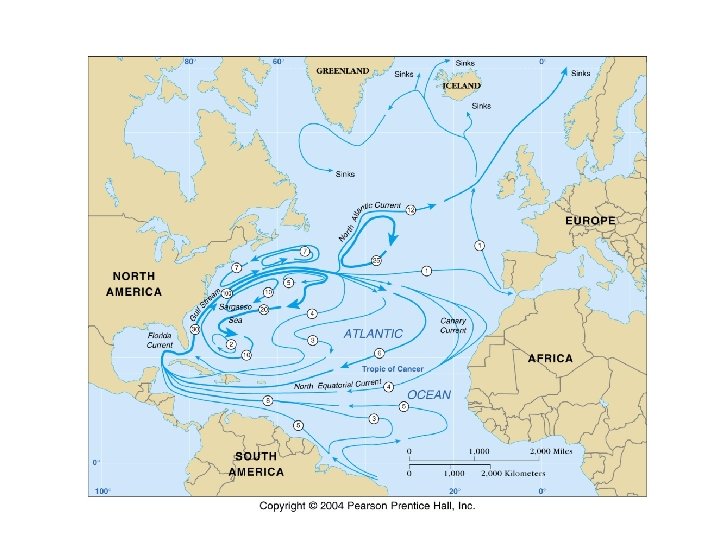
Mean Circulation in the Ocean Gulf Stream
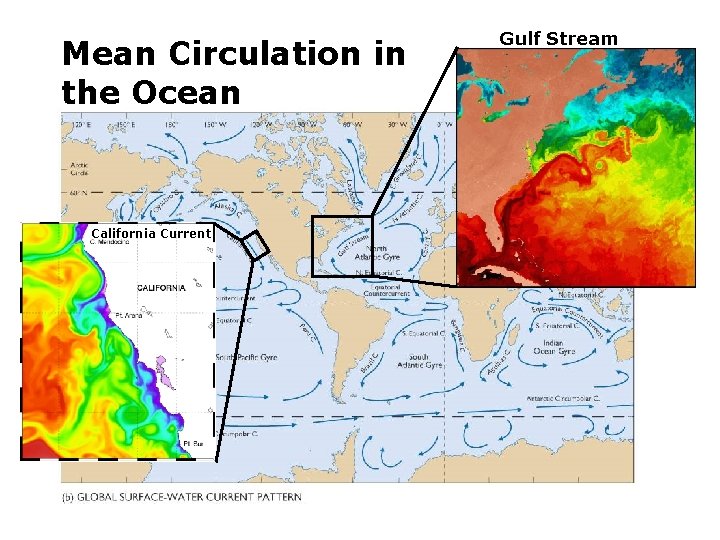
Mean Circulation in the Ocean California Current Gulf Stream
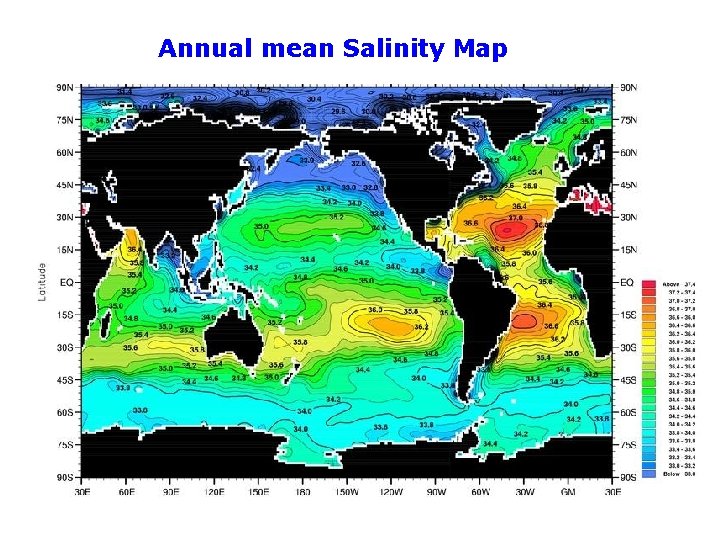
Annual mean Salinity Map
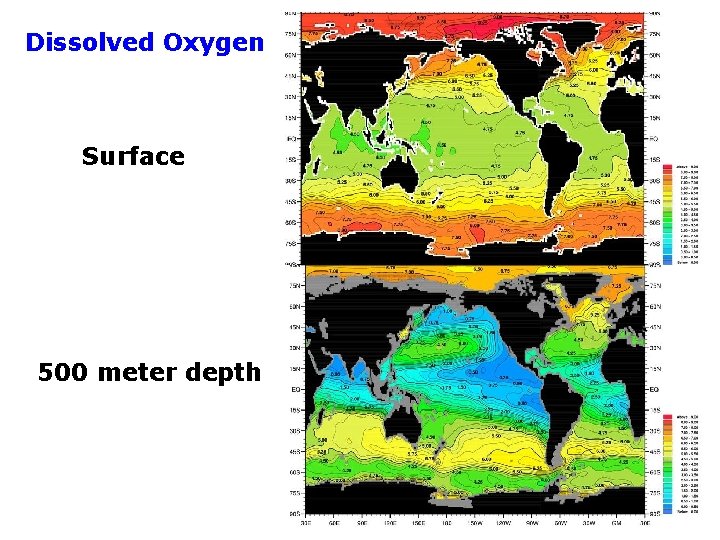
Dissolved Oxygen Surface 500 meter depth
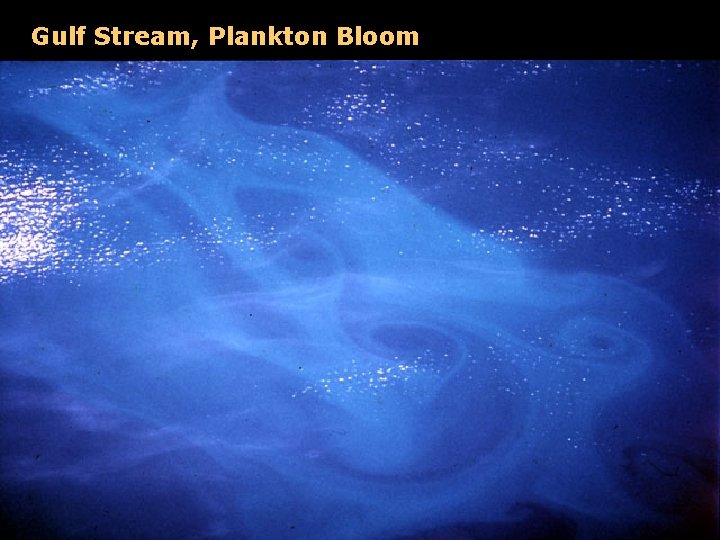
Gulf Stream, Plankton Bloom
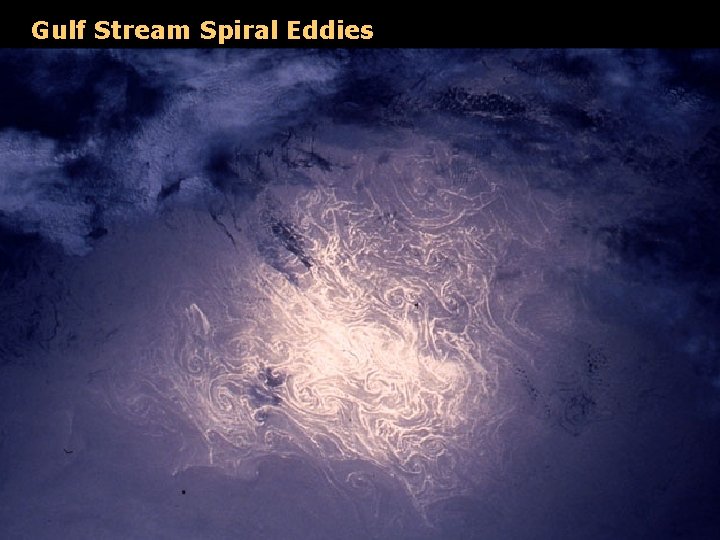
Gulf Stream Spiral Eddies
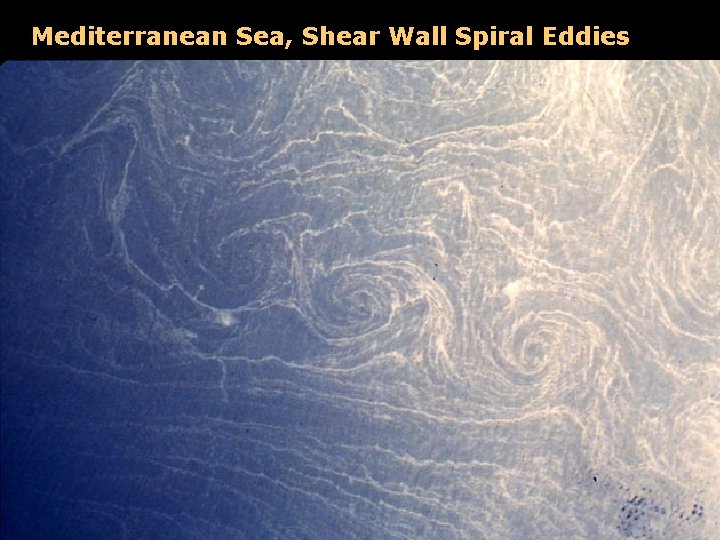
Mediterranean Sea, Shear Wall Spiral Eddies
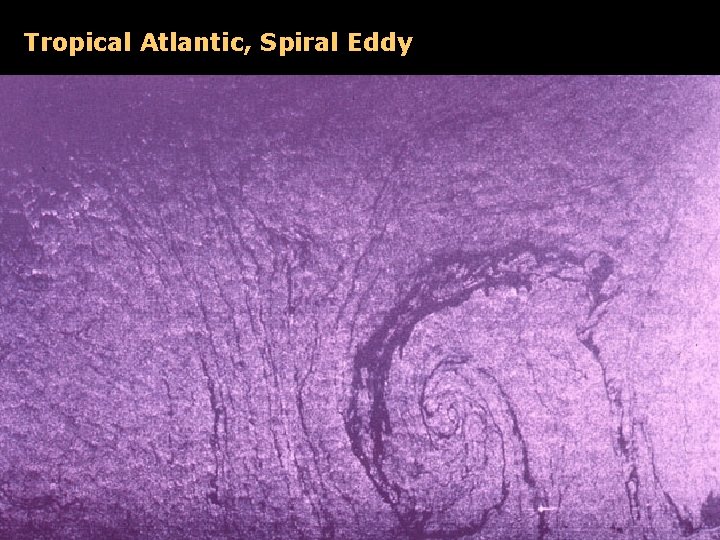
Tropical Atlantic, Spiral Eddy
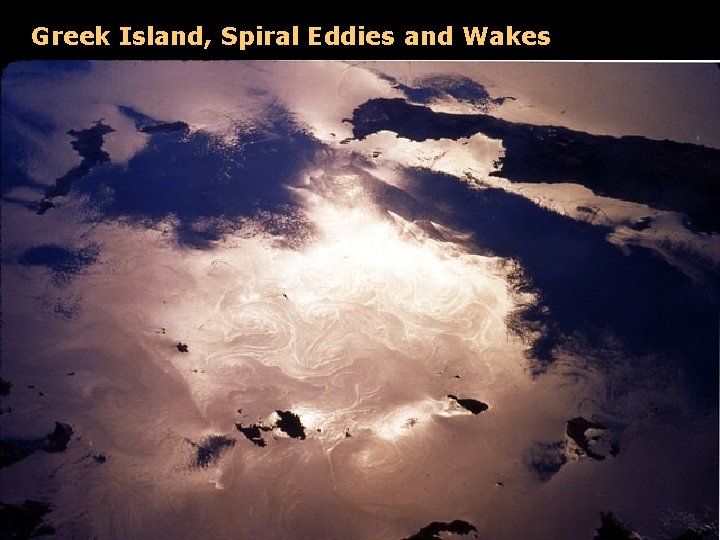
Greek Island, Spiral Eddies and Wakes
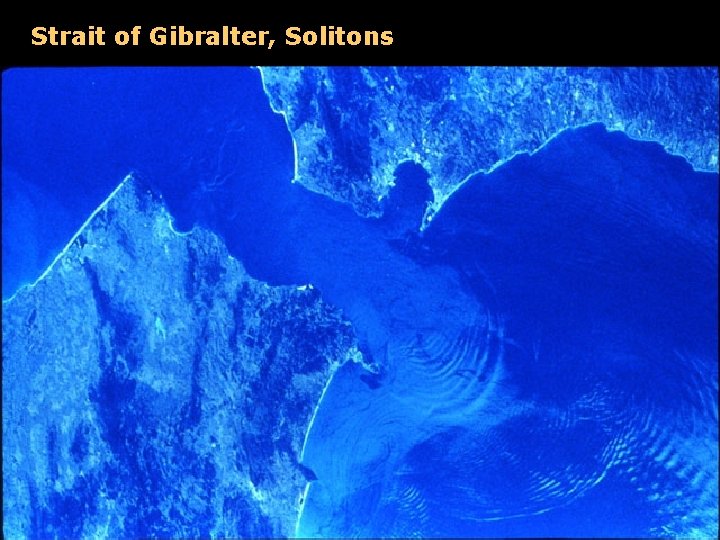
Strait of Gibralter, Solitons
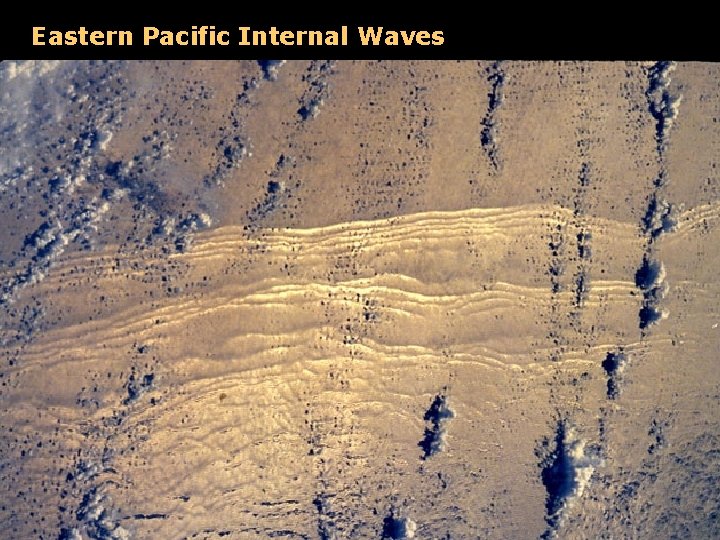
Eastern Pacific Internal Waves
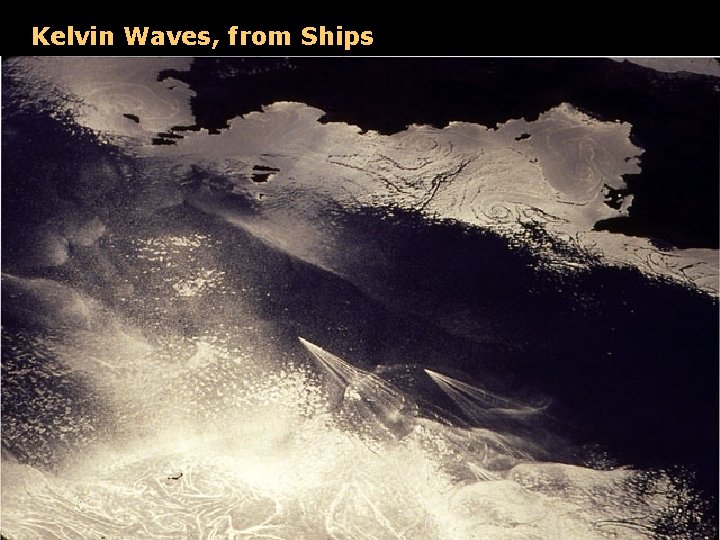
Kelvin Waves, from Ships
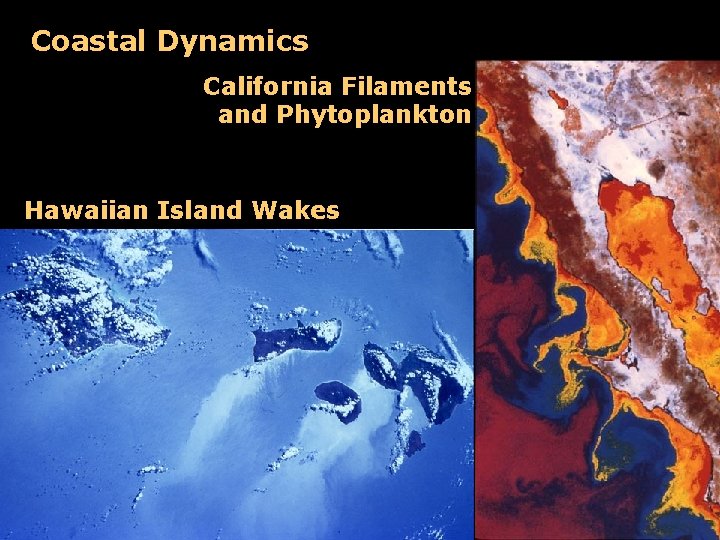
Coastal Dynamics California Filaments and Phytoplankton Hawaiian Island Wakes
Ocean wind driven circulation Learning Objectives How does the wind drive surface currents Oceanic gyres Ekman currents and transport Upwelling and Downwelling Western and Eastern Boundary currents Inertial currents
Some important differences between ocean and atmosphere Ocean is heated from above Feels both Mechanical forcing by the winds Thermal forcing from the sun Boundaries and complex geometry associated with continents and bottom topography Ocean is denser than atmosphere Tides Salinity Atmosphere has clouds and moisture
How is the energy of the winds transferred to the ocean? Ekman Theory …
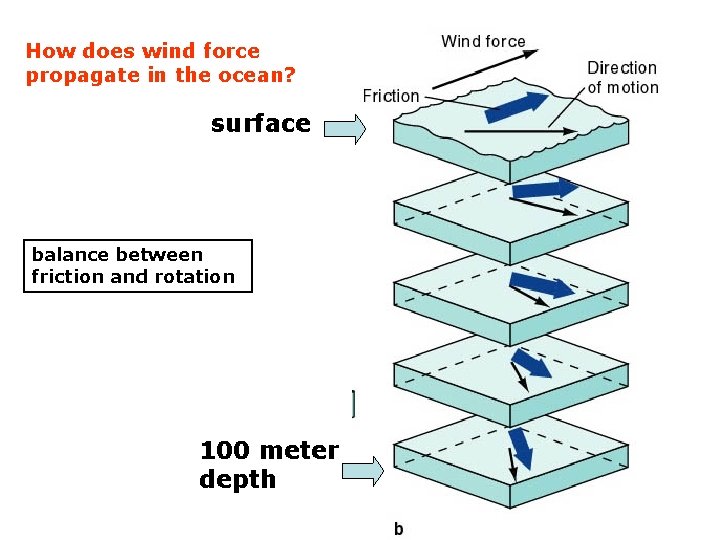
How does wind force propagate in the ocean? surface balance between friction and rotation 100 meter depth
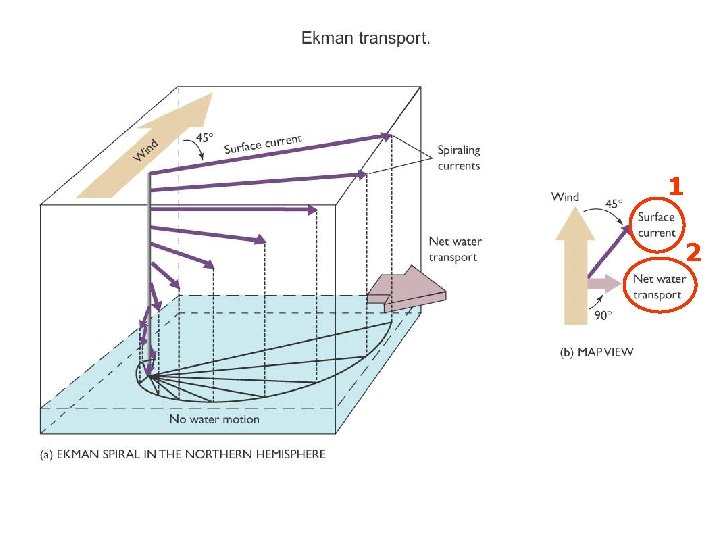
1 2
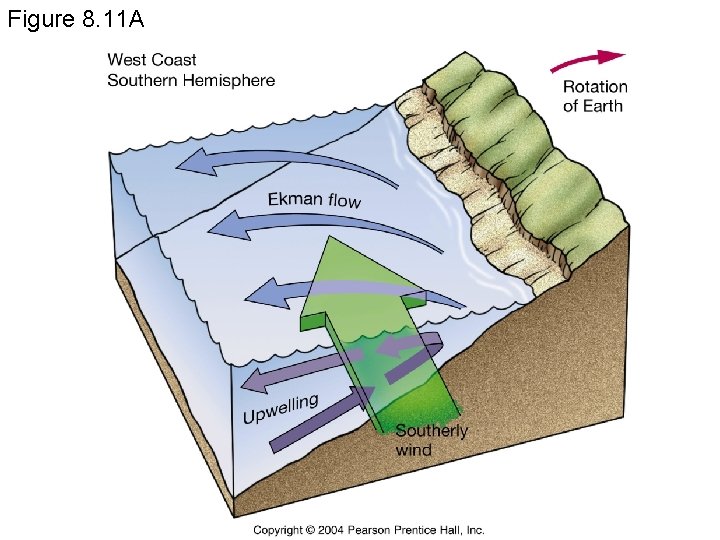
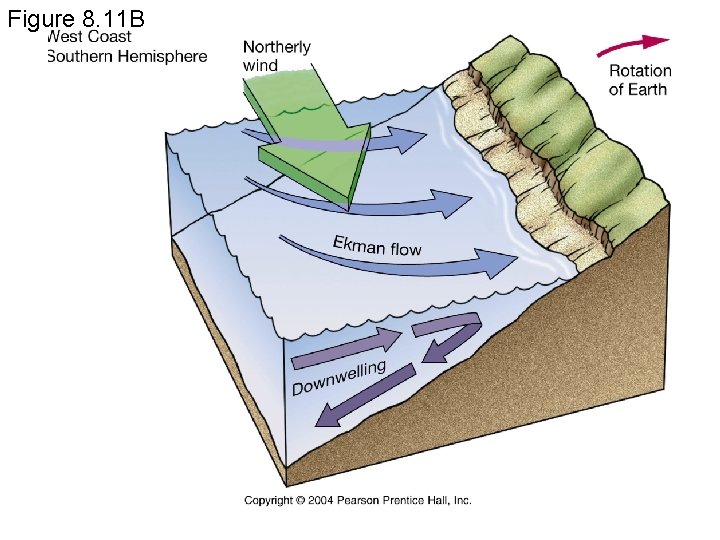
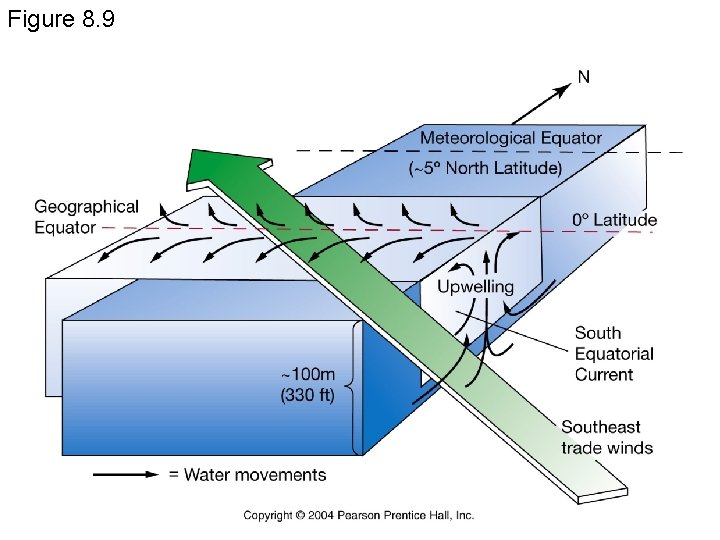
Ekman Theory …and vertical advection in the ocean COASTAL UPWELLING and DOWNWELLING OPEN OCEAN EKMAN PUMPING
Figure 8. 11 A
Figure 8. 11 B
Figure 8. 9
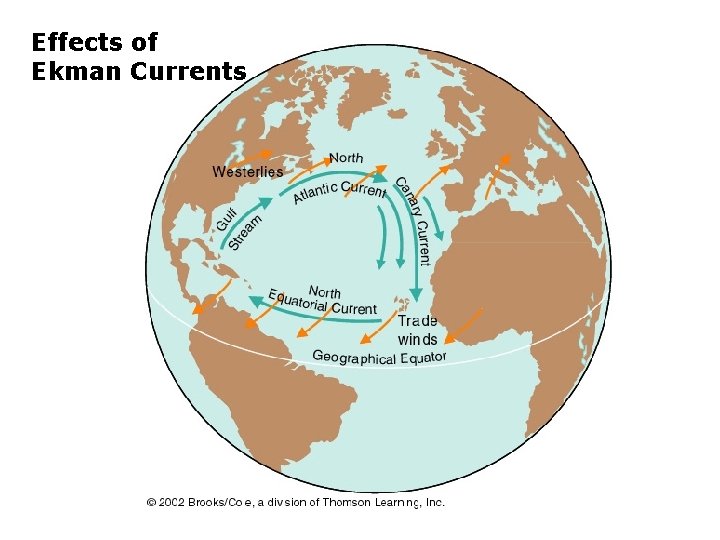
Effects of Ekman Currents
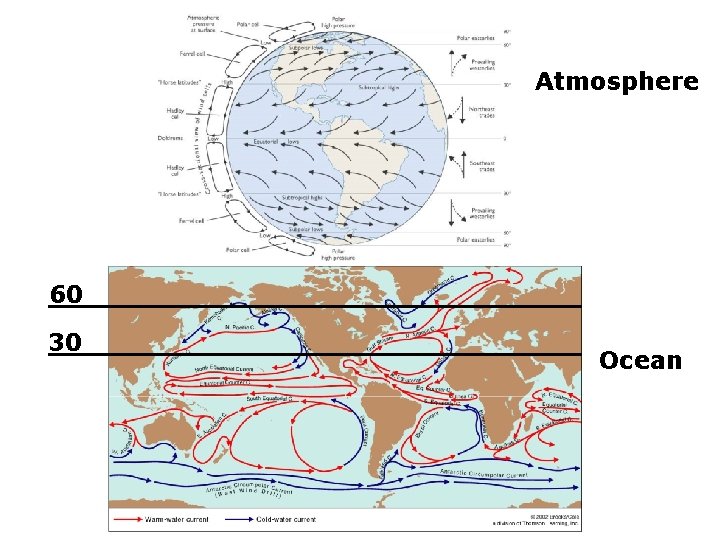
Atmosphere 60 30 Ocean
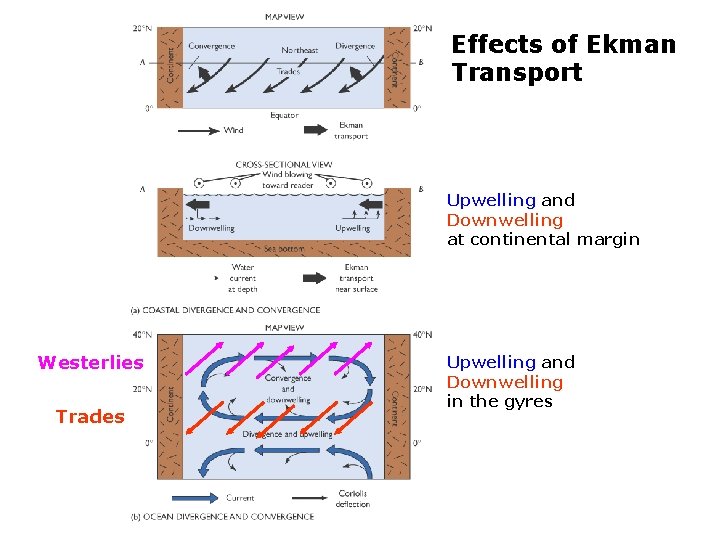
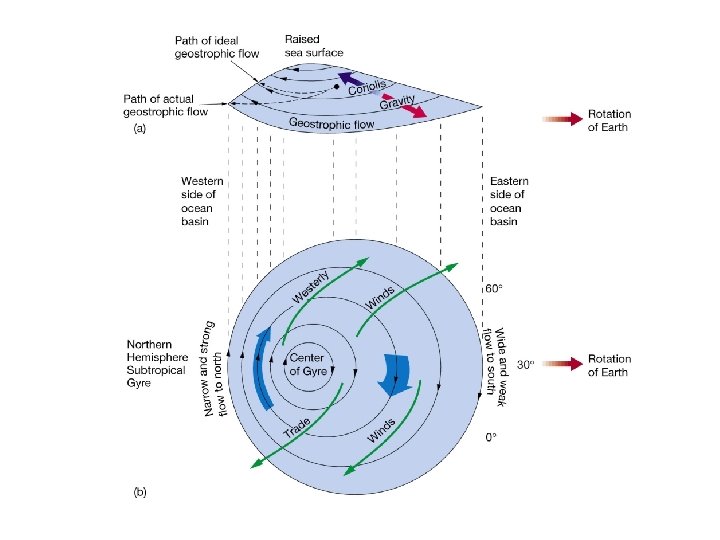
Effects of Ekman Transport Upwelling and Downwelling at continental margin Westerlies Trades Upwelling and Downwelling in the gyres
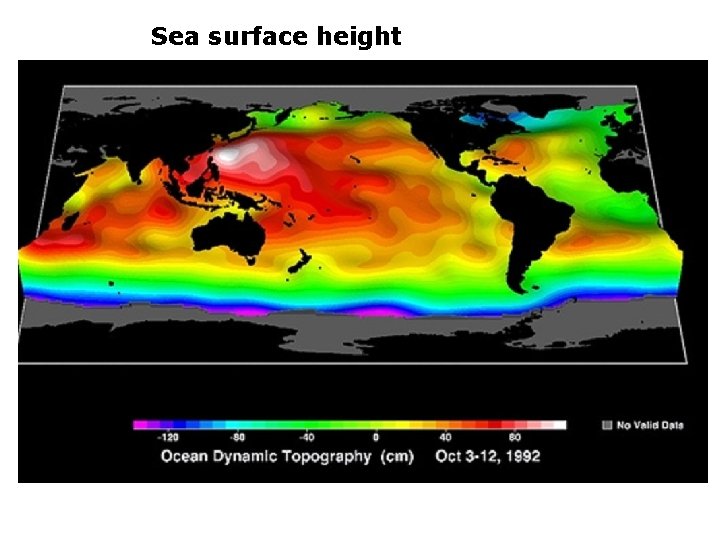
Sea surface height
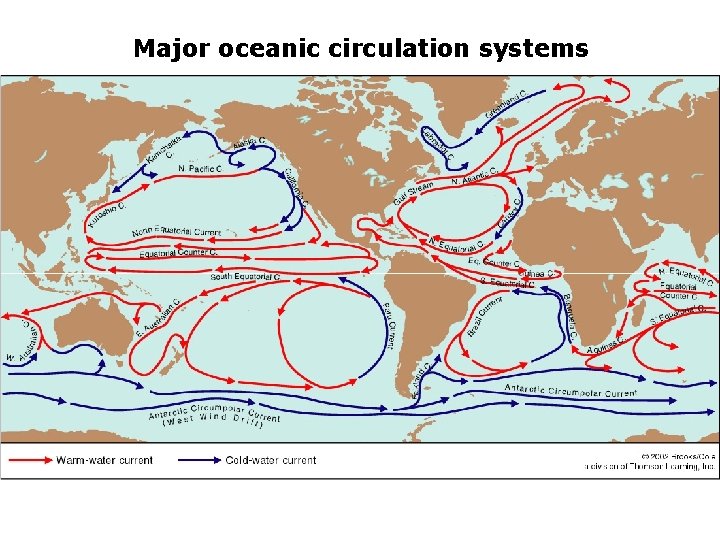
Major oceanic circulation systems
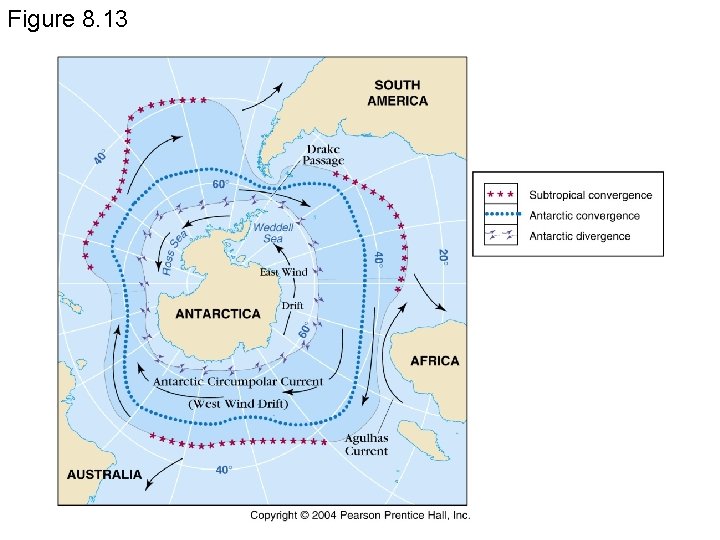
Figure 8. 13
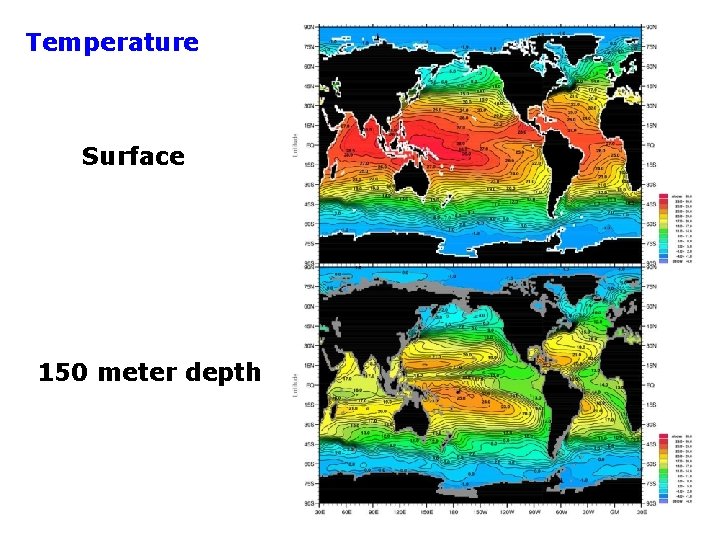
Temperature Surface 150 meter depth
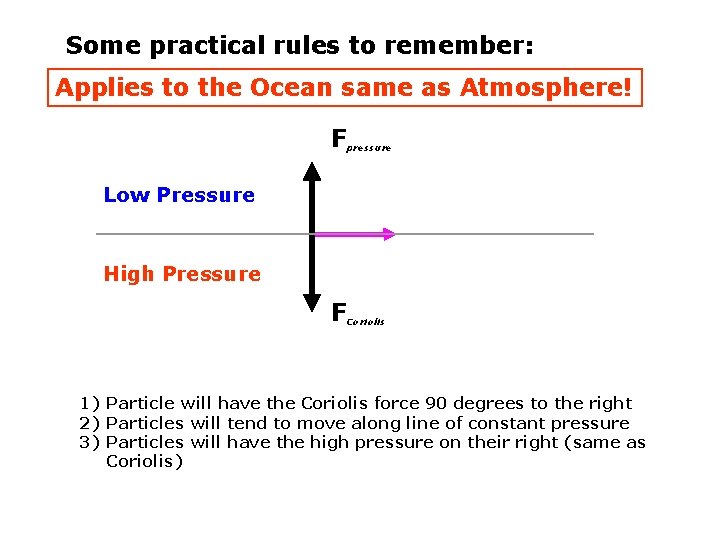
Some practical rules to remember: Applies to the Ocean same as Atmosphere! F pressure F Coriolis Low Pressure High Pressure 1) Particle will have the Coriolis force 90 degrees to the right 2) Particles will tend to move along line of constant pressure 3) Particles will have the high pressure on their right (same as Coriolis)
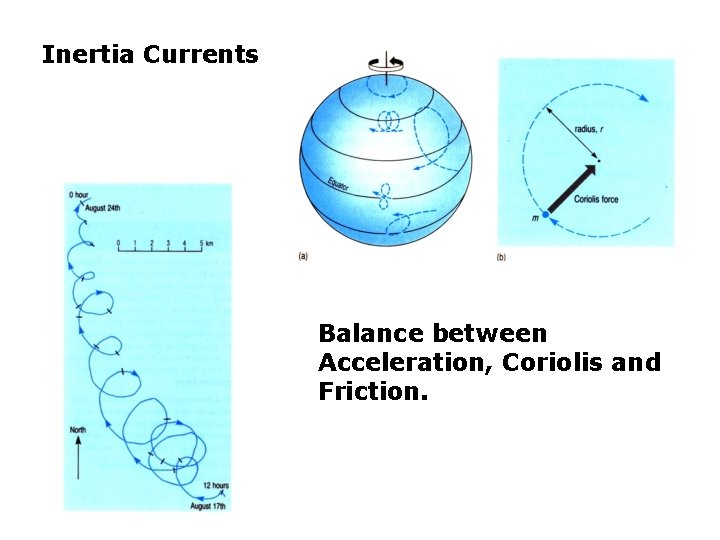
Inertia Currents Balance between Acceleration, Coriolis and Friction.
End of lecture