
The Obesity Epidemic Our multiple redundant systems for
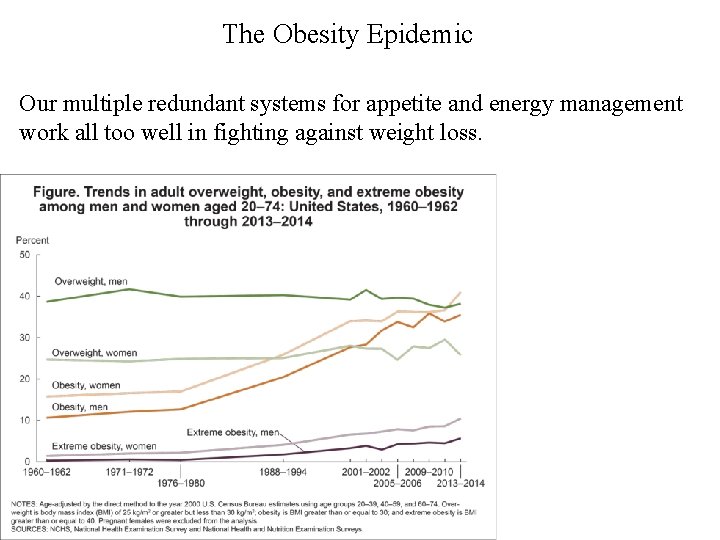
The Obesity Epidemic Our multiple redundant systems for appetite and energy management work all too well in fighting against weight loss.
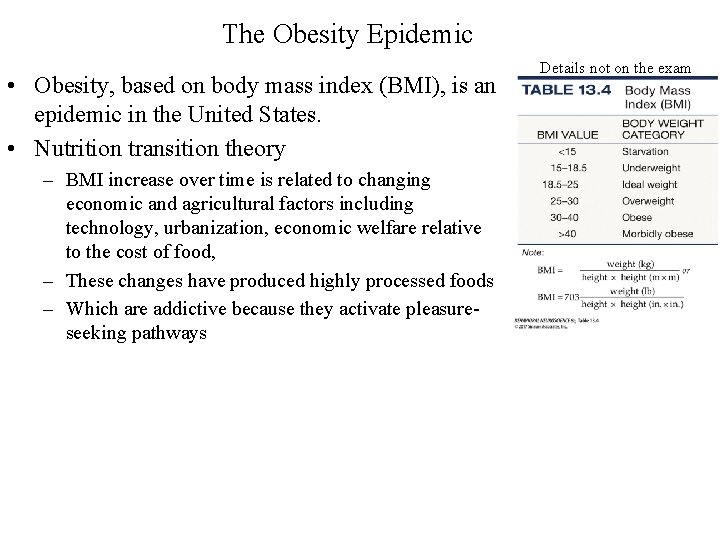
The Obesity Epidemic • Obesity, based on body mass index (BMI), is an epidemic in the United States. • Nutrition transition theory – BMI increase over time is related to changing economic and agricultural factors including technology, urbanization, economic welfare relative to the cost of food, – These changes have produced highly processed foods – Which are addictive because they activate pleasureseeking pathways Details not on the exam
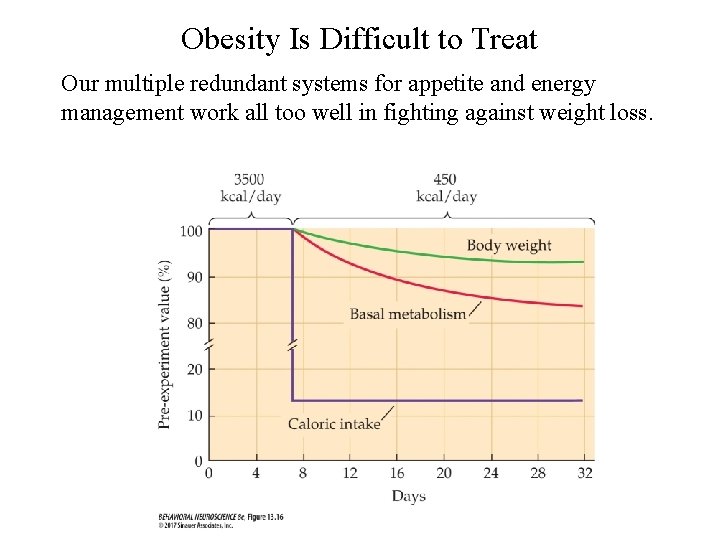
Obesity Is Difficult to Treat Our multiple redundant systems for appetite and energy management work all too well in fighting against weight loss.
Pathways to obesity • Overweight and obesity result from an energy imbalance – Weight Gain: Calories Consumed > Calories Used – Weight Loss: Calories Consumed < Calories Used – No Weight Change: Calories Consumed = Calories Used • Multiple factors – Overeating (“cafeteria” diet) • Carbohydrate intake • Fat intake • Alcohol intake – Inactivity (10% get regular exercise) – Metabolic issues – Genetics “Thrifty genome” – Combinations of the above
Eating Environment • In America, a changing environment has broadened food options and eating habits • Increased availability of inexpensive food – greater selection of products – processed pre-packaged foods – fast food restaurants – soft drinks • Portion size has also increased
Genetics • “thrifty genotype” hypothesis : the same genes that helped our ancestors survive occasional famines – – adjustment in basal metabolism tendency to overeat tendency to be sedentary easily stimulated capacity to store body fat • Evidence of genetic influence – differences among family members, twins, and adoptees – some genes at higher frequencies among the obese
Genetics • Many different genes contribute to the effects – fat mass and obesity-associated (FTO) gene • increased risk of obesity • increases with food deprivation • changes impulse control in response to visual cues – gene for Leptin in rare cases – genes for POMC or MC 4 in rare cases
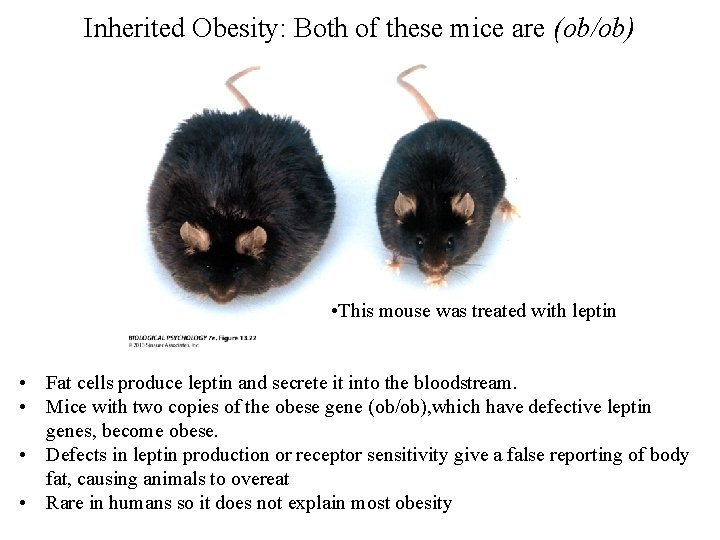
Inherited Obesity: Both of these mice are (ob/ob) • This mouse was treated with leptin • Fat cells produce leptin and secrete it into the bloodstream. • Mice with two copies of the obese gene (ob/ob), which have defective leptin genes, become obese. • Defects in leptin production or receptor sensitivity give a false reporting of body fat, causing animals to overeat • Rare in humans so it does not explain most obesity
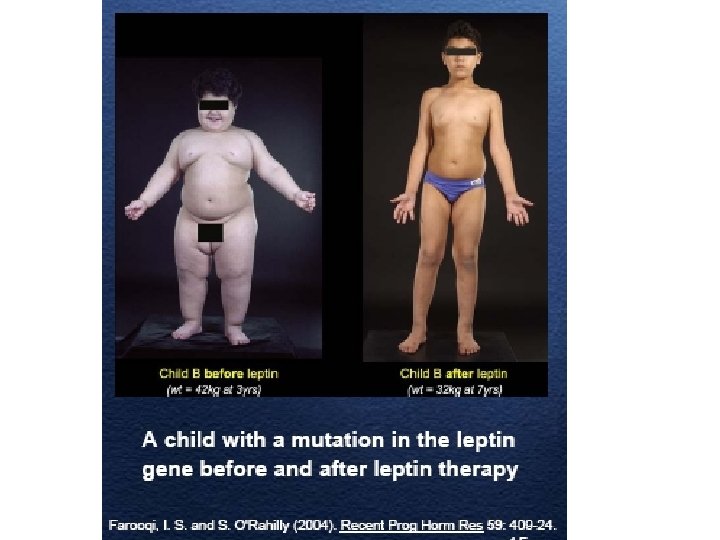
Leptin Treatment
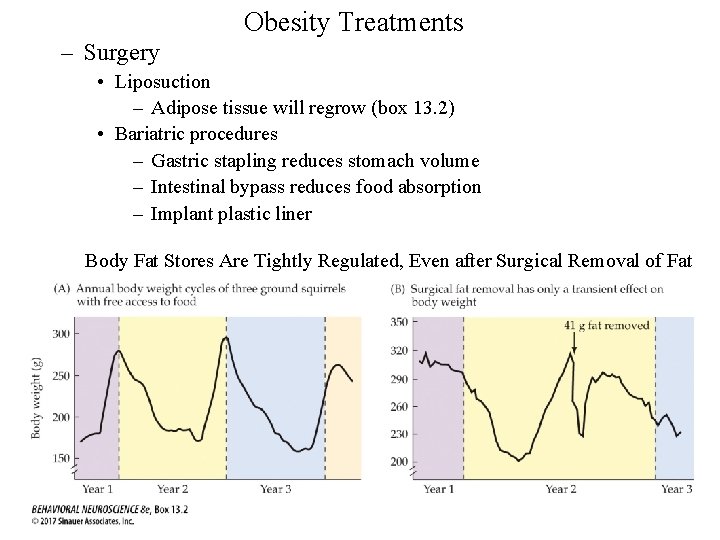
Obesity Treatments – Surgery • Liposuction – Adipose tissue will regrow (box 13. 2) • Bariatric procedures – Gastric stapling reduces stomach volume – Intestinal bypass reduces food absorption – Implant plastic liner Body Fat Stores Are Tightly Regulated, Even after Surgical Removal of Fat
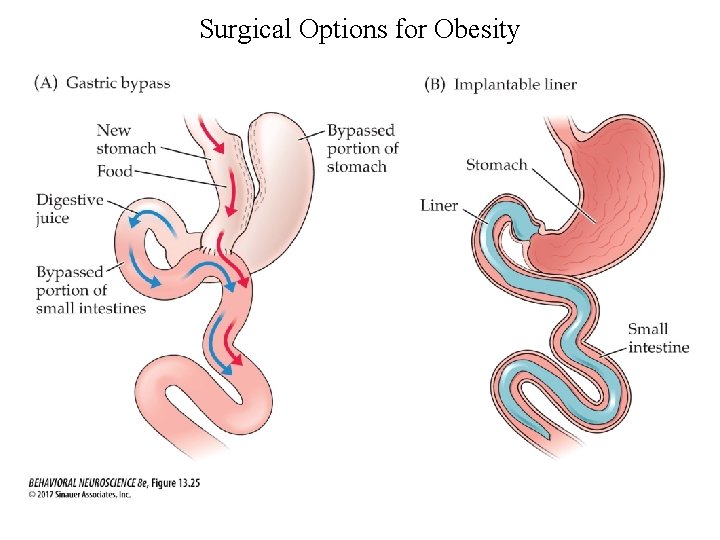
Surgical Options for Obesity
Obesity Treatments – Pharmacological: • Suppression of appetite – Herbal preparations that contain ephedrine – Amphetamines or Cocaine – Canabinoid antagonists producing an anti-high • Blockade of fat absorption (Xenical) • Drugs targeting hypothalamus to reduce appetite based on – Leptin – Ghrelin – PYY • Other Pharmacological obesity treatments include: – Increasing the body’s metabolic rate • Simulating thyroid hormone • Increasing activity of thermogenin – Inhibition of fat formation • Interfering with angiogenesis
Eating Disorders • Anorexia is the decreased sensation of appetite and can be caused by many things such as emotional upset • Anorexia nervosa – – persistently starve themselves and deny their appetites an irrational fear of becoming obese a preoccupation with their weight and food a distorted body-image • Bulimia – – illness in which a person binges on food has regular episodes of overeating feels a loss of control various methods -- such as vomiting or laxative abuse -- to prevent weight gain. • Binge eating – gorging with more food than is necessary to satisfy hunger
Prevalence of Eating Disorders • Lifetime prevalence rates for anorexia (AN) and bulimia (BN) and Binge Eating Disorder (BED) tend to be higher among women than in men. • Lifetime prevalence of AN = 0. 9% in women and 0. 3% in men • Lifetime prevalence of BN = 1. 5% in women and 0. 5% in men • Lifetime prevalence of BED = 3. 5% in women and 2. 0% in men • Prevalence rates of anorexia and bulimia appear to increase during the transition from adolescence to young adulthood. – the median ages for onset is about 12 - to 13 -years-old
Social and Cultural Factors • Controlling family members whom are often on diets • perfectionists and overachievers • “good” daughters who do what they’re told • excel in everything they do • focus on pleasing others • Emphasis on physical appearance • Participation in an activity that demands slenderness • Ballet • Gymnastics • Modeling • Anxiety and/or Stressful events • onset of puberty, a breakup, or going away to school
Genetic Factors May Predispose People to Eating Disorders • Increased risk of anorexia nervosa among first-degree biological relatives of individuals with the disorder – with twin-based heritability estimates of 50– 60% – Yilmaz, 2015 • Increased risk of mood disorders among first-degree biological relatives of people with anorexia, particularly the bingeeating/purging type. • Twin studies – concordant rates for monozygotic twins is significantly higher than those for dizygotic twins. • Thornton, 2011
The Cutting Edge: A Rumbling in the Belly • Microbiome: collectively all the microbes in or on the human body; a community of microbes • Gut Microbiome: Two and a half to five pounds of normal gut flora (microbes) provide beneficial actions. • Within the human gastrointestinal microbiota exists a complex ecosystem of approximately 300 to 500 bacterial species. (Quigley, 013) • Each of us possesses a distinct bacterial enterotype—a personal combination of different species of normal flora. • Gut flora perform regular tasks of digestion, vitamin production, ferments simple carbohydrates, break down cellulose
The Cutting Edge: A Rumbling in the Belly • Microbial genes turn on and off in response to what we do • Our genes turn on and off in response to what our microbes do • Gut–brain axis: how the microbiome influences anxiety, depression and perhaps autism. – Jane A. Foster , Karen-Anne Mc. Vey Neufeld Trends in Neuroscience, Volume 36, Issue 5, p 305– 312, May 2013 – microbiota are important in normal healthy brain function – alterations in microbiota influence stress-related behaviors • Use of psychobiotics to treat depression or anxiety
The Cutting Edge: A Rumbling in the Belly • Interactions of microbes in the gut (intestine) early in life train the immune system to distinguish self from non-self (invaders). • Microbes secrete compounds that regulate immune cells (T cells) cytokines, chemokines which may prevent pathogenic organisms from taking over • Some diseases and antibiotic treatments can drastically alter the balance of our gut flora, resulting in pathogens being able to become established. • Fecal transplantation is a treatment used effectively to restore necessary gut flora. • Probiotics: eating bacteria that are beneficial to health, usually in yogurt
- Slides: 19