
The Nucleus and DNA RecallCell Theory The cell
- Slides: 13
The Nucleus and DNA
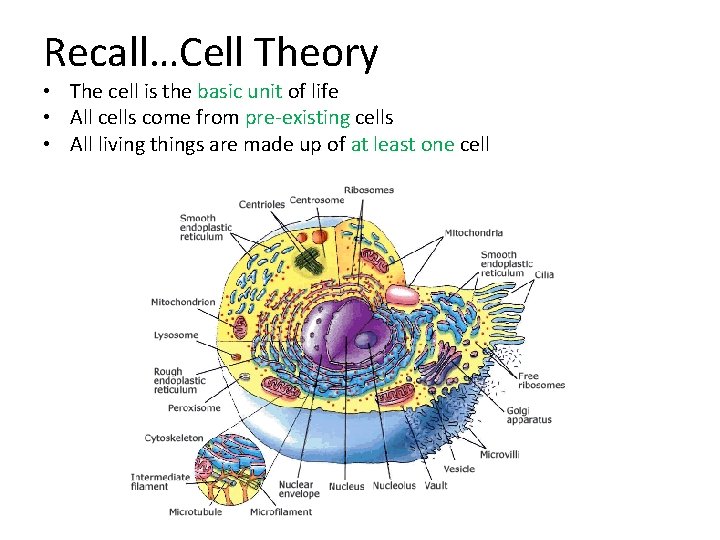
Recall…Cell Theory • The cell is the basic unit of life • All cells come from pre-existing cells • All living things are made up of at least one cell
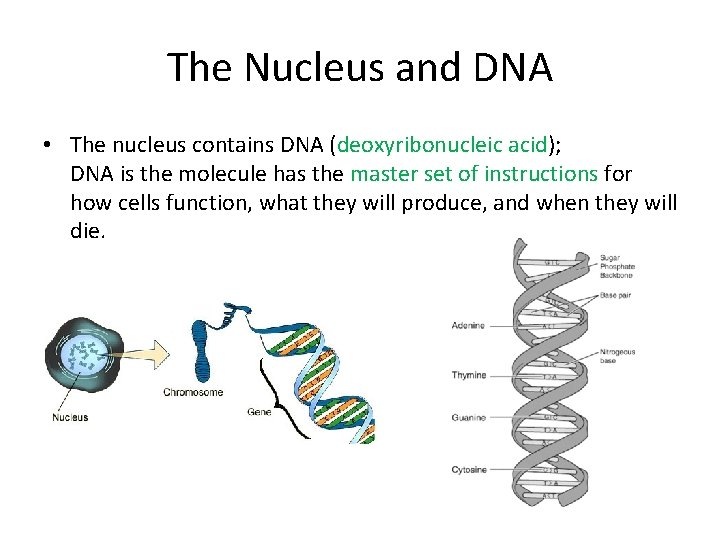
The Nucleus and DNA • The nucleus contains DNA (deoxyribonucleic acid); DNA is the molecule has the master set of instructions for how cells function, what they will produce, and when they will die.
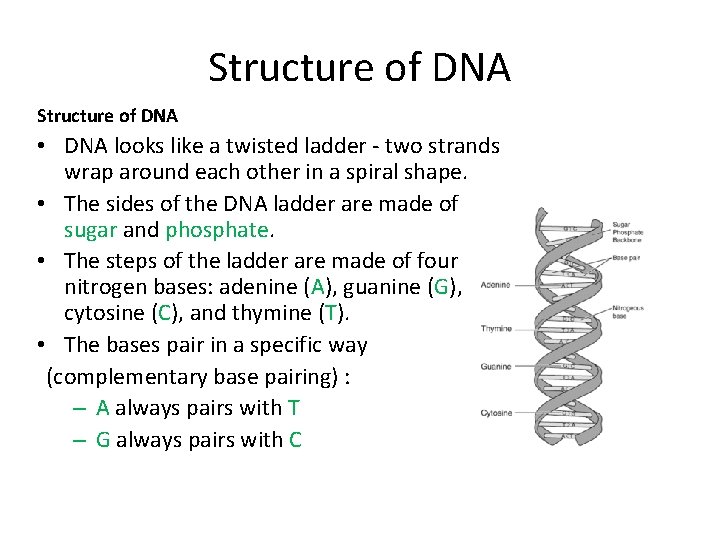
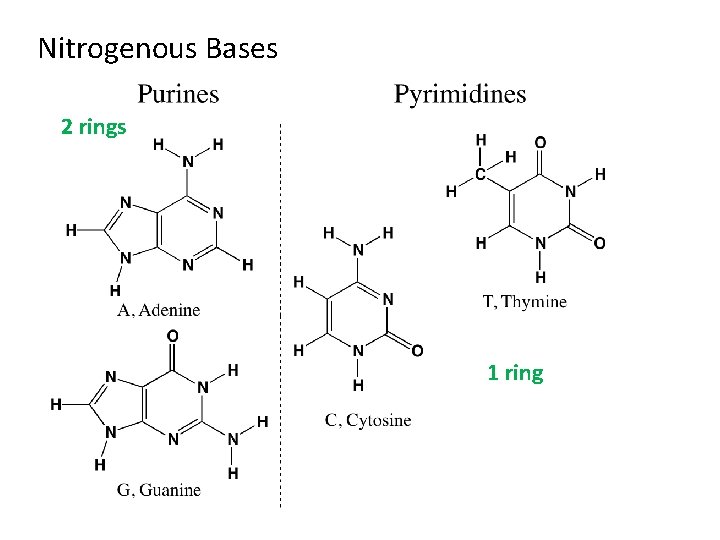
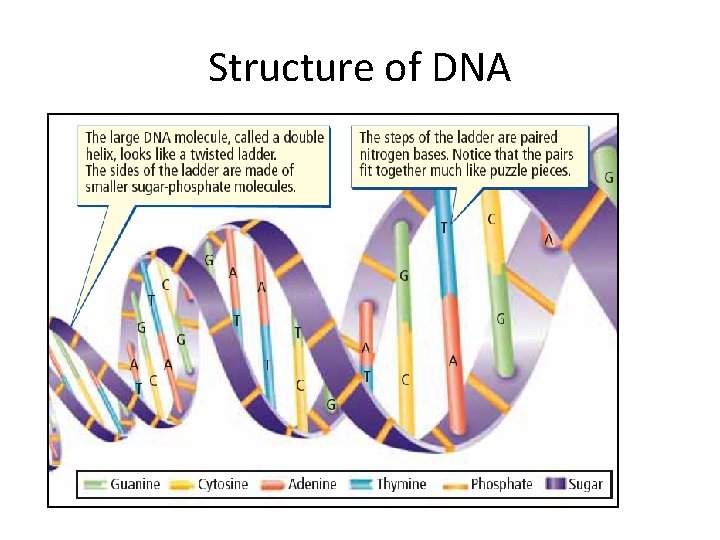
Structure of DNA • DNA looks like a twisted ladder - two strands wrap around each other in a spiral shape. • The sides of the DNA ladder are made of sugar and phosphate. • The steps of the ladder are made of four nitrogen bases: adenine (A), guanine (G), cytosine (C), and thymine (T). • The bases pair in a specific way (complementary base pairing) : – A always pairs with T – G always pairs with C
Nitrogenous Bases 2 rings 1 ring
Structure of DNA
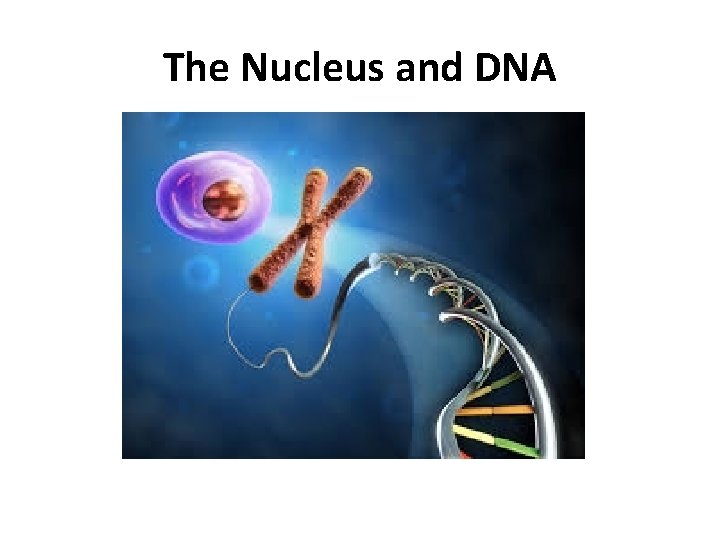
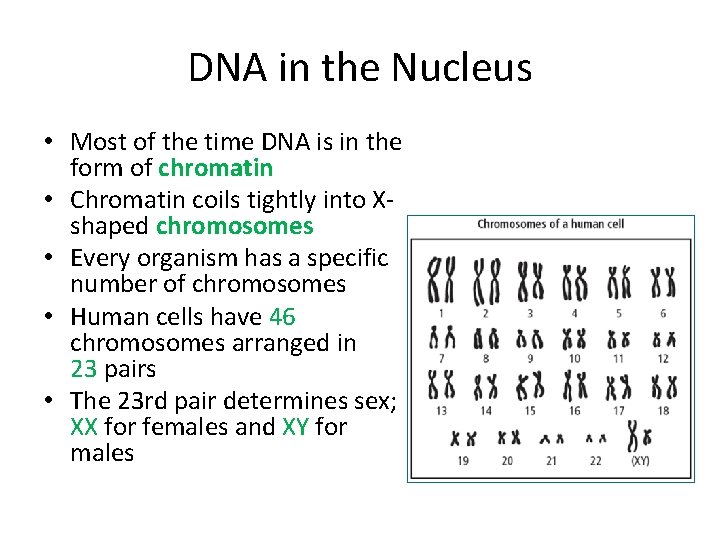
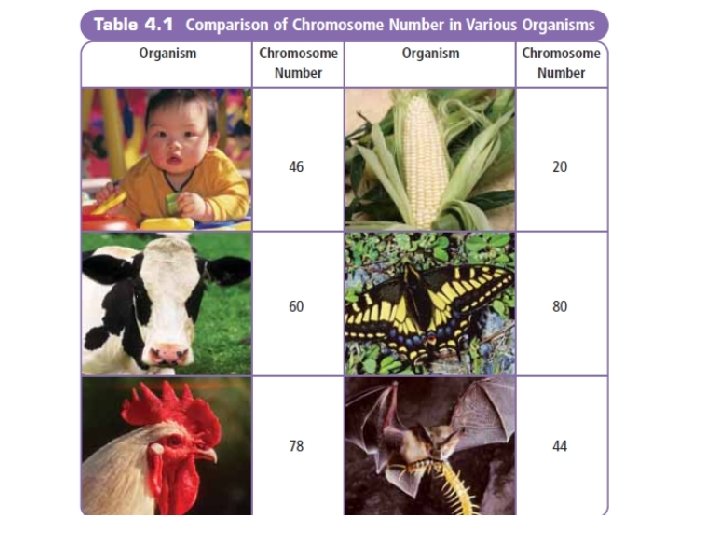
DNA in the Nucleus • Most of the time DNA is in the form of chromatin • Chromatin coils tightly into Xshaped chromosomes • Every organism has a specific number of chromosomes • Human cells have 46 chromosomes arranged in 23 pairs • The 23 rd pair determines sex; XX for females and XY for males
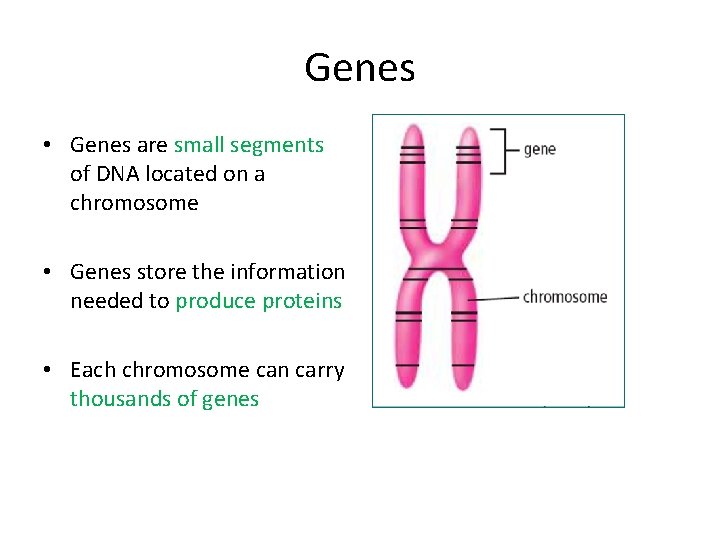
Genes • Genes are small segments of DNA located on a chromosome • Genes store the information needed to produce proteins • Each chromosome can carry thousands of genes
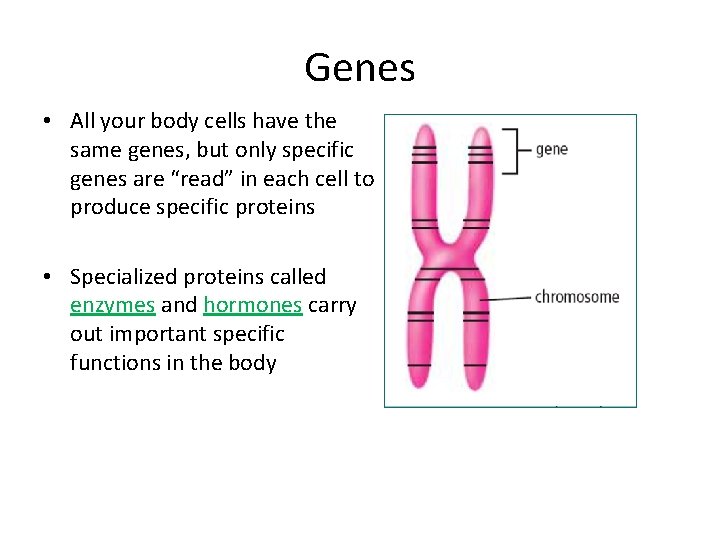
Genes • All your body cells have the same genes, but only specific genes are “read” in each cell to produce specific proteins • Specialized proteins called enzymes and hormones carry out important specific functions in the body
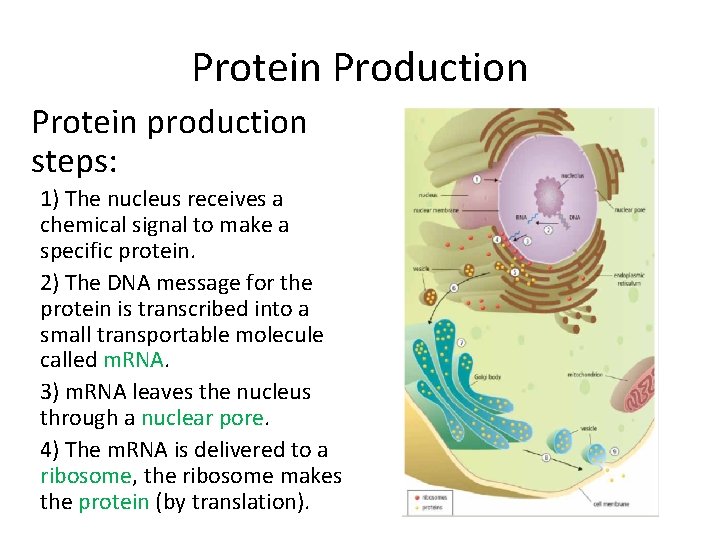
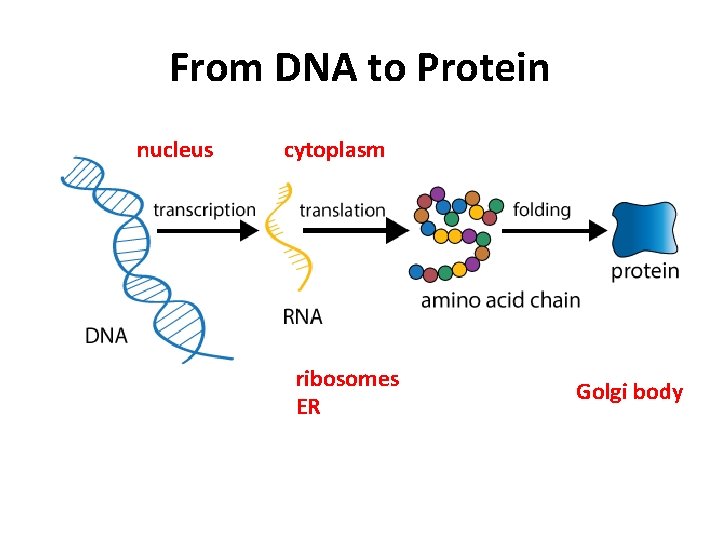
Protein Production Protein production steps: 1) The nucleus receives a chemical signal to make a specific protein. 2) The DNA message for the protein is transcribed into a small transportable molecule called m. RNA. 3) m. RNA leaves the nucleus through a nuclear pore. 4) The m. RNA is delivered to a ribosome, the ribosome makes the protein (by translation).
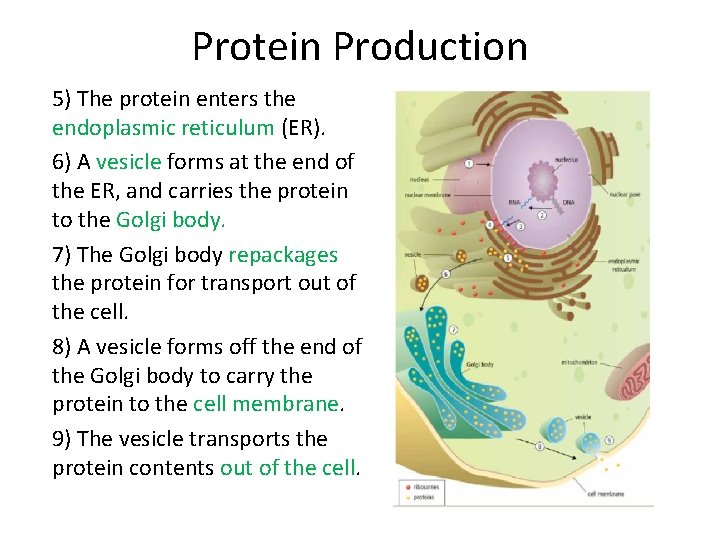
Protein Production 5) The protein enters the endoplasmic reticulum (ER). 6) A vesicle forms at the end of the ER, and carries the protein to the Golgi body. 7) The Golgi body repackages the protein for transport out of the cell. 8) A vesicle forms off the end of the Golgi body to carry the protein to the cell membrane. 9) The vesicle transports the protein contents out of the cell.
From DNA to Protein nucleus cytoplasm ribosomes ER Golgi body