
THE NORWEGIAN COURT SYSTEM May 21 st 2019

- Slides: 11
THE NORWEGIAN COURT SYSTEM May 21 st 2019 Elisabetta Favro
PRESENTATION Ø Main historical points Ø The court system Ø Lay judges
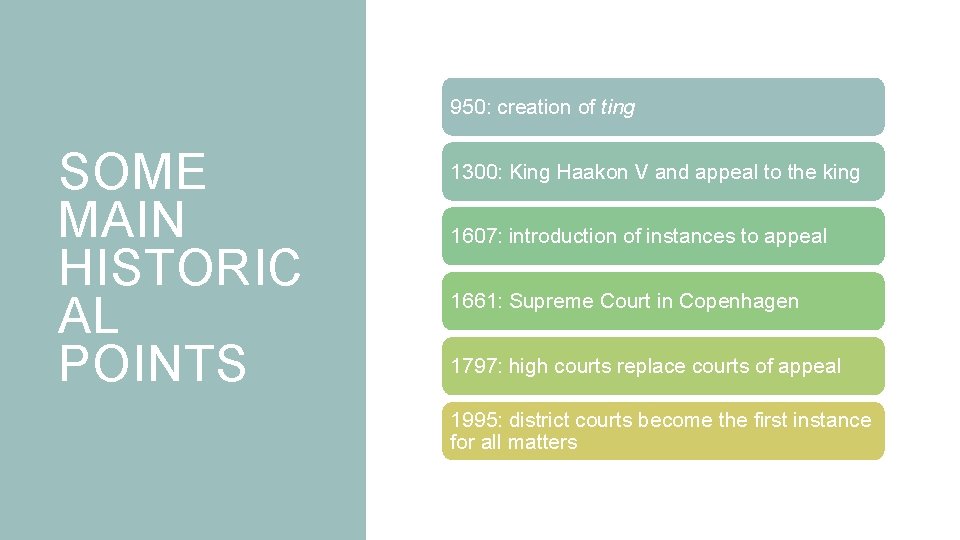
950: creation of ting SOME MAIN HISTORIC AL POINTS 1300: King Haakon V and appeal to the king 1607: introduction of instances to appeal 1661: Supreme Court in Copenhagen 1797: high courts replace courts of appeal 1995: district courts become the first instance for all matters
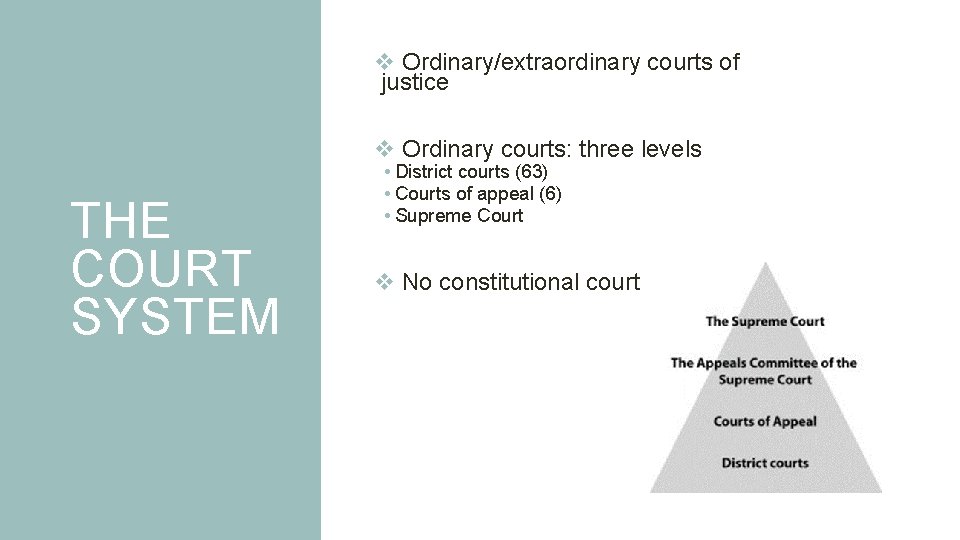
v Ordinary/extraordinary courts of justice v Ordinary courts: three levels THE COURT SYSTEM • District courts (63) • Courts of appeal (6) • Supreme Court v No constitutional court
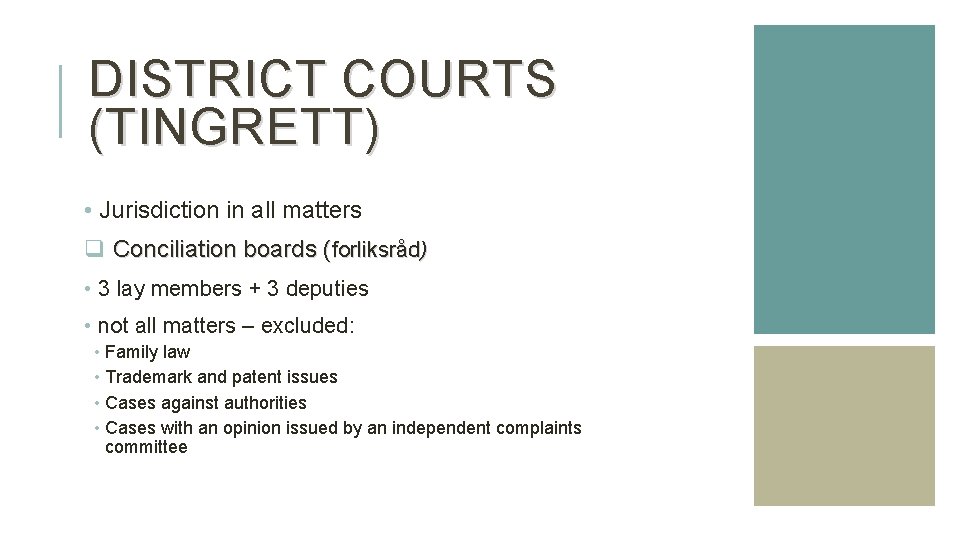
DISTRICT COURTS (TINGRETT) • Jurisdiction in all matters q Conciliation boards (forliksråd) • 3 lay members + 3 deputies • not all matters – excluded: • Family law • Trademark and patent issues • Cases against authorities • Cases with an opinion issued by an independent complaints committee
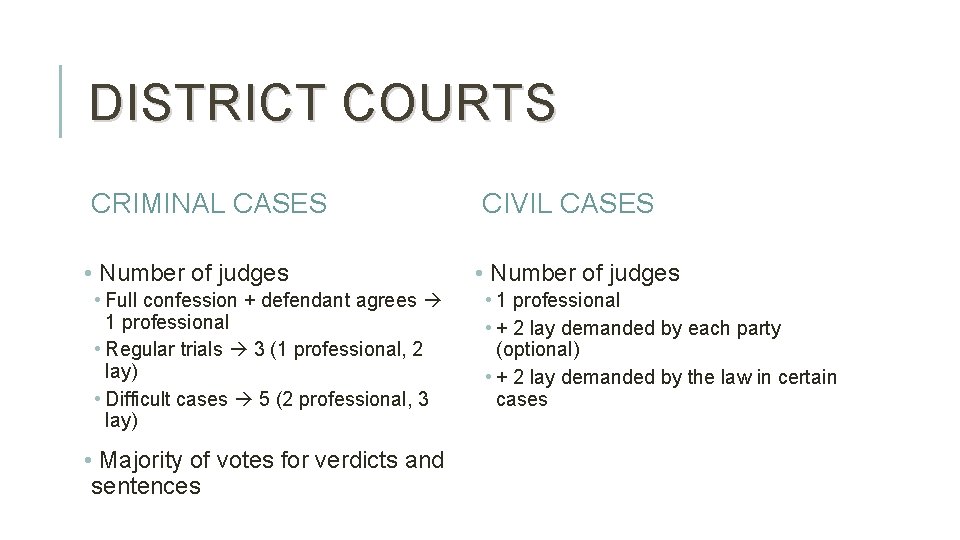
DISTRICT COURTS CRIMINAL CASES CIVIL CASES • Number of judges • Full confession + defendant agrees 1 professional • Regular trials 3 (1 professional, 2 lay) • Difficult cases 5 (2 professional, 3 lay) • Majority of votes for verdicts and sentences • 1 professional • + 2 lay demanded by each party (optional) • + 2 lay demanded by the law in certain cases
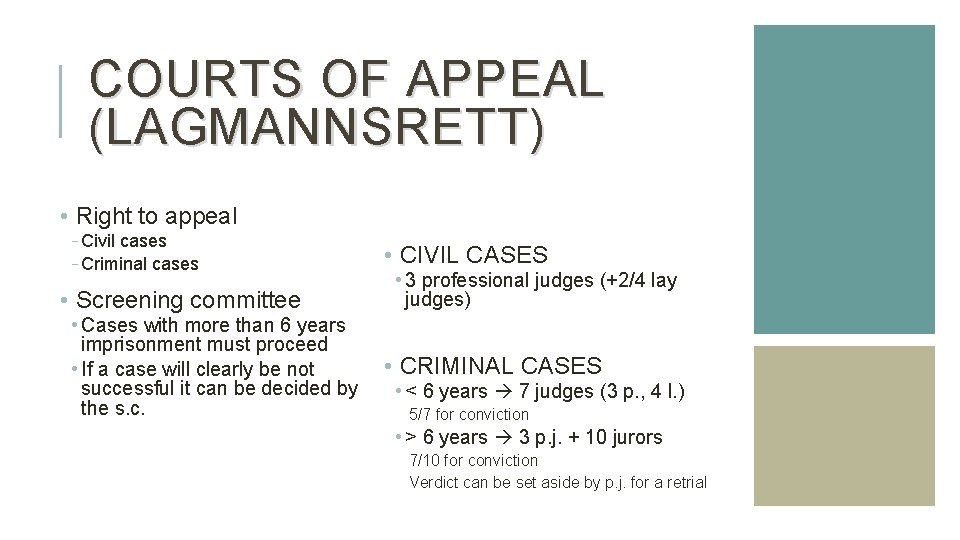
COURTS OF APPEAL (LAGMANNSRETT) • Right to appeal - Civil cases - Criminal cases • Screening committee • Cases with more than 6 years imprisonment must proceed • If a case will clearly be not successful it can be decided by the s. c. • CIVIL CASES • 3 professional judges (+2/4 lay judges) • CRIMINAL CASES • < 6 years 7 judges (3 p. , 4 l. ) 5/7 for conviction • > 6 years 3 p. j. + 10 jurors 7/10 for conviction Verdict can be set aside by p. j. for a retrial
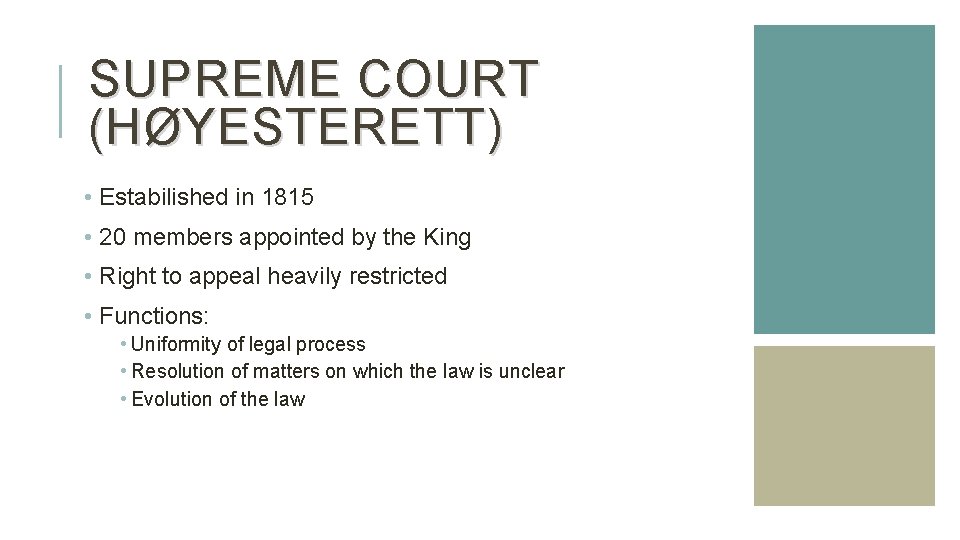
SUPREME COURT (HØYESTERETT) • Estabilished in 1815 • 20 members appointed by the King • Right to appeal heavily restricted • Functions: • Uniformity of legal process • Resolution of matters on which the law is unclear • Evolution of the law
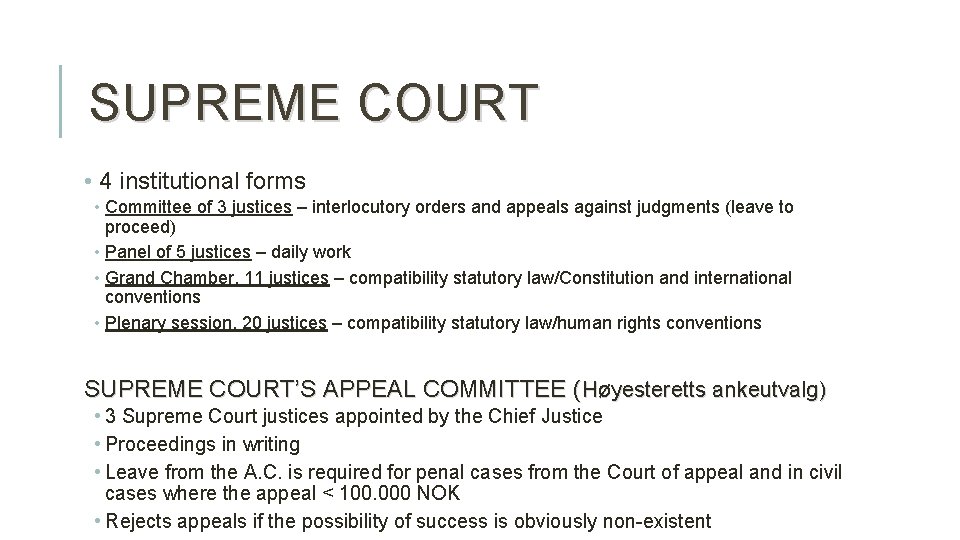
SUPREME COURT • 4 institutional forms • Committee of 3 justices – interlocutory orders and appeals against judgments (leave to proceed) • Panel of 5 justices – daily work • Grand Chamber, 11 justices – compatibility statutory law/Constitution and international conventions • Plenary session, 20 justices – compatibility statutory law/human rights conventions SUPREME COURT’S APPEAL COMMITTEE (Høyesteretts ankeutvalg) • 3 Supreme Court justices appointed by the Chief Justice • Proceedings in writing • Leave from the A. C. is required for penal cases from the Court of appeal and in civil cases where the appeal < 100. 000 NOK • Rejects appeals if the possibility of success is obviously non-existent
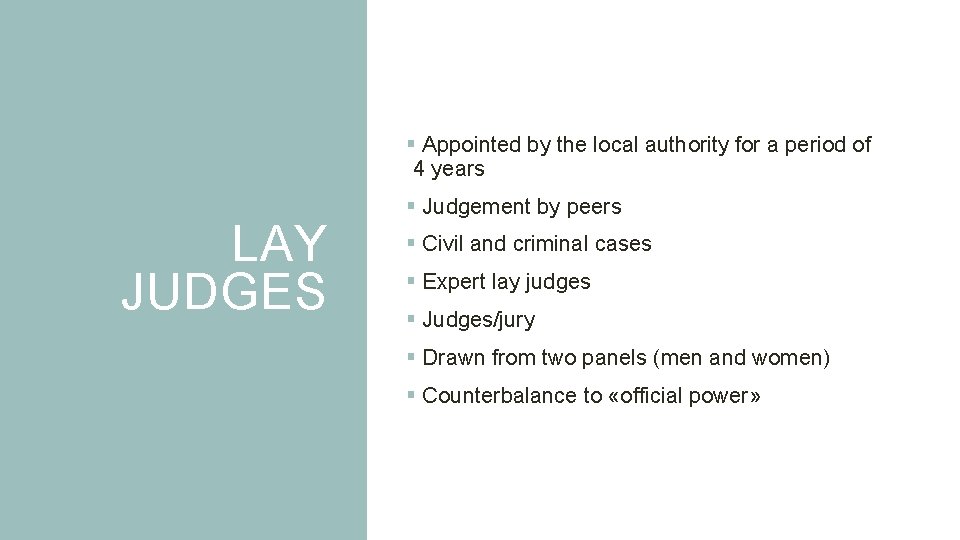
§ Appointed by the local authority for a period of 4 years LAY JUDGES § Judgement by peers § Civil and criminal cases § Expert lay judges § Judges/jury § Drawn from two panels (men and women) § Counterbalance to «official power»
THANK YOU FOR YOUR ATTENTION