
The North West End of Life Care Programme

- Slides: 14
The North West End of Life Care Programme for Domiciliary Care Step 1 workshop
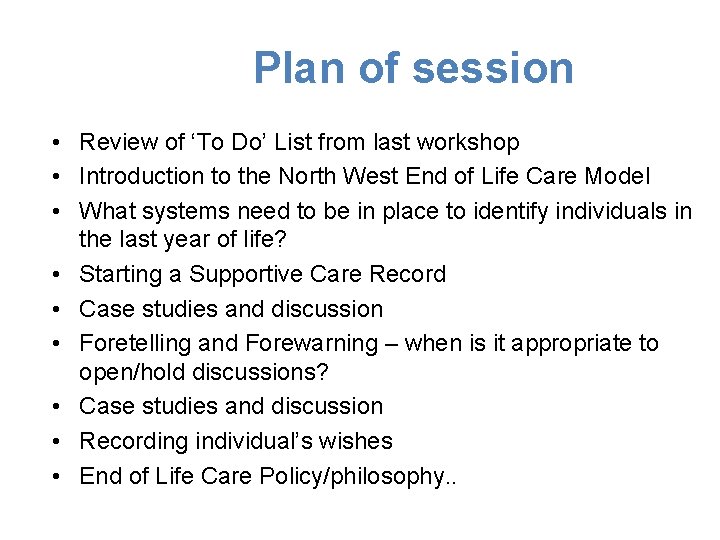
Plan of session • Review of ‘To Do’ List from last workshop • Introduction to the North West End of Life Care Model • What systems need to be in place to identify individuals in the last year of life? • Starting a Supportive Care Record • Case studies and discussion • Foretelling and Forewarning – when is it appropriate to open/hold discussions? • Case studies and discussion • Recording individual’s wishes • End of Life Care Policy/philosophy. .
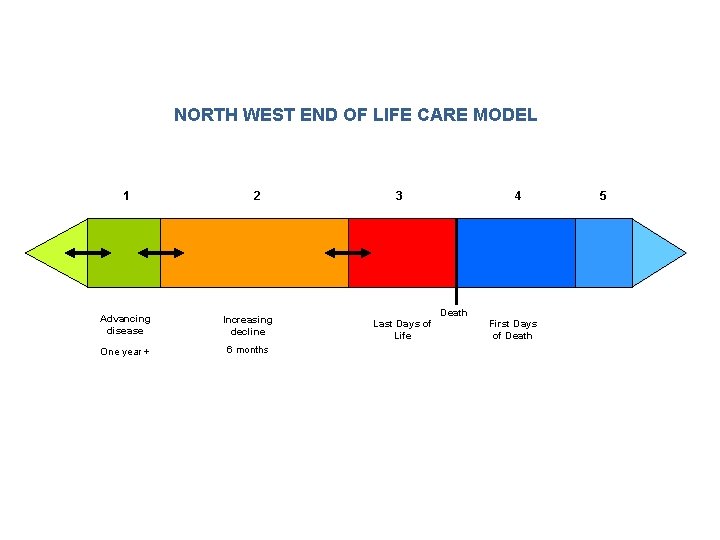
NORTH WEST END OF LIFE CARE MODEL 1 2 Advancing disease Increasing decline One year + 6 months 3 4 Death Last Days of Life First Days of Death 5
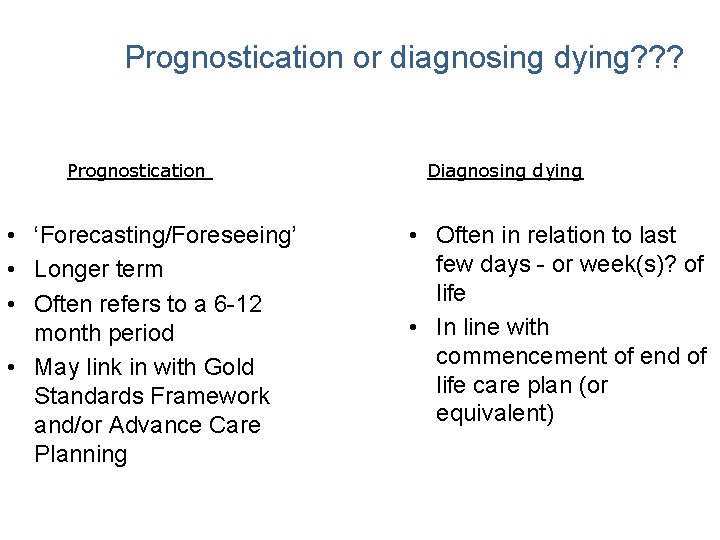
Prognostication or diagnosing dying? ? ? Prognostication • ‘Forecasting/Foreseeing’ • Longer term • Often refers to a 6 -12 month period • May link in with Gold Standards Framework and/or Advance Care Planning Diagnosing dying • Often in relation to last few days - or week(s)? of life • In line with commencement of end of life care plan (or equivalent)
What do we need to do to identify individuals in the last year of life?
Why prognosticate? • THE question…“How long do I have to live? ” • Support individuals, families and professionals to make decisions about the appropriateness of palliative treatments • Provide individuals and families with the opportunity to think about where they wish to be cared for • Allow time for individuals and families to take practical steps to prepare for their own deaths • To enable access to particular resources • To provide ongoing supportive care
How to prognosticate? ? • There is guidance available, however, the ‘SURPRISE QUESTION’ is often referred to. . . • Resources to support this process Ø The Gold Standards Framework Prognostic Indictor Guidance’(PIG) Ø ‘A Quick Guide to Identifying Patients for Supportive and Palliative Care’ • Why is it difficult?
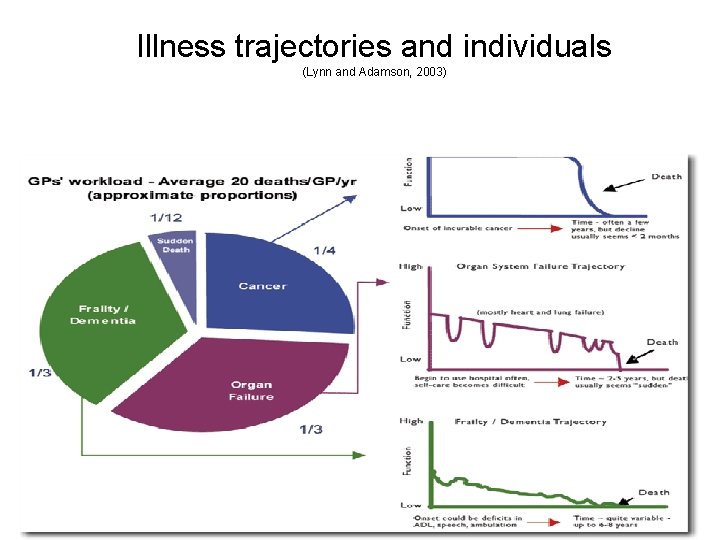
Illness trajectories and individuals (Lynn and Adamson, 2003)
Using the Supportive Care Record for End of Life Care Let’s have a go using case studies Jenny Jones Michael Andrews
Planning ahead. . . (Discussing end of life wishes) Why is it important to think and plan ahead? What sort of things could be planned for? Does everyone want to do it?
Planning ahead. . . (Discussing end of life wishes) Do you facilitate discussions? When and how would it be appropriate to have discussions about end of life issues? How can we initiate/support such discussions? Jenny Michael
Recording wishes • Recognised ‘system’ in the organisation, so EVERYONE knows where/how wishes are documented • Good teamwork (especially with DNs, GPs, Macmillan Nurses • Consider use of existing format, ie, PPC or equivalent or Best Interests at End of Life • Promote an ‘open’ attitude to holding discussions with individuals and families
To conclude. . . Any questions? ? ? • Consider additional workshop for key staff around end of life care planning • End Of Life Care Policy • Next time – ‘To do’ list • Evaluation forms