
The North American Revolution 1775 1787 Comparing Atlantic
- Slides: 15
The North American Revolution (1775 -1787)
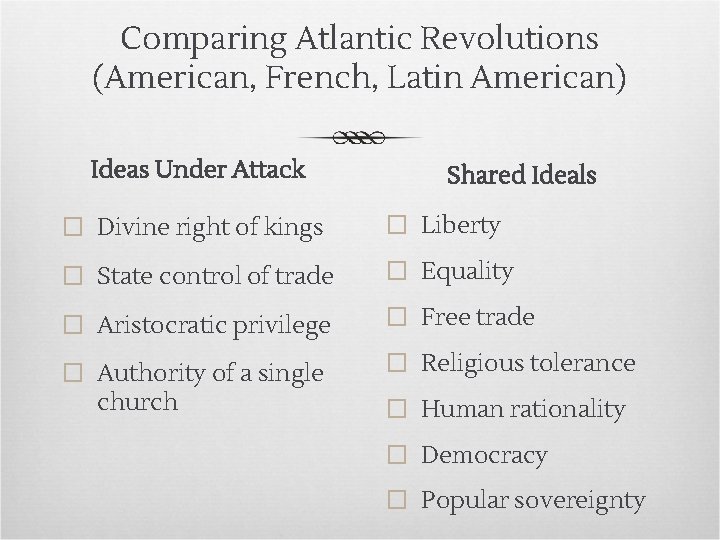
Comparing Atlantic Revolutions (American, French, Latin American) Ideas Under Attack Shared Ideals � Divine right of kings � Liberty � State control of trade � Equality � Aristocratic privilege � Free trade � Authority of a single church � Religious tolerance � Human rationality � Democracy � Popular sovereignty
North American Revolution � Struggle for independence from oppressive British rule � An effort to preserve the existing liberties of the colonies rather than create new ones � Up to this point �� British colonists had enjoyed local autonomy and little interference from Britain � The British government was: � Tied up in internal conflicts � Tied up in European wars (especially with France) � More concerned with its Caribbean colonies because those were more profitable
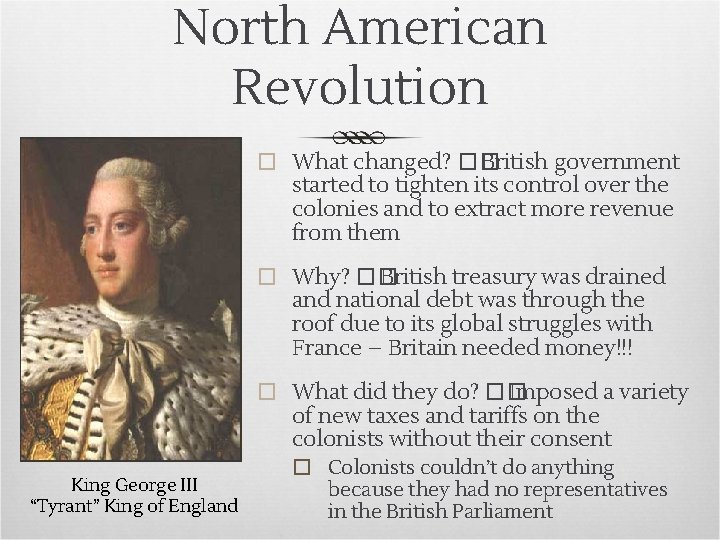
North American Revolution � What changed? �� British government started to tighten its control over the colonies and to extract more revenue from them � Why? �� British treasury was drained and national debt was through the roof due to its global struggles with France – Britain needed money!!! � What did they do? �� Imposed a variety of new taxes and tariffs on the colonists without their consent King George III “Tyrant” King of England � Colonists couldn’t do anything because they had no representatives in the British Parliament
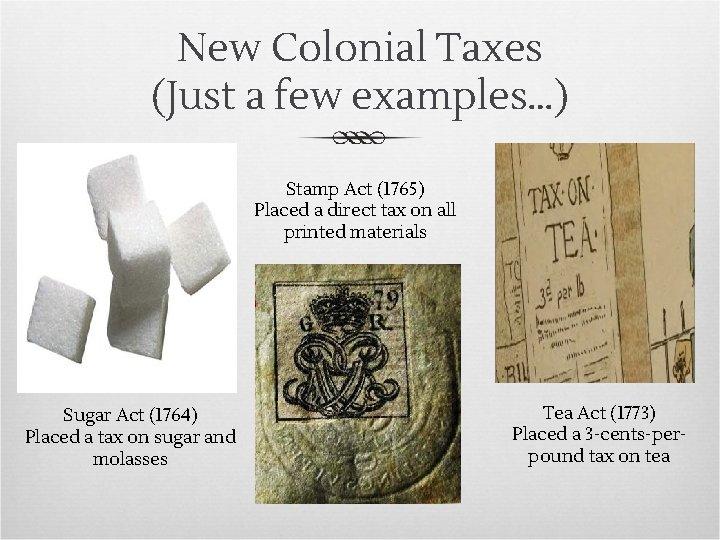
New Colonial Taxes (Just a few examples…) Stamp Act (1765) Placed a direct tax on all printed materials Sugar Act (1764) Placed a tax on sugar and molasses Tea Act (1773) Placed a 3 -cents-perpound tax on tea
Colonial Unrest After many unsuccessful attempts at peaceful resolutions with the British Parliament, the colonists started to get restless…
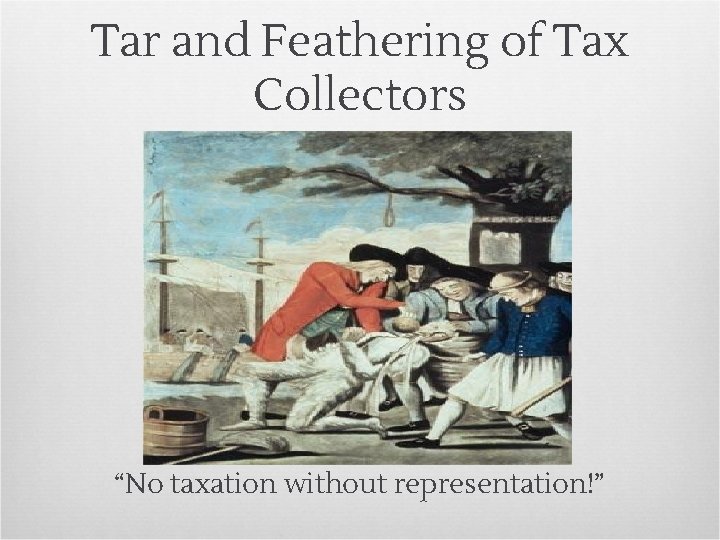
Tar and Feathering of Tax Collectors “No taxation without representation!”
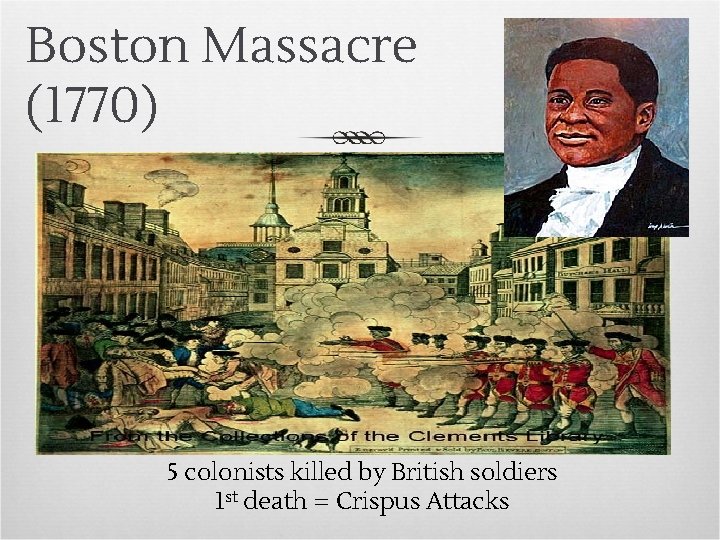
Boston Massacre (1770) 5 colonists killed by British soldiers 1 st death = Crispus Attacks
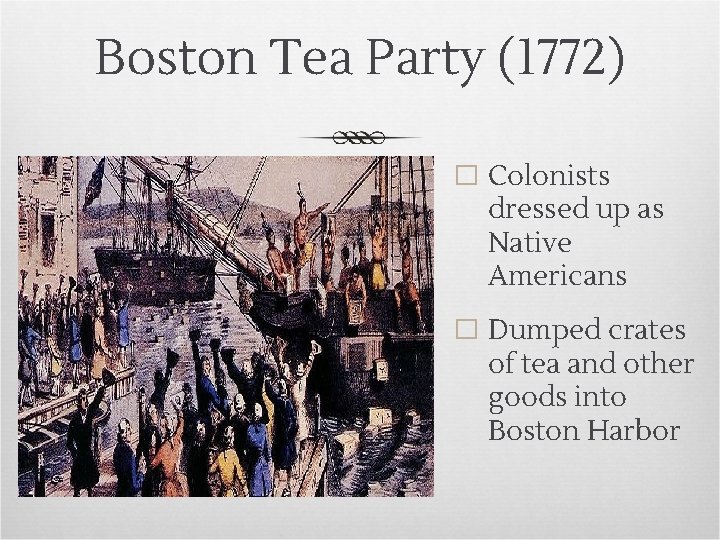
Boston Tea Party (1772) � Colonists dressed up as Native Americans � Dumped crates of tea and other goods into Boston Harbor
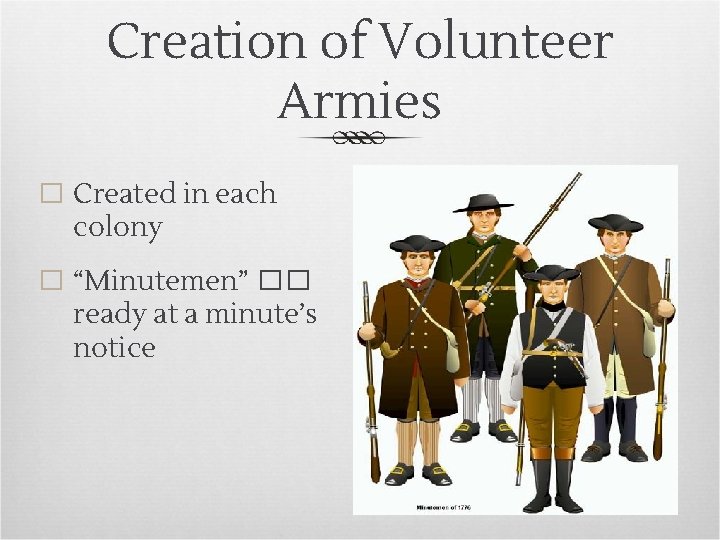
Creation of Volunteer Armies � Created in each colony � “Minutemen” �� ready at a minute’s notice
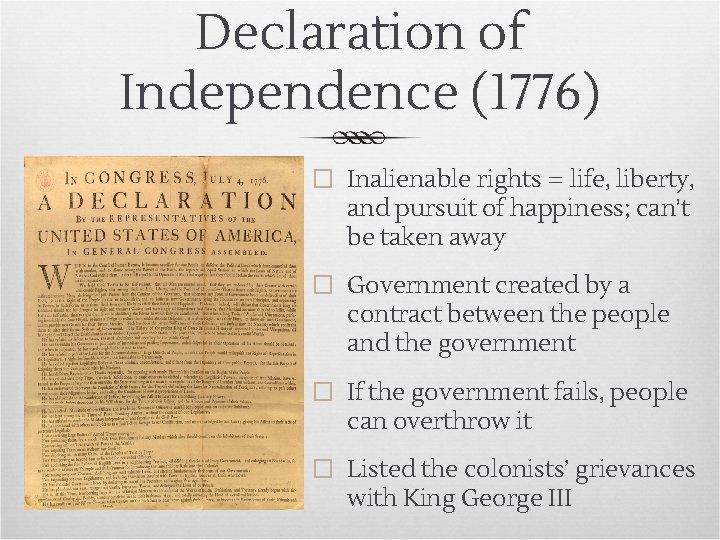
Declaration of Independence (1776) � Inalienable rights = life, liberty, and pursuit of happiness; can’t be taken away � Government created by a contract between the people and the government � If the government fails, people can overthrow it � Listed the colonists’ grievances with King George III
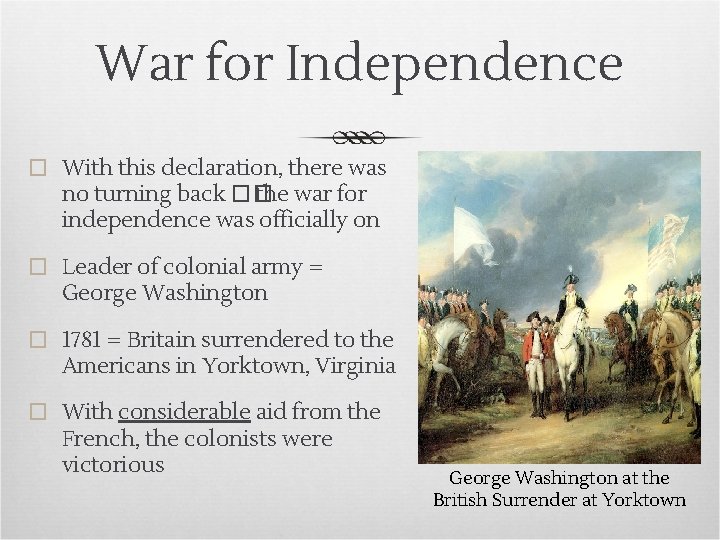
War for Independence � With this declaration, there was no turning back �� the war for independence was officially on � Leader of colonial army = George Washington � 1781 = Britain surrendered to the Americans in Yorktown, Virginia � With considerable aid from the French, the colonists were victorious George Washington at the British Surrender at Yorktown
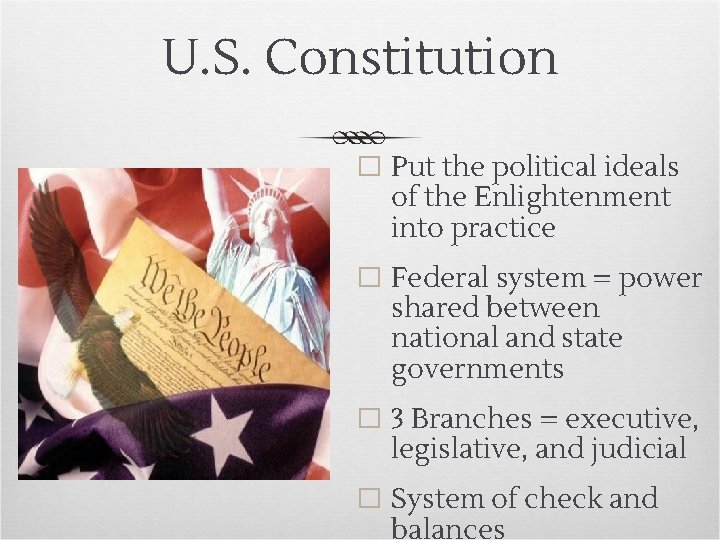
U. S. Constitution � Put the political ideals of the Enlightenment into practice � Federal system = power shared between national and state governments � 3 Branches = executive, legislative, and judicial � System of check and balances
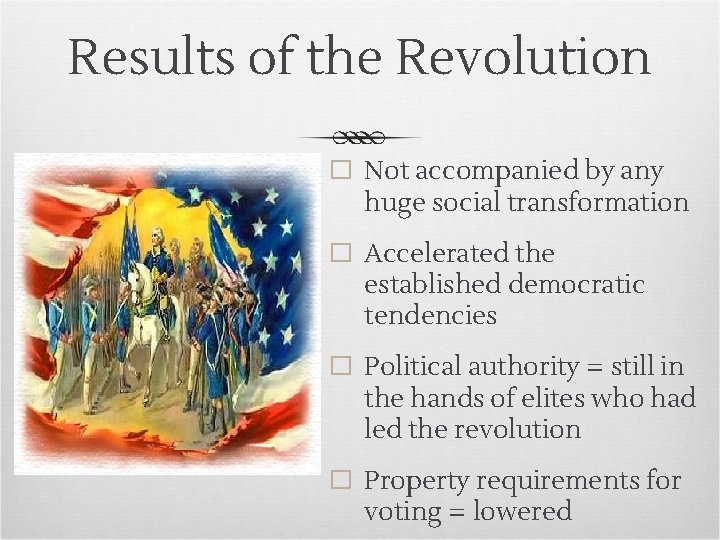
Results of the Revolution � Not accompanied by any huge social transformation � Accelerated the established democratic tendencies � Political authority = still in the hands of elites who had led the revolution � Property requirements for voting = lowered
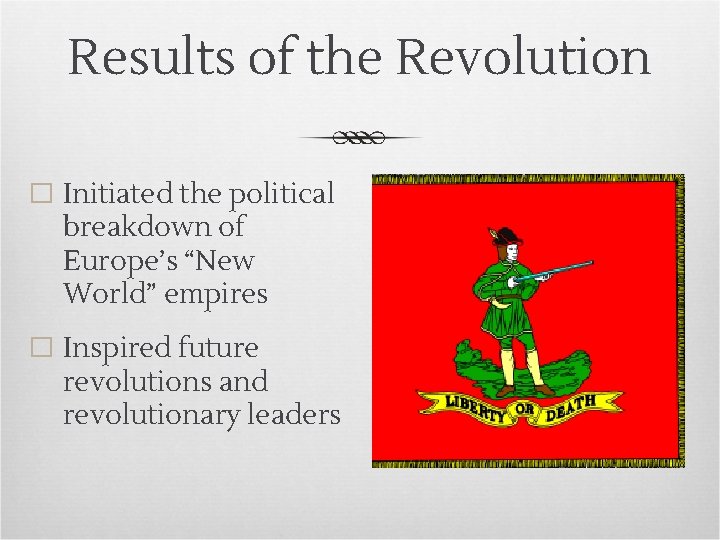
Results of the Revolution � Initiated the political breakdown of Europe’s “New World” empires � Inspired future revolutions and revolutionary leaders