
The NormalConducting Linear Collider preparation status and plans
- Slides: 22
The Normal-Conducting Linear Collider preparation - status and plans 07. 01. 2004 Marc Ross
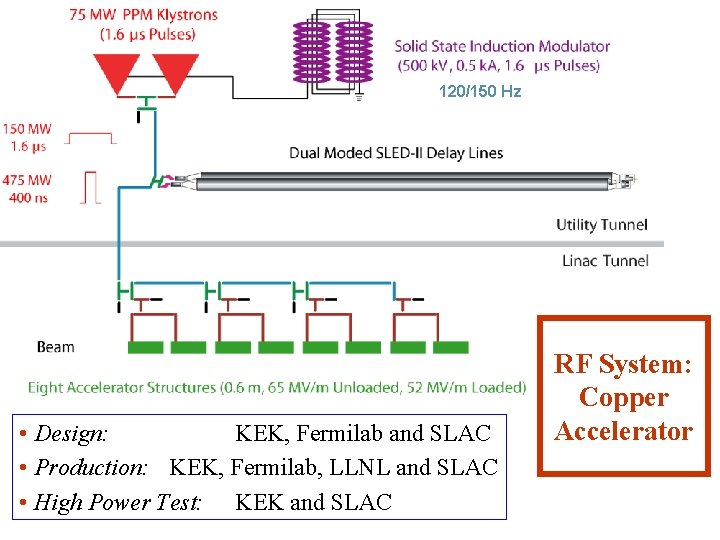
120/150 Hz • Design: KEK, Fermilab and SLAC • Production: KEK, Fermilab, LLNL and SLAC • High Power Test: KEK and SLAC RF System: Copper Accelerator
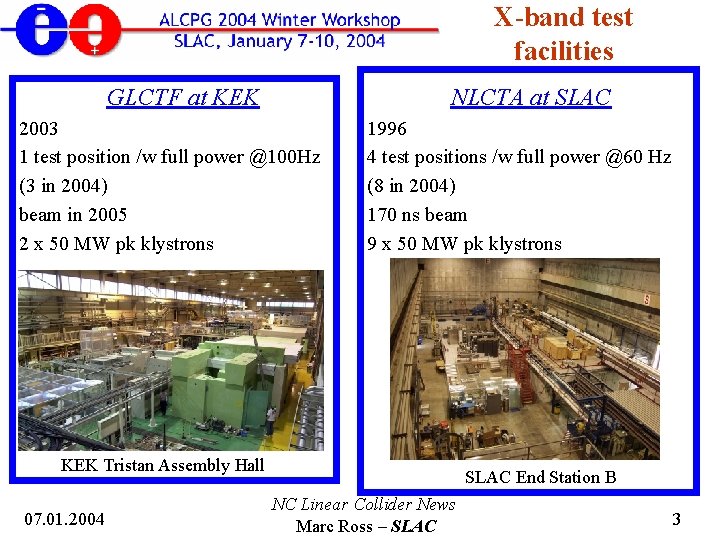
X-band test facilities GLCTF at KEK NLCTA at SLAC 2003 1 test position /w full power @100 Hz (3 in 2004) beam in 2005 2 x 50 MW pk klystrons 1996 4 test positions /w full power @60 Hz (8 in 2004) 170 ns beam 9 x 50 MW pk klystrons KEK Tristan Assembly Hall 07. 01. 2004 SLAC End Station B NC Linear Collider News Marc Ross – SLAC Author Name Date 3 Slide #
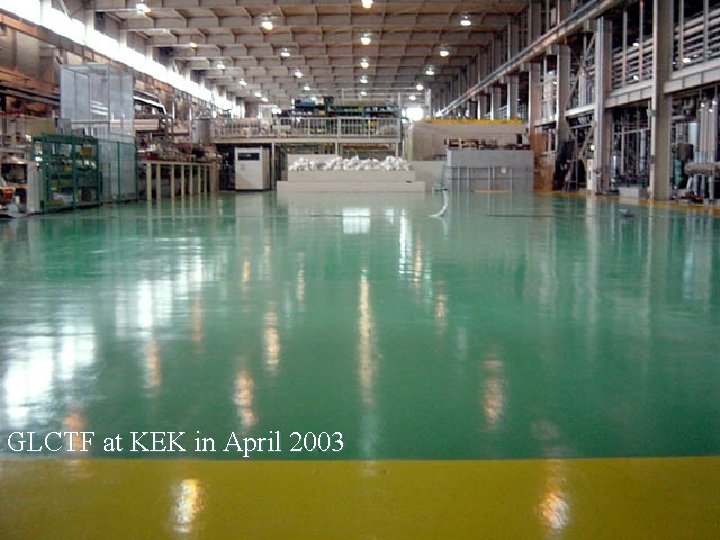
GLCTF at KEK in April 2003
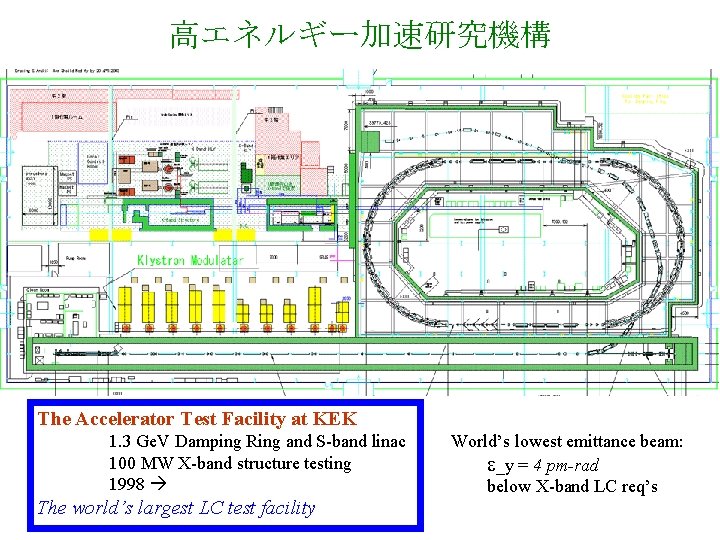
高エネルギー加速研究機構 The Accelerator Test Facility at KEK 1. 3 Ge. V Damping Ring and S-band linac 100 MW X-band structure testing 1998 The world’s largest LC test facility World’s lowest emittance beam: e_y = 4 pm-rad below X-band LC req’s
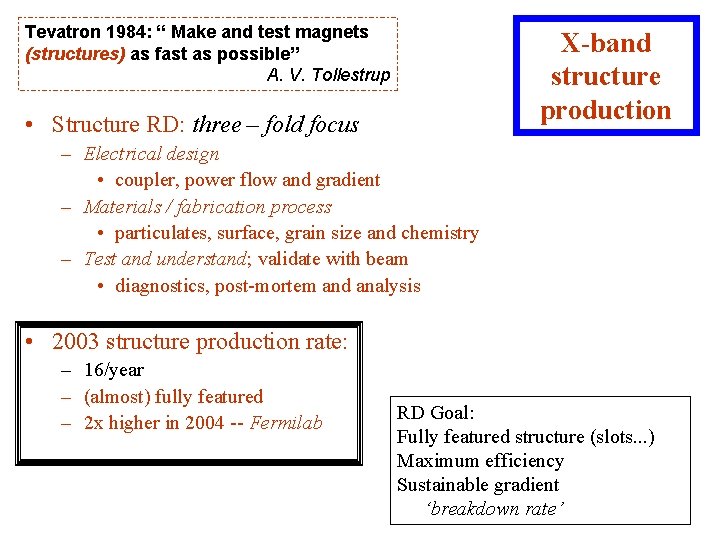
Tevatron 1984: “ Make and test magnets (structures) as fast as possible” A. V. Tollestrup X-band structure production • Structure RD: three – fold focus – Electrical design • coupler, power flow and gradient – Materials / fabrication process • particulates, surface, grain size and chemistry – Test and understand; validate with beam • diagnostics, post-mortem and analysis • 2003 structure production rate: – 16/year – (almost) fully featured – 2 x higher in 2004 -- Fermilab RD Goal: Fully featured structure (slots. . . ) Maximum efficiency Sustainable gradient ‘breakdown rate’
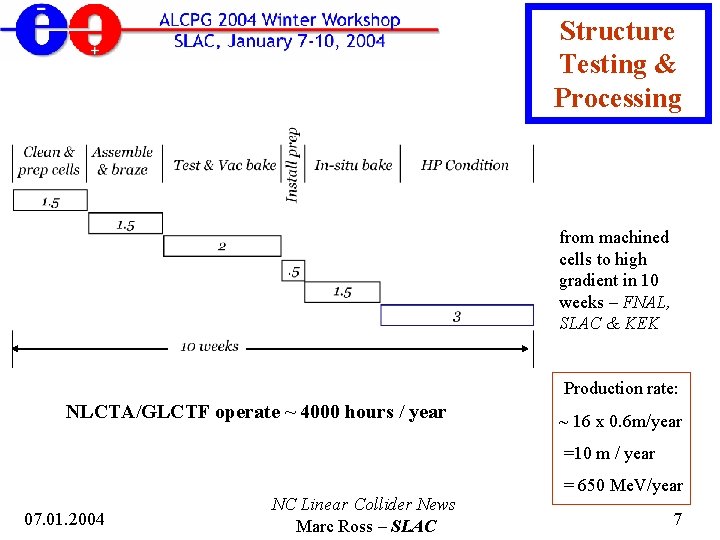
Structure Testing & Processing from machined cells to high gradient in 10 weeks – FNAL, SLAC & KEK Production rate: NLCTA/GLCTF operate ~ 4000 hours / year ~ 16 x 0. 6 m/year =10 m / year 07. 01. 2004 NC Linear Collider News Marc Ross – SLAC = 650 Me. V/year Author Name Date 7 Slide #
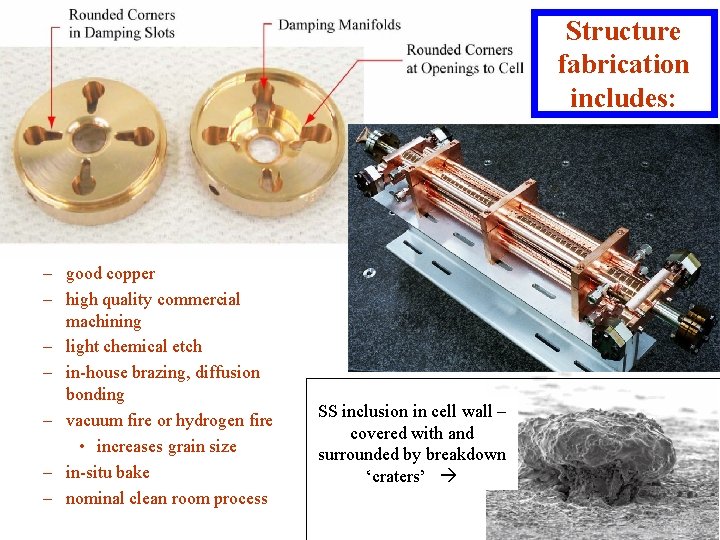
Structure fabrication includes: – good copper – high quality commercial machining – light chemical etch – in-house brazing, diffusion bonding – vacuum fire or hydrogen fire • increases grain size – in-situ bake – nominal clean room process SS inclusion in cell wall – covered with and surrounded by breakdown ‘craters’
07. 01. 2004 NC Linear Collider News Marc Ross – SLAC Author Name Date 9 Slide #
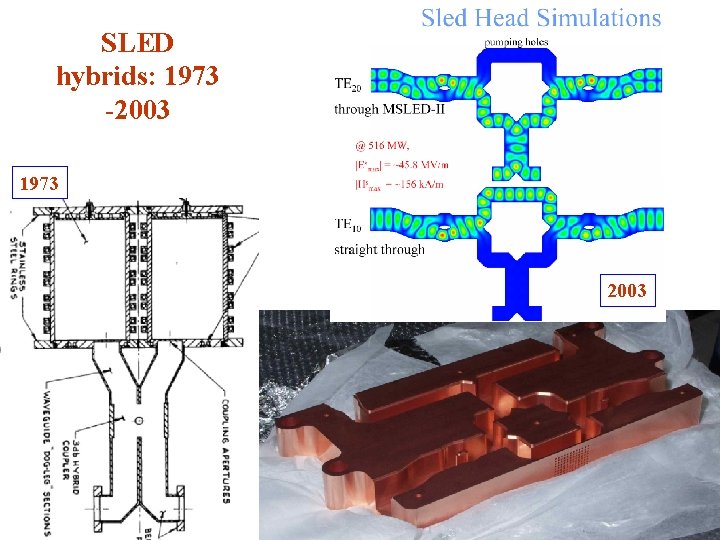
SLED hybrids: 1973 -2003 1973 2003
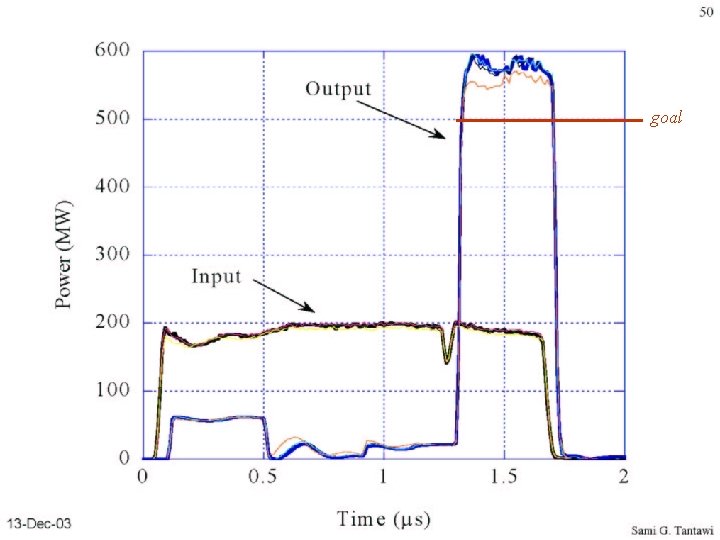
goal
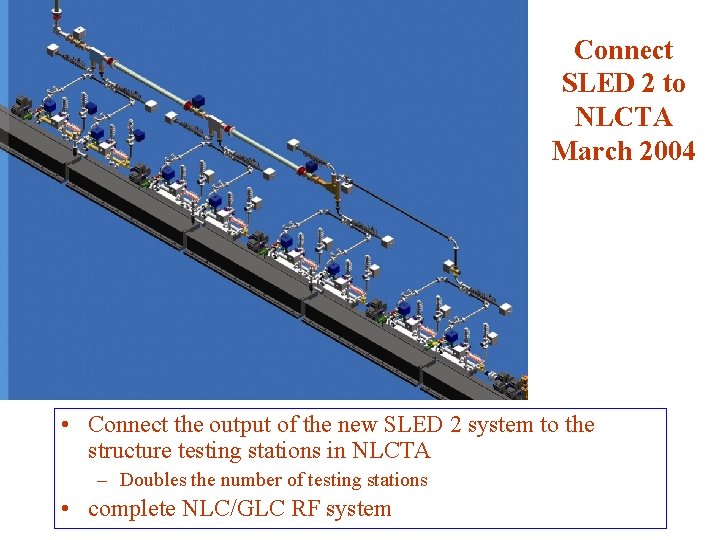
Connect SLED 2 to NLCTA March 2004 • Connect the output of the new SLED 2 system to the structure testing stations in NLCTA – Doubles the number of testing stations • complete NLC/GLC RF system
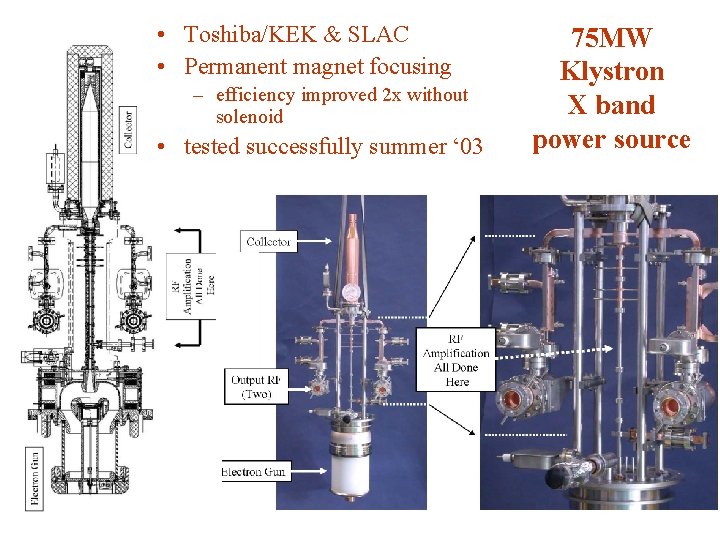
• Toshiba/KEK & SLAC • Permanent magnet focusing – efficiency improved 2 x without solenoid • tested successfully summer ‘ 03 75 MW Klystron X band power source
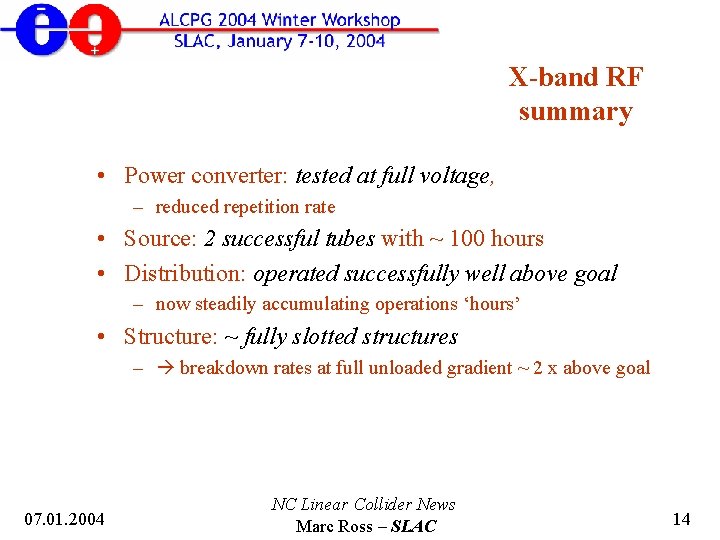
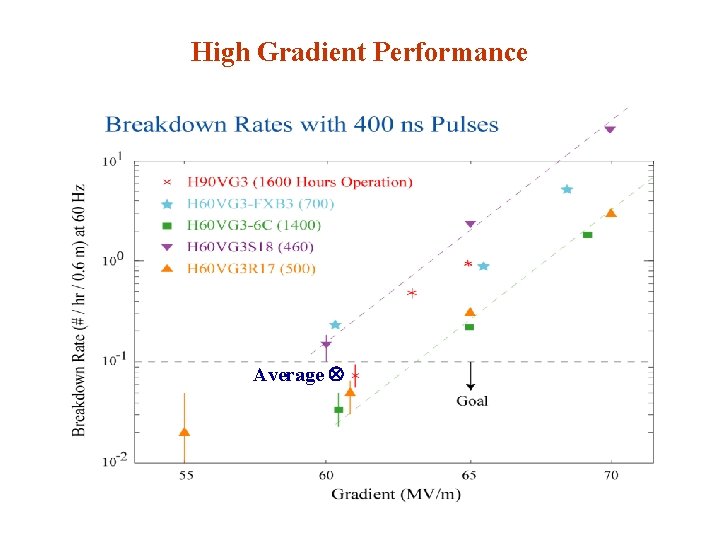
X-band RF summary • Power converter: tested at full voltage, – reduced repetition rate • Source: 2 successful tubes with ~ 100 hours • Distribution: operated successfully well above goal – now steadily accumulating operations ‘hours’ • Structure: ~ fully slotted structures – breakdown rates at full unloaded gradient ~ 2 x above goal 07. 01. 2004 NC Linear Collider News Marc Ross – SLAC Author Name Date 14 Slide #
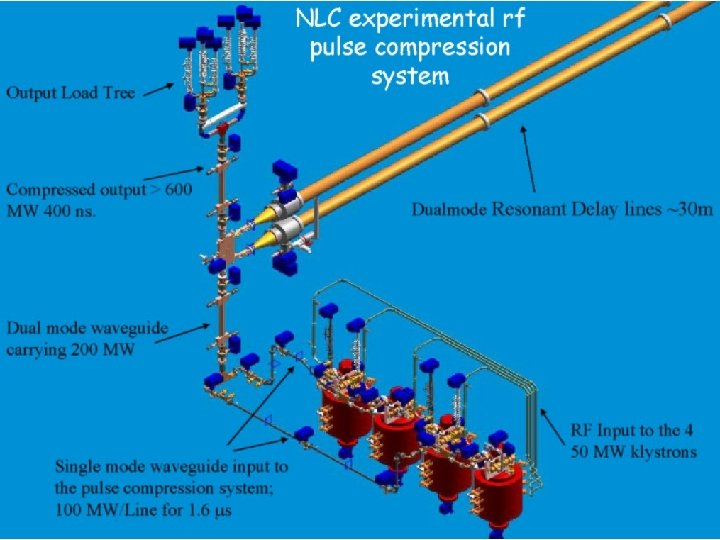
GLC(X)/NLC Level I R&D Requirements (R 1) • one“Demonstration of SLED-II pulse compression system at D design power level. ” • “Test of complete accelerator structure at design gradient with detuning and damping, including study of breakdown and dark current. ”
High Gradient Performance Average
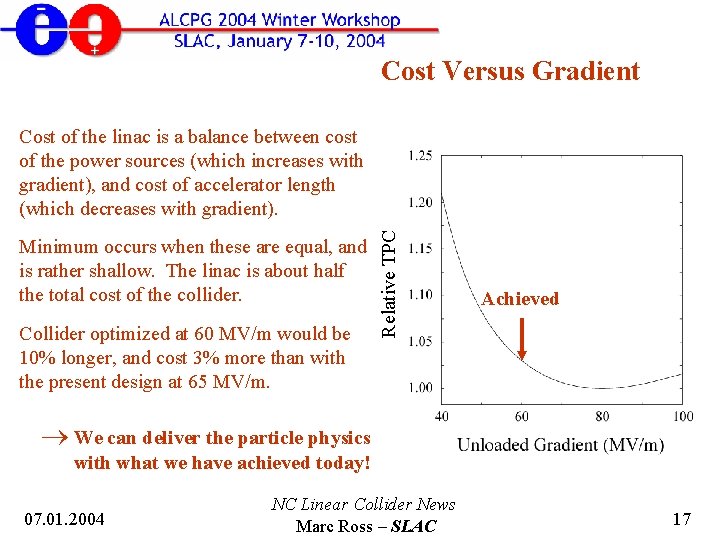
Cost Versus Gradient Minimum occurs when these are equal, and is rather shallow. The linac is about half the total cost of the collider. Collider optimized at 60 MV/m would be 10% longer, and cost 3% more than with the present design at 65 MV/m. Relative TPC Cost of the linac is a balance between cost of the power sources (which increases with gradient), and cost of accelerator length (which decreases with gradient). Achieved We can deliver the particle physics with what we have achieved today! 07. 01. 2004 NC Linear Collider News Marc Ross – SLAC Author Name Date 17 Slide #
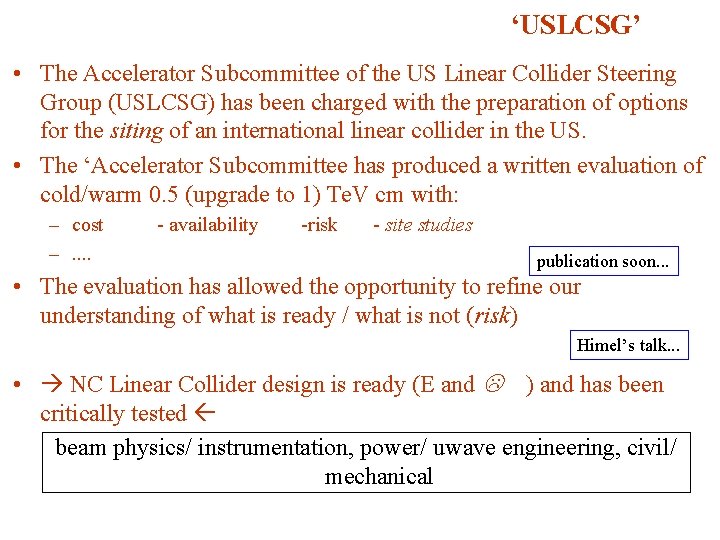
‘USLCSG’ • The Accelerator Subcommittee of the US Linear Collider Steering Group (USLCSG) has been charged with the preparation of options for the siting of an international linear collider in the US. • The ‘Accelerator Subcommittee has produced a written evaluation of cold/warm 0. 5 (upgrade to 1) Te. V cm with: – cost –. . - availability -risk - site studies publication soon. . . • The evaluation has allowed the opportunity to refine our understanding of what is ready / what is not (risk) Himel’s talk. . . • NC Linear Collider design is ready (E and L ) and has been critically tested beam physics/ instrumentation, power/ uwave engineering, civil/ mechanical
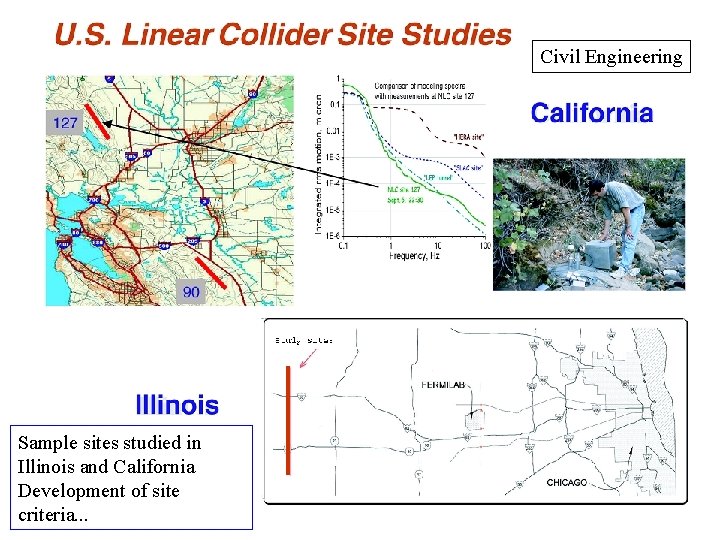
Civil Engineering Sample sites studied in Illinois and California Development of site criteria. . .
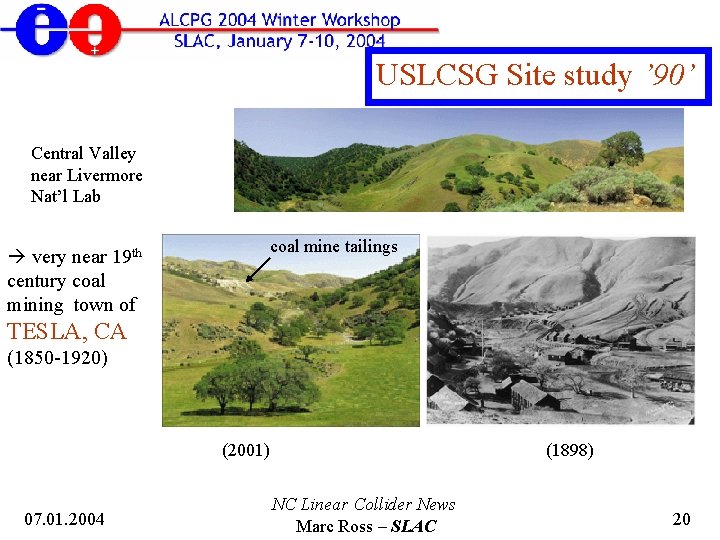
USLCSG Site study ’ 90’ Central Valley near Livermore Nat’l Lab very near 19 th century coal mining town of coal mine tailings TESLA, CA (1850 -1920) (2001) 07. 01. 2004 (1898) NC Linear Collider News Marc Ross – SLAC Author Name Date 20 Slide #
HEP must aggressively attack Controls/Instrumentation issues • System challenges are clearly greater for HEP machines • Look at the shift SLAC. DESY. KEK accelerator groups away from HEP toward nuclear/synchrotron radiation/FEL physics and technology – very active growth field • Many accelerator designers have no intrinsic connection with HEP 07. 01. 2004 NC Linear Collider News Marc Ross – SLAC Author Name Date 21 Slide #
Comment: • Stong, proven, international collaboration (esp. high energy physicists) is an extremely valuable (political and practical) asset – urgent: work to strengthen accelerator development collaboration across the spectrum of RD effort in parallel with the development of design team Conclusions Next few months are pivotal for the X band technology demonstration • present status encouraging • collaboration KEK-SLAC-Fermilab has good vitality 07. 01. 2004 NC Linear Collider News Marc Ross – SLAC Author Name Date 22 Slide #