
The Normal Microbiota Natural Human Flora What organisms

The Normal Microbiota
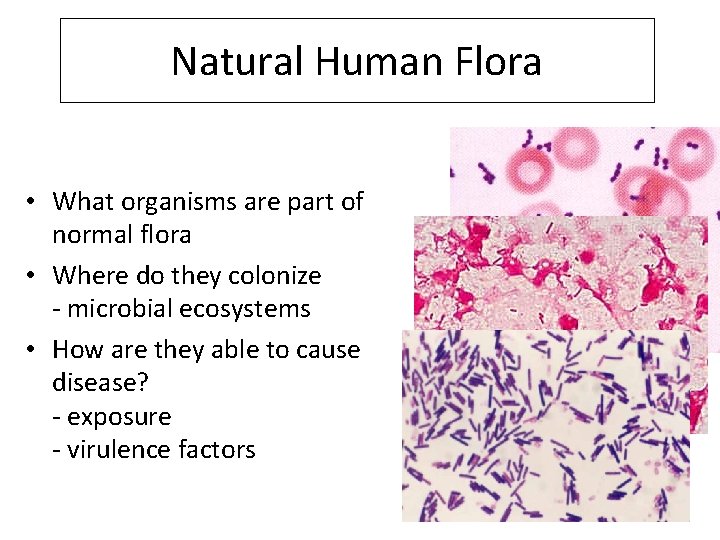
Natural Human Flora • What organisms are part of normal flora • Where do they colonize - microbial ecosystems • How are they able to cause disease? - exposure - virulence factors
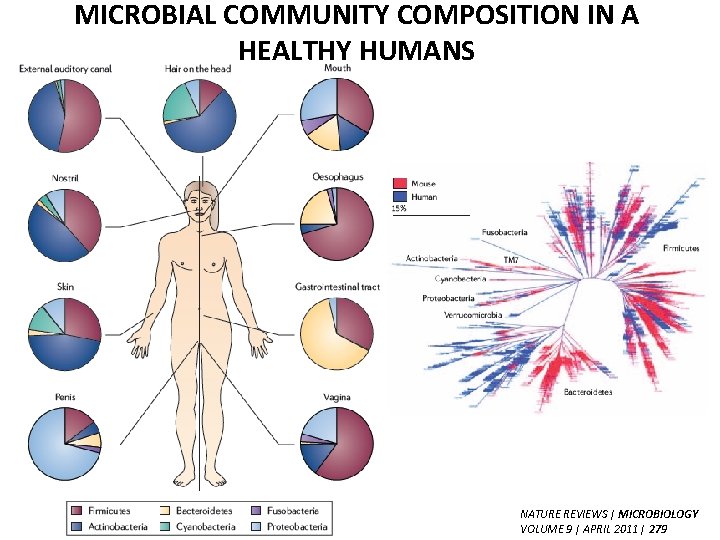
MICROBIAL COMMUNITY COMPOSITION IN A HEALTHY HUMANS NATURE REVIEWS | MICROBIOLOGY VOLUME 9 | APRIL 2011 | 279
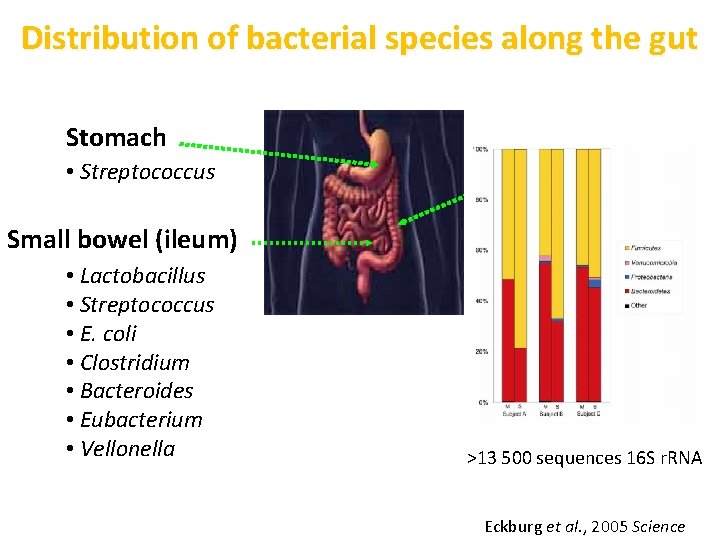
Distribution of bacterial species along the gut Stomach • Streptococcus Small bowel (ileum) • Lactobacillus • Streptococcus • E. coli • Clostridium • Bacteroides • Eubacterium • Vellonella Colon • Bacteroides • Eubacterium Clostridium • Clostridium Ruminococcus • Ruminoccus Bifidobacterium • Bifidobacteriu Streptococcus Lactobacillus m E. • coli Streptococcus non -E. coliformes • Lactobacillus • E. coli >13 500 sequences 16 S r. RNA Eckburg et al. , 2005 Science
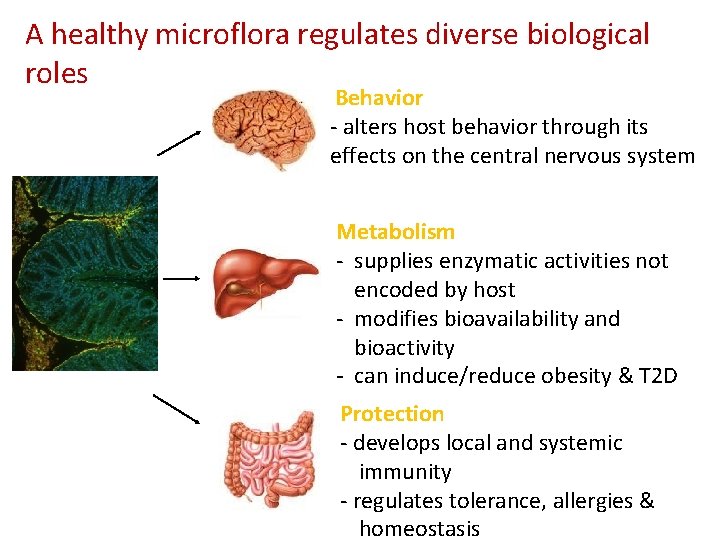
A healthy microflora regulates diverse biological roles Behavior - alters host behavior through its effects on the central nervous system Metabolism - supplies enzymatic activities not encoded by host - modifies bioavailability and bioactivity - can induce/reduce obesity & T 2 D Protection - develops local and systemic immunity - regulates tolerance, allergies & homeostasis
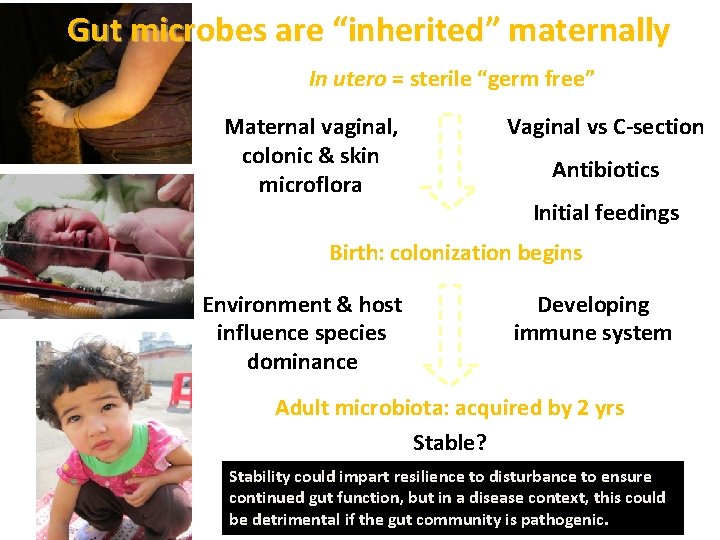
Gut microbes are “inherited” maternally In utero = sterile “germ free” Maternal vaginal, colonic & skin microflora Vaginal vs C-section Antibiotics Initial feedings Birth: colonization begins Environment & host influence species dominance Developing immune system Adult microbiota: acquired by 2 yrs Stable? Stability could impart resilience to disturbance to ensure continued gut function, but in a disease context, this could be detrimental if the gut community is pathogenic.
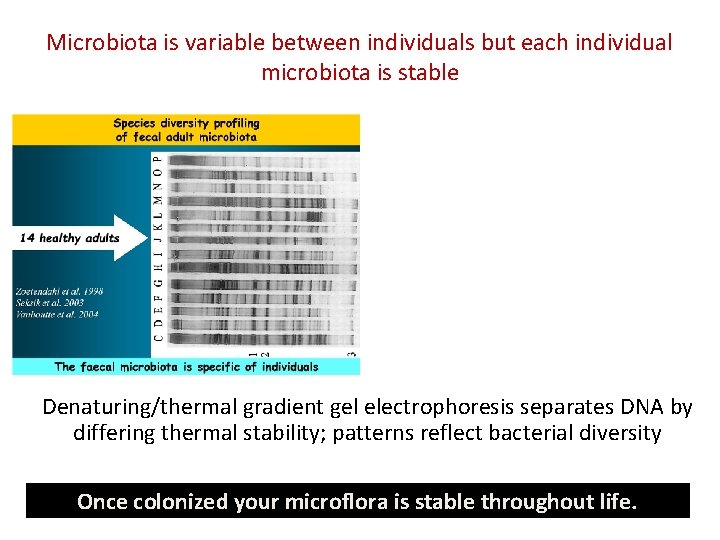
Microbiota is variable between individuals but each individual microbiota is stable Denaturing/thermal gradient gel electrophoresis separates DNA by differing thermal stability; patterns reflect bacterial diversity Once colonized your microflora is stable throughout life.
Factors can change the microbiota composition: dysbiosis • • • Stress: (O'Mahony, 2009) Exercise: (Matsumoto, 2008) Inflammation: (Lupp, 2007) Old Age: (Biagi, 2010) Diet: • carbohydrate reduced(Walker, 2011); high fiber diets (De Filippo 2011); high-fat, high-sugar "Western" diet (Turnbaugh 2010); calorie-restricted diets (Santacruz 2009); vegetarianism (Liszt K, 2009); alcohol consumption (Mutlu, 2009); high fat (Mozes, 2008)
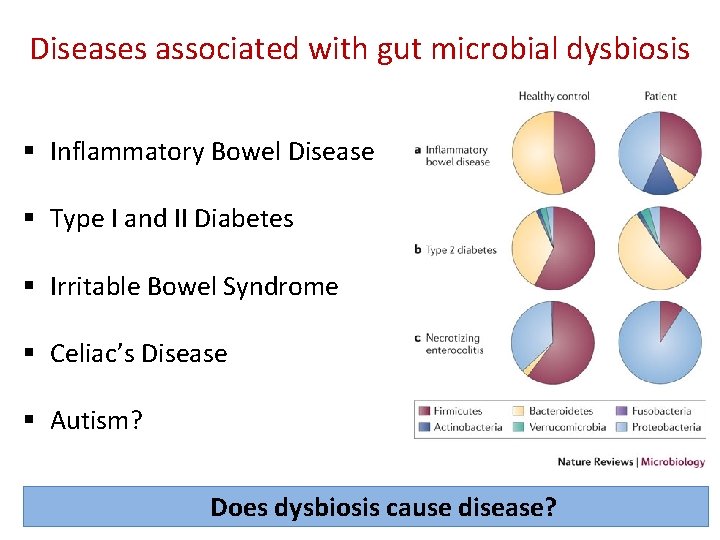
Diseases associated with gut microbial dysbiosis § Inflammatory Bowel Disease § Type I and II Diabetes § Irritable Bowel Syndrome § Celiac’s Disease § Autism? Does dysbiosis cause disease?
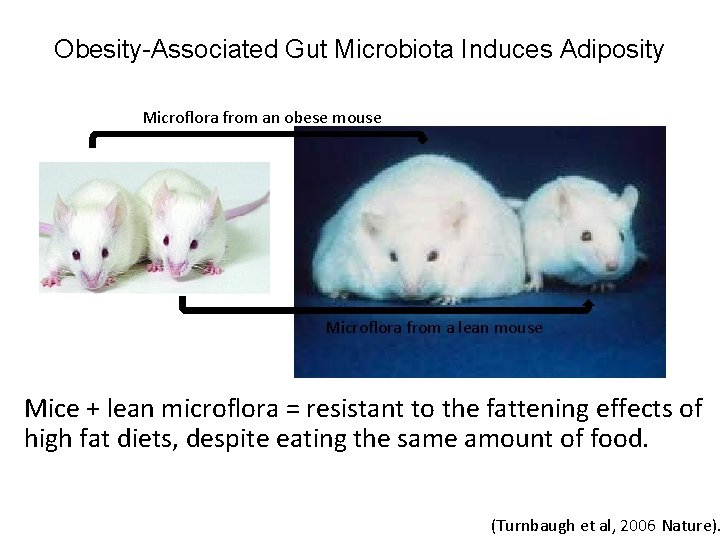
Obesity-Associated Gut Microbiota Induces Adiposity Microflora from an obese mouse Microflora from a lean mouse Mice + lean microflora = resistant to the fattening effects of high fat diets, despite eating the same amount of food. (Turnbaugh et al, 2006 Nature).

Reduced Microbiota Diversity with Obesity The microbiota diversity is reduced in obese subjects. Turnbaugh et al. 2009, Nature 457: 480 -485.
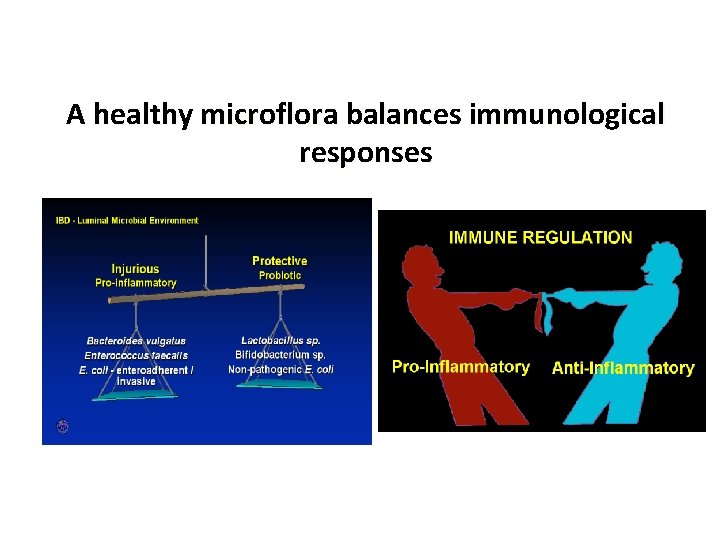
A healthy microflora balances immunological responses
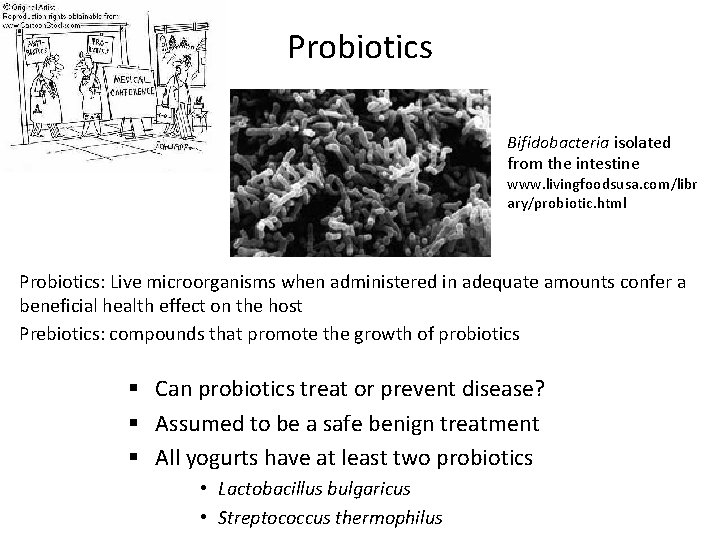
Probiotics Bifidobacteria isolated from the intestine www. livingfoodsusa. com/libr ary/probiotic. html Probiotics: Live microorganisms when administered in adequate amounts confer a beneficial health effect on the host Prebiotics: compounds that promote the growth of probiotics § Can probiotics treat or prevent disease? § Assumed to be a safe benign treatment § All yogurts have at least two probiotics • Lactobacillus bulgaricus • Streptococcus thermophilus
• Opportunist infections – Some microbes that are non-pathogenic in normal host can produce severe life-threatening disease in immunodeficient – may be normal flora components (endogenous) • Ex. Fungal pathogens; • Infection with organisms of known pathogenicity – Reactivation • Ex. TB in AIDS patients – Exogenous • Pathogens which normally cause mild conditions can cause lifethreatening illness in immunodeficient
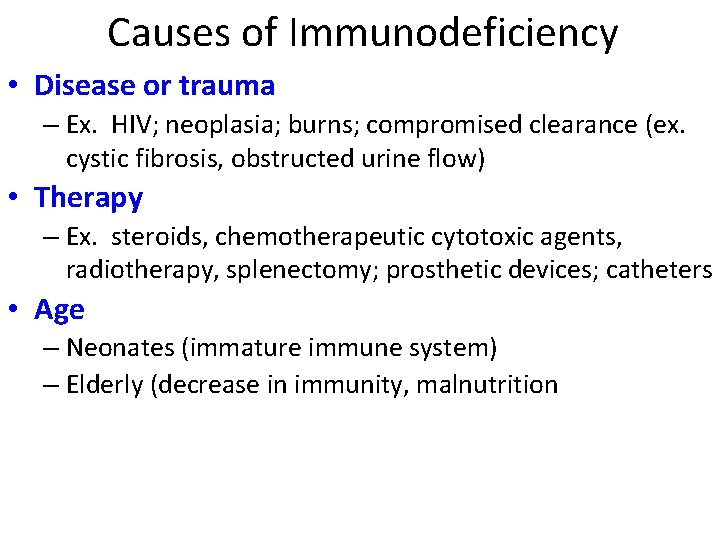
Causes of Immunodeficiency • Disease or trauma – Ex. HIV; neoplasia; burns; compromised clearance (ex. cystic fibrosis, obstructed urine flow) • Therapy – Ex. steroids, chemotherapeutic cytotoxic agents, radiotherapy, splenectomy; prosthetic devices; catheters • Age – Neonates (immature immune system) – Elderly (decrease in immunity, malnutrition
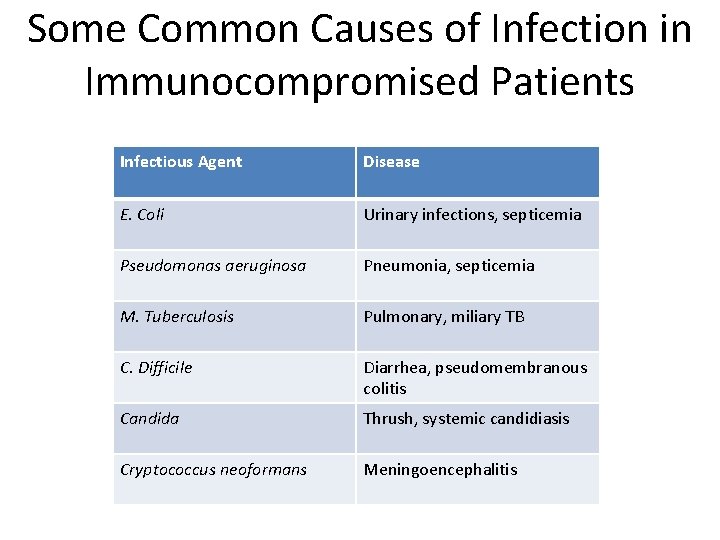
Some Common Causes of Infection in Immunocompromised Patients Infectious Agent Disease E. Coli Urinary infections, septicemia Pseudomonas aeruginosa Pneumonia, septicemia M. Tuberculosis Pulmonary, miliary TB C. Difficile Diarrhea, pseudomembranous colitis Candida Thrush, systemic candidiasis Cryptococcus neoformans Meningoencephalitis
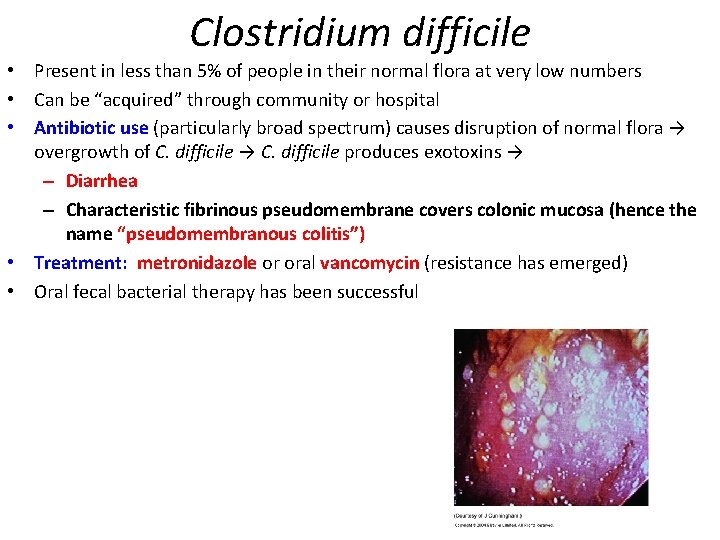
Clostridium difficile • Present in less than 5% of people in their normal flora at very low numbers • Can be “acquired” through community or hospital • Antibiotic use (particularly broad spectrum) causes disruption of normal flora → overgrowth of C. difficile → C. difficile produces exotoxins → – Diarrhea – Characteristic fibrinous pseudomembrane covers colonic mucosa (hence the name “pseudomembranous colitis”) • Treatment: metronidazole or oral vancomycin (resistance has emerged) • Oral fecal bacterial therapy has been successful
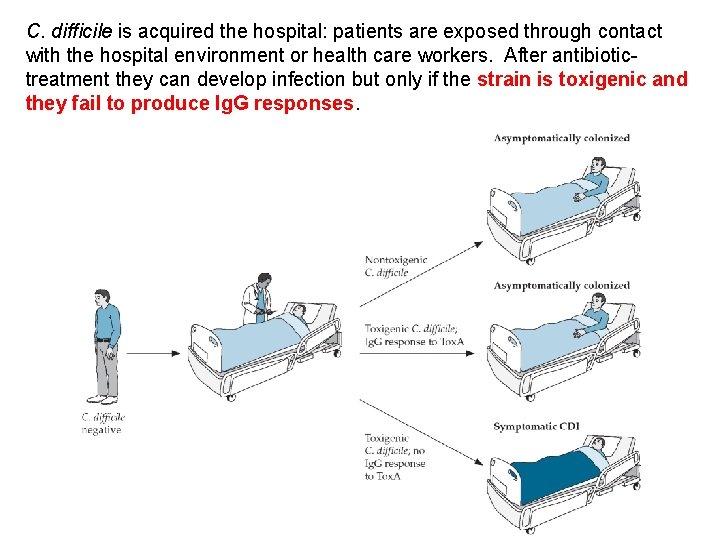
C. difficile is acquired the hospital: patients are exposed through contact with the hospital environment or health care workers. After antibiotictreatment they can develop infection but only if the strain is toxigenic and they fail to produce Ig. G responses.
• Bioterrorism = intentional or threatened use of viruses, bacteria, fungi, or toxins from living organisms to produce death or disease in humans, animals, and plants – Agent chosen for mass casualties • Biocrime: agent chosen as a means for a localized attack • Characteristics that favour use of particular agent: – Invisible, odourless, tasteless – Difficult to detect – Take hours or days before awareness that they have been used
Examples of Intentional Uses of Biological Agents for Criminal or Terror Intent • 1984 in Dalles, Oregon – Salmonella typhimurium in 10 restaurant salad bars • 1996 in Texas – Intentional release of Shigella dysentariae in a hospital lab break room • 2001 in seven eastern U. S. states – Use of weaponized Bacillus anthracis spores delivered through U. S. postal systems – 22 infected persons – Five deaths
Agents Considered a High Priority Threat • • Yersinia pestis Francisella tularensis Small pox Bacillus anthracis Botulinum toxin Exotic viruses (ex. Ebola, Marburg) Genetically modified organisms
- Slides: 21