
The Nodulation Process Chemical recognition of roots and
- Slides: 23
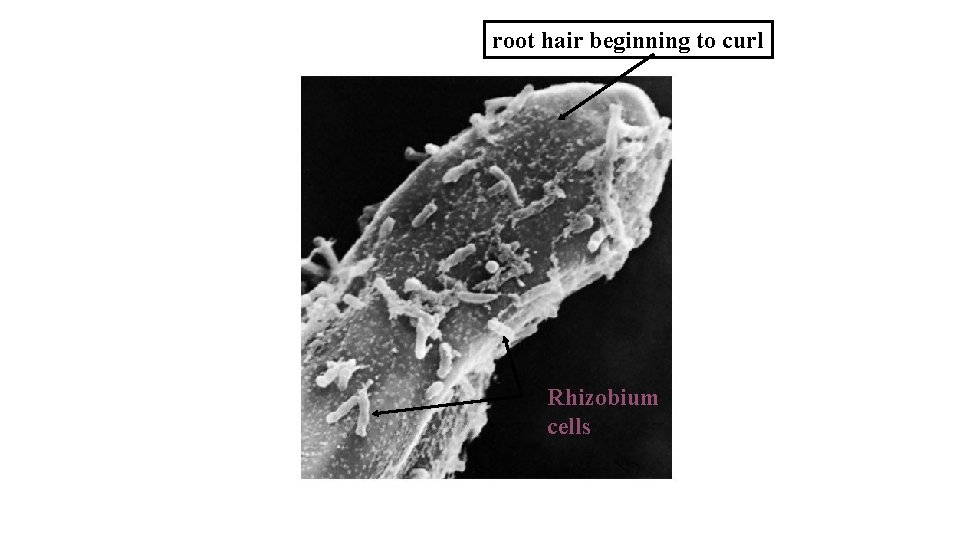
The Nodulation Process • Chemical recognition of roots and Rhizobium • Root hair curling • Formation of infection thread • Invasion of roots by Rhizobia • Cortical cell divisions and formation of nodule tissue • Bacteria fix nitrogen which is transferred to plant cells in exchange for fixed carbon
Biological NH 3 creation (nitrogen fixation) accounts for an estimated 170 x 109 kg of ammonia every year. Human industrial production amounts to some 80 x 109 kg of ammonia yearly. The industrial process (Haber-Bosh process) uses an Fe catalyst to dissociate molecules of N 2 to atomic nitrogen on the catalyst surface, followed by reaction with H 2 to form ammonia. This reaction typically runs at ~450º C and 500 atmospheres pressure. These extreme reaction conditions consume a huge amount of energy each year, considering the scale at which NH 3 is produced industrially.
Symbiotic Rhizobia are classified in two groups: Fast-growing Rhizobium spp. whose nodulation functions (nif, fix) are encoded on their symbiotic megaplasmids (p. Sym) Slow-growing Bradyrhizobium spp. whose N-fixation and nodulation functions are encoded on their chromosome. There also two types of nodule that can be formed: determinate and indeterminate This outcome is controlled by the plant host
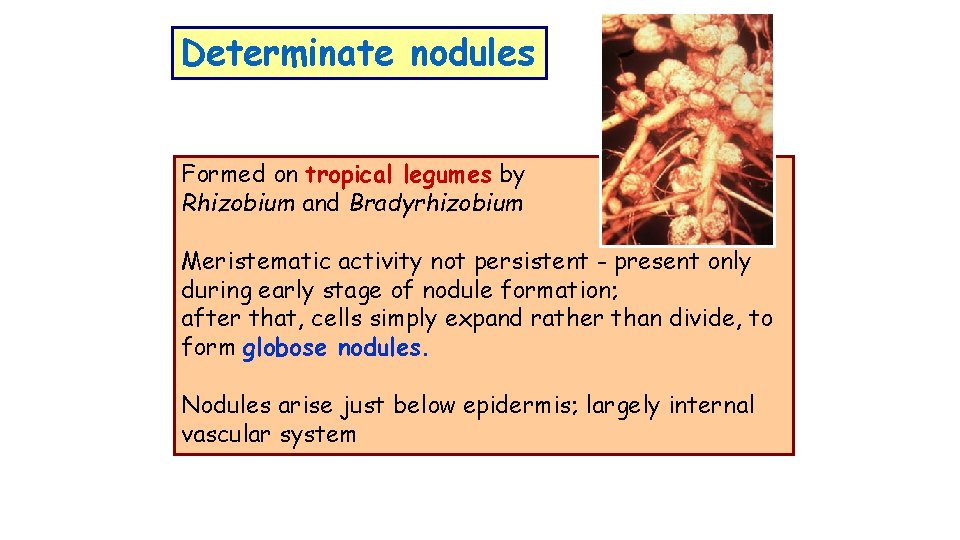
Determinate nodules Formed on tropical legumes by Rhizobium and Bradyrhizobium Meristematic activity not persistent - present only during early stage of nodule formation; after that, cells simply expand rather than divide, to form globose nodules. Nodules arise just below epidermis; largely internal vascular system
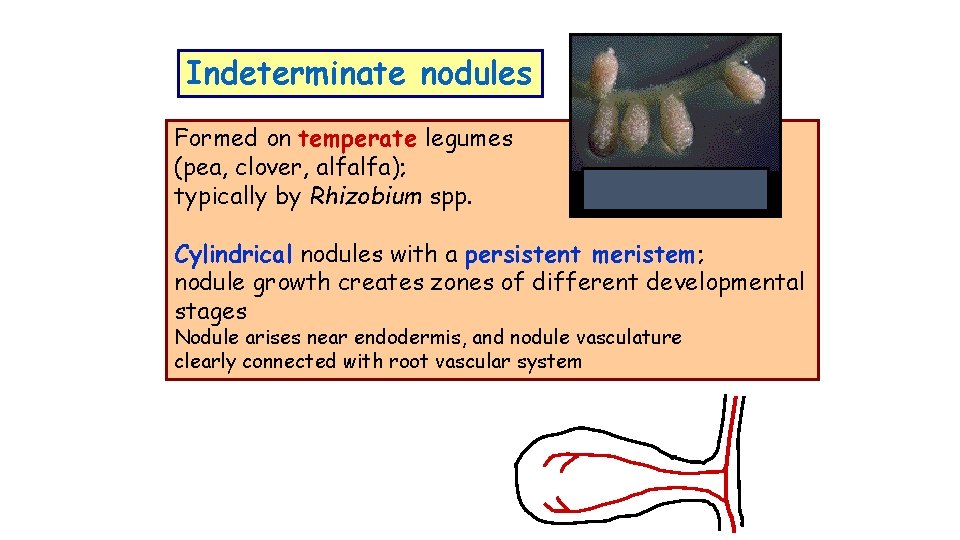
Indeterminate nodules Formed on temperate legumes (pea, clover, alfalfa); typically by Rhizobium spp. Cylindrical nodules with a persistent meristem; nodule growth creates zones of different developmental stages Nodule arises near endodermis, and nodule vasculature clearly connected with root vascular system
Rhizobium • establish highly specific symbiotic associations with legumes • form root nodules • fix nitrogen within root nodules • nodulation genes are present on large plasmid
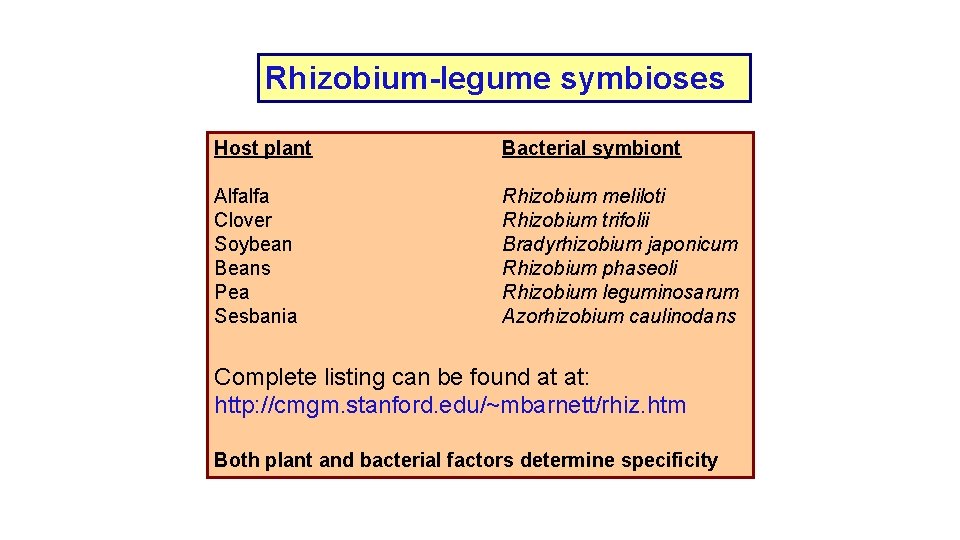
Rhizobium-legume symbioses Host plant Bacterial symbiont Alfalfa Clover Soybean Beans Pea Sesbania Rhizobium meliloti Rhizobium trifolii Bradyrhizobium japonicum Rhizobium phaseoli Rhizobium leguminosarum Azorhizobium caulinodans Complete listing can be found at at: http: //cmgm. stanford. edu/~mbarnett/rhiz. htm Both plant and bacterial factors determine specificity
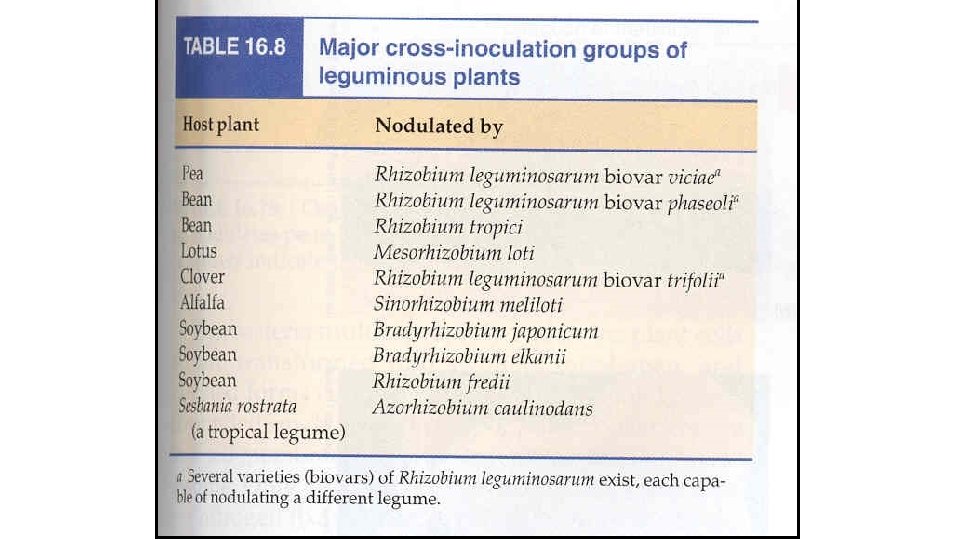
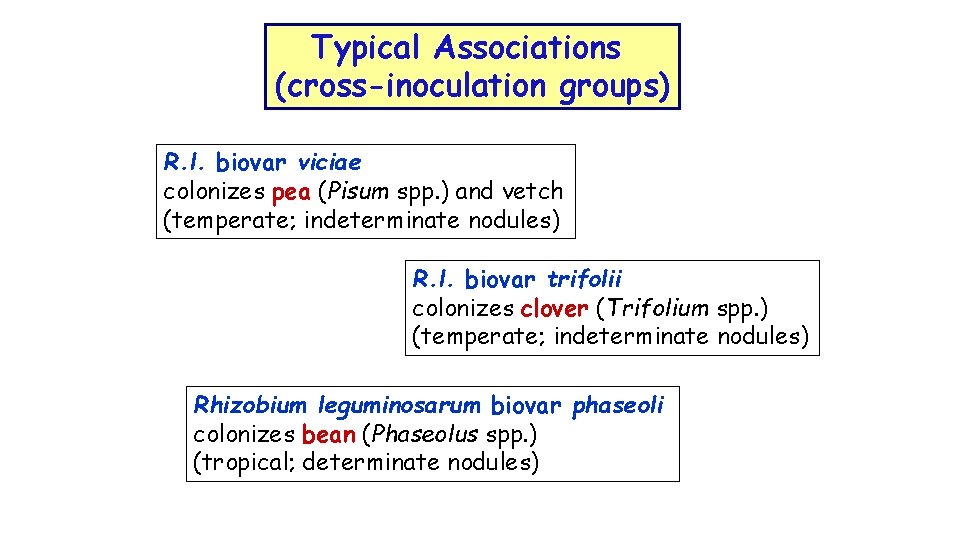
Typical Associations (cross-inoculation groups) R. l. biovar viciae colonizes pea (Pisum spp. ) and vetch (temperate; indeterminate nodules) R. l. biovar trifolii colonizes clover (Trifolium spp. ) (temperate; indeterminate nodules) Rhizobium leguminosarum biovar phaseoli colonizes bean (Phaseolus spp. ) (tropical; determinate nodules)
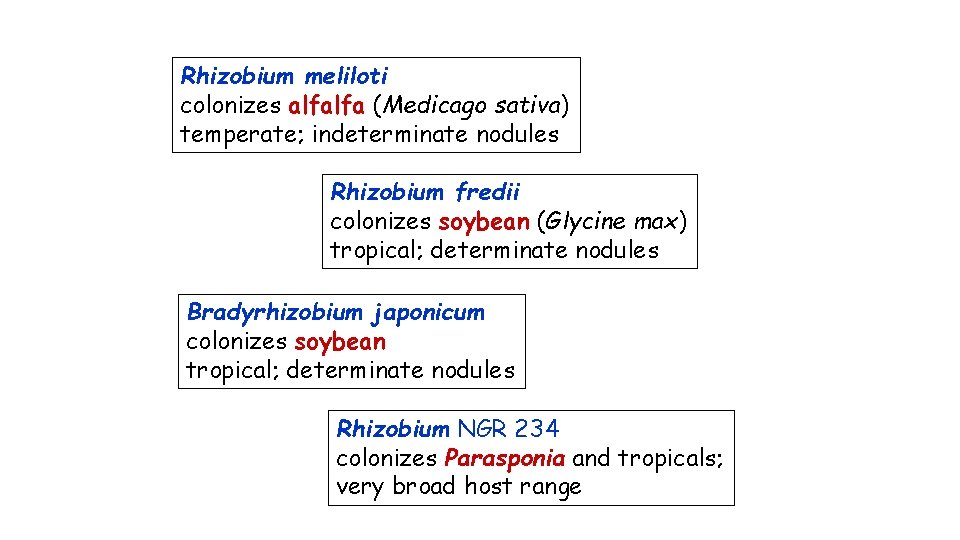
Rhizobium meliloti colonizes alfalfa (Medicago sativa) temperate; indeterminate nodules Rhizobium fredii colonizes soybean (Glycine max) tropical; determinate nodules Bradyrhizobium japonicum colonizes soybean tropical; determinate nodules Rhizobium NGR 234 colonizes Parasponia and tropicals; very broad host range
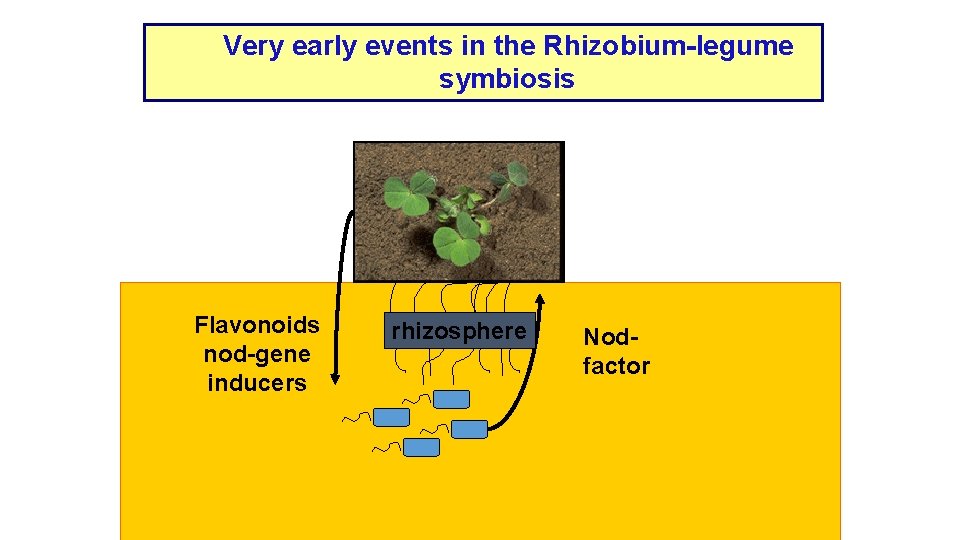
Very early events in the Rhizobium-legume symbiosis Flavonoids nod-gene inducers rhizosphere Nodfactor
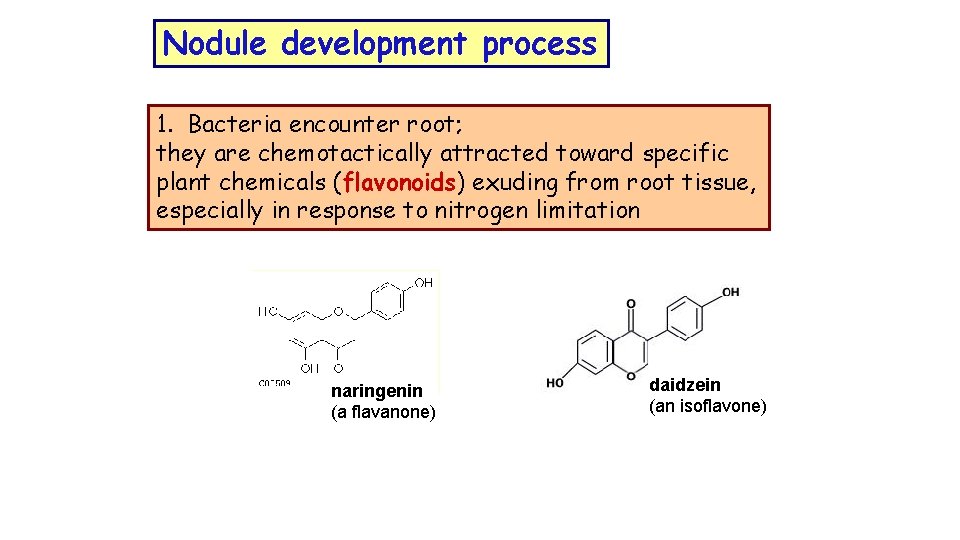
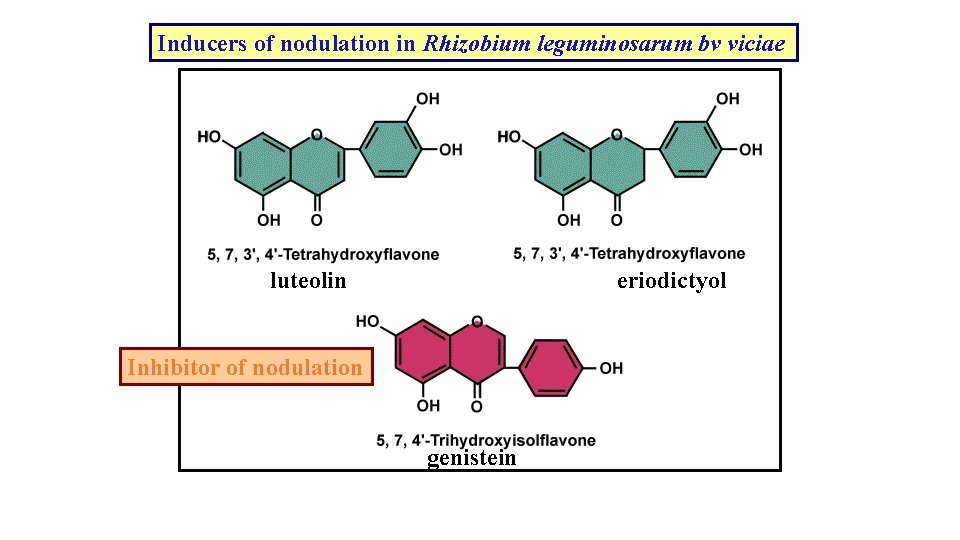
Nodule development process 1. Bacteria encounter root; they are chemotactically attracted toward specific plant chemicals (flavonoids) exuding from root tissue, especially in response to nitrogen limitation naringenin (a flavanone) daidzein (an isoflavone)
Inducers of nodulation in Rhizobium leguminosarum bv viciae luteolin eriodictyol Inhibitor of nodulation genistein
root hair beginning to curl Rhizobium cells
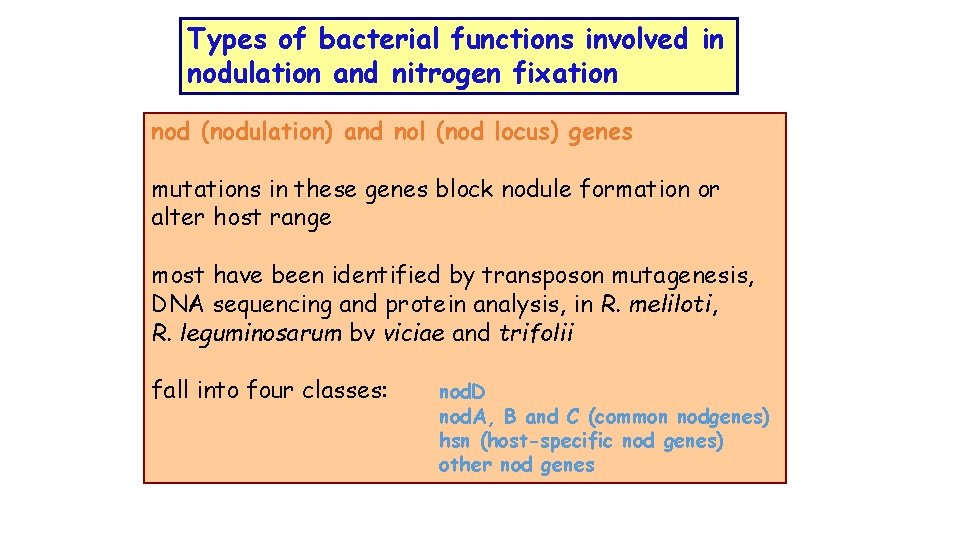
Types of bacterial functions involved in nodulation and nitrogen fixation nod (nodulation) and nol (nod locus) genes mutations in these genes block nodule formation or alter host range most have been identified by transposon mutagenesis, DNA sequencing and protein analysis, in R. meliloti, R. leguminosarum bv viciae and trifolii fall into four classes: nod. D nod. A, B and C (common nodgenes) hsn (host-specific nod genes) other nod genes
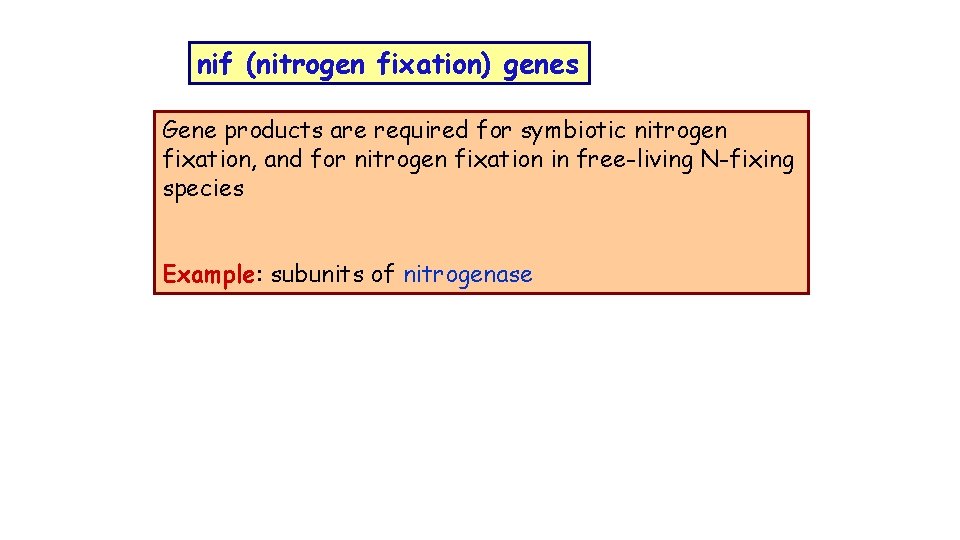
nif (nitrogen fixation) genes Gene products are required for symbiotic nitrogen fixation, and for nitrogen fixation in free-living N-fixing species Example: subunits of nitrogenase
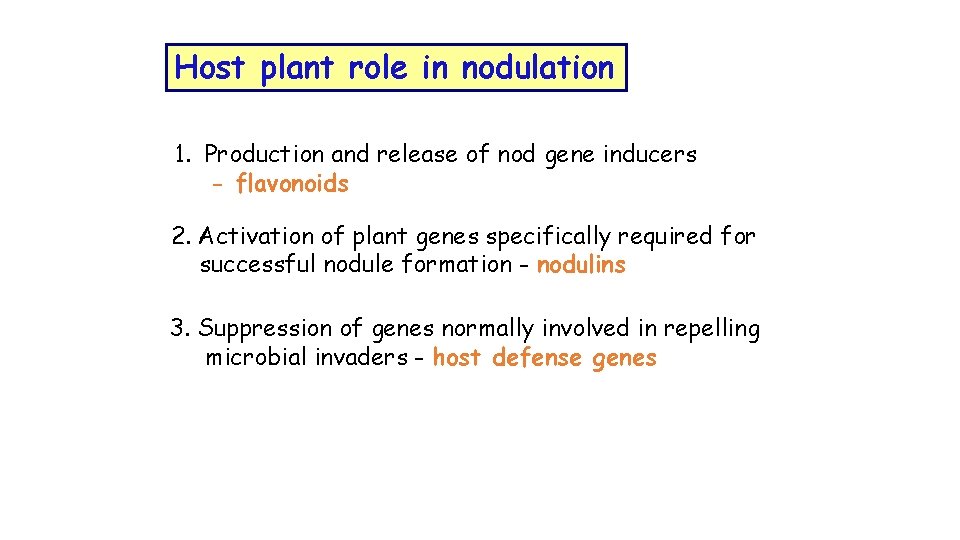
Host plant role in nodulation 1. Production and release of nod gene inducers - flavonoids 2. Activation of plant genes specifically required for successful nodule formation - nodulins 3. Suppression of genes normally involved in repelling microbial invaders - host defense genes
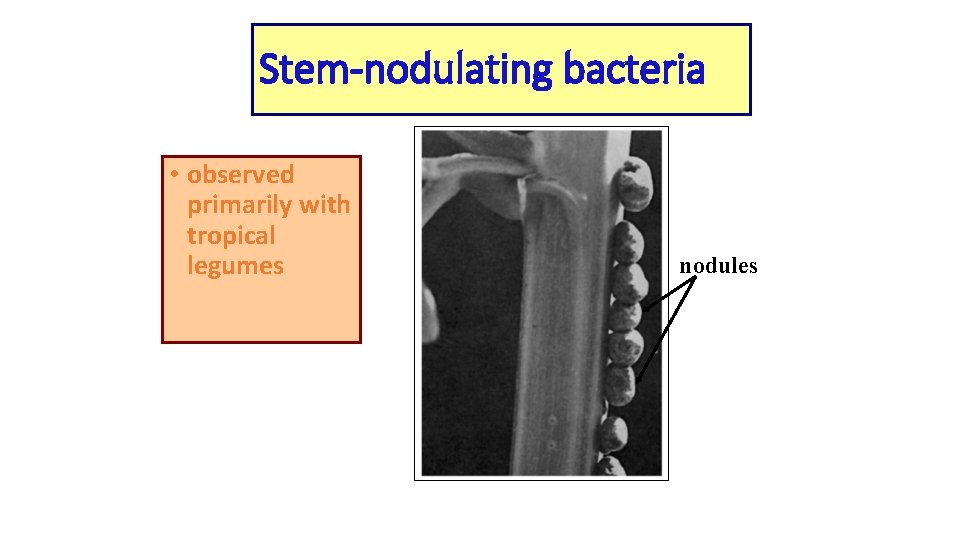
Stem-nodulating bacteria • observed primarily with tropical legumes nodules
NITROGEN FIXATION
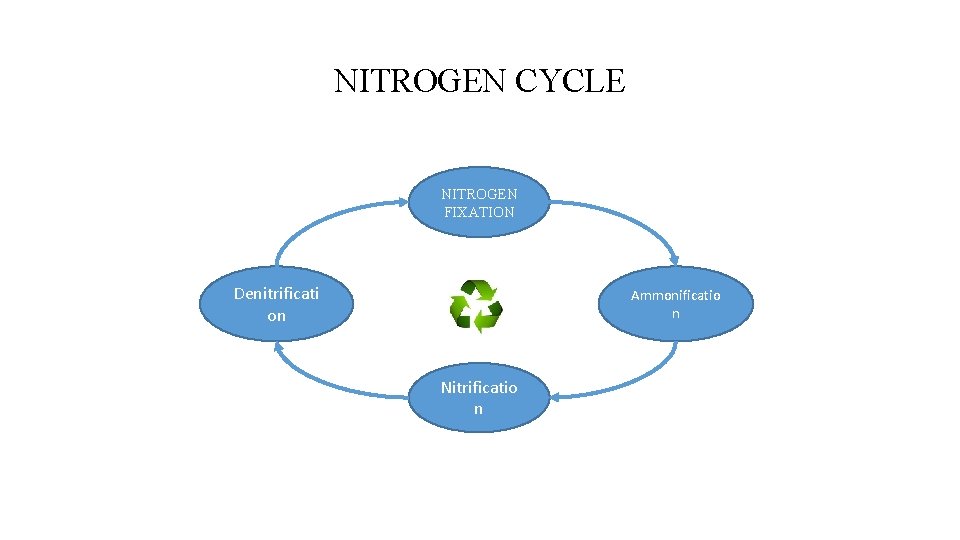
NITROGEN CYCLE NITROGEN FIXATION Denitrificati on Ammonificatio n Nitrificatio n
NITROGEN FIXATION • Chemical process • Atmospheric nitrogen is assimilated into organic compounds. • Microorganisms are used as the major part of the nitrogen cycle. • Nitrogen gets fixed by combining with oxygen or hydrogen.
CLASSIFICATION : • Atmospheric fixation • Industrial fixation • Biological fixation
Atmospheric fixation ØConstitutes 5 -8 % of the fixation process. ØLightning breaks nitrogen molecule apart. ØNitrogen atoms combine with oxygen or hydrogen atoms. ØNitrogen Oxides are formed. ØNitrogen Oxides dissolve in rain to form Nitrates.