
The Nile River is the longest river in
- Slides: 15
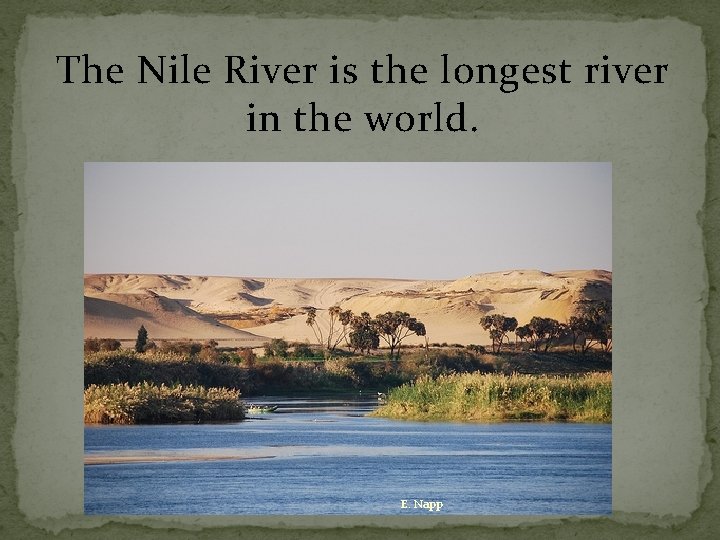
The Nile River is the longest river in the world. E. Napp
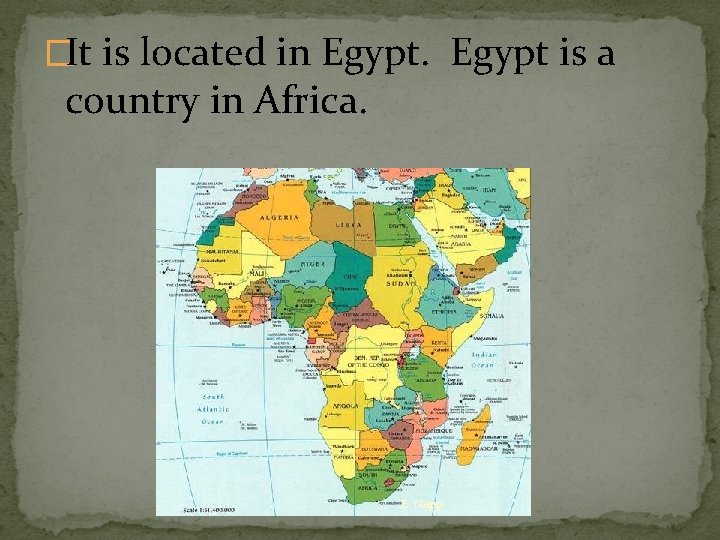
�It is located in Egypt is a country in Africa. E. Napp
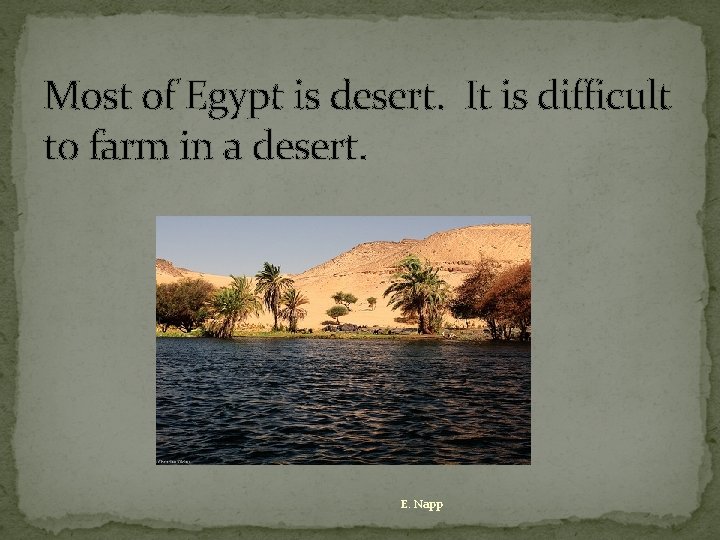
Most of Egypt is desert. It is difficult to farm in a desert. E. Napp
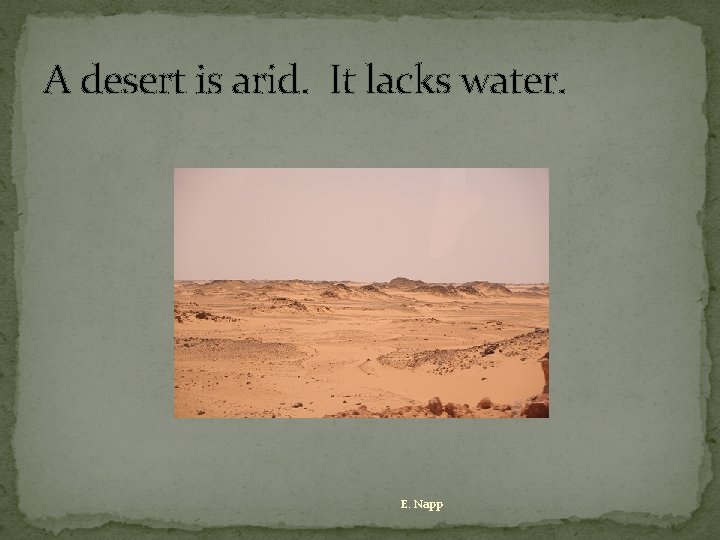
A desert is arid. It lacks water. E. Napp
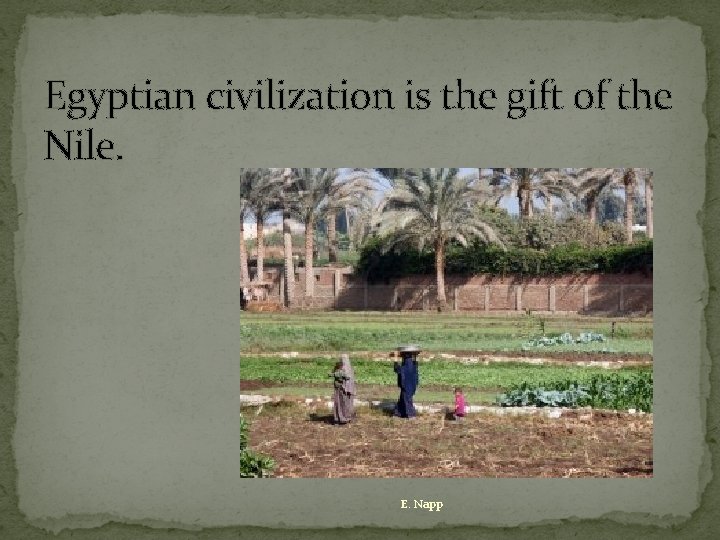
Egyptian civilization is the gift of the Nile. E. Napp
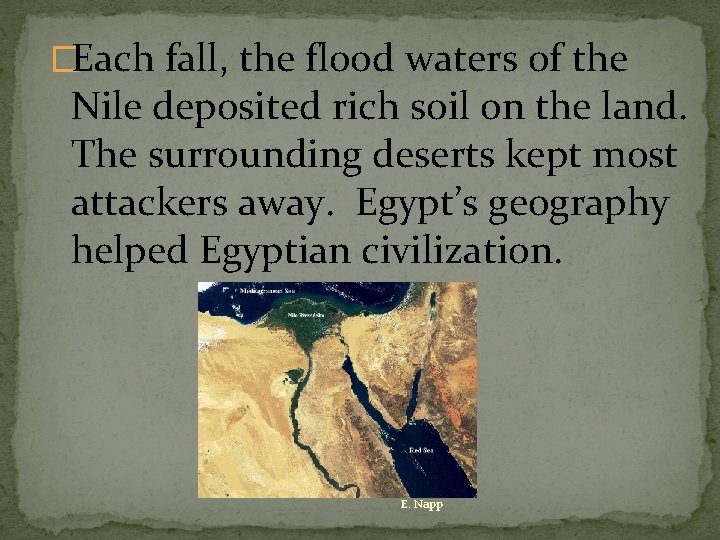
�Each fall, the flood waters of the Nile deposited rich soil on the land. The surrounding deserts kept most attackers away. Egypt’s geography helped Egyptian civilization. E. Napp
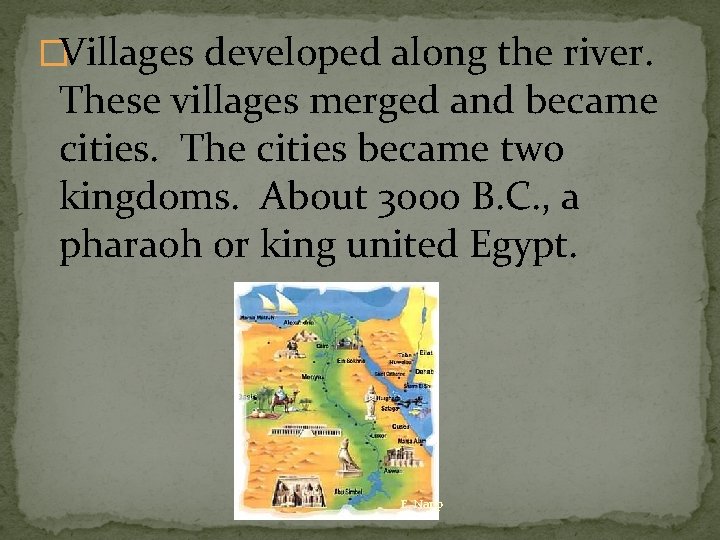
�Villages developed along the river. These villages merged and became cities. The cities became two kingdoms. About 3000 B. C. , a pharaoh or king united Egypt. E. Napp
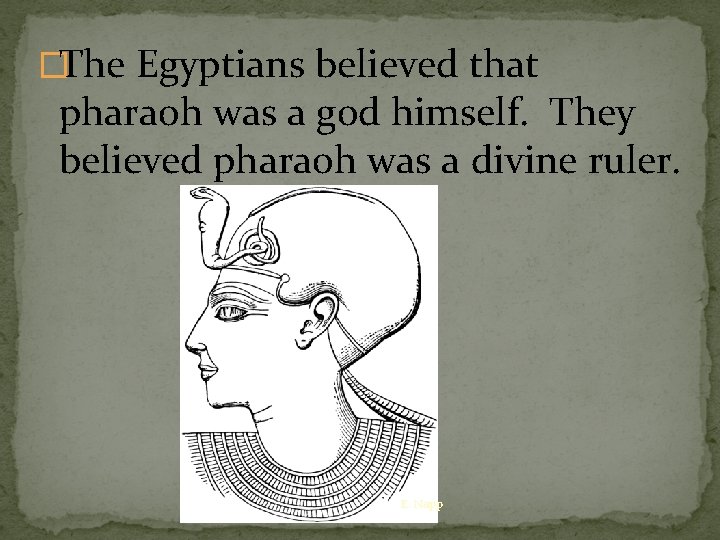
�The Egyptians believed that pharaoh was a god himself. They believed pharaoh was a divine ruler. E. Napp
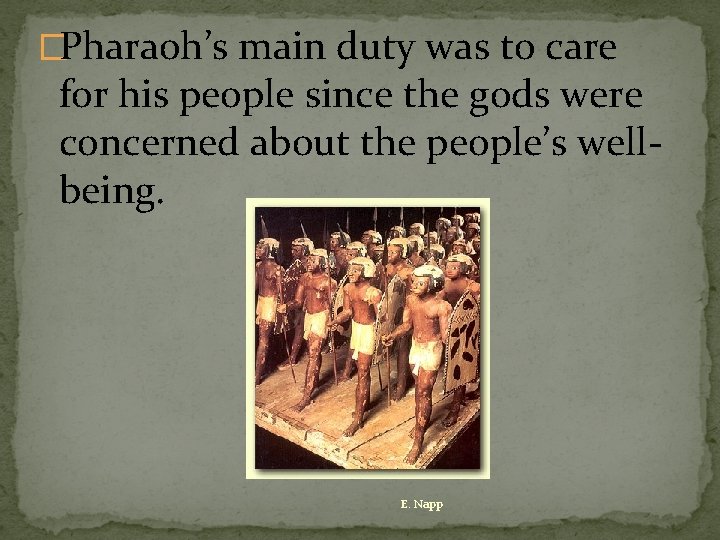
�Pharaoh’s main duty was to care for his people since the gods were concerned about the people’s wellbeing. E. Napp
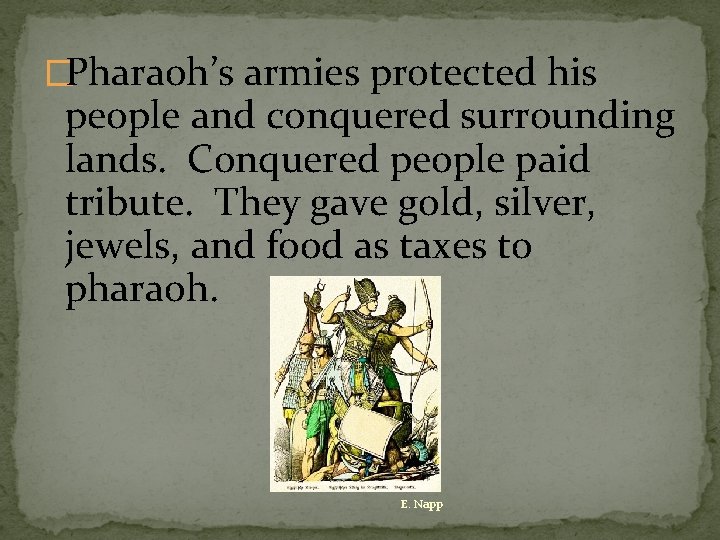
�Pharaoh’s armies protected his people and conquered surrounding lands. Conquered people paid tribute. They gave gold, silver, jewels, and food as taxes to pharaoh. E. Napp
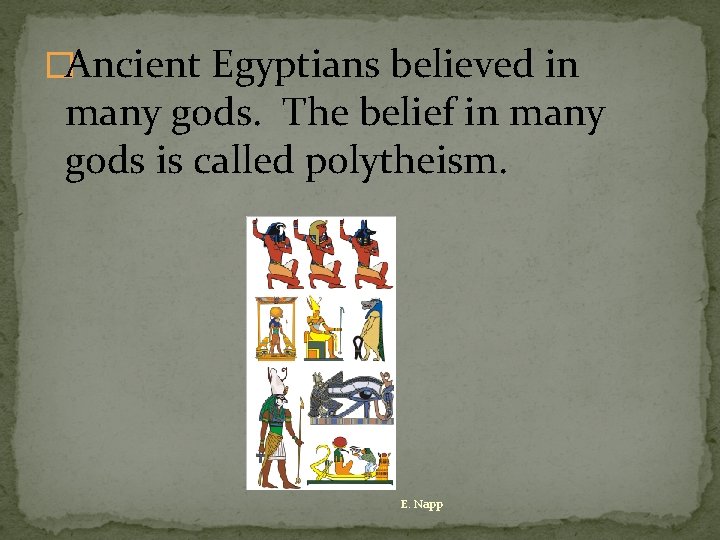
�Ancient Egyptians believed in many gods. The belief in many gods is called polytheism. E. Napp
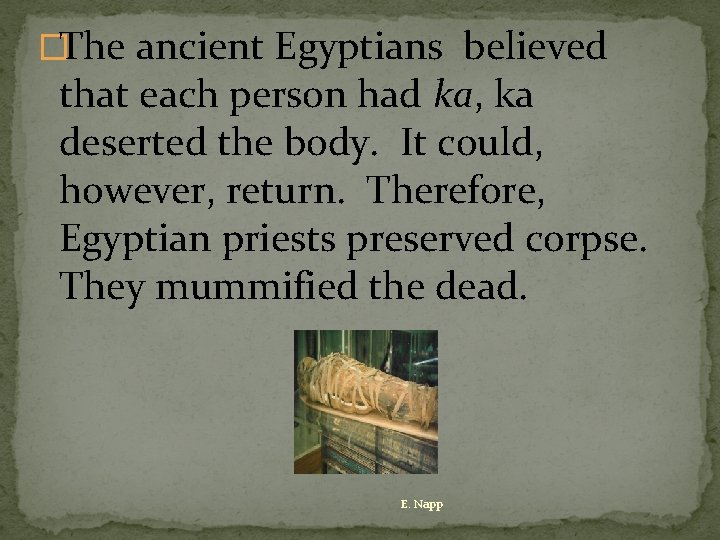
�The ancient Egyptians believed that each person had ka, ka deserted the body. It could, however, return. Therefore, Egyptian priests preserved corpse. They mummified the dead. E. Napp
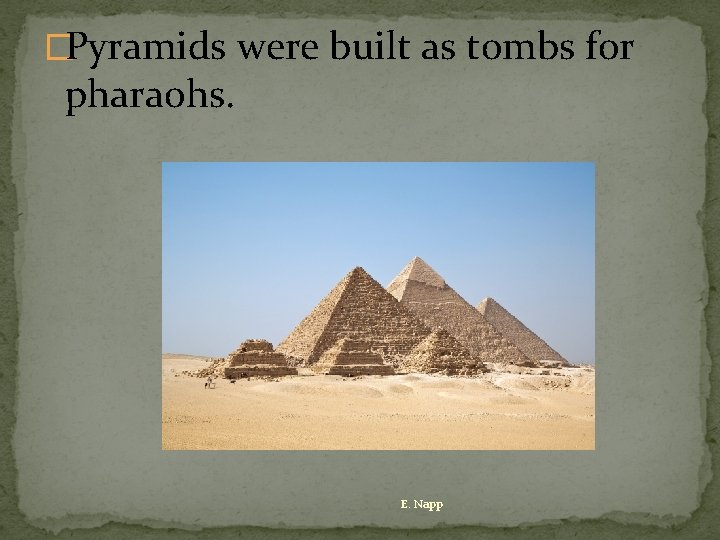
�Pyramids were built as tombs for pharaohs. E. Napp
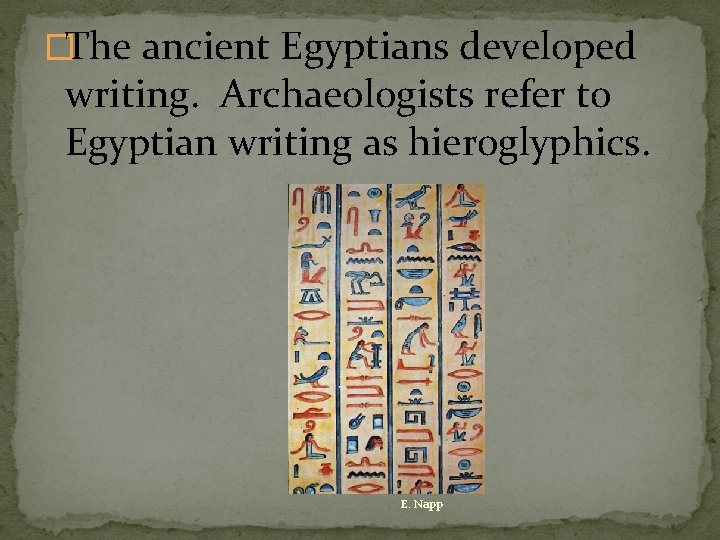
�The ancient Egyptians developed writing. Archaeologists refer to Egyptian writing as hieroglyphics. E. Napp
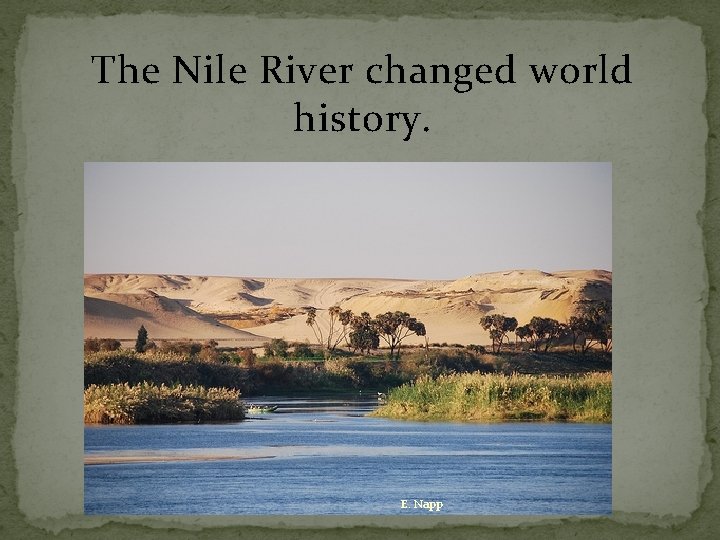
The Nile River changed world history. E. Napp