
The NGP and Local Government Economic Planning and

- Slides: 14
The NGP and Local Government Economic Planning and Coordination 27 May 2011 1
Outline • • • EDD’s role National Challenges Key features of the New Growth Path Proposed framework for alignment Local strategies to create jobs Conclusion
EDD’s role • Address macro and micro-economic development planning • Cross-cutting focus-National Depts. , Provinces and Local Government • Economic development planning • Work with other departments and spheres of government to promote –coordination • Ensure job creation at the centre of economic policies- for better employment outcomes 3
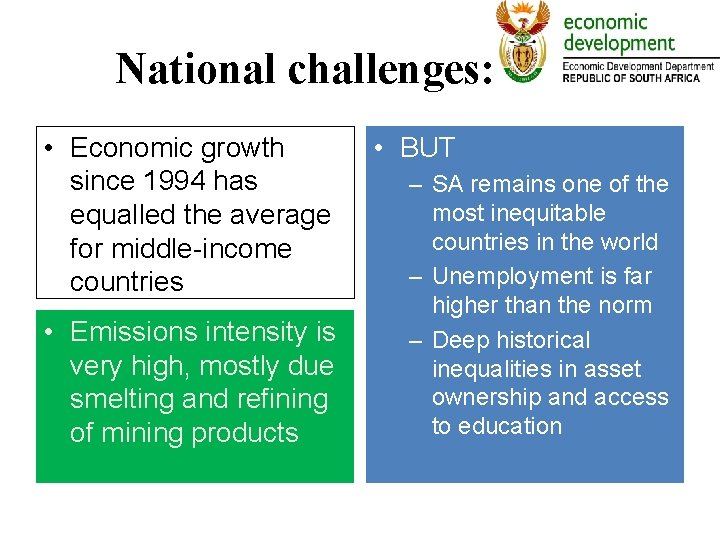
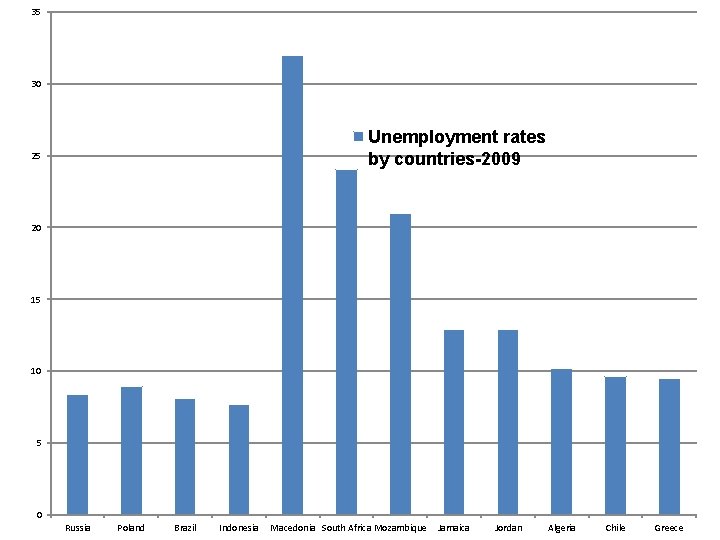
National challenges: • Economic growth since 1994 has equalled the average for middle-income countries • Emissions intensity is very high, mostly due smelting and refining of mining products • BUT – SA remains one of the most inequitable countries in the world – Unemployment is far higher than the norm – Deep historical inequalities in asset ownership and access to education
35 30 Unemployment rates by countries-2009 25 20 15 10 5 0 Russia Poland Brazil Indonesia Macedonia South Africa Mozambique Jamaica Jordan Algeria Chile Greece
Jobs- priority • RDP- Creation of decent work and economic security • Gear- targeted new jobs per annum-104 000 average • ASGISA- halve unemployment rate by 2014 6
The New Growth Path • Brings focus on employment creation and seeks to achieve 5 million new jobs in the next decade-2020 • Identifies areas of job drivers- key sector • Complements the Industrial Policy Action Plan 2 • Deal with cross-cutting issues • Proposes macro and micro economic policy interventions to support more equitable and employment-intensive growth • Emphasizes the importance of social dialogue 7
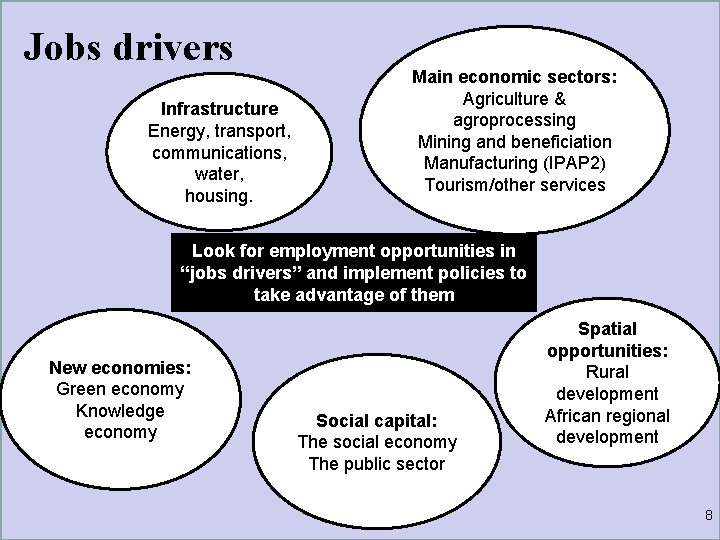
Jobs drivers Infrastructure Energy, transport, communications, water, housing. Main economic sectors: Agriculture & agroprocessing Mining and beneficiation Manufacturing (IPAP 2) Tourism/other services Look for employment opportunities in “jobs drivers” and implement policies to take advantage of them New economies: Green economy Knowledge economy Social capital: The social economy The public sector Spatial opportunities: Rural development African regional development 8
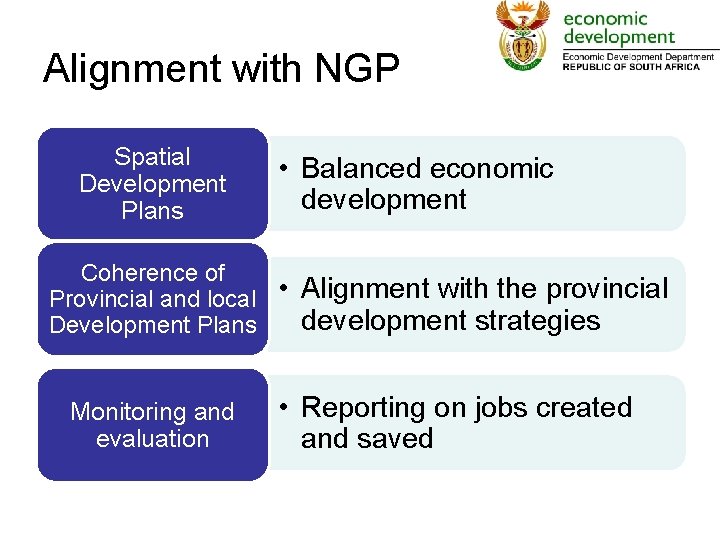
Alignment with NGP Spatial Development Plans Coherence of Provincial and local Development Plans Monitoring and evaluation • Balanced economic development • Alignment with the provincial development strategies • Reporting on jobs created and saved
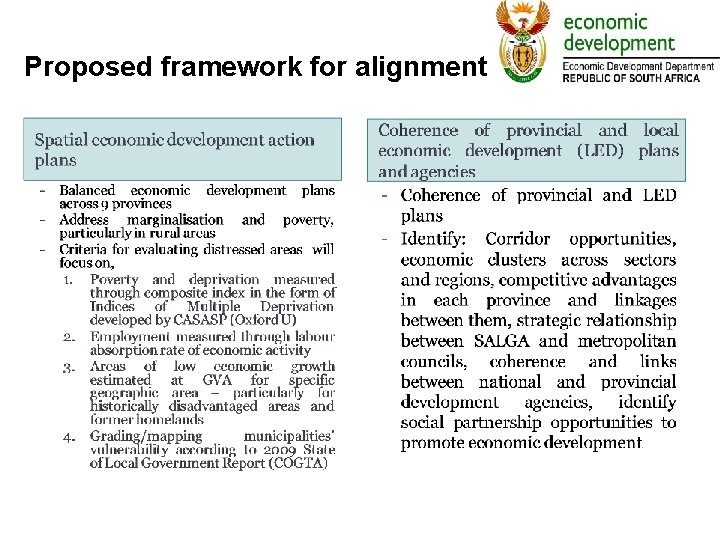
Proposed framework for alignment
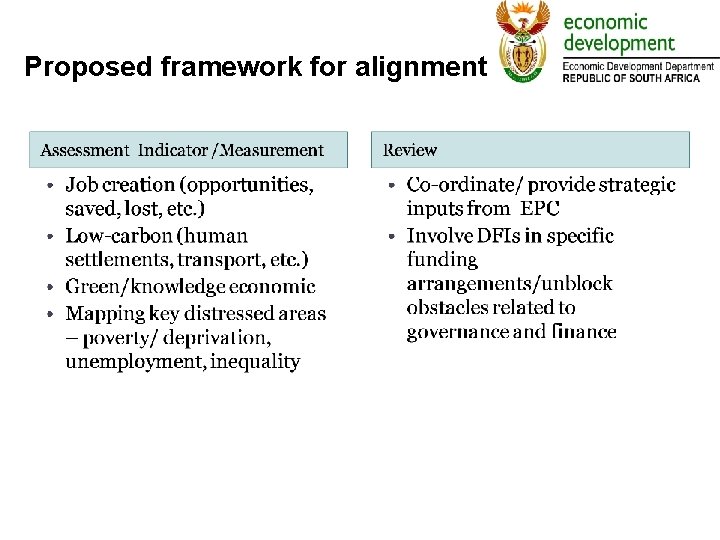
Proposed framework for alignment
Proposed framework for alignment
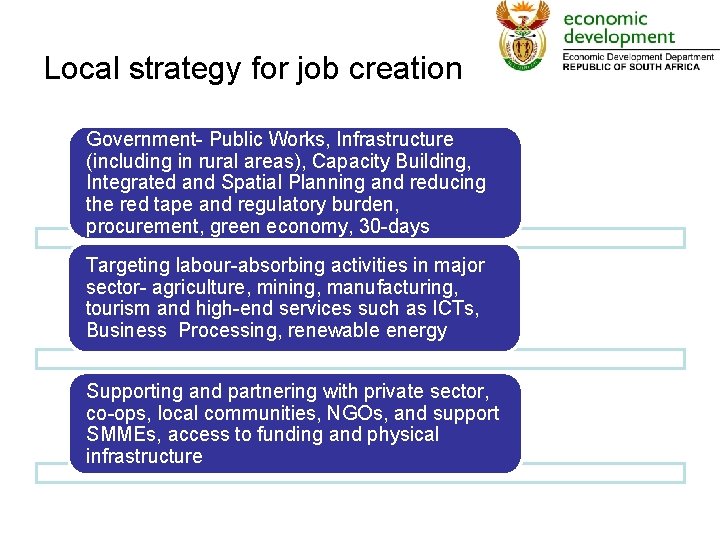
Local strategy for job creation Government- Public Works, Infrastructure (including in rural areas), Capacity Building, Integrated and Spatial Planning and reducing the red tape and regulatory burden, procurement, green economy, 30 -days Targeting labour-absorbing activities in major sector- agriculture, mining, manufacturing, tourism and high-end services such as ICTs, Business Processing, renewable energy Supporting and partnering with private sector, co-ops, local communities, NGOs, and support SMMEs, access to funding and physical infrastructure
Concluding remarks • The NGP seeks to mobilise the country around one vision- job creation • Private sector, local communities, SMMEs, NGOs critical in achieving the objectives • Efficient governance and administration at local government level is fundamental • Implementation will have challenges, but we should not despair • Local Government is a key partner in the implementation of the NGP to achieve in creating and saving jobs 14 14