
The Next Step Tool for Homeless Youth TAYVISPDAT


- Slides: 44
The Next Step Tool for Homeless Youth (TAY-VI-SPDAT)
The Next Step Tool This is a version of the VI-SPDAT for single youth & young adults aged 24 and younger.
Why are we implementing the Next Step Tool? 1) to prioritize services for this age group 2) to have data on types of supports that might be needed to serve this population 3) increase our ability to use data to prevent entries into homelessness 4) to help level the playing field for youth By integrating this tool into HMIS, it will introduce two new categories in the current menu, Individual Young Adult (ages 18 -24) and Youth (under 18).
Background of the Next Step Tool
HUD Guidance on Coordinated Entry for Youth should also be screened and assessed with the same standardized, culturally competent tools as their peers, regardless of who the assessor may be, and expect to be referred according to the same prioritization factors that are used for all youth in the community.
Assessment: 18 and Under For youth under 18, the Next Step Tool could be used but names would not be pulled into the by-name prioritized list of adults. – If these youth are still homeless on their 18 th birthday, they should be reassessed using the Next Step Tool in HMIS. Using this tool for this age group will be optional for youth under 18. However, we encourage providers to use the tool in order to collect important data on this population for the purposes of allocating resources and services.
Reassessing young adults with existing VI-SPDAT score For 18 -24 year olds who have already received a VISPDAT score it is recommended that they are reassessed in order to encourage consistency and give them the most accurate score. However, official reassessment policy will be left to each CAN region to decide. This population will still be integrated into the current by-name list.
Families with Youth or Young Adults Heads of Household At this time, the family VI-SPDAT should continue to be used for the young adult population who have children.
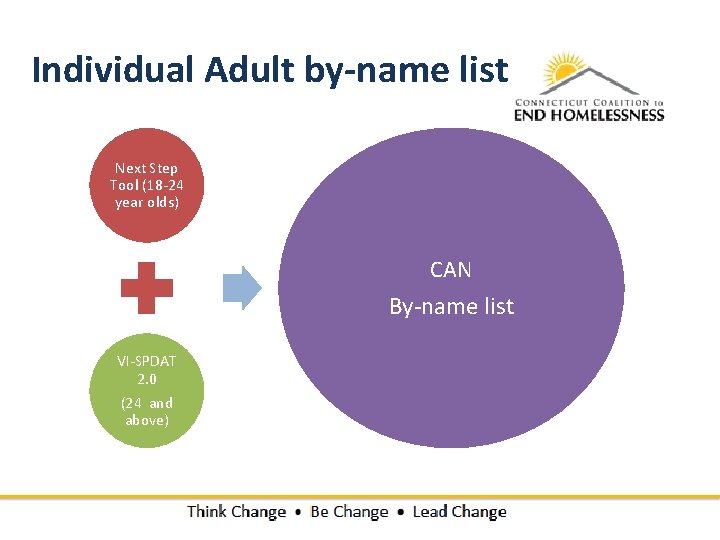
Individual Adult by-name list Next Step Tool (18 -24 year olds) CAN By-name list VI-SPDAT 2. 0 (24 and above)
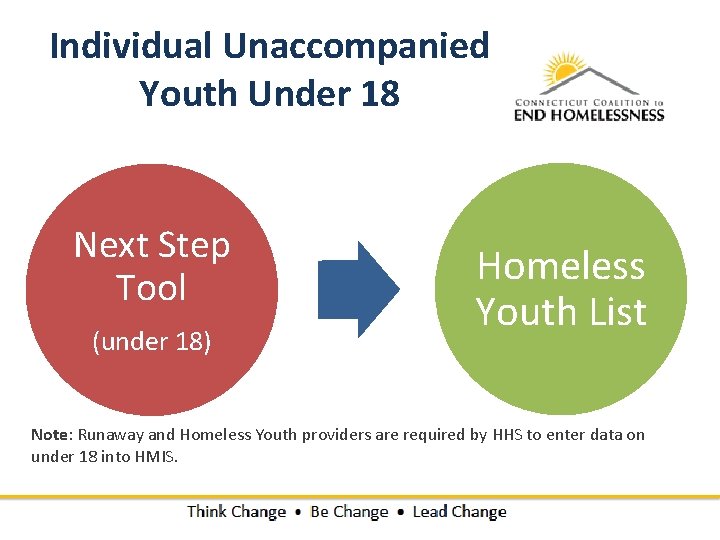
Individual Unaccompanied Youth Under 18 Next Step Tool (under 18) Homeless Youth List Note: Runaway and Homeless Youth providers are required by HHS to enter data on under 18 into HMIS.
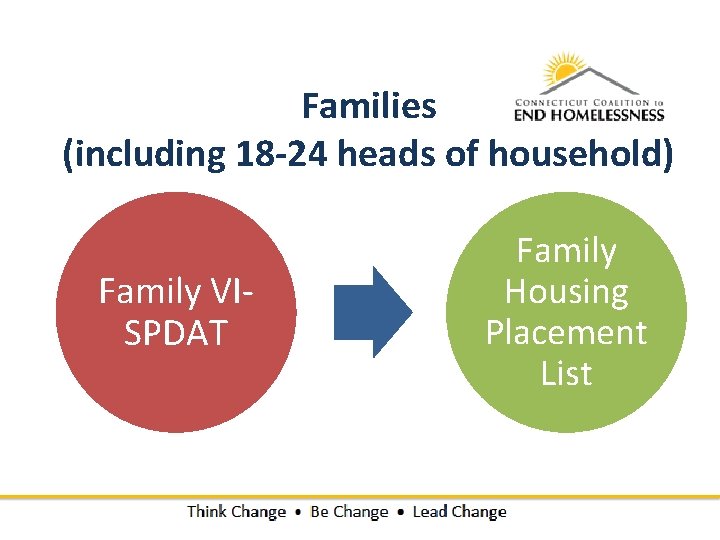
Families (including 18 -24 heads of household) Family VISPDAT Family Housing Placement List
The goal of the Next Step Tool: v To be Objective in Determining Service v To move from Waitlist Priority List & “Who’s Eligible? ” to “Who needs it the most? ” v Provide a more accurate tool for measuring the vulnerability of youth and young adults.
When to Administer the Next Step Tool: The Next Step Tool should only be administered to youth and young adults aged 24 and below if they are literally homeless.
Literally Homeless: • Includes: – Living in a place not meant for habitation, such as outdoors, in a car, garage, porch, abandoned building, bus station, etc. – In a hospital, rehab, or other institution if homeless prior to entry and staying 90 days or less. – In a hotel or motel paid for by agency or government – In a Warming Center – In an Emergency Shelter – Fleeing or attempting to flee abuse or domestic violence
Do not Administer if: The person is safely doubled up with friends or family. They are not considered literally homeless.
Administrative Info & Opening Script Sets up expectations and trust. Introducing the Survey in the same way by everyone, every time helps to create consistent results Your organization should have a Common Opening Script for all Interviews
Your Script should include: Who are you and who do you work for? Why are you using the Next Step Tool? Reassure them that it should only take about 7 minutes Remind them to try to keep answers to “Yes” and “No. ” • Explain it will be stored in HMIS • Remind them Clarification can be provided & any Question can be Skipped or Refused • Stress The Importance of Relaying Accurate Information • •
Consent Remember: ( Consent to Participate Is NOT The HMIS Release of Information You need to have both )
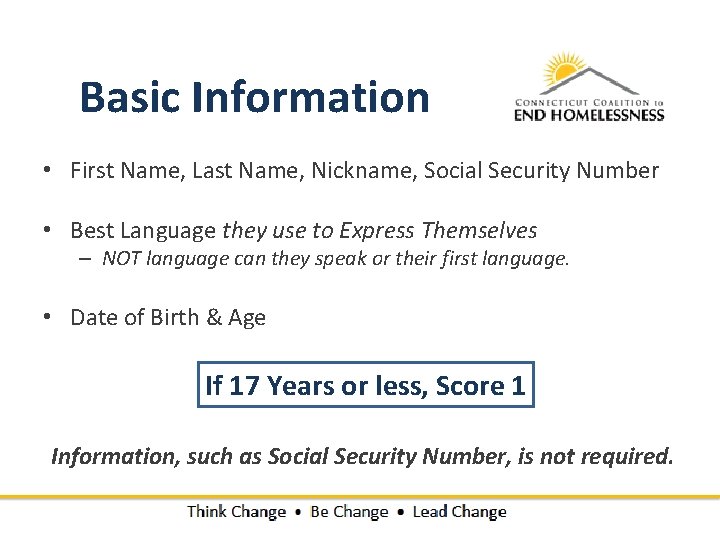
Basic Information • First Name, Last Name, Nickname, Social Security Number • Best Language they use to Express Themselves – NOT language can they speak or their first language. • Date of Birth & Age If 17 Years or less, Score 1 Information, such as Social Security Number, is not required.
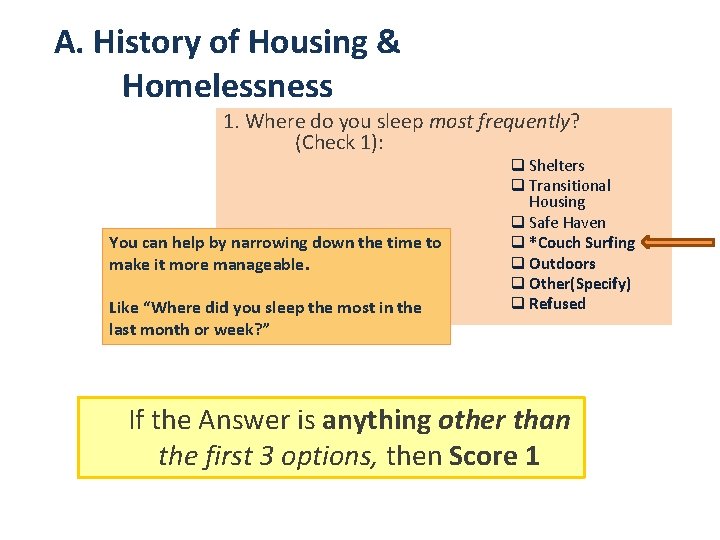
A. History of Housing & Homelessness 1. Where do you sleep most frequently? (Check 1): You can help by narrowing down the time to make it more manageable. Like “Where did you sleep the most in the last month or week? ” q Shelters q Transitional Housing q Safe Haven q *Couch Surfing q Outdoors q Other(Specify) q Refused If the Answer is anything other than the first 3 options, then Score 1
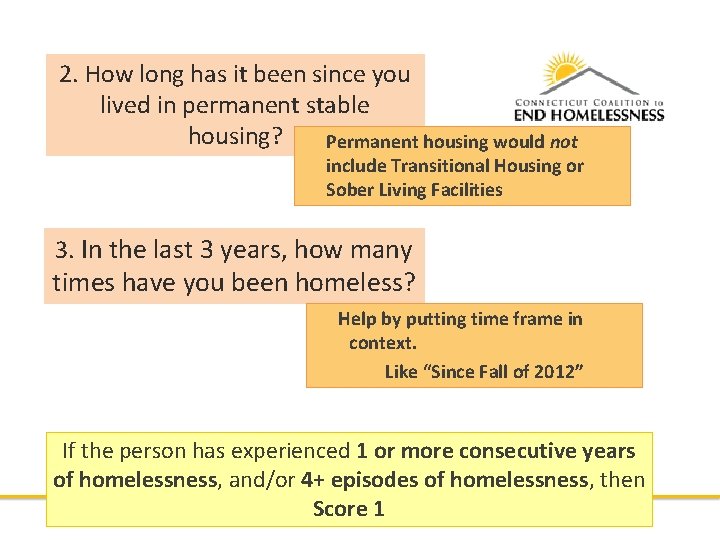
2. How long has it been since you lived in permanent stable housing? Permanent housing would not include Transitional Housing or Sober Living Facilities 3. In the last 3 years, how many times have you been homeless? Help by putting time frame in context. Like “Since Fall of 2012” If the person has experienced 1 or more consecutive years of homelessness, and/or 4+ episodes of homelessness, then Score 1
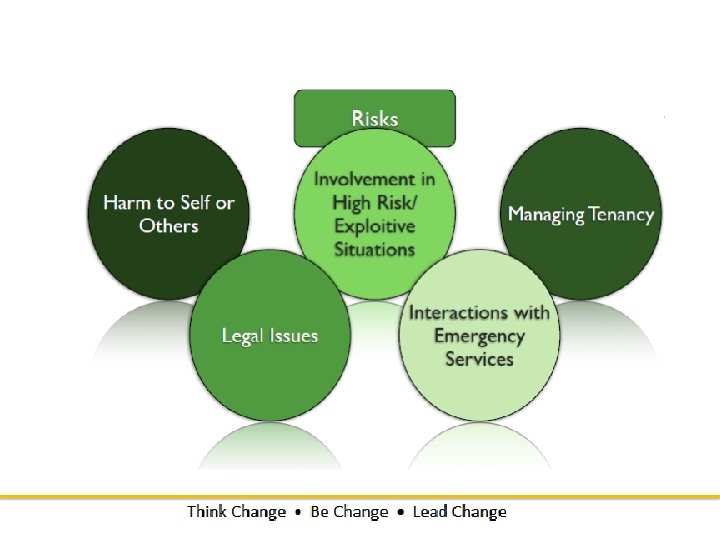
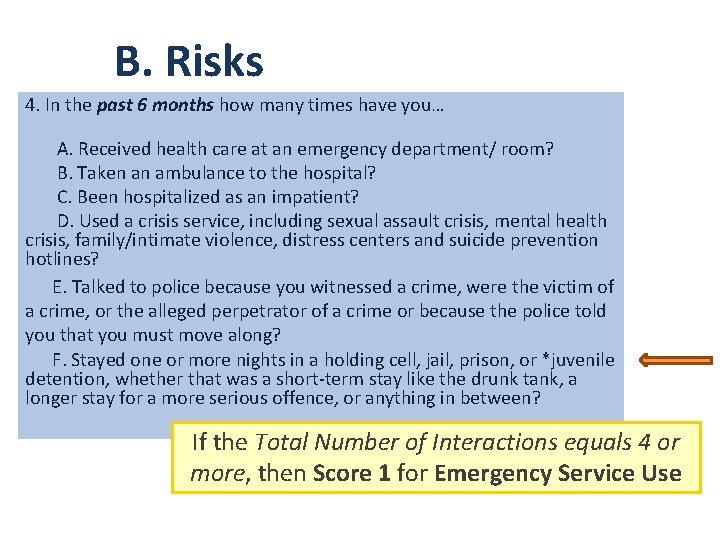
B. Risks 4. In the past 6 months how many times have you… A. Received health care at an emergency department/ room? B. Taken an ambulance to the hospital? C. Been hospitalized as an impatient? D. Used a crisis service, including sexual assault crisis, mental health crisis, family/intimate violence, distress centers and suicide prevention hotlines? E. Talked to police because you witnessed a crime, were the victim of a crime, or the alleged perpetrator of a crime or because the police told you that you must move along? F. Stayed one or more nights in a holding cell, jail, prison, or *juvenile detention, whether that was a short-term stay like the drunk tank, a longer stay for a more serious offence, or anything in between? If the Total Number of Interactions equals 4 or more, then Score 1 for Emergency Service Use
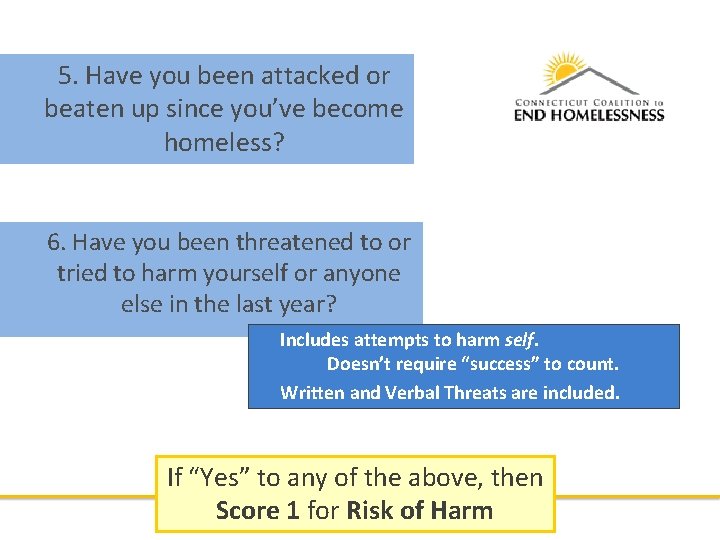
5. Have you been attacked or beaten up since you’ve become homeless? 6. Have you been threatened to or tried to harm yourself or anyone else in the last year? Includes attempts to harm self. Doesn’t require “success” to count. Written and Verbal Threats are included. If “Yes” to any of the above, then Score 1 for Risk of Harm
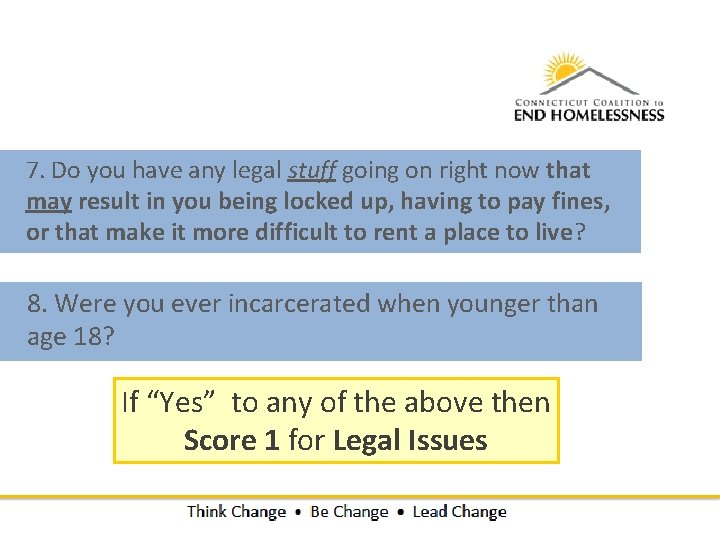
7. Do you have any legal stuff going on right now that may result in you being locked up, having to pay fines, or that make it more difficult to rent a place to live? 8. Were you ever incarcerated when younger than age 18? If “Yes” to any of the above then Score 1 for Legal Issues
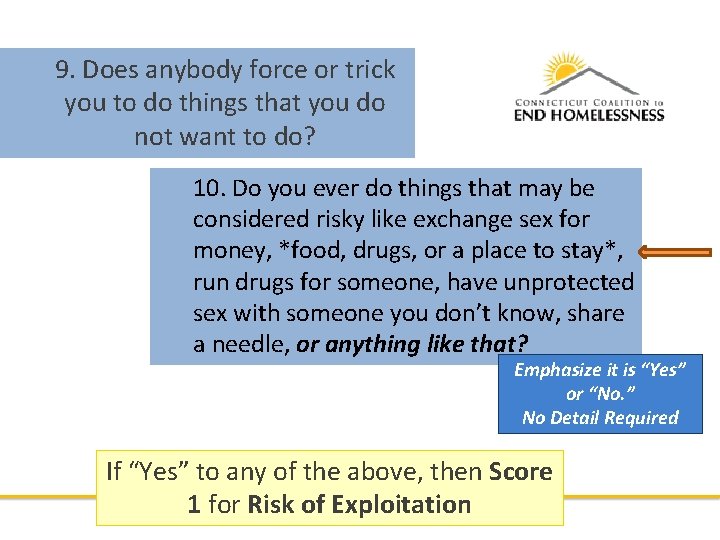
9. Does anybody force or trick you to do things that you do not want to do? 10. Do you ever do things that may be considered risky like exchange sex for money, *food, drugs, or a place to stay*, run drugs for someone, have unprotected sex with someone you don’t know, share a needle, or anything like that? Emphasize it is “Yes” or “No. ” No Detail Required If “Yes” to any of the above, then Score 1 for Risk of Exploitation
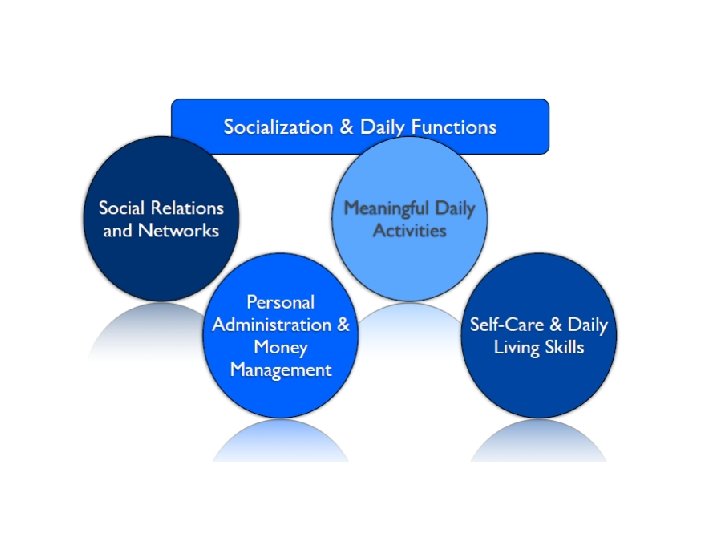
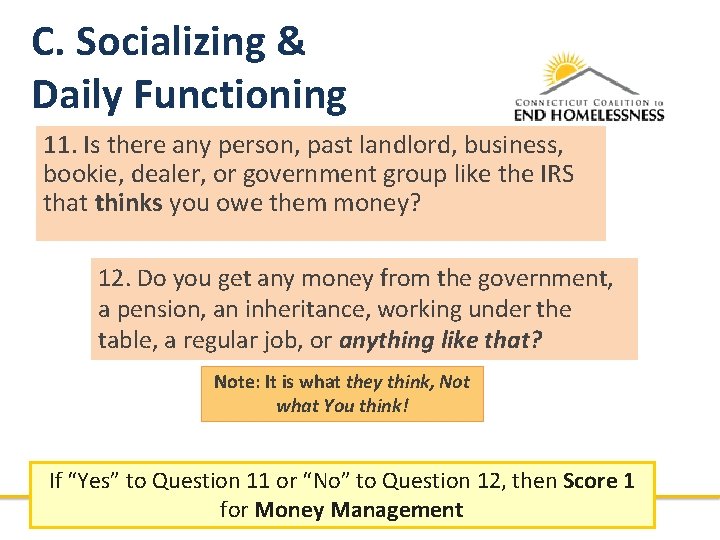
C. Socializing & Daily Functioning 11. Is there any person, past landlord, business, bookie, dealer, or government group like the IRS that thinks you owe them money? 12. Do you get any money from the government, a pension, an inheritance, working under the table, a regular job, or anything like that? Note: It is what they think, Not what You think! If “Yes” to Question 11 or “No” to Question 12, then Score 1 for Money Management
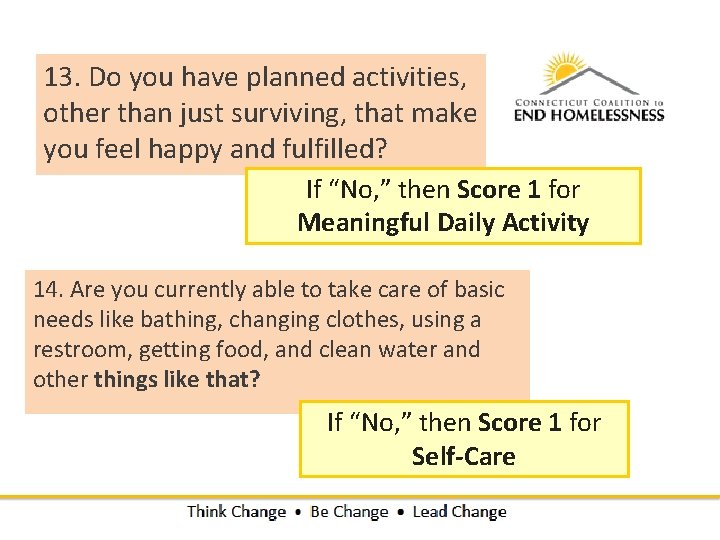
13. Do you have planned activities, other than just surviving, that make you feel happy and fulfilled? If “No, ” then Score 1 for Meaningful Daily Activity 14. Are you currently able to take care of basic needs like bathing, changing clothes, using a restroom, getting food, and clean water and other things like that? If “No, ” then Score 1 for Self-Care
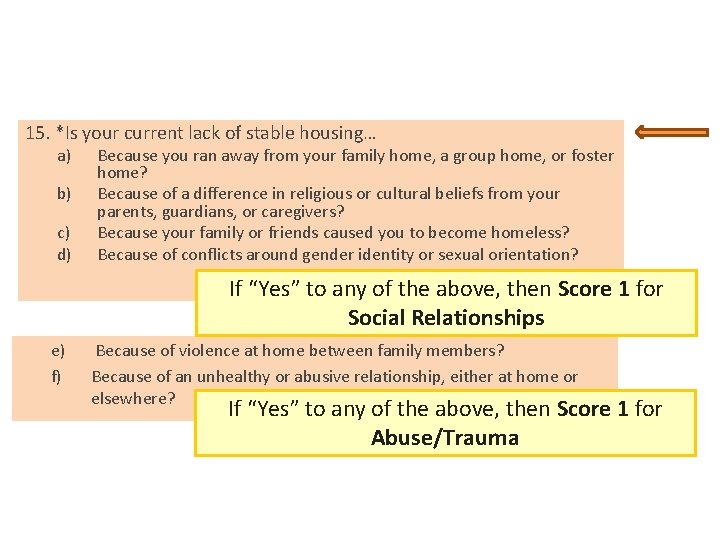
15. *Is your current lack of stable housing… a) b) c) d) Because you ran away from your family home, a group home, or foster home? Because of a difference in religious or cultural beliefs from your parents, guardians, or caregivers? Because your family or friends caused you to become homeless? Because of conflicts around gender identity or sexual orientation? If “Yes” to any of the above, then Score 1 for Social Relationships e) f) Because of violence at home between family members? Because of an unhealthy or abusive relationship, either at home or elsewhere? If “Yes” to any of the above, then Score 1 for Abuse/Trauma
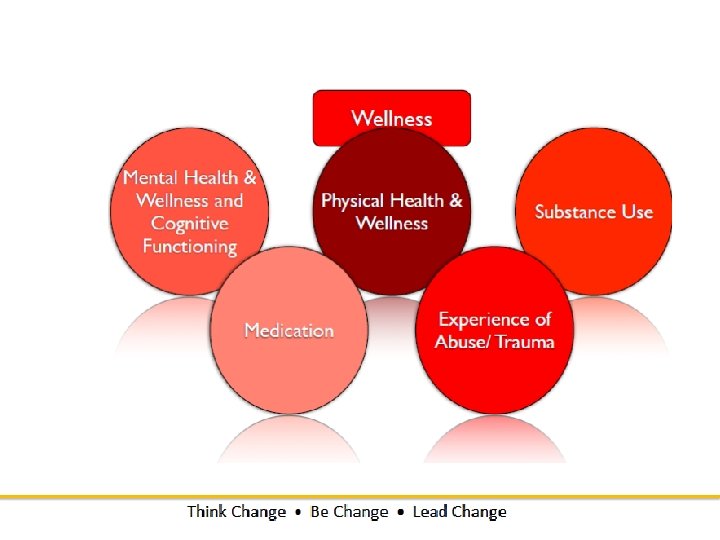
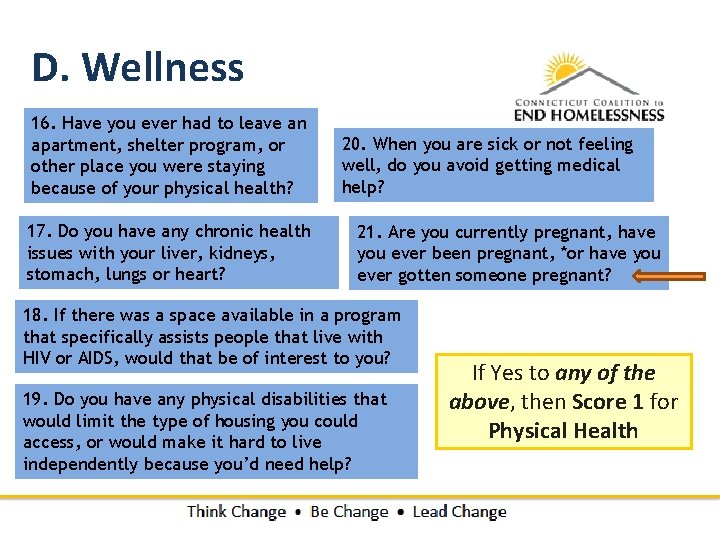
D. Wellness 16. Have you ever had to leave an apartment, shelter program, or other place you were staying because of your physical health? 17. Do you have any chronic health issues with your liver, kidneys, stomach, lungs or heart? 20. When you are sick or not feeling well, do you avoid getting medical help? 21. Are you currently pregnant, have you ever been pregnant, *or have you ever gotten someone pregnant? 18. If there was a space available in a program that specifically assists people that live with HIV or AIDS, would that be of interest to you? 19. Do you have any physical disabilities that would limit the type of housing you could access, or would make it hard to live independently because you’d need help? If Yes to any of the above, then Score 1 for Physical Health
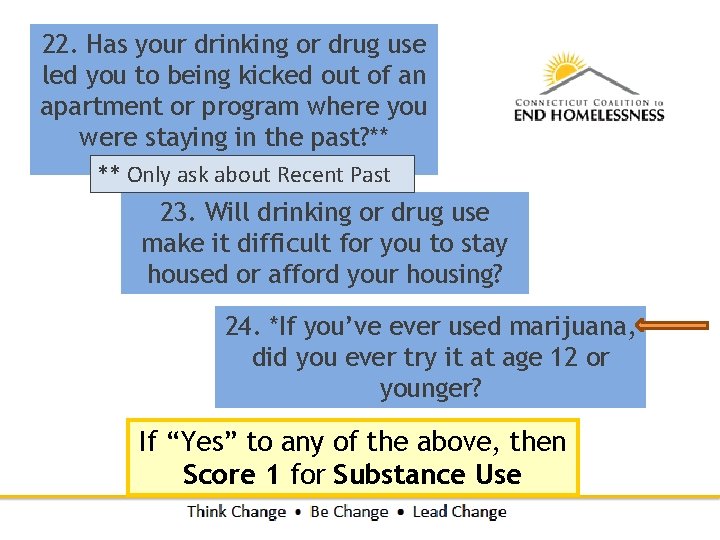
22. Has your drinking or drug use led you to being kicked out of an apartment or program where you were staying in the past? ** ** Only ask about Recent Past 23. Will drinking or drug use make it difficult for you to stay housed or afford your housing? 24. *If you’ve ever used marijuana, did you ever try it at age 12 or younger? If “Yes” to any of the above, then Score 1 for Substance Use
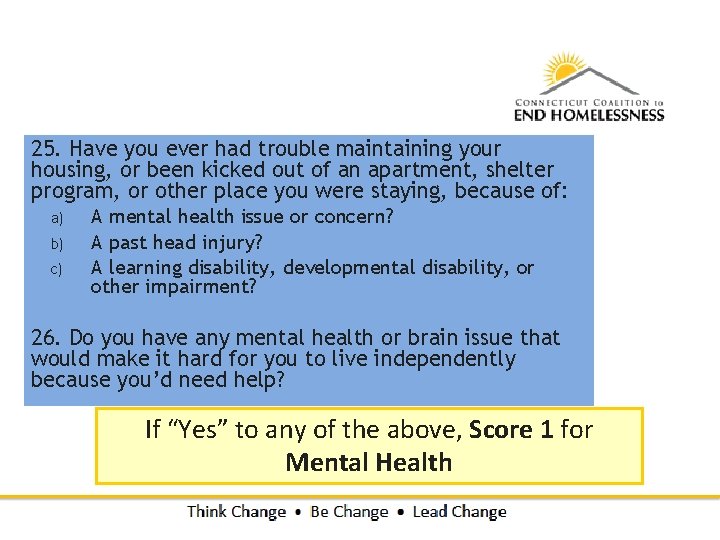
25. Have you ever had trouble maintaining your housing, or been kicked out of an apartment, shelter program, or other place you were staying, because of: a) b) c) A mental health issue or concern? A past head injury? A learning disability, developmental disability, or other impairment? 26. Do you have any mental health or brain issue that would make it hard for you to live independently because you’d need help? If “Yes” to any of the above, Score 1 for Mental Health
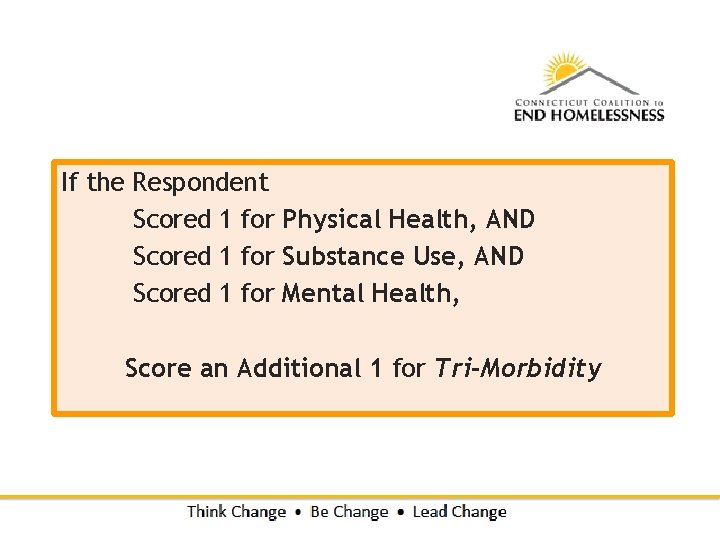
If the Respondent Scored 1 for Physical Health, AND Scored 1 for Substance Use, AND Scored 1 for Mental Health, Score an Additional 1 for Tri-Morbidity
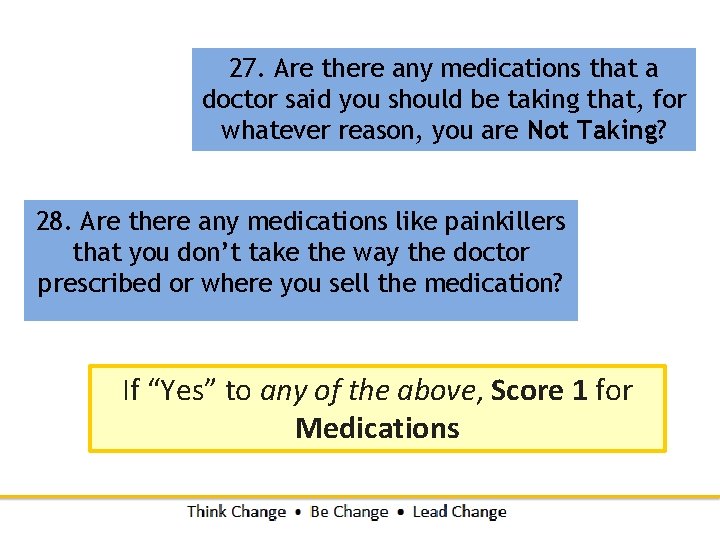
27. Are there any medications that a doctor said you should be taking that, for whatever reason, you are Not Taking? 28. Are there any medications like painkillers that you don’t take the way the doctor prescribed or where you sell the medication? If “Yes” to any of the above, Score 1 for Medications
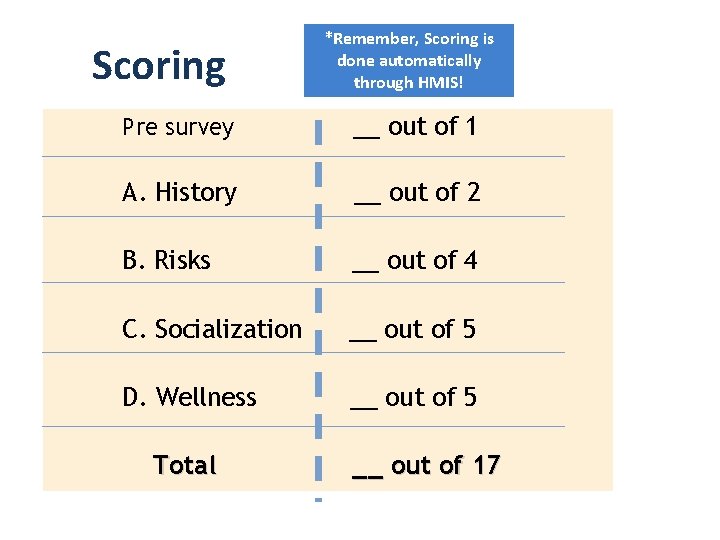
Scoring *Remember, Scoring is done automatically through HMIS! Pre survey __ out of 1 A. History __ out of 2 B. Risks __ out of 4 C. Socialization __ out of 5 D. Wellness __ out of 5 Total __ out of 17
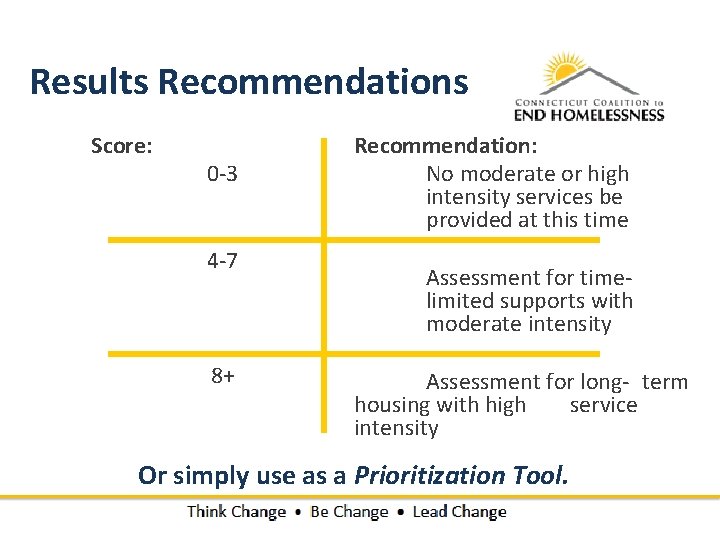
Results Recommendations Score: 0 -3 4 -7 8+ Recommendation: No moderate or high intensity services be provided at this time Assessment for timelimited supports with moderate intensity Assessment for long- term housing with high service intensity Or simply use as a Prioritization Tool.
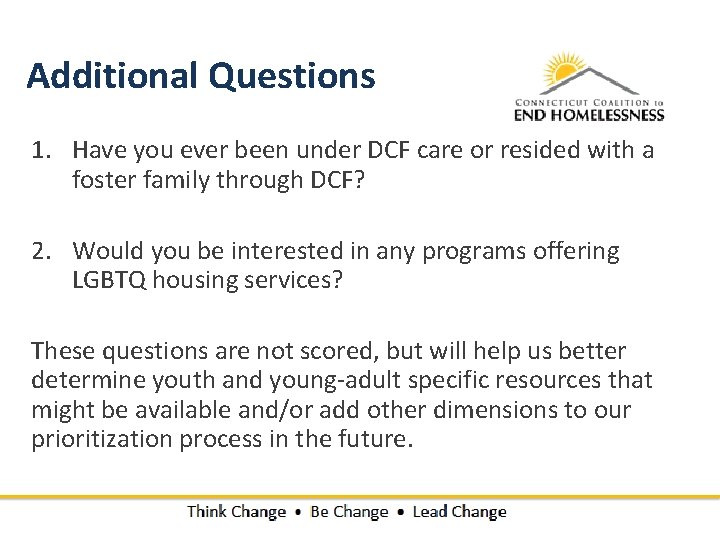
Additional Questions 1. Have you ever been under DCF care or resided with a foster family through DCF? 2. Would you be interested in any programs offering LGBTQ housing services? These questions are not scored, but will help us better determine youth and young-adult specific resources that might be available and/or add other dimensions to our prioritization process in the future.
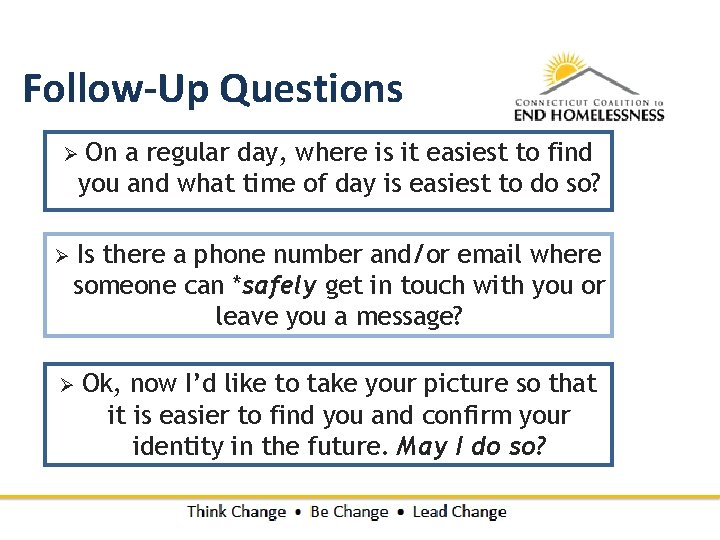
Follow-Up Questions On a regular day, where is it easiest to find you and what time of day is easiest to do so? Ø Ø Is there a phone number and/or email where someone can *safely get in touch with you or leave you a message? Ø Ok, now I’d like to take your picture so that it is easier to find you and confirm your identity in the future. May I do so?
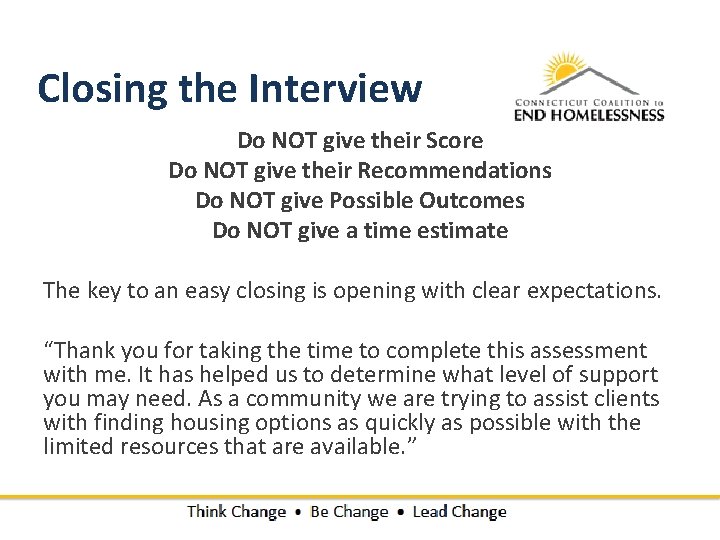
Closing the Interview Do NOT give their Score Do NOT give their Recommendations Do NOT give Possible Outcomes Do NOT give a time estimate The key to an easy closing is opening with clear expectations. “Thank you for taking the time to complete this assessment with me. It has helped us to determine what level of support you may need. As a community we are trying to assist clients with finding housing options as quickly as possible with the limited resources that are available. ”
Just Don’t… v Change Questions Order v Change Scoring v Complete it More than Once v Think it is going to be Perfect. v Remember: Nothing is Perfect
Thank You If you have any questions or concerns, please contact: Sarah Chess Training and Communications Coordinator schess@cceh. org Also Note: If you believe your score is significantly off, please consult your CAN protocol. May require a full SPDAT.