
The New Pyramid Nutrition What are nutrients Essential
- Slides: 14
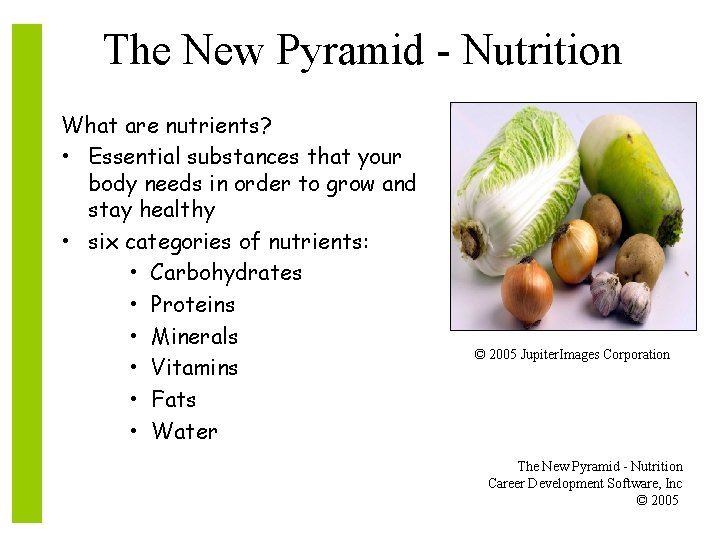
The New Pyramid - Nutrition What are nutrients? • Essential substances that your body needs in order to grow and stay healthy • six categories of nutrients: • Carbohydrates • Proteins • Minerals • Vitamins • Fats • Water © 2005 Jupiter. Images Corporation The New Pyramid - Nutrition Career Development Software, Inc © 2005
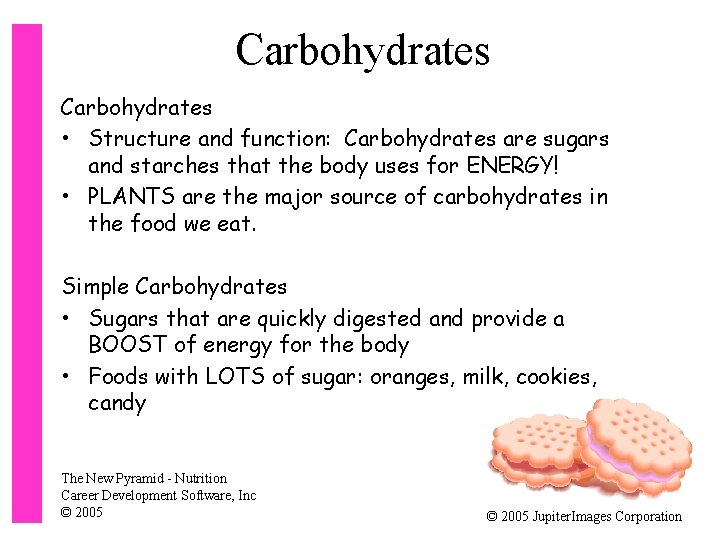
Carbohydrates • Structure and function: Carbohydrates are sugars and starches that the body uses for ENERGY! • PLANTS are the major source of carbohydrates in the food we eat. Simple Carbohydrates • Sugars that are quickly digested and provide a BOOST of energy for the body • Foods with LOTS of sugar: oranges, milk, cookies, candy The New Pyramid - Nutrition Career Development Software, Inc © 2005 Jupiter. Images Corporation
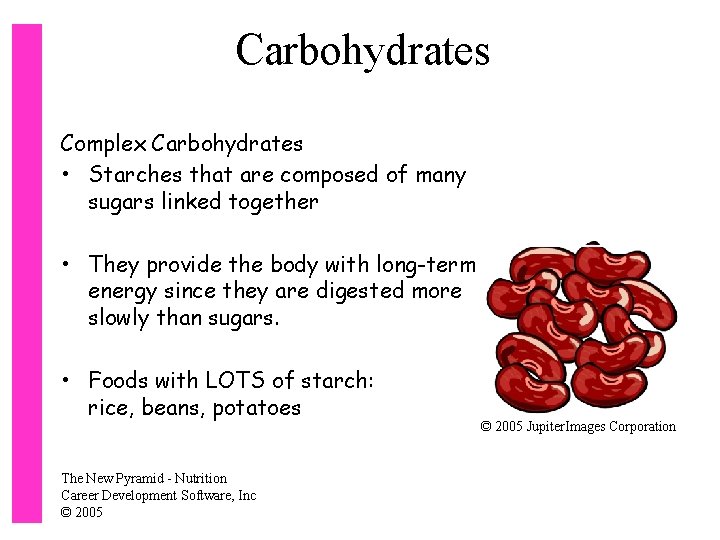
Carbohydrates Complex Carbohydrates • Starches that are composed of many sugars linked together • They provide the body with long-term energy since they are digested more slowly than sugars. • Foods with LOTS of starch: rice, beans, potatoes The New Pyramid - Nutrition Career Development Software, Inc © 2005 Jupiter. Images Corporation
Fiber (p. 116) • What is fiber and where is it found? • What are the benefits of fiber? • How much fiber should you eat? © 2005 Jupiter. Images Corporation The New Pyramid - Nutrition Career Development Software, Inc copyright 2005
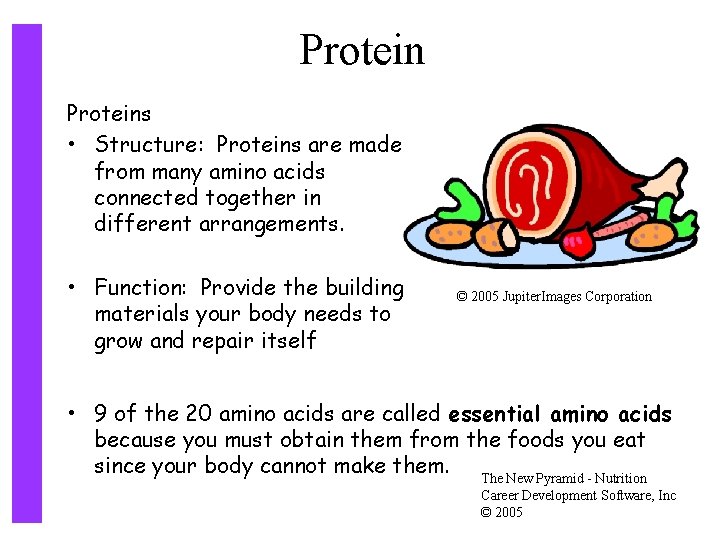
Proteins • Structure: Proteins are made from many amino acids connected together in different arrangements. • Function: Provide the building materials your body needs to grow and repair itself © 2005 Jupiter. Images Corporation • 9 of the 20 amino acids are called essential amino acids because you must obtain them from the foods you eat since your body cannot make them. The New Pyramid - Nutrition Career Development Software, Inc © 2005
Protein Complete proteins: • Foods containing all the essential amino acids Examples: fish, meat, eggs, milk, cheese Incomplete proteins: • Foods that are missing some essential amino acids Examples: Legumes, nuts, whole grains The New Pyramid - Nutrition Career Development Software, Inc copyright 2005
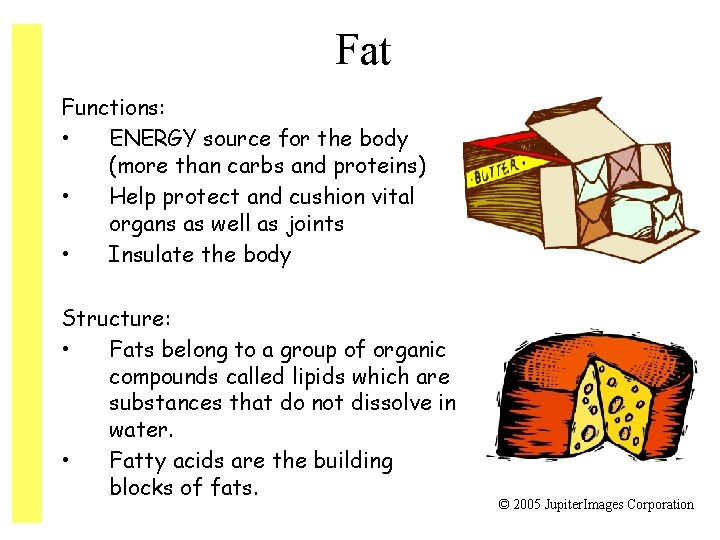
Fat Functions: • ENERGY source for the body (more than carbs and proteins) • Help protect and cushion vital organs as well as joints • Insulate the body Structure: • Fats belong to a group of organic compounds called lipids which are substances that do not dissolve in water. • Fatty acids are the building blocks of fats. © 2005 Jupiter. Images Corporation
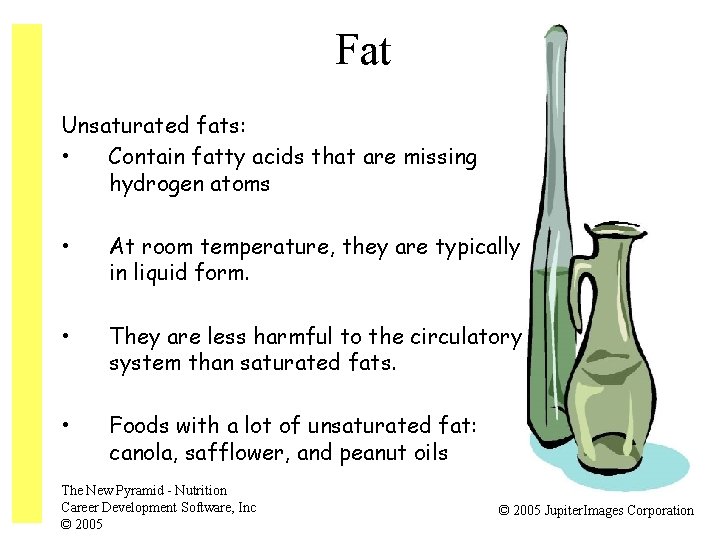
Fat Unsaturated fats: • Contain fatty acids that are missing hydrogen atoms • At room temperature, they are typically in liquid form. • They are less harmful to the circulatory system than saturated fats. • Foods with a lot of unsaturated fat: canola, safflower, and peanut oils The New Pyramid - Nutrition Career Development Software, Inc © 2005 Jupiter. Images Corporation
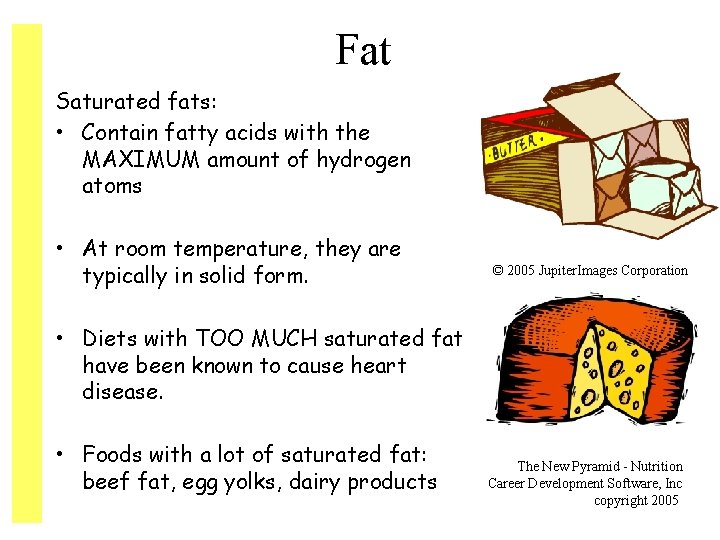
Fat Saturated fats: • Contain fatty acids with the MAXIMUM amount of hydrogen atoms • At room temperature, they are typically in solid form. © 2005 Jupiter. Images Corporation • Diets with TOO MUCH saturated fat have been known to cause heart disease. • Foods with a lot of saturated fat: beef fat, egg yolks, dairy products The New Pyramid - Nutrition Career Development Software, Inc copyright 2005
Calories What is a calorie? • The energy obtained from carbohydrates, proteins, and fats is measured in units called calories. © 2005 Jupiter. Images Corporation The New Pyramid - Nutrition Career Development Software, Inc copyright 2005
Vitamins What are vitamins? What is the difference between water soluble and fat soluble vitamins? The New Pyramid - Nutrition Career Development Software, Inc copyright 2005
Minerals What are minerals? Find the benefits to the body and what foods is it found for the following: -Calcium -Phosphorous -Magnesium -Iron The New Pyramid - Nutrition Career Development Software, Inc copyright 2005
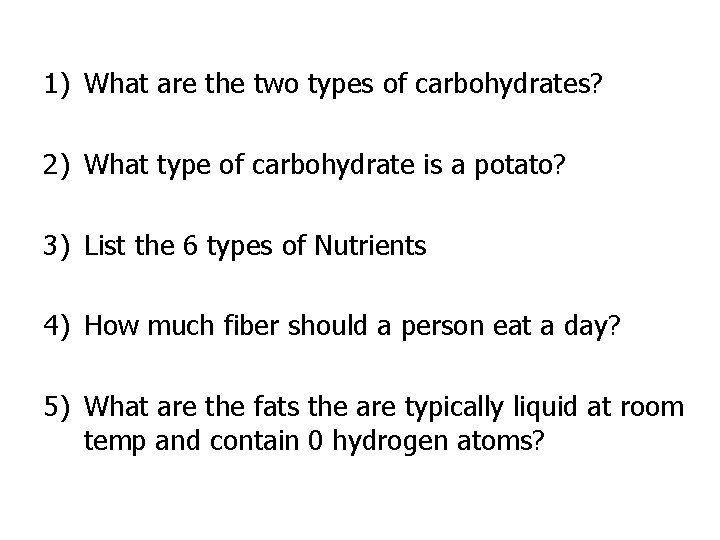
1) What are the two types of carbohydrates? 2) What type of carbohydrate is a potato? 3) List the 6 types of Nutrients 4) How much fiber should a person eat a day? 5) What are the fats the are typically liquid at room temp and contain 0 hydrogen atoms?
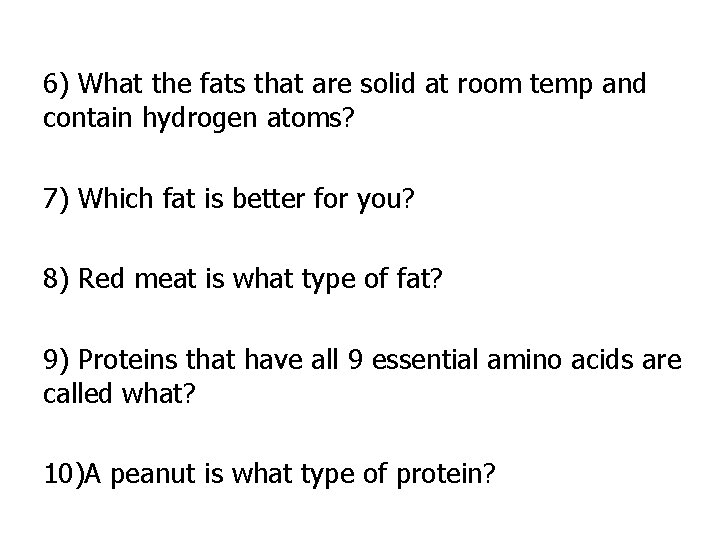
6) What the fats that are solid at room temp and contain hydrogen atoms? 7) Which fat is better for you? 8) Red meat is what type of fat? 9) Proteins that have all 9 essential amino acids are called what? 10)A peanut is what type of protein?