
The New Imperialism 1878 1914 Is the New
- Slides: 20
The “New” Imperialism 1878 - 1914
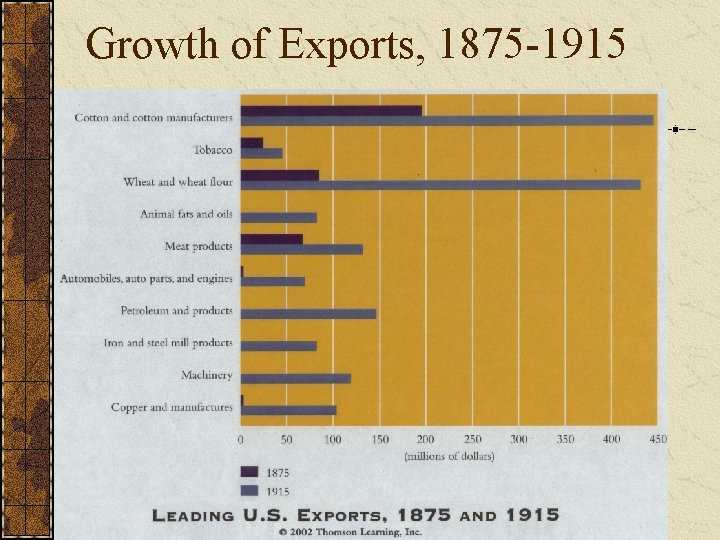
Is the “New” Imperialism New? Not new – U. S. continually expanding New in two senses: Non-contiguous expansion Colonization, not usurpation Tied to economic expansion U. S. exports increase from $234 million in 1865 to $1. 5 billion in 1900, 2. 5 billion in 1914 Particularly in Latin America: by 1914, . . . • U. S. exported $300 million worth of goods to region • U. S. investments in region totaled $1. 26 billion
Growth of Exports, 1875 -1915
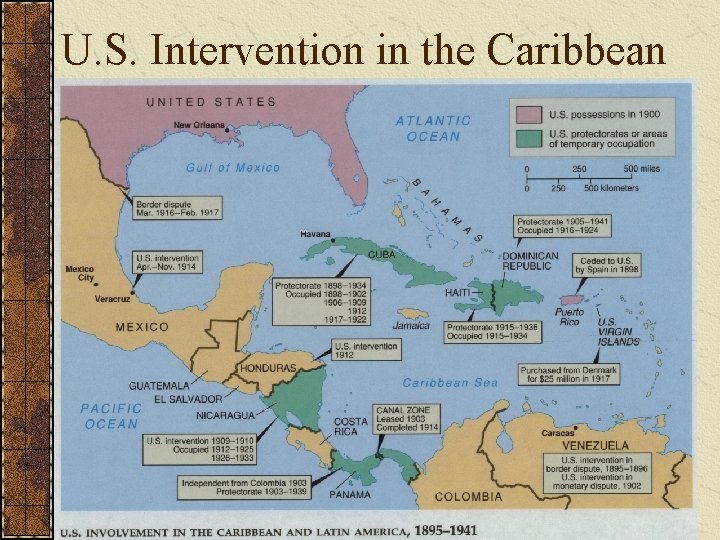
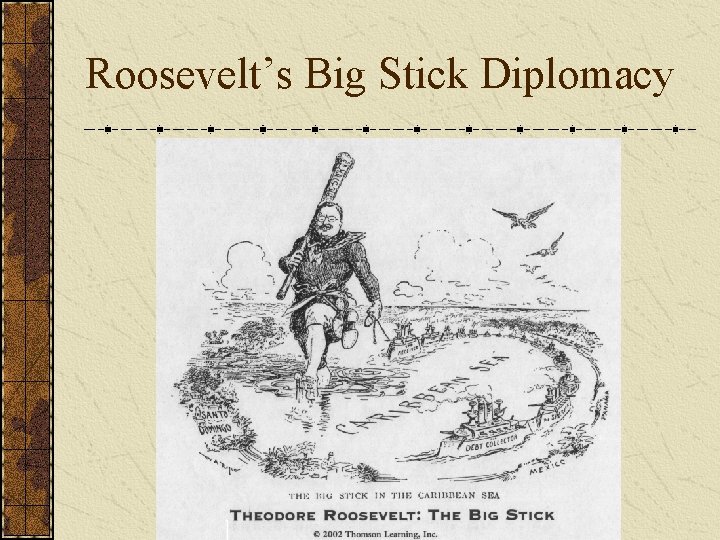
U. S. Intervention in the Caribbean
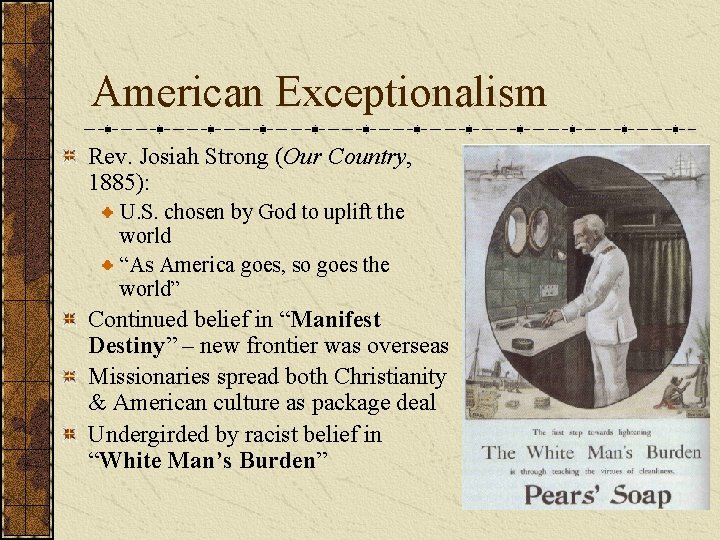
American Exceptionalism Rev. Josiah Strong (Our Country, 1885): U. S. chosen by God to uplift the world “As America goes, so goes the world” Continued belief in “Manifest Destiny” – new frontier was overseas Missionaries spread both Christianity & American culture as package deal Undergirded by racist belief in “White Man’s Burden”
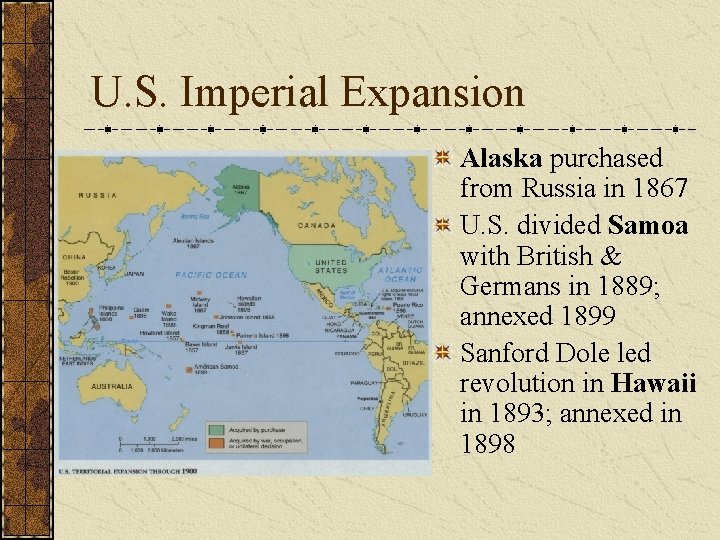
U. S. Imperial Expansion Alaska purchased from Russia in 1867 U. S. divided Samoa with British & Germans in 1889; annexed 1899 Sanford Dole led revolution in Hawaii in 1893; annexed in 1898
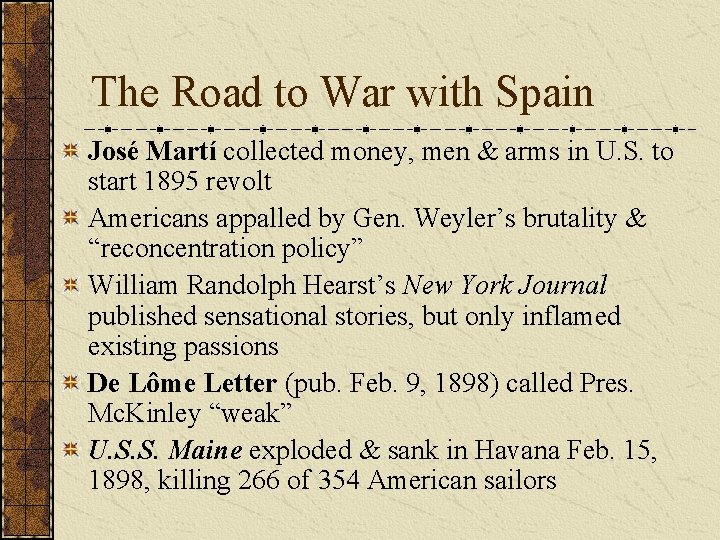
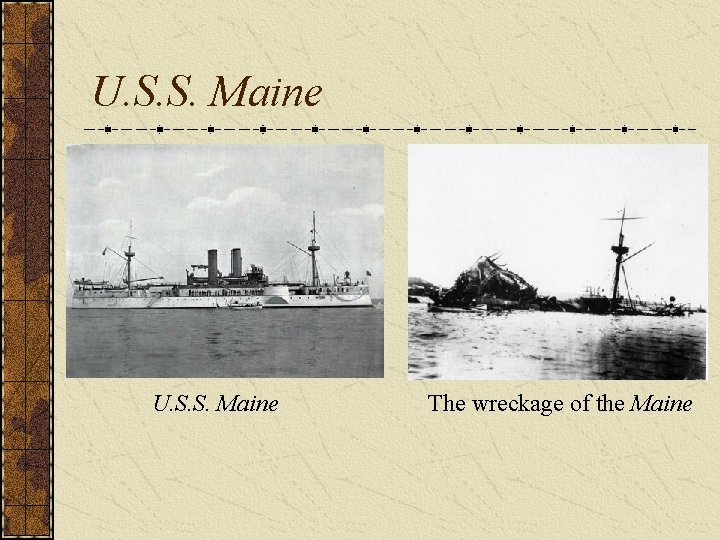
The Road to War with Spain José Martí collected money, men & arms in U. S. to start 1895 revolt Americans appalled by Gen. Weyler’s brutality & “reconcentration policy” William Randolph Hearst’s New York Journal published sensational stories, but only inflamed existing passions De Lôme Letter (pub. Feb. 9, 1898) called Pres. Mc. Kinley “weak” U. S. S. Maine exploded & sank in Havana Feb. 15, 1898, killing 266 of 354 American sailors
U. S. S. Maine The wreckage of the Maine
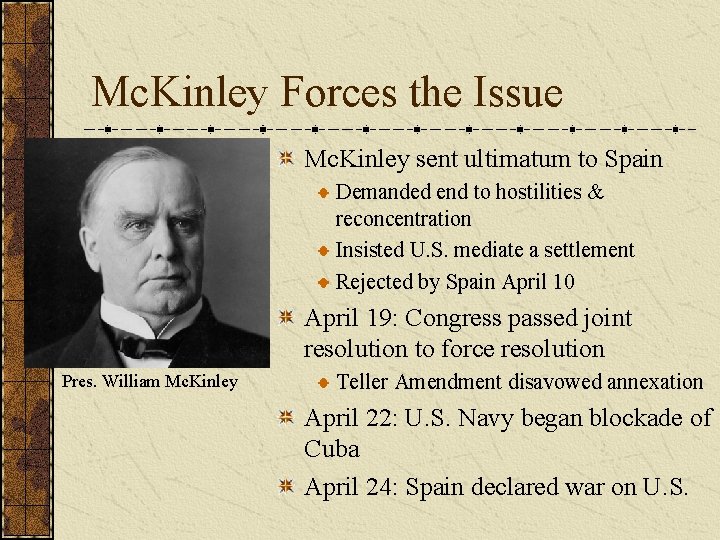
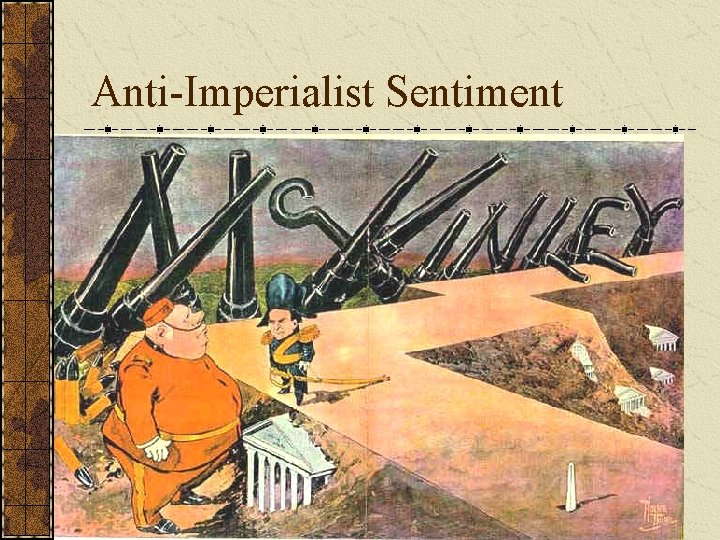
Mc. Kinley Forces the Issue Mc. Kinley sent ultimatum to Spain Demanded end to hostilities & reconcentration Insisted U. S. mediate a settlement Rejected by Spain April 10 April 19: Congress passed joint resolution to force resolution Pres. William Mc. Kinley Teller Amendment disavowed annexation April 22: U. S. Navy began blockade of Cuba April 24: Spain declared war on U. S.
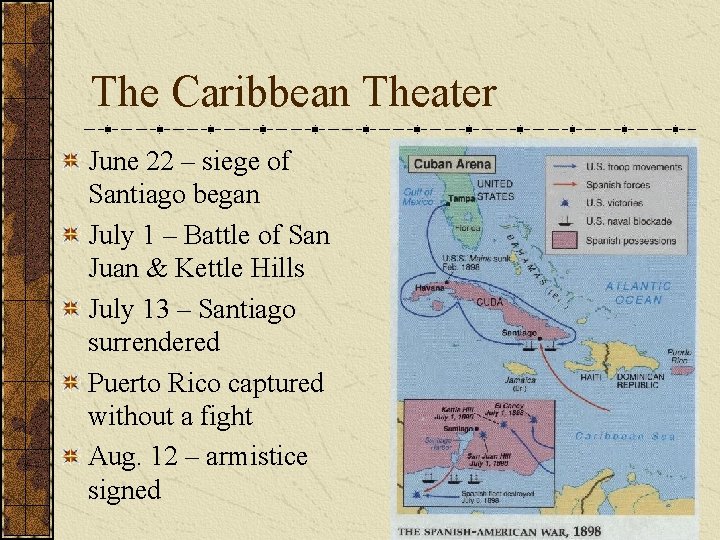
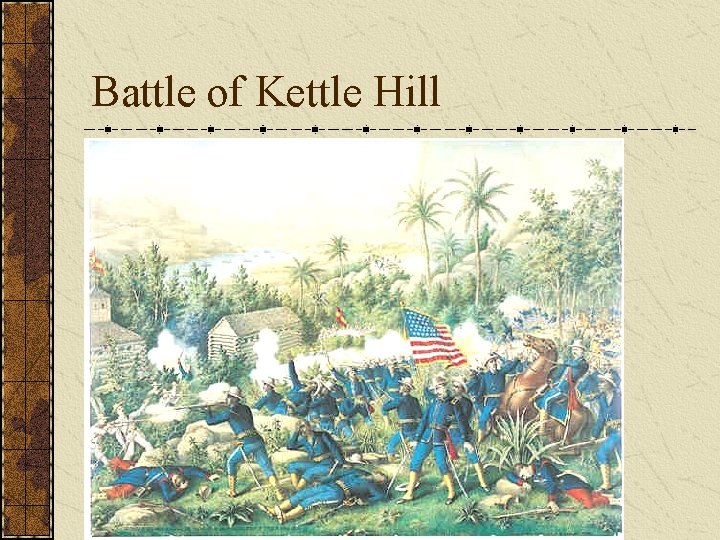
The Caribbean Theater June 22 – siege of Santiago began July 1 – Battle of San Juan & Kettle Hills July 13 – Santiago surrendered Puerto Rico captured without a fight Aug. 12 – armistice signed
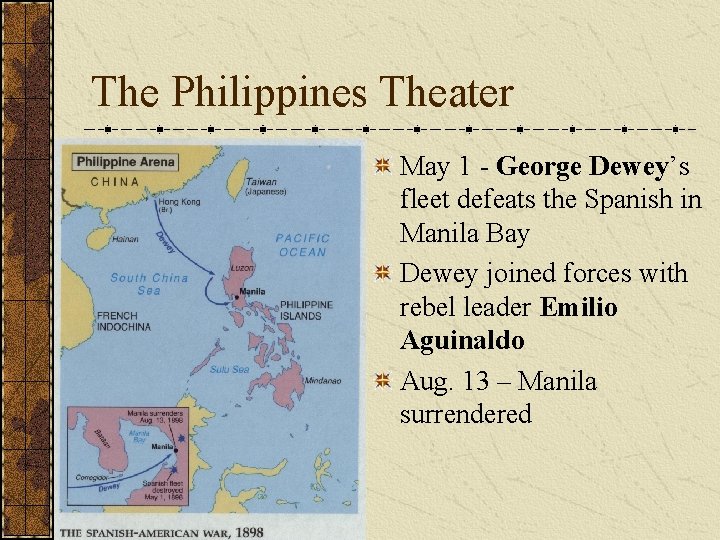
The Philippines Theater May 1 - George Dewey’s fleet defeats the Spanish in Manila Bay Dewey joined forces with rebel leader Emilio Aguinaldo Aug. 13 – Manila surrendered
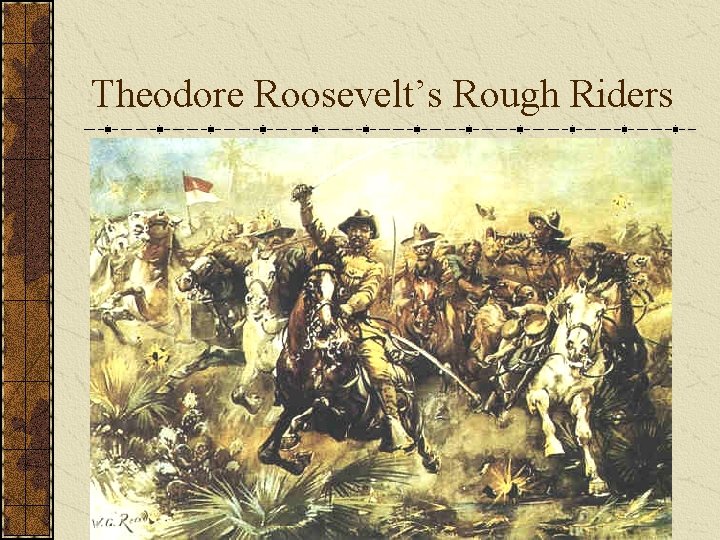
Theodore Roosevelt’s Rough Riders
Battle of Kettle Hill
Effects of Imperialism - Caribbean Treaty of Paris (Dec. 1898; ratified Feb. 1899): U. S. got Philippines, Guam & Puerto Rico Spain got $20 million Cuba granted independence (became U. S. protectorate) Platt Amendment gave U. S. control over Cuba’s foreign policy & right of intervention Foraker Act (1900) denied U. S. citizenship to Puerto Ricans (got it in 1917) Insular Cases – Supreme Court ruled Constitution doesn’t follow the flag
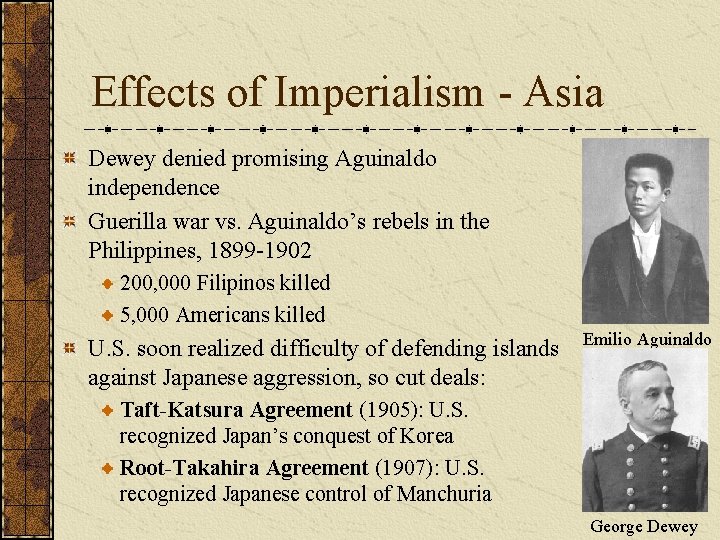
Effects of Imperialism - Asia Dewey denied promising Aguinaldo independence Guerilla war vs. Aguinaldo’s rebels in the Philippines, 1899 -1902 200, 000 Filipinos killed 5, 000 Americans killed U. S. soon realized difficulty of defending islands against Japanese aggression, so cut deals: Emilio Aguinaldo Taft-Katsura Agreement (1905): U. S. recognized Japan’s conquest of Korea Root-Takahira Agreement (1907): U. S. recognized Japanese control of Manchuria George Dewey
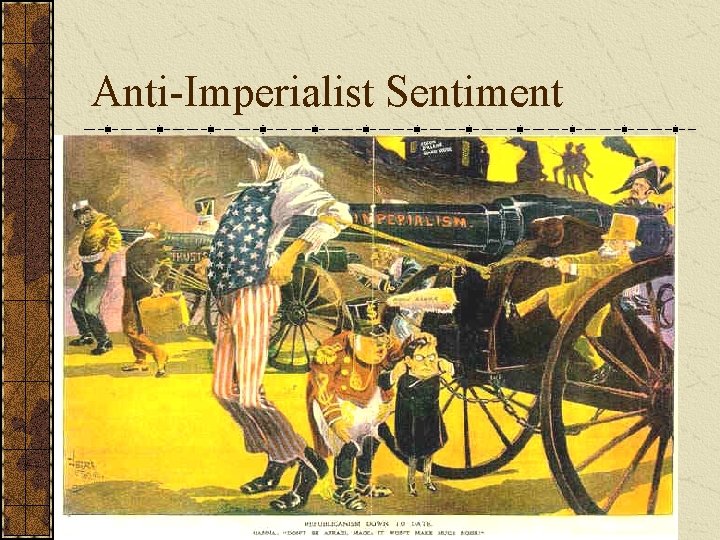
Anti-Imperialist Sentiment
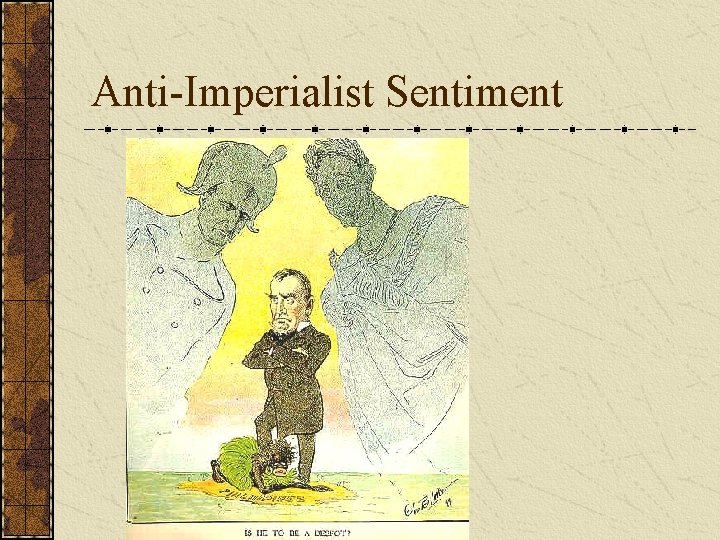
Anti-Imperialist Sentiment
Anti-Imperialist Sentiment
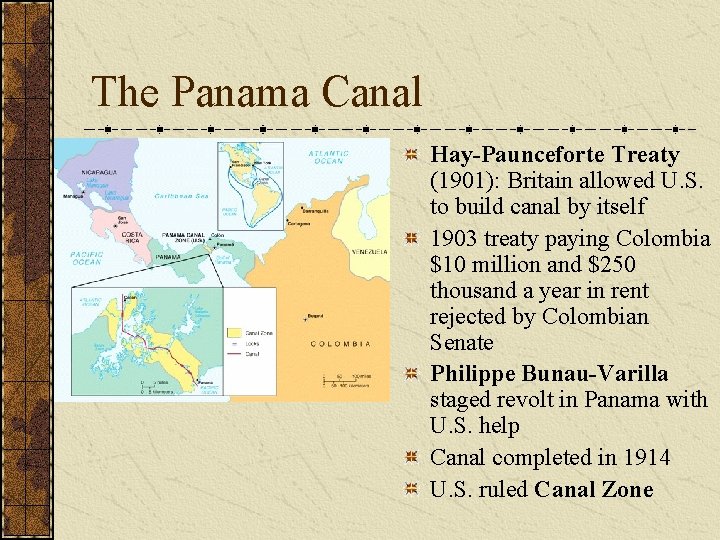
The Panama Canal Hay-Paunceforte Treaty (1901): Britain allowed U. S. to build canal by itself 1903 treaty paying Colombia $10 million and $250 thousand a year in rent rejected by Colombian Senate Philippe Bunau-Varilla staged revolt in Panama with U. S. help Canal completed in 1914 U. S. ruled Canal Zone
Roosevelt’s Big Stick Diplomacy