
The New GPh C Inspection Model Leyla Hannbeck

The New GPh. C Inspection Model Leyla Hannbeck, Head of Pharmacy Services, NPA
The new inspection model “A show me, tell me story” Based on FIVE principles and the underpinning GPh. C standards 1. Governance arrangements 2. Empowered and competent staff 3. Managing pharmacy premises 4. Delivering pharmacy services 5. Equipment and facilities

Principle 1: Governance arrangements This is all about managing the potential risks that processes and services may pose to patients/public NPA standard operating procedure üStandard operating procedures (SOPs) ü Staff have clear roles ü Complaints procedure NHS Complaints Record Book ü Appropriate records ü Safeguarding Children and vulnerable adults
Principle 2: Empowered and competent staff This is all about the competency of staff, the skill mix and the way that training is managed within the pharmacy This is to certify that: ü Sufficient staff with appropriate skill mix ü Training is appropriately supervised ü Culture of openness, honesty and learning üIncentives/targets should not affect patient care
Principle 3: Managing pharmacy premises This is all about having well-maintained pharmacy premises that are hygienic, well-designed and secure ü Well-maintained and safe pharmacy premises ü Compliant with the Health Act ü Clean and hygienic üSecure
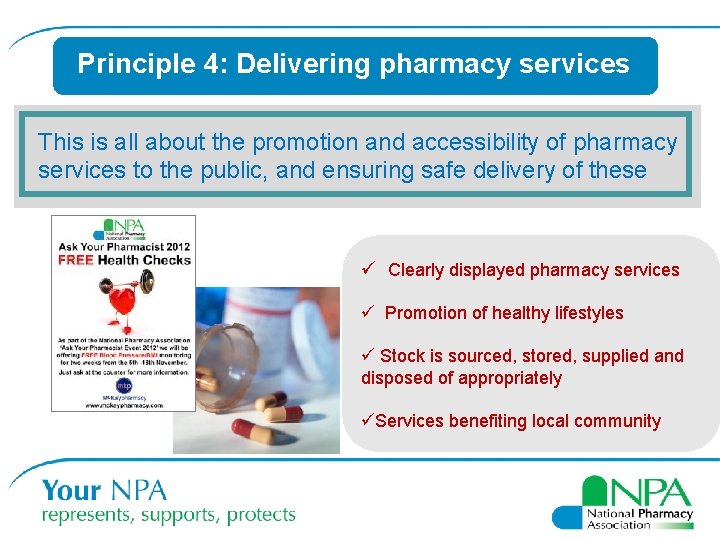
Principle 4: Delivering pharmacy services This is all about the promotion and accessibility of pharmacy services to the public, and ensuring safe delivery of these ü Clearly displayed pharmacy services ü Promotion of healthy lifestyles ü Stock is sourced, stored, supplied and disposed of appropriately üServices benefiting local community
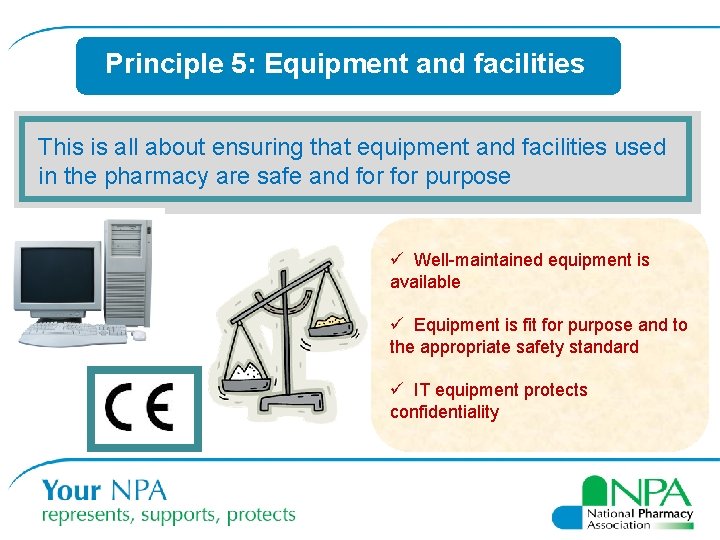
Principle 5: Equipment and facilities This is all about ensuring that equipment and facilities used in the pharmacy are safe and for purpose ü Well-maintained equipment is available ü Equipment is fit for purpose and to the appropriate safety standard ü IT equipment protects confidentiality
“A show me, tell me story” by the NPA Video clips for pharmacists and their teams on NPA Website! Evidence How am I doing? Principles Signposting In practice scenarios

Summary of NPA resources: The following resources are available in this series, with further documents planned in due course: “GPh. C inspections “A show me, tell me story”: introduction” “GPh. C inspections “A show me, tell me story”: Guidance — Principle 1” “GPh. C inspections “A show me, tell me story”: Guidance — Principle 2” “GPh. C inspections “A show me, tell me story”: Guidance — Principle 3” “GPh. C inspections “A show me, tell me story”: Guidance — Principle 4” “GPh. C inspections “A show me, tell me story”: Guidance — Principle 5” “GPh. C inspections: “A show me, tell me story”: Self-assessment grading” “GPh. C Inspections: FAQs (Dec 2013)” “GPh. C inspections: NHS public health campaign pharmacy log” “GPh. C inspections: Pharmacy cleaning matrix” “GPh. C inspections: Pharmacy date-checking matrix” “GPh. C inspections: Pharmacy drug/device alert log” “GPh. C inspections: Pharmacy maintenance issues log” “GPh. C inspections: Recommended resources” “GPh. C inspections: Pharmacy self care log” “GPh. C inspections: Pharmacy signposting record log” “GPh. C inspections: Pharmacy team training record” (for individual members of the pharmacy team) “GPh. C inspections: Sale of medicines protocol guidance” Other NPA resources: Standard operating procedures: o Controlled Drugs o Responsible pharmacist o National Patient Safety Agency (for example, supplying insulin, supply of lithium therapy) o Medicines Use Review
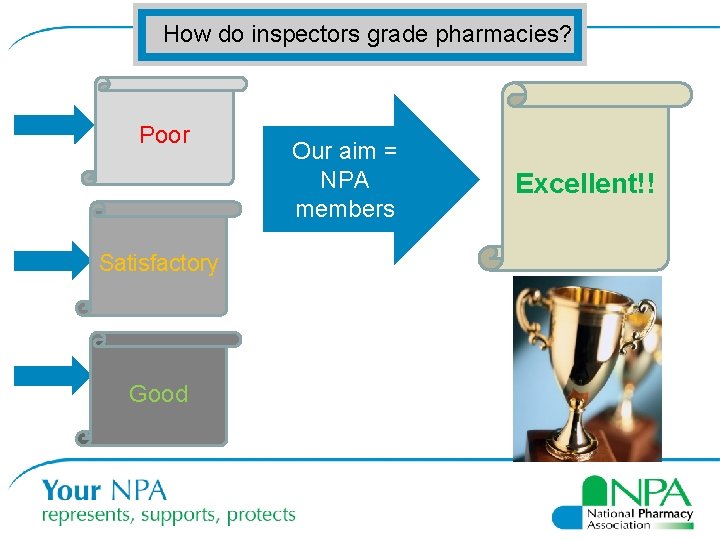
How do inspectors grade pharmacies? Poor Satisfactory Good Our aim = NPA members Excellent!!
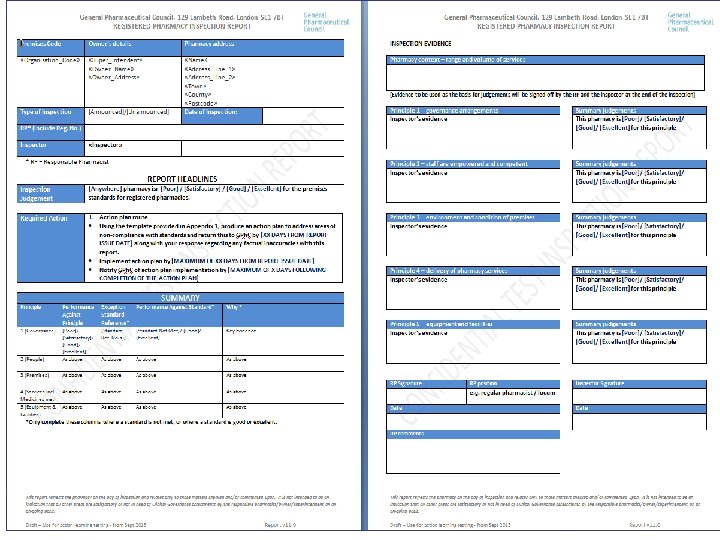
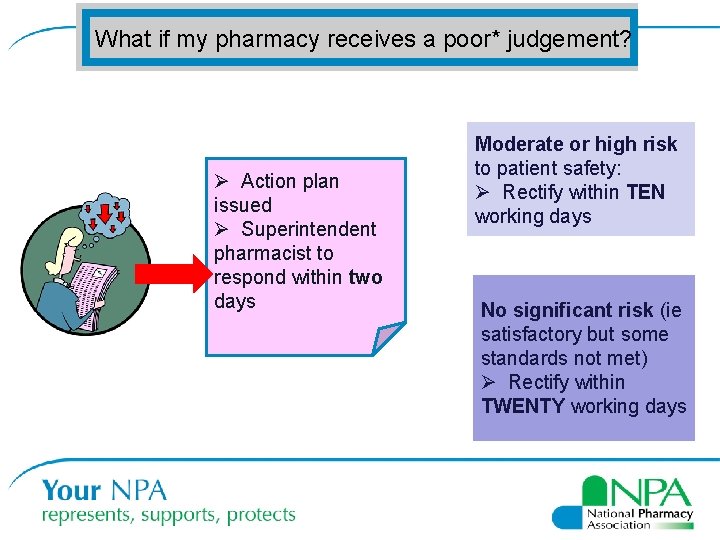
What if my pharmacy receives a poor* judgement? Ø Action plan issued Ø Superintendent pharmacist to respond within two days Moderate or high risk to patient safety: Ø Rectify within TEN working days No significant risk (ie satisfactory but some standards not met) Ø Rectify within TWENTY working days

Scenario 1 Dispensing error: Tegretol Prolonged Release tablets 200 mg supplied instead of Voltarol Retard tablets. The patient took the tablets for two days before the error was detected and the patient’s doctor has contacted the pharmacy to notify the pharmacist of the error. The dispensing technician takes the call — what action would they take? Ø Ø Ø Which member of the pharmacy team were involved? How are incidents dealt with? What processes are in place to notify the patient? Are incident reporting procedures in place? What possible factors were implicated in the incident? Is indemnity insurance cover in place? HC 1 NHS 1 Help with health costs
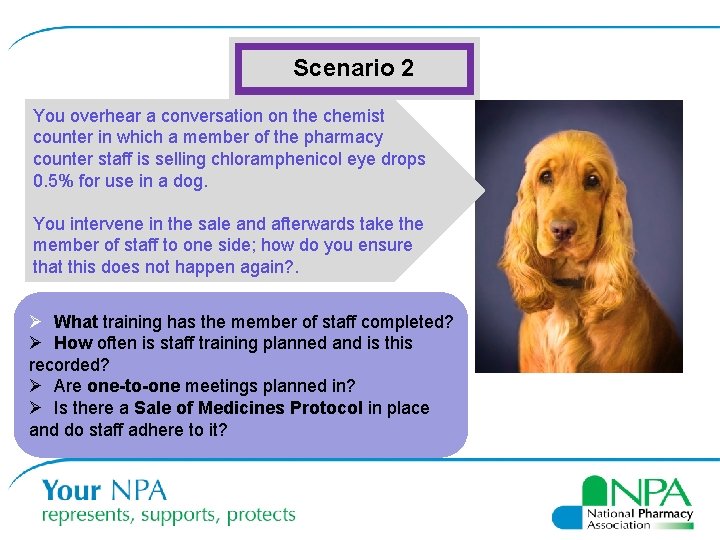
Scenario 2 You overhear a conversation on the chemist counter in which a member of the pharmacy counter staff is selling chloramphenicol eye drops 0. 5% for use in a dog. You intervene in the sale and afterwards take the member of staff to one side; how do you ensure that this does not happen again? . Ø What training has the member of staff completed? Ø How often is staff training planned and is this recorded? Ø Are one-to-one meetings planned in? Ø Is there a Sale of Medicines Protocol in place and do staff adhere to it?
Scenario 3 You are checking the uncollected owing prescriptions and notice that a number of prescriptions are nearing their expiry date. Some of these are long term out-of-stock items and you are unsure whether the items are still required. In addition, two of the bags on the shelf contain fridge lines. ØAudit to determine the percentage of owing items against the total items dispensed ØReview the frequency of checking owing items and which member(s) of staff are responsible — confirm that there is a checking matrix ØSOPs on supply of medicines — dealing with fridge lines, Controlled Drugs, owing items and so on; stickers should be used to highlight prescriptions containing these items
Scenario 4 How can you be sure that the medicines you sell/ supply are in date? ØThere is a data checking matrix in place and staff know how it operates ØThat stock approaching expiry data is clearly marked to differentiate from indate stock ØThat procedures are in place for dealing with out-of-date medicines ØThat you have a SOP in place on how to store medicines In this scenario staff will need to demonstrate that Principle 1 and 2 are complied with
FAQs: general Will I get a notification of the intention of a GPh. C inspectors visit? If there is a locum pharmacist on duty, can the inspection be deferred?
FAQs: action plans What if the Superintendent Pharmacist is on holiday and an action plan needs to be produced? I am not sure that ten days is sufficient time to rectify the shortfalls, what can I do?
FAQs How often will my pharmacy be visited? Are the visits similar to the contract monitoring visits? • There is some overlap • GPh. C inspections focus heavily on patient safety; risk assessment forms part of Clinical Governance (an NHS Essential Service) • Contract monitoring visits are carried out by Local Area Teams, and only apply to those pharmacies in NHS England’s pharmaceutical lists; GPh. C inspections apply to all registered pharmacies
Remember! ØThe focus of the inspections is patient safety Ø Inspectors are not looking to penalise minor issues Ø It does not matter what methods are used to achieve standards Ø The more prepared you are, the less time the inspection will take Ø The NPA Pharmacy Services Support and toolkits
Any questions? GPh. C inspections: Pharmacy log Record keeping ü Legal records maintained ü Logs/matrices maintained as supporting evidence NPA standard operating procedure SOPs: ü In place for all the processes in the pharmacy ü Up to date and regularly reviewed ü Staff can demonstrate that processes are followed in line with SOPs ü Evidence of where incidents have occurred and SOPs reviewed, thus improving processes
The end! Thank you for listening and good luck!! Email: l. hannbeck@npa. co. uk Twitter: Leyla. Hannbeck
- Slides: 22