
The New Deal I pledge you I pledge
- Slides: 15
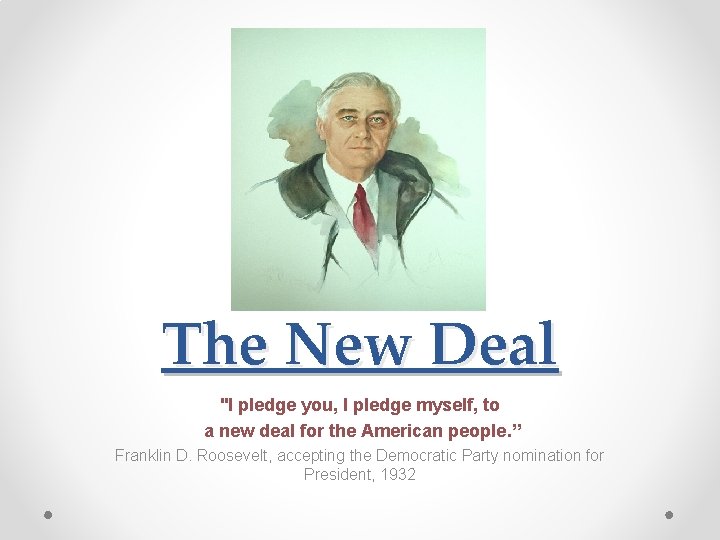
The New Deal "I pledge you, I pledge myself, to a new deal for the American people. ” Franklin D. Roosevelt, accepting the Democratic Party nomination for President, 1932
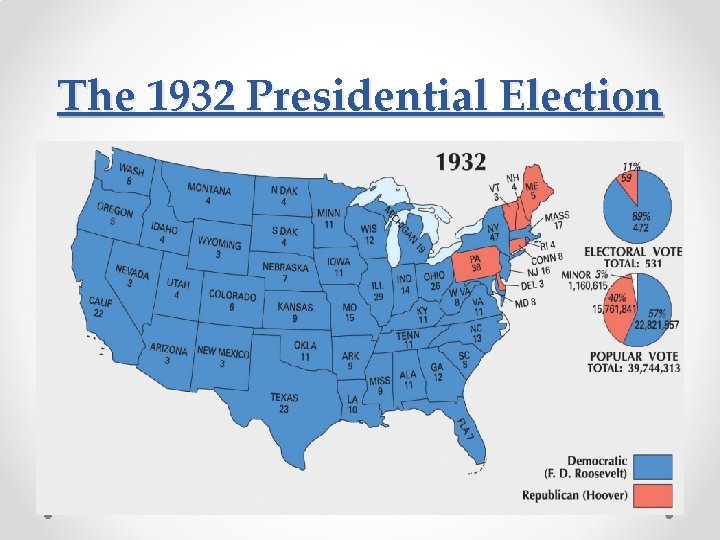
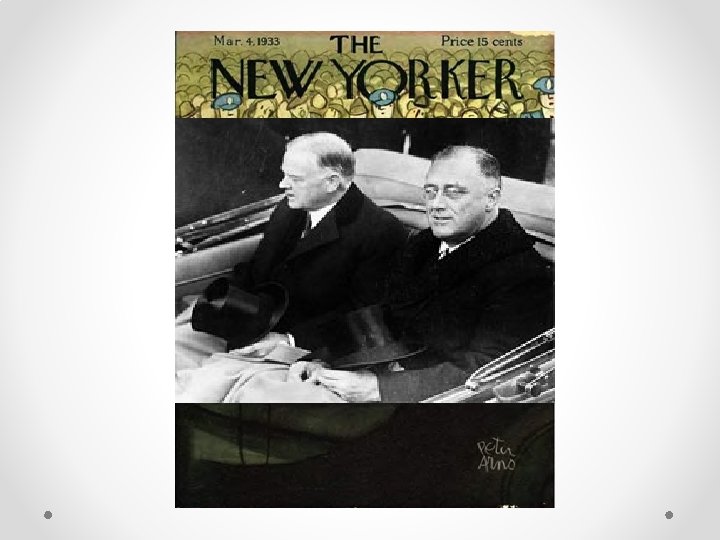
The 1932 Presidential Election President Herbert Hoover (R) Governor Franklin D. Roosevelt (D)
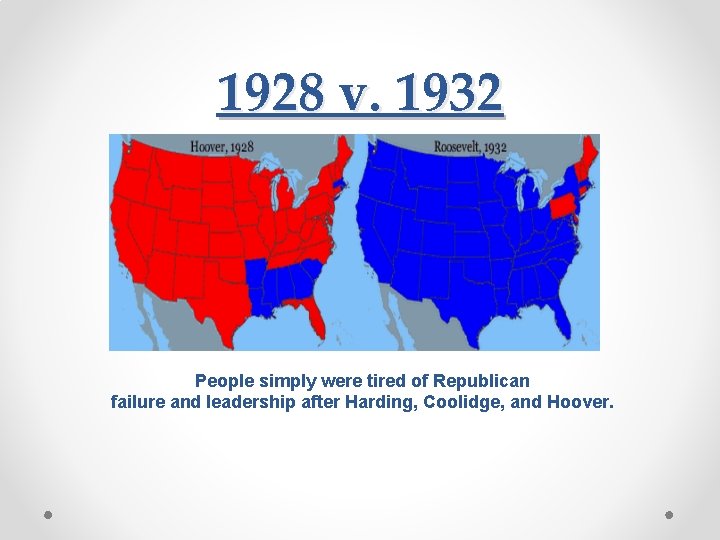
1928 v. 1932 People simply were tired of Republican failure and leadership after Harding, Coolidge, and Hoover.
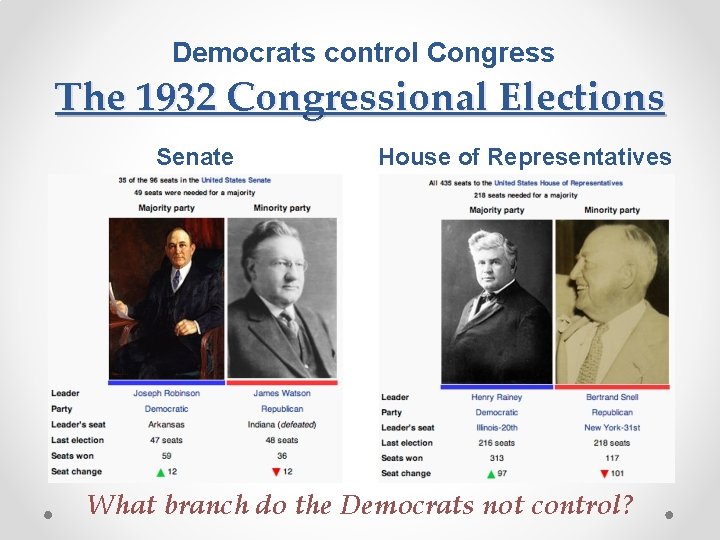
Democrats control Congress The 1932 Congressional Elections Senate House of Representatives What branch do the Democrats not control?
The New Deal The Three R’s of the New Deal 1. Relief Giving money & directing aid to those in need. 2. Recovery Fixing the economy in the short run & providing jobs. 3. Reform Regulating the economy to prevent future collapses.
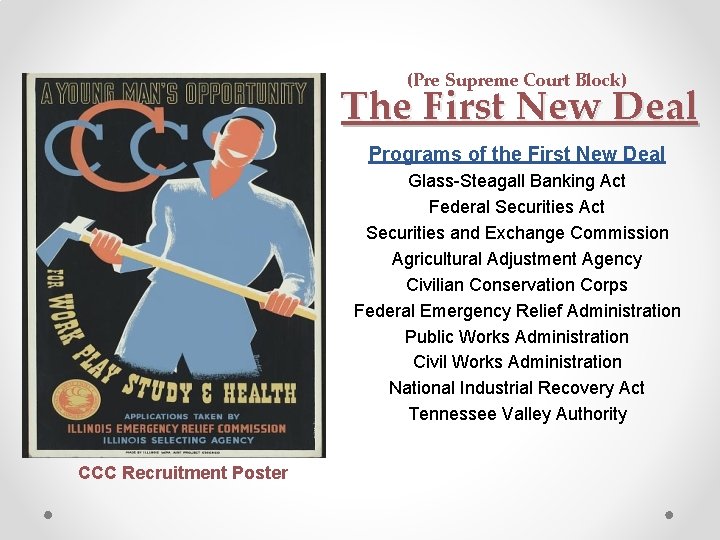
(Pre Supreme Court Block) The First New Deal Programs of the First New Deal Glass-Steagall Banking Act Federal Securities Act Securities and Exchange Commission Agricultural Adjustment Agency Civilian Conservation Corps Federal Emergency Relief Administration Public Works Administration Civil Works Administration National Industrial Recovery Act Tennessee Valley Authority CCC Recruitment Poster
Glass-Steagall Banking Act Made it illegal for banks to play the Stock Market with invested money from the public. Federal Emergency Relief Administration Responds to natural disasters Federal Securities Act Required companies to make public information Public Works Administration about their stock offerings. Budgeted funds to be spent on the creation of public projects such as bridges, railroads, airports, schools, more. Linked to the NIRA. Securities and Exchange Commission “Stock Cops”. Agricultural Adjustment Act Civil Works Administration Similar to the PWA Tennessee Valley Authority Responsible for dealing with overproduction in Worked to improve the economic conditions of the farming sector. the South through “pump priming”. Dammed rivers, provided electricity to many areas in the South that were previously lacking. Civilian Conservation Corps National Park, road construction, more.
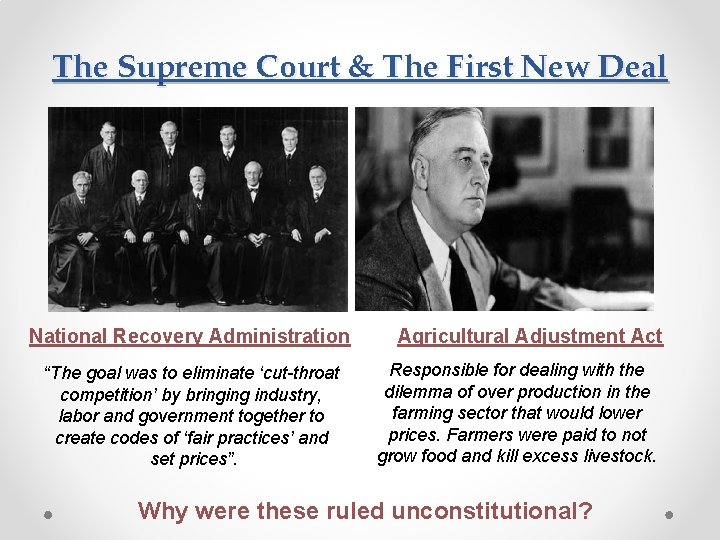
The Supreme Court & The First New Deal National Recovery Administration “The goal was to eliminate ‘cut-throat competition’ by bringing industry, labor and government together to create codes of ‘fair practices’ and set prices”. Agricultural Adjustment Act Responsible for dealing with the dilemma of over production in the farming sector that would lower prices. Farmers were paid to not grow food and kill excess livestock. Why were these ruled unconstitutional?
What does President Roosevelt do in response to the Supreme Court blocking one of his programs? Attempts to “pack” the courts.
(Post Supreme Court Block) The Second New Deal Programs of the Second New Deal Farm Security Administration Works Progress Administration National Youth Administration Wagner Act National Labor Relations Board Social Security Act Fair Labor Standards Act Rural Electrification Administration
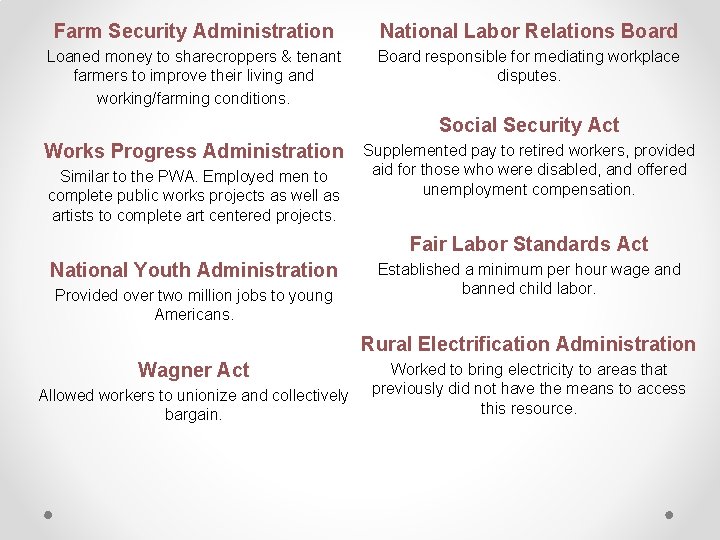
Farm Security Administration National Labor Relations Board Loaned money to sharecroppers & tenant farmers to improve their living and working/farming conditions. Board responsible for mediating workplace disputes. Social Security Act Works Progress Administration Similar to the PWA. Employed men to complete public works projects as well as artists to complete art centered projects. Supplemented pay to retired workers, provided aid for those who were disabled, and offered unemployment compensation. Fair Labor Standards Act National Youth Administration Provided over two million jobs to young Americans. Established a minimum per hour wage and banned child labor. Rural Electrification Administration Wagner Act Allowed workers to unionize and collectively bargain. Worked to bring electricity to areas that previously did not have the means to access this resource.
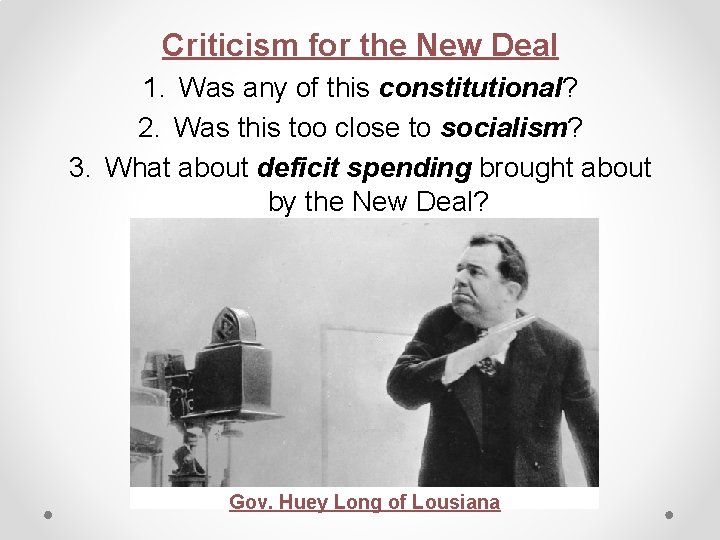
Criticism for the New Deal 1. Was any of this constitutional? 2. Was this too close to socialism? 3. What about deficit spending brought about by the New Deal? Gov. Huey Long of Lousiana
So, did President Roosevelt end the Depression? No.
Impact of the New Deal 1. The power of the three branches shifted back to the Executive branch. The office of the President would once again carry the responsibility of “having made the decisions. ” 2. The people of the United States would now have high expectations of their government in the event something went wrong in the nation. The government was now expected to do something to help.