
The New Deal 1933 1941 1 How did
- Slides: 31
The New Deal 1933 -1941
• 1. How did Roosevelt’s actions help a wide array of business interests involved in high finance and agriculture? • 2. Why did Roosevelt’s actions in the early years of the New Deal make him the target of fiery opposition?
Big Idea • After becoming president, FDR used government programs to combat the Depression.
Glass-Steagall Act • Established the FDIC • Restore confidence in banks
Federal Securities Act • Corporations had to disclose stock information. • Restore confidence in the stock market.
National Industrial Recovery Act • Set prices and standardized labor standards. • Ensure fair business practices. • Promote industrial growth.
Agricultural Adjustment Act • Paid farmers to lower prices • Raise crop prices and farm income
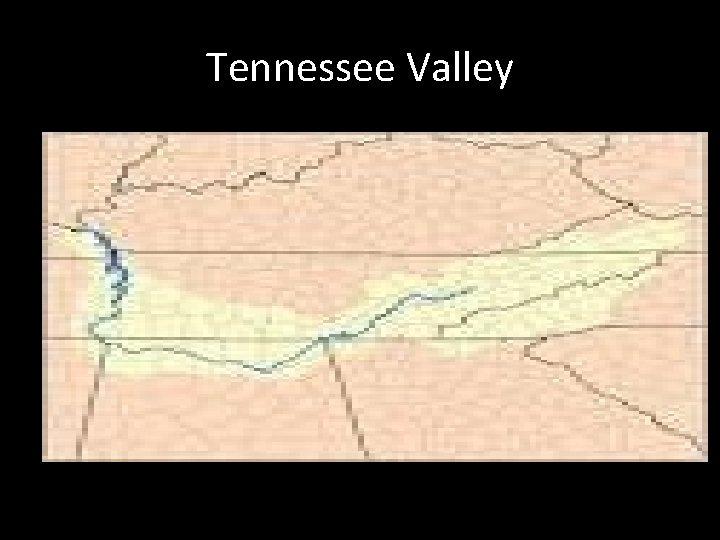
Tennessee Valley Authority • Built and repaired dams in the Tennessee Valley • Promote prosperity in the Tennessee Valley
Tennessee Valley
Civilian Conservation Corps • Put young men to work earning a dollar a day building roads and conservation projects • Reduce unemployment
Federal Emergency Relief Administration • Direct relief to the needy. • Meet basic needs of the people.
Public Works Administration • Federal money to states to create jobs • Reduce unemployment
Civil Works Administration • Creation of 4 million jobs • Reduce unemployment
Home Owner’s Loan Corporation • Government loans to homeowners. • Help keep homes out of foreclosure.
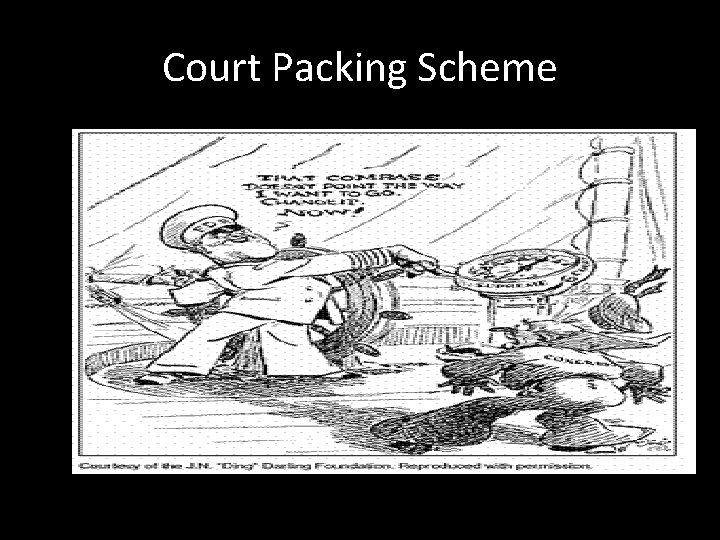
Court Packing Scheme
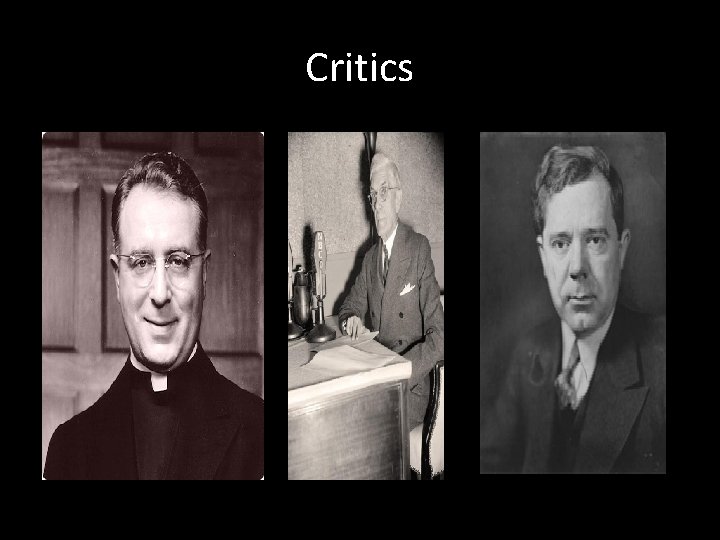
Critics
Big Idea • The Second New Deal included new programs to extend federal aid and stimulate the nation’s economy.
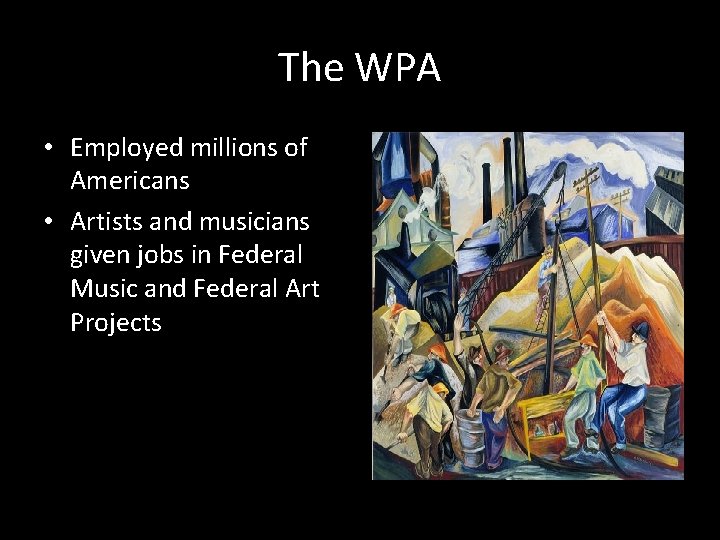
The WPA • Employed millions of Americans • Artists and musicians given jobs in Federal Music and Federal Art Projects
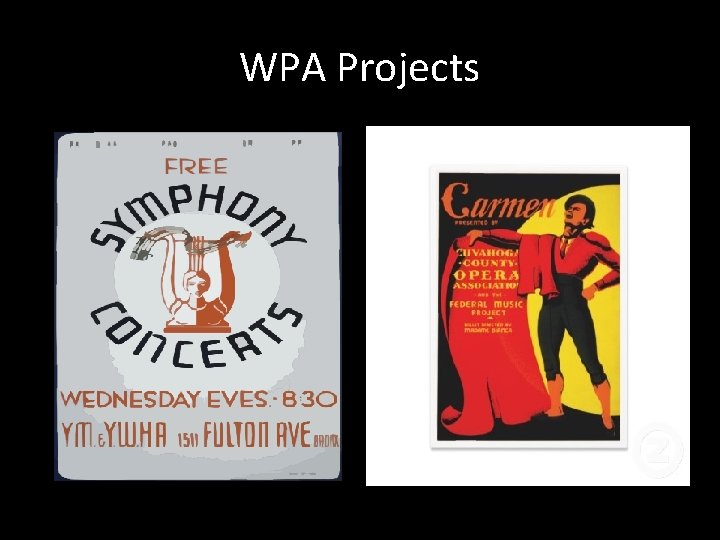
WPA Projects
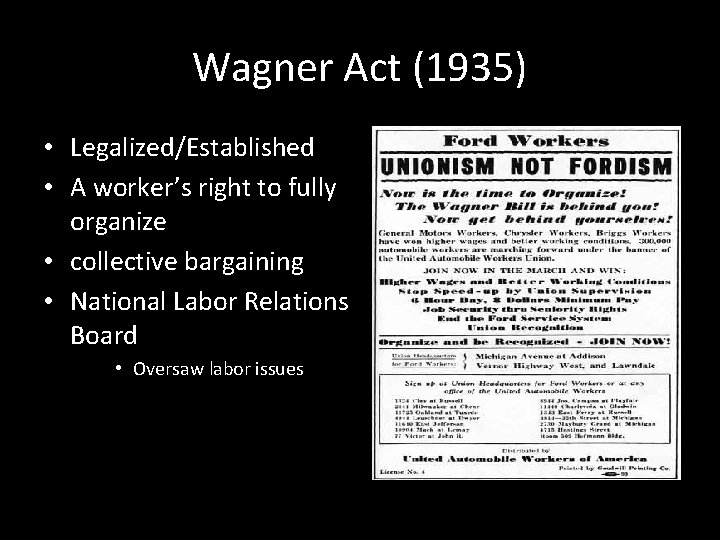
Wagner Act (1935) • Legalized/Established • A worker’s right to fully organize • collective bargaining • National Labor Relations Board • Oversaw labor issues
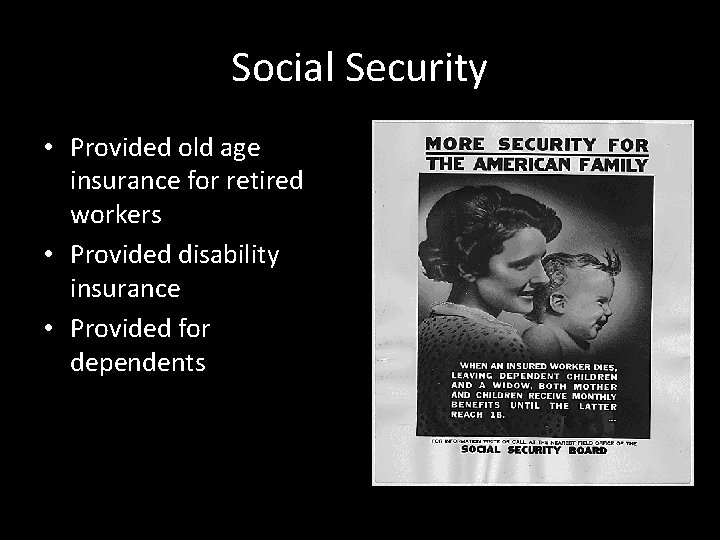
Social Security • Provided old age insurance for retired workers • Provided disability insurance • Provided for dependents
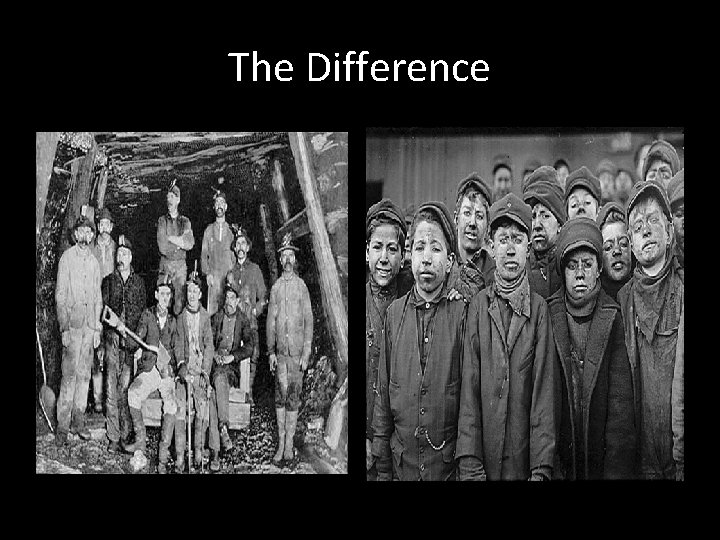
The Difference
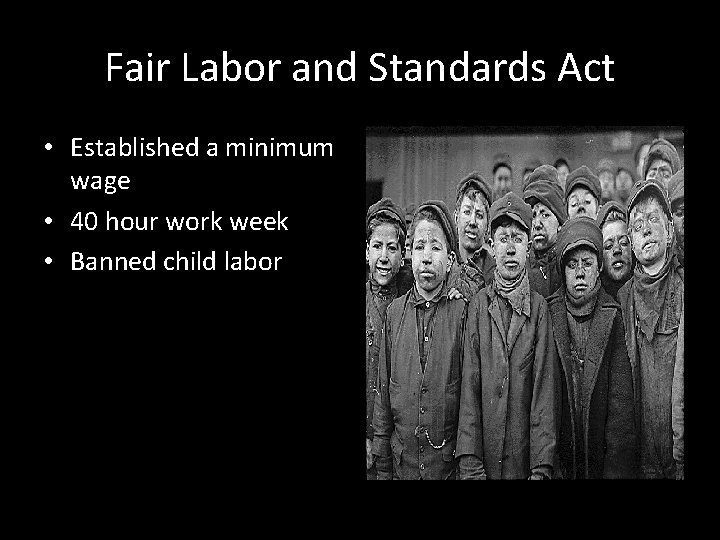
Fair Labor and Standards Act • Established a minimum wage • 40 hour work week • Banned child labor
The New Deal Coalition
Big Idea • New Deal policies and actions affected various social and ethnic groups.
Coalition • A pact among individuals or groups, during which they cooperate in joint action, each with their own self interest for a common cause
The new Deal Coalition • • African Americans Organized Labor Urban groups Southern whites
African Americans • Helped by New Deal programs – The WPA • Moved from Republican to Democratic Party • Roosevelt seen as doing “something”
Organized Labor • The Wagner Act • Labor felt the Roosevelt Administration valued their contributions
Urban groups • Supported repeal of Prohibition • Supported direct relief programs and other New Deal Programs for jobs
Southern Whites • Traditional Democrats • Solid South critical for Democratic power • Segregation generally was not interfered with because of this