
The New ANSI B 101 Standards Copyright 2016
The New ANSI B 101 Standards Copyright © 2016 National Floor Safety Institute
The NFSI B 101 Committee on Slip, Trip and Fall Prevention ANSI B 101. 0 – ANSI B 101. 10 National Consensus Standards
ANSI/NFSI B 101. 1 -2009 • Scope: This test method specifies the procedures and devices used for both laboratory and field testing to measure the wet Static Coefficient of Friction (SCOF) of common hard- surface floor materials. • Purpose: This test method provides a measurement procedure setting forth traction ranges that facilitate remediation of walkway surfaces when warranted. • Application: method does not apply to carpeting of any type or mechanically polished tile such as polished porcelain, marble, etc. , but does address the common hard-surfaced flooring materials such as ceramic tile, vinyl floor coverings, and wood laminates, as well as coatings, polishes, etc.
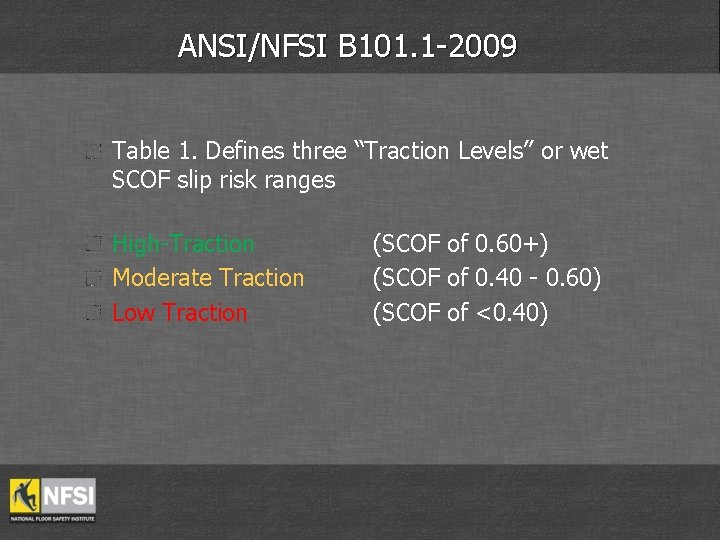
ANSI/NFSI B 101. 1 -2009 Table 1. Defines three “Traction Levels” or wet SCOF slip risk ranges High-Traction Moderate Traction Low Traction (SCOF of 0. 60+) (SCOF of 0. 40 - 0. 60) (SCOF of <0. 40)
ANSI/NFSI B 101. 3 -2012 • Scope: This test method specifies the procedures and devices used for both laboratory and field testing to measure the wet Dynamic Coefficient of friction (DCOF) of common hard surface floor materials • Purpose: This test method provides a measurement procedure setting forth DCOF ranges which facilitate remediation of walkway surfaces when warranted. • Application: This test method does not apply to carpeting of any type, however does address the common hard-surfaced flooring materials such as: ceramic and porcelain tile, polished concrete, stone, vinyl floor coverings, wood and synthetic laminates, and such materials with coatings or polishes applied.
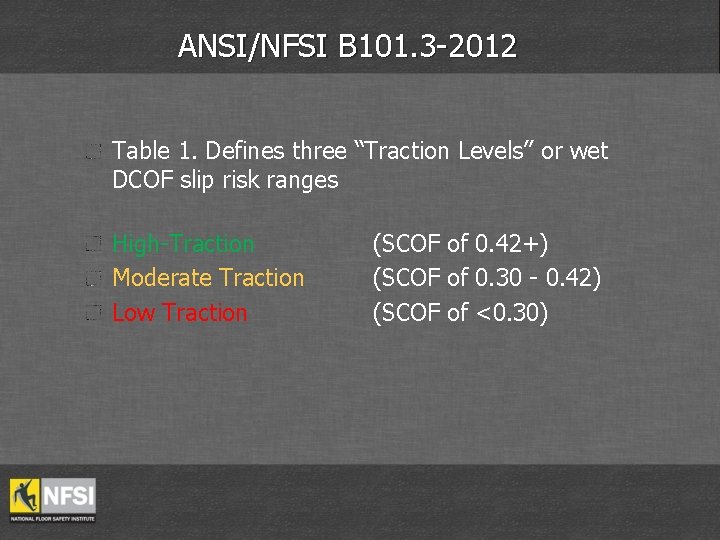
ANSI/NFSI B 101. 3 -2012 Table 1. Defines three “Traction Levels” or wet DCOF slip risk ranges High-Traction Moderate Traction Low Traction (SCOF of 0. 42+) (SCOF of 0. 30 - 0. 42) (SCOF of <0. 30)
ANSI/NFSI B 101. 5 -2014 • • Scope: This guideline sets forth a uniform product labeling method which identifies the wet static and wet dynamic coefficient of friction (traction) of floor coverings, floor coverings with coatings, and treated floor coverings. • Purpose: The purpose of this standard is to offer, at the point of product sale, guidance to users/purchasers on the traction capabilities of the contents of the package through display of labels and markings. • Application: This standard applies to floor products used primarily on public and private areas where pedestrians are not supervisory controlled. The term "floor products" refers to floor coverings, coatings, and treatments intended for floor coverings except carpeting, rugs, mats, runners, and artificial turf.
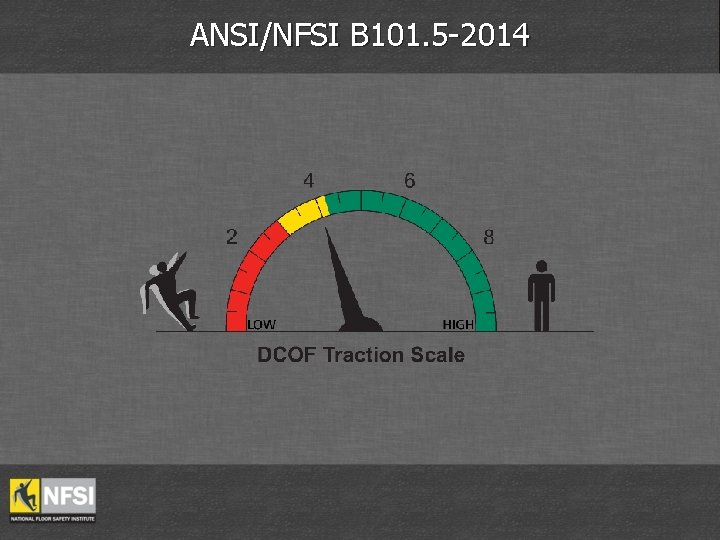
ANSI/NFSI B 101. 5 -2014

ANSI/NFSI B 101. 0 -2012 • Scope: This standard provides the technical procedures for walkway auditing and measuring the coefficient of friction (tribometry) of walkway surfaces in both public and private facilities. • Purpose: The purpose of this standard is to provide specific methods and procedures for the performance of a walkway audit, which may, by its performance, reduce or prevent injuries and fatalities from slips and falls. • Application: This standard sets forth the requirements in the process of walkway surface auditing using a three (3) risk class approach to structure a detailed and systematic procedure resulting in an auditor's report suggestive of warranted interventions.
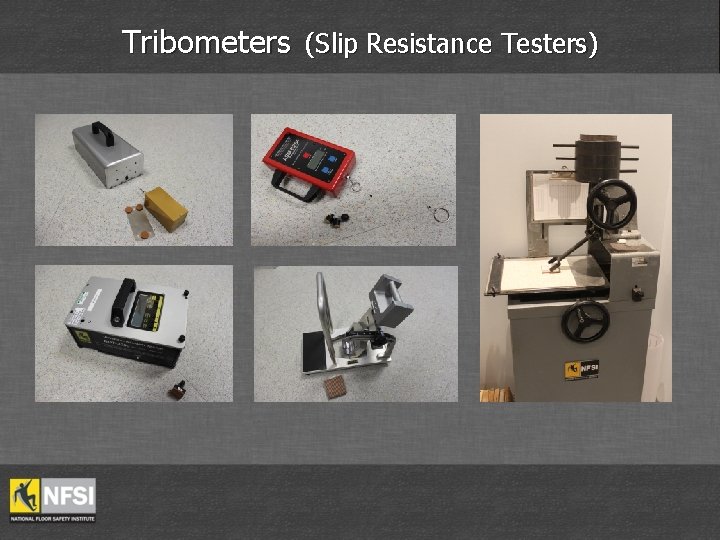
Tribometers (Slip Resistance Testers)
NFSI Tribometer Selection Process Requirements by which a walkway tribometer must meet in order to be approved by the NFSI: • Must complete the appropriate NFSI Inter-Laboratory Study (ILS) for SCOF or DCOF • The tribometer manufacturer shall be capable of providing calibration, repair, maintenance, revision control, a reference tile method for field performance verification, and other services necessary to ensure device reliability. • The tribometer shall be capable of providing a digital display of results for DCOF and/or SCOF to the hundredths (two positions right of the decimal point) using a scale of 0. 00 to >/= 1. 00. • The tribometer manufacturer shall provide both a validation and a calibration report per the ASTM F-2508 -2011 "Standard Practice for Validation and Calibration of Walkway Tribometer using Reference Surfaces.
NFSI 101 -D Floor Mat Certification • Floor mat backings are evaluated for their traction level • Mats that meet the NFSI “High-Traction” level are certified as such • Benefits: Provides evidence that your mats backings are in compliance with a nationally recognized standard. – Strengthens your defense in the event of a lawsuit and will serve in building an evidentiary trail of due diligence
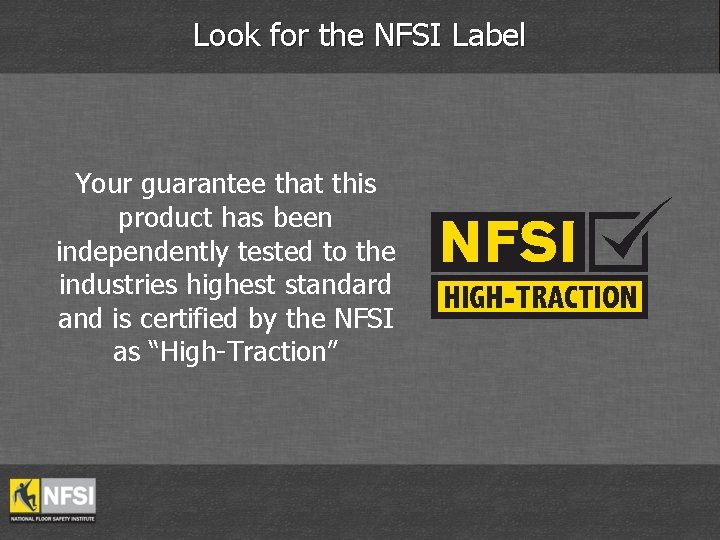
Look for the NFSI Label Your guarantee that this product has been independently tested to the industries highest standard and is certified by the NFSI as “High-Traction”
- Slides: 13