
The Neuron Nerves Bundles of Axons Same function
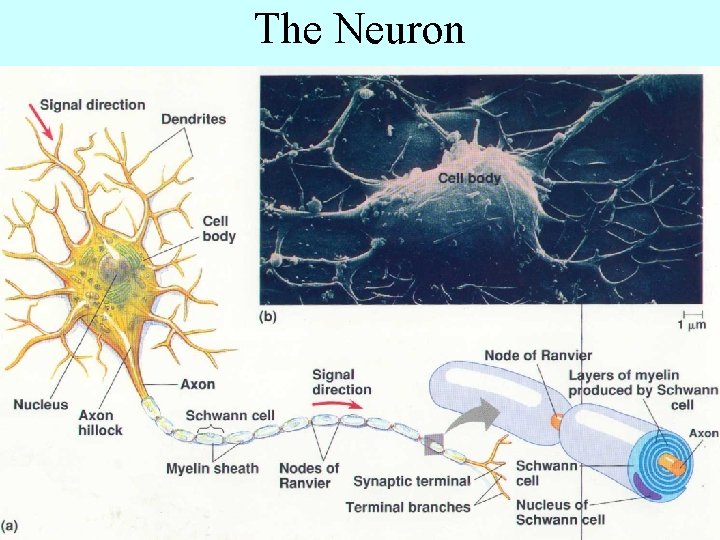
The Neuron
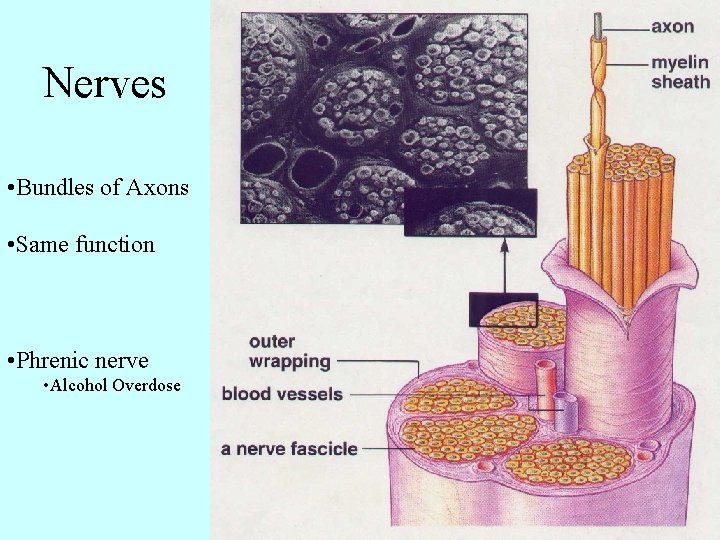
Nerves • Bundles of Axons • Same function • Phrenic nerve • Alcohol Overdose
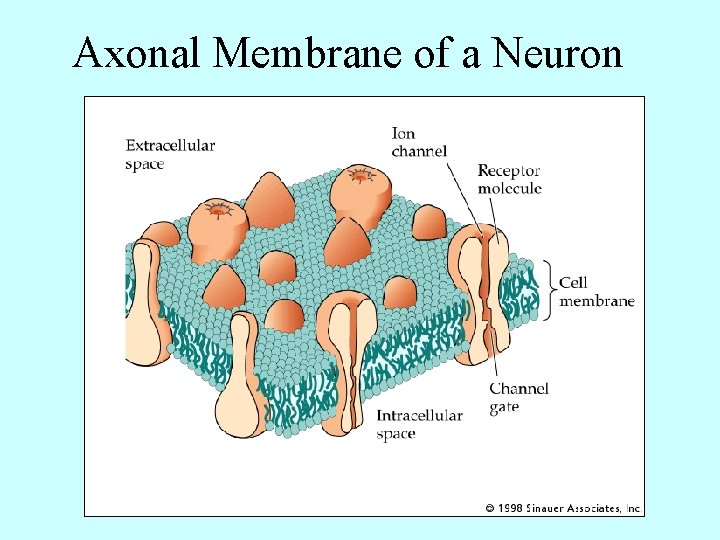
Axonal Membrane of a Neuron
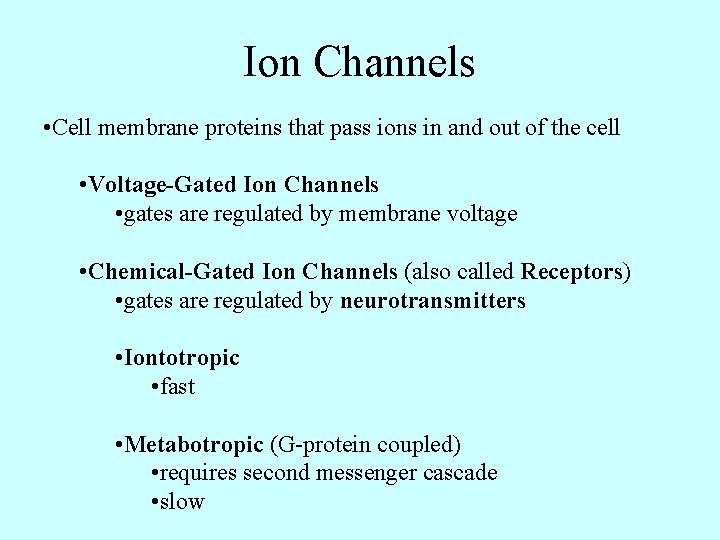
Ion Channels • Cell membrane proteins that pass ions in and out of the cell • Voltage-Gated Ion Channels • gates are regulated by membrane voltage • Chemical-Gated Ion Channels (also called Receptors) • gates are regulated by neurotransmitters • Iontotropic • fast • Metabotropic (G-protein coupled) • requires second messenger cascade • slow
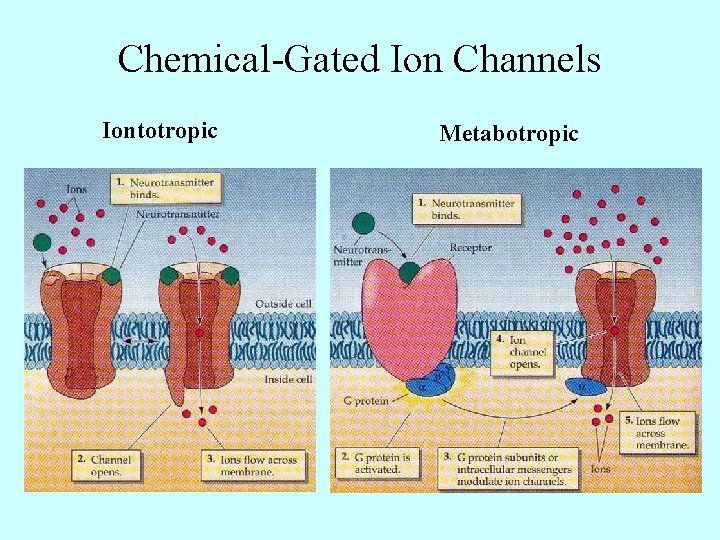
Chemical-Gated Ion Channels Iontotropic Metabotropic
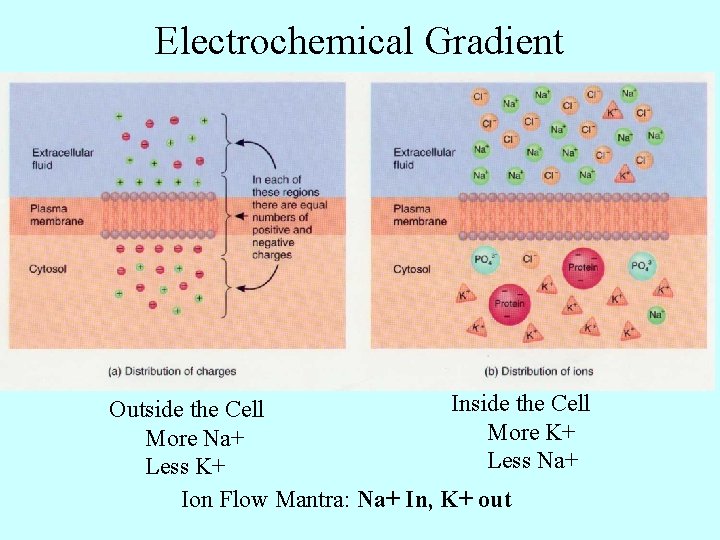
Electrochemical Gradient Inside the Cell Outside the Cell More K+ More Na+ Less K+ Ion Flow Mantra: Na+ In, K+ out
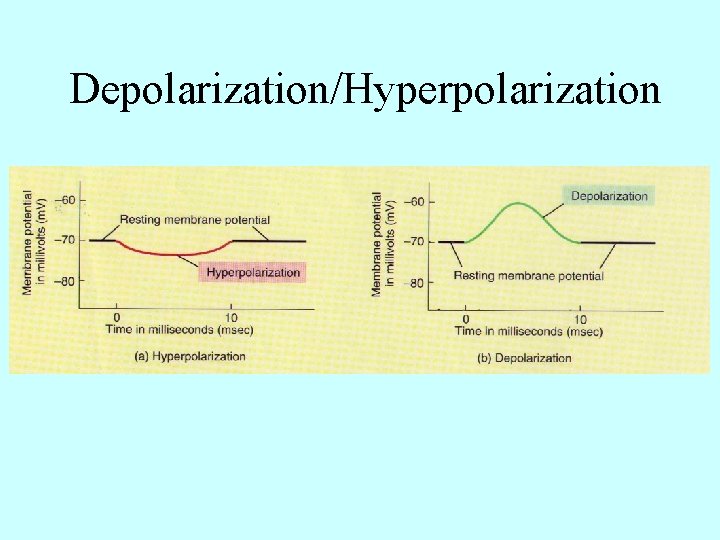
Depolarization/Hyperpolarization
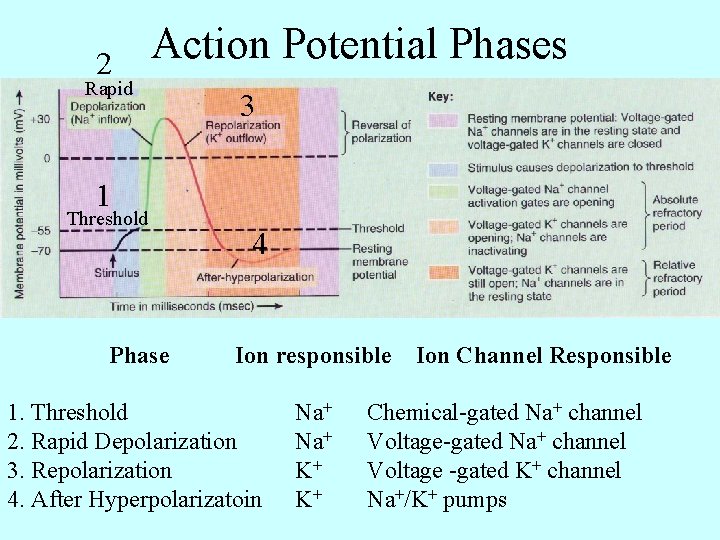
2 Action Potential Phases Rapid 3 1 Threshold Phase 4 Ion responsible 1. Threshold 2. Rapid Depolarization 3. Repolarization 4. After Hyperpolarizatoin Na+ K+ K+ Ion Channel Responsible Chemical-gated Na+ channel Voltage -gated K+ channel Na+/K+ pumps
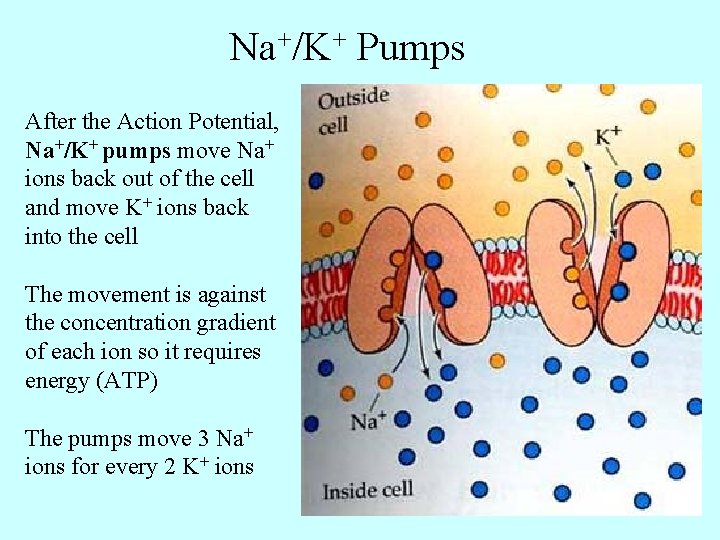
Na+/K+ Pumps After the Action Potential, Na+/K+ pumps move Na+ ions back out of the cell and move K+ ions back into the cell The movement is against the concentration gradient of each ion so it requires energy (ATP) The pumps move 3 Na+ ions for every 2 K+ ions
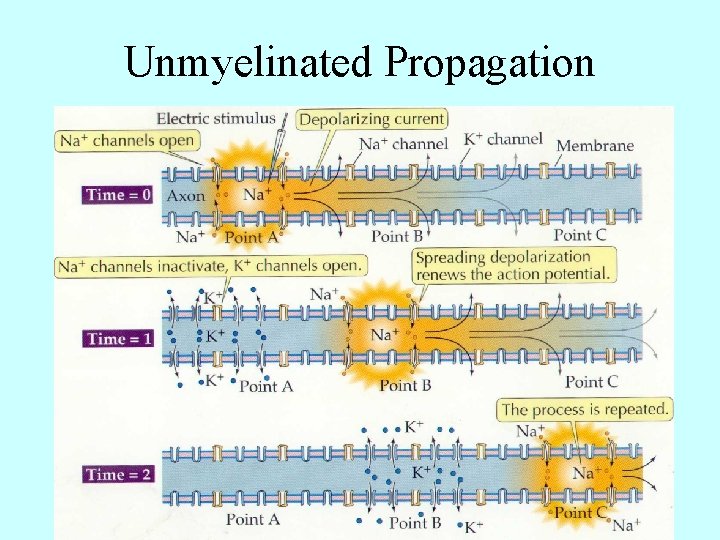
Unmyelinated Propagation
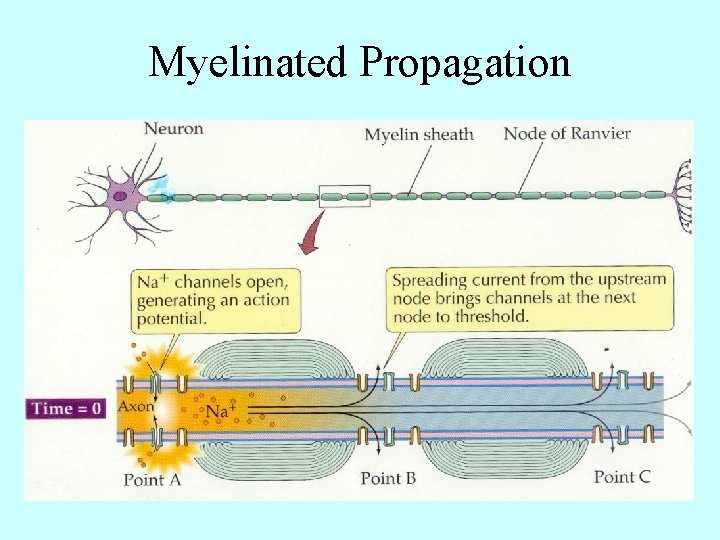
Myelinated Propagation
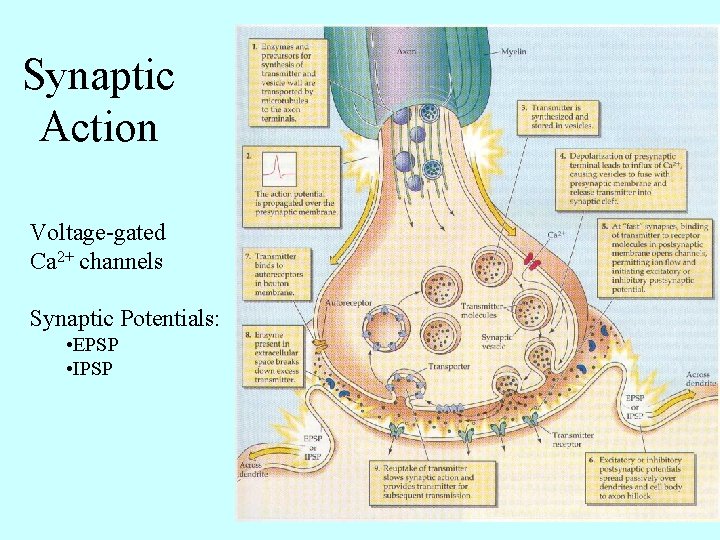
Synaptic Action Voltage-gated Ca 2+ channels Synaptic Potentials: • EPSP • IPSP
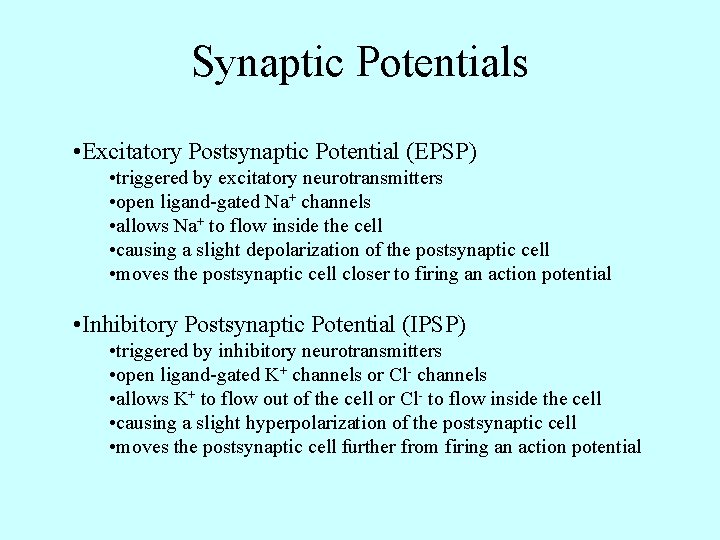
Synaptic Potentials • Excitatory Postsynaptic Potential (EPSP) • triggered by excitatory neurotransmitters • open ligand-gated Na+ channels • allows Na+ to flow inside the cell • causing a slight depolarization of the postsynaptic cell • moves the postsynaptic cell closer to firing an action potential • Inhibitory Postsynaptic Potential (IPSP) • triggered by inhibitory neurotransmitters • open ligand-gated K+ channels or Cl- channels • allows K+ to flow out of the cell or Cl- to flow inside the cell • causing a slight hyperpolarization of the postsynaptic cell • moves the postsynaptic cell further from firing an action potential
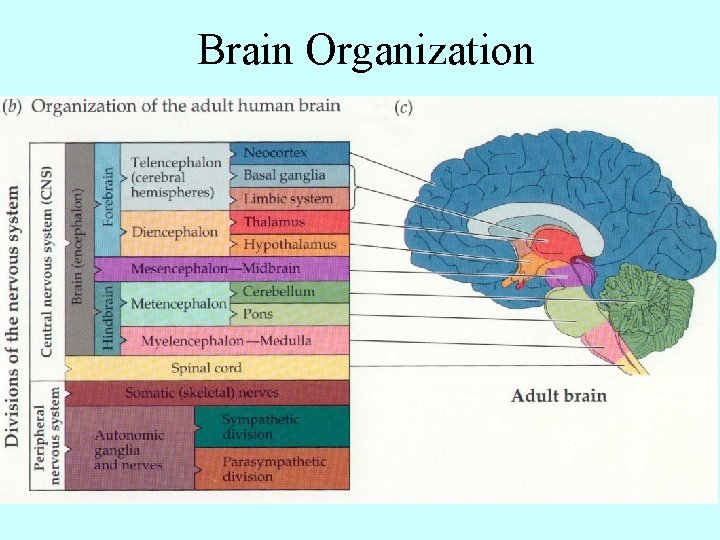
Brain Organization
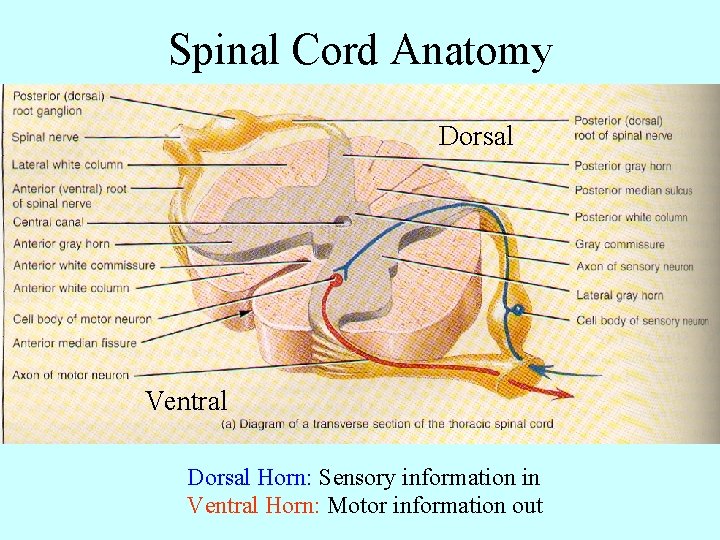
Spinal Cord Anatomy Dorsal Ventral Dorsal Horn: Sensory information in Ventral Horn: Motor information out
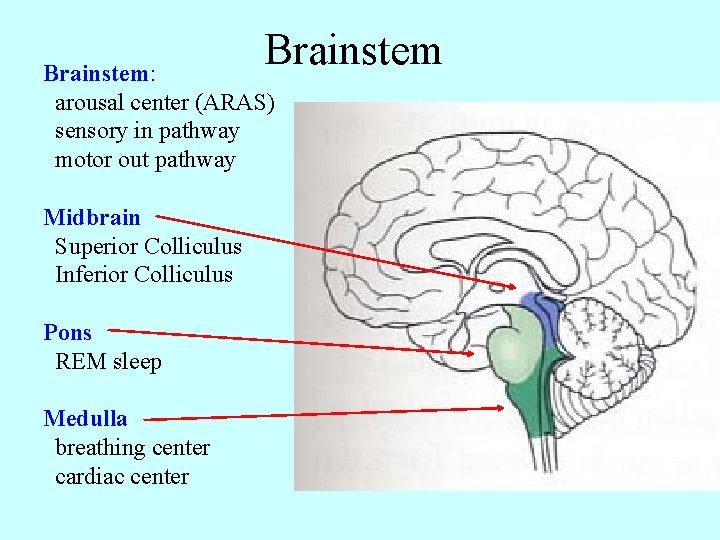
Brainstem: arousal center (ARAS) sensory in pathway motor out pathway Midbrain Superior Colliculus Inferior Colliculus Pons REM sleep Medulla breathing center cardiac center
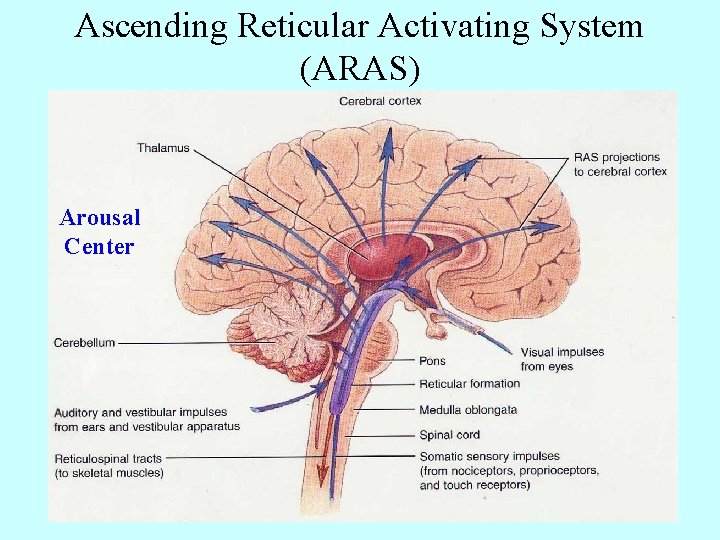
Ascending Reticular Activating System (ARAS) Arousal Center
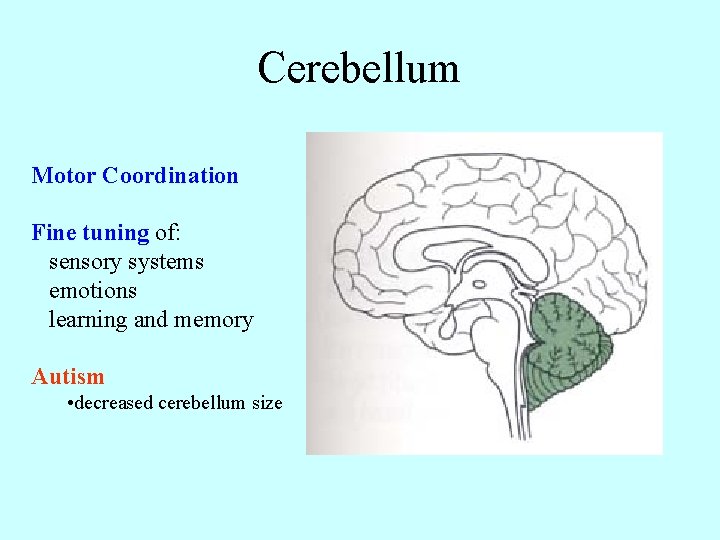
Cerebellum Motor Coordination Fine tuning of: sensory systems emotions learning and memory Autism • decreased cerebellum size
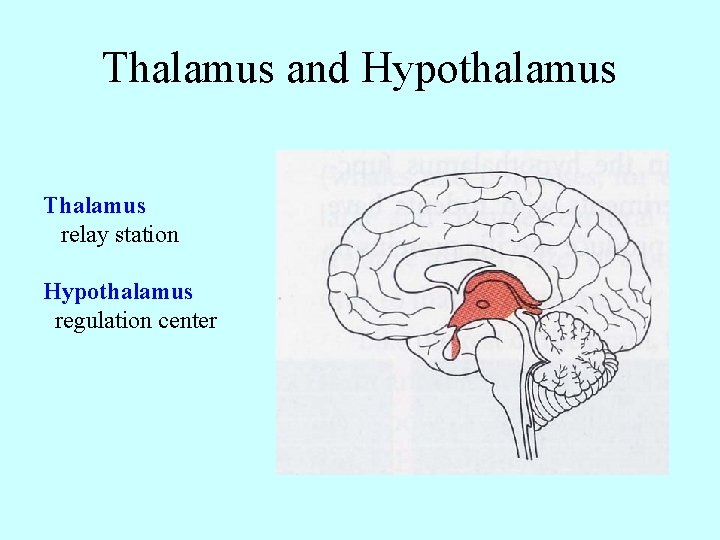
Thalamus and Hypothalamus Thalamus relay station Hypothalamus regulation center
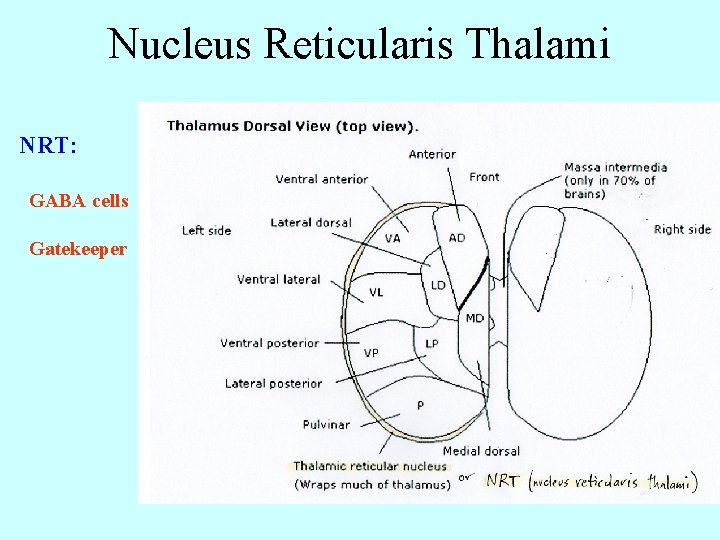
Nucleus Reticularis Thalami NRT: GABA cells Gatekeeper
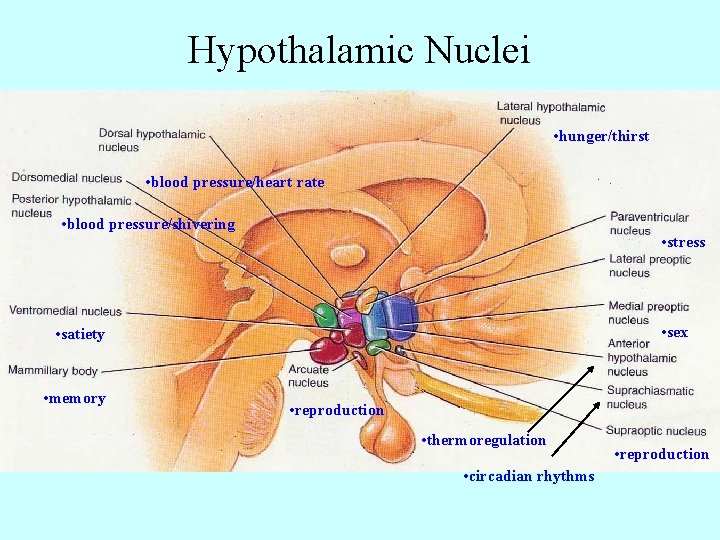
Hypothalamic Nuclei • hunger/thirst • blood pressure/heart rate • blood pressure/shivering • stress • sex • satiety • memory • reproduction • thermoregulation • circadian rhythms • reproduction
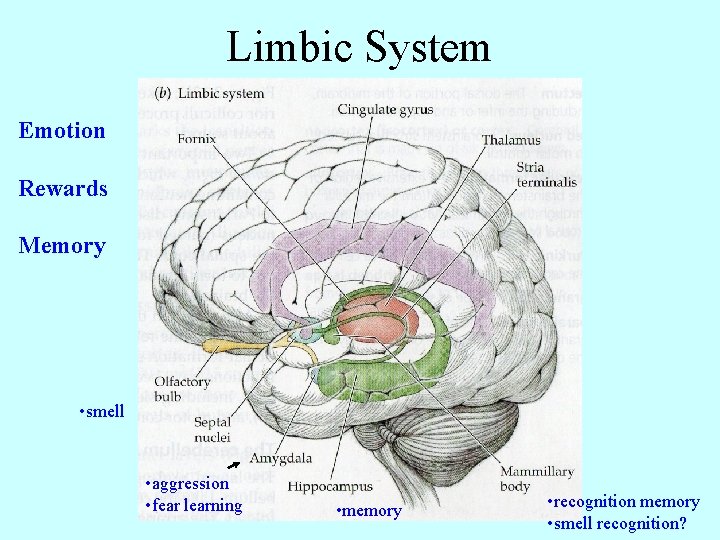
Limbic System Emotion Rewards Memory • smell • aggression • fear learning • memory • recognition memory • smell recognition?
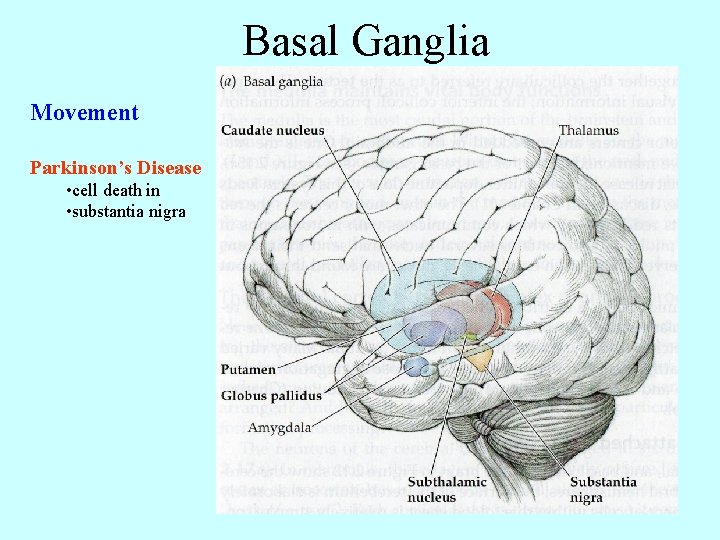
Basal Ganglia Movement Parkinson’s Disease • cell death in • substantia nigra
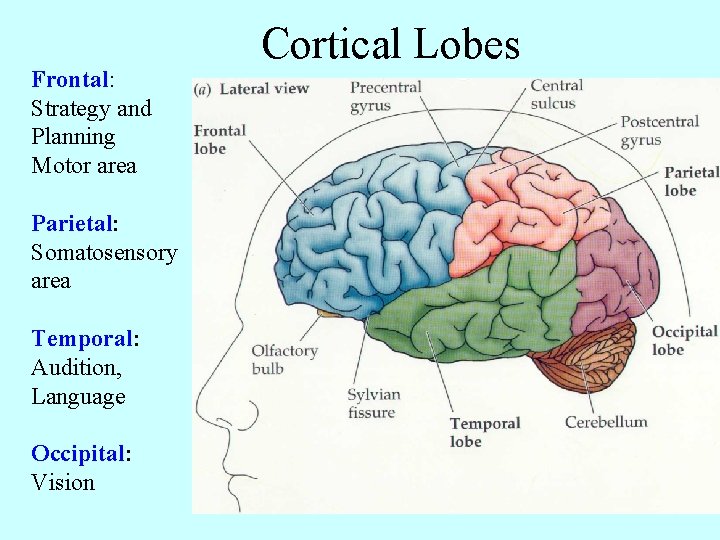
Frontal: Strategy and Planning Motor area Parietal: Somatosensory area Temporal: Audition, Language Occipital: Vision Cortical Lobes
- Slides: 24