
The Neurobiology of Addiction Trauma Intricate Links Presented
The Neurobiology of Addiction & Trauma: Intricate Links Presented by: Carol Ackley, LADC 1
AMA Stated Alcoholism was a Disease in 1956 • Equal opportunity disease • No one is immune • Some people are much more vulnerable 22
Drug and Alcohol Use Interfere with Primary Survival Pathways in the Brain • Automatic • Semi-Automatic • Voluntary 3

4
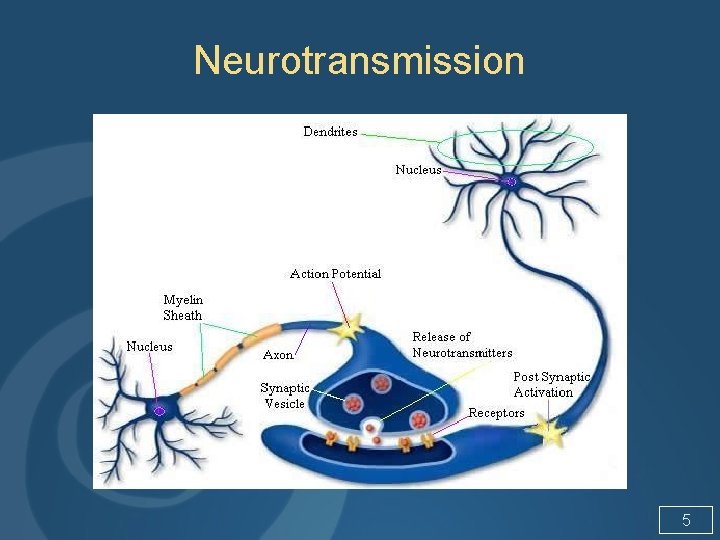
Neurotransmission 5
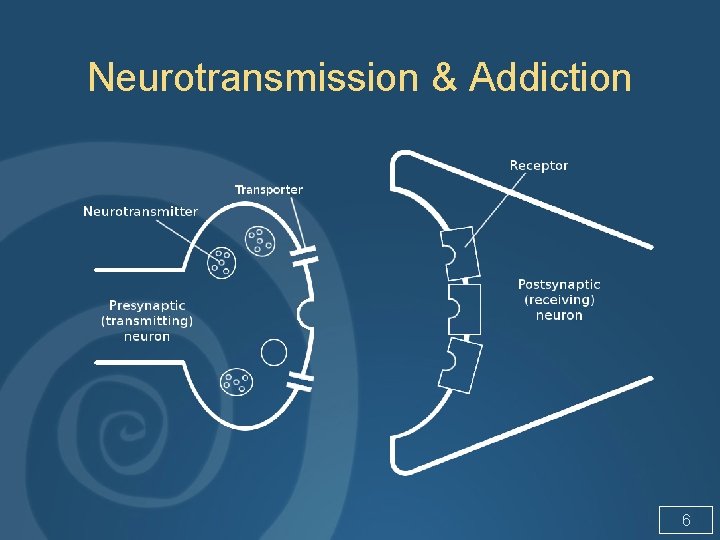
Neurotransmission & Addiction 6
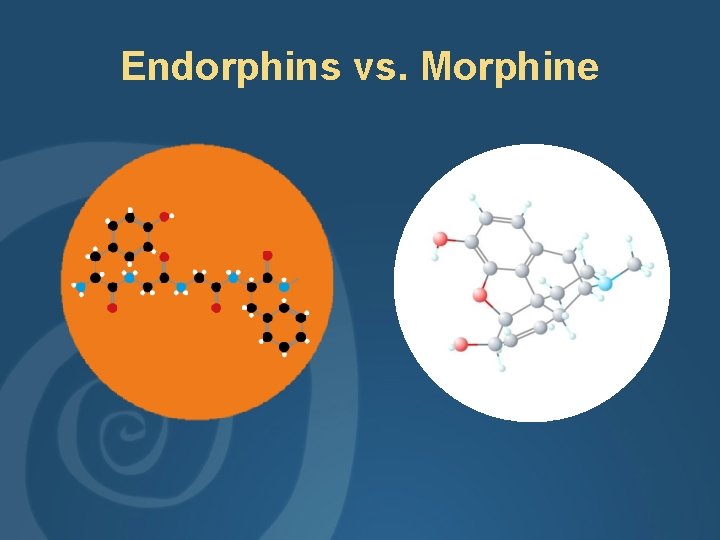
Endorphins vs. Morphine
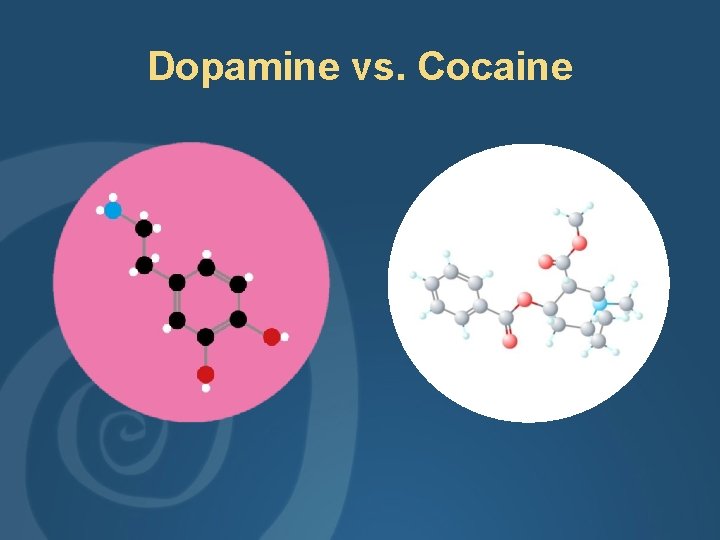
Dopamine vs. Cocaine
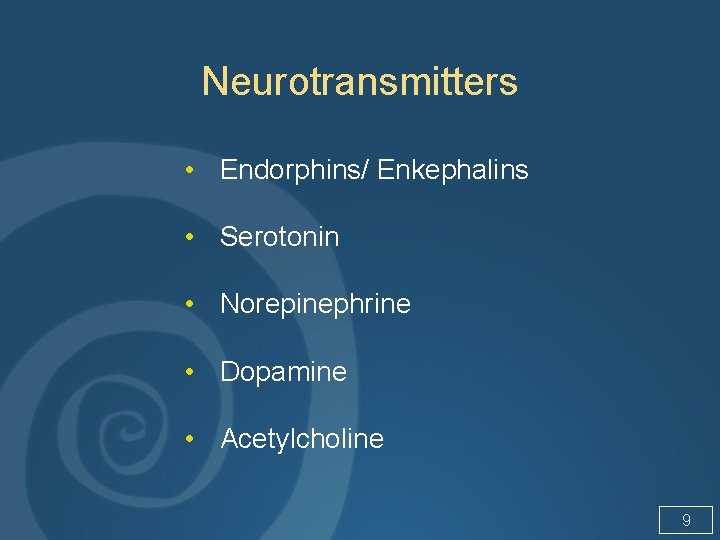
Neurotransmitters • Endorphins/ Enkephalins • Serotonin • Norepinephrine • Dopamine • Acetylcholine 9
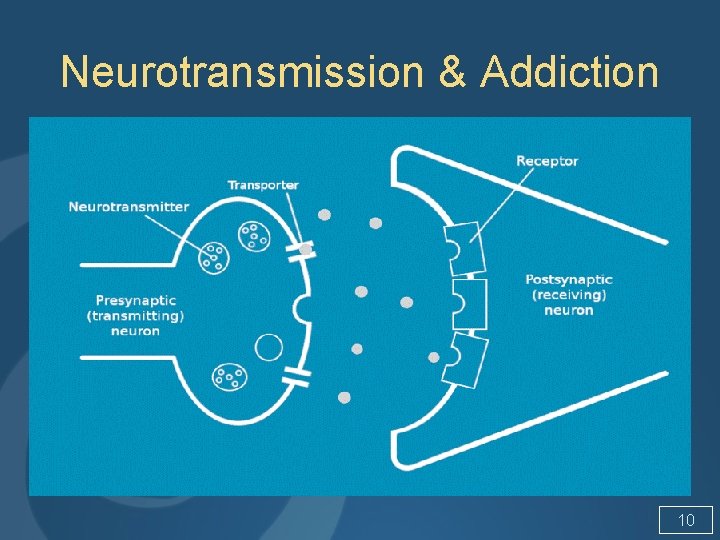
Neurotransmission & Addiction 10
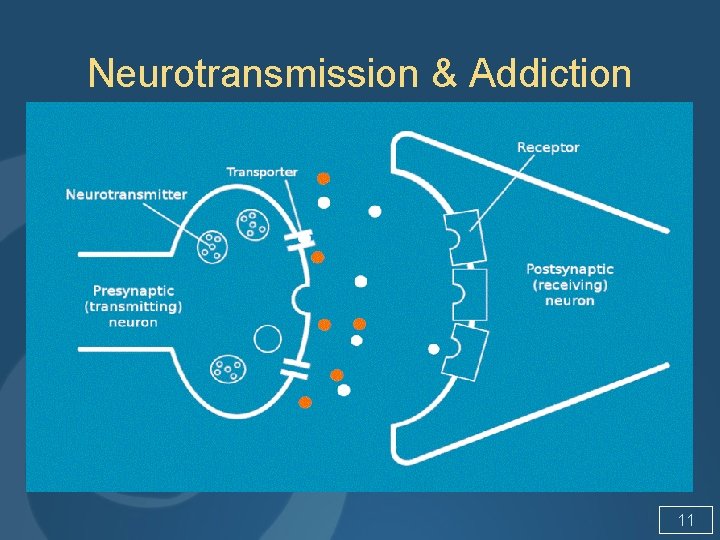
Neurotransmission & Addiction 11
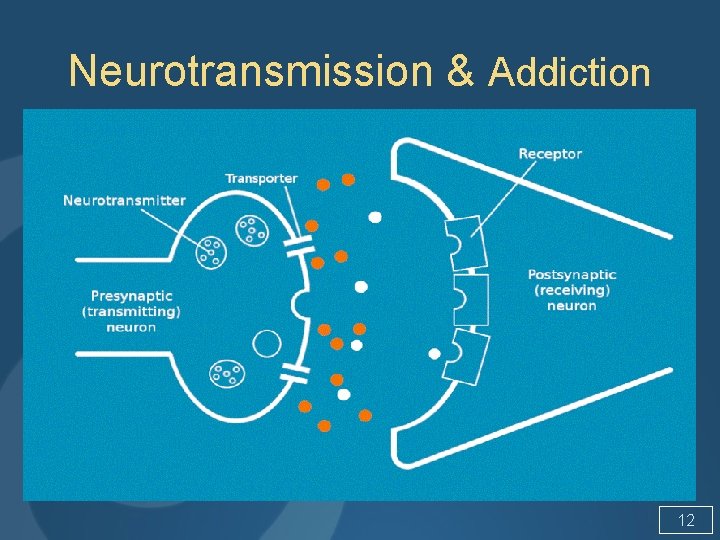
Neurotransmission & Addiction 12
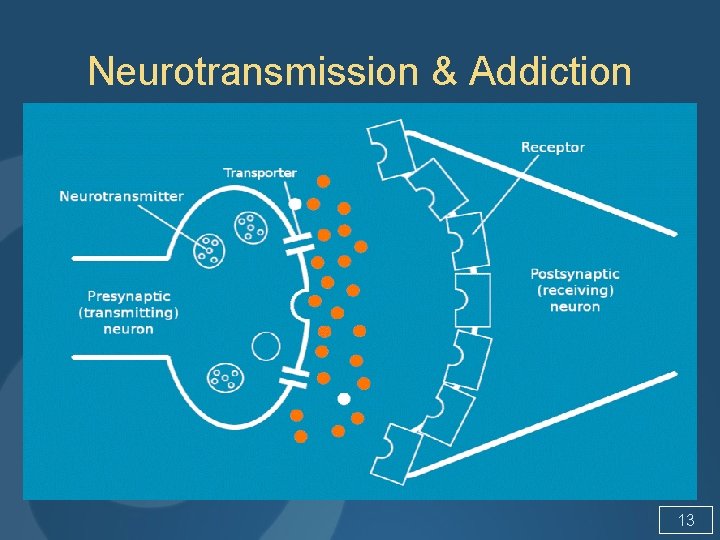
Neurotransmission & Addiction 13
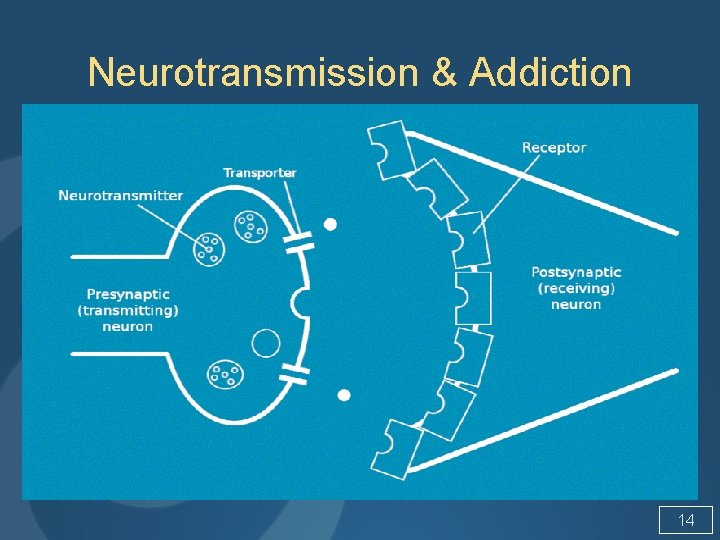
Neurotransmission & Addiction 14
Addictive Disease • Progressive • Chronic • Fatal 15
Addictive Disease • Full Remission • Harm Reduction • Prevention 16 16
Re-Stabilize Brain Chemistry • Abstinence • Nutrition • Stress Prevention 17
Vulnerability to Addictive Disease 50% - 60% GENETIC 40% - 50% ENVIRONMENTAL Early Onset of Use Chemical Environment Adverse Childhood Experiences Poor Nutrition High Stress Levels Inadequate Coping Skills Chronic Illness Grief & Loss 18
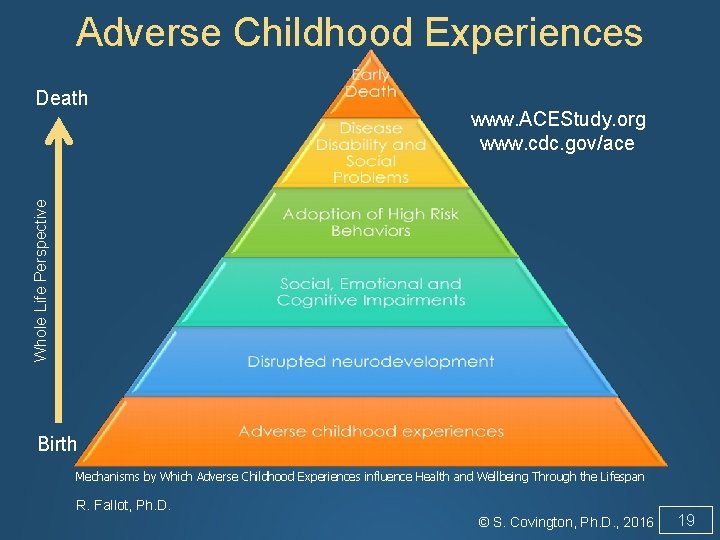
Adverse Childhood Experiences www. ACEStudy. org www. cdc. gov/ace Whole Life Perspective Death Birth Mechanisms by Which Adverse Childhood Experiences influence Health and Wellbeing Through the Lifespan R. Fallot, Ph. D. © S. Covington, Ph. D. , 2016 19
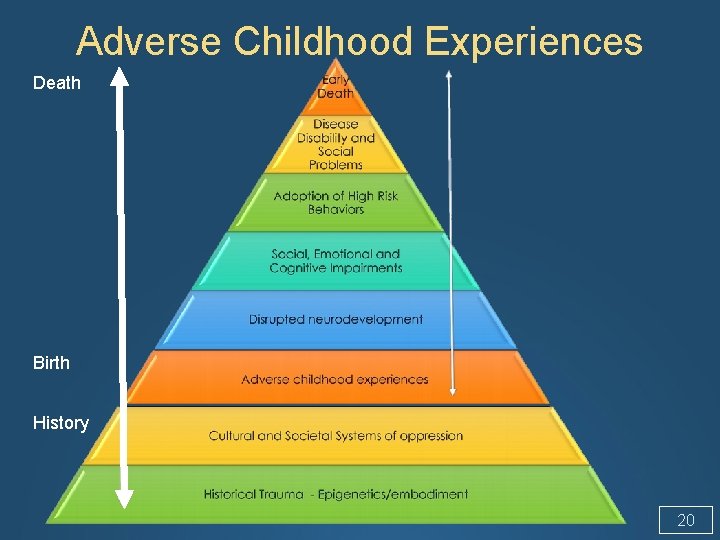
Adverse Childhood Experiences Death Birth History 20
Definition of Trauma occurs when an external event overwhelms a person’s physical and psychological coping mechanisms or strategies. (Van der Kolk, 1989) © S. Covington, Ph. D. , 2016 21
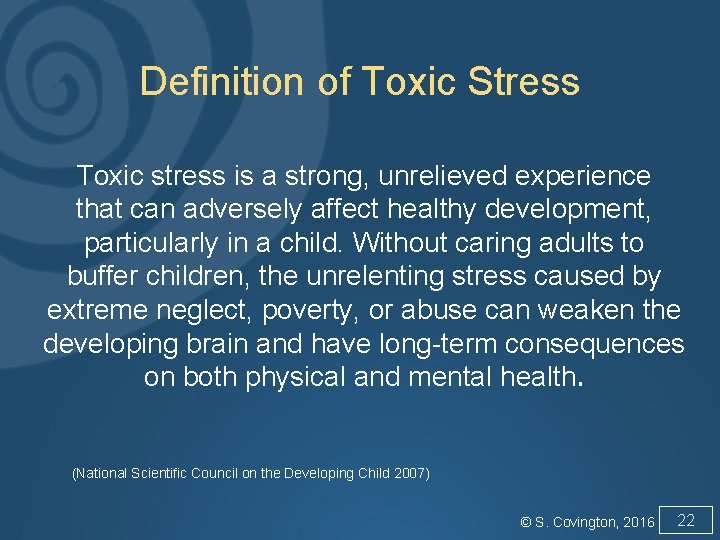
Definition of Toxic Stress Toxic stress is a strong, unrelieved experience that can adversely affect healthy development, particularly in a child. Without caring adults to buffer children, the unrelenting stress caused by extreme neglect, poverty, or abuse can weaken the developing brain and have long-term consequences on both physical and mental health. (National Scientific Council on the Developing Child 2007) © S. Covington, 2016 22
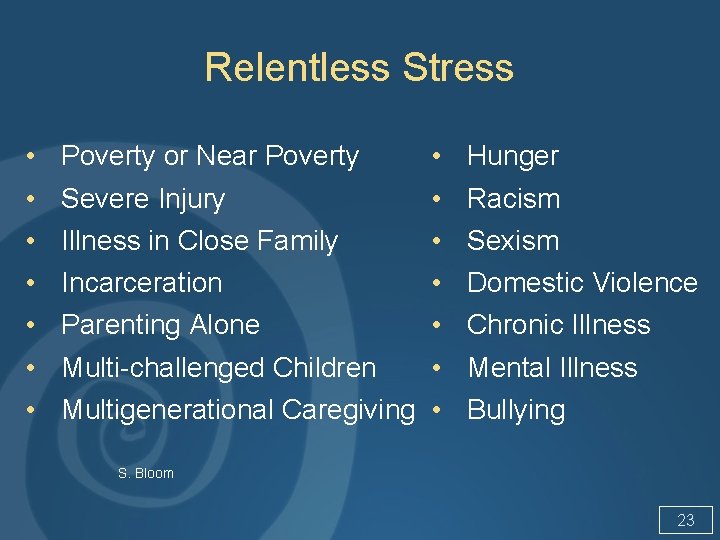
Relentless Stress • • • Severe Injury • Illness in Close Family • Incarceration • Parenting Alone • Multi-challenged Children Multigenerational Caregiving • Poverty or Near Poverty Hunger Racism Sexism Domestic Violence Chronic Illness Mental Illness Bullying S. Bloom 23
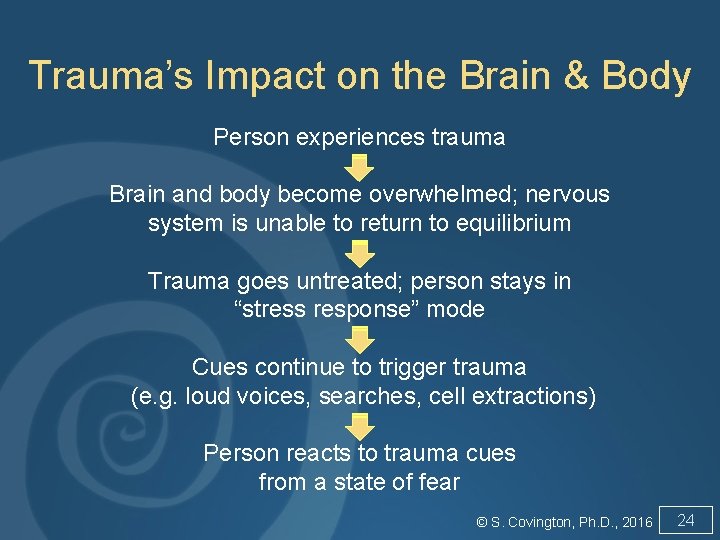
Trauma’s Impact on the Brain & Body Person experiences trauma Brain and body become overwhelmed; nervous system is unable to return to equilibrium Trauma goes untreated; person stays in “stress response” mode Cues continue to trigger trauma (e. g. loud voices, searches, cell extractions) Person reacts to trauma cues from a state of fear © S. Covington, Ph. D. , 2016 24
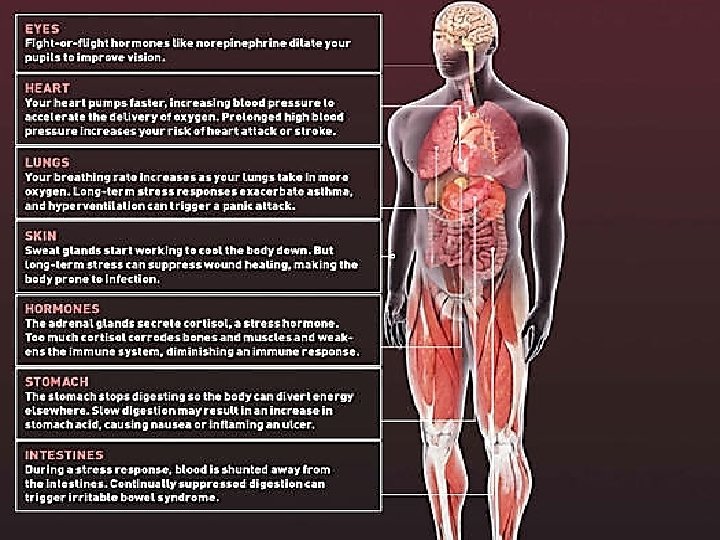
25
Trauma and the Brain • Trauma disrupts the chemistry of the brain and can predispose people to alcohol and drug use, eating disorders, self-injurious behavior and mental health problems • When trauma occurs in childhood, it can have lasting effects on brain development 26
Trauma and the Brain: The Limbic System • Stores highly charged emotional events, positive and negative • Processes the sense of smell directly • Is the center of bonding and social connectedness • Sets emotional tone, attitude, shading • Tags events as internally important • Controls appetite and sleep cycle • Modulates libido (sexual desire) • When the limbic system is less active, you experience calm and a more positive attitude 27
Trauma and the Brain: The Limbic System • When the limbic system is inflamed (i. e. , as a result of trauma or stress), you experience more negativity, hyperarousal and/or depression • The limbic system in women is proportionately larger than in men, providing them with increased ability to bond and experience and express emotions • This also makes women more susceptible to depression and other emotional imbalances • When the fear response is triggered, it is powerful and immediate 28
Trauma and the Brain: Neurotransmitter Disruption During the Stress Response Serotonin (responsible for emotional stability and homeostasis) Ø When this system is disrupted, people experience depression and have a tendency to repeat maladaptive behaviors. This can also cause sleep and appetite irregularities Dopamine (responsible for drive and pleasure rewards) Ø Disruption of this neurotransmitter can create low motivation, avoidance, or hyper-arousal Opioid Peptides (endogenous pain relievers) Ø Disruption of this neurotransmitter can create a pain sensitivity, low pain tolerance, or numbing Disruption of these systems can become chronic 29
Triggers A trigger is an external stimulus that sets off a physical or emotional reaction in a person. The stimulus can be a sight, a sound, a smell, a person, a place, a behaviour, or anything that reminds you of the traumatic event. © S. Covington, Ph. D. , 2016 30
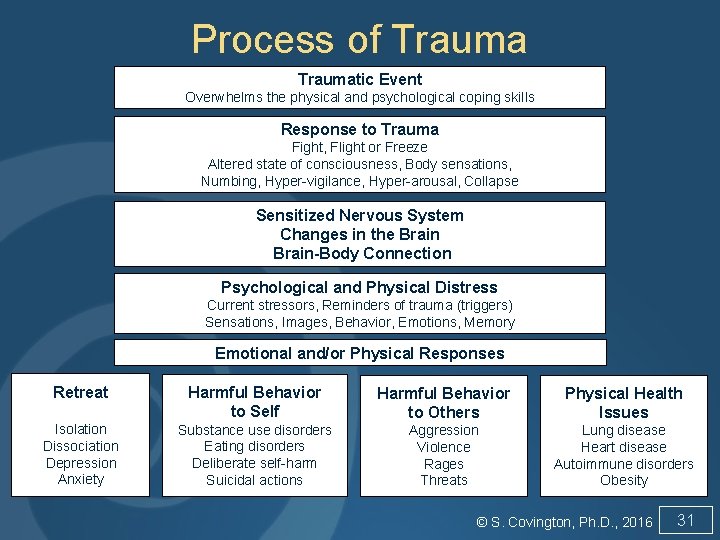
Process of Traumatic Event Overwhelms the physical and psychological coping skills Response to Trauma Fight, Flight or Freeze Altered state of consciousness, Body sensations, Numbing, Hyper-vigilance, Hyper-arousal, Collapse Sensitized Nervous System Changes in the Brain-Body Connection Psychological and Physical Distress Current stressors, Reminders of trauma (triggers) Sensations, Images, Behavior, Emotions, Memory Emotional and/or Physical Responses Retreat Harmful Behavior to Self Harmful Behavior to Others Physical Health Issues Isolation Dissociation Depression Anxiety Substance use disorders Eating disorders Deliberate self-harm Suicidal actions Aggression Violence Rages Threats Lung disease Heart disease Autoimmune disorders Obesity © S. Covington, Ph. D. , 2016 31
32
Vulnerability to Addictive Disease 50% - 60% GENETIC 40% - 50% ENVIRONMENTAL Early Onset of Use Chemical Environment Adverse Childhood Experiences Poor Nutrition High Stress Levels Inadequate Coping Skills Chronic Illness Grief & Loss 33
Posttraumatic Growth • Positive changes from a major life crisis • Searching for good in the terrible • Beyond resilience • Catalyst for higher level of functioning Calhoun and Tedeshchi 1999, 2013 34
Posttraumatic Growth (cont. ) Personal Strength Vulnerability Powerlessness can paradoxically boost self-confidence Relationships Bonding on a deeper level after tragedy Greater Life Appreciation Can shift perspective to focus on gratitude and joy Beliefs May change or be reinforced by grief New Possibilities Perceive new opportunities and pursue them Calhoun and Tedeshchi 1999, 2013 35
SEEDS Five factors to promote healing of the brain: Social Connectivity Exercise Education Diet Sleep © S. Covington, 2015 36
SEEDS S Social Connectivity Being in connection and relationship with others E Exercise Thirty minutes a day can make a big difference E Education Learn something new each day D Diet The food we eat either nourishes or starves our brain S Sleep Our brains and our bodies need to rest and regenerate each day © S. Covington, 2015 37
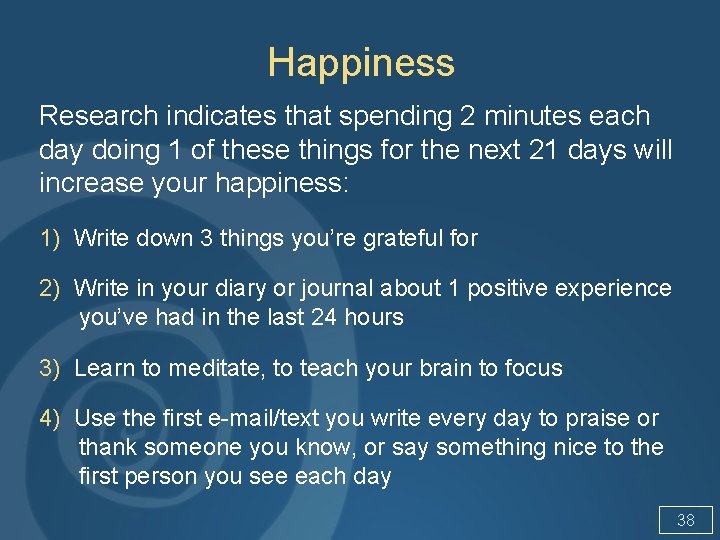
Happiness Research indicates that spending 2 minutes each day doing 1 of these things for the next 21 days will increase your happiness: 1) Write down 3 things you’re grateful for 2) Write in your diary or journal about 1 positive experience you’ve had in the last 24 hours 3) Learn to meditate, to teach your brain to focus 4) Use the first e-mail/text you write every day to praise or thank someone you know, or say something nice to the first person you see each day 38
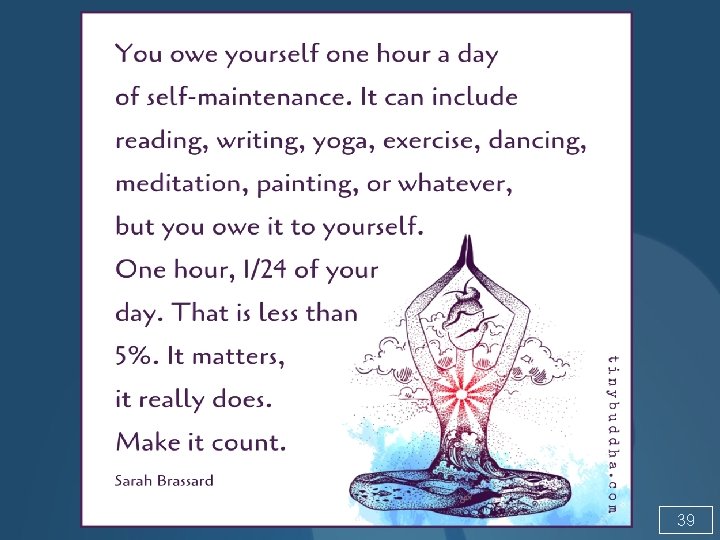
39
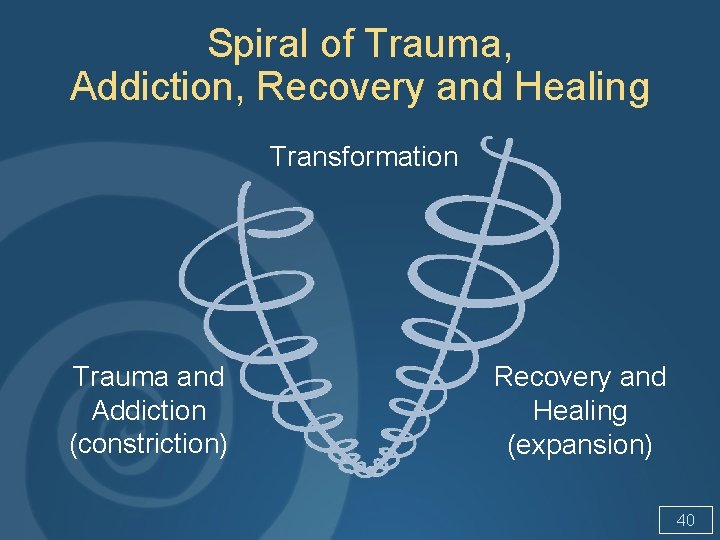
Spiral of Trauma, Addiction, Recovery and Healing Transformation Trauma and Addiction (constriction) Recovery and Healing (expansion) 40

41
Carol Ackley, LADC Ackley Consulting and Training, LLC rca 0622@aol. com 612. 961. 3344 42
- Slides: 42