
The Neurobiology of Addiction Physical vs l Physical
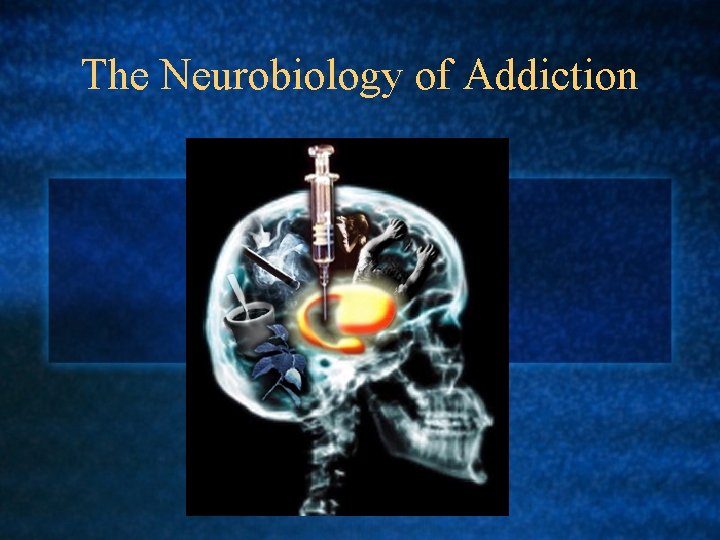
The Neurobiology of Addiction
Physical vs. l Physical addiction actually changes structure of brain l Brain needs drug for “normal” function l Permanent brain damage can occur l Can begin after 1 st use, though often requires repeated use Psychological l Perceived need by user, but no true chemical need l Habitual practice, often socially reinforced (marijuana, caffeine)
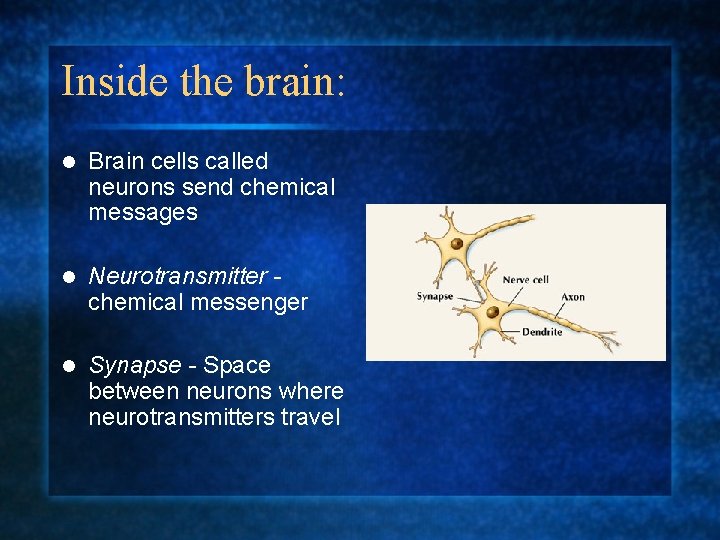
Inside the brain: l Brain cells called neurons send chemical messages l Neurotransmitter chemical messenger l Synapse - Space between neurons where neurotransmitters travel

The Brain’s reward center Reward center is region of brain that responds to sensations of pleasure l Dopamine naturally stimulates the reward center (one of multiple such neurotransmitters) l Many drugs simulate or stimulate this process l
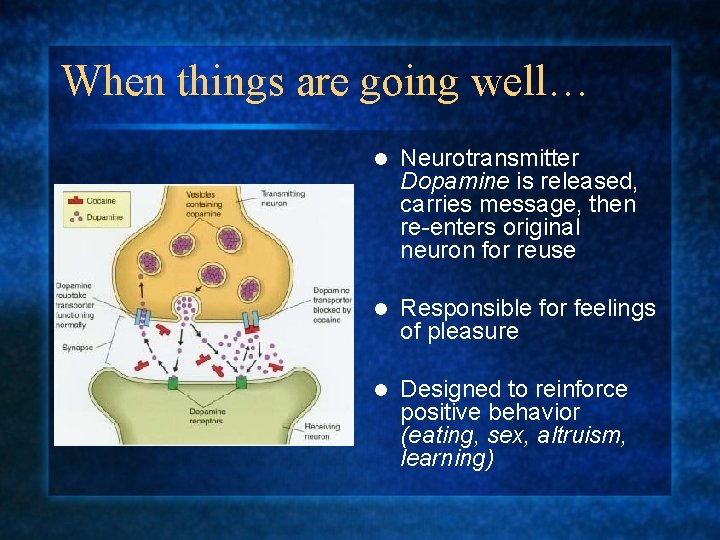
When things are going well… l Neurotransmitter Dopamine is released, carries message, then re-enters original neuron for reuse l Responsible for feelings of pleasure l Designed to reinforce positive behavior (eating, sex, altruism, learning)
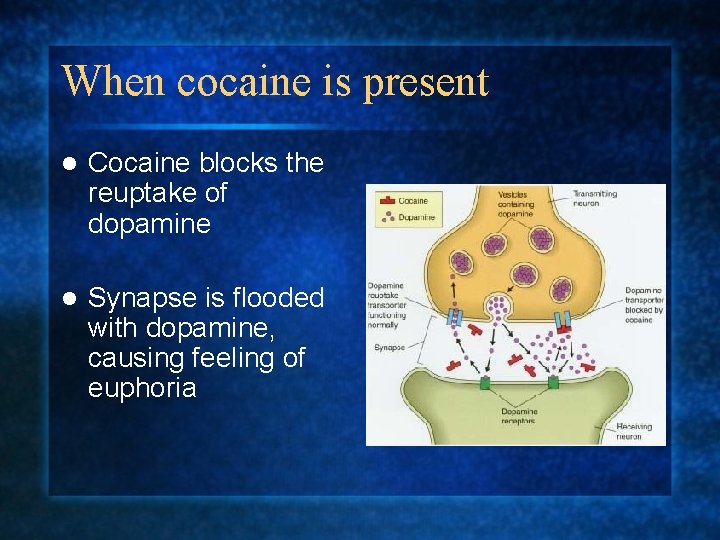
When cocaine is present l Cocaine blocks the reuptake of dopamine l Synapse is flooded with dopamine, causing feeling of euphoria
Long-term Damage? Long-term drug use results in loss of dopamine receptors l Users report constant depression, sadness, feelings of hopelessness l Need more and more of the drug just to feel normal l Potential for “high” is gone l
- Slides: 7