
The Nervous System V Sensory Neurons Todays Lesson
- Slides: 23
The Nervous System V Sensory Neurons
Today’s Lesson • • Attendance & Housekeeping Review Sensory Neurons Workbook
Housekeeping • Model of a motor neuron • Test on Nervous System: – Wednesday March 16 th (tomorrow) – I’ll be available Today at lunch for questions (after class) – Any other time look for me in the science department (B-102)
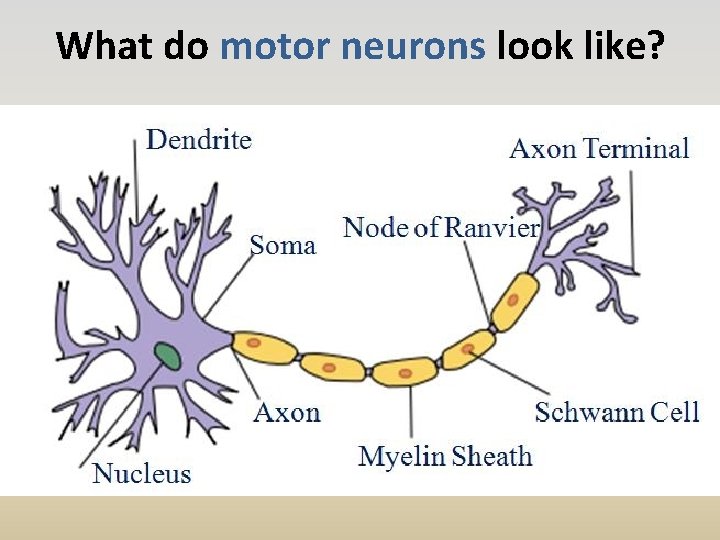
Study for Test • • Review the note packages I gave you Review pages 121 -128 in the workbook Know the components of the CNS and their definitions Know the 3 parts of the brain and what they’re responsible for Know how to label the neuron (motor and sensory) Know how neurons send signals Know the pathway reflexes take Be able to identify stimulus, reaction and whether reaction is voluntary/involuntary
Review
Nervous System • What is it? – The system that receives, processes, stores and transmits information that comes from various parts of the body and the external world. 2 components: The Central Nervous System (CNS) The Peripheral Nervous System (PNS)
The Brain The parts of the central nervous system located in the cranium
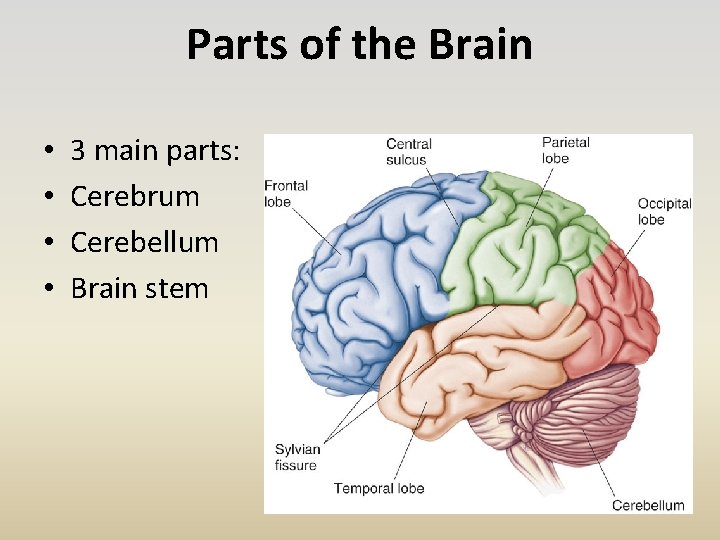
Parts of the Brain • • 3 main parts: Cerebrum Cerebellum Brain stem
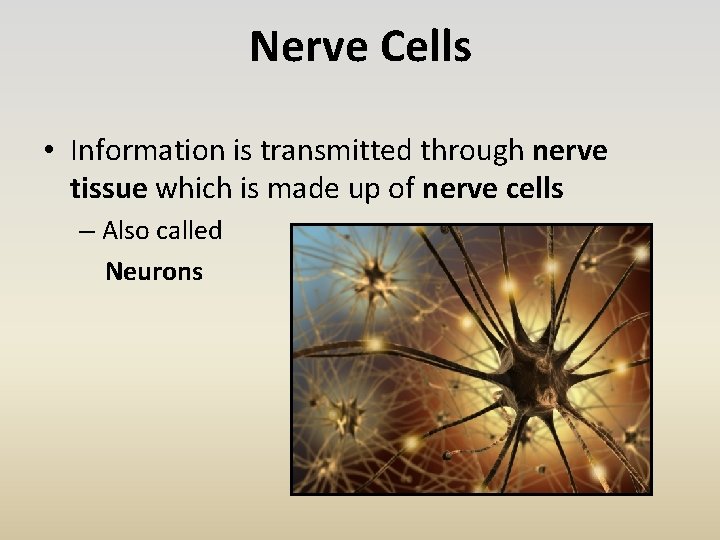
Nerve Cells • Information is transmitted through nerve tissue which is made up of nerve cells – Also called Neurons
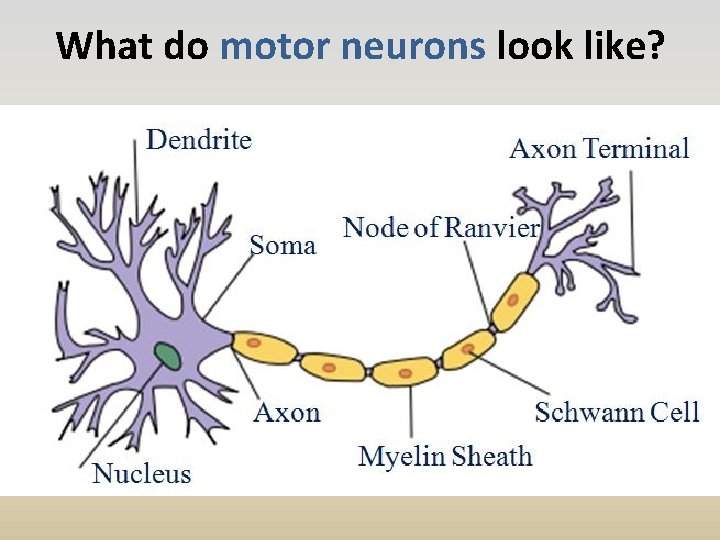
What do motor neurons look like?
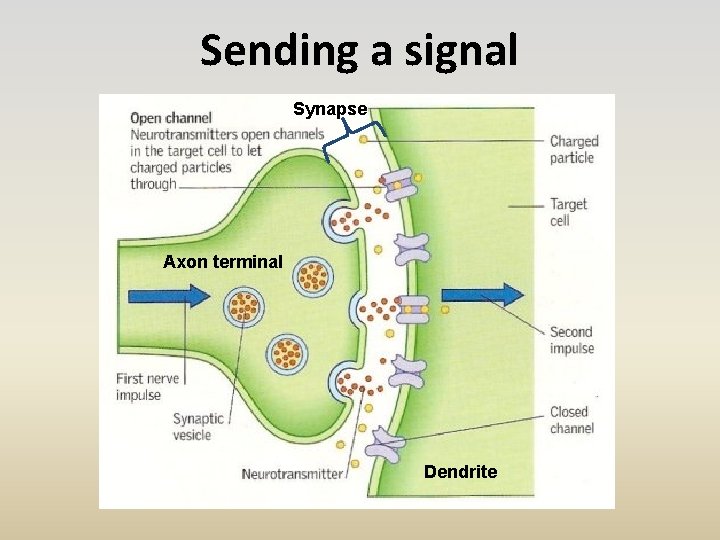
Sending a signal • Travel from one neuron to another via neurotransmitters – These are chemical substances secreted by the axon terminal that travel across the transmission zone between neurons to the next dendrite • Transmission zone is called a synapse
Sending a signal Synapse Axon terminal Dendrite
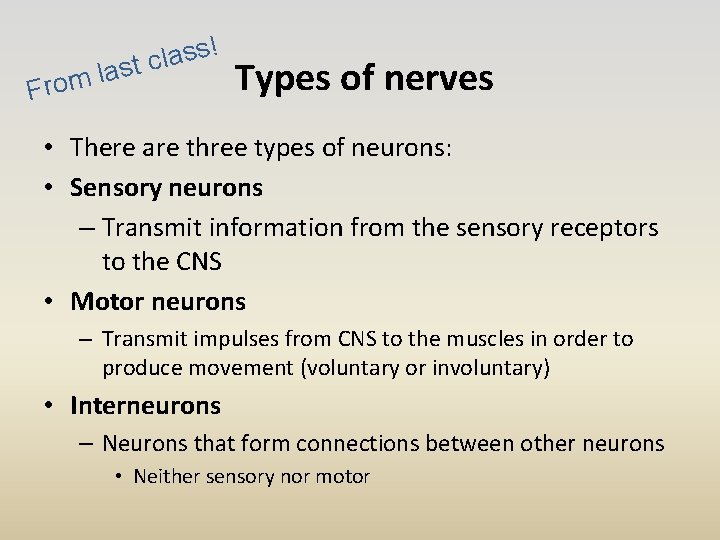
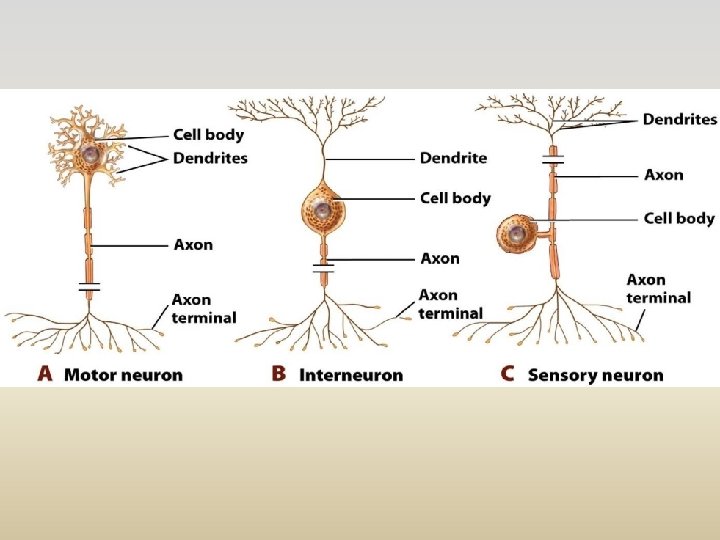
! s s a l st c a l m o Fr Types of nerves • There are three types of neurons: • Sensory neurons – Transmit information from the sensory receptors to the CNS • Motor neurons – Transmit impulses from CNS to the muscles in order to produce movement (voluntary or involuntary) • Interneurons – Neurons that form connections between other neurons • Neither sensory nor motor
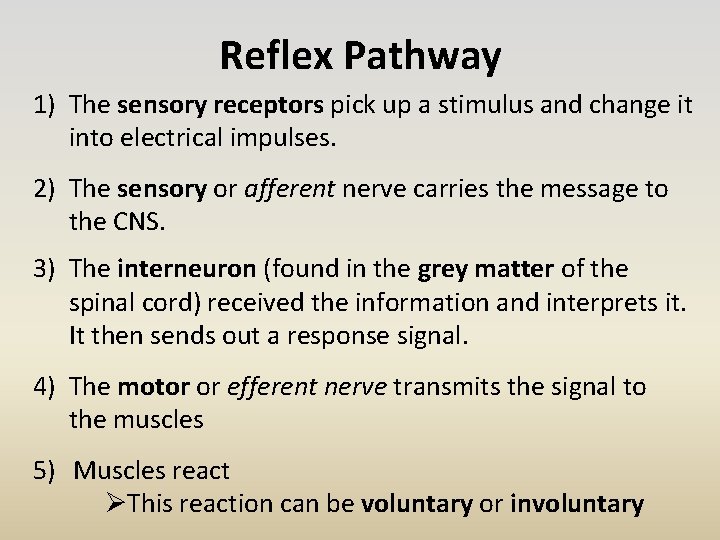
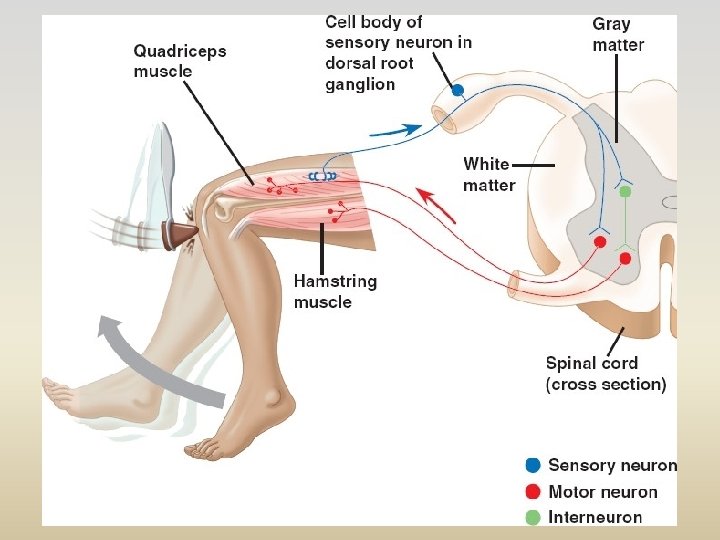
Reflex Pathway 1) The sensory receptors pick up a stimulus and change it into electrical impulses. 2) The sensory or afferent nerve carries the message to the CNS. 3) The interneuron (found in the grey matter of the spinal cord) received the information and interprets it. It then sends out a response signal. 4) The motor or efferent nerve transmits the signal to the muscles 5) Muscles react ØThis reaction can be voluntary or involuntary
Motor Neurons
What do motor neurons look like?
Sensory Neurons
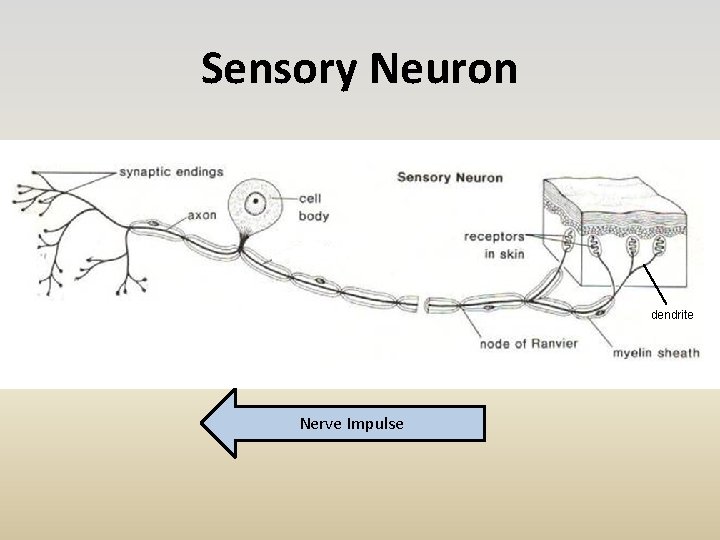
Sensory Neuron dendrite Nerve Impulse
More on the Brain
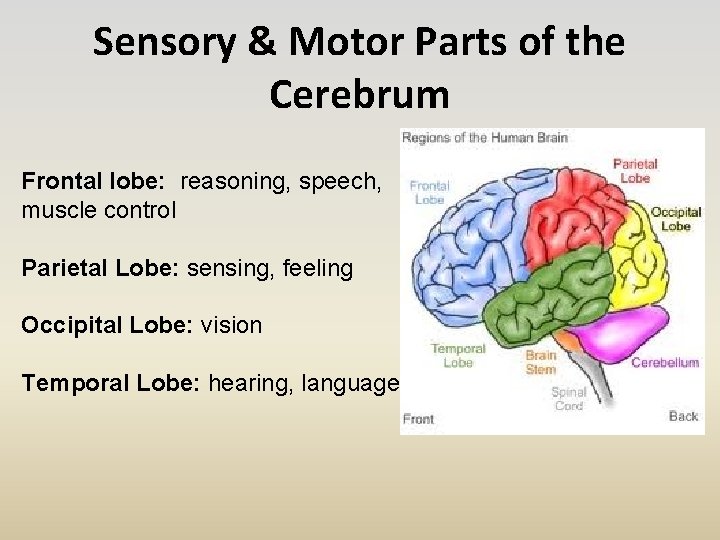
Sensory & Motor Parts of the Cerebrum Frontal lobe: reasoning, speech, muscle control Parietal Lobe: sensing, feeling Occipital Lobe: vision Temporal Lobe: hearing, language
Workbook • Complete pages 121 -128 in your workbook – If you’re done: study for test! Remember: you can always come see me if you have questions