
The Nervous System The Nervous System The master
- Slides: 37
The Nervous System
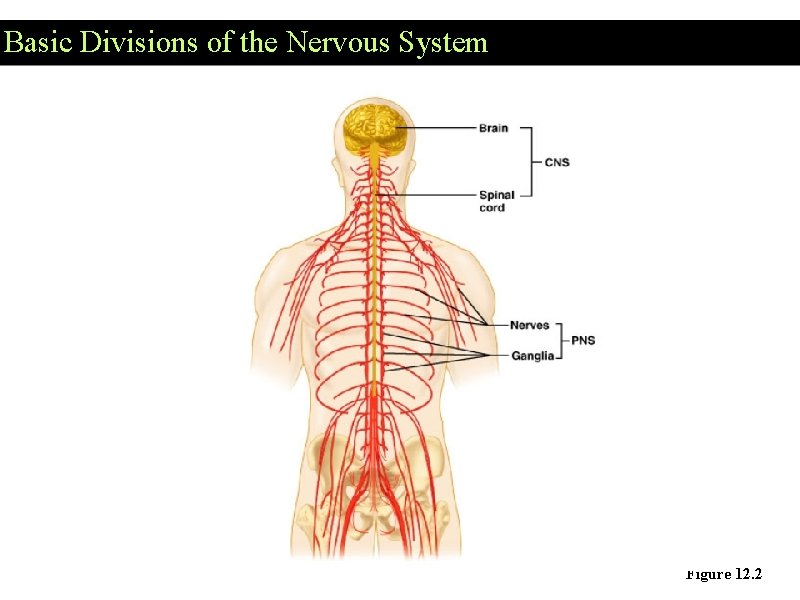
The Nervous System • The master controlling and communicating system of the body. • Vital in maintaining homeostasis • Two divisions: – Central Nervous System (CNS) = brain and spinal cord – Peripheral Nervous System (PNS) = nerves that extend from CNS
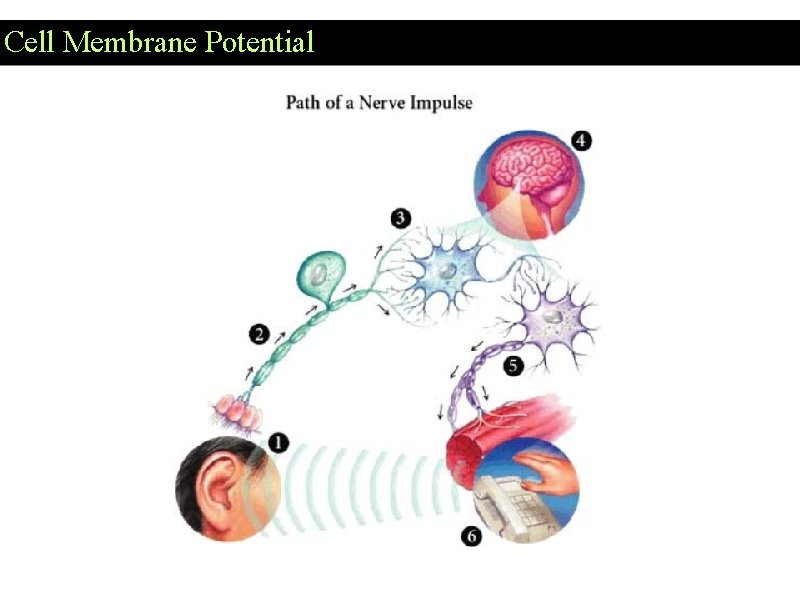
PNS Structures • Sensory / Afferent Division – Nerves that convey impulses to the CNS from sensory receptors in the body. • Motor / Efferent Division – Nerves that convey impulses from the CNS to organs, muscles, and glands. • Two divisions of motor / efferent nerves: • Somatic nervous system – voluntary control • Ex: skeletal muscle contraction • Autonomic nervous system (ANS) – automatic or involuntary regulation • Ex: cardiac muscles
Basic Divisions of the Nervous System Figure 12. 2
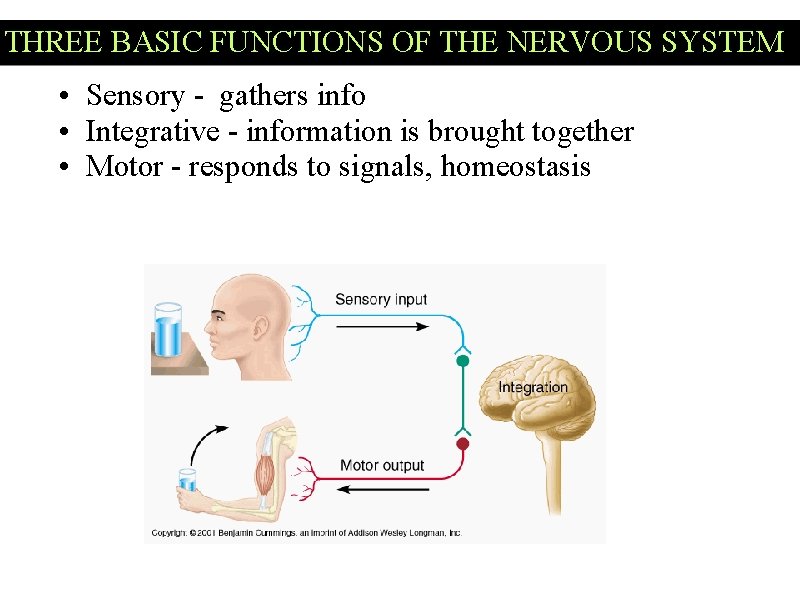
THREE BASIC FUNCTIONS OF THE NERVOUS SYSTEM • Sensory - gathers info • Integrative - information is brought together • Motor - responds to signals, homeostasis
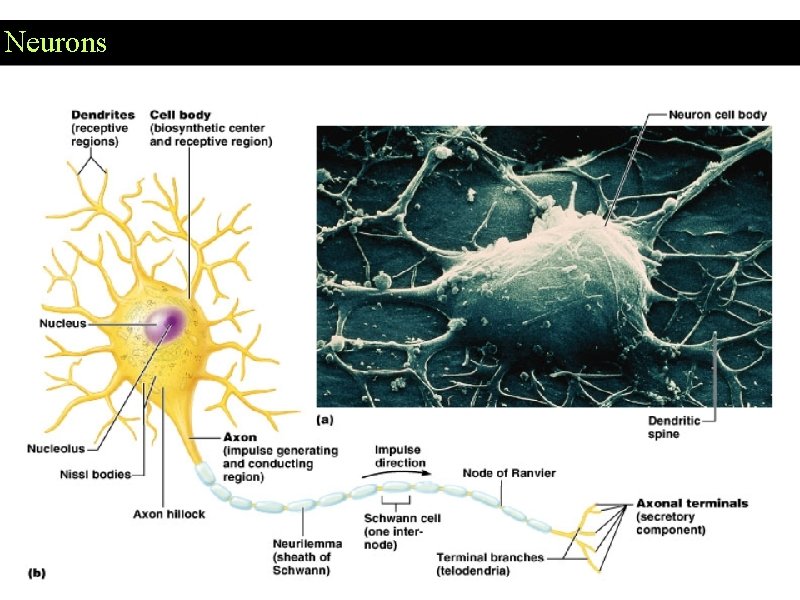
Neurons
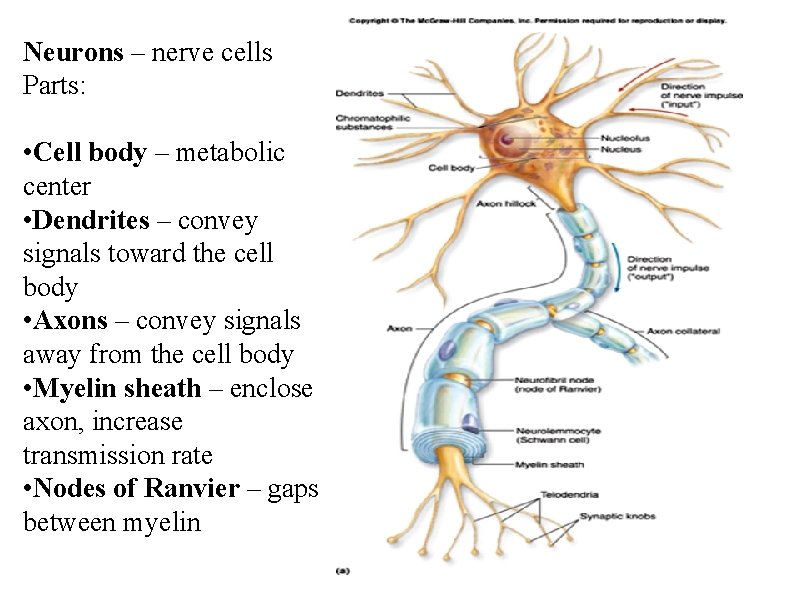
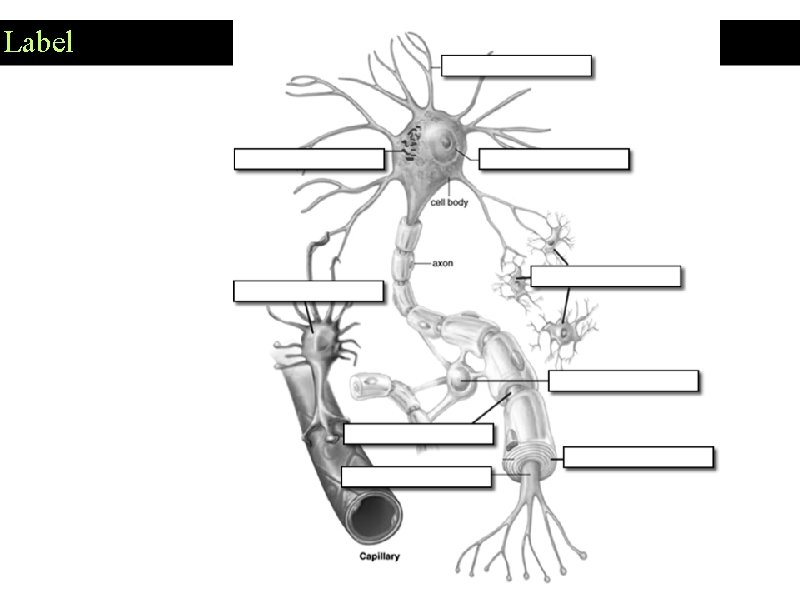
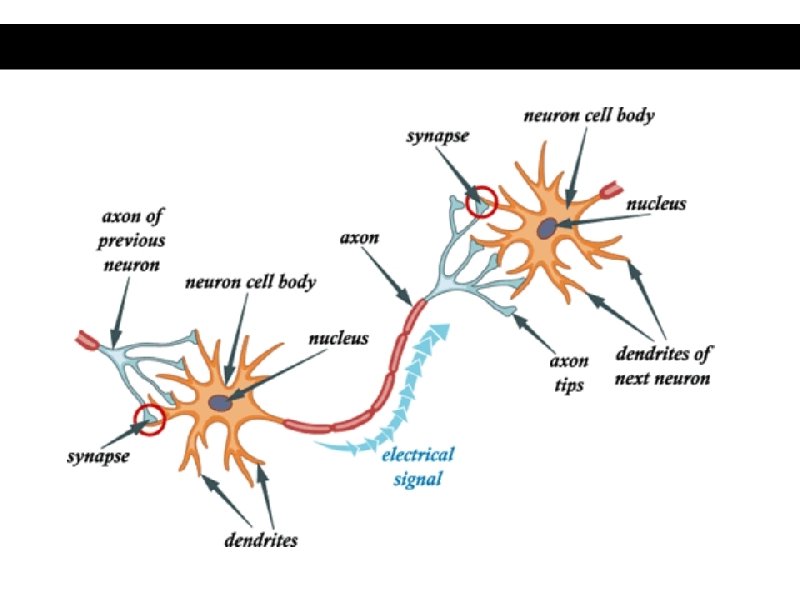
Neurons – nerve cells Parts: • Cell body – metabolic center • Dendrites – convey signals toward the cell body • Axons – convey signals away from the cell body • Myelin sheath – enclose axon, increase transmission rate • Nodes of Ranvier – gaps between myelin
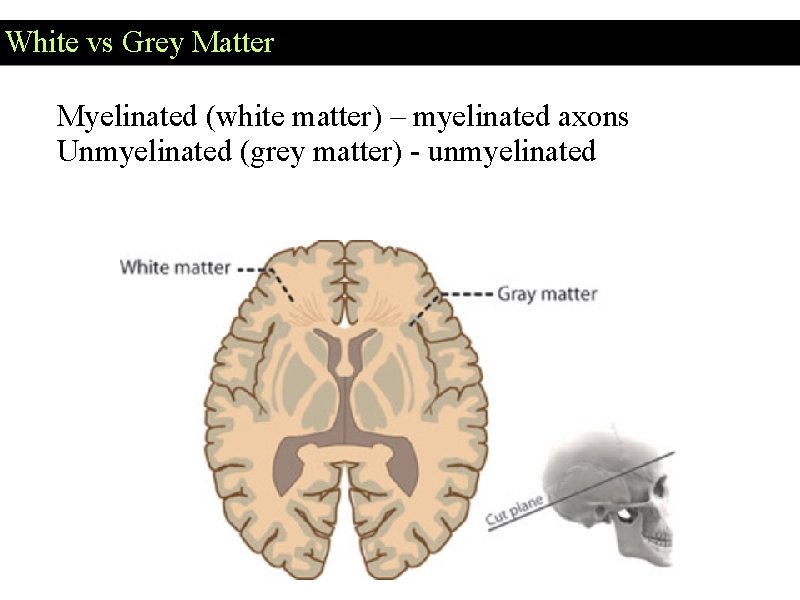
White vs Grey Matter Myelinated (white matter) – myelinated axons Unmyelinated (grey matter) - unmyelinated
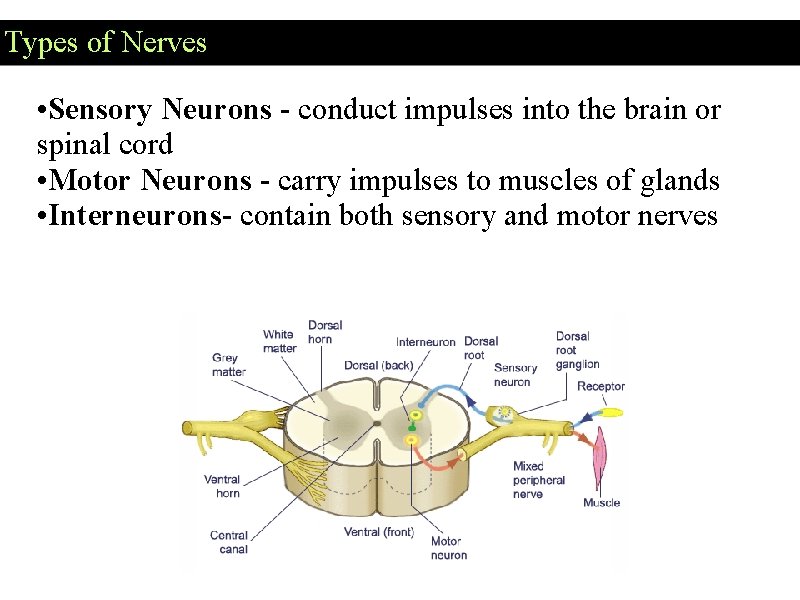
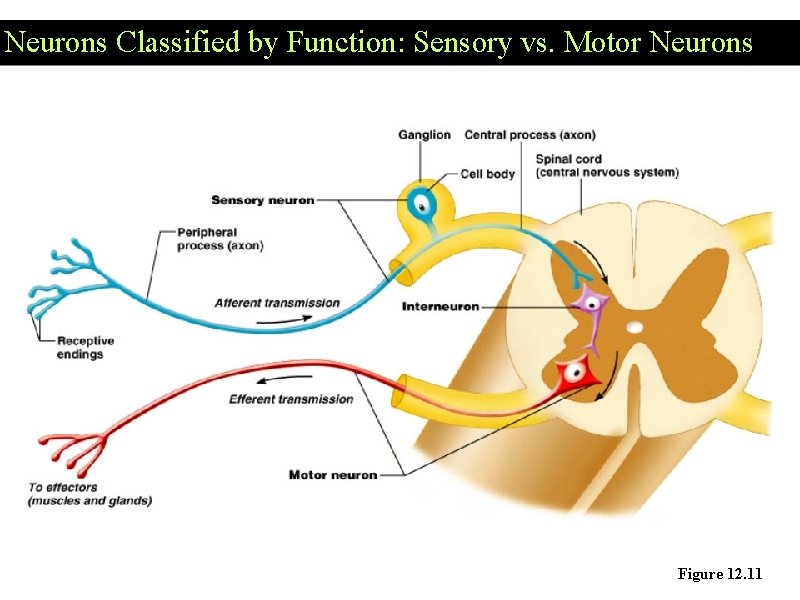
Types of Nerves • Sensory Neurons - conduct impulses into the brain or spinal cord • Motor Neurons - carry impulses to muscles of glands • Interneurons- contain both sensory and motor nerves
Neurons Classified by Function: Sensory vs. Motor Neurons Figure 12. 11
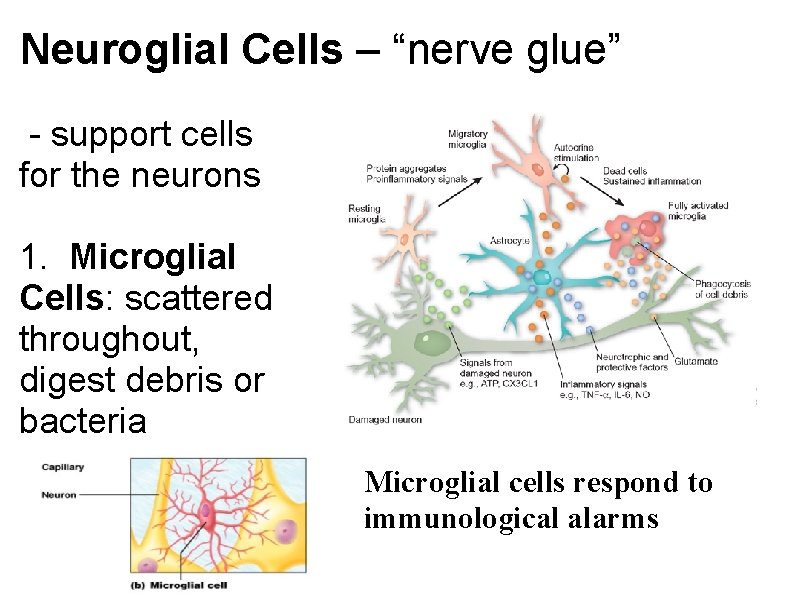
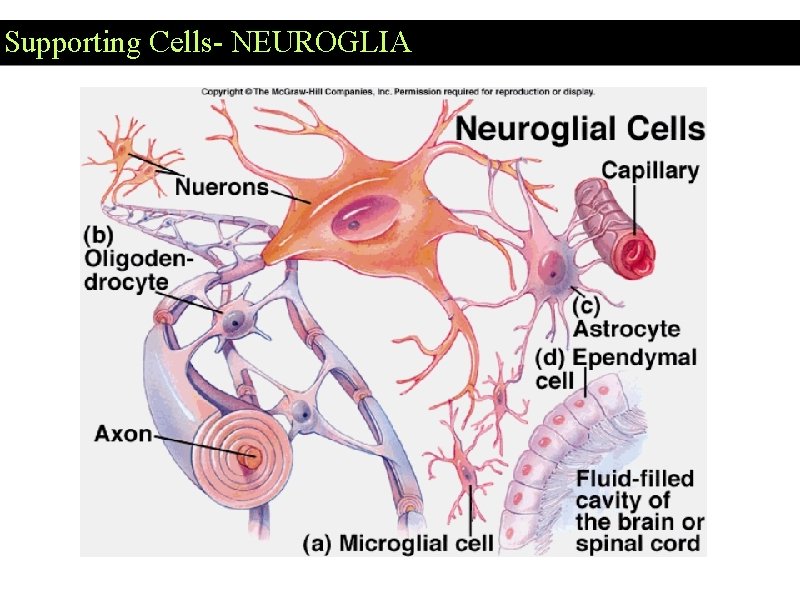
Neuroglial Cells – “nerve glue” - support cells for the neurons 1. Microglial Cells: scattered throughout, digest debris or bacteria Microglial cells respond to immunological alarms
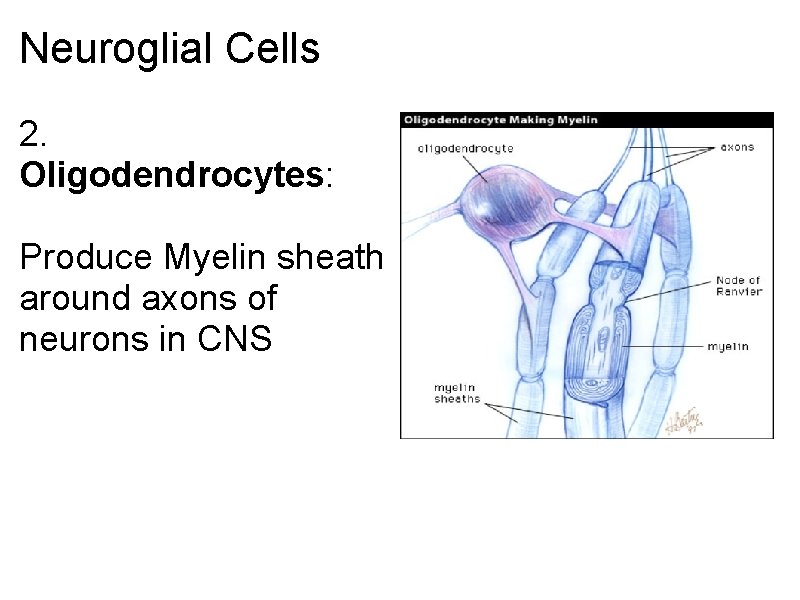
Neuroglial Cells 2. Oligodendrocytes: Produce Myelin sheath around axons of neurons in CNS
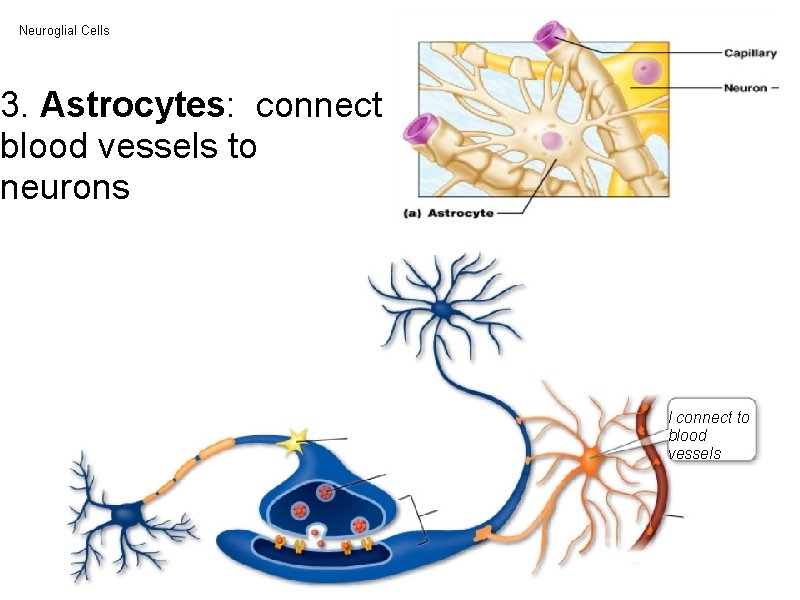
Neuroglial Cells 3. Astrocytes: connect blood vessels to neurons I connect to blood vessels
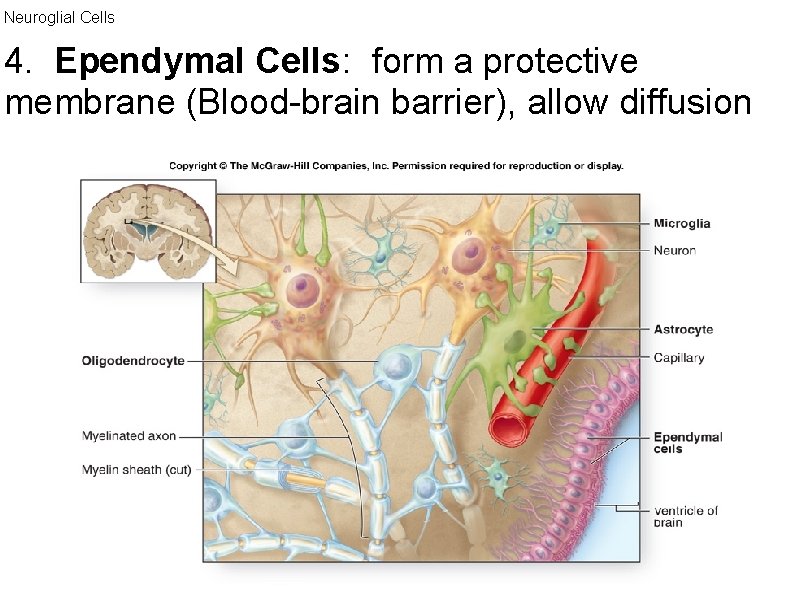
Neuroglial Cells 4. Ependymal Cells: form a protective membrane (Blood-brain barrier), allow diffusion
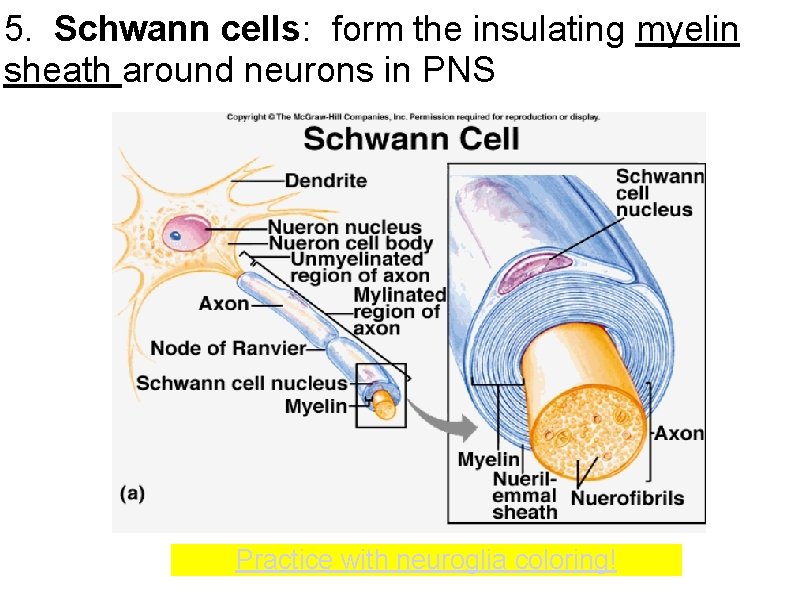
5. Schwann cells: form the insulating myelin sheath around neurons in PNS Practice with neuroglia coloring!
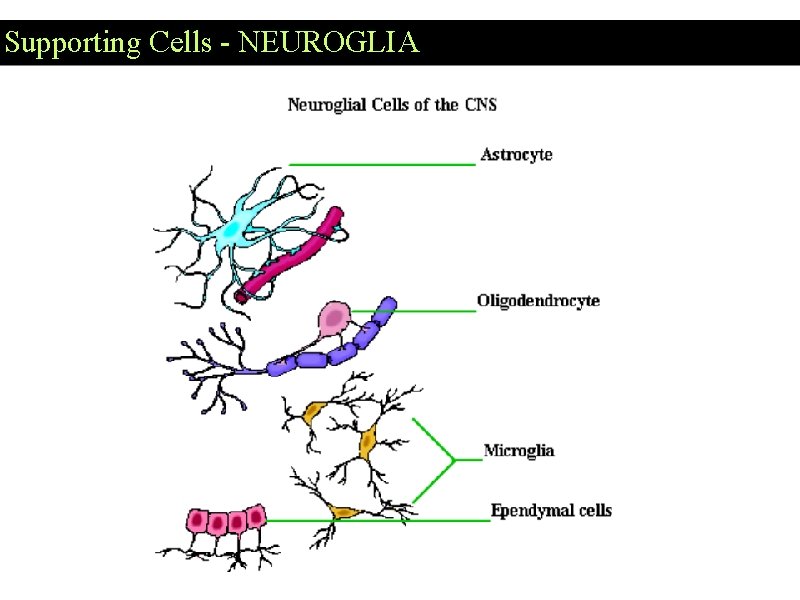
Supporting Cells - NEUROGLIA
Supporting Cells- NEUROGLIA
Label
Cell Membrane Potential
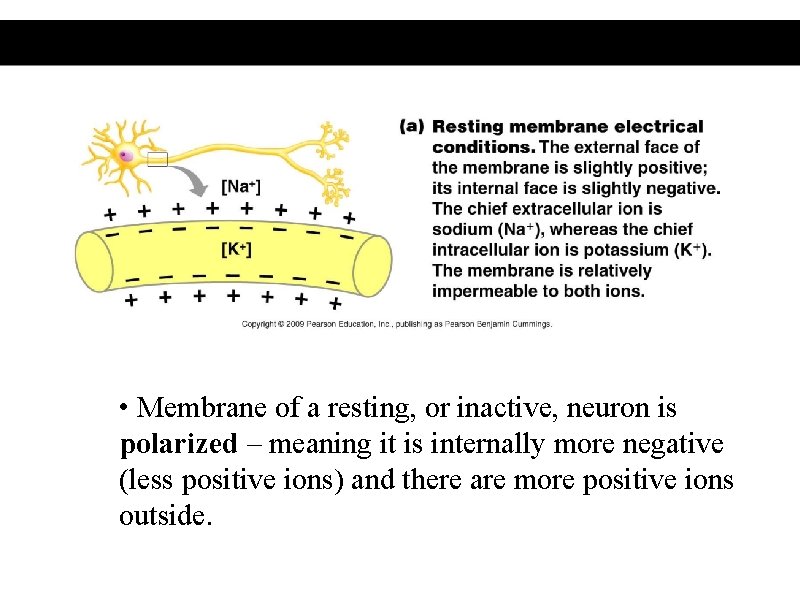
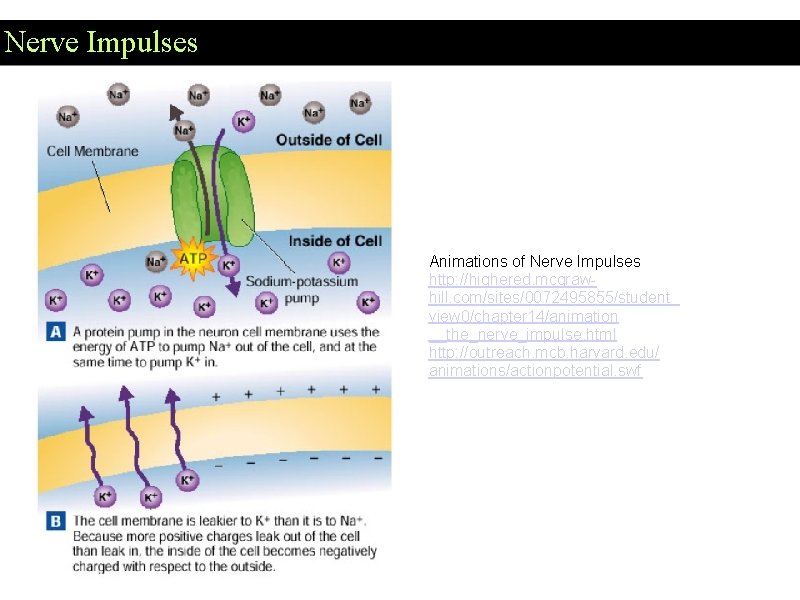
• Membrane of a resting, or inactive, neuron is polarized – meaning it is internally more negative (less positive ions) and there are more positive ions outside.
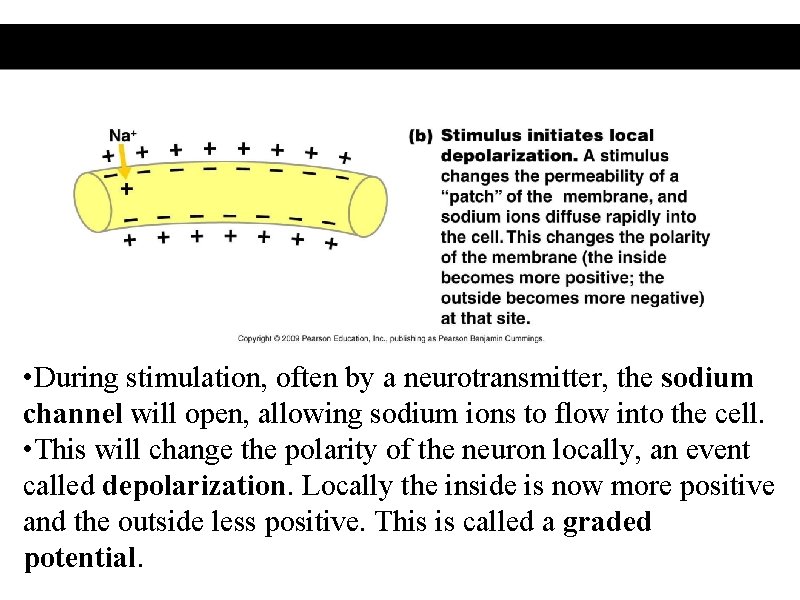
• During stimulation, often by a neurotransmitter, the sodium channel will open, allowing sodium ions to flow into the cell. • This will change the polarity of the neuron locally, an event called depolarization. Locally the inside is now more positive and the outside less positive. This is called a graded potential.
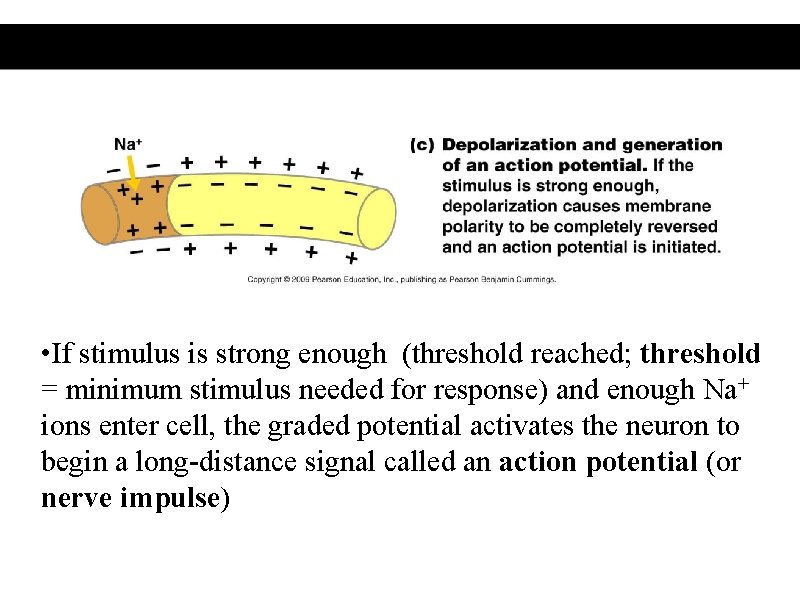
• If stimulus is strong enough (threshold reached; threshold = minimum stimulus needed for response) and enough Na+ ions enter cell, the graded potential activates the neuron to begin a long-distance signal called an action potential (or nerve impulse)
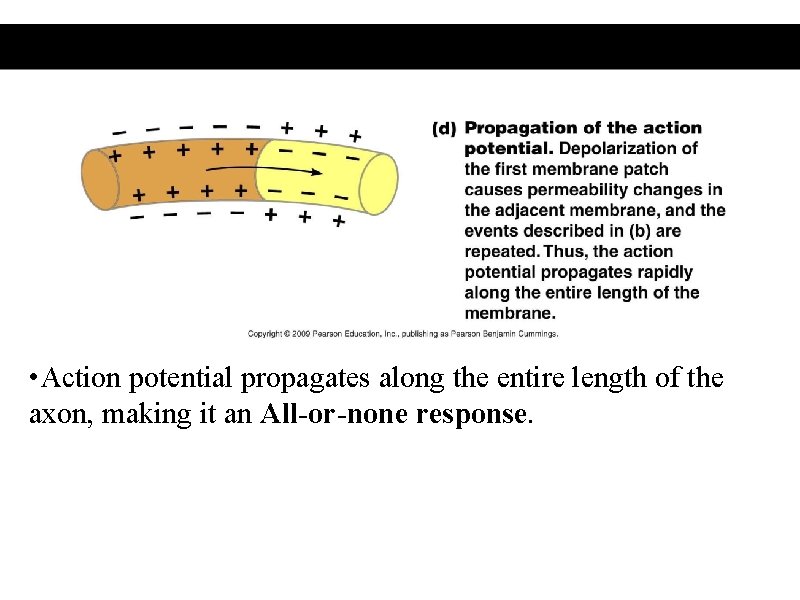
• Action potential propagates along the entire length of the axon, making it an All-or-none response.
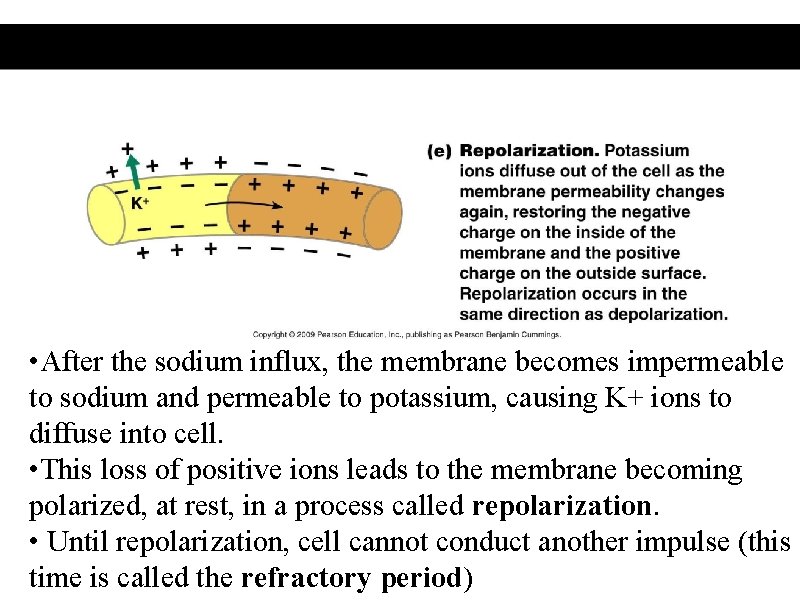
• After the sodium influx, the membrane becomes impermeable to sodium and permeable to potassium, causing K+ ions to diffuse into cell. • This loss of positive ions leads to the membrane becoming polarized, at rest, in a process called repolarization. • Until repolarization, cell cannot conduct another impulse (this time is called the refractory period)
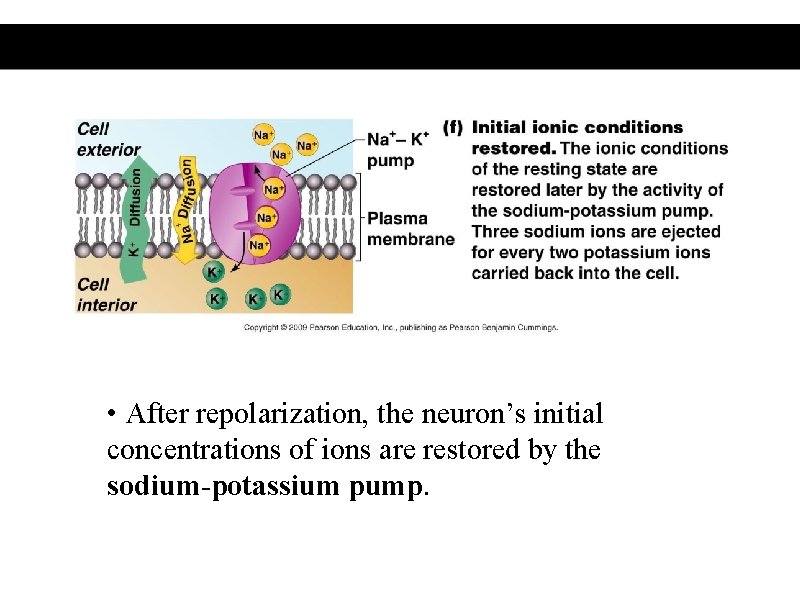
• After repolarization, the neuron’s initial concentrations of ions are restored by the sodium-potassium pump.
Nerve Impulses Animations of Nerve Impulses http: //highered. mcgrawhill. com/sites/0072495855/student_ view 0/chapter 14/animation __the_nerve_impulse. html http: //outreach. mcb. harvard. edu/ animations/actionpotential. swf
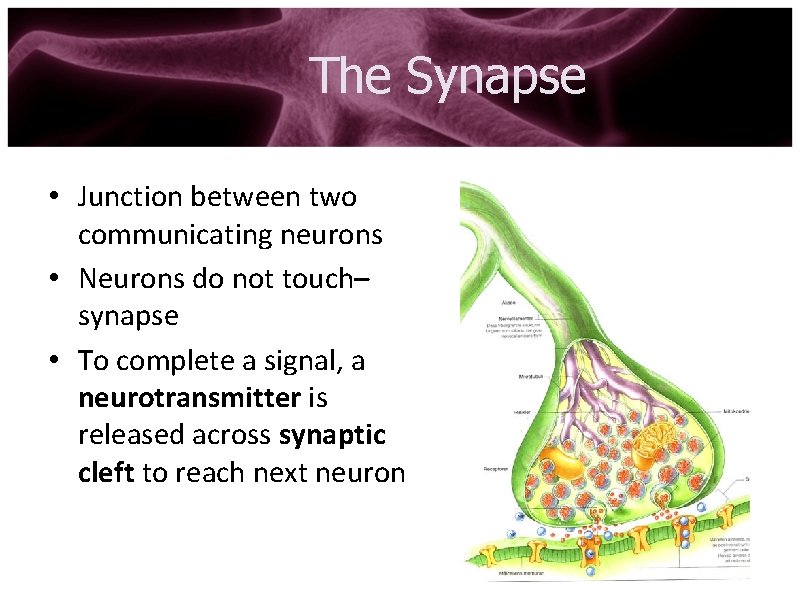
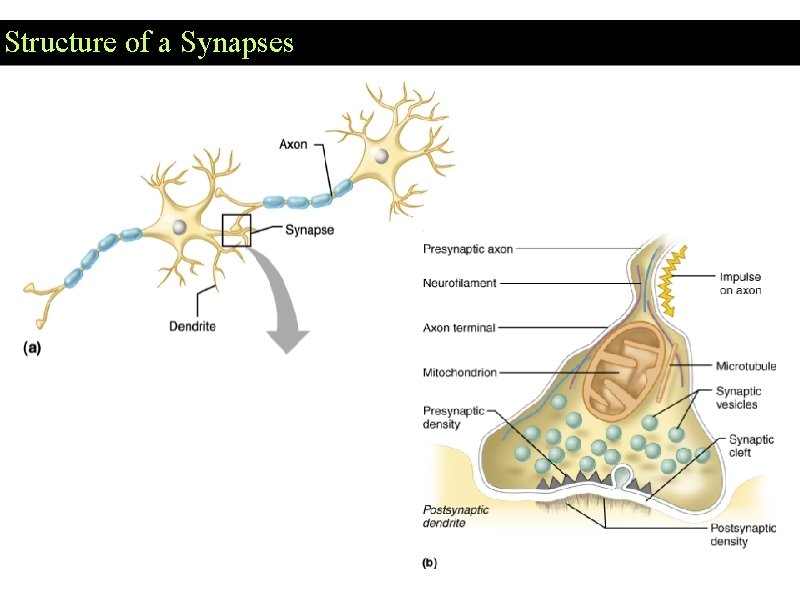
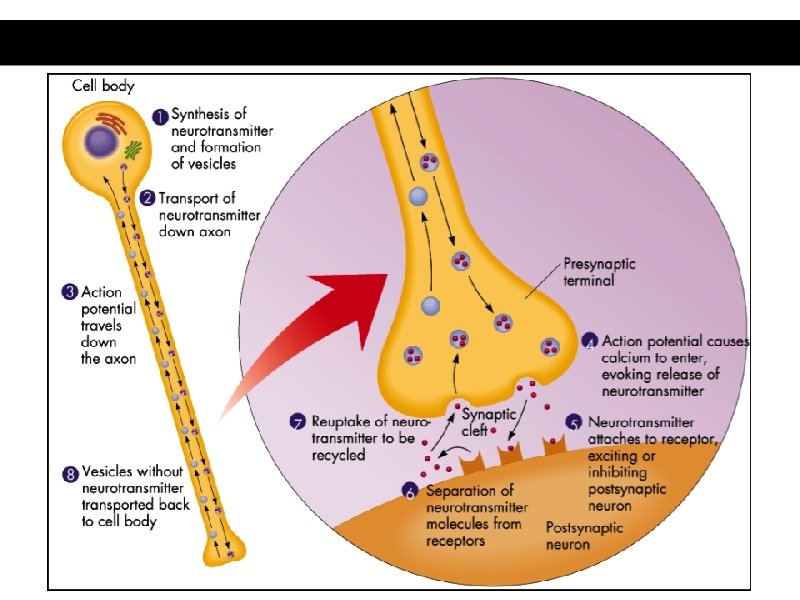
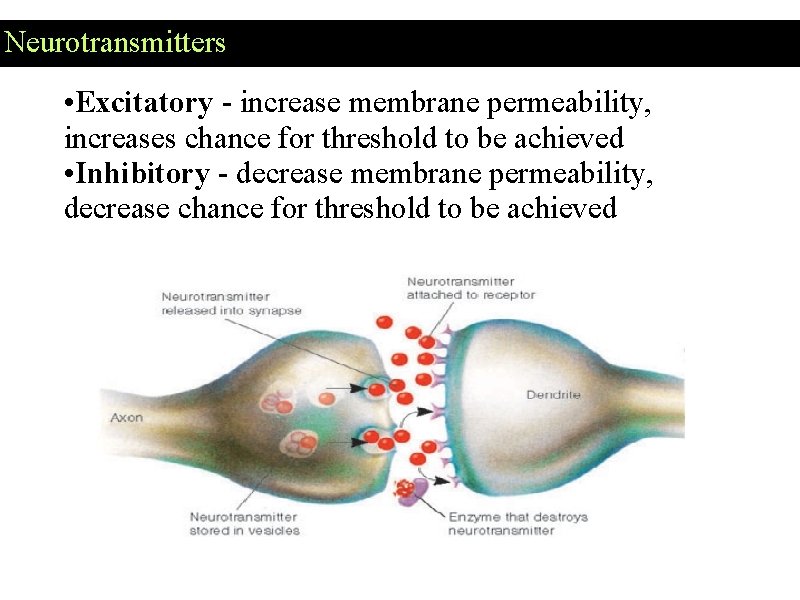
The Synapse • Junction between two communicating neurons • Neurons do not touch– synapse • To complete a signal, a neurotransmitter is released across synaptic cleft to reach next neuron
Structure of a Synapses
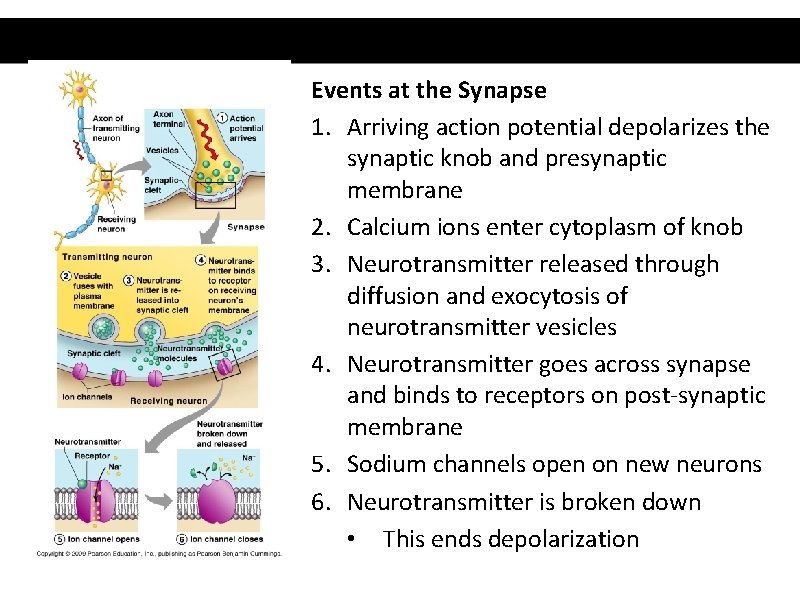
Events at the Synapse 1. Arriving action potential depolarizes the synaptic knob and presynaptic membrane 2. Calcium ions enter cytoplasm of knob 3. Neurotransmitter released through diffusion and exocytosis of neurotransmitter vesicles 4. Neurotransmitter goes across synapse and binds to receptors on post-synaptic membrane 5. Sodium channels open on new neurons 6. Neurotransmitter is broken down • This ends depolarization
Neurotransmitters • Excitatory - increase membrane permeability, increases chance for threshold to be achieved • Inhibitory - decrease membrane permeability, decrease chance for threshold to be achieved
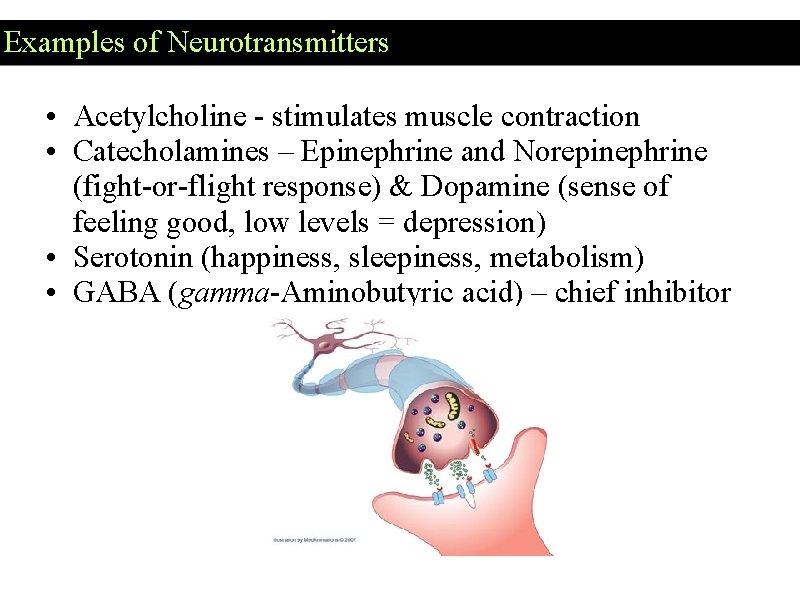
Examples of Neurotransmitters • Acetylcholine - stimulates muscle contraction • Catecholamines – Epinephrine and Norepinephrine (fight-or-flight response) & Dopamine (sense of feeling good, low levels = depression) • Serotonin (happiness, sleepiness, metabolism) • GABA (gamma-Aminobutyric acid) – chief inhibitor
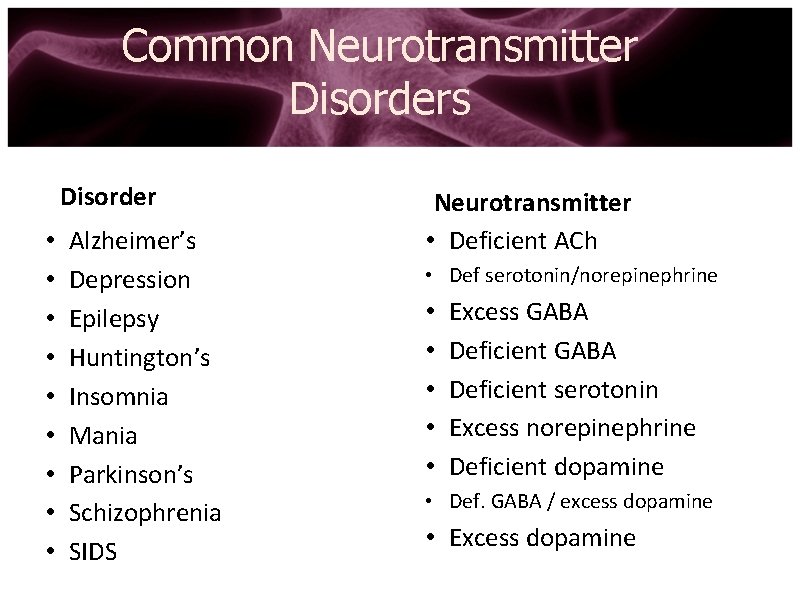
Common Neurotransmitter Disorders Disorder • • • Alzheimer’s Depression Epilepsy Huntington’s Insomnia Mania Parkinson’s Schizophrenia SIDS Neurotransmitter • Deficient ACh • Def serotonin/norepinephrine • • • Excess GABA Deficient serotonin Excess norepinephrine Deficient dopamine • Def. GABA / excess dopamine • Excess dopamine
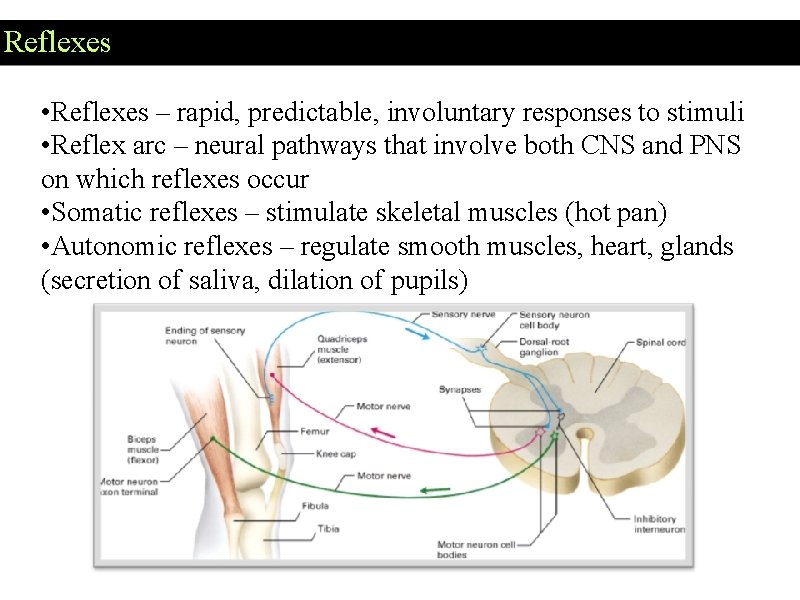
Reflexes • Reflexes – rapid, predictable, involuntary responses to stimuli • Reflex arc – neural pathways that involve both CNS and PNS on which reflexes occur • Somatic reflexes – stimulate skeletal muscles (hot pan) • Autonomic reflexes – regulate smooth muscles, heart, glands (secretion of saliva, dilation of pupils)
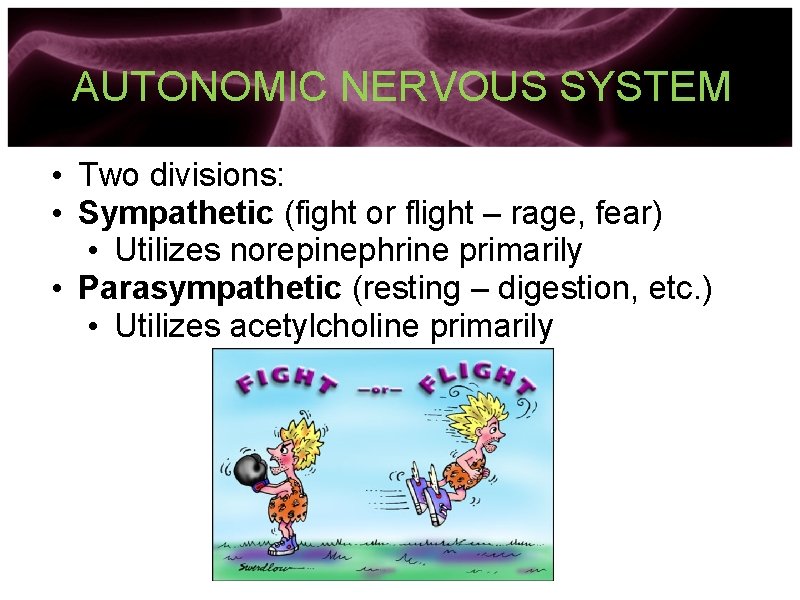
AUTONOMIC NERVOUS SYSTEM • Two divisions: • Sympathetic (fight or flight – rage, fear) • Utilizes norepinephrine primarily • Parasympathetic (resting – digestion, etc. ) • Utilizes acetylcholine primarily