
The Nervous System The nervous system is a
- Slides: 25
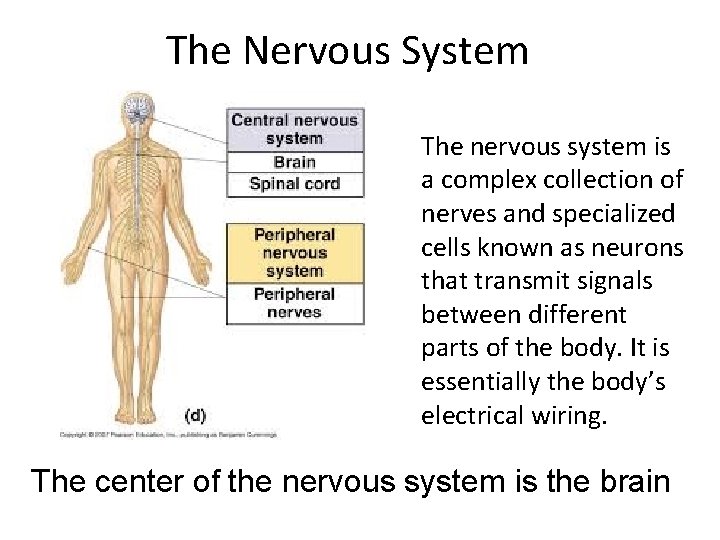
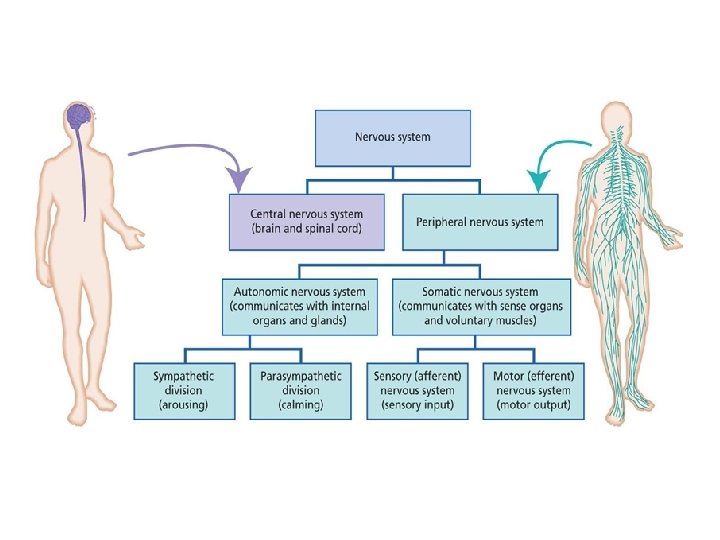
The Nervous System The nervous system is a complex collection of nerves and specialized cells known as neurons that transmit signals between different parts of the body. It is essentially the body’s electrical wiring. The center of the nervous system is the brain
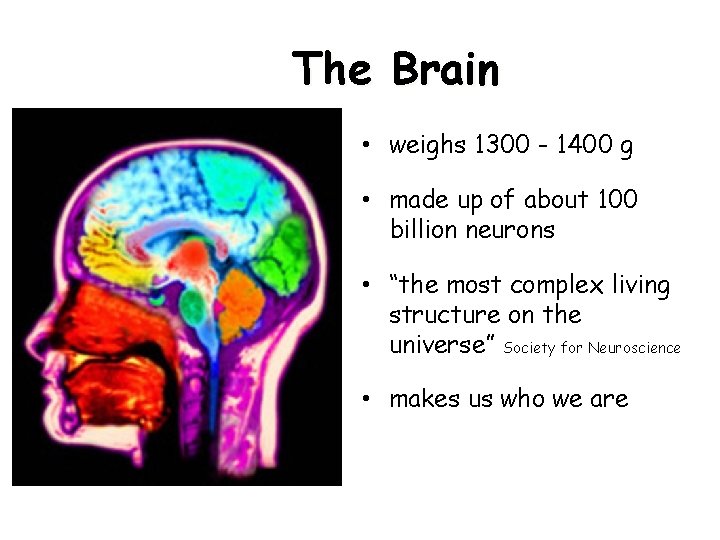
The Brain • weighs 1300 - 1400 g • made up of about 100 billion neurons • “the most complex living structure on the universe” Society for Neuroscience • makes us who we are
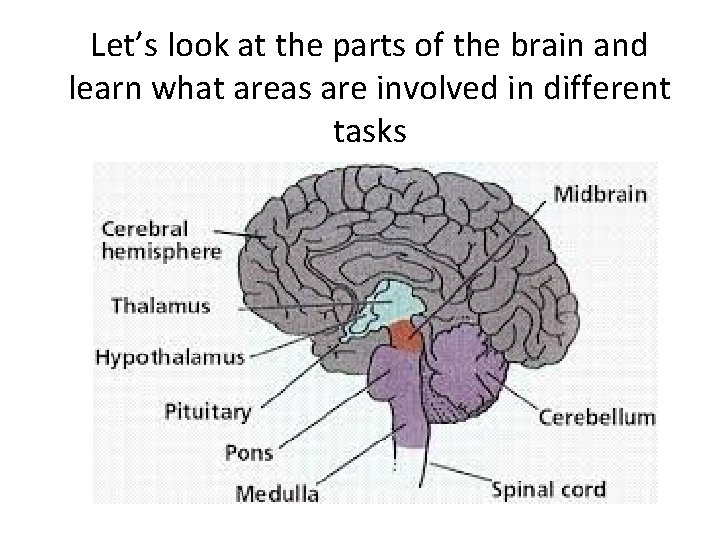
Let’s look at the parts of the brain and learn what areas are involved in different tasks
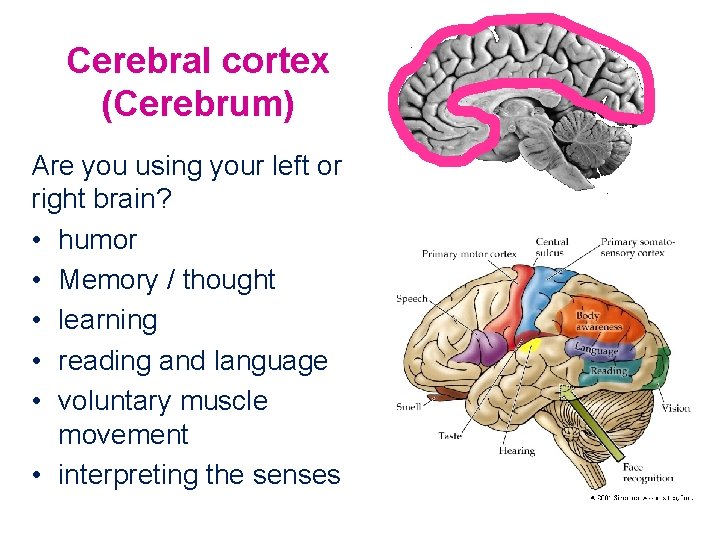
Cerebral cortex (Cerebrum) Are you using your left or right brain? • humor • Memory / thought • learning • reading and language • voluntary muscle movement • interpreting the senses
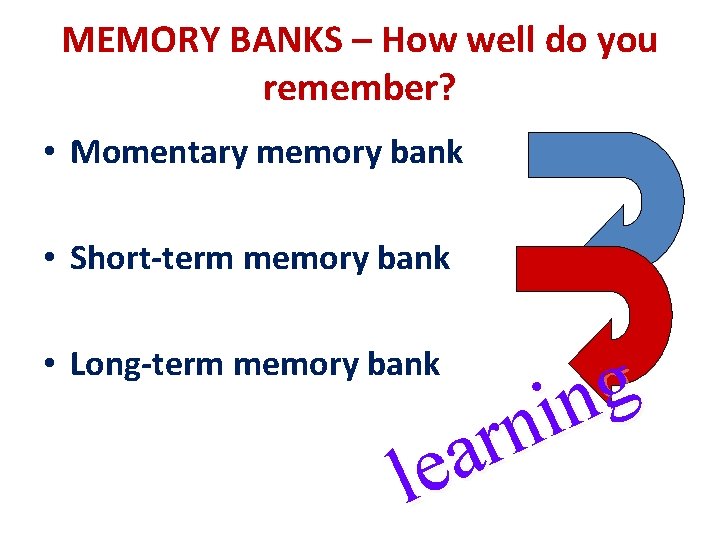
MEMORY BANKS – How well do you remember? • Momentary memory bank • Short-term memory bank g n i n r a e l • Long-term memory bank
MOMENTARY MEMORY ACTIVITY • Jot down 20 random single digits (from 0 - 9) • Find a partner. • Partner A will tell partner B a single digit at a time. • Partner B recalls all the numbers, starting from the beginning, adding the one new digit last. • Example: Partner A: “One” Partner B: “One” Partner A: “Eight” Partner B: “One, eight” • Continue until Partner B messes up. • Record the number of digits he/she WAS able to remember without messing up. • Switch roles.
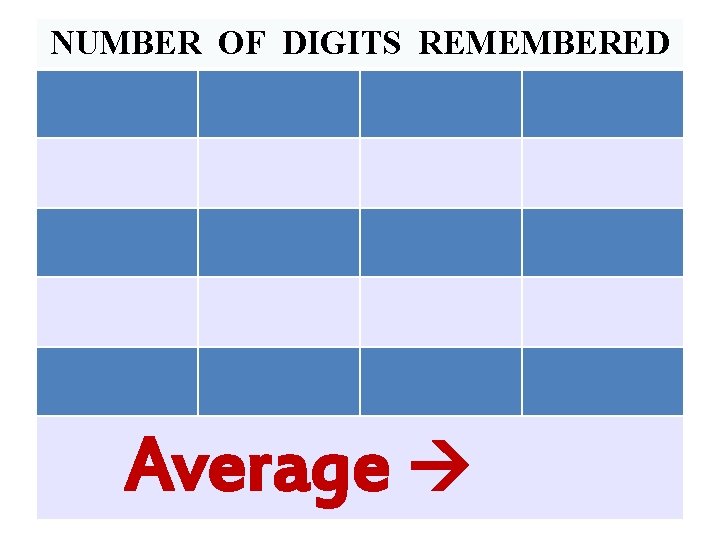
NUMBER OF DIGITS REMEMBERED Average
TRANSFERRING INFORMATION FROM MOMENTARY TO SHORT-TERM MEMORY What techniques do you use to help you remember……. let’s try one more memory game.
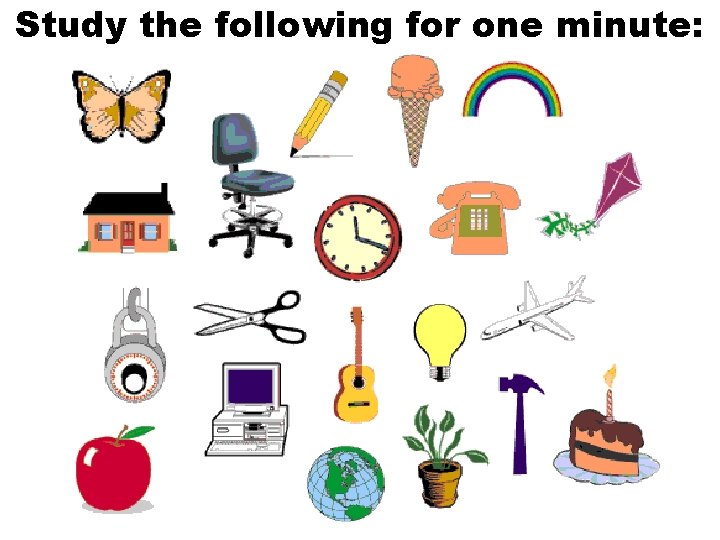
Study the following for one minute:
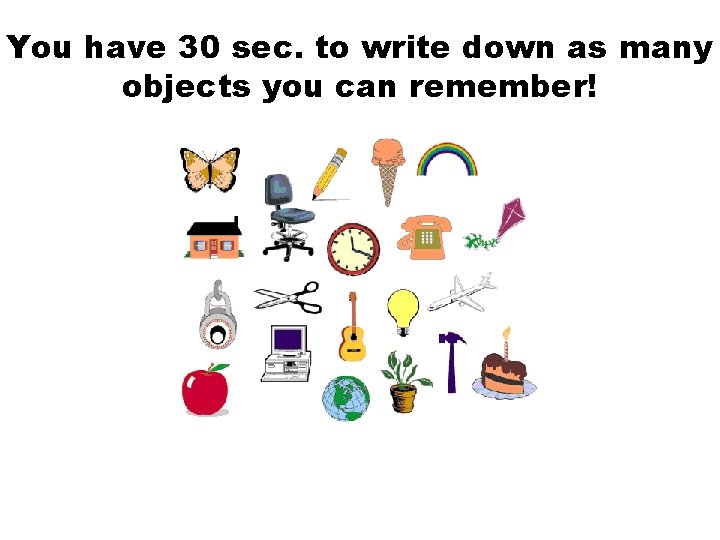
You have 30 sec. to write down as many objects you can remember!
What were some of your “tricks”? All those “tricks” you described are common methods for committing information to memory (learning)
Process Time the period which elapses between start & finish - recognition - memory retrieval - output Let’s try an example…. . Stroop Effect
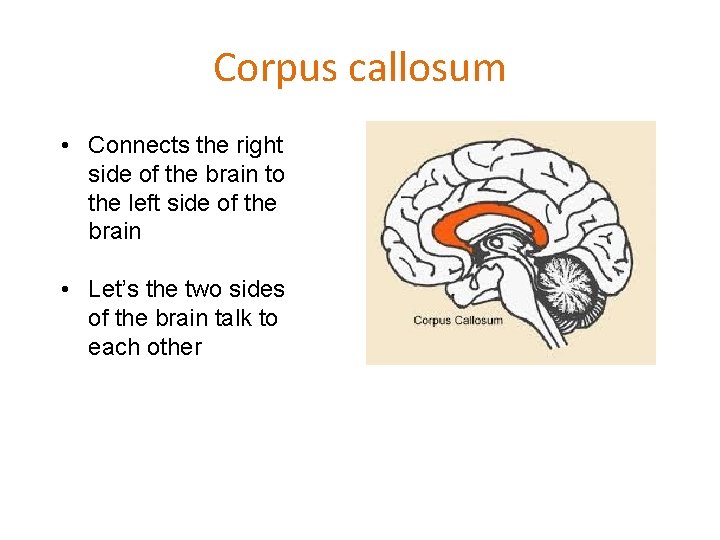
Corpus callosum • Connects the right side of the brain to the left side of the brain • Let’s the two sides of the brain talk to each other
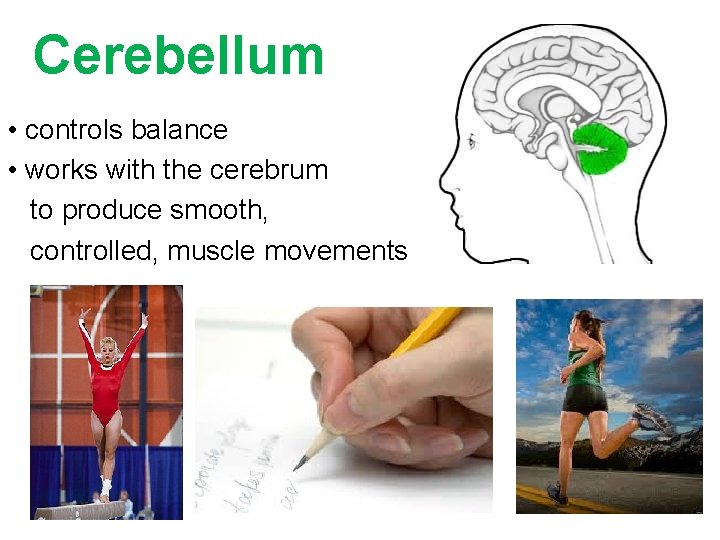
Cerebellum • controls balance • works with the cerebrum to produce smooth, controlled, muscle movements
try to “outsmart” your foot 1. While sitting at your desk, lift your right foot off the floor and make clockwise circles with it. 2. Now, while doing this, draw the number '6' in the air with your right hand…. . Your foot will change direction. You can’t do it. It's pre-programmed in your brain!
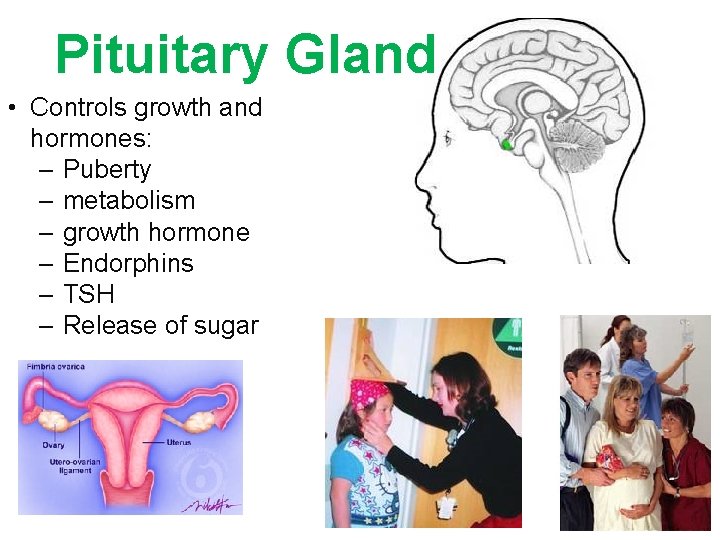
Pituitary Gland • Controls growth and hormones: – Puberty – metabolism – growth hormone – Endorphins – TSH – Release of sugar
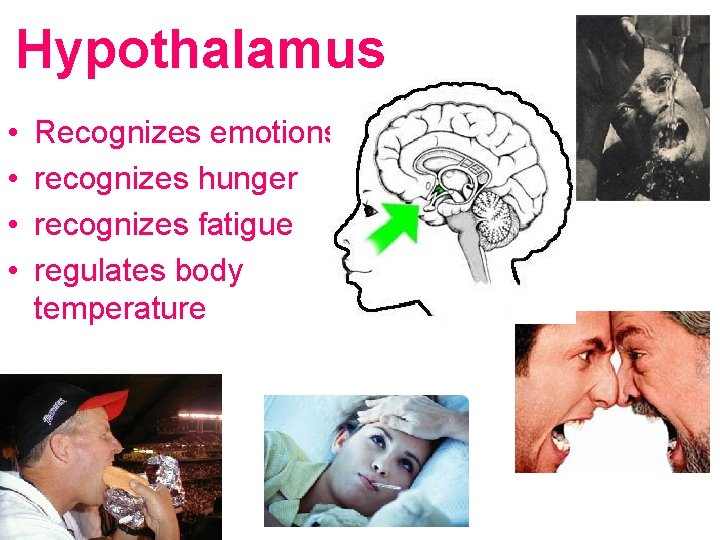
Hypothalamus • • Recognizes emotions recognizes hunger recognizes fatigue regulates body temperature
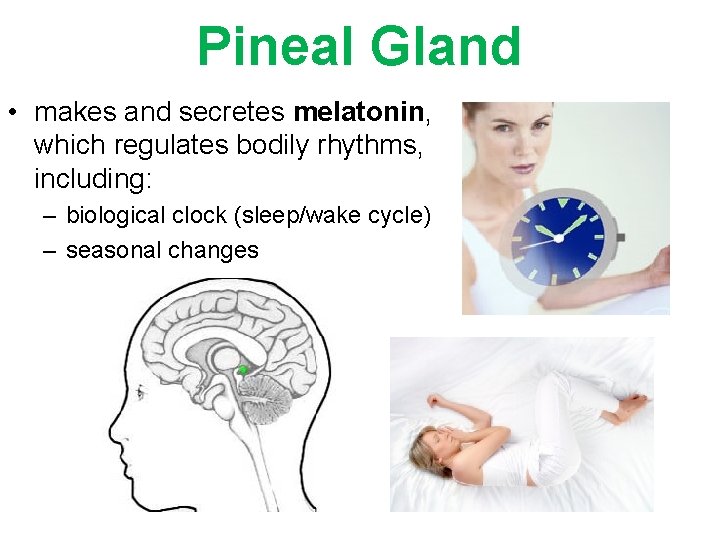
Pineal Gland • makes and secretes melatonin, which regulates bodily rhythms, including: – biological clock (sleep/wake cycle) – seasonal changes
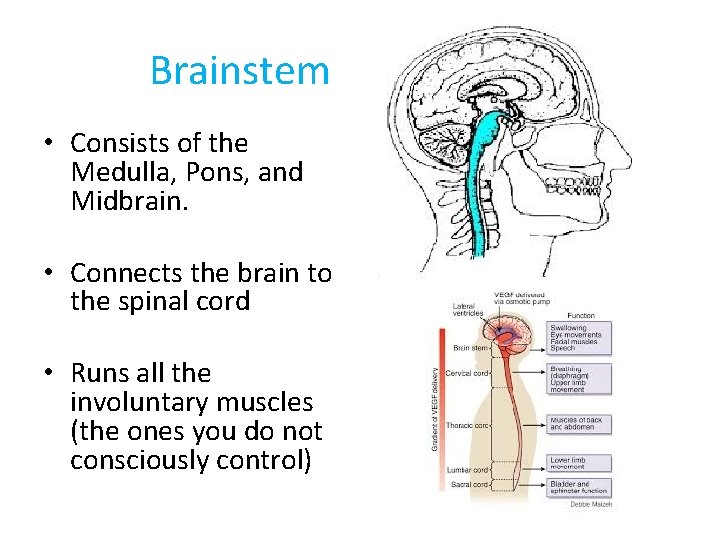
Brainstem • Consists of the Medulla, Pons, and Midbrain. • Connects the brain to the spinal cord • Runs all the involuntary muscles (the ones you do not consciously control)
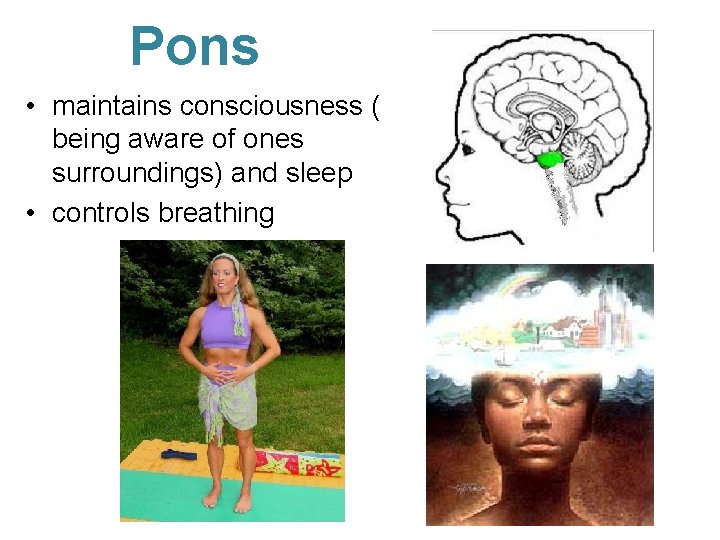
Pons • maintains consciousness ( being aware of ones surroundings) and sleep • controls breathing
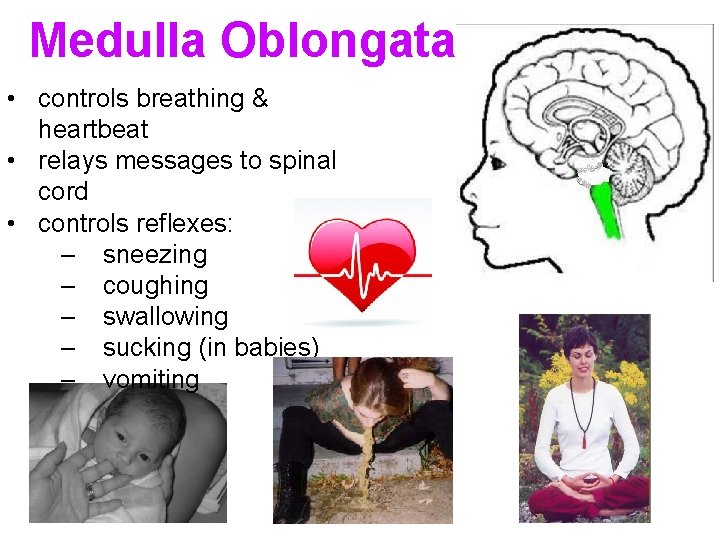
Medulla Oblongata • controls breathing & heartbeat • relays messages to spinal cord • controls reflexes: – sneezing – coughing – swallowing – sucking (in babies) – vomiting
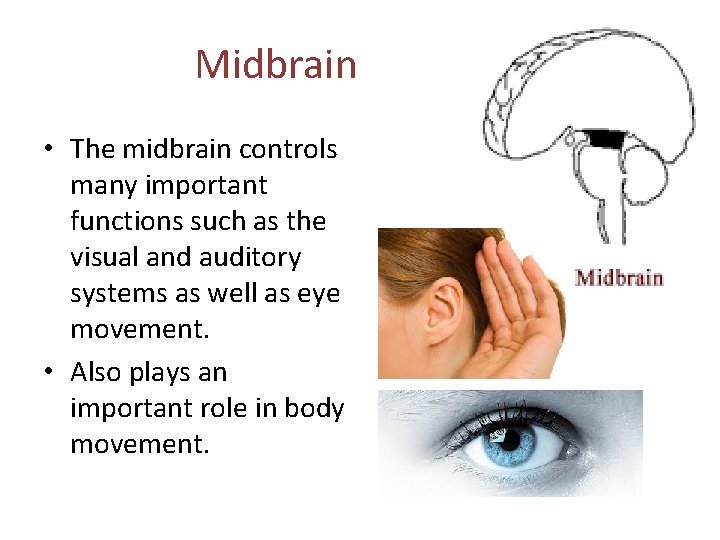
Midbrain • The midbrain controls many important functions such as the visual and auditory systems as well as eye movement. • Also plays an important role in body movement.
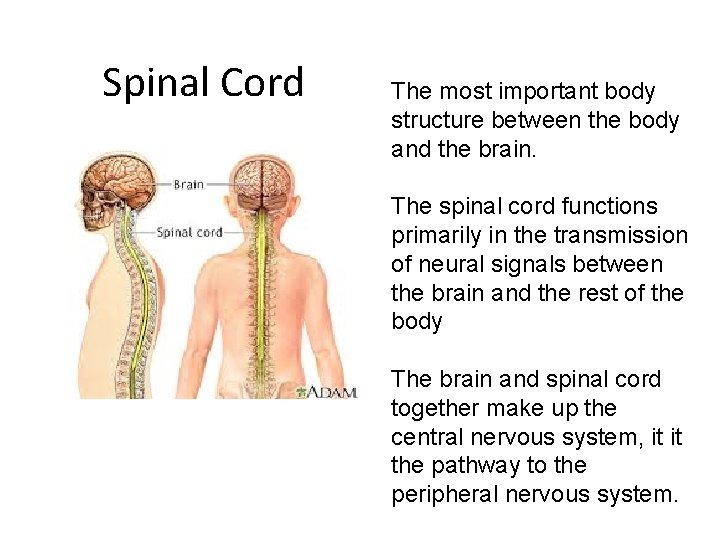
Spinal Cord The most important body structure between the body and the brain. The spinal cord functions primarily in the transmission of neural signals between the brain and the rest of the body The brain and spinal cord together make up the central nervous system, it it the pathway to the peripheral nervous system.
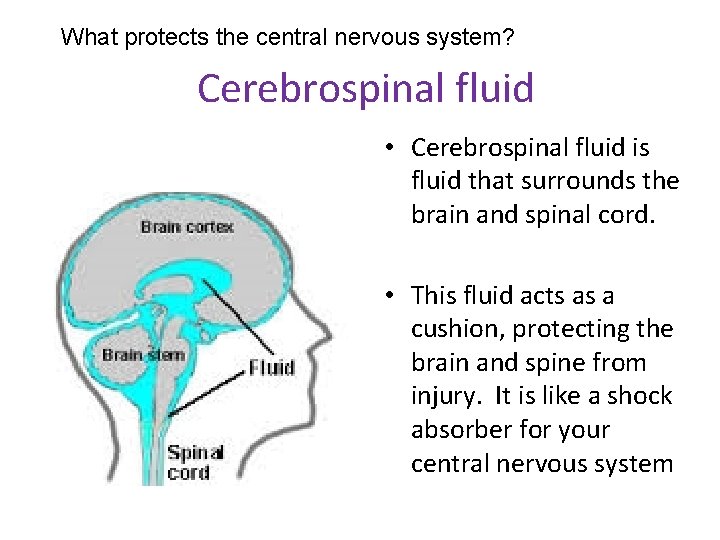
What protects the central nervous system? Cerebrospinal fluid • Cerebrospinal fluid is fluid that surrounds the brain and spinal cord. • This fluid acts as a cushion, protecting the brain and spine from injury. It is like a shock absorber for your central nervous system