
The Nervous system The nerve cell is the
- Slides: 51
The Nervous system The nerve cell is the basic unit of communication in the vertebrate nervous system
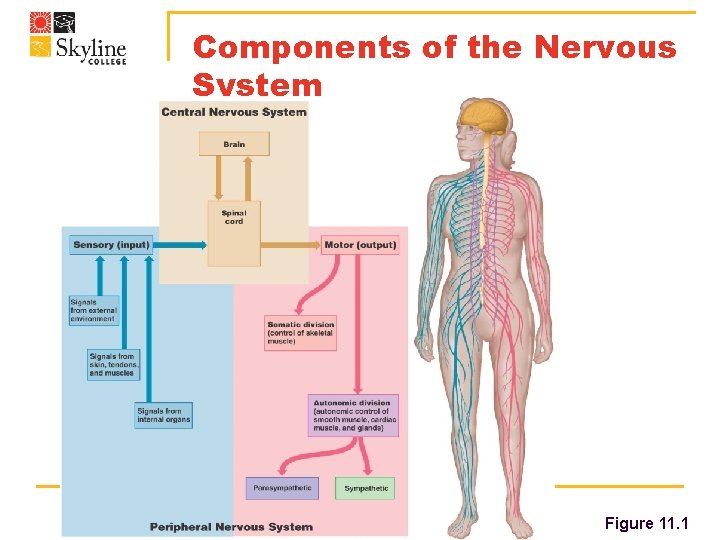
Components of the Nervous System Bio 130 Human Biology Figure 11. 1
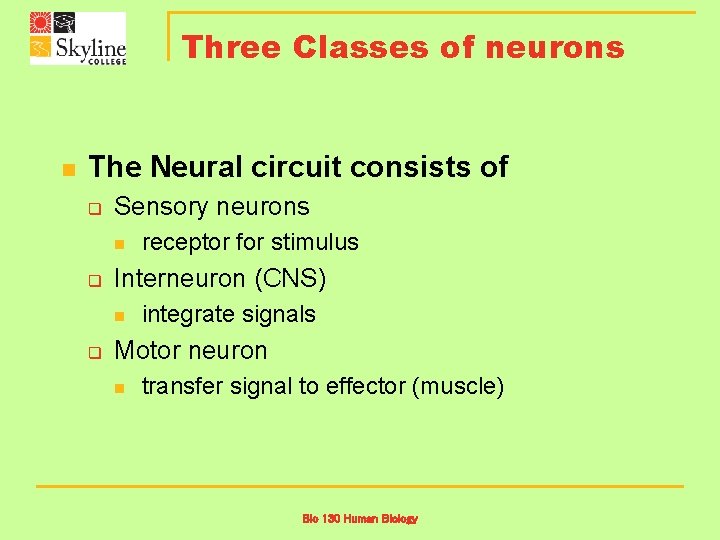
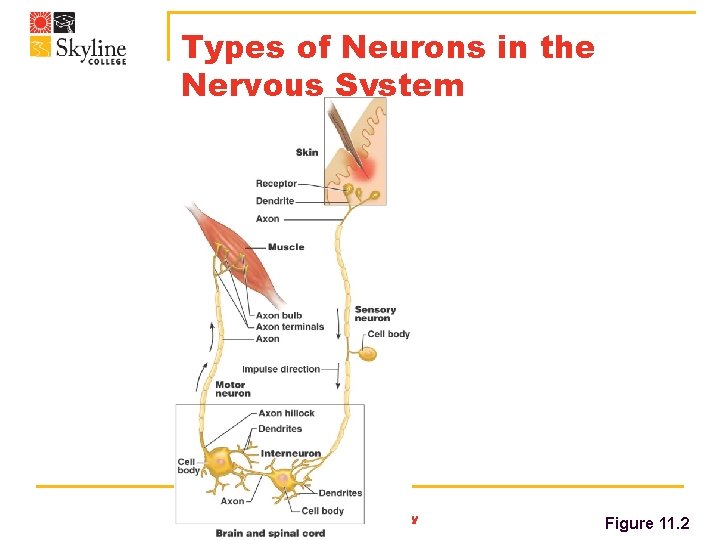
Three Classes of neurons n The Neural circuit consists of q Sensory neurons n q Interneuron (CNS) n q receptor for stimulus integrate signals Motor neuron n transfer signal to effector (muscle) Bio 130 Human Biology
Types of Neurons in the Nervous System Bio 130 Human Biology Figure 11. 2
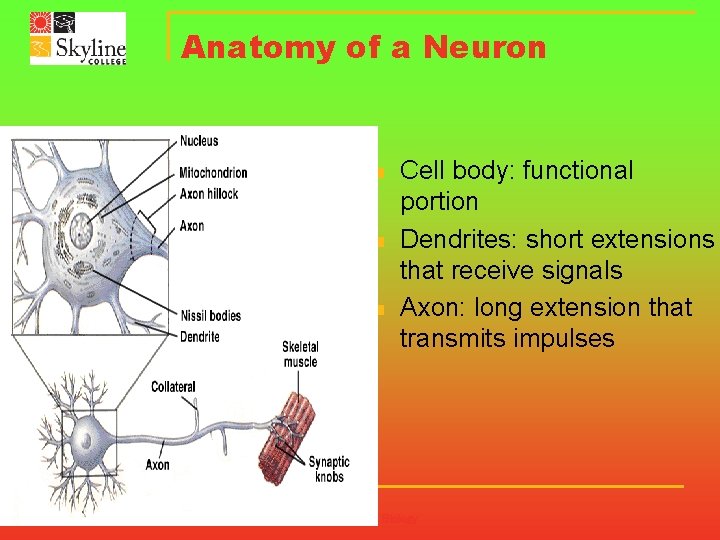
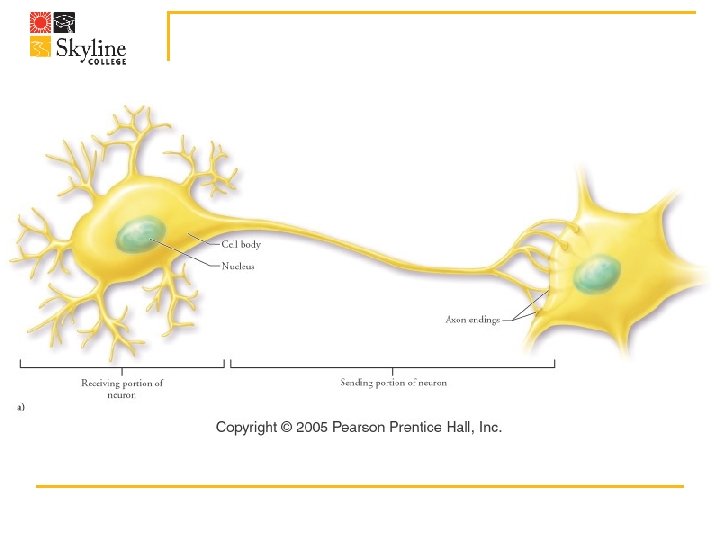
Anatomy of a Neuron n Cell body: functional portion Dendrites: short extensions that receive signals Axon: long extension that transmits impulses Bio 130 Human Biology
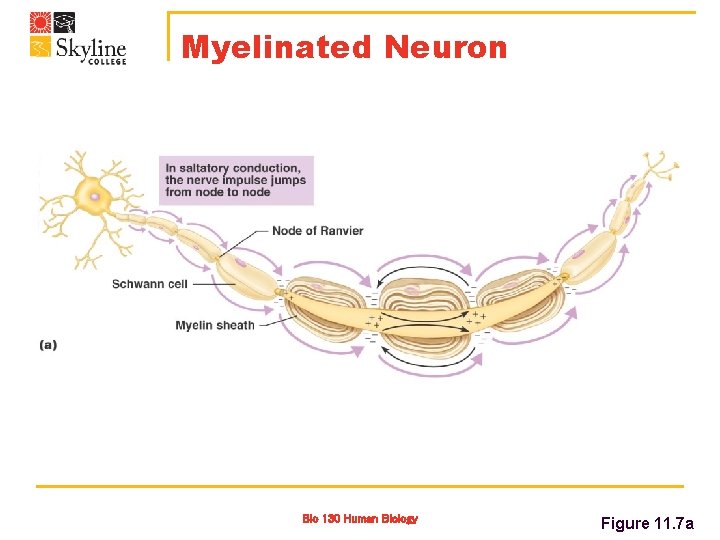
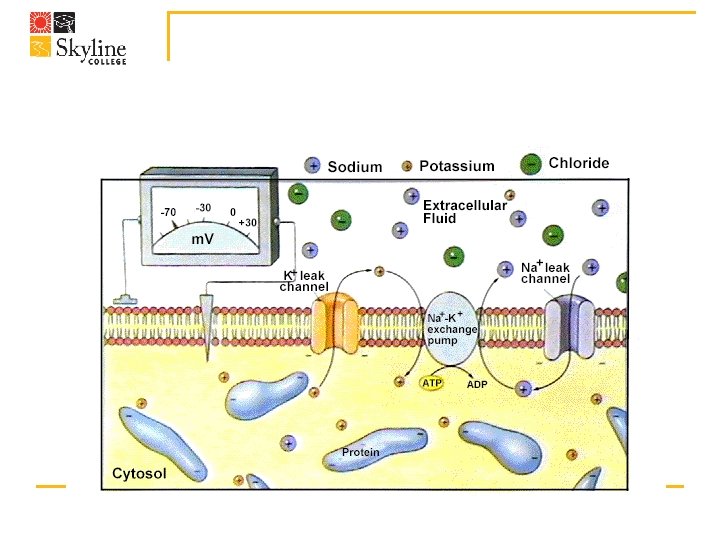
How does a neuron hold and move info? n n A neuron at rest has a voltage difference across the plasma membrane called a resting voltage potential An action potential (AP) is when this charge across the membrane is briefly switched The action potential moves down the membrane at a rapid pace. Ap can move faster over mylenated portions is called saltatory conduction Bio 130 Human Biology
Myelinated Neuron Bio 130 Human Biology Figure 11. 7 a
Bio 130 Human Biology
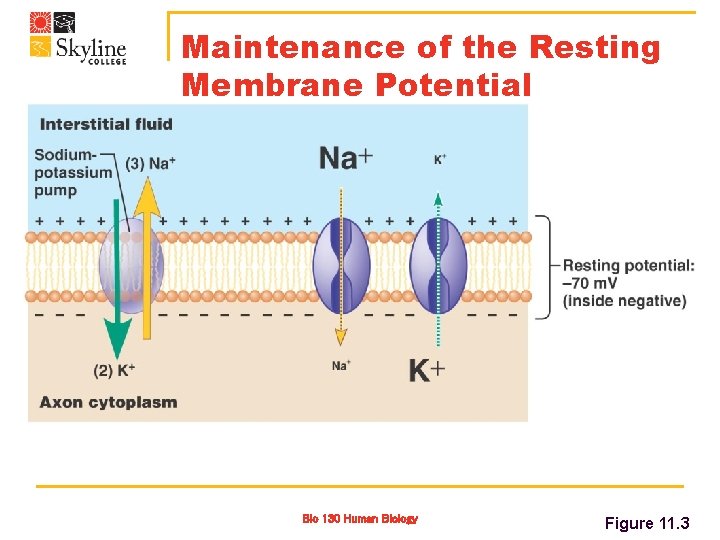
Maintenance of the Resting Membrane Potential Bio 130 Human Biology Figure 11. 3
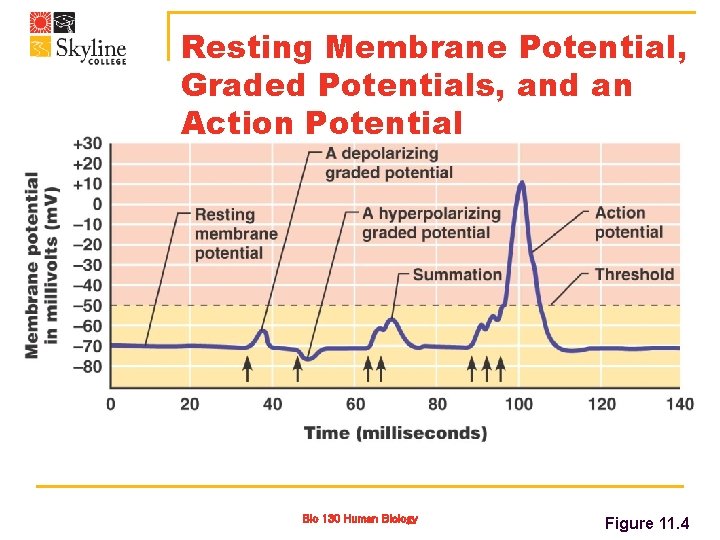
Resting Membrane Potential, Graded Potentials, and an Action Potential Bio 130 Human Biology Figure 11. 4
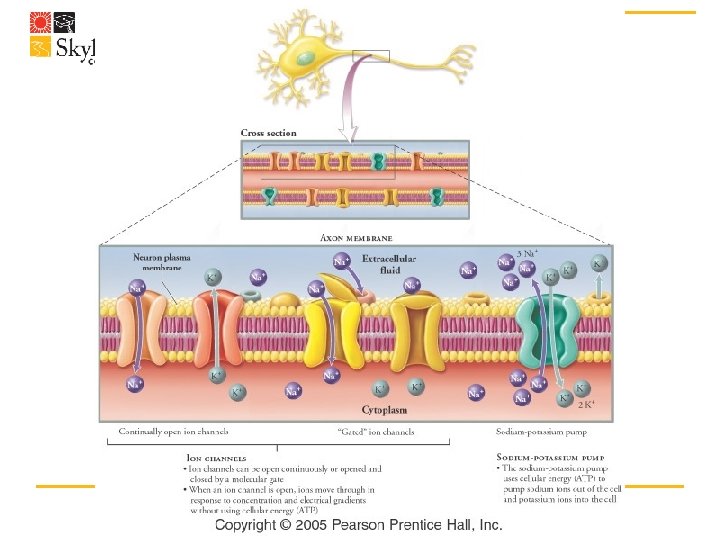
The Nerve Impulse Is a Bioelectrical Signal n n n The sodium-potassium pump uses ATP to transport sodium ions out and potassium ions in The inside of a resting neuron has a negative charge relative to the outside An action potential is a reversal and restoration of the charge difference across the membrane The sodium-potassium pump restores the original distribution of ions Action potentials are all-or-none events A neuron cannot fire during the refractory period Bio 130 Human Biology
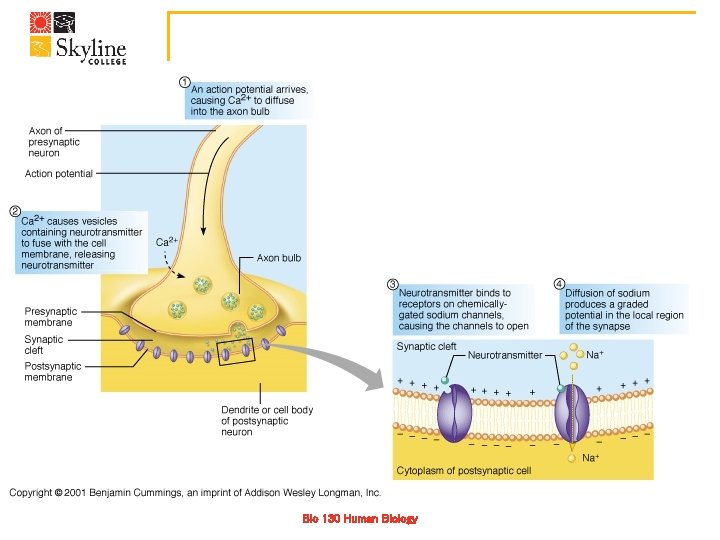
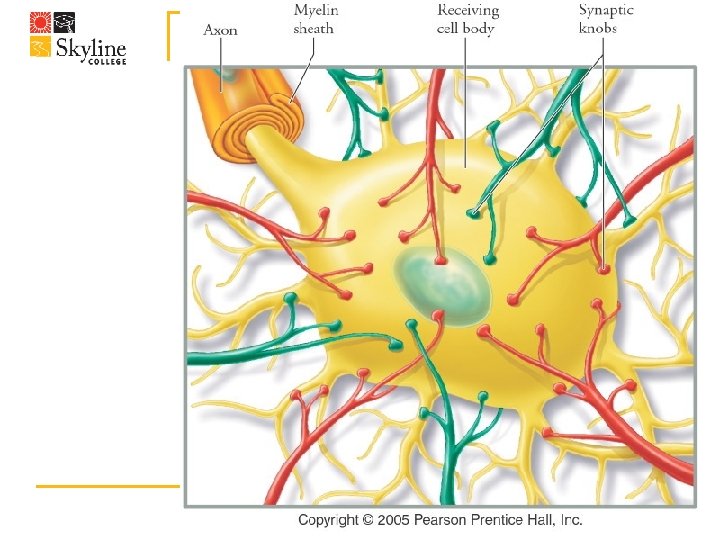
How does a signal move from one neuron to another? n n A synaptic cleft divides 2 neurons The AP will not move across the synaptic cleft Neuro transmitters are released by the signal cell to the receiver cell Move by diffusion Bio 130 Human Biology
Bio 130 Human Biology
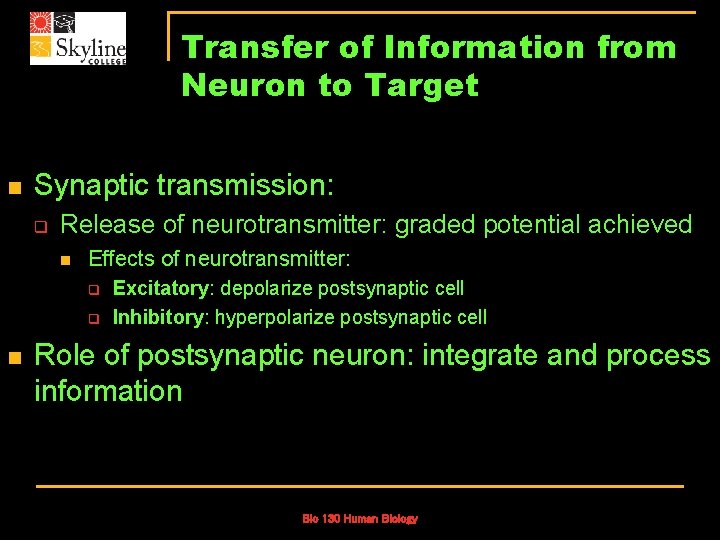
Transfer of Information from Neuron to Target n Synaptic transmission: q Release of neurotransmitter: graded potential achieved n Effects of neurotransmitter: q q n Excitatory: depolarize postsynaptic cell Inhibitory: hyperpolarize postsynaptic cell Role of postsynaptic neuron: integrate and process information Bio 130 Human Biology
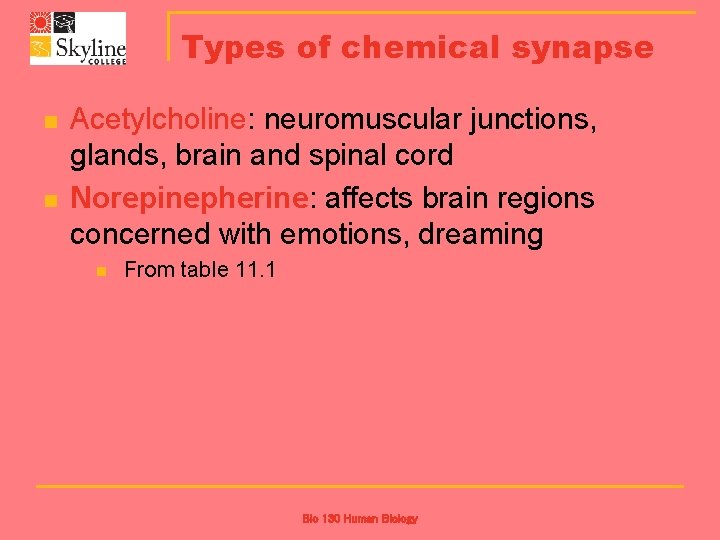
Types of chemical synapse n n Acetylcholine: neuromuscular junctions, glands, brain and spinal cord Norepinepherine: affects brain regions concerned with emotions, dreaming n From table 11. 1 Bio 130 Human Biology
The nervous System Bio 130 Human Biology
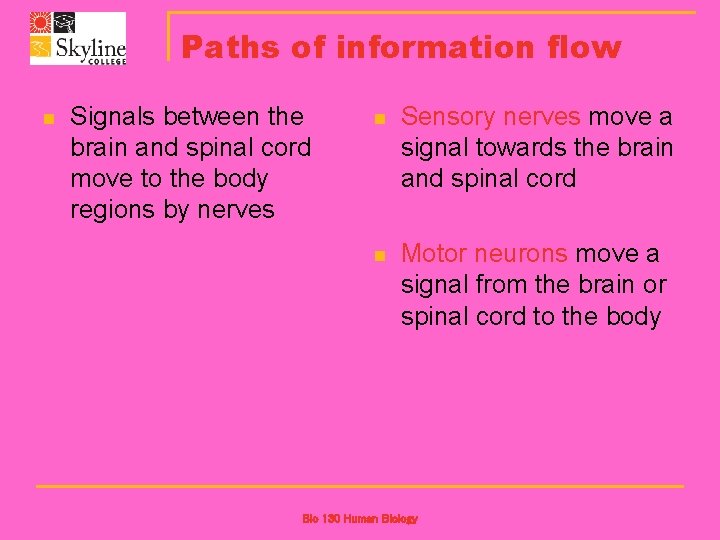
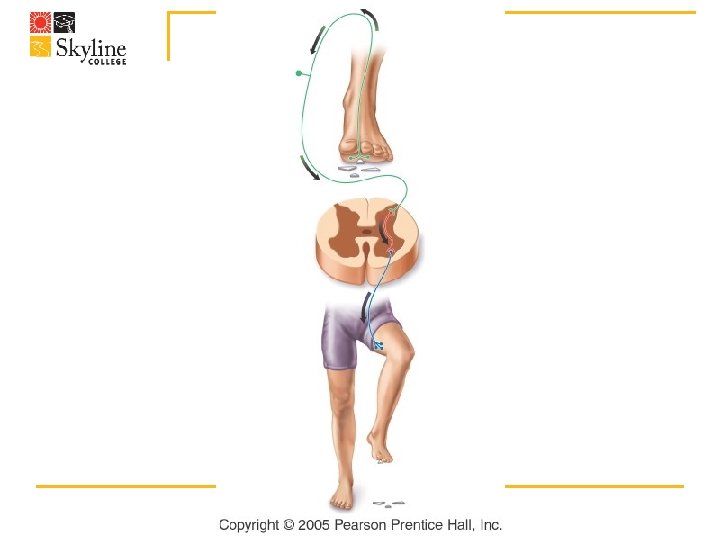
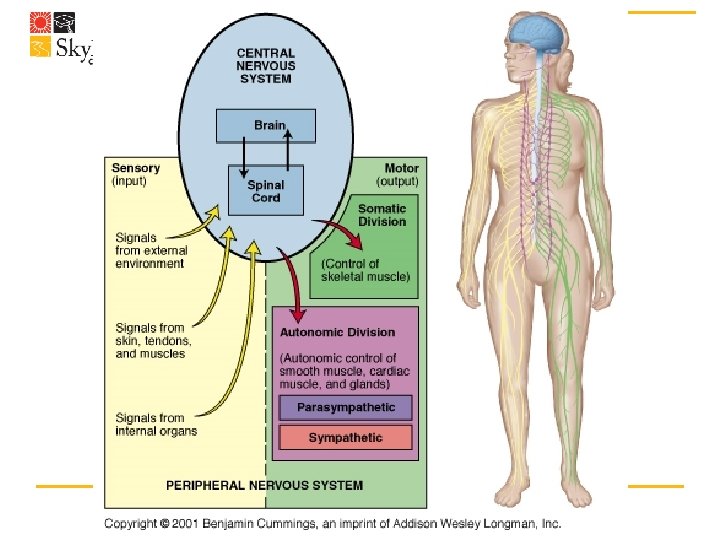
Paths of information flow n Signals between the brain and spinal cord move to the body regions by nerves n Sensory nerves move a signal towards the brain and spinal cord n Motor neurons move a signal from the brain or spinal cord to the body Bio 130 Human Biology
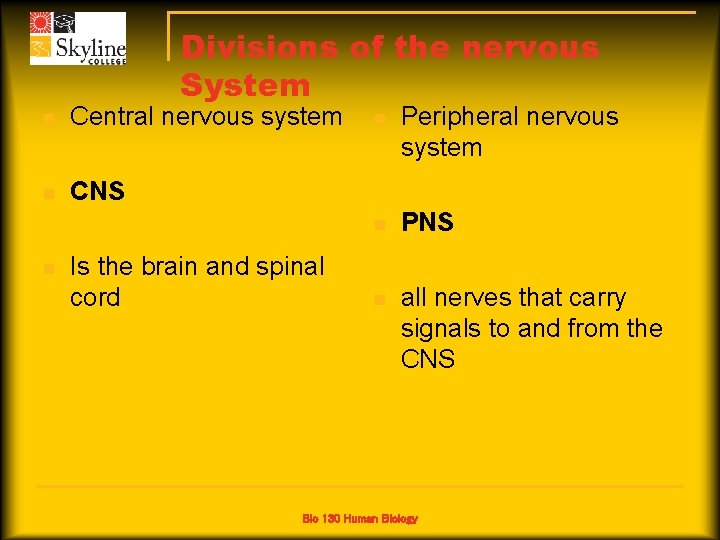
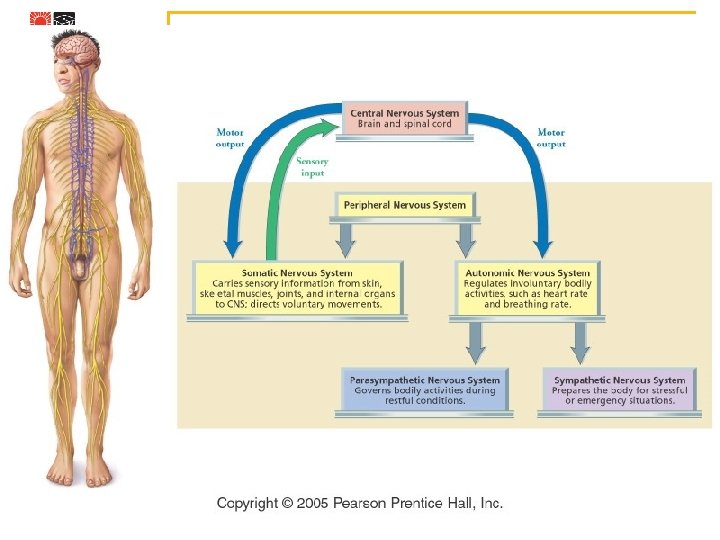
Divisions of the nervous System n Central nervous system n CNS n Is the brain and spinal cord n Peripheral nervous system n PNS n all nerves that carry signals to and from the CNS Bio 130 Human Biology
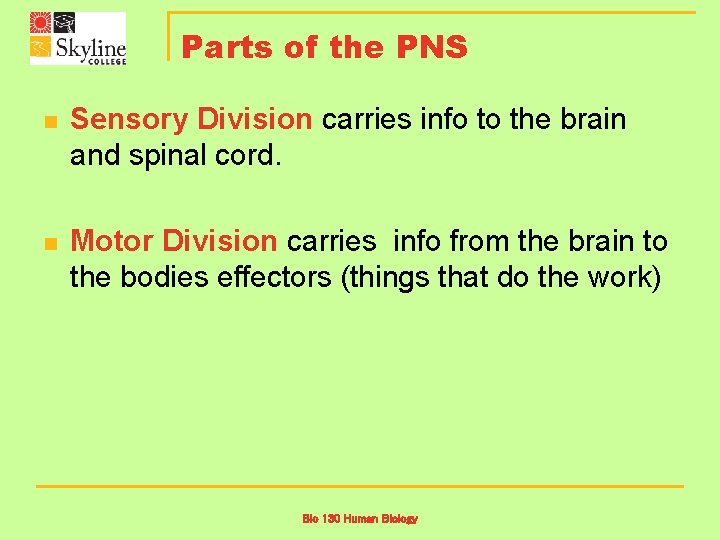
Parts of the PNS n Sensory Division carries info to the brain and spinal cord. n Motor Division carries info from the brain to the bodies effectors (things that do the work) Bio 130 Human Biology
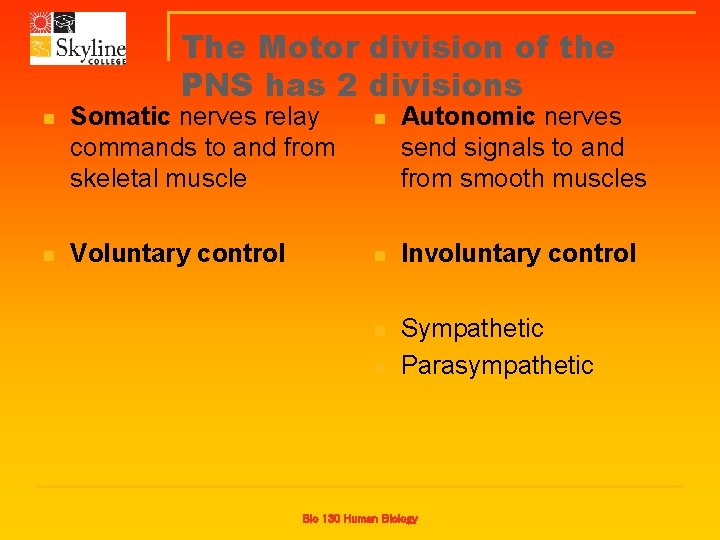
The Motor division of the PNS has 2 divisions n Somatic nerves relay commands to and from skeletal muscle n Autonomic nerves send signals to and from smooth muscles n Voluntary control n Involuntary control n Sympathetic Parasympathetic n Bio 130 Human Biology
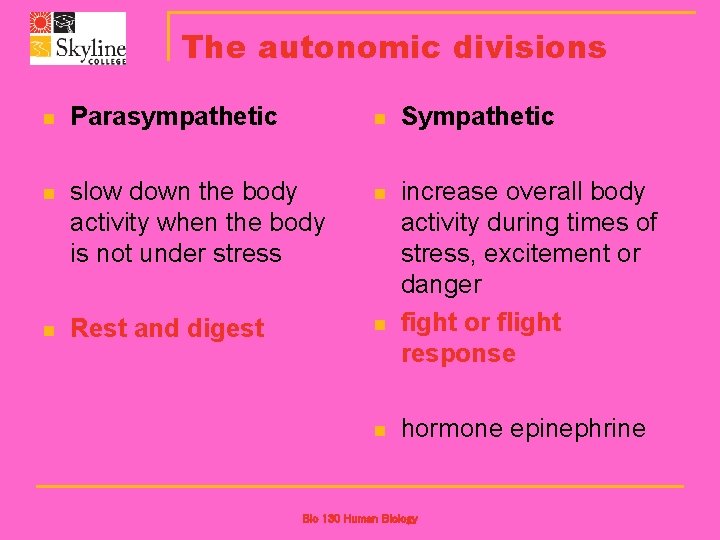
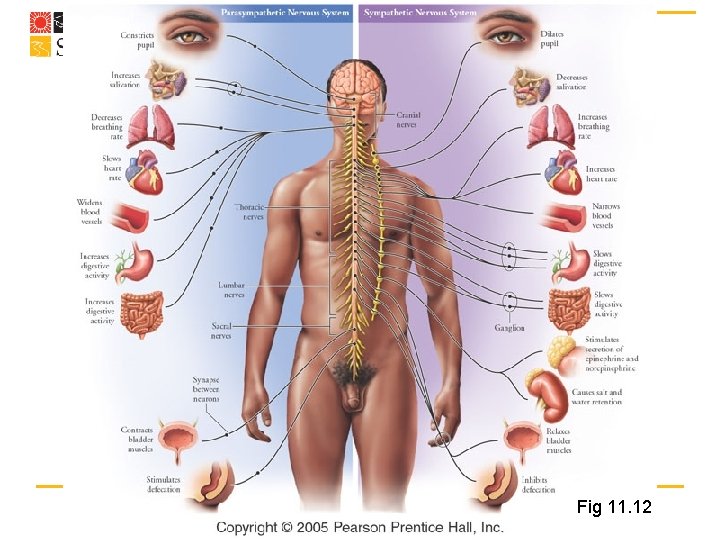
The autonomic divisions n Parasympathetic n Sympathetic n slow down the body activity when the body is not under stress n n Rest and digest n increase overall body activity during times of stress, excitement or danger fight or flight response n hormone epinephrine Bio 130 Human Biology
Fig 11. 12
Sympathetic and Parasympathetic n n Are Antagonistic Work towards the automatic, subconscious maintenance of homeostasis. Bio 130 Human Biology
Bio 130 Human Biology
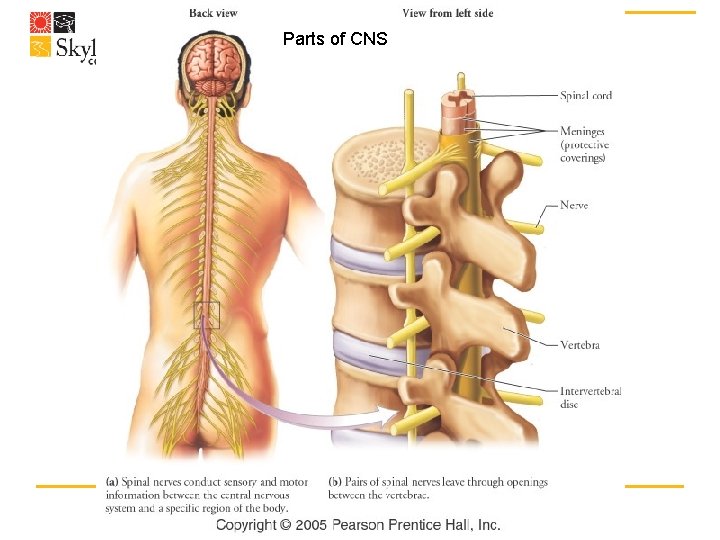
Parts of CNS
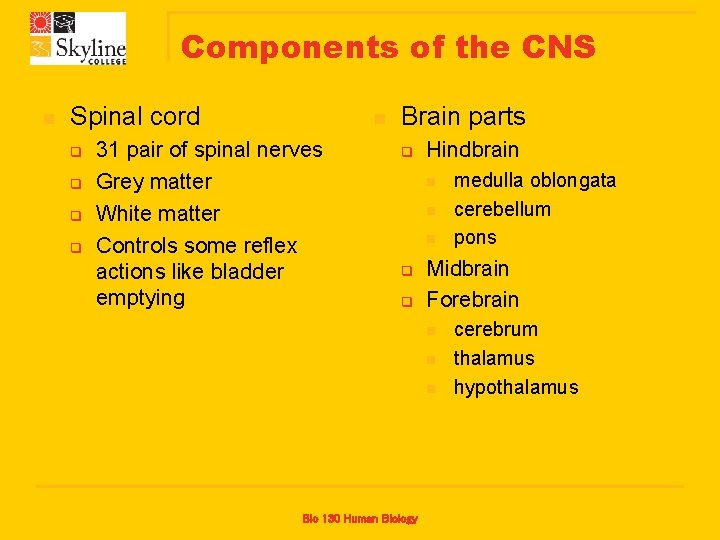
Components of the CNS n Spinal cord q q n 31 pair of spinal nerves Grey matter White matter Controls some reflex actions like bladder emptying Brain parts q Hindbrain n q q Midbrain Forebrain n Bio 130 Human Biology medulla oblongata cerebellum pons cerebrum thalamus hypothalamus
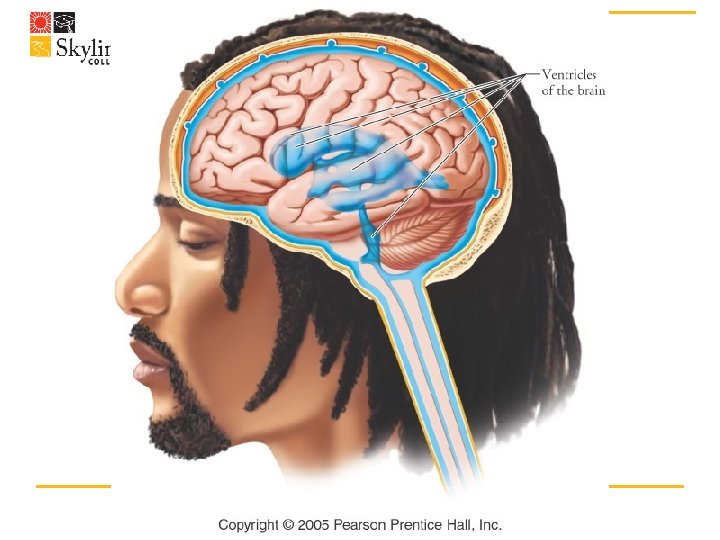
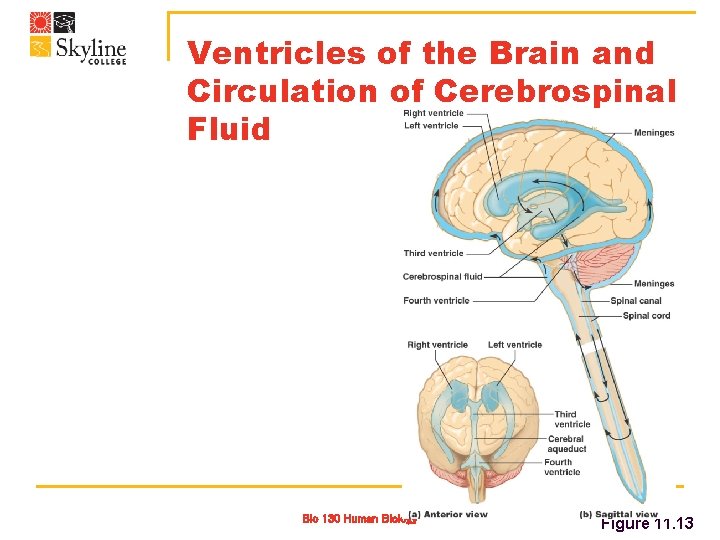
Ventricles of the Brain and Circulation of Cerebrospinal Fluid Bio 130 Human Biology Figure 11. 13
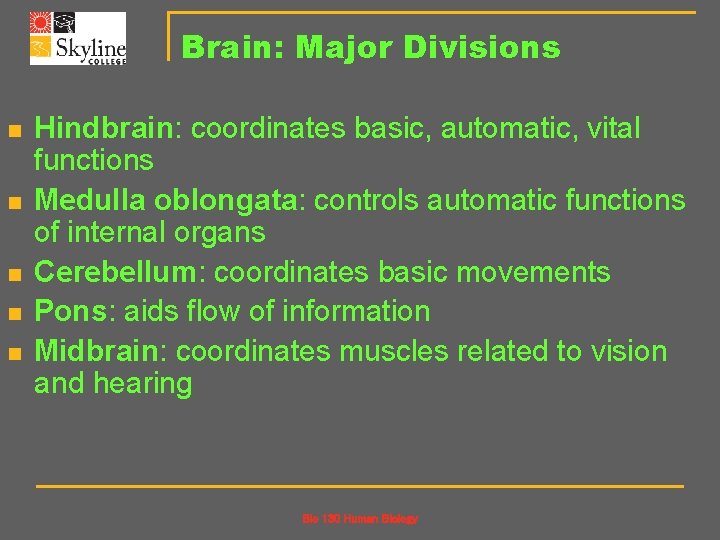
Brain: Major Divisions n n n Hindbrain: coordinates basic, automatic, vital functions Medulla oblongata: controls automatic functions of internal organs Cerebellum: coordinates basic movements Pons: aids flow of information Midbrain: coordinates muscles related to vision and hearing Bio 130 Human Biology
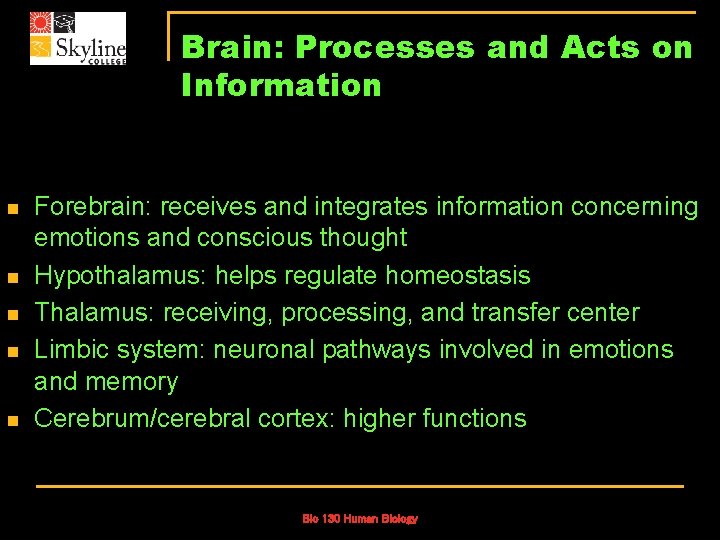
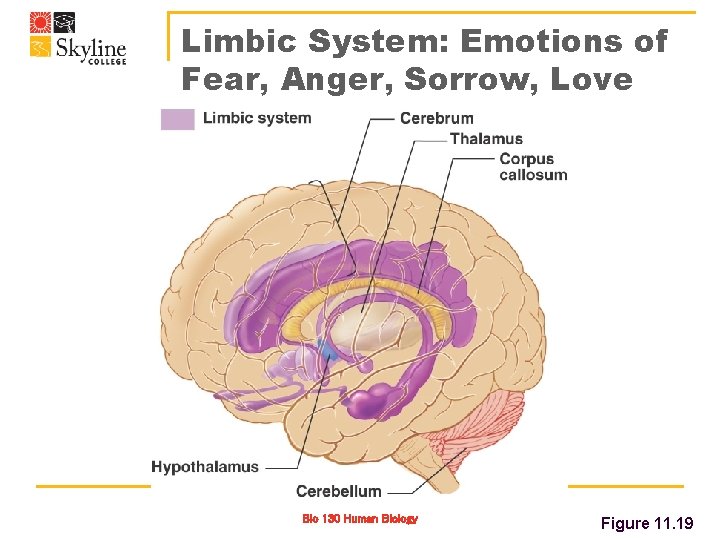
Brain: Processes and Acts on Information n n Forebrain: receives and integrates information concerning emotions and conscious thought Hypothalamus: helps regulate homeostasis Thalamus: receiving, processing, and transfer center Limbic system: neuronal pathways involved in emotions and memory Cerebrum/cerebral cortex: higher functions Bio 130 Human Biology
Sleep n n Sleep center: reticular activating system (RAS) Stages: based on electroencephalograms (EEGs): q q Stage 1: transitional, random small waves on EEG Stage 2: skeletal muscles relax, little eye or body movement, EEG shows sleep spindles Bio 130 Human Biology
Sleep (cont. ) n n n Stage 3: heart and respiration slower, EEG shows slow wave sleep Stage 4: difficult to awaken, heart and respiration slowest, body temperature decreased REM (rapid eye movement) sleep: dreaming, EEG same as awake Bio 130 Human Biology
Limbic System: Emotions of Fear, Anger, Sorrow, Love Bio 130 Human Biology Figure 11. 19
Memory: Storing and Retrieving Information n Short term: working memory, information from previous few hours n Long term: information from previous days to years Bio 130 Human Biology
Other parts of the CNS n The two cerebral hemispheres communicate through the corpus collosum q q n left verbal skills right nonverbal skills such as music math, abstract Brain cavities and Canals q q cerebrospinal fluid surrounds and fills in cavities in the brain Blood Brain barrier- controls what moves into the brain. Will prevent infections. Bio 130 Human Biology
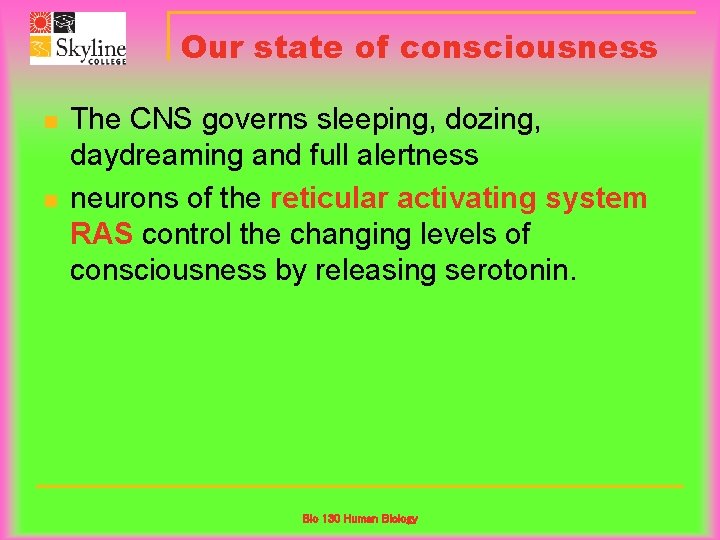
Our state of consciousness n n The CNS governs sleeping, dozing, daydreaming and full alertness neurons of the reticular activating system RAS control the changing levels of consciousness by releasing serotonin. Bio 130 Human Biology
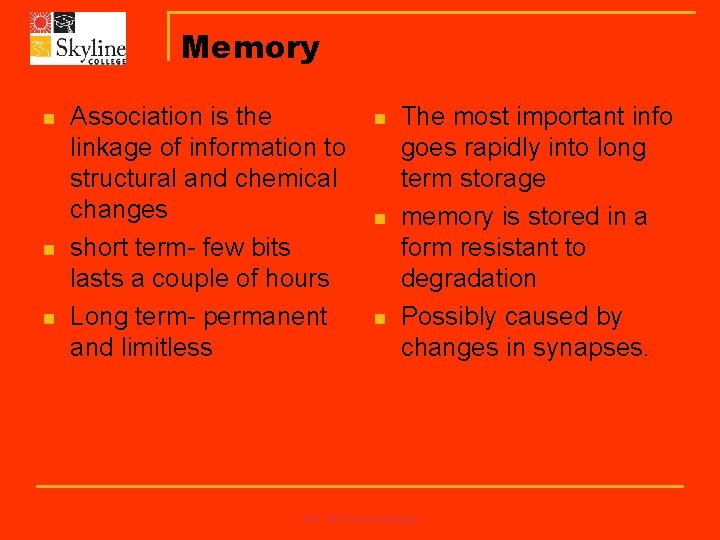
Memory n n n Association is the linkage of information to structural and chemical changes short term- few bits lasts a couple of hours Long term- permanent and limitless n n n The most important info goes rapidly into long term storage memory is stored in a form resistant to degradation Possibly caused by changes in synapses. Bio 130 Human Biology
Tips on studying n n n Concentrate on what you study. Minimize interference. Study takes time. Break material into smaller portions. Rephrase materials in your own words. Test yourself to see what you know. Bio 130 Human Biology
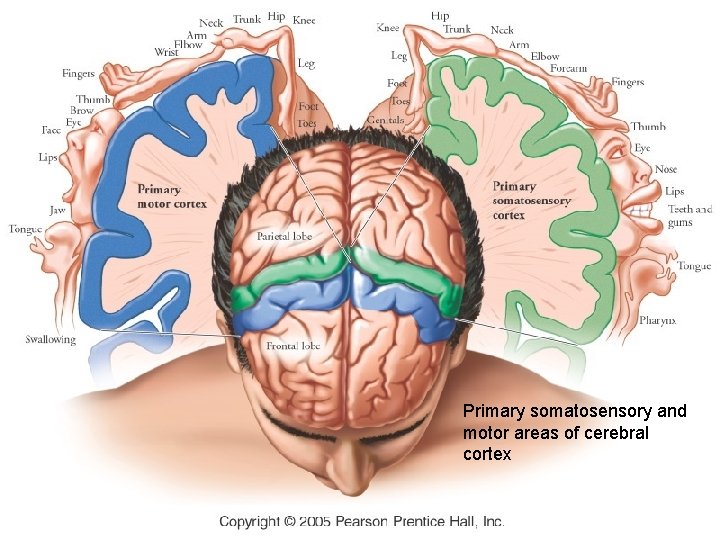
Primary somatosensory and motor areas of cerebral cortex
Disorders of the nervous system n n n n Trauma Infections Transmission and synaptic defects. Abnormal growth Headache Tumors Stroke Bio 130 Human Biology
Psychoactive Drugs n n n Action: affects higher brain functions Psychological dependence: user craves the feeling associated with the drug Tolerance: takes more of the substance to achieve the same affect Addiction: the need to continue obtaining and using a substance; no free choice Withdrawal: physical symptoms that occur upon stopping the drug Bio 130 Human Biology
Know what the parts of the brain do n Brain parts n n n medulla oblongata cerebellum pons cerebrum thalamus hypothalamus Bio 130 Human Biology
Bio 130 Human Biology
Bio 130 Human Biology
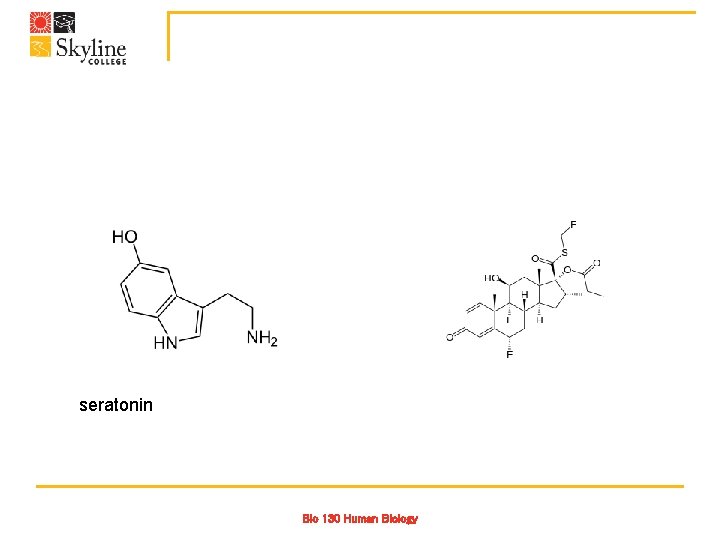
seratonin Bio 130 Human Biology
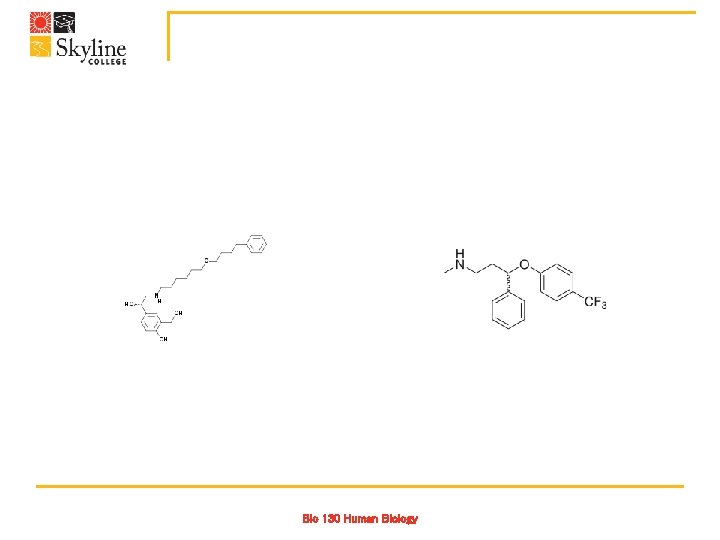
n Just a reminder to talk about drugs that interact with brain. Bio 130 Human Biology