
The Nervous System Sends messages quickly but they
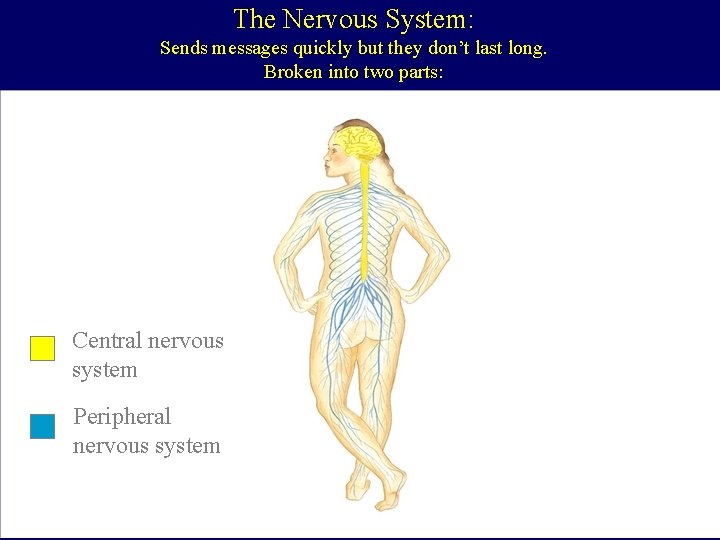
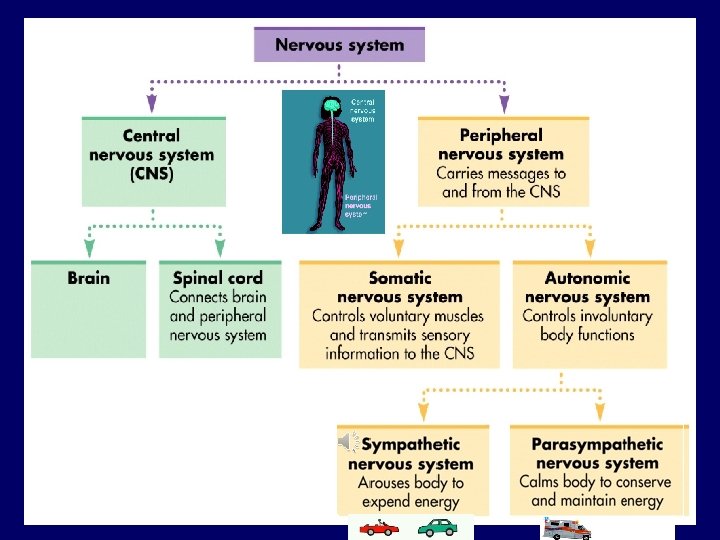
The Nervous System: Sends messages quickly but they don’t last long. Broken into two parts: Central nervous system Peripheral nervous system
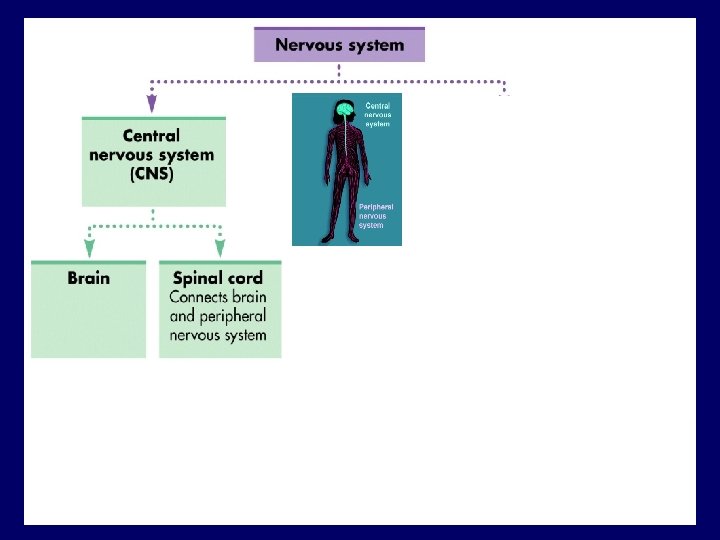
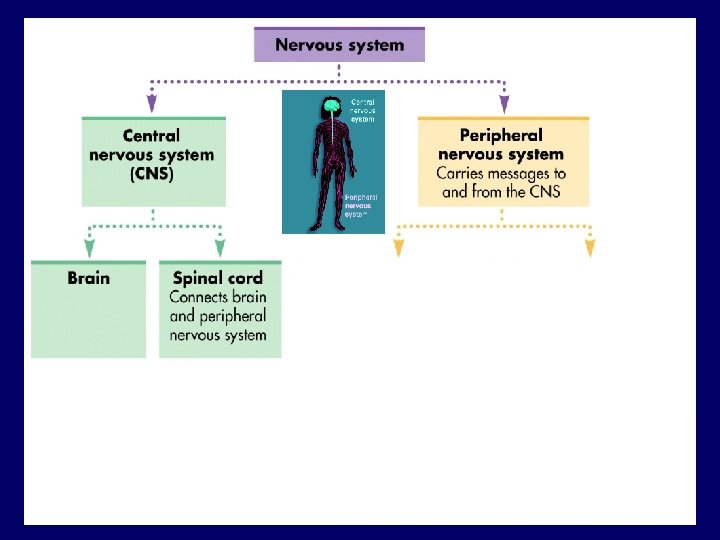
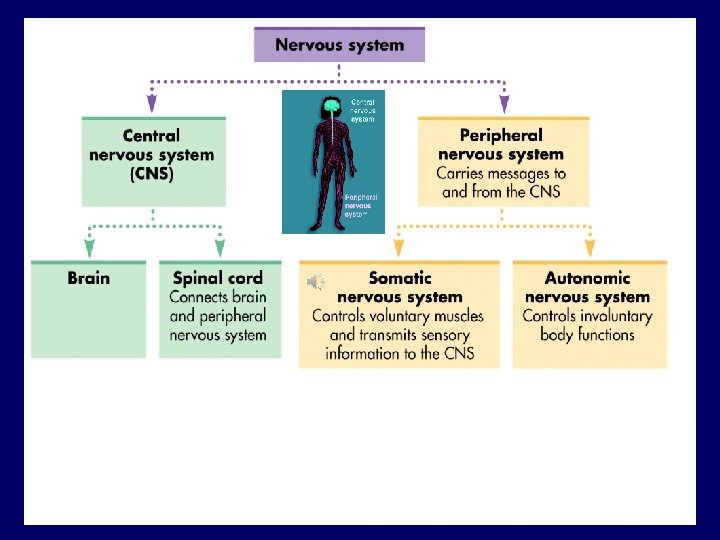
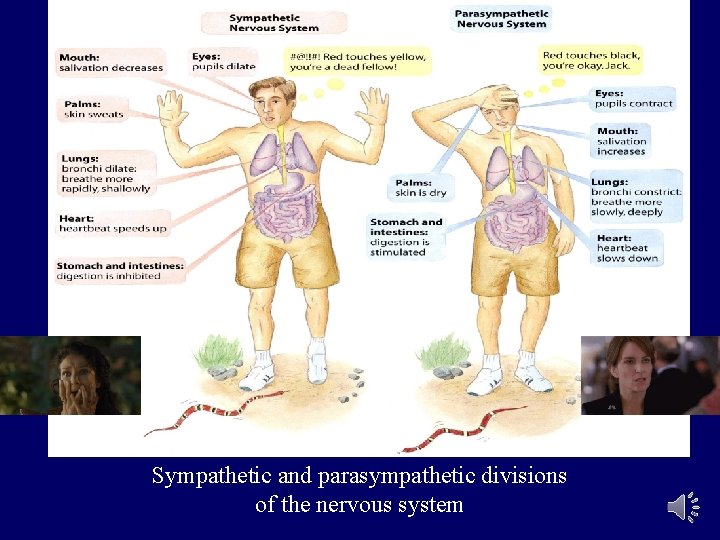
Sympathetic and parasympathetic divisions of the nervous system
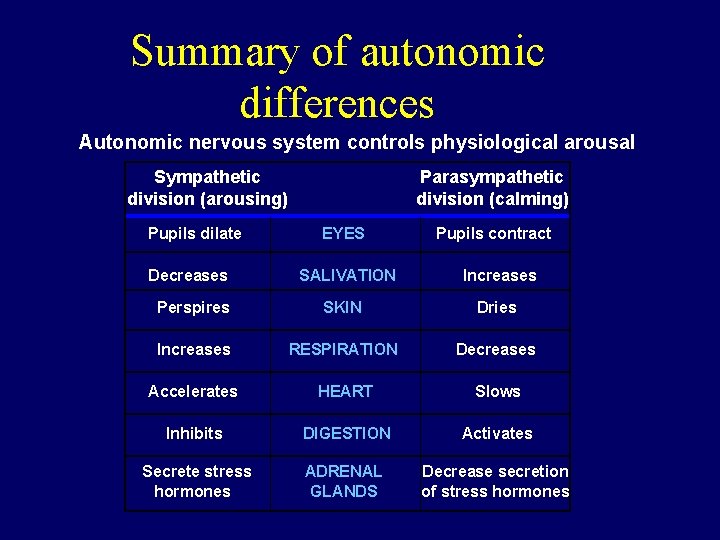
Summary of autonomic differences Autonomic nervous system controls physiological arousal Sympathetic division (arousing) Pupils dilate Decreases Parasympathetic division (calming) EYES SALIVATION Pupils contract Increases Perspires SKIN Dries Increases RESPIRATION Decreases Accelerates HEART Slows Inhibits DIGESTION Activates Secrete stress hormones ADRENAL GLANDS Decrease secretion of stress hormones
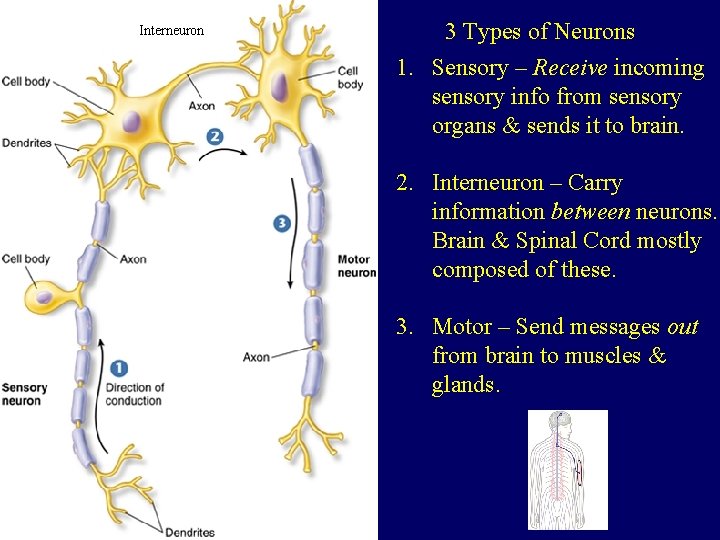
Interneuron 3 Types of Neurons 1. Sensory – Receive incoming sensory info from sensory organs & sends it to brain. 2. Interneuron – Carry information between neurons. Brain & Spinal Cord mostly composed of these. 3. Motor – Send messages out from brain to muscles & glands.
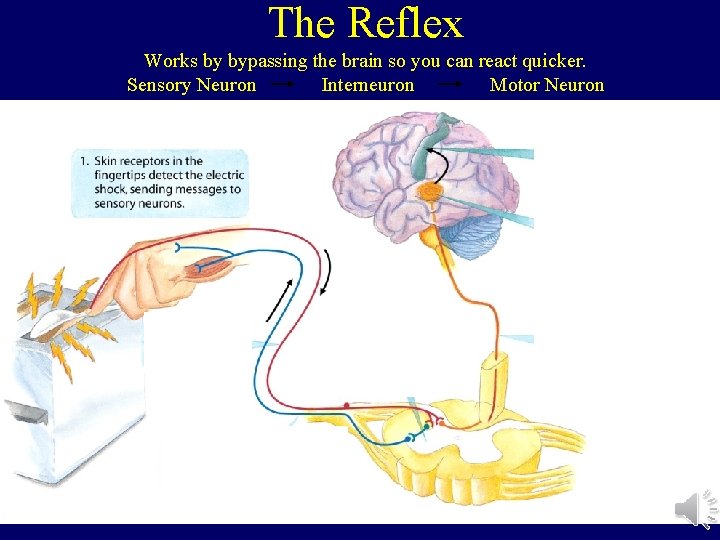
The Reflex Works by bypassing the brain so you can react quicker. Sensory Neuron Interneuron Motor Neuron
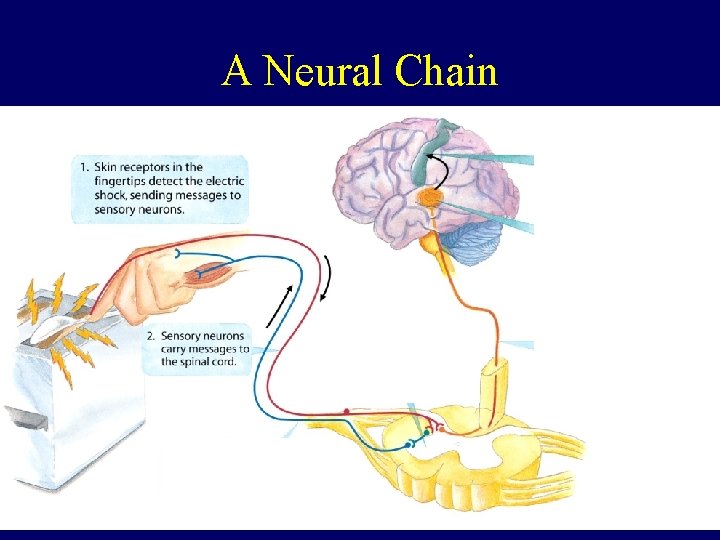
A Neural Chain
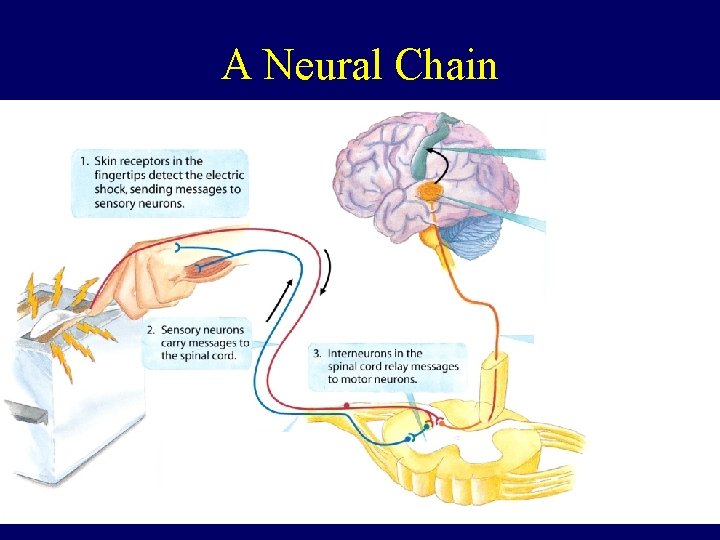
A Neural Chain
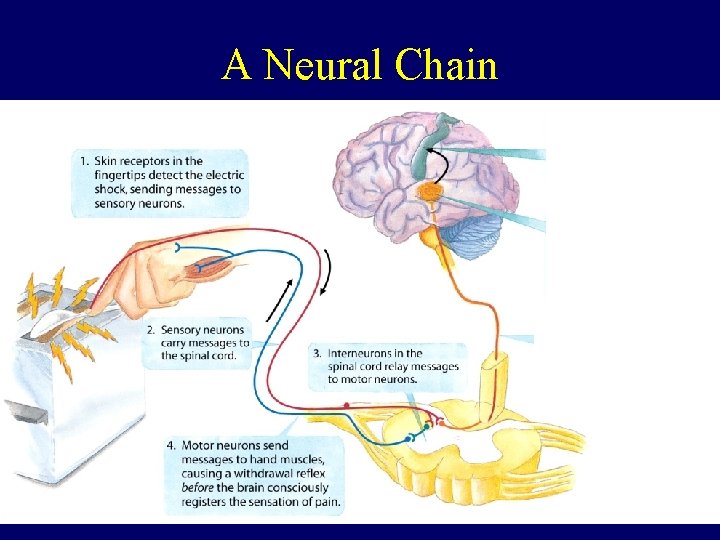
A Neural Chain
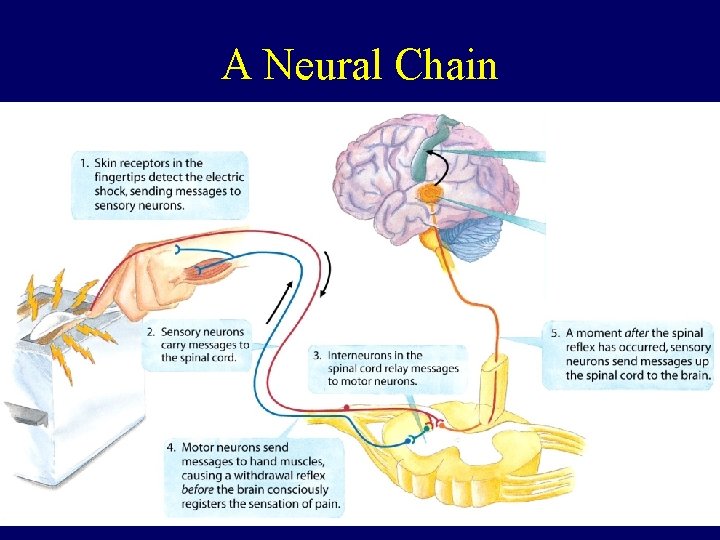
A Neural Chain

A Neural Chain
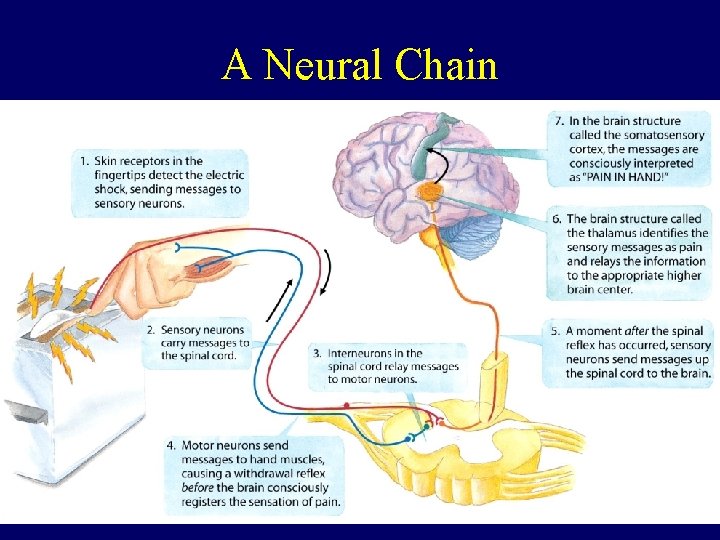
A Neural Chain
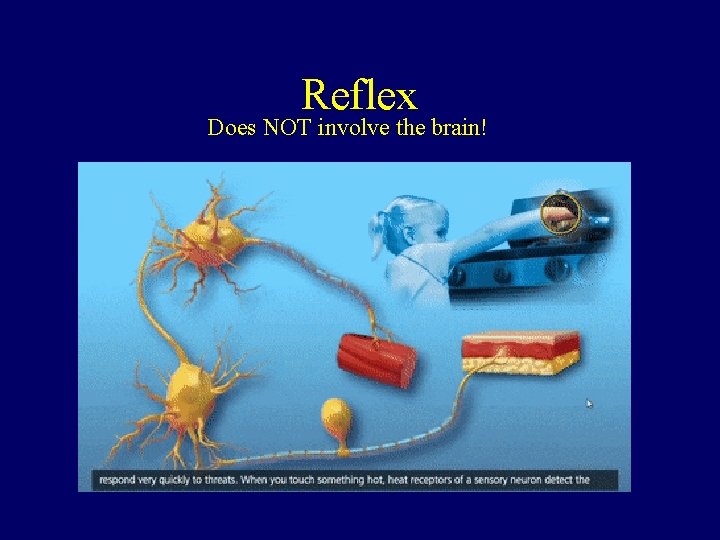
Reflex Does NOT involve the brain!
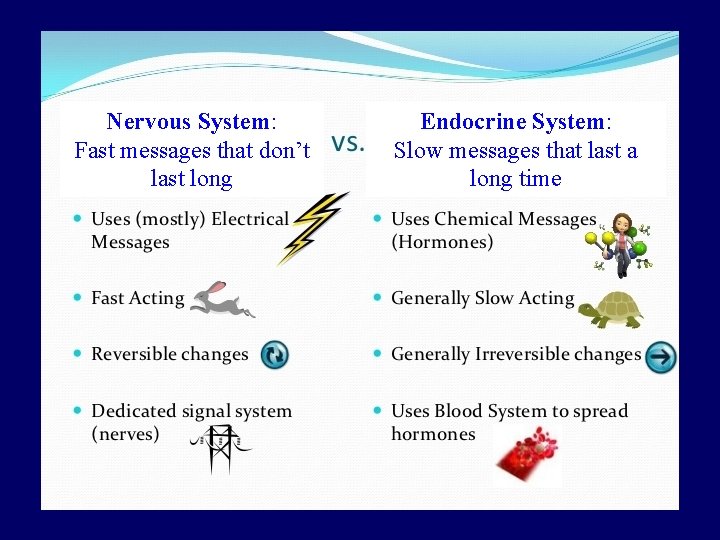
Nervous System: Fast messages that don’t last long Endocrine System: Slow messages that last a long time
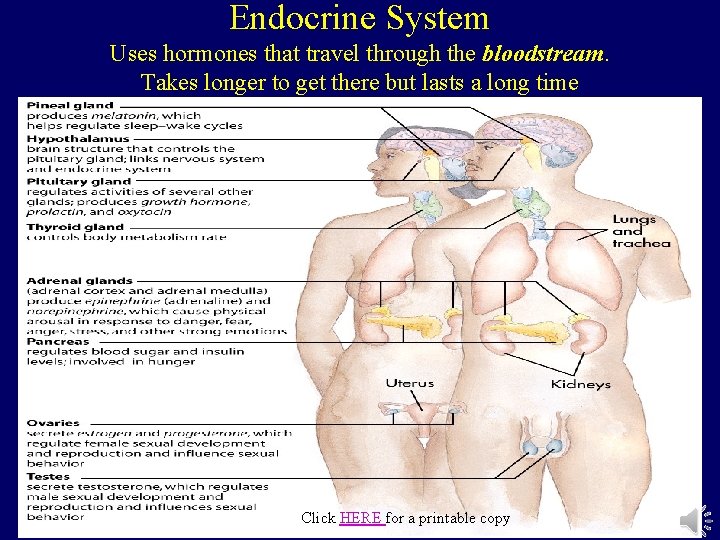
Endocrine System Uses hormones that travel through the bloodstream. Takes longer to get there but lasts a long time Click HERE for a printable copy
- Slides: 18