
The Nervous System Part IIThe Brain I Central
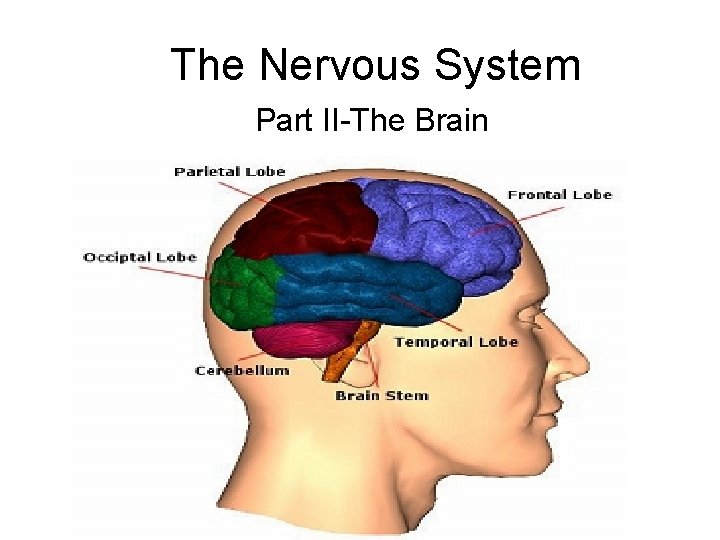
The Nervous System Part II-The Brain

I. Central Nervous System: The Brain • Cerebrum – Largest part – Sensory & motor functions – Higher mental functions (memory, reasoning, etc) • Brainstem – Connects the cerebrum to the spinal cord • Cerebellum – Coordinates voluntary muscle movements • Diencephalon – Processes sensory info
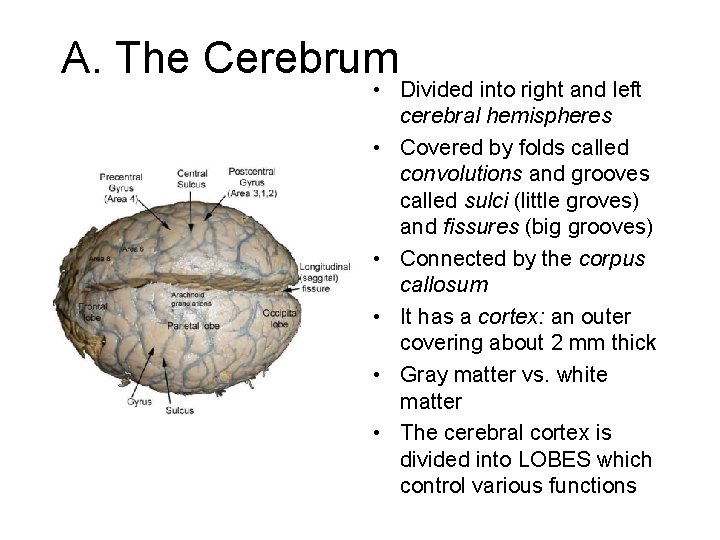
A. The Cerebrum • Divided into right and left cerebral hemispheres • Covered by folds called convolutions and grooves called sulci (little groves) and fissures (big grooves) • Connected by the corpus callosum • It has a cortex: an outer covering about 2 mm thick • Gray matter vs. white matter • The cerebral cortex is divided into LOBES which control various functions
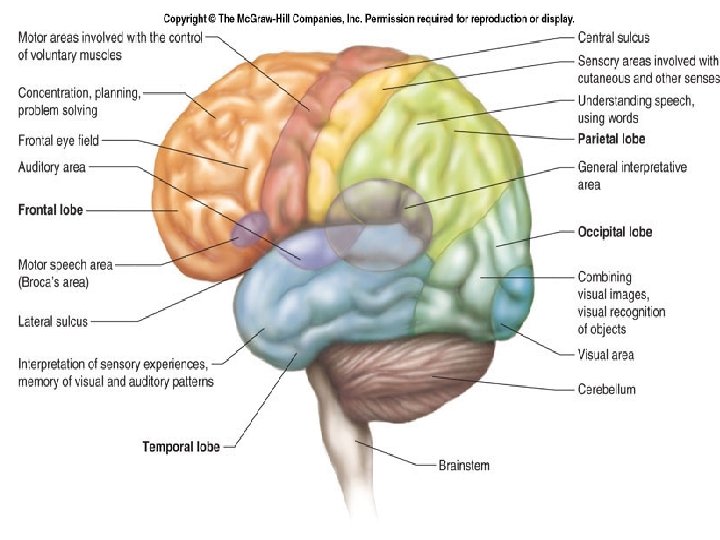

1. Frontal Lobe (Brain 1 handout) – – – Control of voluntary muscles in the body Motor speech (Broca’s area) Voluntary eye movement Concentration, planning, problem solving Rational thought, intelligence
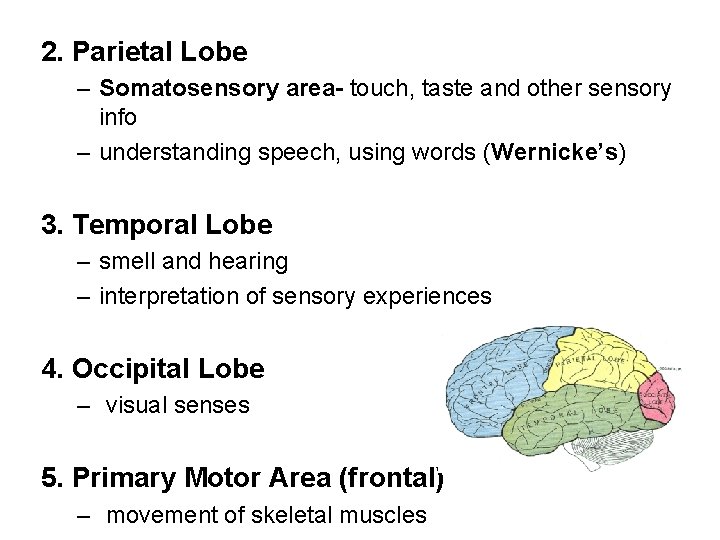
2. Parietal Lobe – Somatosensory area- touch, taste and other sensory info – understanding speech, using words (Wernicke’s) 3. Temporal Lobe – smell and hearing – interpretation of sensory experiences 4. Occipital Lobe – visual senses 5. Primary Motor Area (frontal) – movement of skeletal muscles
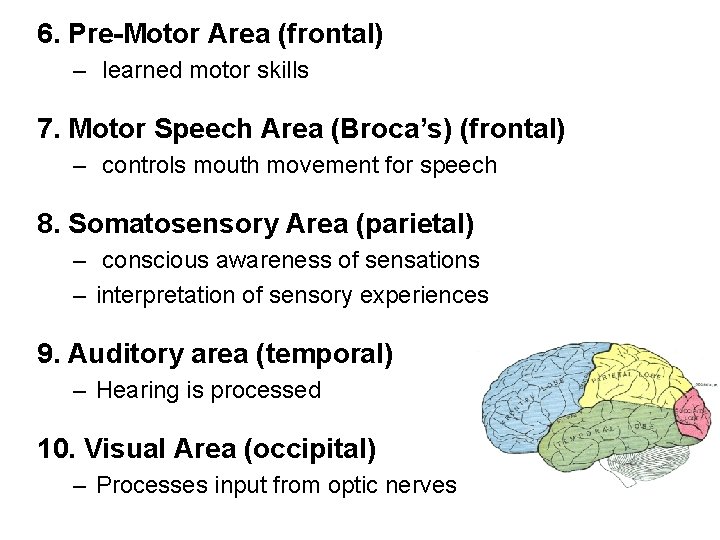
6. Pre-Motor Area (frontal) – learned motor skills 7. Motor Speech Area (Broca’s) (frontal) – controls mouth movement for speech 8. Somatosensory Area (parietal) – conscious awareness of sensations – interpretation of sensory experiences 9. Auditory area (temporal) – Hearing is processed 10. Visual Area (occipital) – Processes input from optic nerves
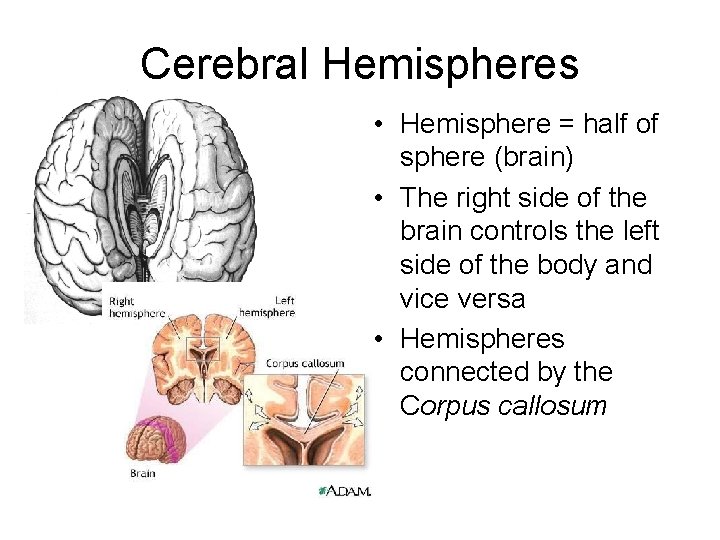
Cerebral Hemispheres • Hemisphere = half of sphere (brain) • The right side of the brain controls the left side of the body and vice versa • Hemispheres connected by the Corpus callosum
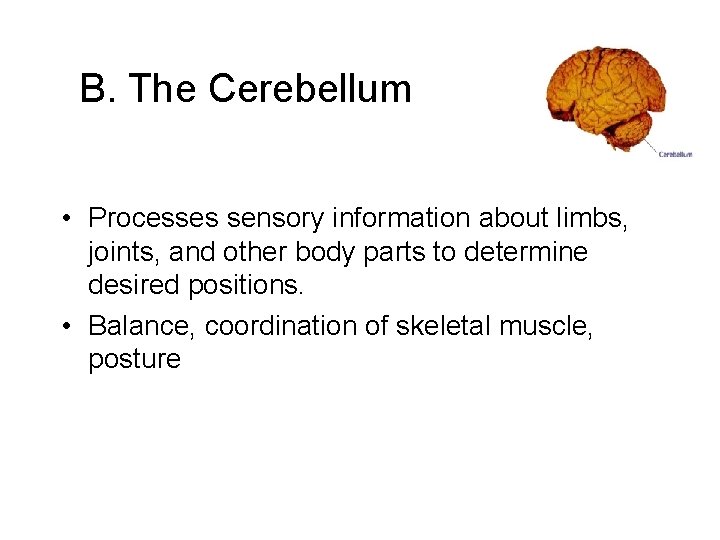
B. The Cerebellum • Processes sensory information about limbs, joints, and other body parts to determine desired positions. • Balance, coordination of skeletal muscle, posture
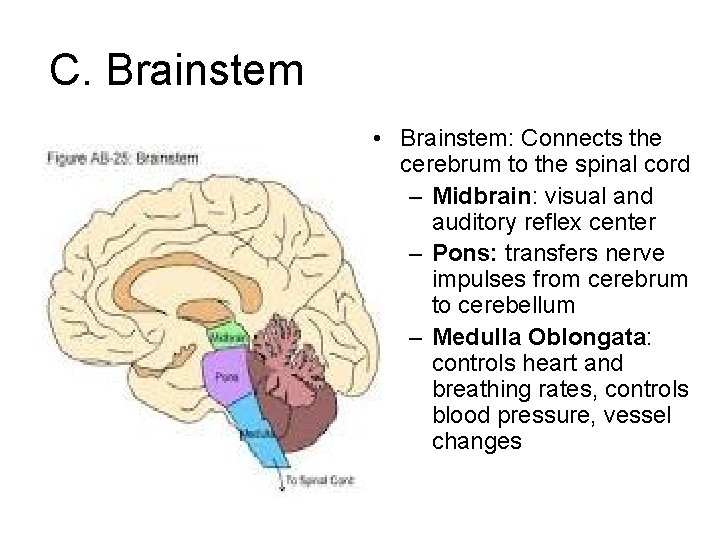
C. Brainstem • Brainstem: Connects the cerebrum to the spinal cord – Midbrain: visual and auditory reflex center – Pons: transfers nerve impulses from cerebrum to cerebellum – Medulla Oblongata: controls heart and breathing rates, controls blood pressure, vessel changes
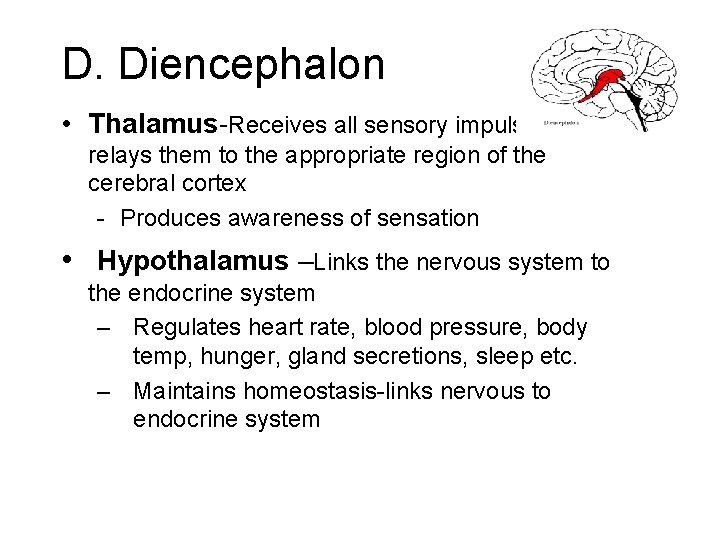
D. Diencephalon • Thalamus-Receives all sensory impulses and relays them to the appropriate region of the cerebral cortex - Produces awareness of sensation • Hypothalamus –Links the nervous system to the endocrine system – Regulates heart rate, blood pressure, body temp, hunger, gland secretions, sleep etc. – Maintains homeostasis-links nervous to endocrine system
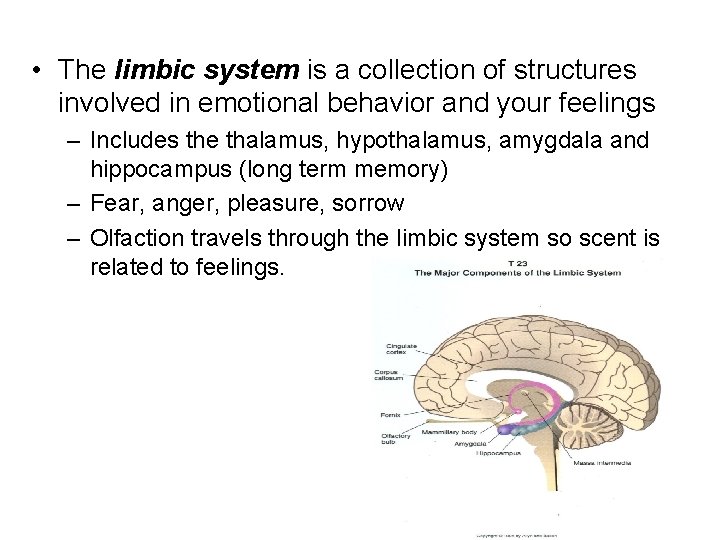
• The limbic system is a collection of structures involved in emotional behavior and your feelings – Includes the thalamus, hypothalamus, amygdala and hippocampus (long term memory) – Fear, anger, pleasure, sorrow – Olfaction travels through the limbic system so scent is related to feelings.
II. Neurotransmitters A. Excitatory neurotransmitters 1. Increase postsynaptic membrane permeability to Na+ 2. Threshold is reached for message to be sent B. Inhibitory neurotransmitters 1. Decrease permeability to Na+ 2. Decreases chance nerve impulse will occur.
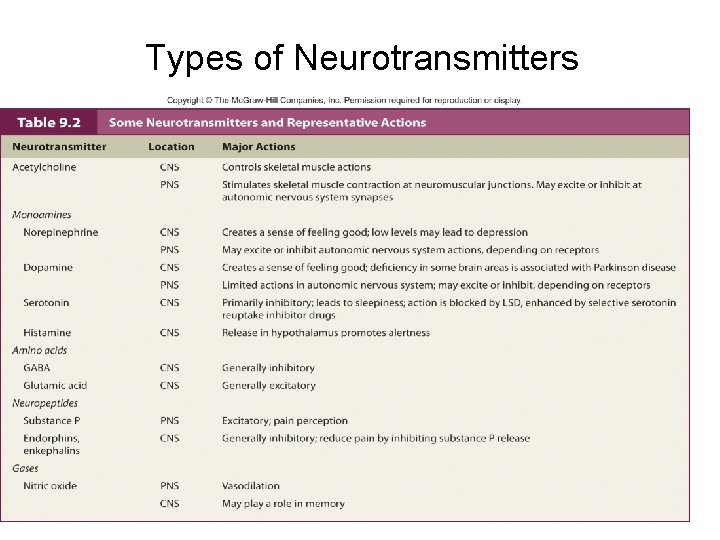
Types of Neurotransmitters
Pathways: Brain uses Neurotransmitters • The Brain Reward Pathway • Beyond Reward
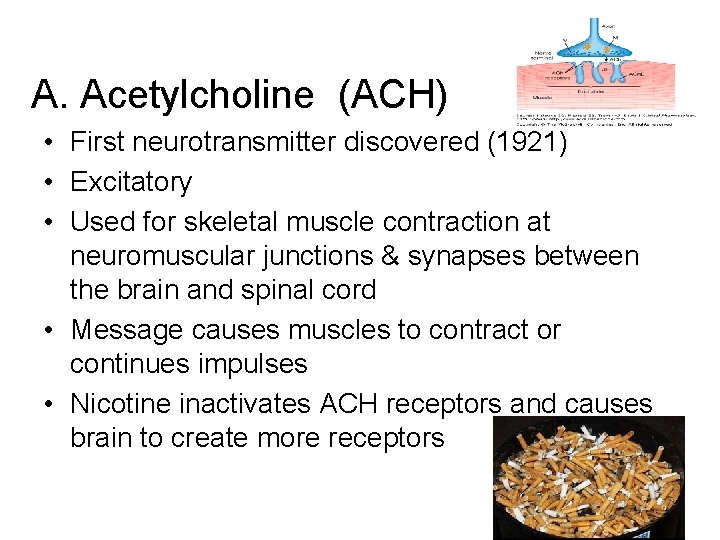
A. Acetylcholine (ACH) • First neurotransmitter discovered (1921) • Excitatory • Used for skeletal muscle contraction at neuromuscular junctions & synapses between the brain and spinal cord • Message causes muscles to contract or continues impulses • Nicotine inactivates ACH receptors and causes brain to create more receptors
B. Serotonin • Found in the brain, released by regions in the brainstem but effect entire brain. • Sleep, mood, pain and temperature regulation • Antidepressants (Prozac, Zoloft, Paxil, etc) work by allowing serotonin to accumulate in the synapse, – “SSRI’s” or Selective Serotonin Reuptake Inhibitors – feel more content • LSD mimics serotonin, and MDMA (aka: ecstasy) releases excess serotonin
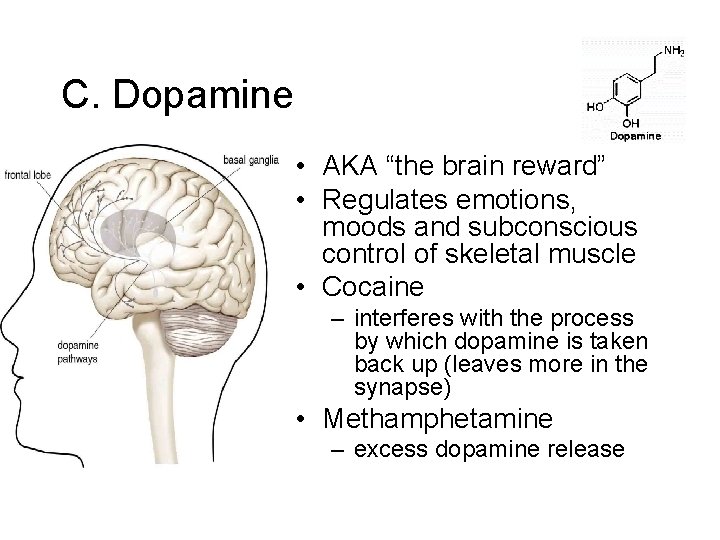
C. Dopamine • AKA “the brain reward” • Regulates emotions, moods and subconscious control of skeletal muscle • Cocaine – interferes with the process by which dopamine is taken back up (leaves more in the synapse) • Methamphetamine – excess dopamine release
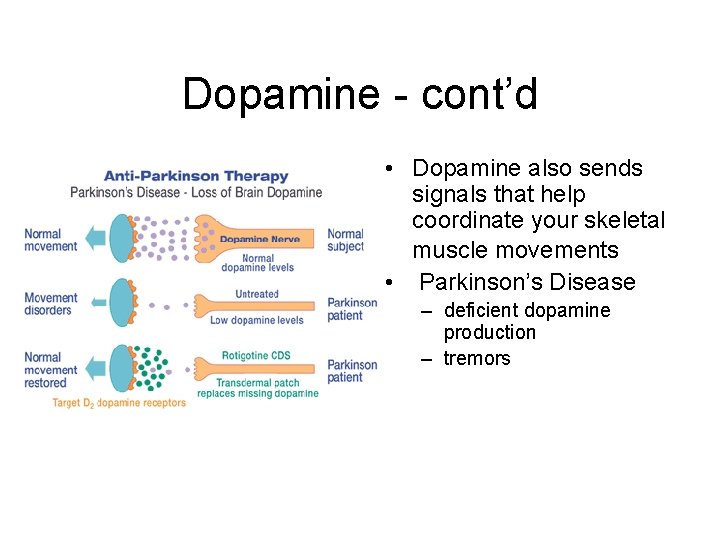
Dopamine - cont’d • Dopamine also sends signals that help coordinate your skeletal muscle movements • Parkinson’s Disease – deficient dopamine production – tremors
D. Endorphins • Flood the synaptic cleft during pain or stress – Usually inhibit neurons from firing, causing an analgesic effect – At lower levels can excite the next neuron • Reduces pain and makes one feel good • “Opiates” (heroin, codeine, morphine, oxycodone, hydrocodone, etc) – bind to endorphin receptors and mimic endorphins
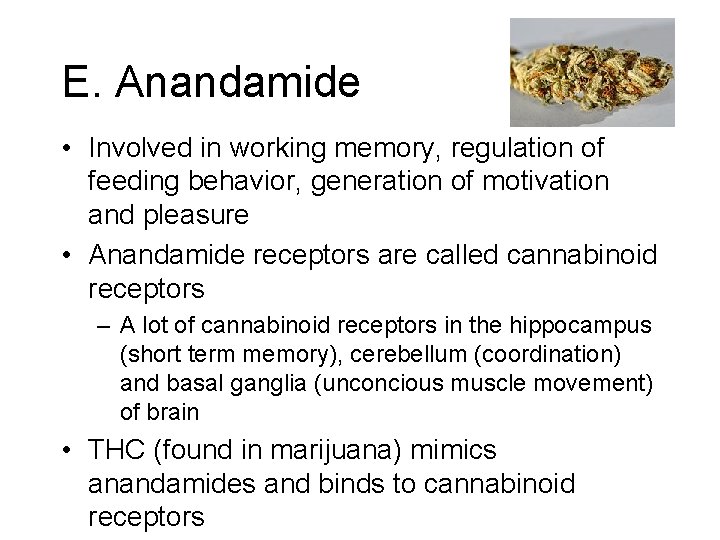
E. Anandamide • Involved in working memory, regulation of feeding behavior, generation of motivation and pleasure • Anandamide receptors are called cannabinoid receptors – A lot of cannabinoid receptors in the hippocampus (short term memory), cerebellum (coordination) and basal ganglia (unconcious muscle movement) of brain • THC (found in marijuana) mimics anandamides and binds to cannabinoid receptors
- Slides: 21