
The nervous system Nervous coordination To survive all
- Slides: 33
The nervous system
Nervous co-ordination • To survive, all organisms need to be able to sense changes in their environment and to control their responses to these changes. • The nervous system and the endocrine system are important communication systems that co-ordinate, intergrade and carry out the activity of body cells, tissues, organs and the organism. • They maintain a constant internal balance, while reacting to the changes that occur in both the external and internal environment
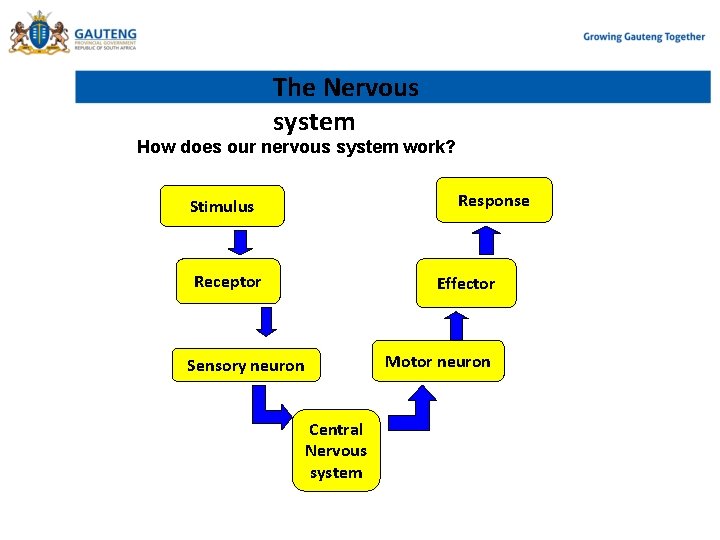
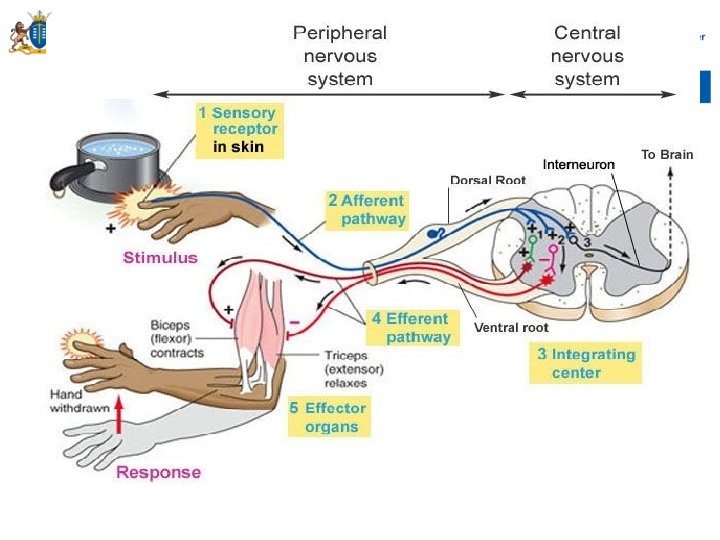
The Nervous system How does our nervous system work? Response Stimulus Receptor Effector Motor neuron Sensory neuron Central Nervous system
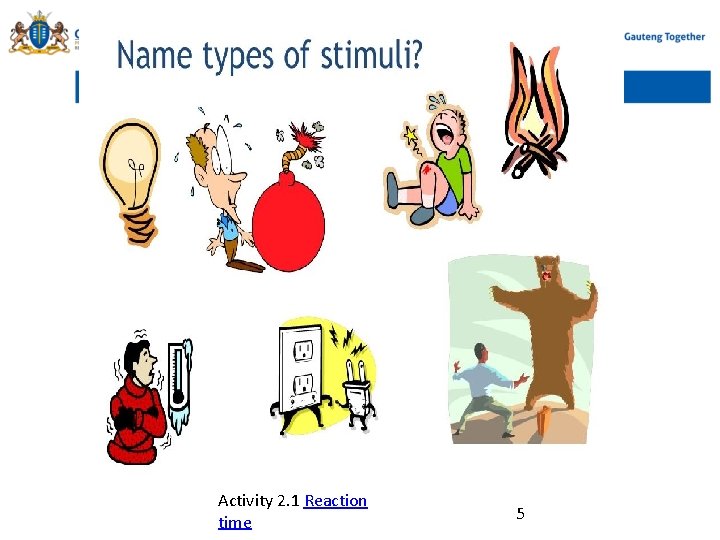
Reaction to stimuli in the environment • The nervous system and sense organs play an important part in picking up stimuli, gathering information and responding quickly to changes from both the external and internal environment to maintain a constant state • The nervous system in vertebrates performs five main functions 1. Gathers information using the senses 2. Transmits information to processing areas of the brain 3. Processes information 4. Formulates responses to stimuli 5. Sends information back through the network of effector organs to execute the response 4
Activity 2. 1 Reaction time 5
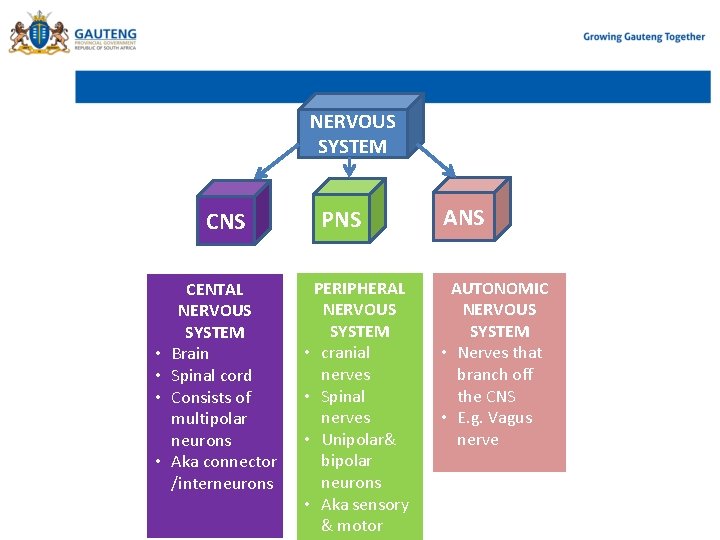
NERVOUS SYSTEM CNS • • CENTAL NERVOUS SYSTEM Brain Spinal cord Consists of multipolar neurons Aka connector /interneurons PNS PERIPHERAL NERVOUS SYSTEM • cranial nerves • Spinal nerves • Unipolar& bipolar neurons • Aka sensory & motor ANS AUTONOMIC NERVOUS SYSTEM • Nerves that branch off the CNS • E. g. Vagus nerve
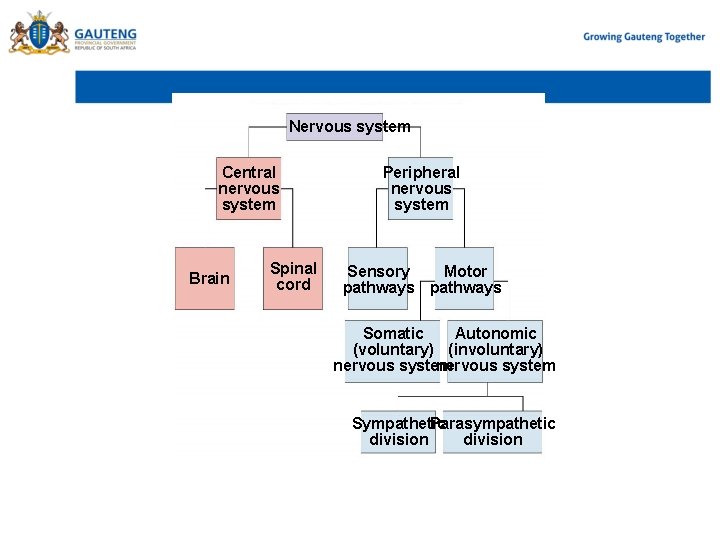
Nervous system Central nervous system Brain Spinal cord Peripheral nervous system Sensory Motor pathways Somatic Autonomic (voluntary) (involuntary) nervous system Sympathetic Parasympathetic division
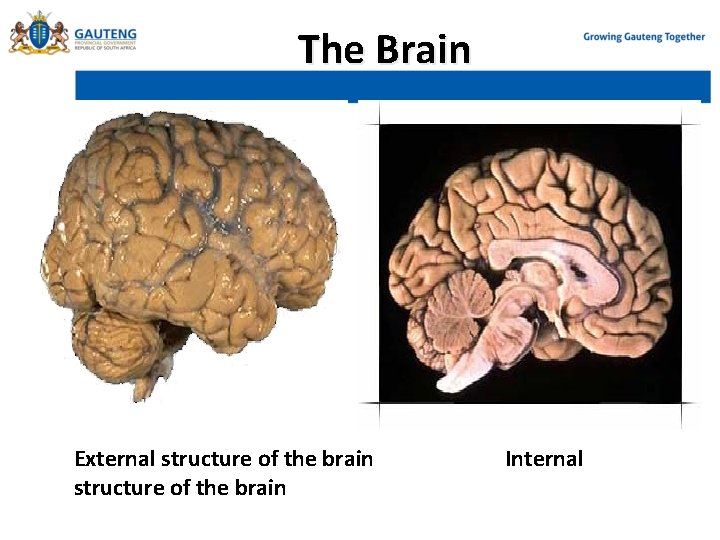
The Brain External structure of the brain Internal
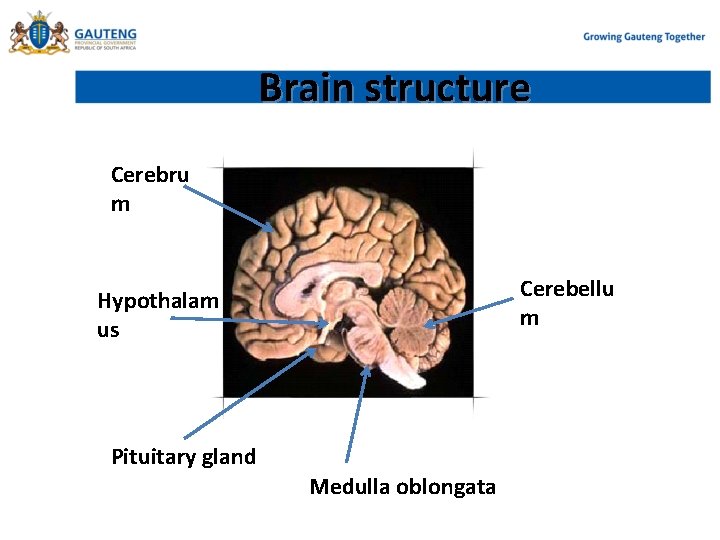
Brain structure Cerebru m Cerebellu m Hypothalam us Pituitary gland Medulla oblongata
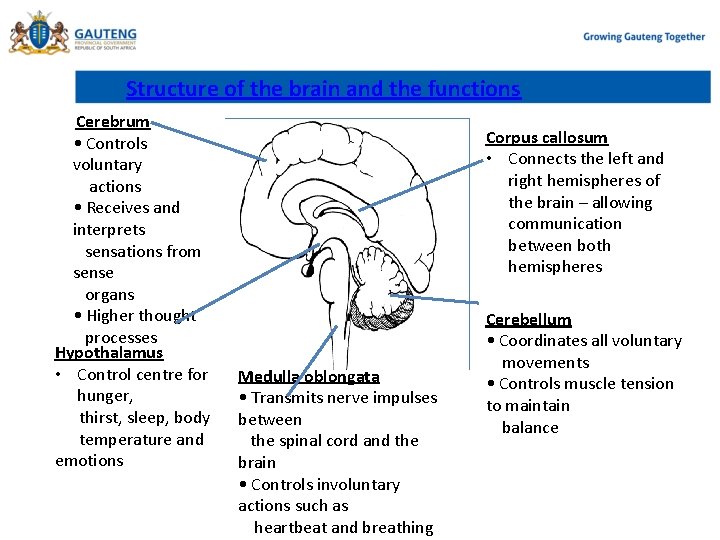
Structure of the brain and the functions Cerebrum • Controls voluntary actions • Receives and interprets sensations from sense organs • Higher thought processes Hypothalamus • Control centre for hunger, thirst, sleep, body temperature and emotions Corpus callosum • Connects the left and right hemispheres of the brain – allowing communication between both hemispheres Medulla oblongata • Transmits nerve impulses between the spinal cord and the brain • Controls involuntary actions such as heartbeat and breathing Cerebellum • Coordinates all voluntary movements • Controls muscle tension to maintain balance
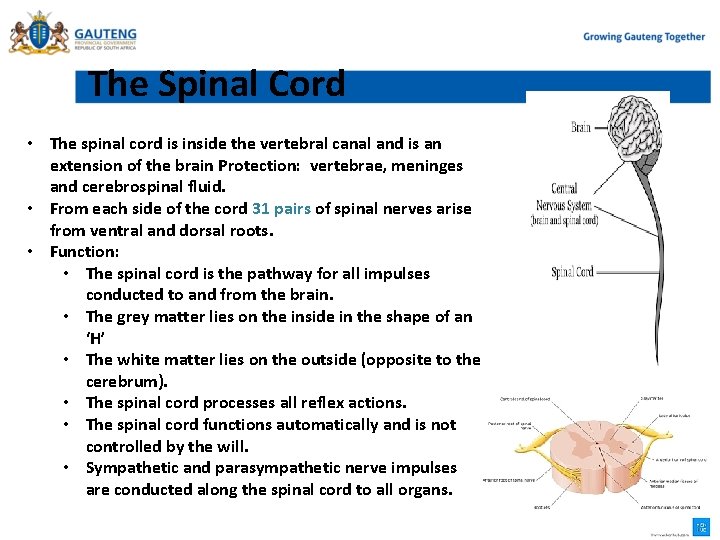
The Spinal Cord • The spinal cord is inside the vertebral canal and is an extension of the brain Protection: vertebrae, meninges and cerebrospinal fluid. • From each side of the cord 31 pairs of spinal nerves arise from ventral and dorsal roots. • Function: • The spinal cord is the pathway for all impulses conducted to and from the brain. • The grey matter lies on the inside in the shape of an ‘H’ • The white matter lies on the outside (opposite to the cerebrum). • The spinal cord processes all reflex actions. • The spinal cord functions automatically and is not controlled by the will. • Sympathetic and parasympathetic nerve impulses are conducted along the spinal cord to all organs.
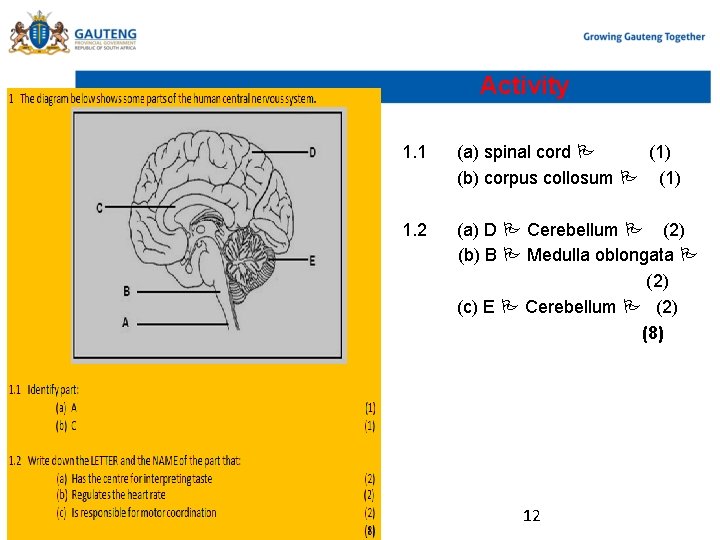
Activity 1. 1 (a) spinal cord (1) (b) corpus collosum (1) 1. 2 (a) D Cerebellum (2) (b) B Medulla oblongata (2) (c) E Cerebellum (2) (8) 12
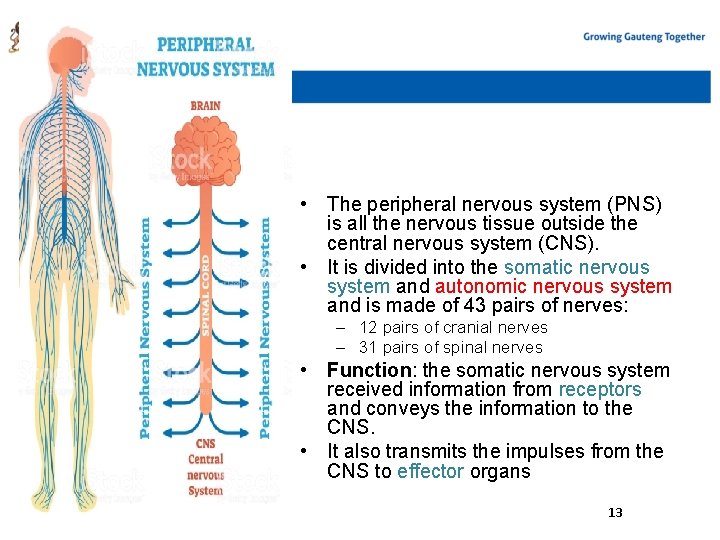
Peripheral nervous system • The peripheral nervous system (PNS) is all the nervous tissue outside the central nervous system (CNS). • It is divided into the somatic nervous system and autonomic nervous system and is made of 43 pairs of nerves: – 12 pairs of cranial nerves – 31 pairs of spinal nerves • Function: the somatic nervous system received information from receptors and conveys the information to the CNS. • It also transmits the impulses from the CNS to effector organs 13
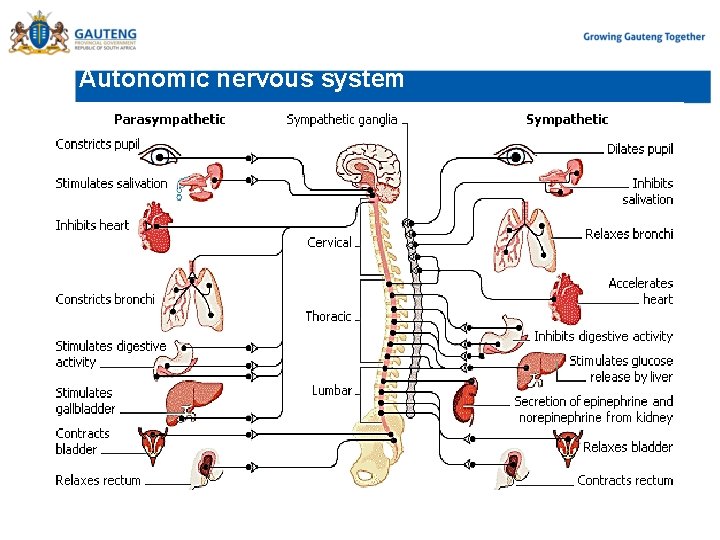
AUTONOMIC NERVOUS SYSTEM • The autonomic nervous system (ANS) controls the heart rate, breathing, digestion and gland functions e. g. salivary glands secreting saliva • The autonomic nervous system HAS two branches. • The sympathetic branch prepares the body for energyexpending, stressful, or emergency situations. • The parasympathetic branch is active under ordinary, restful conditions • The two systems have an opposite effect: one stimulates, the other inhibits i. e. each organ in the body is innervated by the sympathetic nerve and parasympathetic nerve. • This is known as double innervation • E. g. the sympathetic nerve causes the iris to dilate and the parasympathetic nerve causes the iris to constrict
Autonomic nervous system
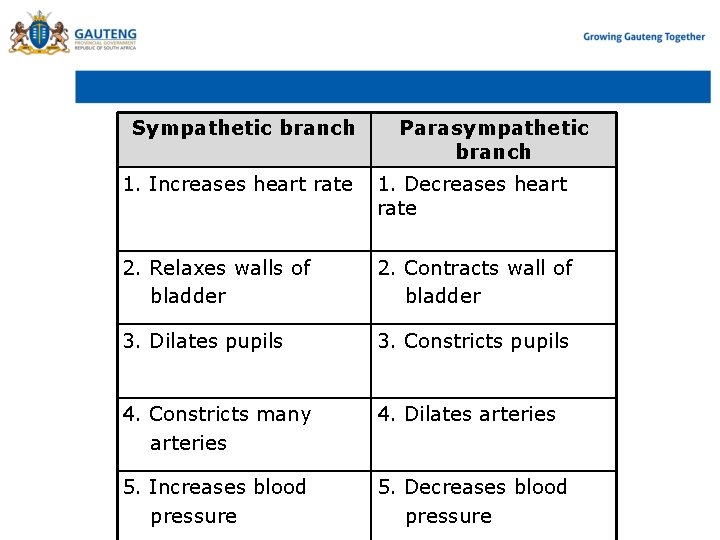
Sympathetic branch Parasympathetic branch 1. Increases heart rate 1. Decreases heart rate 2. Relaxes walls of bladder 2. Contracts wall of bladder 3. Dilates pupils 3. Constricts pupils 4. Constricts many arteries 4. Dilates arteries 5. Increases blood pressure 5. Decreases blood pressure
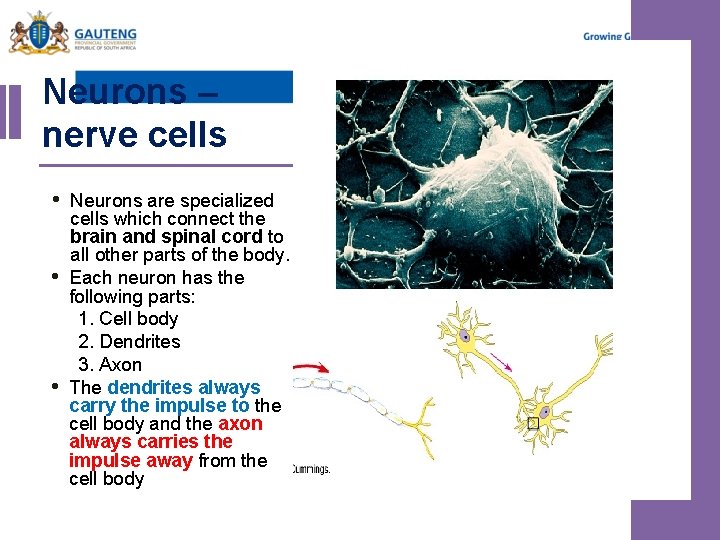
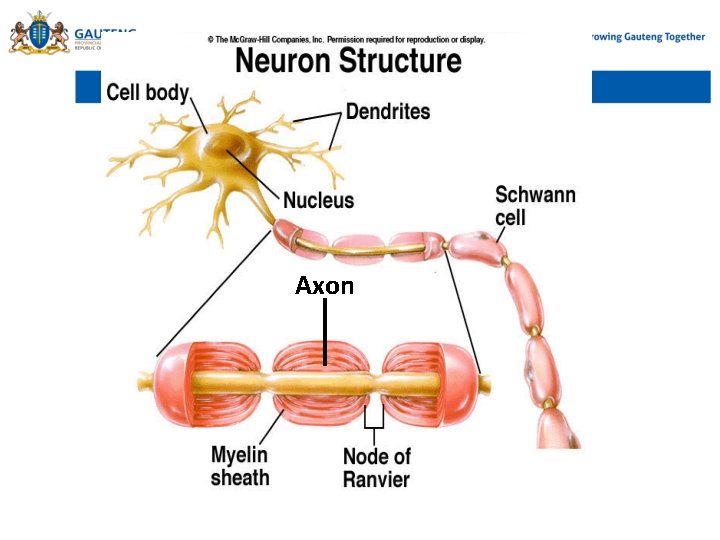
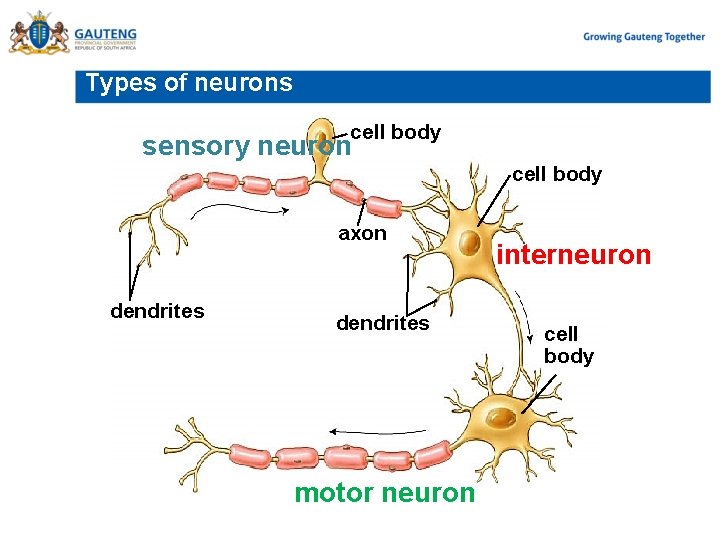
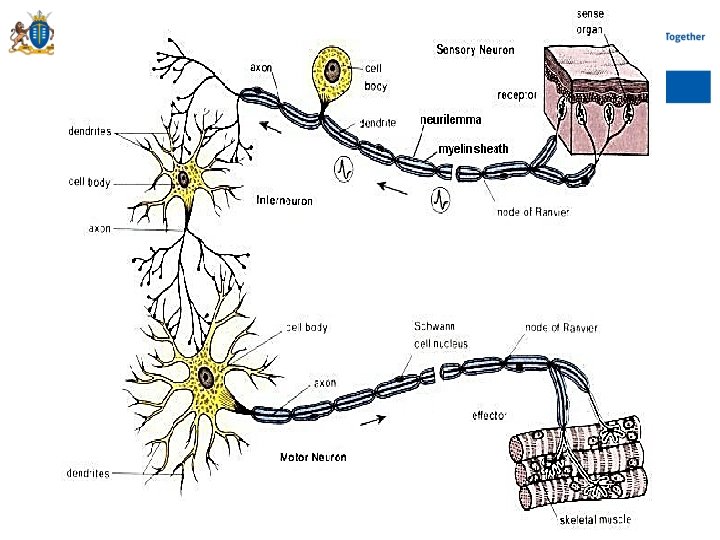
Click to edit Neurons – Master title style nerve cells • • • Neurons are specialized cells which connect the brain and spinal cord to all other parts of the body. Each neuron has the following parts: 1. Cell body 2. Dendrites 3. Axon The dendrites always carry the impulse to the cell body and the axon always carries the impulse away from the cell body
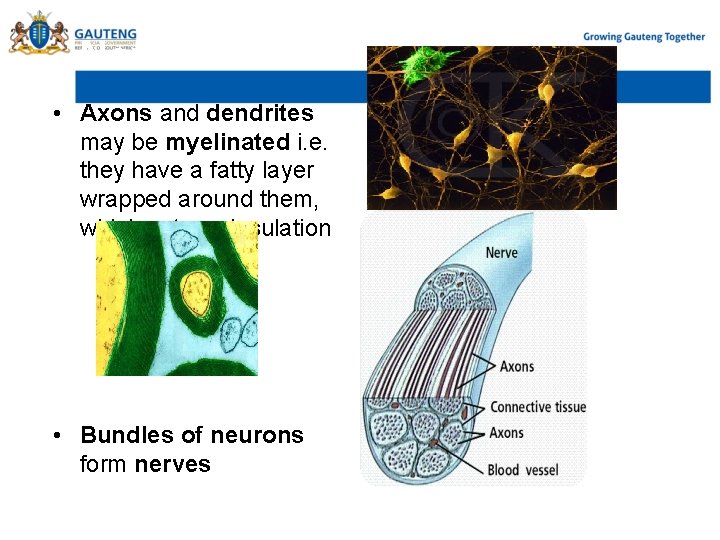
Neurons • Axons and dendrites may be myelinated i. e. they have a fatty layer wrapped around them, which acts as insulation • Bundles of neurons form nerves
Axon
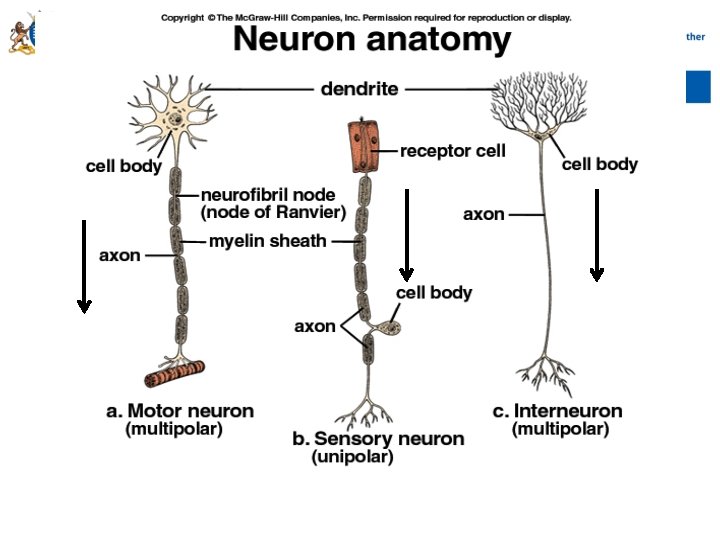
Types of neurons cell body sensory neuron cell body axon dendrites motor neuron interneuron cell body
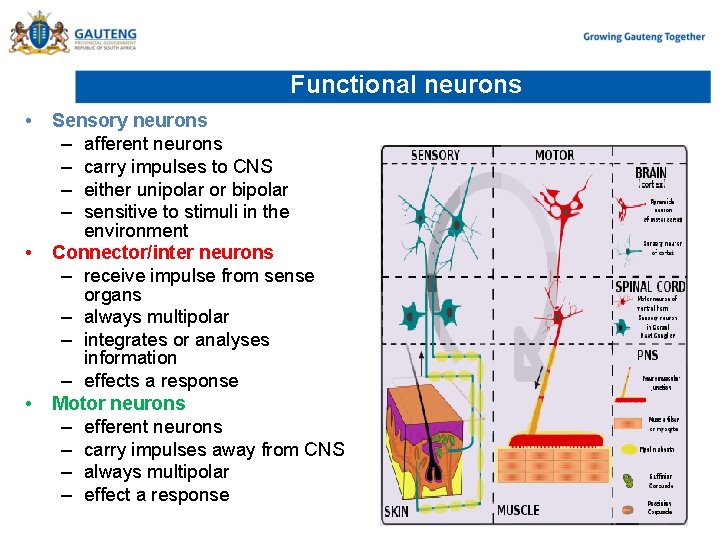
Functional neurons • • • Sensory neurons – afferent neurons – carry impulses to CNS – either unipolar or bipolar – sensitive to stimuli in the environment Connector/inter neurons – receive impulse from sense organs – always multipolar – integrates or analyses information – effects a response Motor neurons – efferent neurons – carry impulses away from CNS – always multipolar – effect a response
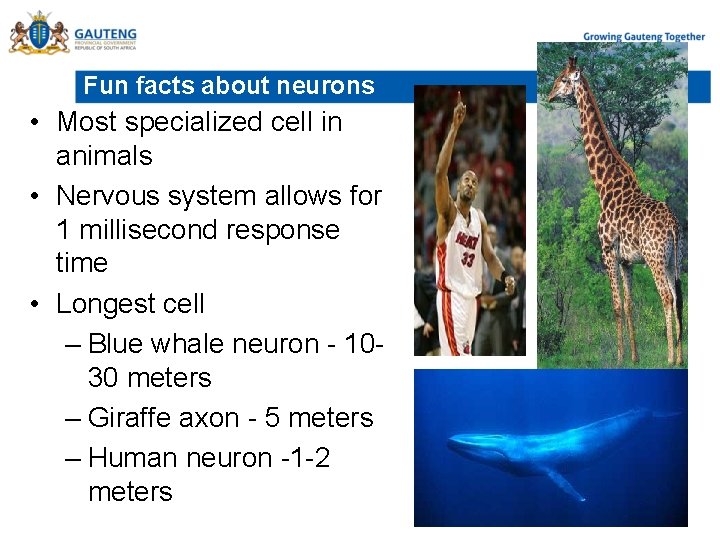
Fun facts about neurons • Most specialized cell in animals • Nervous system allows for 1 millisecond response time • Longest cell – Blue whale neuron - 1030 meters – Giraffe axon - 5 meters – Human neuron -1 -2 meters
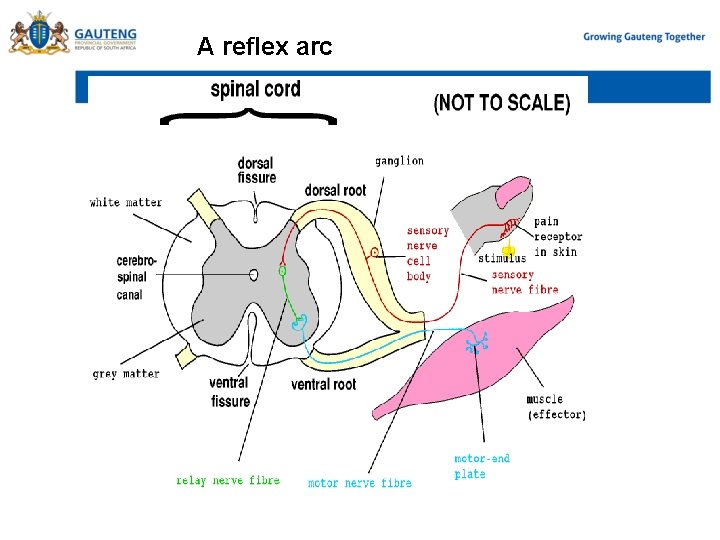
A reflex arc • The nerve pathway taken in a reflex action is called a reflex arc. • The nervous message goes to the spinal cord, then a message passes from the spinal cord directly to an effector to give an immediate response.
A reflex arc
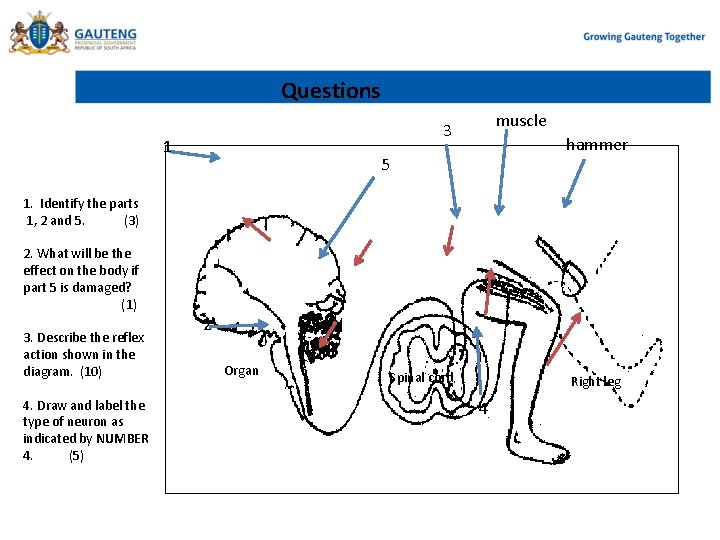
Questions muscle 3 1 hammer 5 1. Identify the parts 1, 2 and 5. (3) 2. What will be the effect on the body if part 5 is damaged? (1) 3. Describe the reflex action shown in the diagram. (10) 4. Draw and label the type of neuron as indicated by NUMBER 4. (5) 2 Organ Spinal cord Right leg 4
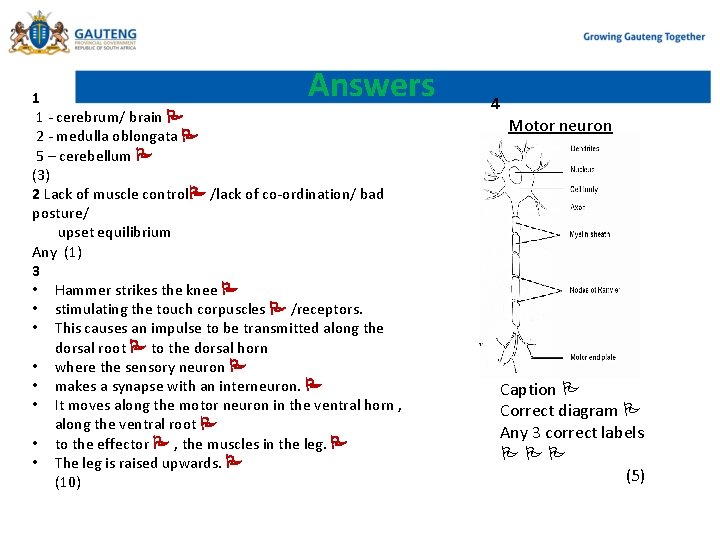
Answers 1 1 - cerebrum/ brain 2 - medulla oblongata 5 – cerebellum (3) 2 Lack of muscle control /lack of co-ordination/ bad posture/ upset equilibrium Any (1) 3 • Hammer strikes the knee • stimulating the touch corpuscles /receptors. • This causes an impulse to be transmitted along the dorsal root to the dorsal horn • where the sensory neuron • makes a synapse with an interneuron. • It moves along the motor neuron in the ventral horn , along the ventral root • to the effector , the muscles in the leg. • The leg is raised upwards. (10) 4 Motor neuron Caption Correct diagram Any 3 correct labels (5)
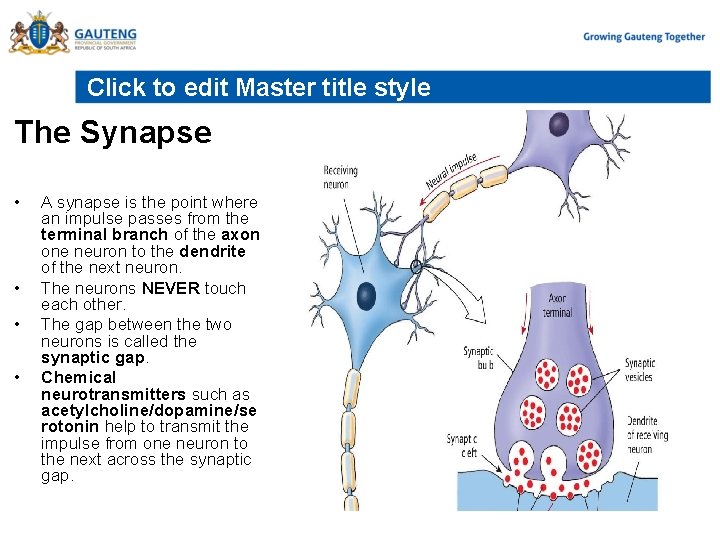
Click to edit Master title style The Synapse • • A synapse is the point where an impulse passes from the terminal branch of the axon one neuron to the dendrite of the next neuron. The neurons NEVER touch each other. The gap between the two neurons is called the synaptic gap. Chemical neurotransmitters such as acetylcholine/dopamine/se rotonin help to transmit the impulse from one neuron to the next across the synaptic gap.
Significance of a synapse • Ensures that the impulse travels in one direction • At the synapse a nerve impulse can either be speeded up, slowed down or blocked • Therefore it enables unnecessary or unimportant background stimuli to be filtered out • Channels impulses so that reactions are integrated and become part of learning and memory
Diseases of the Nervous system • • • Alzheimer’s disease (AD) is the most common form of dementia Usually affecting people over 65, although some people may develop early-onset AD. Characterized by a loss of neurons and synapses in the cortex of the brain, as well as the presence of clumps of proteins (amyloid plaques) and tangled bundles of fibers There is no cure for the disease, which is progressive and eventually leads to death Cause: Unknown Symptoms: the loss of brain function results in – – – • Slower thinking Behaviour changes Confusion about events, time and place Difficulty recognizing people they know Difficulty speaking, swallowing and walking Cure: None – – Researchers are trying to find better ways to treat the disease, delay its onset and prevent it from developing Stem-cell research and therapeutic cloning hold great potential for providing a cure for Alzheimer’s disease Dementia: general term used for memory loss and loss of other intellectual abilities 32
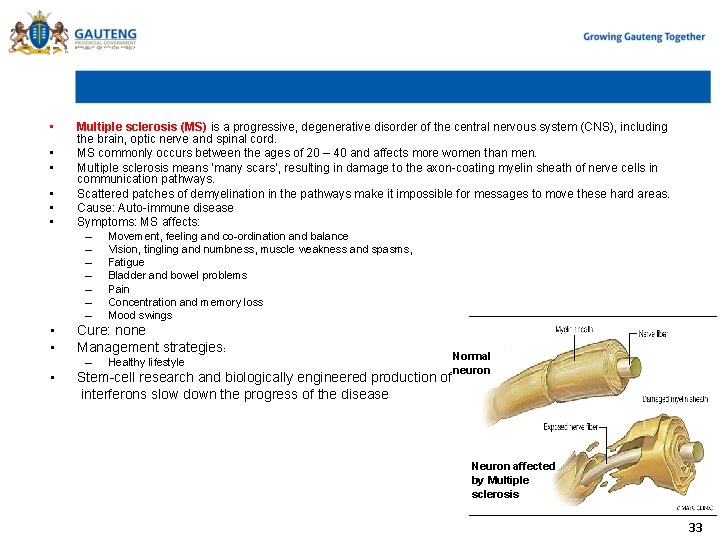
Diseases of the Nervous system • • Multiple sclerosis (MS) is a progressive, degenerative disorder of the central nervous system (CNS), including the brain, optic nerve and spinal cord. MS commonly occurs between the ages of 20 – 40 and affects more women than men. Multiple sclerosis means ‘many scars’, resulting in damage to the axon-coating myelin sheath of nerve cells in communication pathways. Scattered patches of demyelination in the pathways make it impossible for messages to move these hard areas. Cause: Auto-immune disease Symptoms: MS affects: – Movement, feeling and co-ordination and balance – Vision, tingling and numbness, muscle weakness and spasms, – Fatigue – Bladder and bowel problems – Pain – Concentration and memory loss – Mood swings Cure: none Management strategies: – • Healthy lifestyle Stem-cell research and biologically engineered production of interferons slow down the progress of the disease Normal neuron Neuron affected by Multiple sclerosis 33