
The nervous system Learning objectives Identify the key
The nervous system

Learning objectives • Identify the key parts of the central nervous system (CNS) • Explain the function of each part of the CNS • Explain how the CNS helps humans to react to there surroundings

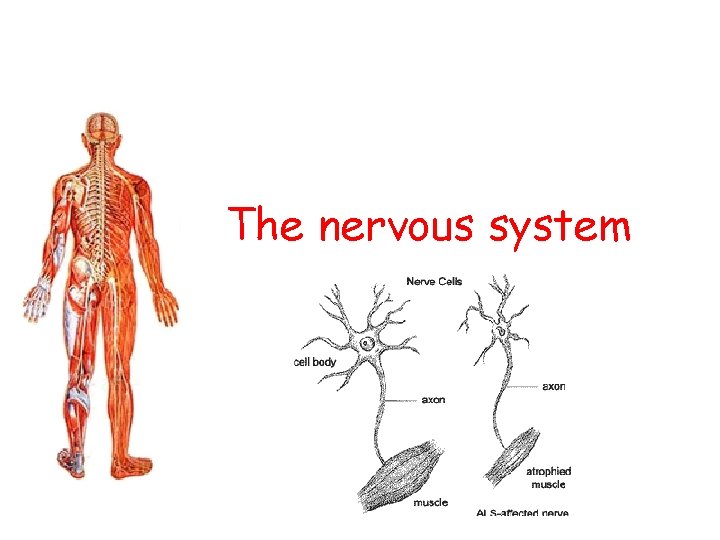
The nervous system • The nervous system is made up of three main parts: • the brain, the spinal cord and nerve fibres. • It detects stimuli such as light, temperature, sound, pressure, pain, movement, touch and chemicals (for example, food) and coordinates the body’s response. • If you smell something burning your nose sends a message to your brain, and it co-ordinates your response. Q 1) Look at photograph: Explain, in detail what happens the moment the starter fires the gun.
Answer Q 1
Diagram of nervous system

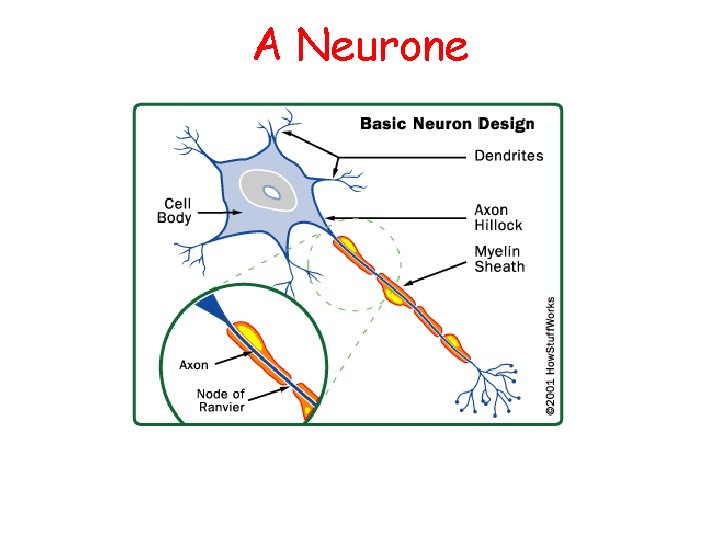
The nervous system - Receptors • Receptors are sensors on the body that detect stimuli. • Information from these passes along nerve fibres to the brain. • Nerve fibres are made from lots of nerve cells, called neurones. • The information passes along them as electrical signals called impulses.
A Neurone
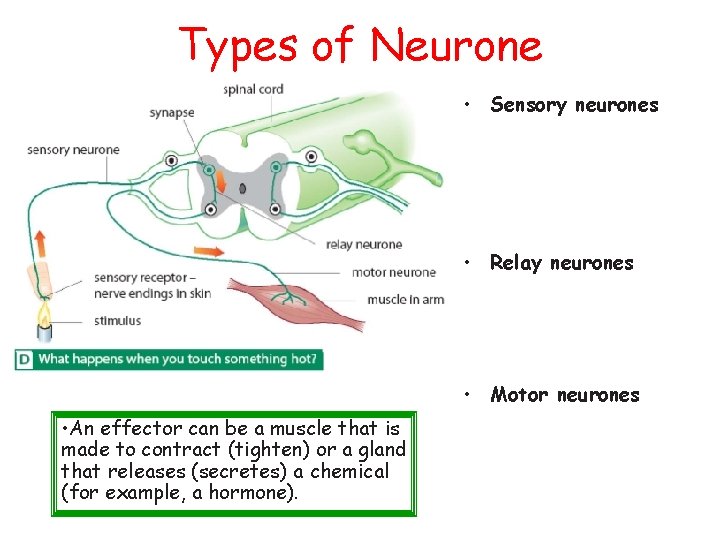
Types of Neurone • Sensory neurones • Relay neurones • Motor neurones • An effector can be a muscle that is made to contract (tighten) or a gland that releases (secretes) a chemical (for example, a hormone).
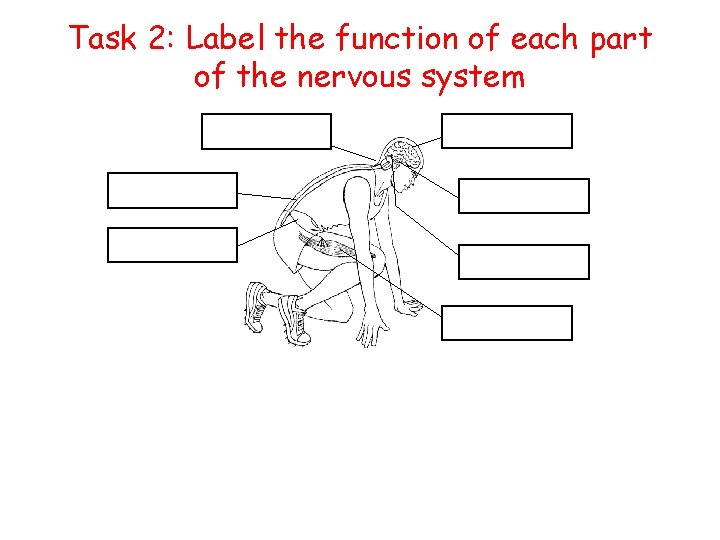
Task 2: Label the function of each part of the nervous system
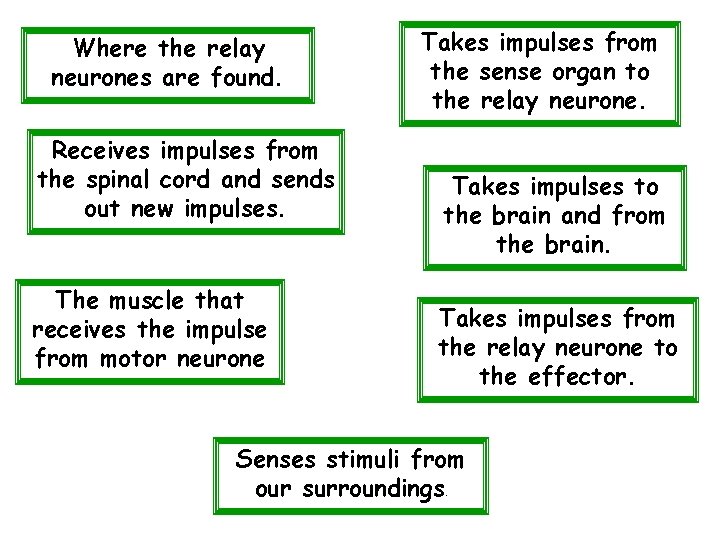
Where the relay neurones are found. Receives impulses from the spinal cord and sends out new impulses. The muscle that receives the impulse from motor neurone Takes impulses from the sense organ to the relay neurone. Takes impulses to the brain and from the brain. Takes impulses from the relay neurone to the effector. Senses stimuli from our surroundings.
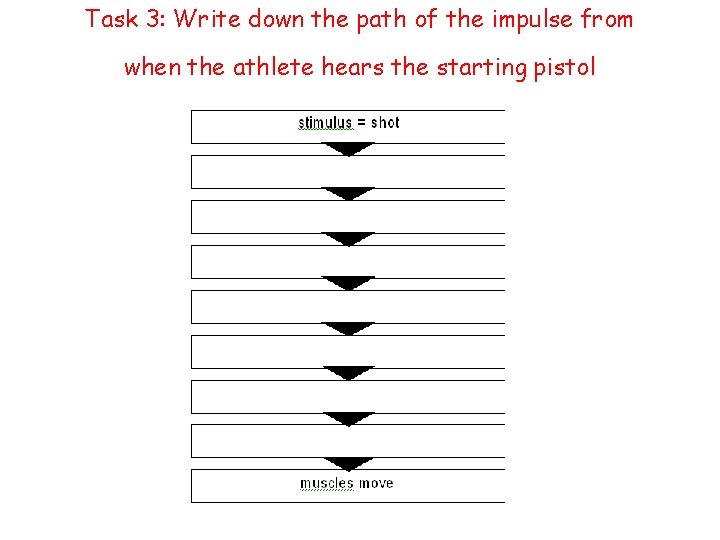
Task 3: Write down the path of the impulse from when the athlete hears the starting pistol
Reflexes; The Grabbing Game • Who is the best? • Why are they the best? • What stimuli is making you react? • What do we call the time it takes to grab the paper?
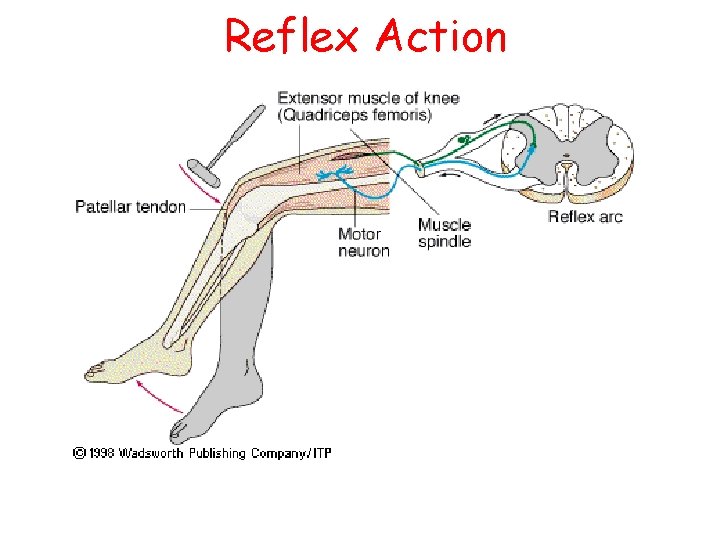
Reflex Action
Describe a reflex action
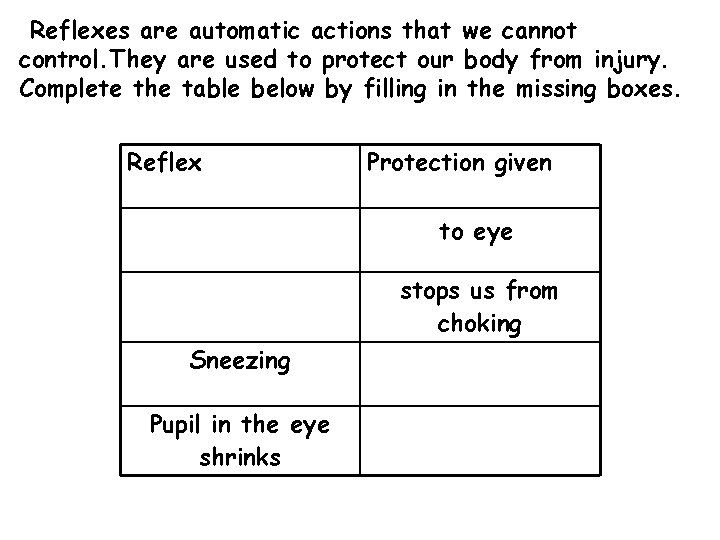
Reflexes are automatic actions that we cannot control. They are used to protect our body from injury. Complete the table below by filling in the missing boxes. Reflex Protection given to eye stops us from choking Sneezing Pupil in the eye shrinks
Learning objectives – What have I learnt • Identify the key parts of the central nervous system (CNS) • Explain the function of each part of the CNS • Explain how the CNS helps humans to react to there surroundings
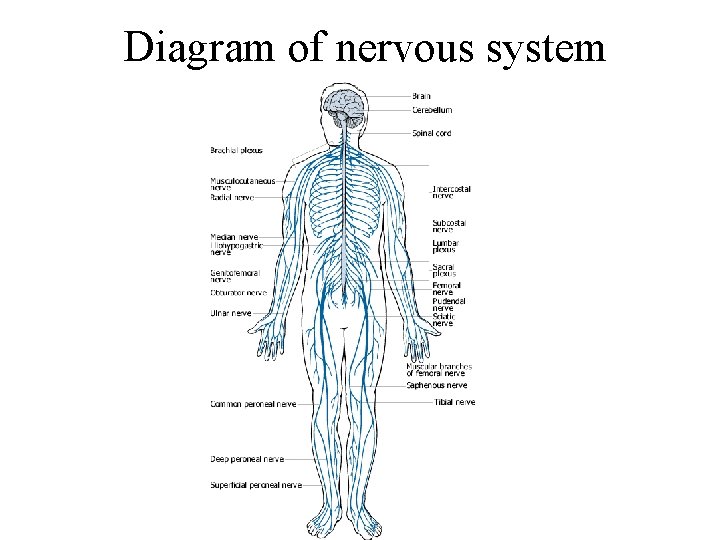
Diagram of nervous system

Types of Neurone • Sensory neurones carry impulses from the receptor to the spinal cord. • Relay neurones carry impulses through the spinal cord and up to the brain and from the brain back along the spinal cord. • An effector can be a muscle that is made to contract (tighten) or a gland that releases (secretes) a chemical (for example, a hormone). • Motor neurones take impulses from the spinal cord to an effector.
- Slides: 18