
The Nervous System Function of the nervous System

- Slides: 30
+ The Nervous System
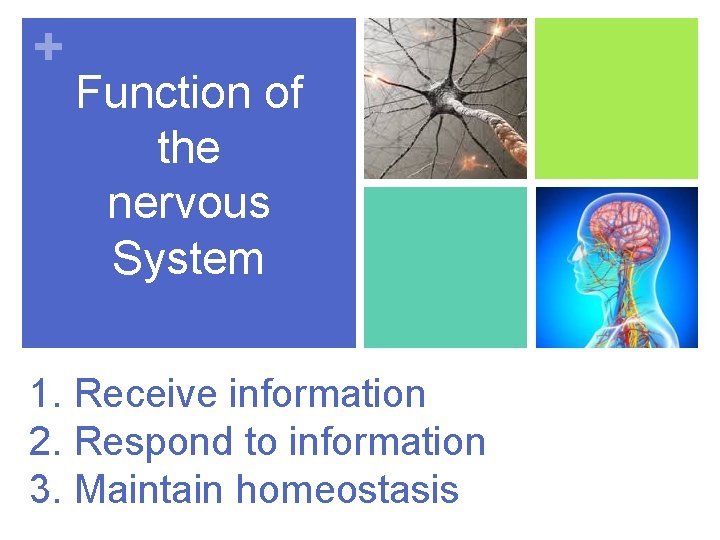
+ Function of the nervous System 1. Receive information 2. Respond to information 3. Maintain homeostasis
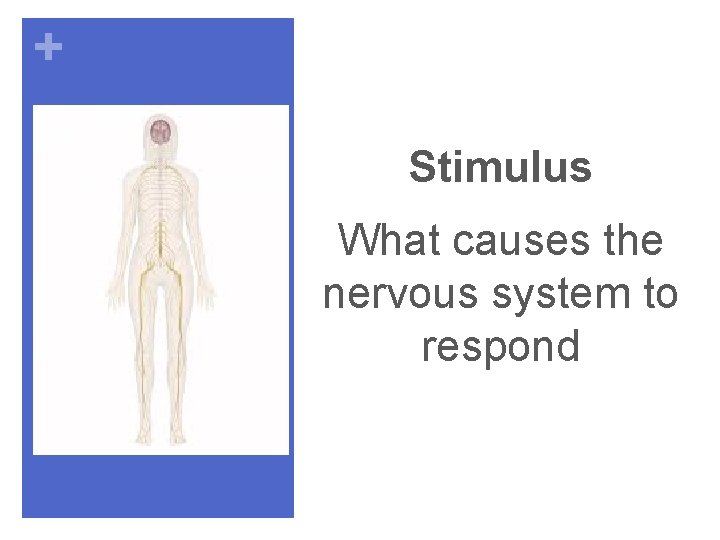
+ Stimulus What causes the nervous system to respond
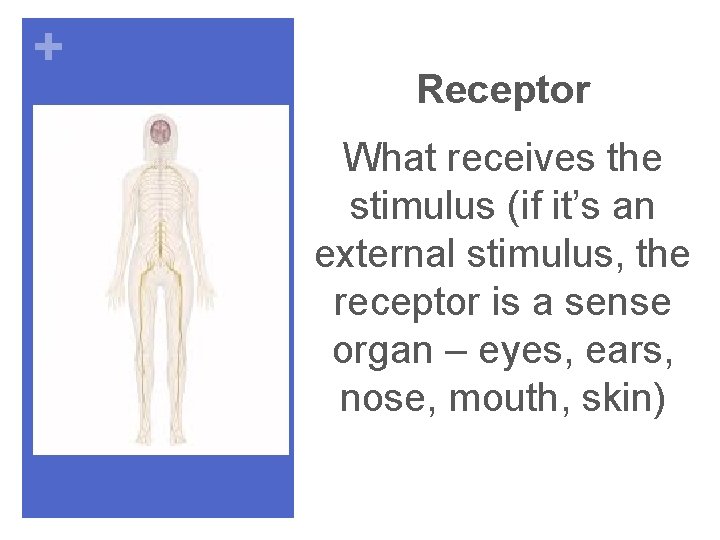
+ Receptor What receives the stimulus (if it’s an external stimulus, the receptor is a sense organ – eyes, ears, nose, mouth, skin)
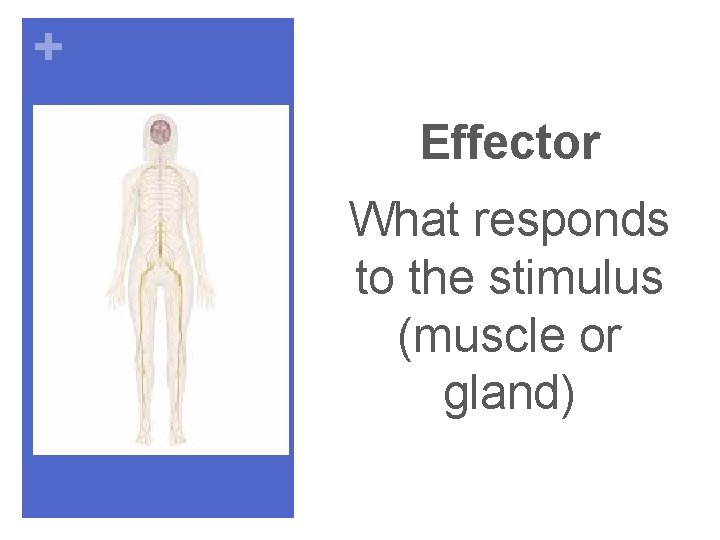
+ Effector What responds to the stimulus (muscle or gland)
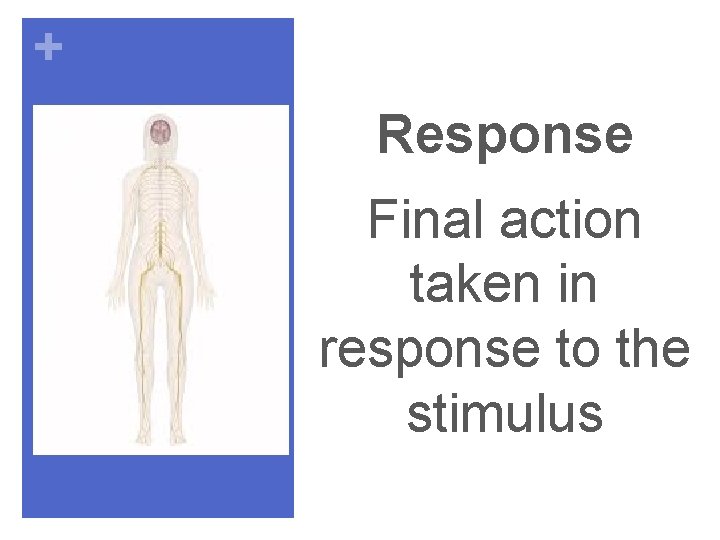
+ Response Final action taken in response to the stimulus
+ A torch is aimed at your eyes and shines bright light into them…. .
+ You have some bad seafood for dinner and start to feel really queasy…next thing you are running for the bathroom. . . .
+ You go to pick up a tripod that was used in your science experiment but it is still red hot…….
+ You are running around Albert Park lake and your hard working muscle cells are using up lots of energy. This means that carbon dioxide is being produced and its levels are starting to increase in the blood……….
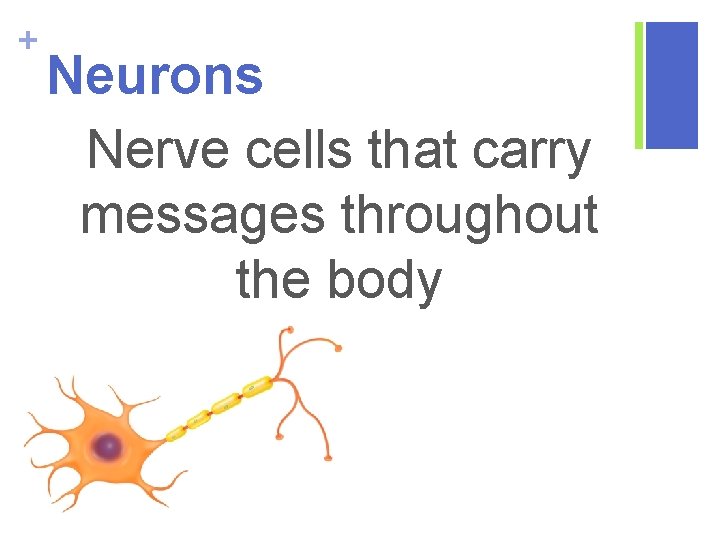
+ Neurons Nerve cells that carry messages throughout the body
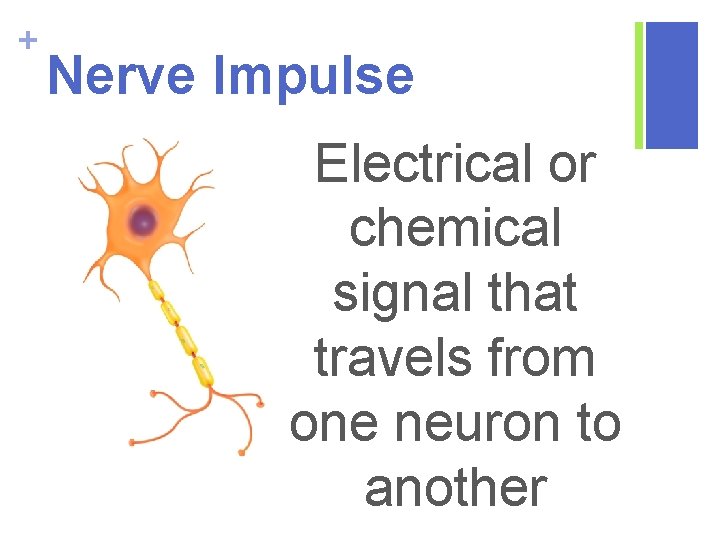
+ Nerve Impulse Electrical or chemical signal that travels from one neuron to another
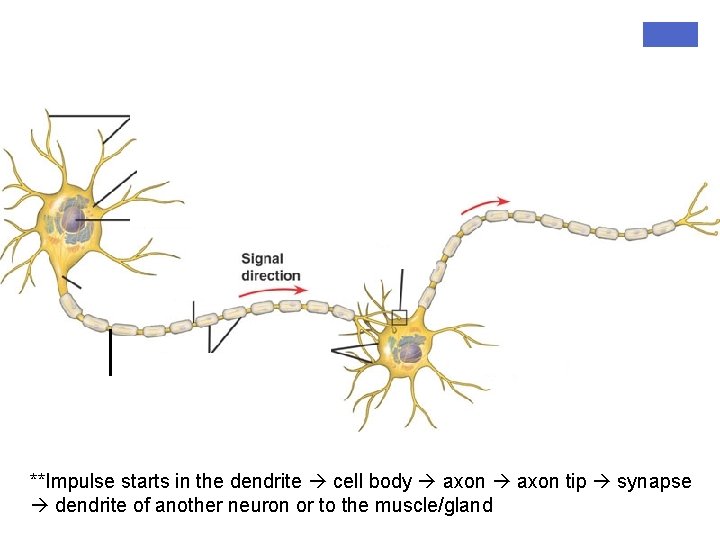
+ Neuron Structure All neurons are alike in that they have the same structures, but each type of neuron looks different.
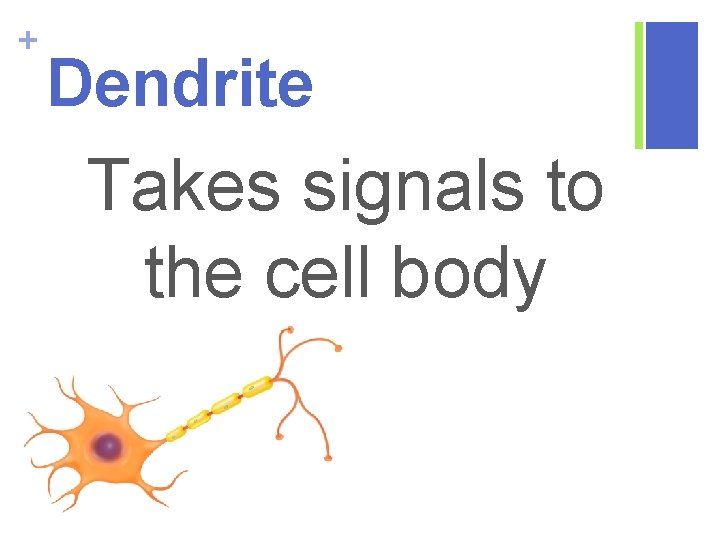
+ Dendrite Takes signals to the cell body
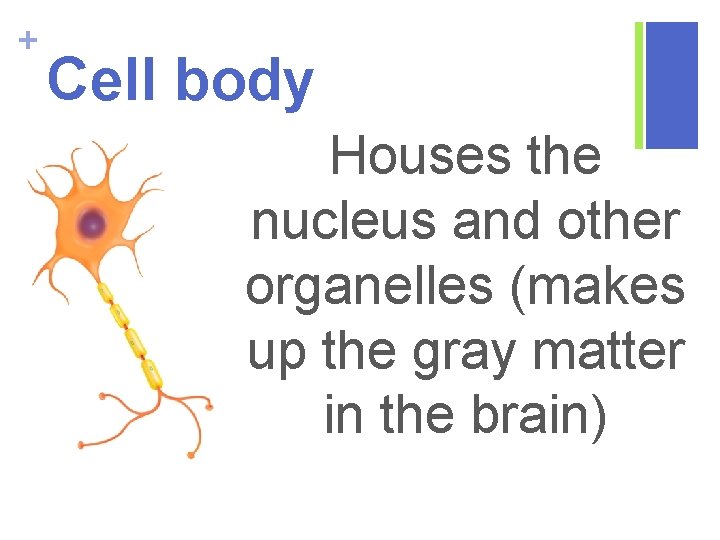
+ Cell body Houses the nucleus and other organelles (makes up the gray matter in the brain)
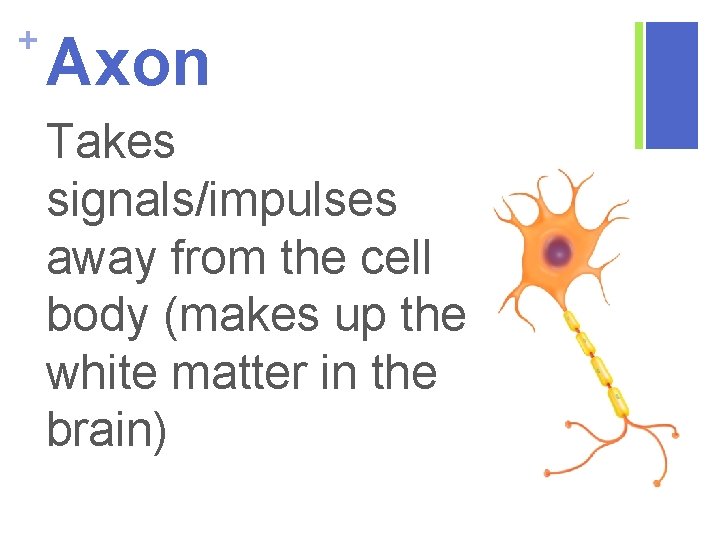
+ Axon Takes signals/impulses away from the cell body (makes up the white matter in the brain)
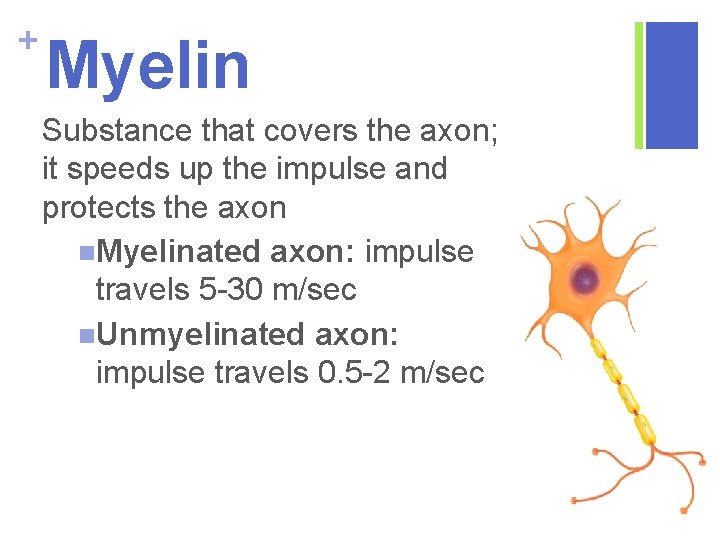
+ Myelin Substance that covers the axon; it speeds up the impulse and protects the axon n. Myelinated axon: impulse travels 5 -30 m/sec n. Unmyelinated axon: impulse travels 0. 5 -2 m/sec
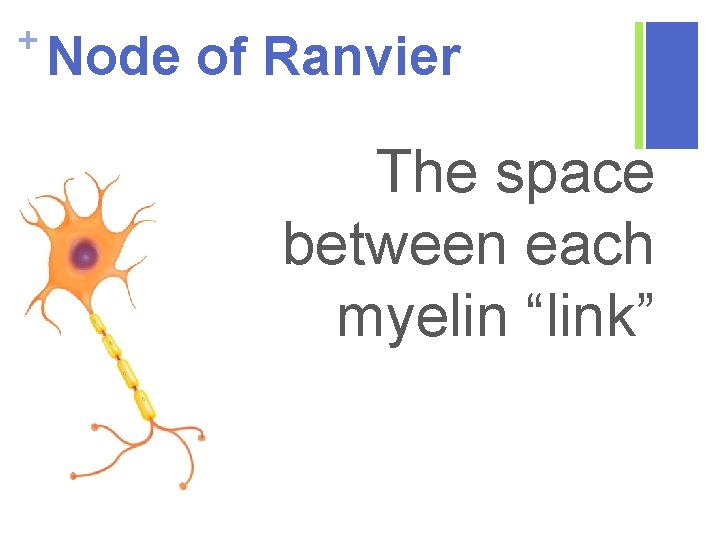
+ Node of Ranvier The space between each myelin “link”
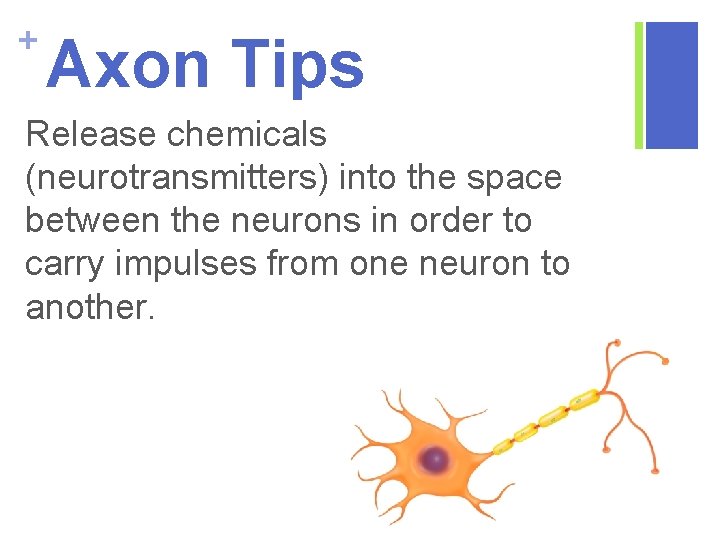
+ Axon Tips Release chemicals (neurotransmitters) into the space between the neurons in order to carry impulses from one neuron to another.
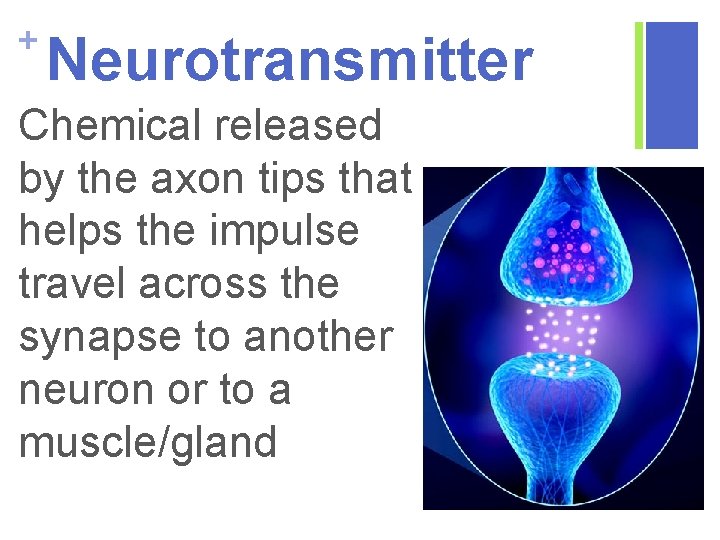
+ Neurotransmitter Chemical released by the axon tips that helps the impulse travel across the synapse to another neuron or to a muscle/gland
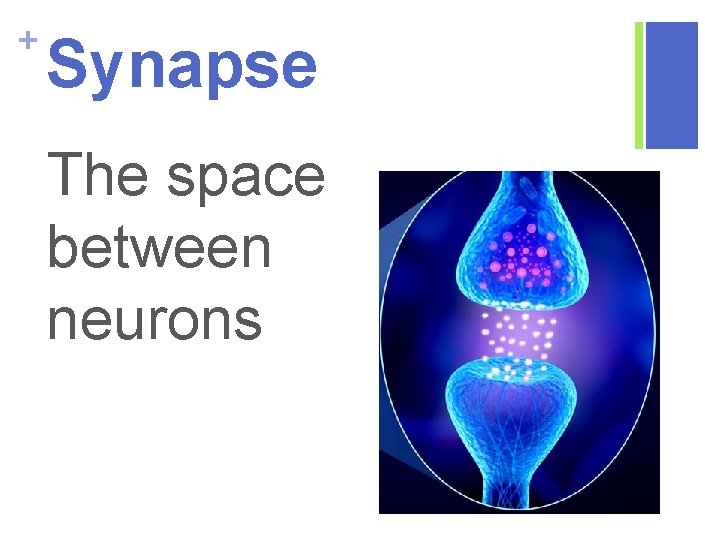
+ Synapse The space between neurons
Axon Tips Nodes of Ranvier **Impulse starts in the dendrite cell body axon tip synapse dendrite of another neuron or to the muscle/gland
-The impulse carried by the neuron is electrical - The impulse carried through the synapse is chemical + -If the axon tips did not release the neurotransmitters, the impulse would stop at the axon tips.
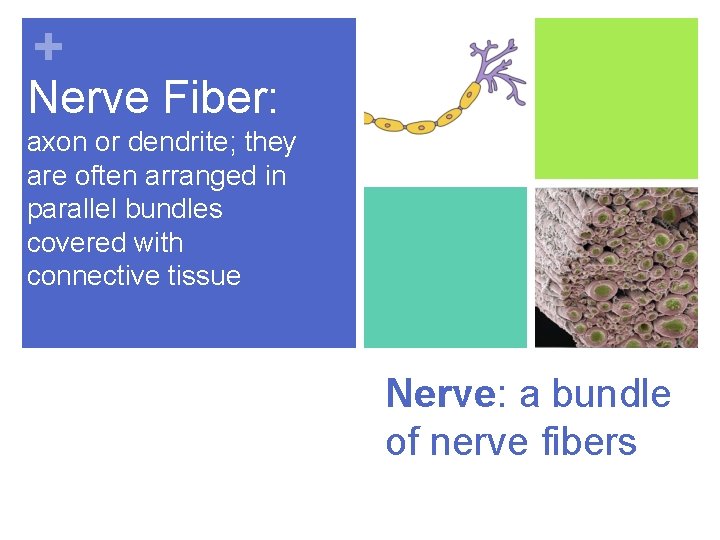
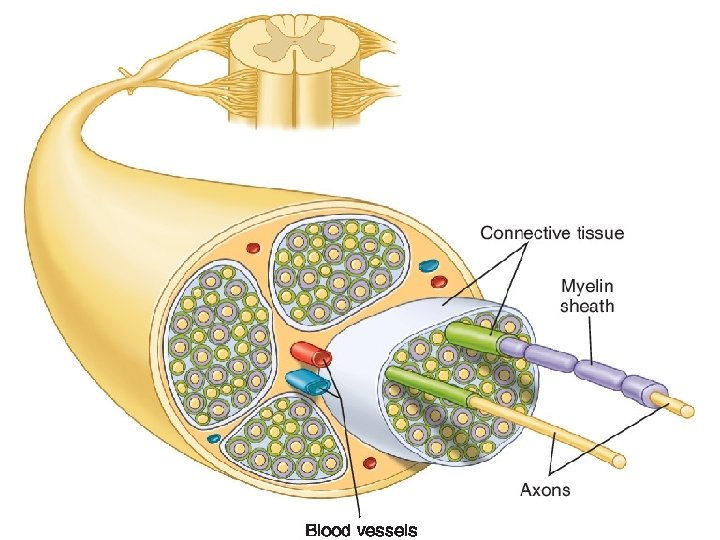
+ Nerve Fiber: axon or dendrite; they are often arranged in parallel bundles covered with connective tissue Nerve: a bundle of nerve fibers
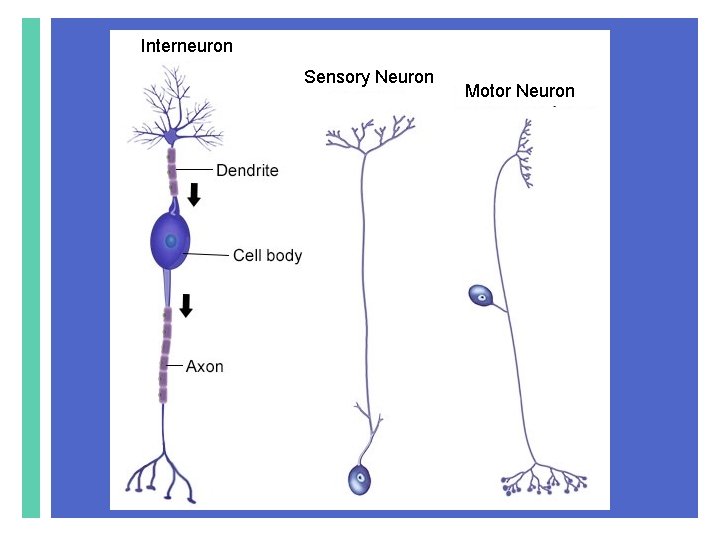
+ Types of Neurons Sensory Neuron Picks up internal or external stimuli and converts it to a nerve impulse, then sends it to the interneuron
+ Types of Neurons Interneuron In the brain/spinal cord; takes impulse from sensory neuron and interprets it; decides if further action should be taken, then sends message, if necessary, to the motor neuron
+ Types of Neurons Motor Neuron Takes the impulse from the interneuron and sends it to a muscle/gland (effector); the muscle contracts in response or a gland releases a hormone.
Interneuron Sensory Neuron + Motor Neuron
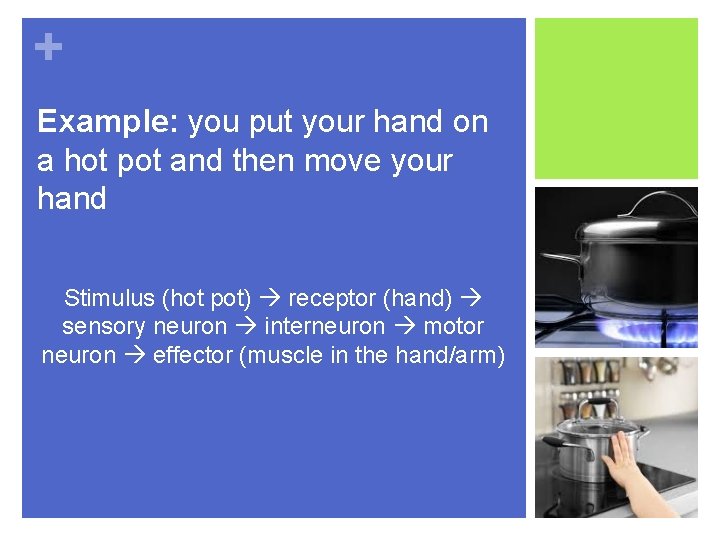
+ Example: you put your hand on a hot pot and then move your hand Stimulus (hot pot) receptor (hand) sensory neuron interneuron motor neuron effector (muscle in the hand/arm)