
The Nervous System Division of the Nervous System
- Slides: 18
The Nervous System
Division of the Nervous System • Central Nervous System (CNS) – Consists of the brain and spinal cord – The central nervous system relays messages, processes information, and analyzes information. • Peripheral Nervous System (PNS) – Consists of all the nerves outside the CNS – Senses and movement; Relays information from the external environment to the central nervous system. • Somatic Nervous System • Autonomic Nervous System
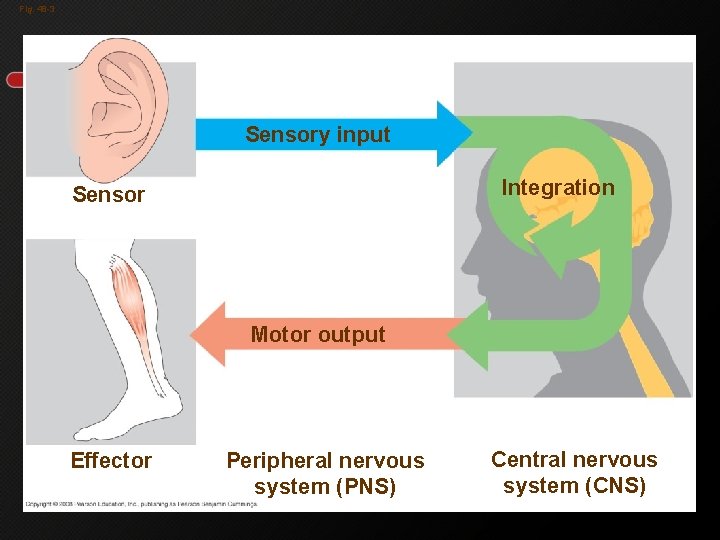
Fig. 48 -3 Sensory input Integration Sensor Motor output Effector Peripheral nervous system (PNS) Central nervous system (CNS)
Peripheral Nervous System • Sensory – Conveys information from sensory receptors or nerve endings • Motor – Stimulates voluntary and involuntary muscles • Consists of two systems – Somatic Nervous System • regulates activities that are under conscious control, such as the movement of the skeletal muscles – Autonomic Nervous System • Controls involuntary muscles
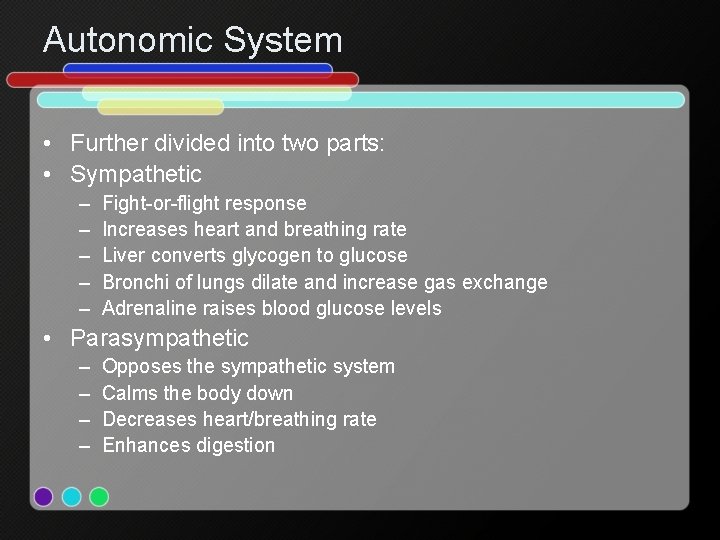
Autonomic System • Further divided into two parts: • Sympathetic – – – Fight-or-flight response Increases heart and breathing rate Liver converts glycogen to glucose Bronchi of lungs dilate and increase gas exchange Adrenaline raises blood glucose levels • Parasympathetic – – Opposes the sympathetic system Calms the body down Decreases heart/breathing rate Enhances digestion
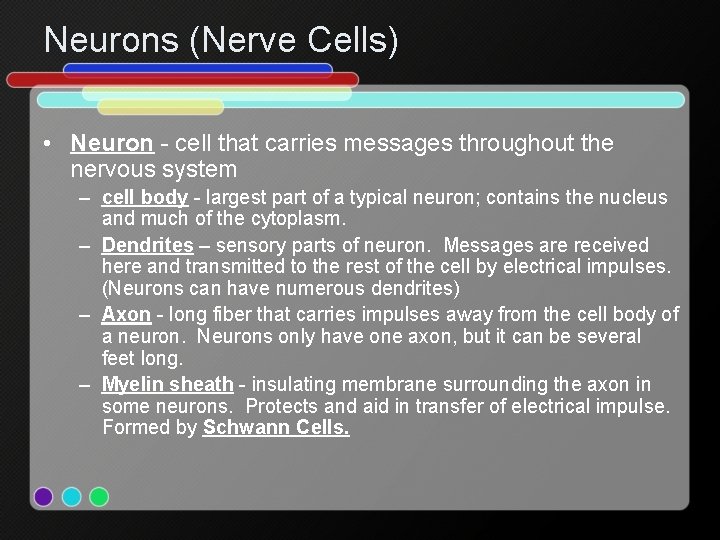
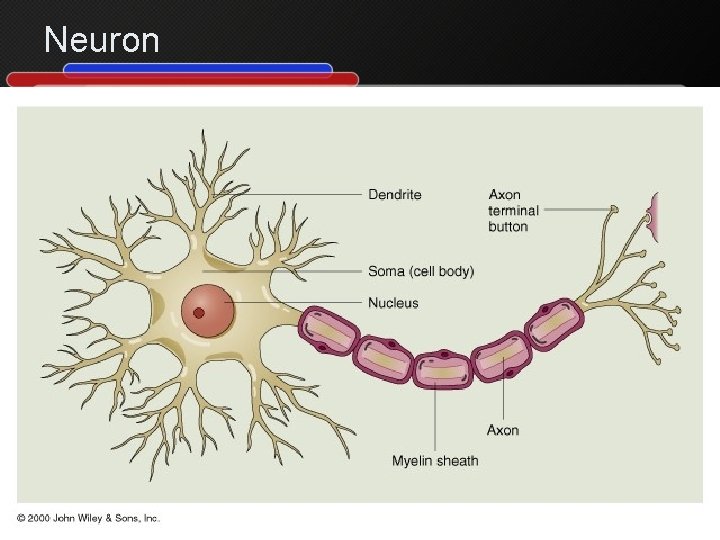
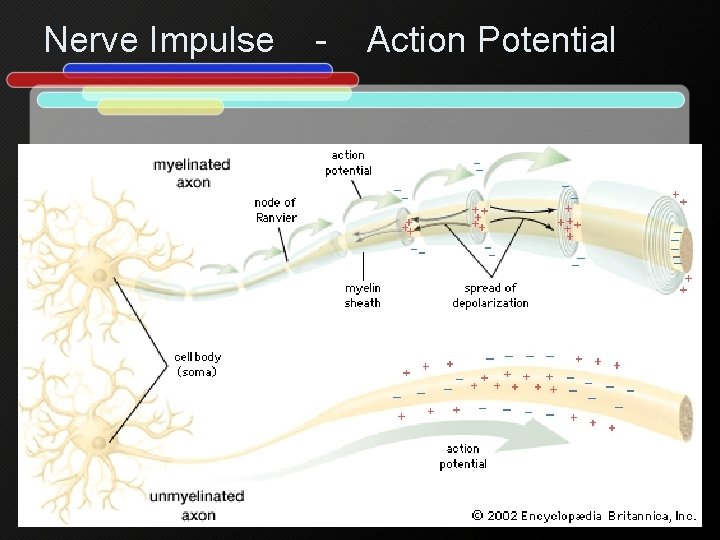
Neurons (Nerve Cells) • Neuron - cell that carries messages throughout the nervous system – cell body - largest part of a typical neuron; contains the nucleus and much of the cytoplasm. – Dendrites – sensory parts of neuron. Messages are received here and transmitted to the rest of the cell by electrical impulses. (Neurons can have numerous dendrites) – Axon - long fiber that carries impulses away from the cell body of a neuron. Neurons only have one axon, but it can be several feet long. – Myelin sheath - insulating membrane surrounding the axon in some neurons. Protects and aid in transfer of electrical impulse. Formed by Schwann Cells.
Neuron
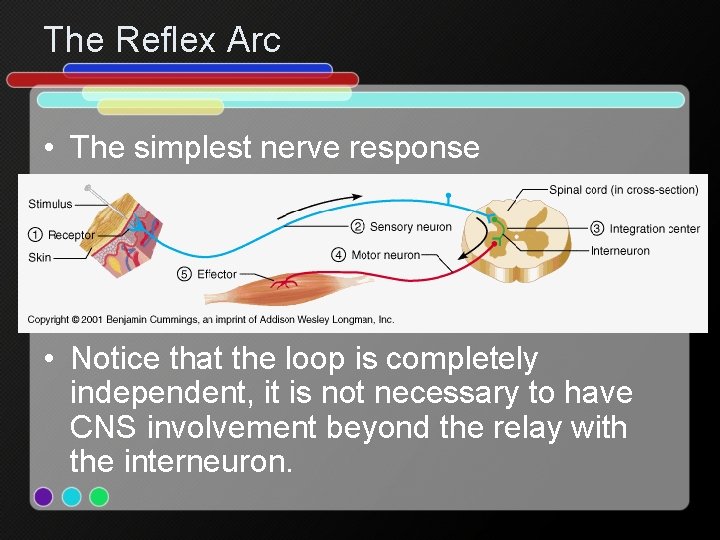
The Reflex Arc • The simplest nerve response • Notice that the loop is completely independent, it is not necessary to have CNS involvement beyond the relay with the interneuron.
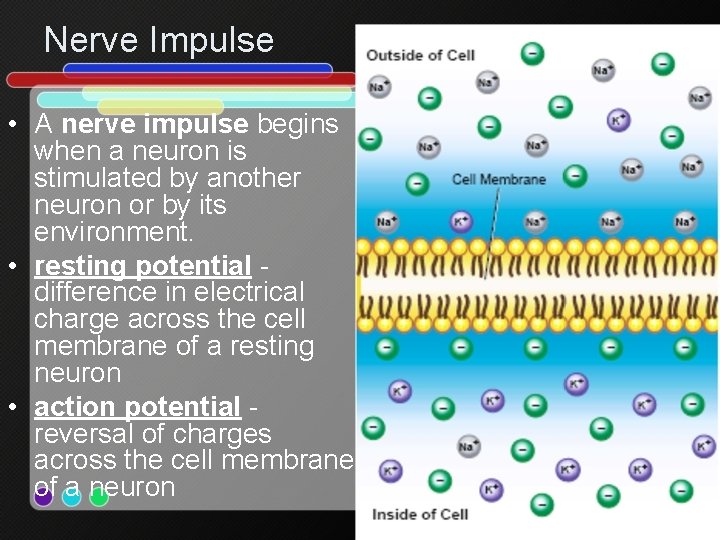
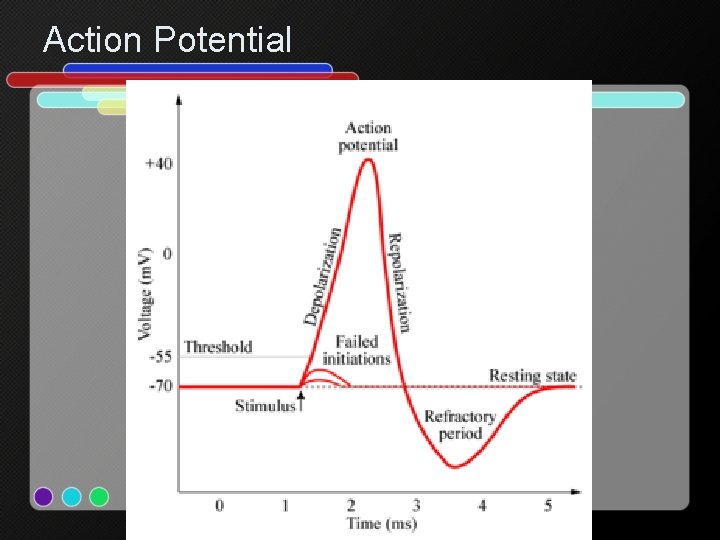
Nerve Impulse • A nerve impulse begins when a neuron is stimulated by another neuron or by its environment. • resting potential difference in electrical charge across the cell membrane of a resting neuron • action potential reversal of charges across the cell membrane of a neuron
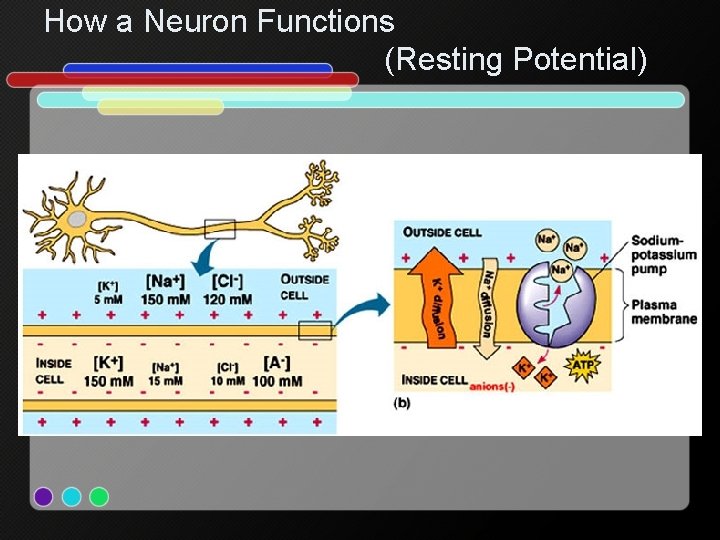
Nerve Impulse - (Resting Potential) • All living cells have a membrane potential between the cytoplasm and extracellular fluid. (-50 m. V to -100 m. V) • A resting Neuron is polarized (-70 m. V) – Sodium-potassium pump maintains this state by pumping out + ions – Stimulus must overcome resting potential (70 m. V or possible more)
How a Neuron Functions (Resting Potential)
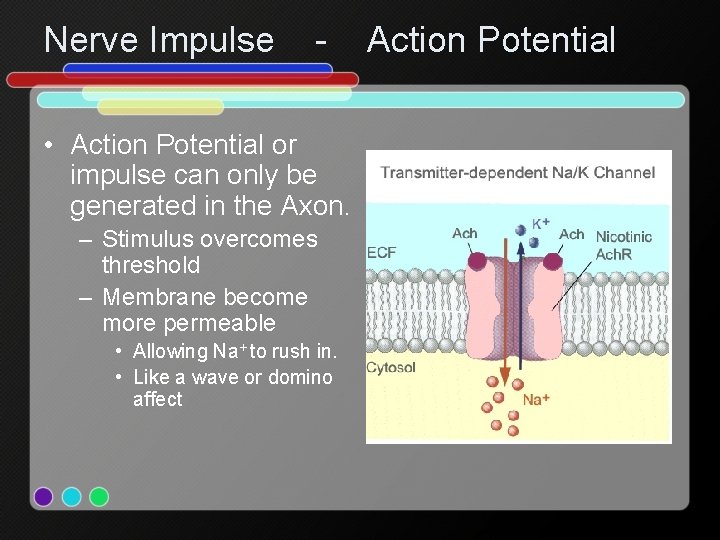
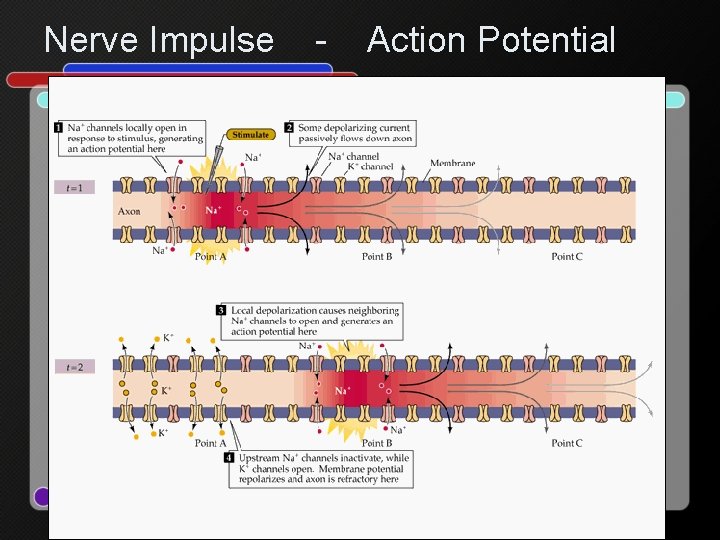
Nerve Impulse - • Action Potential or impulse can only be generated in the Axon. – Stimulus overcomes threshold – Membrane become more permeable • Allowing Na+ to rush in. • Like a wave or domino affect Action Potential
Nerve Impulse - Action Potential
Nerve Impulse - Action Potential
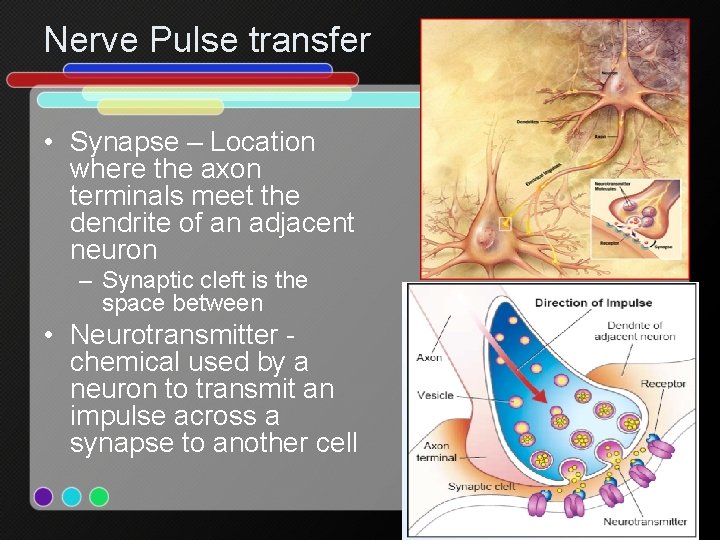
Nerve Pulse transfer • Synapse – Location where the axon terminals meet the dendrite of an adjacent neuron – Synaptic cleft is the space between • Neurotransmitter chemical used by a neuron to transmit an impulse across a synapse to another cell
Action Potential
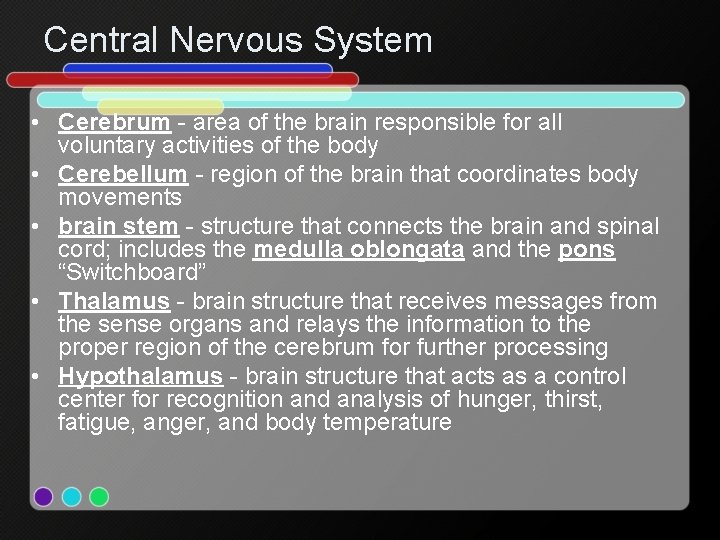
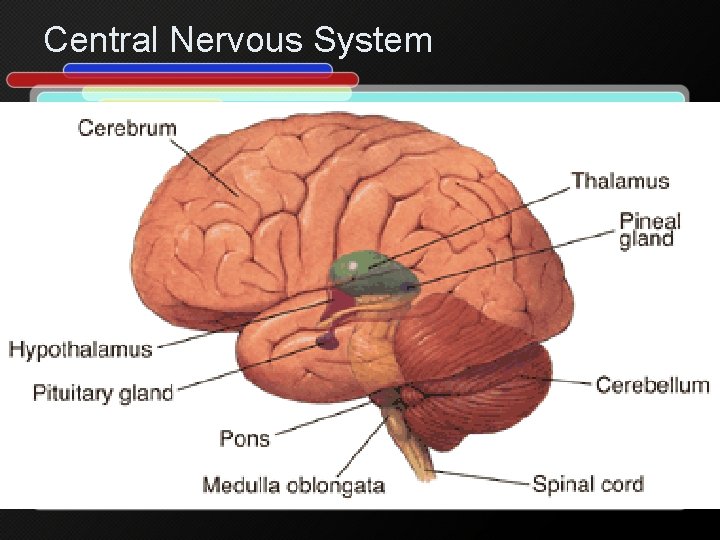
Central Nervous System • Cerebrum - area of the brain responsible for all voluntary activities of the body • Cerebellum - region of the brain that coordinates body movements • brain stem - structure that connects the brain and spinal cord; includes the medulla oblongata and the pons “Switchboard” • Thalamus - brain structure that receives messages from the sense organs and relays the information to the proper region of the cerebrum for further processing • Hypothalamus - brain structure that acts as a control center for recognition and analysis of hunger, thirst, fatigue, anger, and body temperature
Central Nervous System