
The Nervous System Diagram of the Nervous System

- Slides: 15
The Nervous System
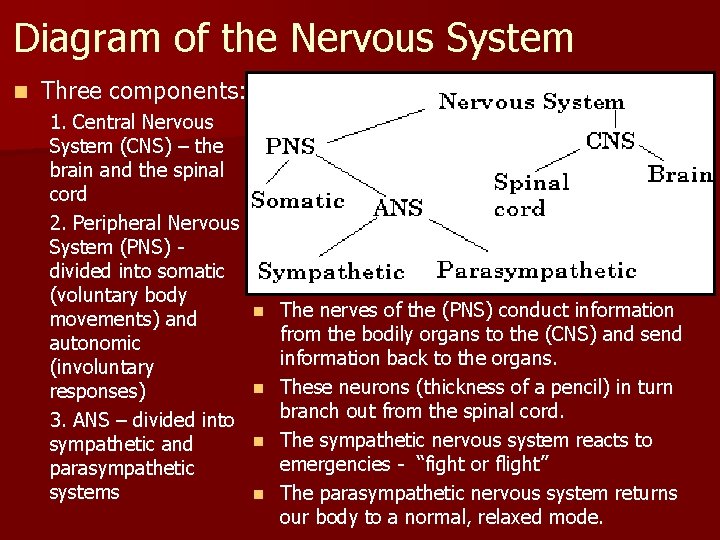
Diagram of the Nervous System n Three components: 1. Central Nervous System (CNS) – the brain and the spinal cord 2. Peripheral Nervous System (PNS) divided into somatic (voluntary body movements) and autonomic (involuntary responses) 3. ANS – divided into sympathetic and parasympathetic systems n n The nerves of the (PNS) conduct information from the bodily organs to the (CNS) and send information back to the organs. These neurons (thickness of a pencil) in turn branch out from the spinal cord. The sympathetic nervous system reacts to emergencies - “fight or flight” The parasympathetic nervous system returns our body to a normal, relaxed mode.
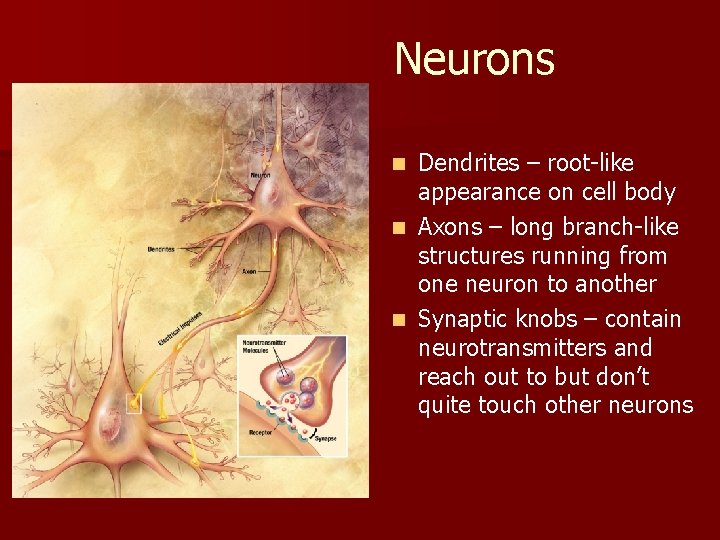
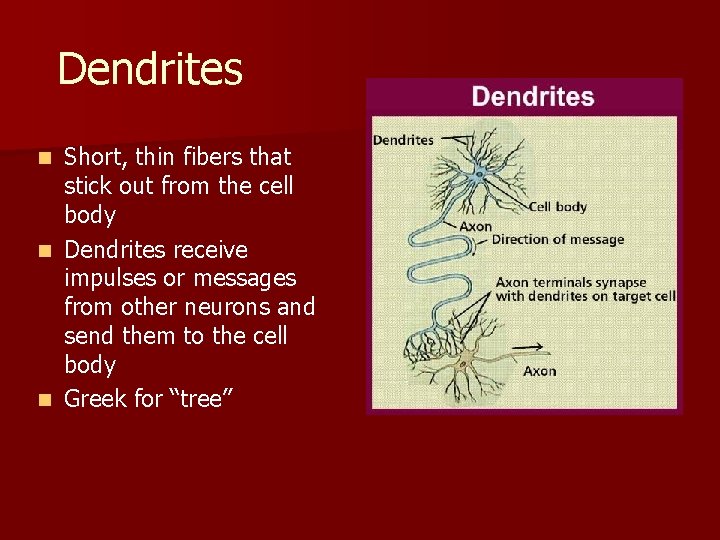
Neurons Dendrites – root-like appearance on cell body n Axons – long branch-like structures running from one neuron to another n Synaptic knobs – contain neurotransmitters and reach out to but don’t quite touch other neurons n
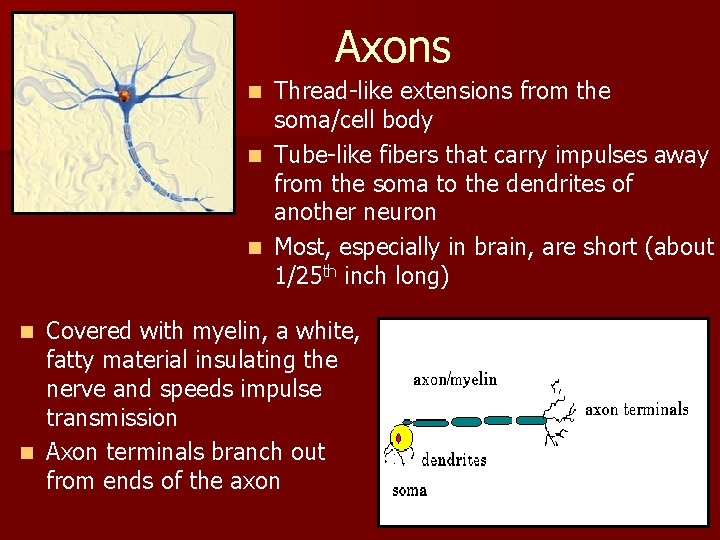
Axons Thread-like extensions from the soma/cell body n Tube-like fibers that carry impulses away from the soma to the dendrites of another neuron n Most, especially in brain, are short (about 1/25 th inch long) n Covered with myelin, a white, fatty material insulating the nerve and speeds impulse transmission n Axon terminals branch out from ends of the axon n
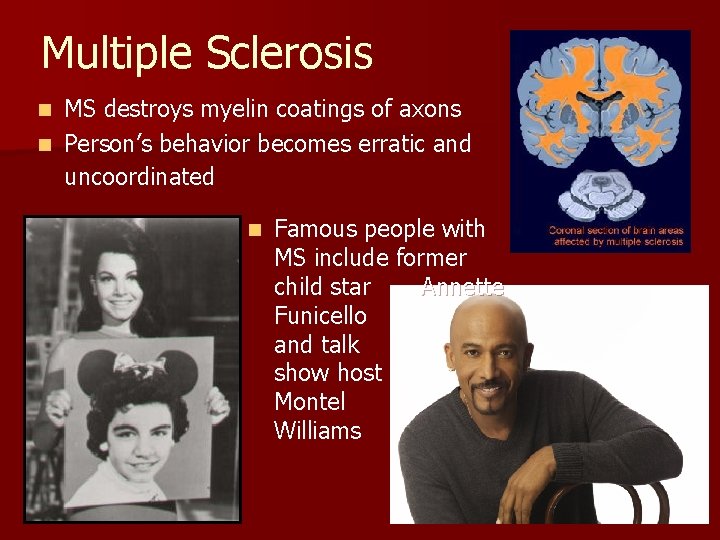
Multiple Sclerosis MS destroys myelin coatings of axons n Person’s behavior becomes erratic and uncoordinated n n Famous people with MS include former child star Annette Funicello and talk show host Montel Williams
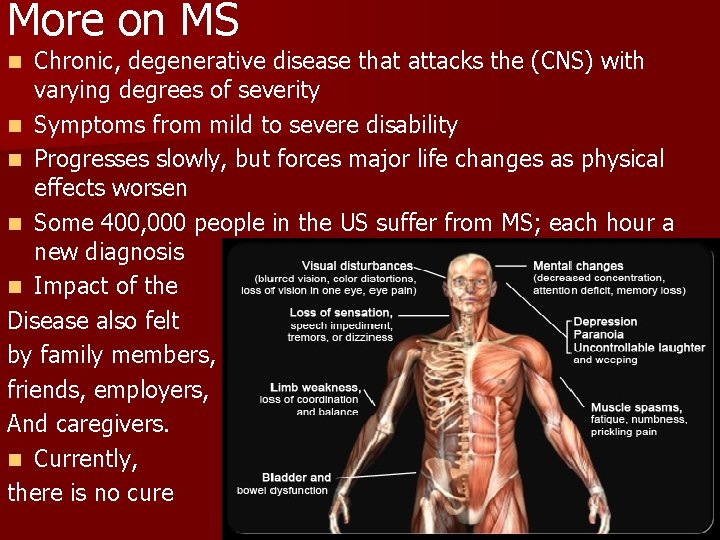
More on MS Chronic, degenerative disease that attacks the (CNS) with varying degrees of severity n Symptoms from mild to severe disability n Progresses slowly, but forces major life changes as physical effects worsen n Some 400, 000 people in the US suffer from MS; each hour a new diagnosis n Impact of the Disease also felt by family members, friends, employers, And caregivers. n Currently, there is no cure n
Dendrites Short, thin fibers that stick out from the cell body n Dendrites receive impulses or messages from other neurons and send them to the cell body n Greek for “tree” n
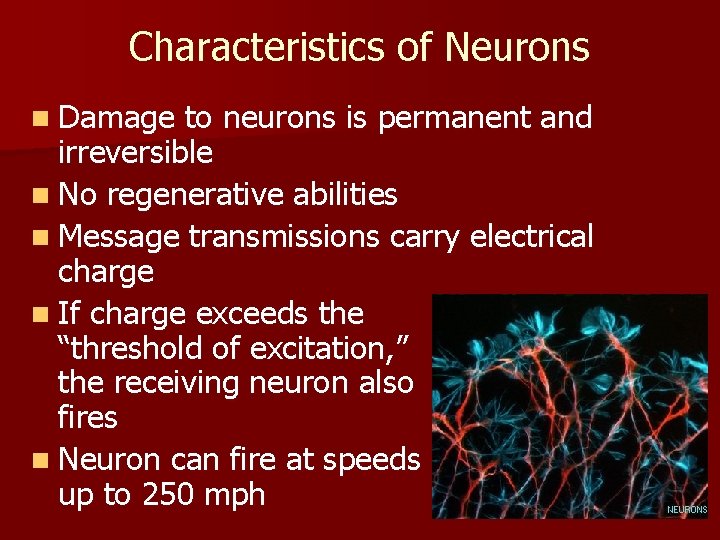
Characteristics of Neurons n Damage to neurons is permanent and irreversible n No regenerative abilities n Message transmissions carry electrical charge n If charge exceeds the “threshold of excitation, ” the receiving neuron also fires n Neuron can fire at speeds up to 250 mph
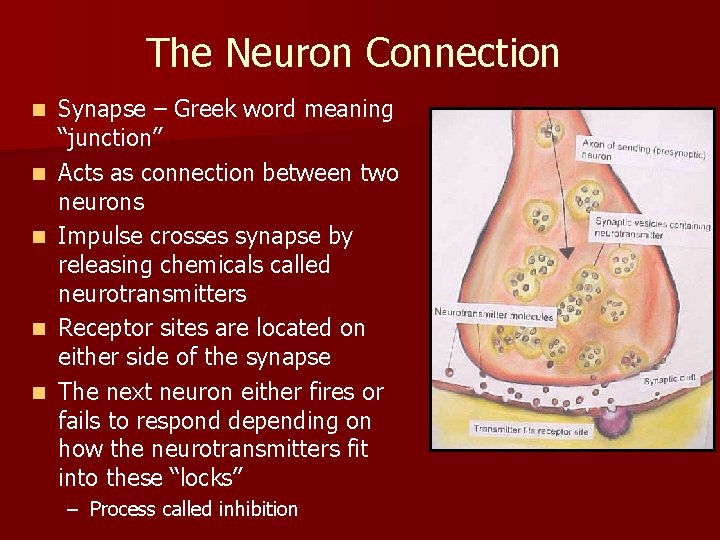
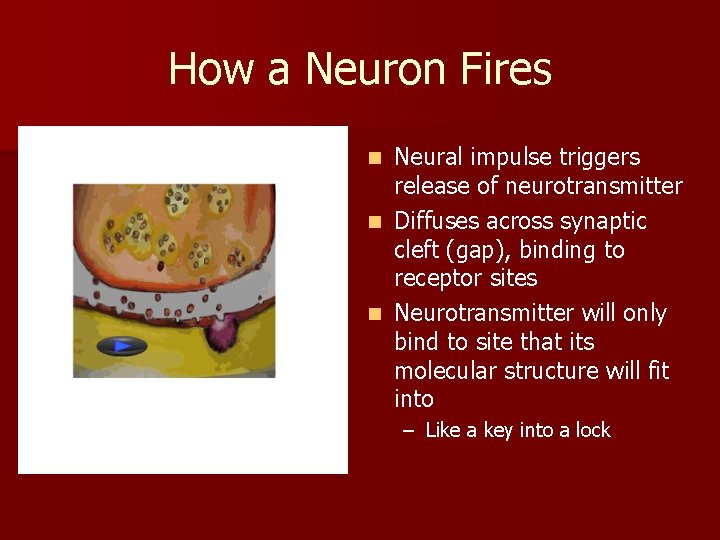
The Neuron Connection n n Synapse – Greek word meaning “junction” Acts as connection between two neurons Impulse crosses synapse by releasing chemicals called neurotransmitters Receptor sites are located on either side of the synapse The next neuron either fires or fails to respond depending on how the neurotransmitters fit into these “locks” – Process called inhibition
How a Neuron Fires Neural impulse triggers release of neurotransmitter n Diffuses across synaptic cleft (gap), binding to receptor sites n Neurotransmitter will only bind to site that its molecular structure will fit into n – Like a key into a lock
Neurotransmitters n Different types of neurotransmitters: – Acetycholine is related to memory and movement § Undersupply could lead to Alzheimer’s disease – Norepinephrine affects memory and learning § Undersupply can lead to depression § Also contributes to mood changes – Serotonin governs sleep patterns, sleep, and body temperature § Low levels can cause depression § Abnormal levels may be related to obsessive-compulsive behavior – Endorphins are the brain’s natural painkillers § Morphine and other opiates are synthetic versions – Dopamine affects learning, emotions, movement § Oversupply can cause schizophrenia; undersupply may result in Parkinson’s disease
Types of Neurons n Ascending vs. descending tracts – Ascending carry sensory information to the brain – Descending carry motor impulses from the brain Afferent (sensory) neurons relay messages to the brain from sense organs like the skin, eyes, and nose n Efferent (motor) neurons send signals from brain to body’s glands and muscles n Interneurons (connecting) carry nerve impulses between the neurons and body n
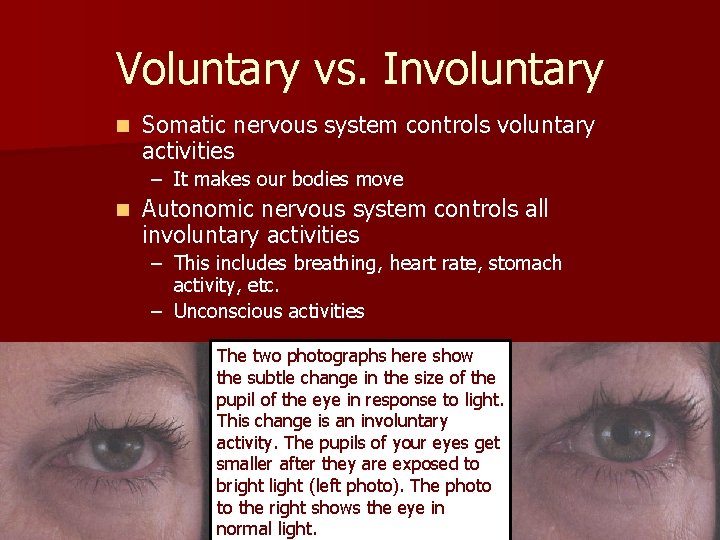
Voluntary vs. Involuntary n Somatic nervous system controls voluntary activities – It makes our bodies move n Autonomic nervous system controls all involuntary activities – This includes breathing, heart rate, stomach activity, etc. – Unconscious activities The two photographs here show the subtle change in the size of the pupil of the eye in response to light. This change is an involuntary activity. The pupils of your eyes get smaller after they are exposed to bright light (left photo). The photo to the right shows the eye in normal light.
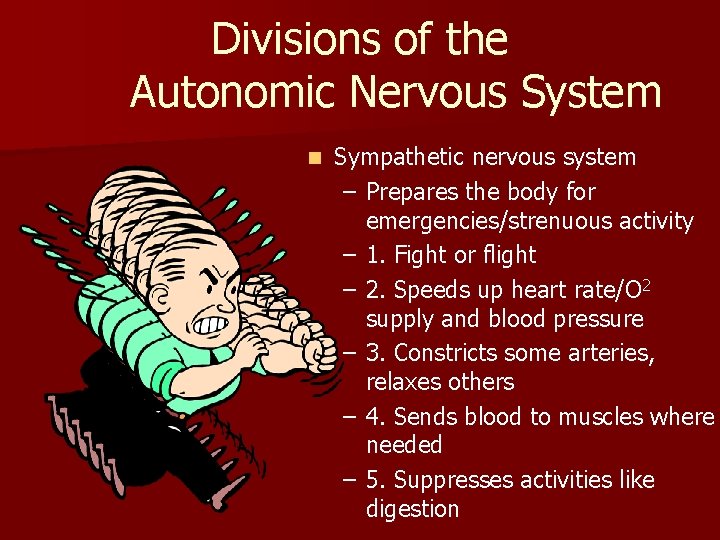
Divisions of the Autonomic Nervous System n Sympathetic nervous system – Prepares the body for emergencies/strenuous activity – 1. Fight or flight – 2. Speeds up heart rate/O 2 supply and blood pressure – 3. Constricts some arteries, relaxes others – 4. Sends blood to muscles where needed – 5. Suppresses activities like digestion
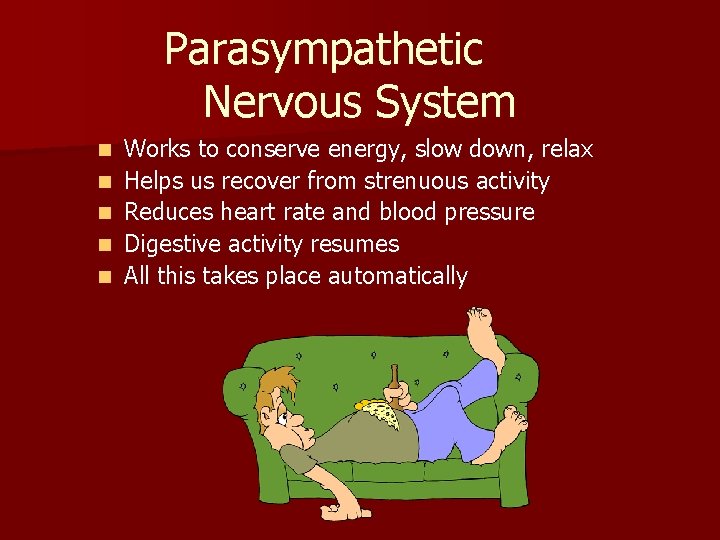
Parasympathetic Nervous System n n n Works to conserve energy, slow down, relax Helps us recover from strenuous activity Reduces heart rate and blood pressure Digestive activity resumes All this takes place automatically