
The Nervous System Controls and coordinates the bodys
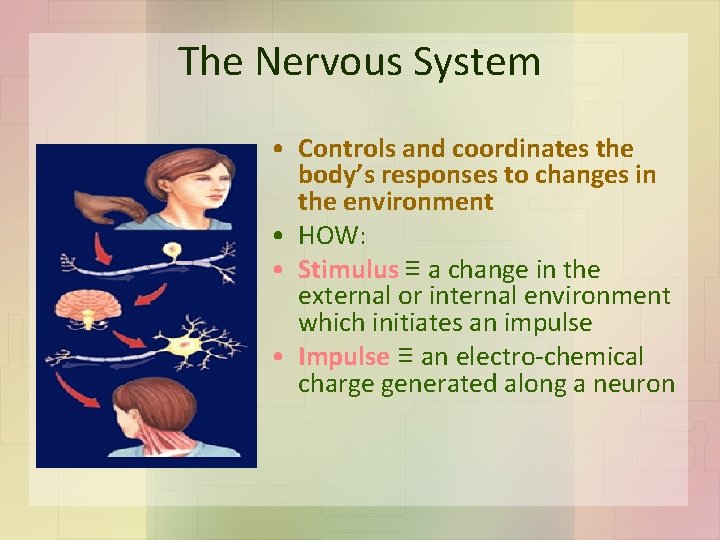
The Nervous System • Controls and coordinates the body’s responses to changes in the environment • HOW: • Stimulus ≡ a change in the external or internal environment which initiates an impulse • Impulse ≡ an electro-chemical charge generated along a neuron
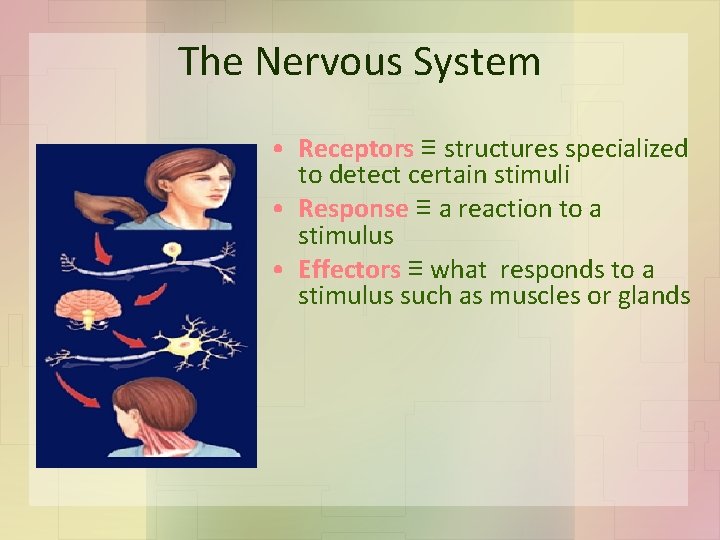
The Nervous System • Receptors ≡ structures specialized to detect certain stimuli • Response ≡ a reaction to a stimulus • Effectors ≡ what responds to a stimulus such as muscles or glands
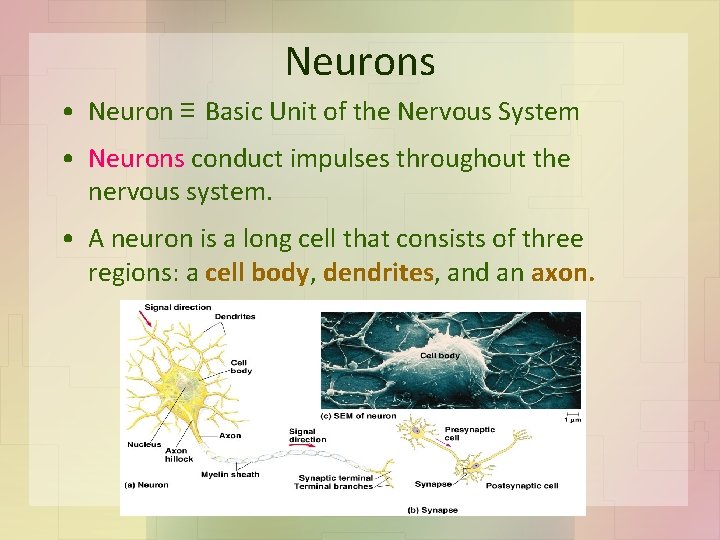
Neurons • Neuron ≡ Basic Unit of the Nervous System • Neurons conduct impulses throughout the nervous system. • A neuron is a long cell that consists of three regions: a cell body, dendrites, and an axon.
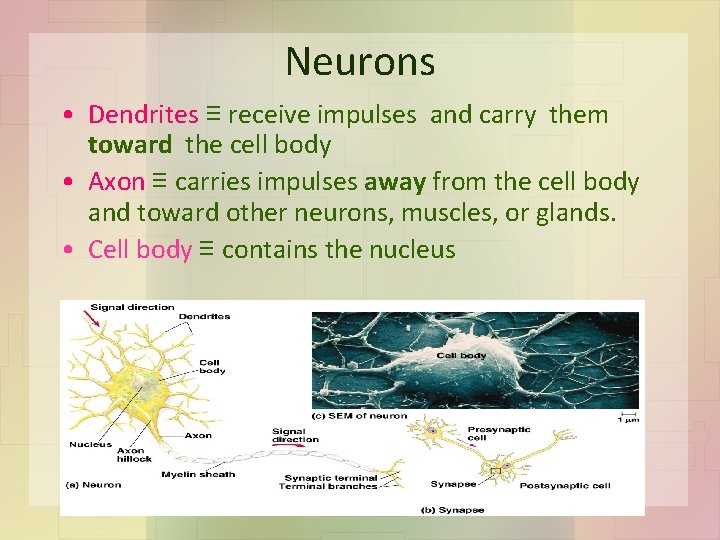
Neurons • Dendrites ≡ receive impulses and carry them toward the cell body • Axon ≡ carries impulses away from the cell body and toward other neurons, muscles, or glands. • Cell body ≡ contains the nucleus
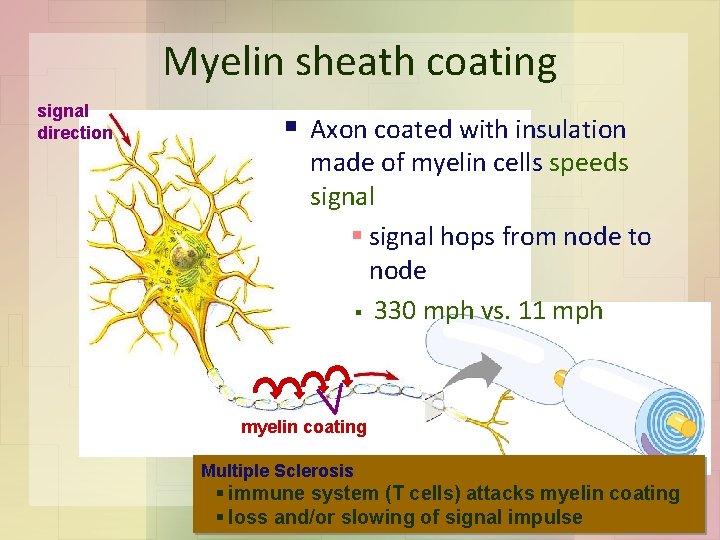
Myelin sheath coating signal direction § Axon coated with insulation made of myelin cells speeds signal § signal hops from node to node § 330 mph vs. 11 mph myelin coating Multiple Sclerosis 2003 -2004 § immune system (T cells) attacks myelin coating § loss and/or slowing of signal impulse
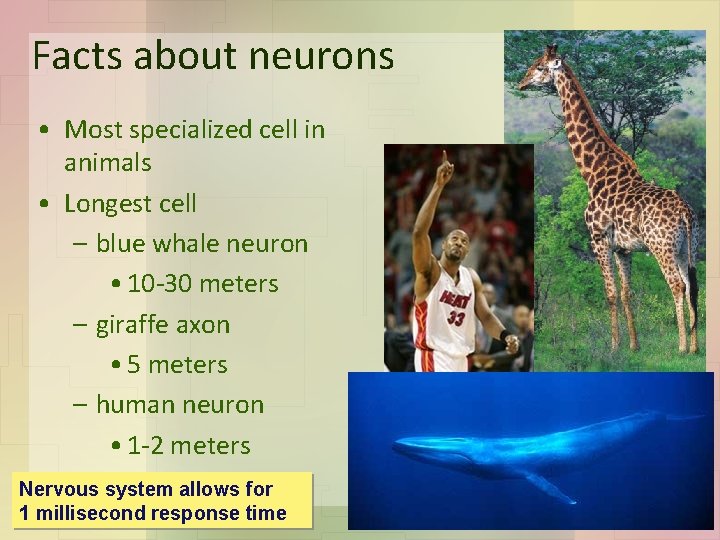
Facts about neurons • Most specialized cell in animals • Longest cell – blue whale neuron • 10 -30 meters – giraffe axon • 5 meters – human neuron • 1 -2 meters Nervous system allows for 1 millisecond response time 2003 -2004
Types of Neurons 3 Types of neurons • 1. Sensory neurons: carry impulses from the body to the spinal cord and brain (sense receptors) • 2. Motor neurons carry the response impulses away from the brain and spinal cord to a muscle or gland. (effectors) • 3. Interneurons: connect sensory &motor neurons within the brain and spinal cord
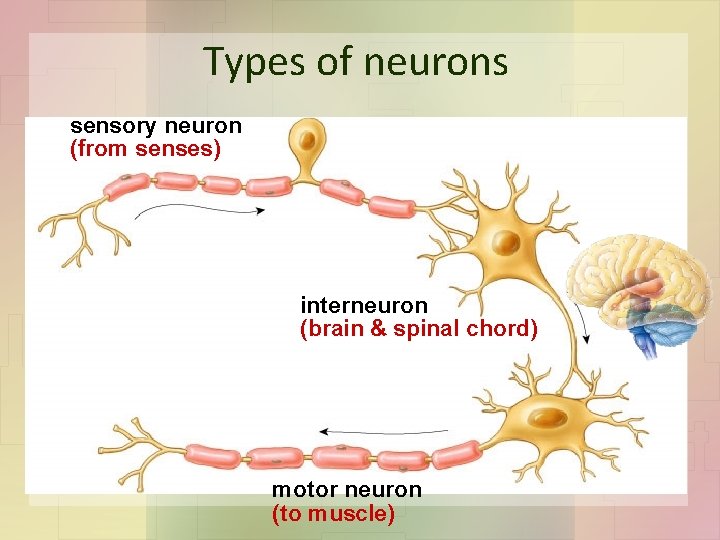
Types of neurons sensory neuron (from senses) interneuron (brain & spinal chord) 2003 -2004 motor neuron (to muscle)
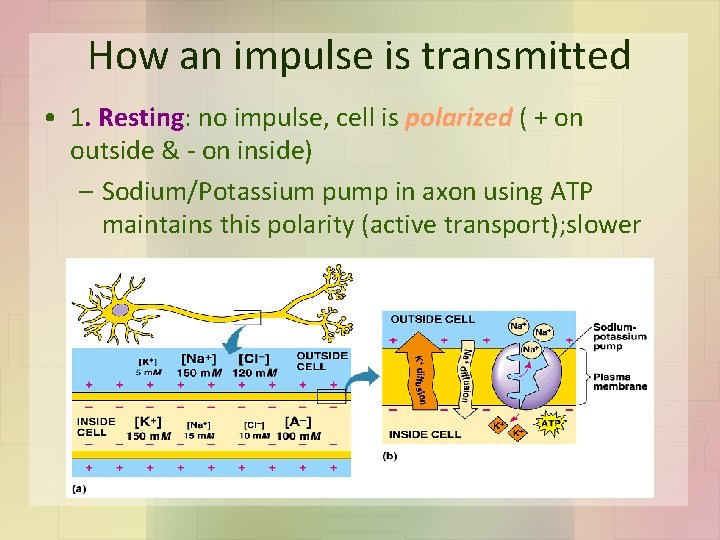
How an impulse is transmitted • 1. Resting: no impulse, cell is polarized ( + on outside & - on inside) – Sodium/Potassium pump in axon using ATP maintains this polarity (active transport); slower
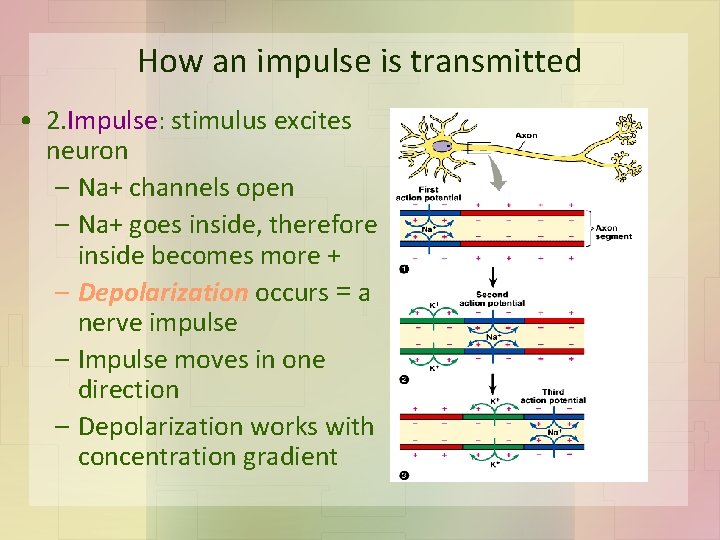
How an impulse is transmitted • 2. Impulse: stimulus excites neuron – Na+ channels open – Na+ goes inside, therefore inside becomes more + – Depolarization occurs = a nerve impulse – Impulse moves in one direction – Depolarization works with concentration gradient
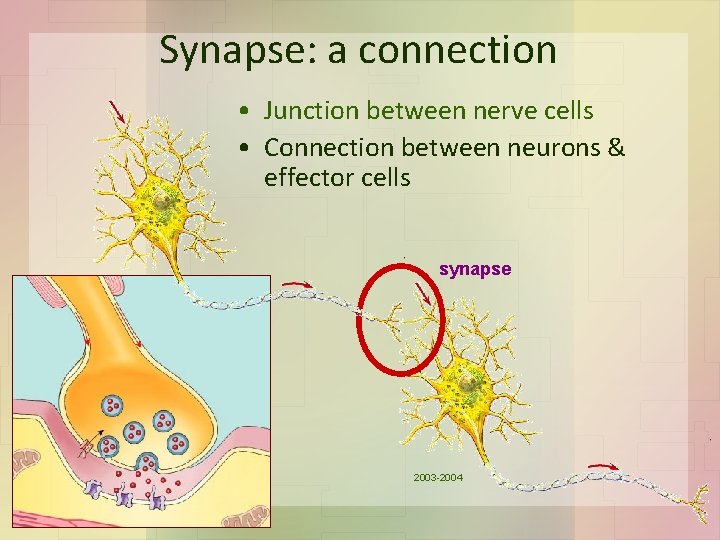
Synapse: a connection • Junction between nerve cells • Connection between neurons & effector cells synapse 2003 -2004
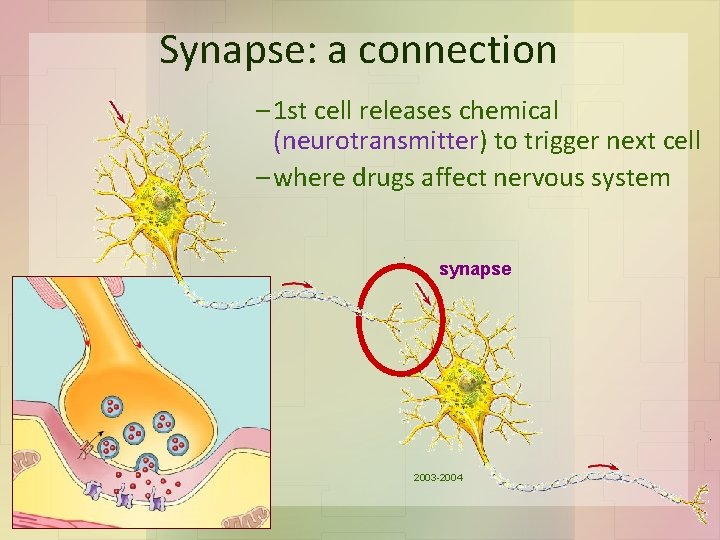
Synapse: a connection – 1 st cell releases chemical (neurotransmitter) to trigger next cell – where drugs affect nervous system synapse 2003 -2004
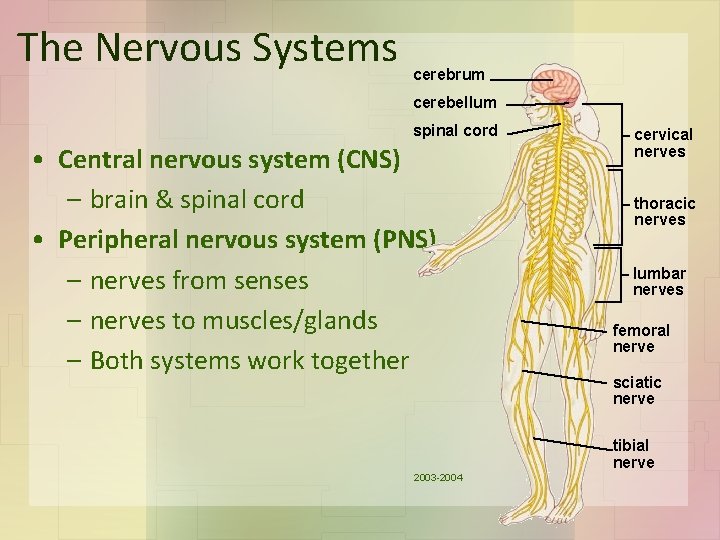
The Nervous Systems cerebrum cerebellum spinal cord • Central nervous system (CNS) – brain & spinal cord • Peripheral nervous system (PNS) – nerves from senses – nerves to muscles/glands – Both systems work together cervical nerves thoracic nerves lumbar nerves femoral nerve sciatic nerve tibial nerve 2003 -2004
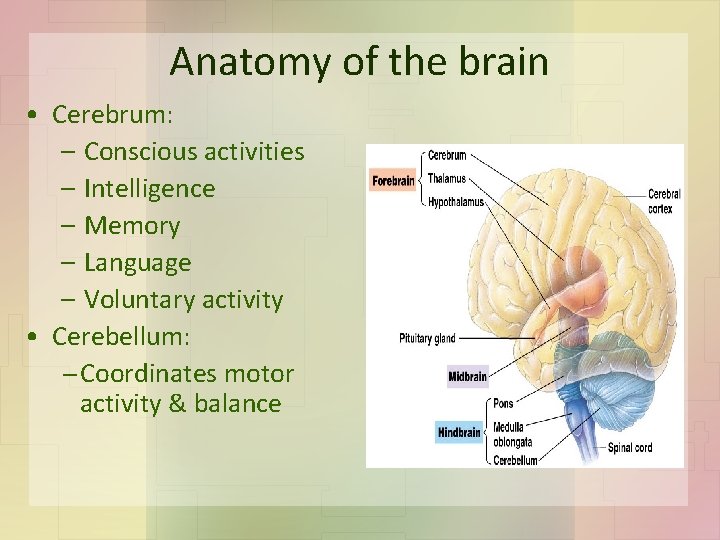
Anatomy of the brain • Cerebrum: – Conscious activities – Intelligence – Memory – Language – Voluntary activity • Cerebellum: Coordinates motor activity & balance
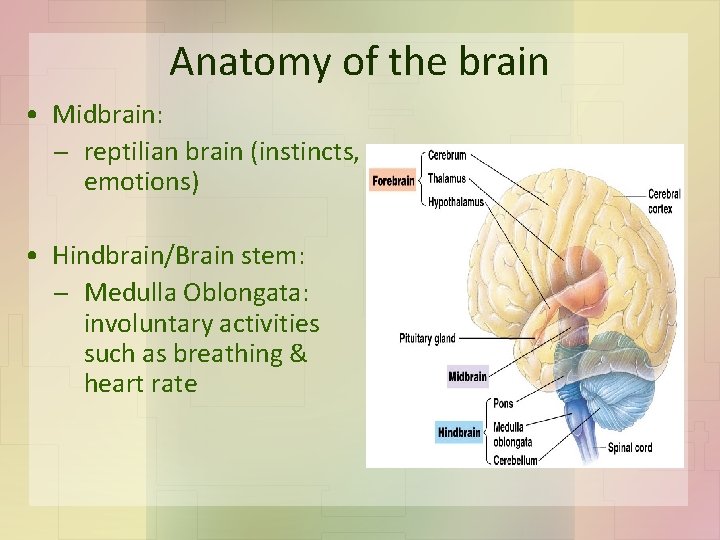
Anatomy of the brain • Midbrain: reptilian brain (instincts, emotions) • Hindbrain/Brain stem: Medulla Oblongata: involuntary activities such as breathing & heart rate
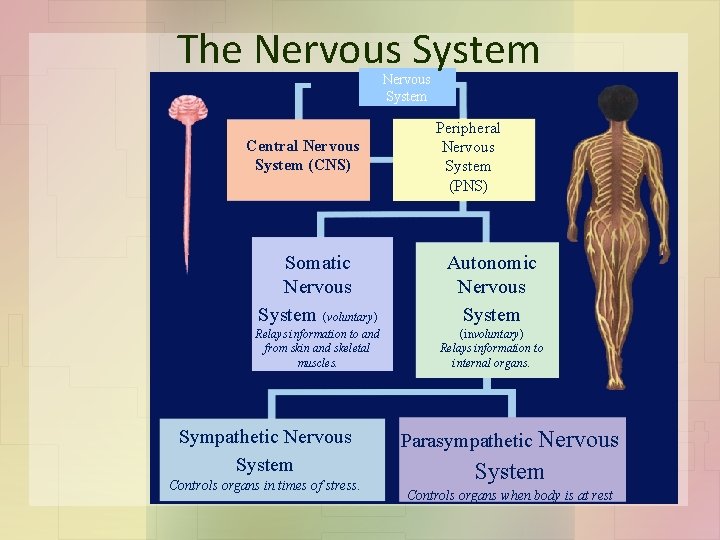
The Nervous System Central Nervous System (CNS) Peripheral Nervous System (PNS) Somatic Nervous System (voluntary) Autonomic Nervous System Relays information to and from skin and skeletal muscles. (involuntary) Relays information to internal organs. Sympathetic Nervous System Controls organs in times of stress. Parasympathetic Nervous System Controls organs when body is at rest
- Slides: 16