
The Nervous System Chapter 45 Outline Neuron Organization





- Slides: 48
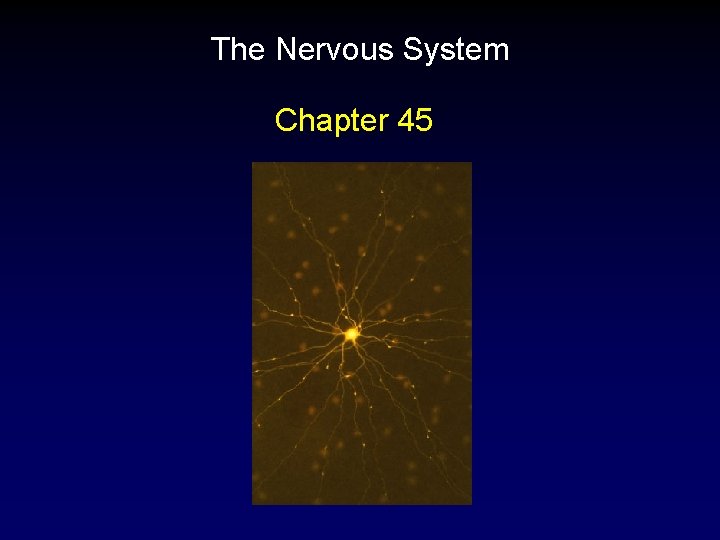
The Nervous System Chapter 45
Outline • • • Neuron Organization Resting Membrane Potential Action Potentials Structure of Synapses Neurotransmitters and their Functions Evolution of the Vertebrate Brain Human Forebrain The Spinal Cord Peripheral Nervous System Autonomic Nervous System 2
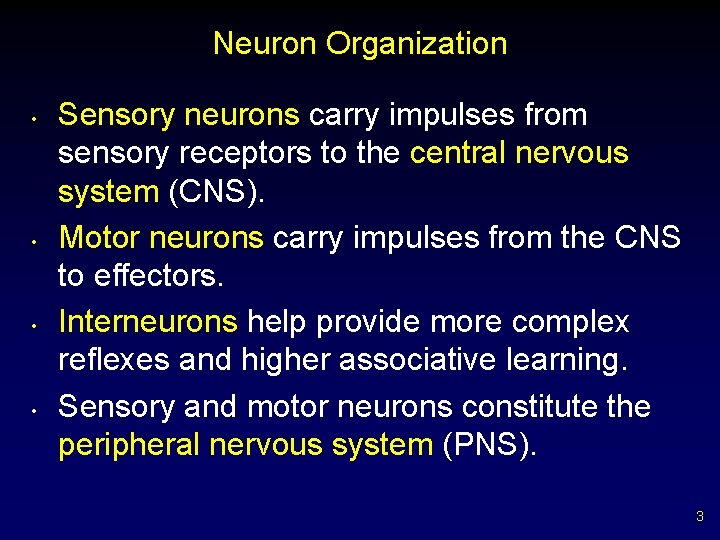
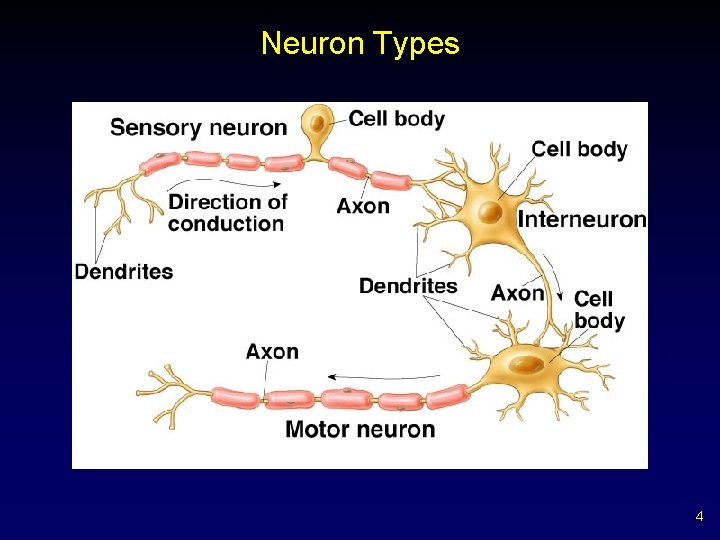
Neuron Organization • • Sensory neurons carry impulses from sensory receptors to the central nervous system (CNS). Motor neurons carry impulses from the CNS to effectors. Interneurons help provide more complex reflexes and higher associative learning. Sensory and motor neurons constitute the peripheral nervous system (PNS). 3
Neuron Types 4
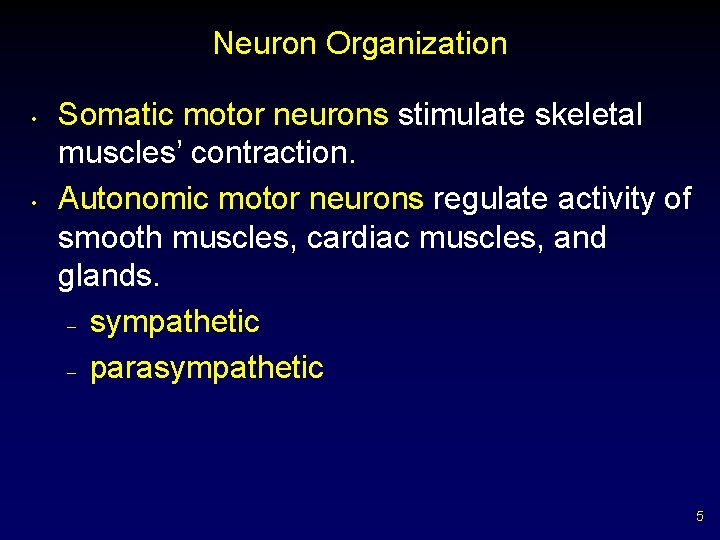
Neuron Organization • • Somatic motor neurons stimulate skeletal muscles’ contraction. Autonomic motor neurons regulate activity of smooth muscles, cardiac muscles, and glands. – sympathetic – parasympathetic 5
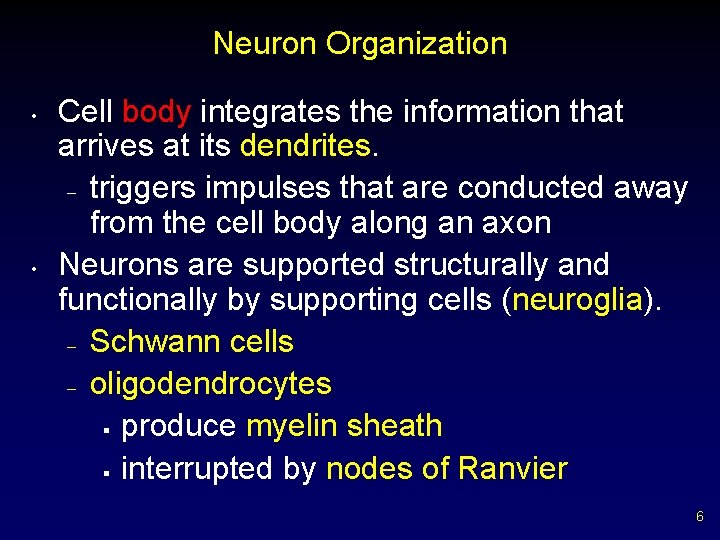
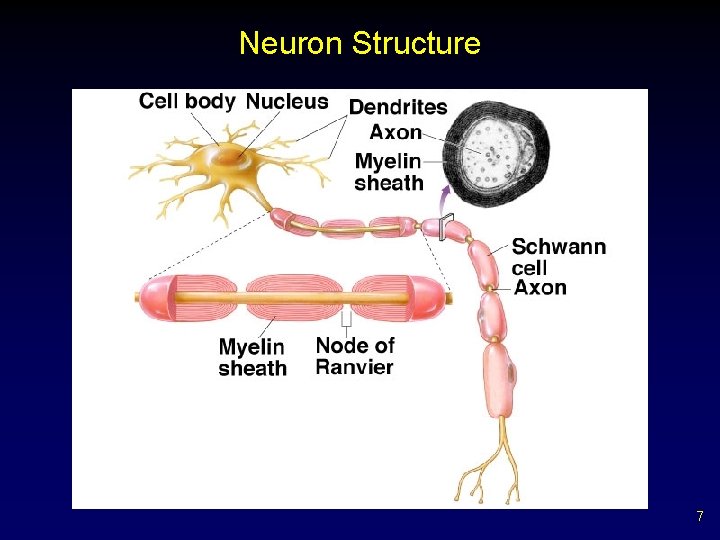
Neuron Organization • • Cell body integrates the information that arrives at its dendrites. – triggers impulses that are conducted away from the cell body along an axon Neurons are supported structurally and functionally by supporting cells (neuroglia). – Schwann cells – oligodendrocytes § produce myelin sheath § interrupted by nodes of Ranvier 6
Neuron Structure 7
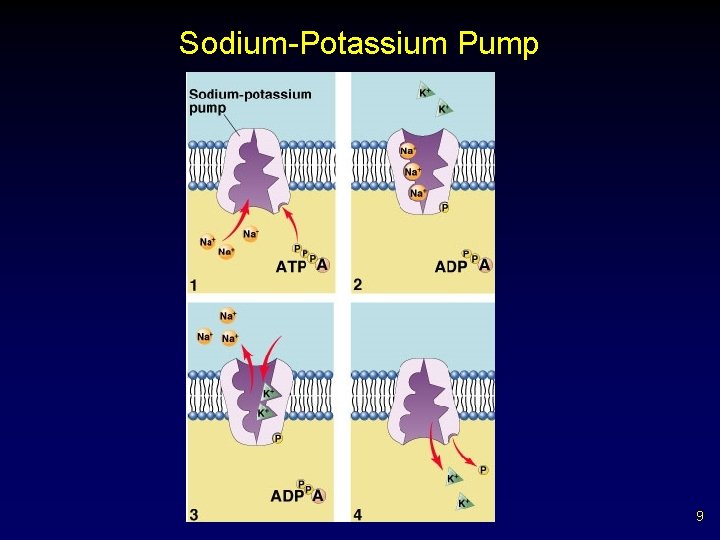
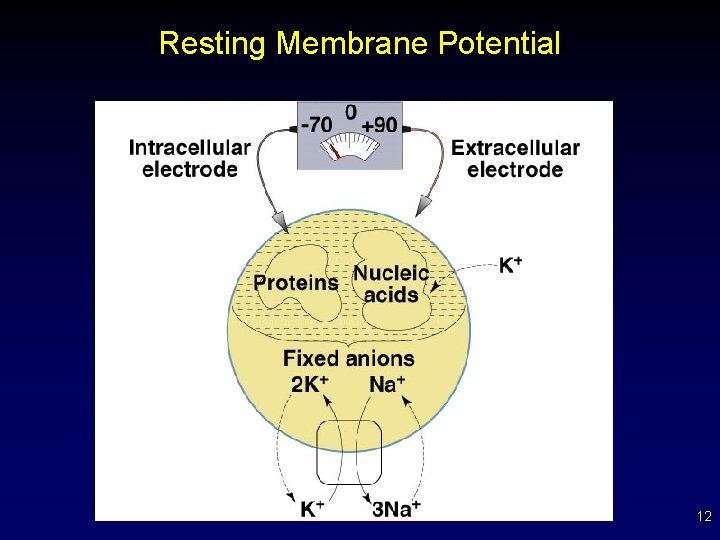
Resting Membrane Potential • • Potential difference exists across every cell’s plasma membrane. – cytoplasm side is negative pole, and extracellular fluid side is positive pole Inside of cell negatively charged because: – large, negatively charged molecules are more abundant inside the cell – sodium potassium pump – voltage-gated ion channels 8
Sodium-Potassium Pump 9
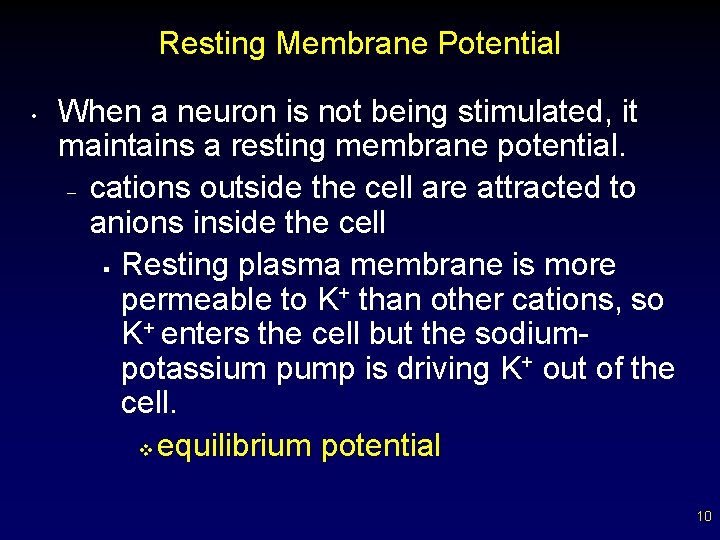
Resting Membrane Potential • When a neuron is not being stimulated, it maintains a resting membrane potential. – cations outside the cell are attracted to anions inside the cell § Resting plasma membrane is more permeable to K+ than other cations, so K+ enters the cell but the sodiumpotassium pump is driving K+ out of the cell. v equilibrium potential 10
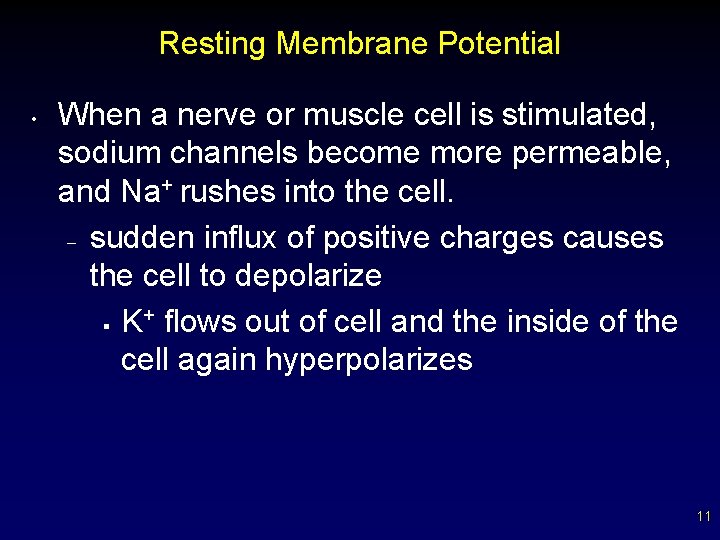
Resting Membrane Potential • When a nerve or muscle cell is stimulated, sodium channels become more permeable, and Na+ rushes into the cell. – sudden influx of positive charges causes the cell to depolarize + § K flows out of cell and the inside of the cell again hyperpolarizes 11
Resting Membrane Potential 12
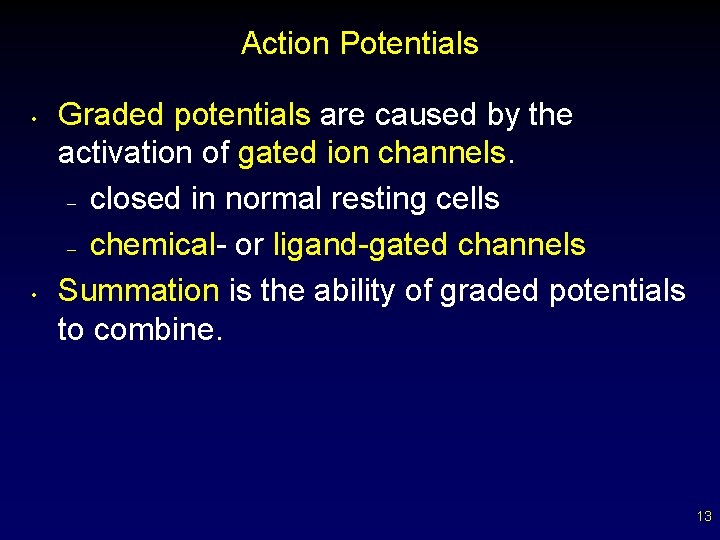
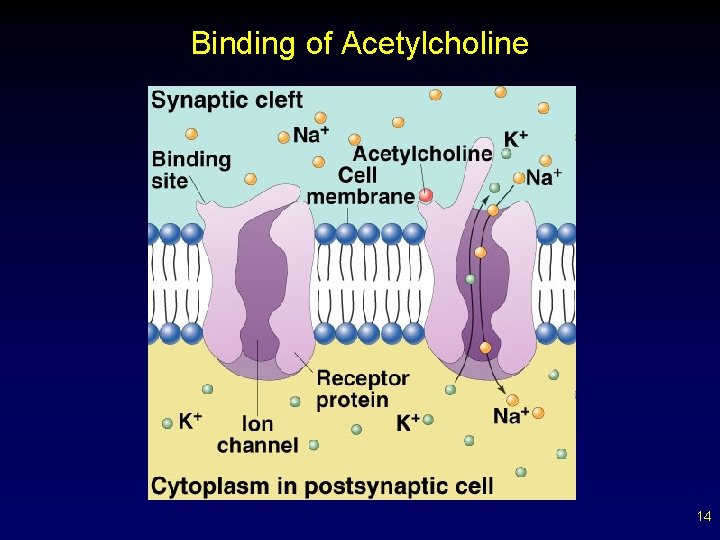
Action Potentials • • Graded potentials are caused by the activation of gated ion channels. – closed in normal resting cells – chemical- or ligand-gated channels Summation is the ability of graded potentials to combine. 13
Binding of Acetylcholine 14
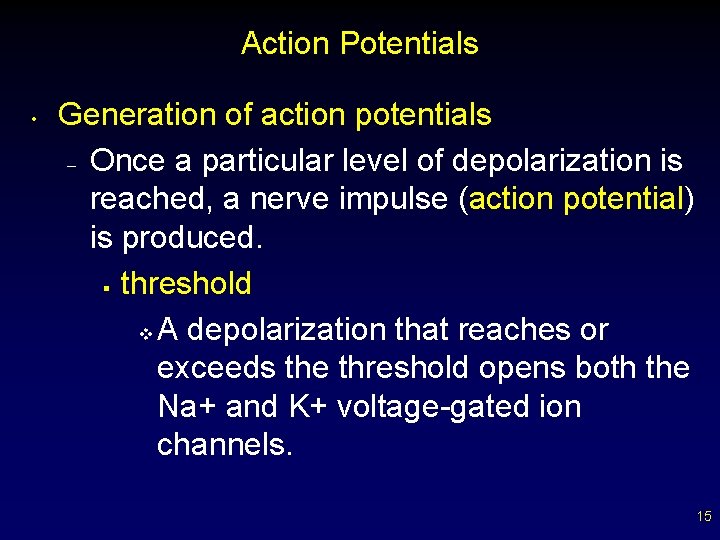
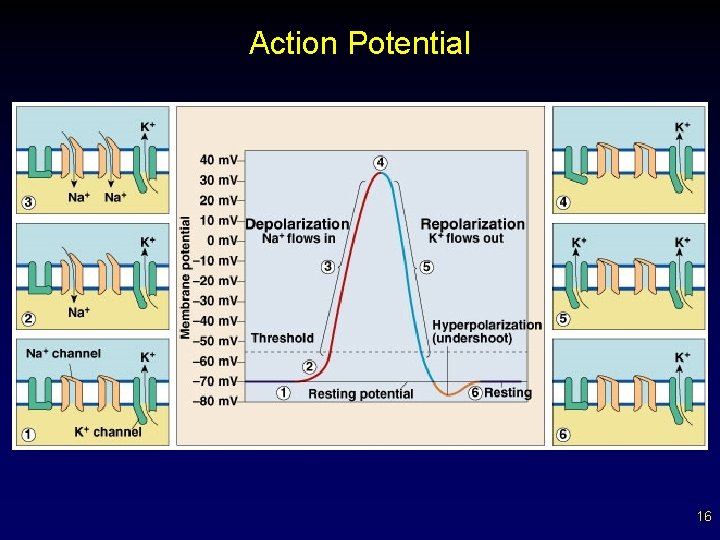
Action Potentials • Generation of action potentials – Once a particular level of depolarization is reached, a nerve impulse (action potential) is produced. § threshold v A depolarization that reaches or exceeds the threshold opens both the Na+ and K+ voltage-gated ion channels. 15
Action Potential 16
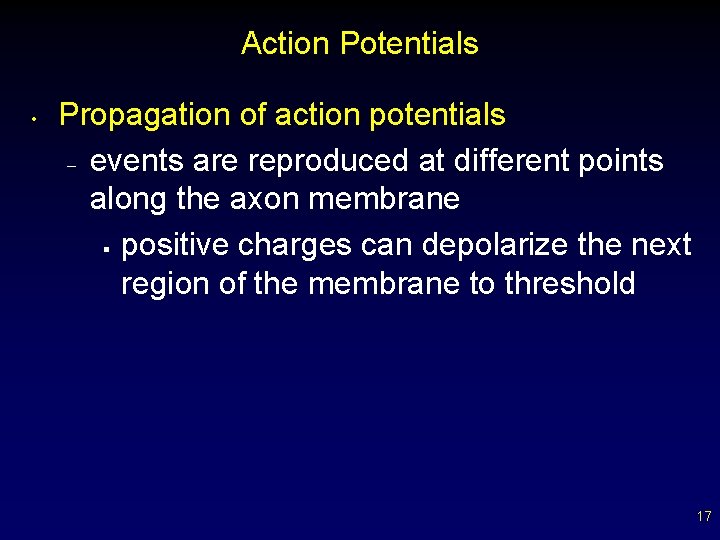
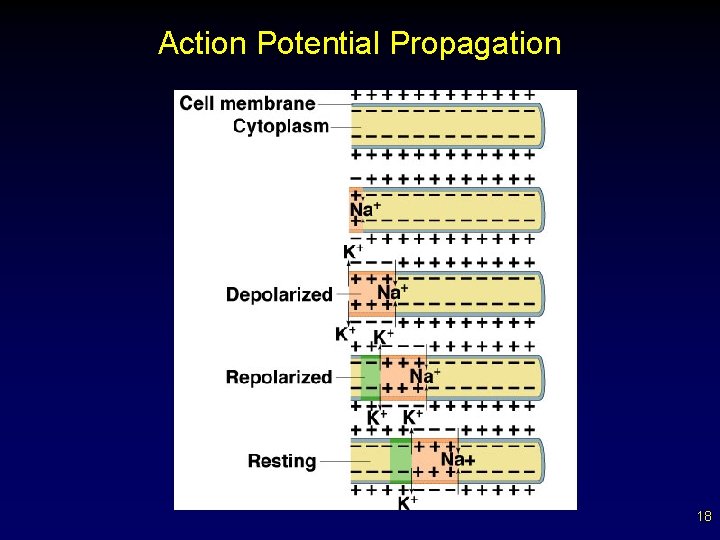
Action Potentials • Propagation of action potentials – events are reproduced at different points along the axon membrane § positive charges can depolarize the next region of the membrane to threshold 17
Action Potential Propagation 18
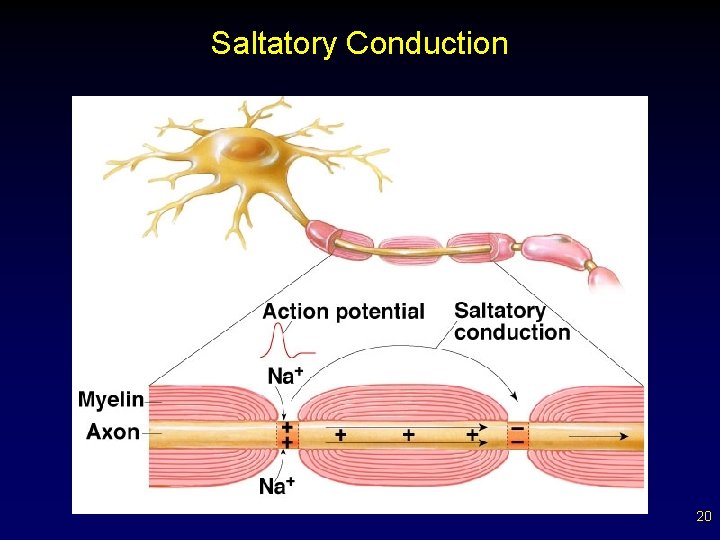
Action Potentials • Saltatory conduction – one node of Ranvier depolarizes the next, so that action potentials can skip between nodes § saltatory conductions in myelinated axon more rapid than conduction in an unmyelinated axon 19
Saltatory Conduction 20
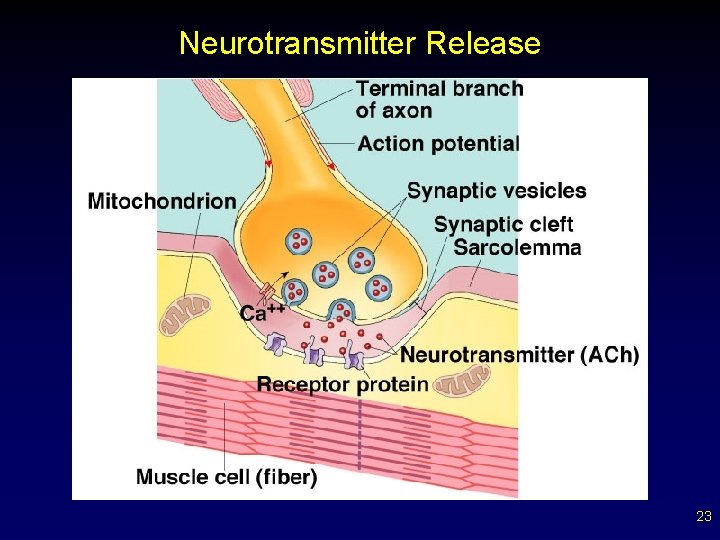
Structure of Synapses • Synapses are intercellular junctions. – The neuron transmitting an action potential to the synapse is the presynaptic cell, while the receiving cell on the other side of the synapse is the postsynaptic cell. § synaptic cleft - narrow space separating two cells 21
Structure of Synapses • End of presynaptic axon contains synaptic vesicles, each packed with neurotransmitters. – diffuse rapidly to the other side of the cleft, and bind to receptor proteins in the membrane of postsynaptic cell 22
Neurotransmitter Release 23
Neurotransmitters and Their Functions • Acetylcholine – binds to its receptor proteins in the postsynaptic membrane and thereby causes ion channels within the proteins to open § produces an excitatory postsynaptic potential (EPSP) v acetycholine eliminated from the synaptic cleft by acetylcholinesterase 24
Neurotransmitters and Their Functions • Glutamate, glycine, and GABA – Glutamate is the major excitatory neurotransmitter in the vertebrate CNS. – Glycine and GABA are inhibitory neurotransmitters. § produces inhibitory postsynaptic potential (IPSP) 25
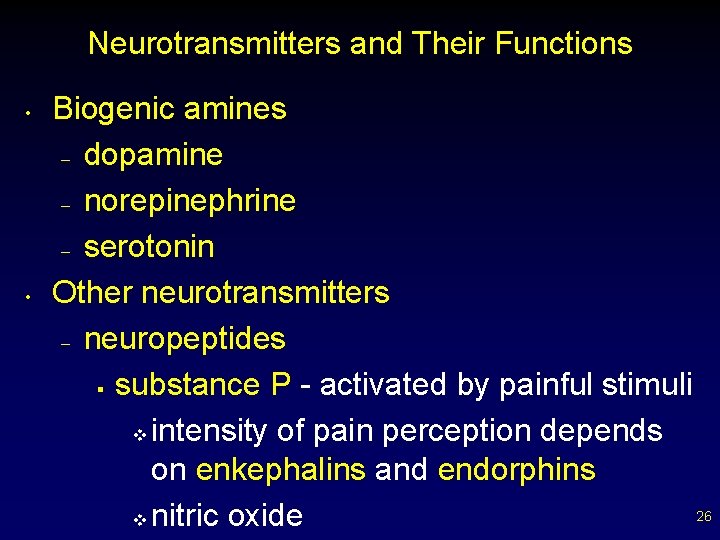
Neurotransmitters and Their Functions • • Biogenic amines – dopamine – norepinephrine – serotonin Other neurotransmitters – neuropeptides § substance P - activated by painful stimuli v intensity of pain perception depends on enkephalins and endorphins 26 v nitric oxide
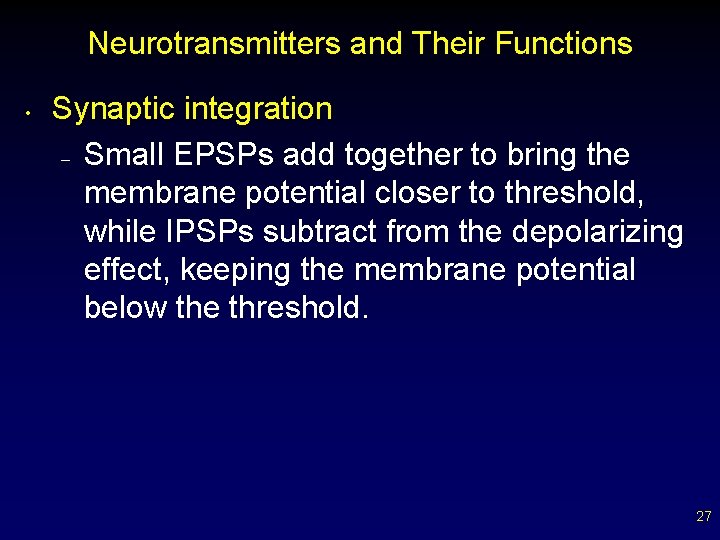
Neurotransmitters and Their Functions • Synaptic integration – Small EPSPs add together to bring the membrane potential closer to threshold, while IPSPs subtract from the depolarizing effect, keeping the membrane potential below the threshold. 27
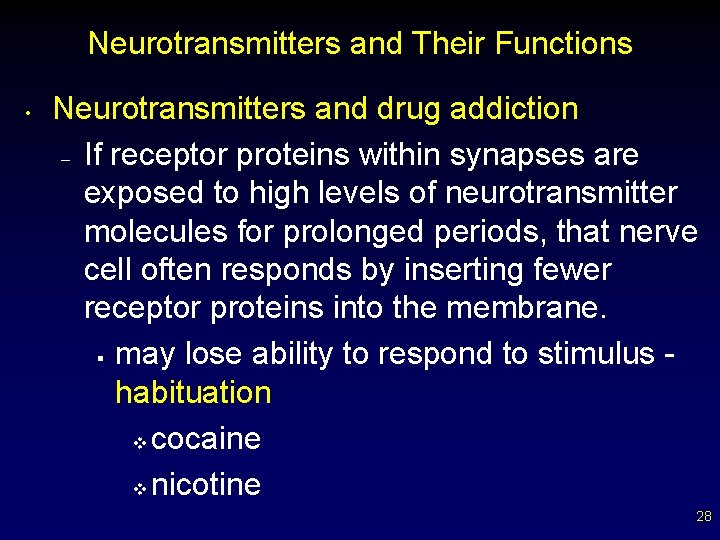
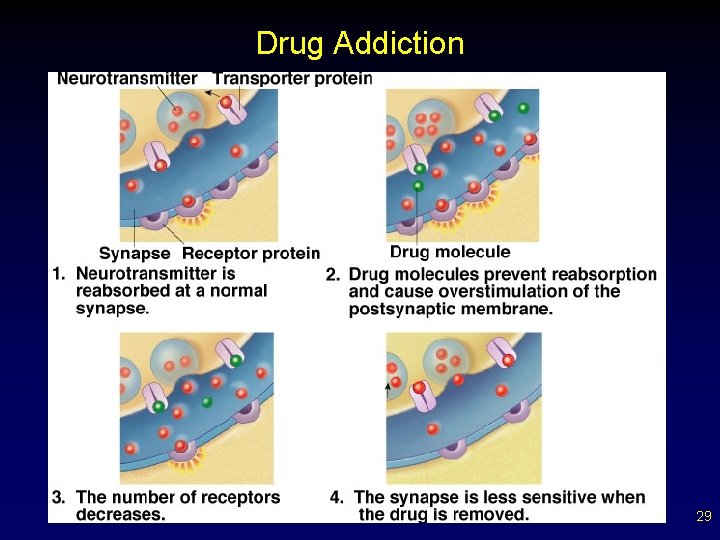
Neurotransmitters and Their Functions • Neurotransmitters and drug addiction – If receptor proteins within synapses are exposed to high levels of neurotransmitter molecules for prolonged periods, that nerve cell often responds by inserting fewer receptor proteins into the membrane. § may lose ability to respond to stimulus habituation v cocaine v nicotine 28
Drug Addiction 29
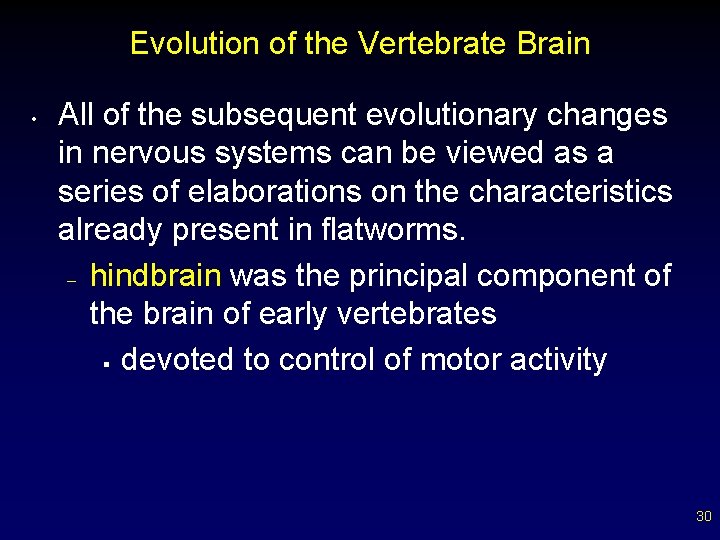
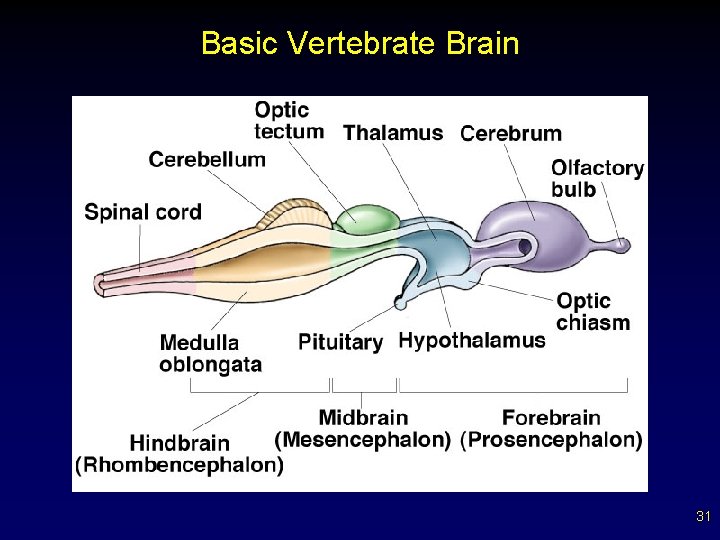
Evolution of the Vertebrate Brain • All of the subsequent evolutionary changes in nervous systems can be viewed as a series of elaborations on the characteristics already present in flatworms. – hindbrain was the principal component of the brain of early vertebrates § devoted to control of motor activity 30
Basic Vertebrate Brain 31
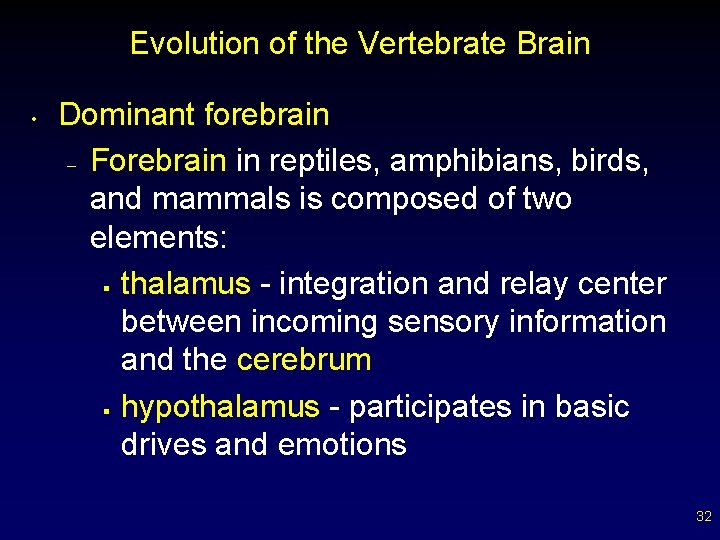
Evolution of the Vertebrate Brain • Dominant forebrain – Forebrain in reptiles, amphibians, birds, and mammals is composed of two elements: § thalamus - integration and relay center between incoming sensory information and the cerebrum § hypothalamus - participates in basic drives and emotions 32
Evolution of the Vertebrate Brain • Telencephalon (endbrain) is located at the front of the forebrain. – called cerebrum in mammals § mammals have brains particularly large relative to their body mass v largely reflects enlargement of cerebrum Ø center for correlation, association, and learning in mammals 33
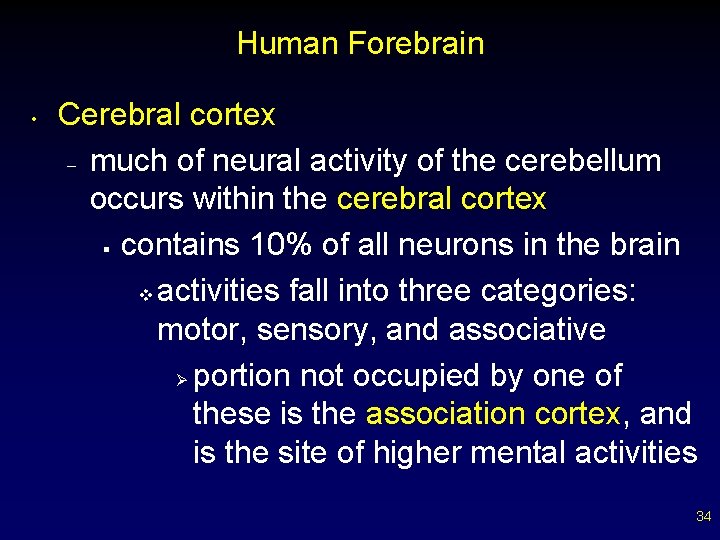
Human Forebrain • Cerebral cortex – much of neural activity of the cerebellum occurs within the cerebral cortex § contains 10% of all neurons in the brain v activities fall into three categories: motor, sensory, and associative Ø portion not occupied by one of these is the association cortex, and is the site of higher mental activities 34
Cerebrum 35
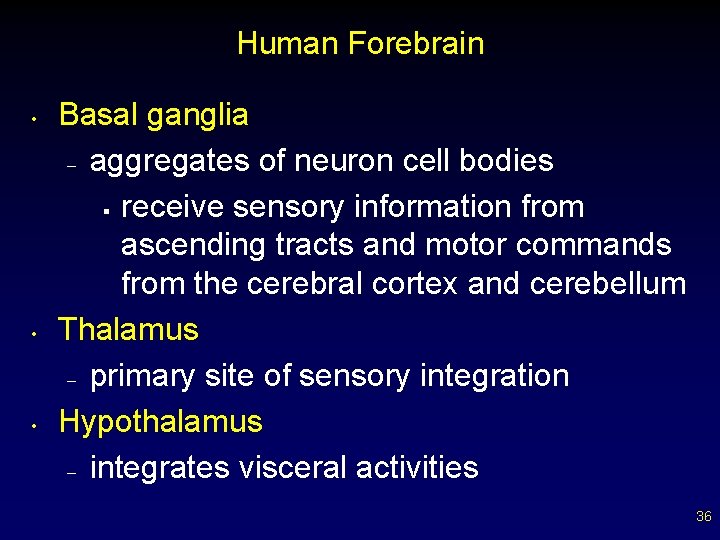
Human Forebrain • • • Basal ganglia – aggregates of neuron cell bodies § receive sensory information from ascending tracts and motor commands from the cerebral cortex and cerebellum Thalamus – primary site of sensory integration Hypothalamus – integrates visceral activities 36
Language and Other Functions • Arousal and sleep – one section of reticular formation controls consciousness and alertness § reticular activating system controls both sleep and waking state v sleep not a loss of consciousness 37
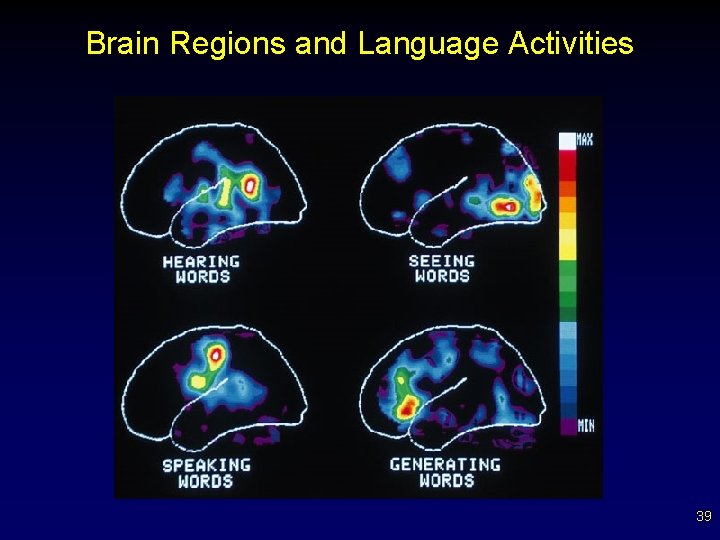
Language and Other Functions • • Language and spatial recognition – left hemisphere dominant hemisphere for language § sequential reasoning – right hemisphere usually adept at spatial reasoning § musical ability Memory and learning – fundamental differences between short and long-term memory 38
Brain Regions and Language Activities 39
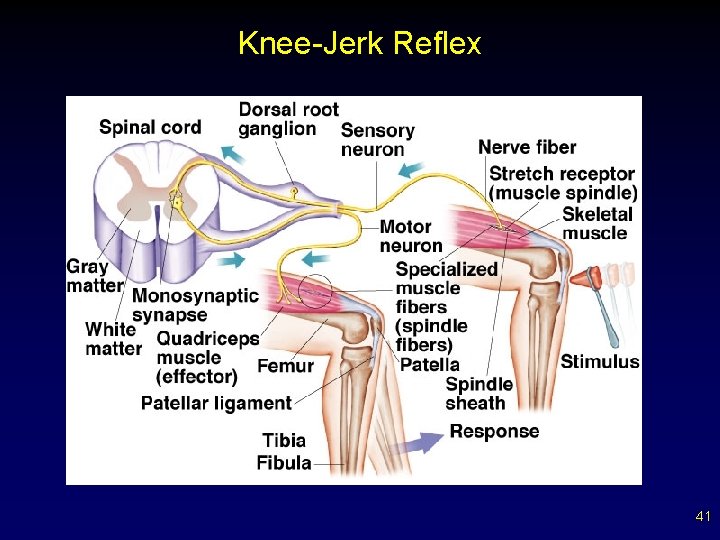
The Spinal Cord • Spinal cord is a cable of neurons extending from the brain down through the backbone. – protected by vertebral column and layers of membranes (meninges) § relays messages, and functions in reflexes v knee-jerk reflex is monosynaptic Ø very fast 40
Knee-Jerk Reflex 41
Components of the Peripheral Nervous System • • Axons of sensory neurons enter the dorsal surface of the spinal cord and form the dorsal root of the spinal nerve. Motor axons leave from the ventral surface and form the ventral root of the spinal cord. – Cell bodies of sensory neurons are grouped together outside each level of the spinal cord in dorsal root ganglia. 42
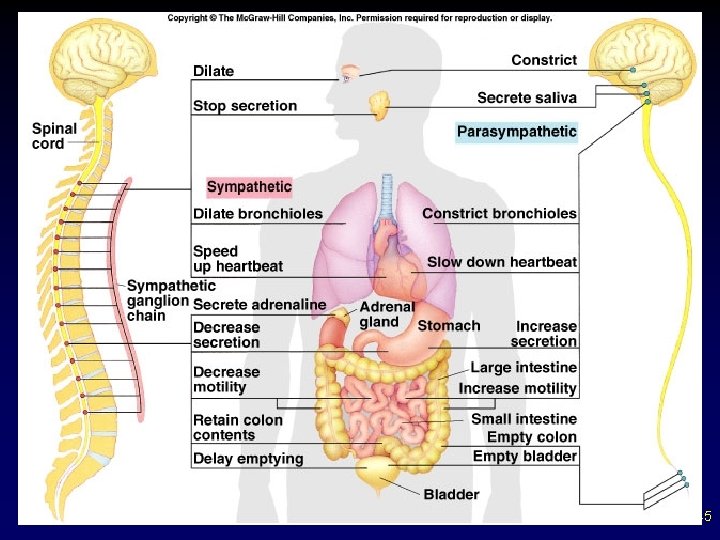
Autonomic Nervous System • Autonomic nervous system is composed of the sympathetic and parasympathetic divisions and the medulla oblongata of the hindbrain, which coordinates the system. 43
Autonomic Nervous System • • Sympathetic division of the autonomic system, together with the adrenal medulla, activates the body for fight or flight responses. – produced by norepinephrine Parasympathetic division generally has antagonistic effects. – produced by ACh 44
45
G Proteins • Indirectly produce many parasympathetic effects of ACh – regulated by guanosine diphosphate and triphosphate 46
Summary • • • Neuron Organization Resting Membrane Potential Action Potentials Structure of Synapses Neurotransmitters and their Functions Evolution of the Vertebrate Brain Human Forebrain The Spinal Cord Peripheral Nervous System Autonomic Nervous System 47
48