
The Nervous System Chapter 13 Introduction Communication system
- Slides: 54
The Nervous System Chapter 13
Introduction • Communication system of an animal’s body. • Study is called Neurology • Composed of two main divisions: • Central Nervous System (CNS) • Composed of brain and spinal cord • Peripheral Nervous System (PNS) • Consist of nerves that come off of the CNS and innervate rest of body • Function of nervous system activities: • Sensory functions • Integrating functions • Motor functions
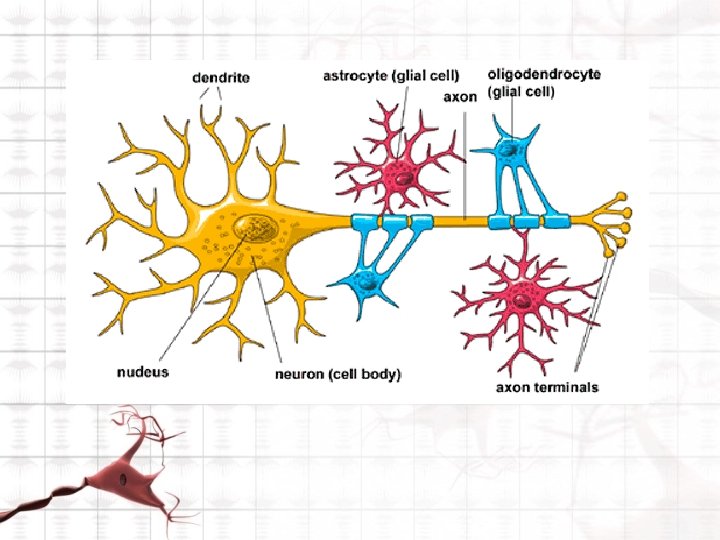
Neurons • Basic functional unit of the nervous system. • Have high oxygen requirement • Can not reproduce but in some cases can regenerate. • Neuroglia or glial cells- supporting cells to neurons • Structurally and functionally support and protect the neurons • Are more numerous than neurons • Do not transmit impulses
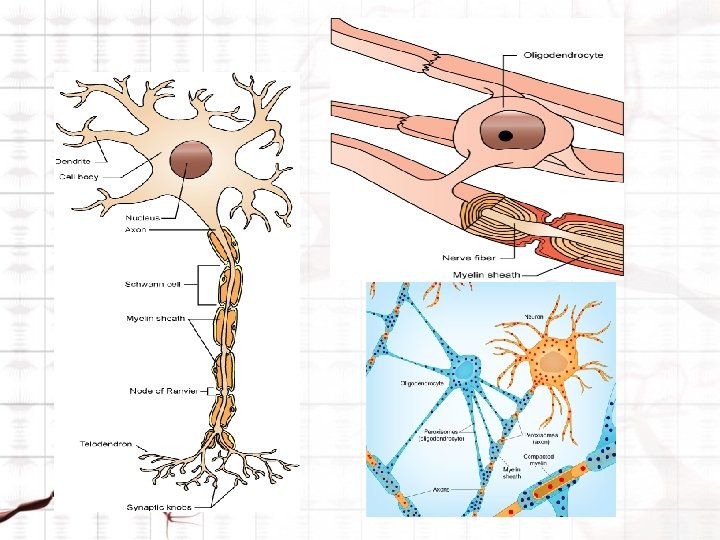
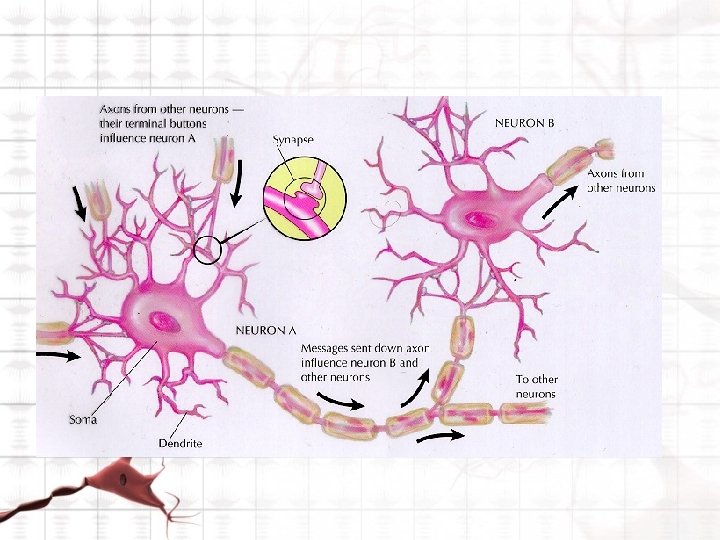
Neuron composition • Soma (perikaryon): central cell body • Dendrites: receive stimuli or impulses from other nuerons and transmit info to soma. • Sensory components feel things like heat and cold • Very short and branched • Axons: Conduct nerve impulses away from the cell body to another neuron. Have single, long body with branches at end. • Secondary cells are called effector cells because they do something when stimulated. • Covered in myelin. • White matter, specialized glial cells called oligodendroctytes in brain and spinal cord and Schwann cells in nerves outside brain and spinal cord.
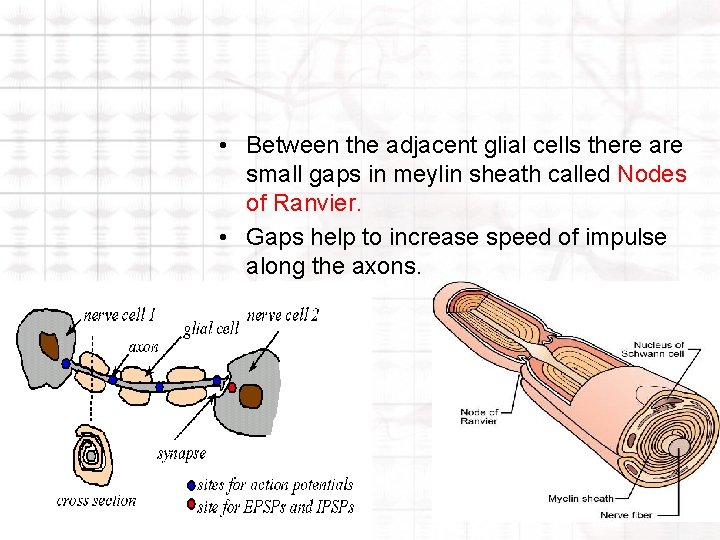
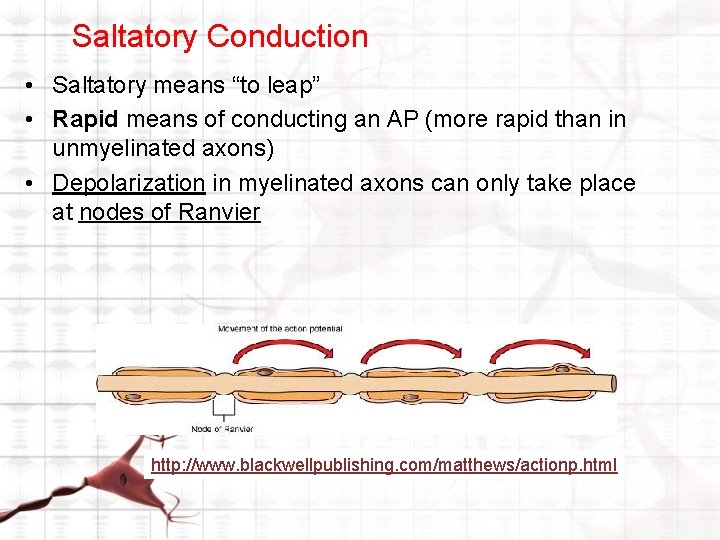
• Between the adjacent glial cells there are small gaps in meylin sheath called Nodes of Ranvier. • Gaps help to increase speed of impulse along the axons.
• http: //www. youtube. com/watch? v=i. Ng. GKSNi. Nw
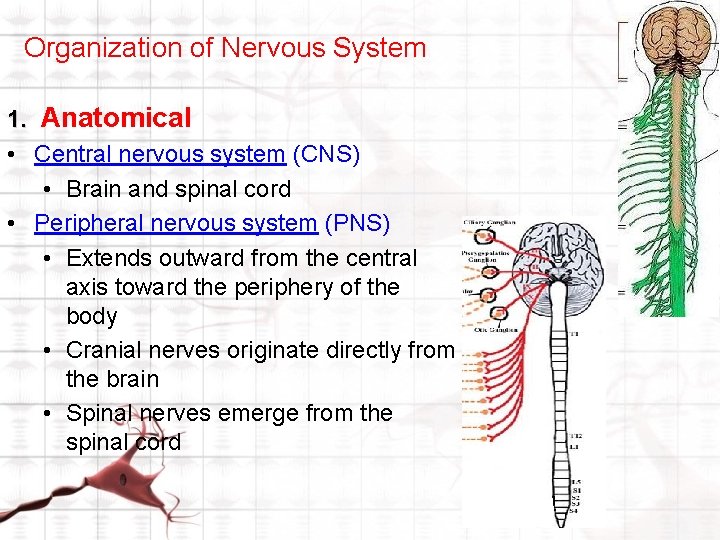
Organization of Nervous System 1. Anatomical • Central nervous system (CNS) • Brain and spinal cord • Peripheral nervous system (PNS) • Extends outward from the central axis toward the periphery of the body • Cranial nerves originate directly from the brain • Spinal nerves emerge from the spinal cord
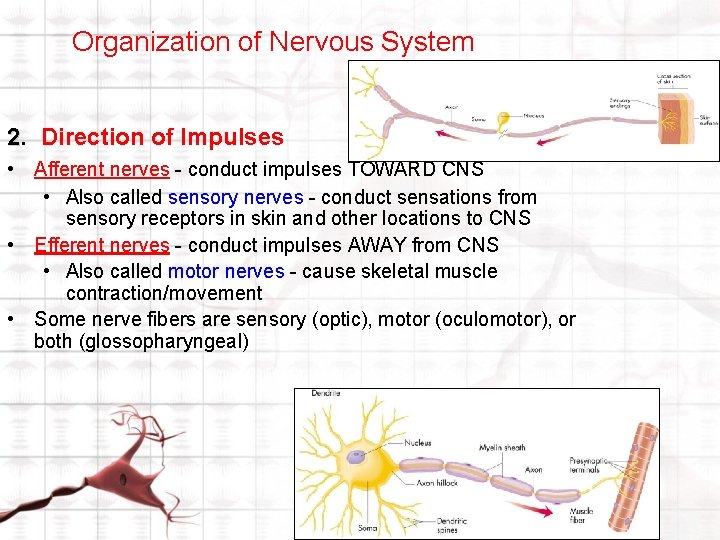
Organization of Nervous System 2. Direction of Impulses • Afferent nerves - conduct impulses TOWARD CNS • Also called sensory nerves - conduct sensations from sensory receptors in skin and other locations to CNS • Efferent nerves - conduct impulses AWAY from CNS • Also called motor nerves - cause skeletal muscle contraction/movement • Some nerve fibers are sensory (optic), motor (oculomotor), or both (glossopharyngeal)
Organization of Nervous System 3. Function: Autonomic vs. Somatic • Somatic nervous system – • actions under conscious, or voluntary, control • Autonomic nervous system – • controls and coordinates automatic functions • Example: slowing of the heart rate in response to an increased blood pressure • Sympathetic Division (fight or flight) • Parasympathetic Division (feed or breed)
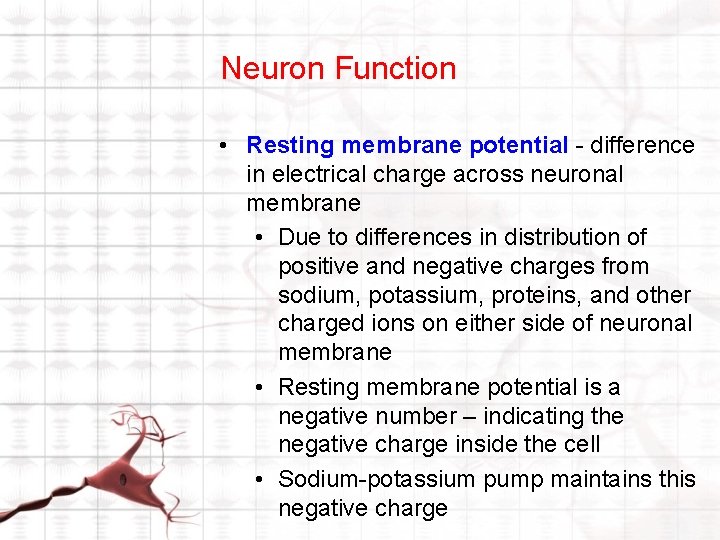
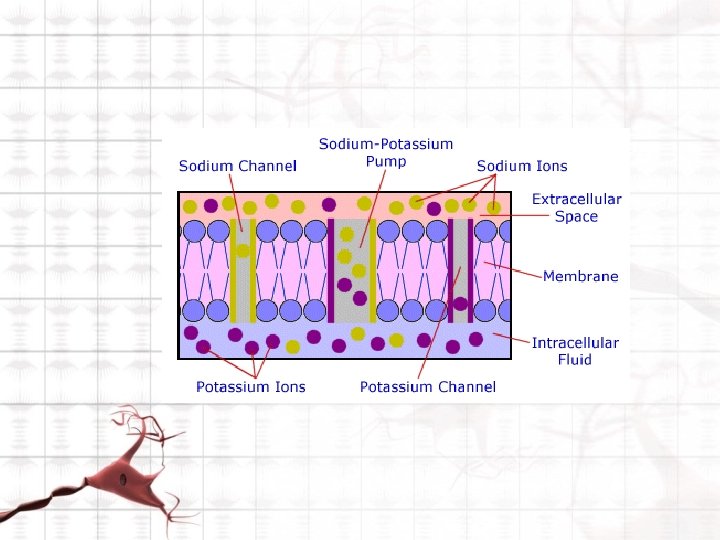
Neuron Function: Depolarization and Repolarization • Resting state - when neuron is not stimulated • But, not truly resting – still working to maintain resting state • Sodium-Potassium Pump – proteins in the neuron’s cell membrane pump sodium ions out and potassium ions into the cell • Sodium can’t diffuse through membrane on its own which creates a higher concentration of sodium ions outside and higher concentration of potassium inside • Positive charges outside and negative charges inside create a polarized membrane
Neuron Function • Resting membrane potential - difference in electrical charge across neuronal membrane • Due to differences in distribution of positive and negative charges from sodium, potassium, proteins, and other charged ions on either side of neuronal membrane • Resting membrane potential is a negative number – indicating the negative charge inside the cell • Sodium-potassium pump maintains this negative charge
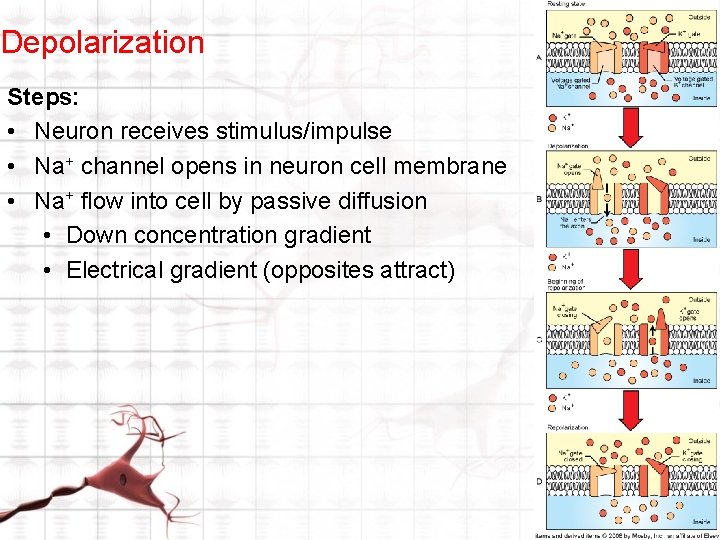
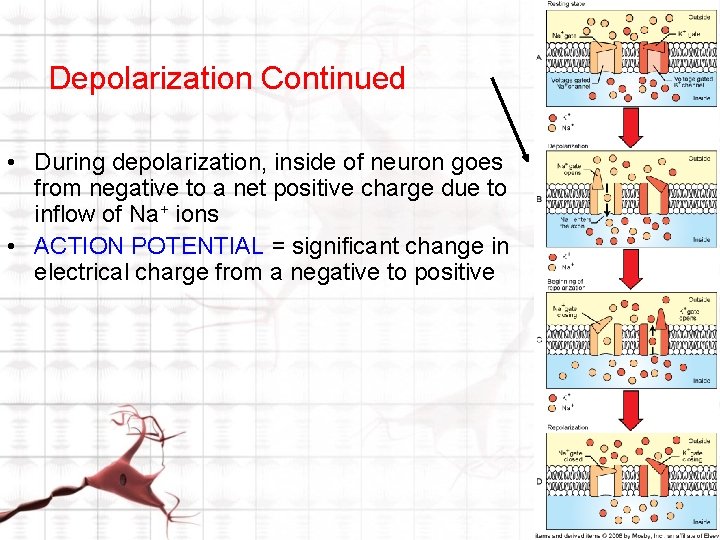
Depolarization Steps: • Neuron receives stimulus/impulse • Na+ channel opens in neuron cell membrane • Na+ flow into cell by passive diffusion • Down concentration gradient • Electrical gradient (opposites attract)
Depolarization Continued • During depolarization, inside of neuron goes from negative to a net positive charge due to inflow of Na+ ions • ACTION POTENTIAL = significant change in electrical charge from a negative to positive
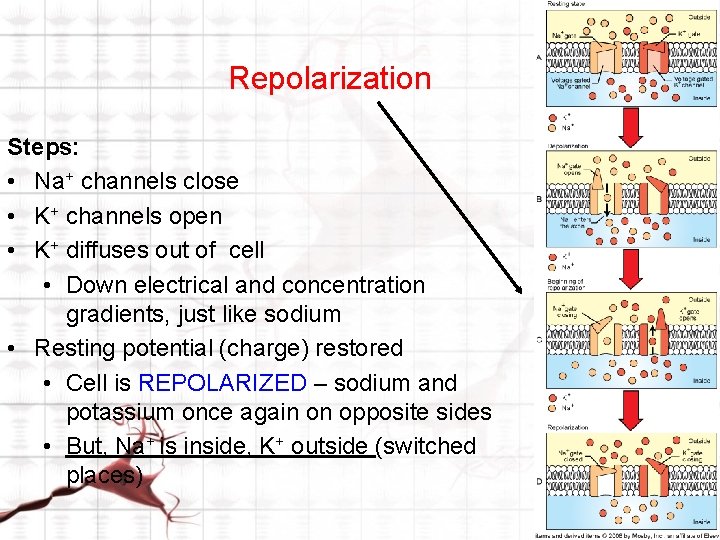
Repolarization Steps: • Na+ channels close • K+ channels open • K+ diffuses out of cell • Down electrical and concentration gradients, just like sodium • Resting potential (charge) restored • Cell is REPOLARIZED – sodium and potassium once again on opposite sides • But, Na+ is inside, K+ outside (switched places)
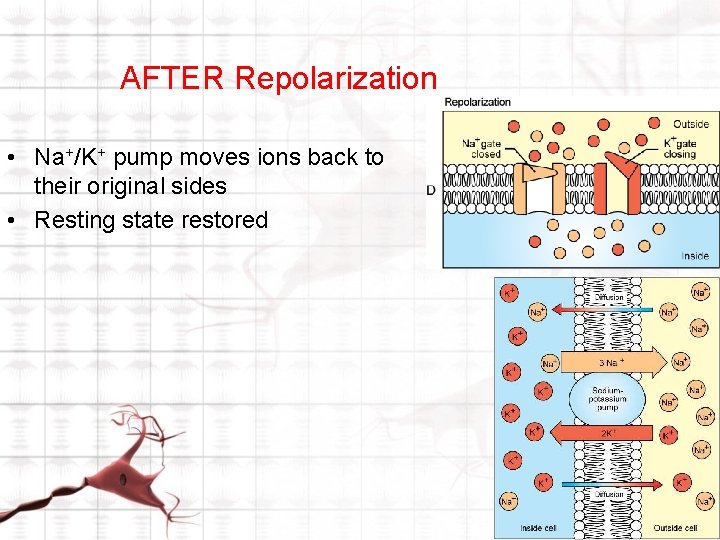
AFTER Repolarization • Na+/K+ pump moves ions back to their original sides • Resting state restored
Threshold Stimulus • Stimulus must be sufficient to make the neuron respond and cause complete depolarization – weak stimuli do not cause depolarization • “All-or-nothing principle” - neuron depolarizes to its maximum strength or not at all • Strong stimuli cause depolarization and sodium channels open which causes adjacent channels to open – wave of depolarization • Conduction of action potential— spreading wave of opening Na+ channels in sufficient numbers to allow Na+ influx and depolarization • Nerve impulse= wave of depolarization=conduction of AP
Refractory Period • Time when neuron is not sensitive to a stimulus —Cell is still in depolarization/early repolarization • Absolute refractory period – • during Na+ influx and early K+ outflow • No amount of stimulus can elicit another AP • Relative refractory period – • during end of repolarization period • Strong stimulus may elicit response
Saltatory Conduction • Saltatory means “to leap” • Rapid means of conducting an AP (more rapid than in unmyelinated axons) • Depolarization in myelinated axons can only take place at nodes of Ranvier http: //www. blackwellpublishing. com/matthews/actionp. html
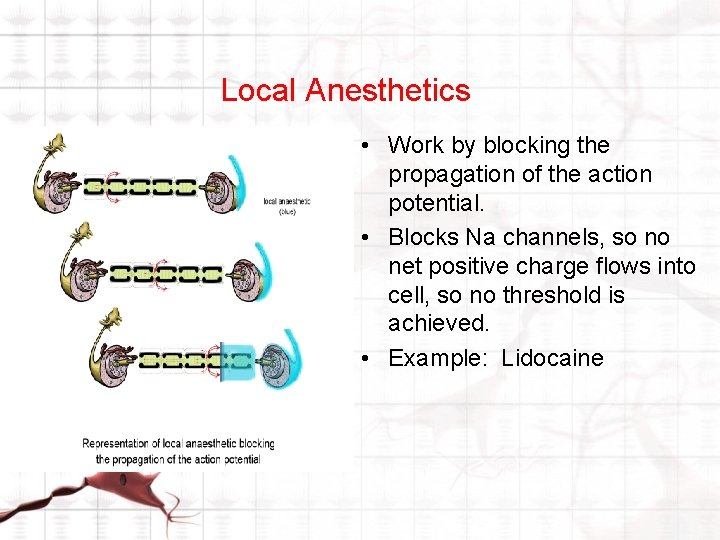
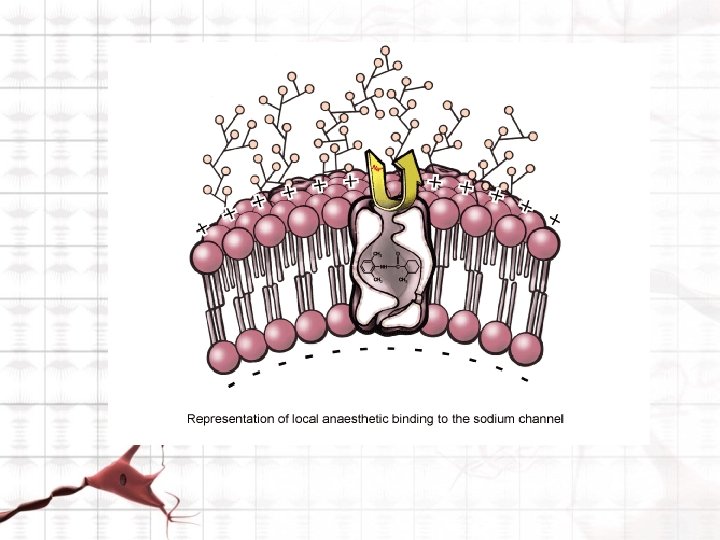
Local Anesthetics • Work by blocking the propagation of the action potential. • Blocks Na channels, so no net positive charge flows into cell, so no threshold is achieved. • Example: Lidocaine
Synaptic Transmission • Synapse - junction between two neurons or a neuron and target cell • Synaptic cleft - gap between adjacent neurons/effector cell • Presynaptic neuron - neuron bringing the depolarization wave to the synapse • Releases neurotransmitter • Postsynaptic neuron - contains receptors for the neurotransmitter
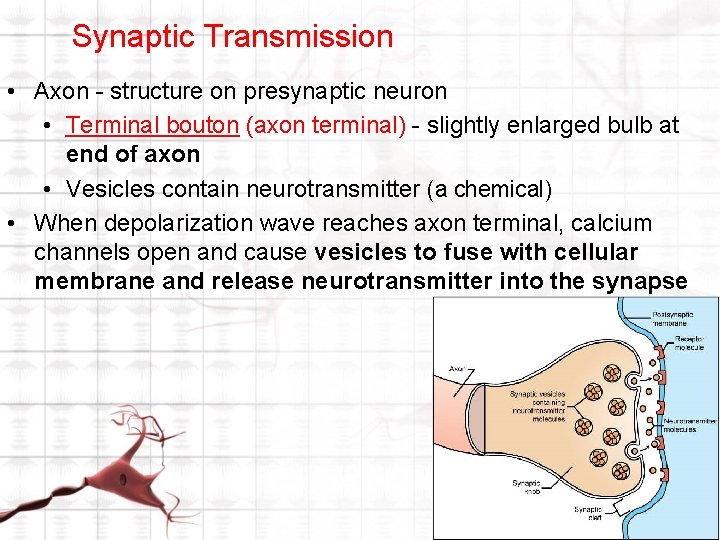
Synaptic Transmission • Axon - structure on presynaptic neuron • Terminal bouton (axon terminal) - slightly enlarged bulb at end of axon • Vesicles contain neurotransmitter (a chemical) • When depolarization wave reaches axon terminal, calcium channels open and cause vesicles to fuse with cellular membrane and release neurotransmitter into the synapse
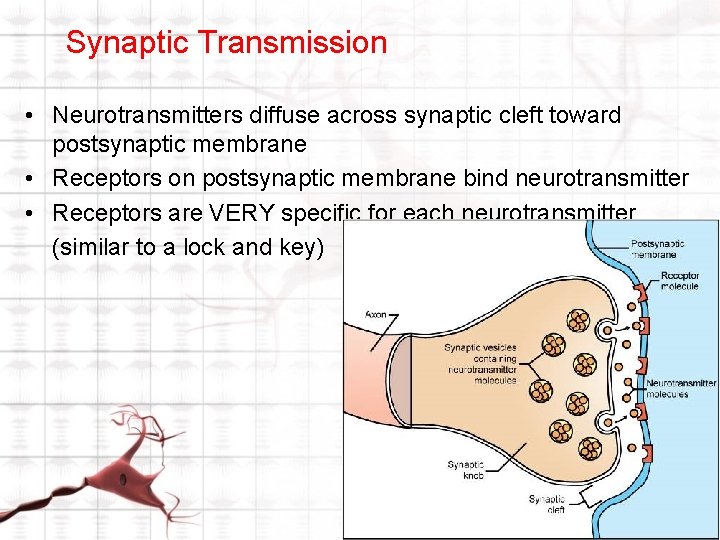
Synaptic Transmission • Neurotransmitters diffuse across synaptic cleft toward postsynaptic membrane • Receptors on postsynaptic membrane bind neurotransmitter • Receptors are VERY specific for each neurotransmitter (similar to a lock and key)
Types of Neurotransmitters • Excitatory neurotransmitters • Usually cause an influx of Na+; postsynaptic membrane moves toward threshold (more positive) • Inhibitory neurotransmitters • Move the charge of postsynaptic cell farther away from threshold (more negative) • May open K+ channels/Cl- channels
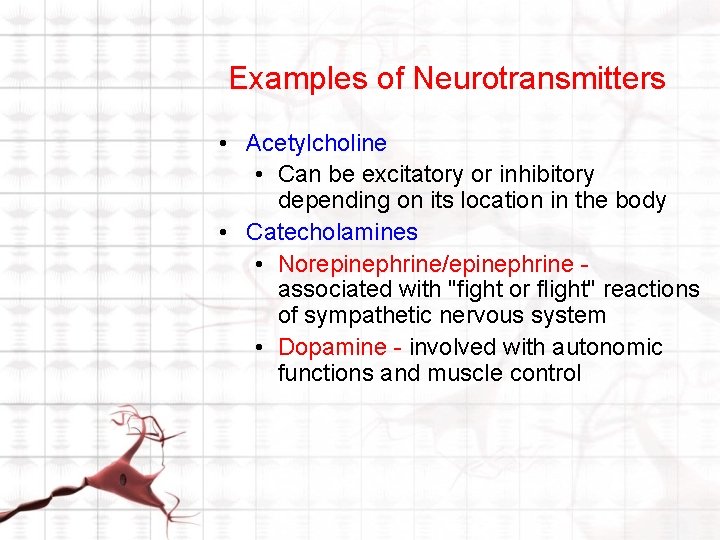
Examples of Neurotransmitters • Acetylcholine • Can be excitatory or inhibitory depending on its location in the body • Catecholamines • Norepinephrine/epinephrine associated with "fight or flight" reactions of sympathetic nervous system • Dopamine - involved with autonomic functions and muscle control
Recycling the Neurotransmitter • Acetylcholinesterase – • found on postsynaptic membrane; breaks down acetylcholine • Remember this? ? • Monoamine oxidase (MAO) – • breaks down norepinephrine • Catechol-O-methyl transferase (COMT) – • breaks down norepinephrine that is not reabsorbed
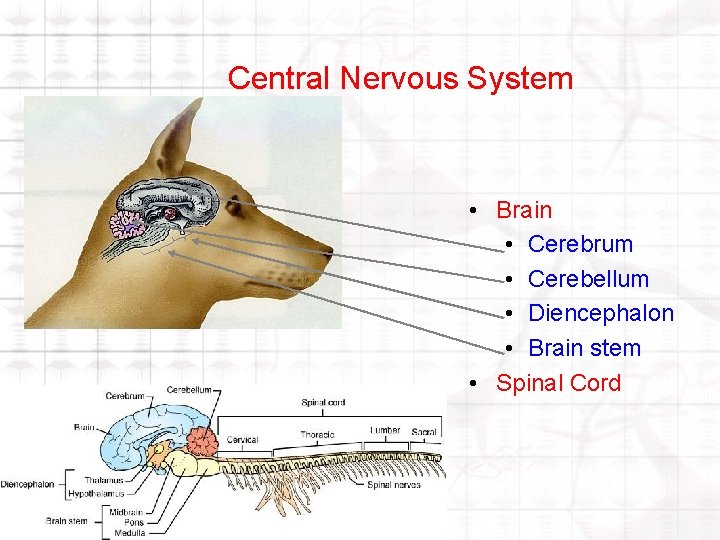
Central Nervous System • Brain • Cerebrum • Cerebellum • Diencephalon • Brain stem • Spinal Cord
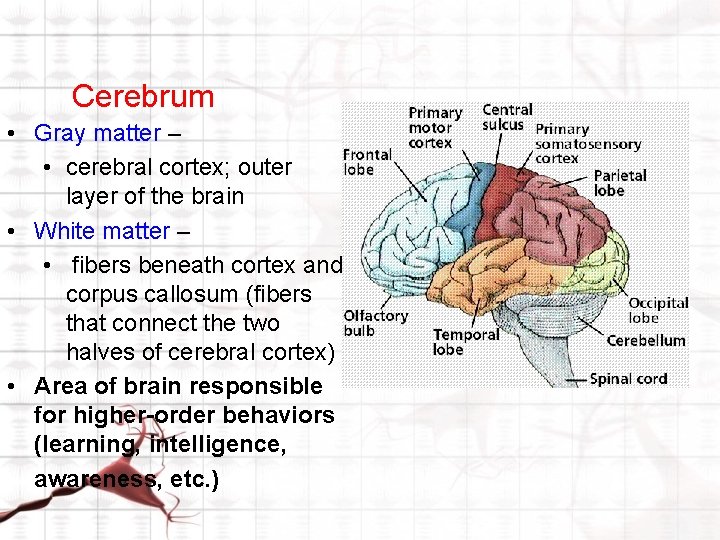
Cerebrum • Gray matter – • cerebral cortex; outer layer of the brain • White matter – • fibers beneath cortex and corpus callosum (fibers that connect the two halves of cerebral cortex) • Area of brain responsible for higher-order behaviors (learning, intelligence, awareness, etc. )
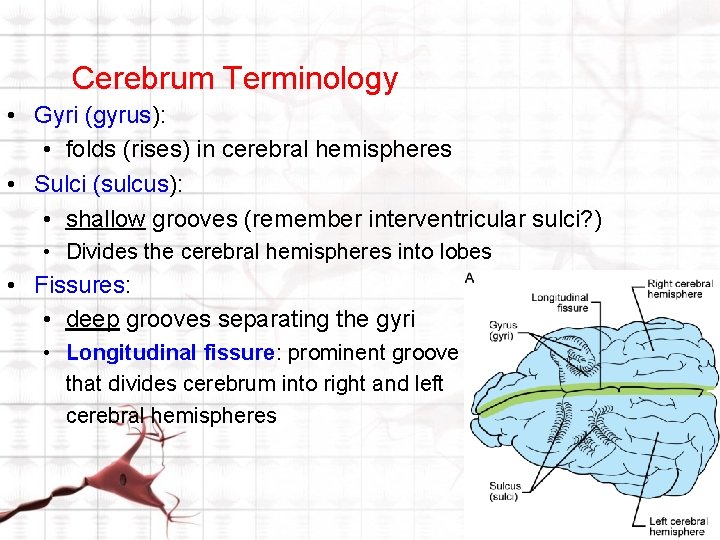
Cerebrum Terminology • Gyri (gyrus): • folds (rises) in cerebral hemispheres • Sulci (sulcus): • shallow grooves (remember interventricular sulci? ) • Divides the cerebral hemispheres into lobes • Fissures: • deep grooves separating the gyri • Longitudinal fissure: prominent groove that divides cerebrum into right and left cerebral hemispheres
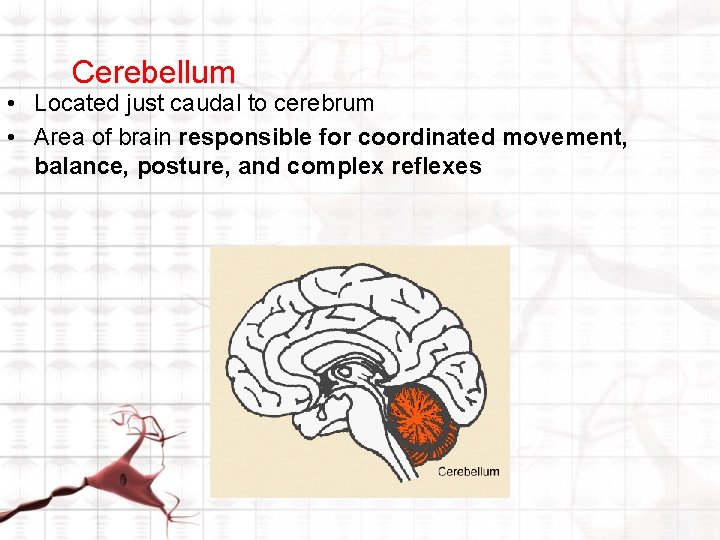
Cerebellum • Located just caudal to cerebrum • Area of brain responsible for coordinated movement, balance, posture, and complex reflexes
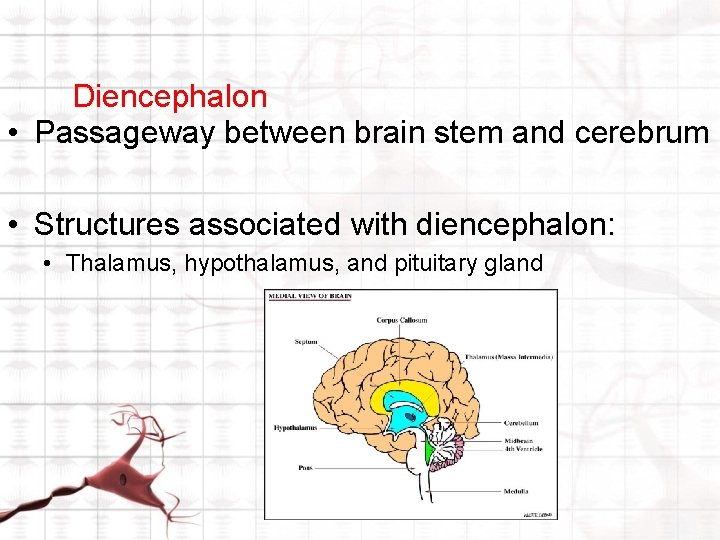
Diencephalon • Passageway between brain stem and cerebrum • Structures associated with diencephalon: • Thalamus, hypothalamus, and pituitary gland
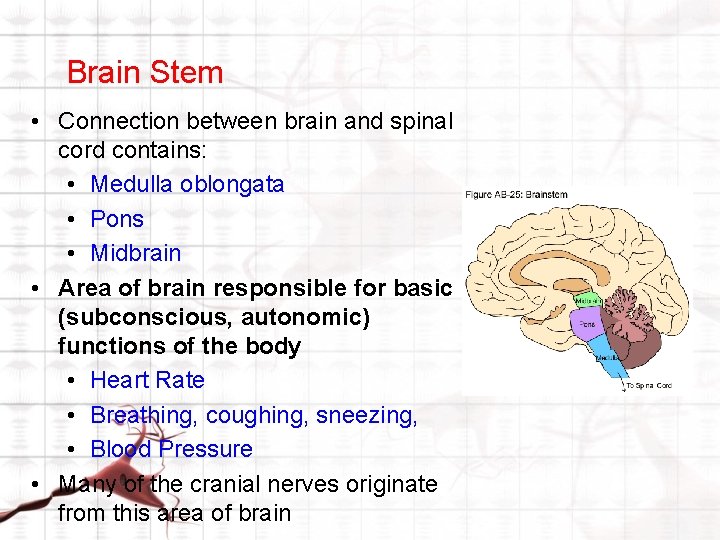
Brain Stem • Connection between brain and spinal cord contains: • Medulla oblongata • Pons • Midbrain • Area of brain responsible for basic (subconscious, autonomic) functions of the body • Heart Rate • Breathing, coughing, sneezing, • Blood Pressure • Many of the cranial nerves originate from this area of brain
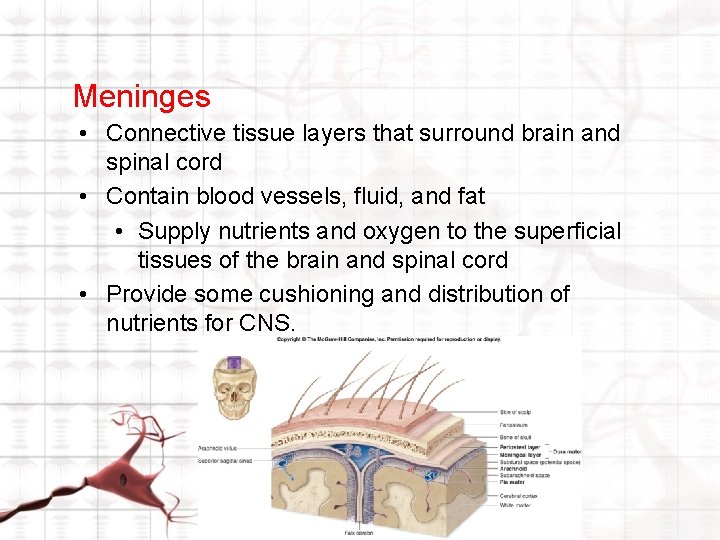
Meninges • Connective tissue layers that surround brain and spinal cord • Contain blood vessels, fluid, and fat • Supply nutrients and oxygen to the superficial tissues of the brain and spinal cord • Provide some cushioning and distribution of nutrients for CNS.
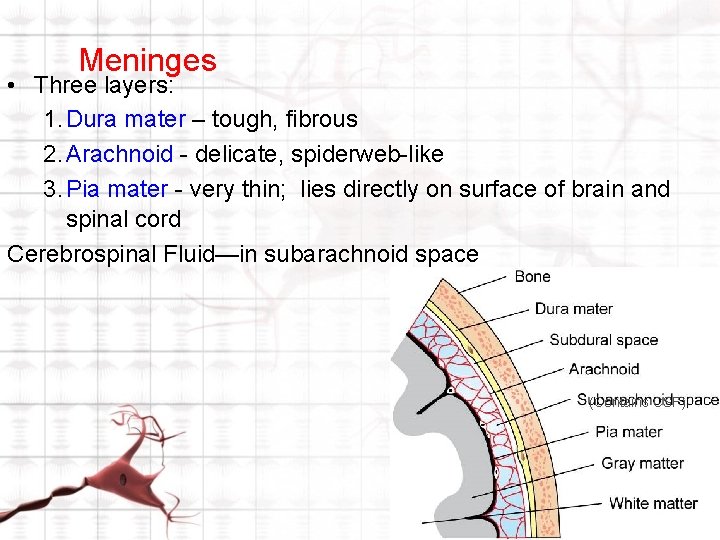
Meninges • Three layers: 1. Dura mater – tough, fibrous 2. Arachnoid - delicate, spiderweb-like 3. Pia mater - very thin; lies directly on surface of brain and spinal cord Cerebrospinal Fluid—in subarachnoid space (Contains CSF)
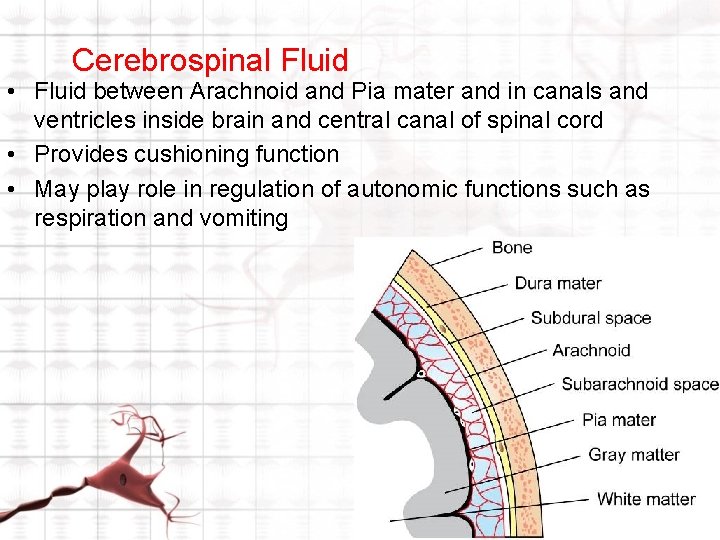
Cerebrospinal Fluid • Fluid between Arachnoid and Pia mater and in canals and ventricles inside brain and central canal of spinal cord • Provides cushioning function • May play role in regulation of autonomic functions such as respiration and vomiting
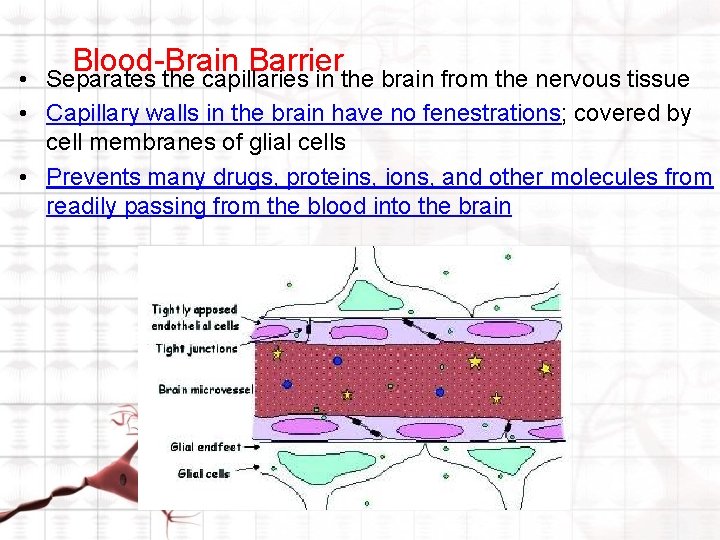
Blood-Brain Barrier • Separates the capillaries in the brain from the nervous tissue • Capillary walls in the brain have no fenestrations; covered by cell membranes of glial cells • Prevents many drugs, proteins, ions, and other molecules from readily passing from the blood into the brain
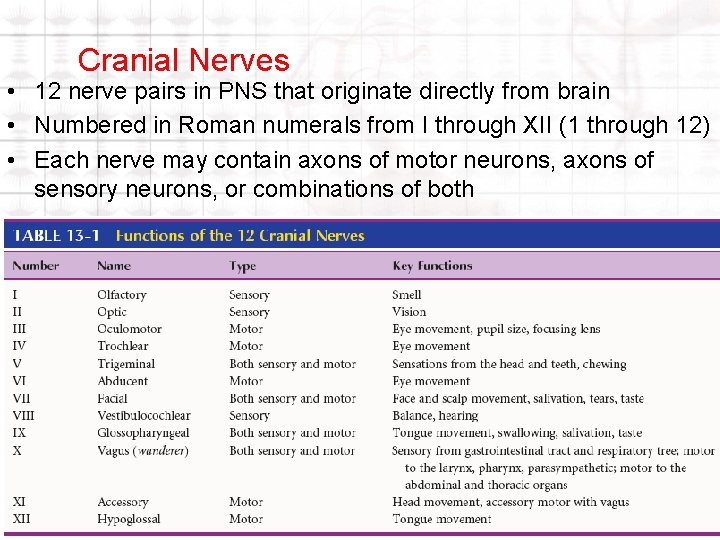
Cranial Nerves • 12 nerve pairs in PNS that originate directly from brain • Numbered in Roman numerals from I through XII (1 through 12) • Each nerve may contain axons of motor neurons, axons of sensory neurons, or combinations of both
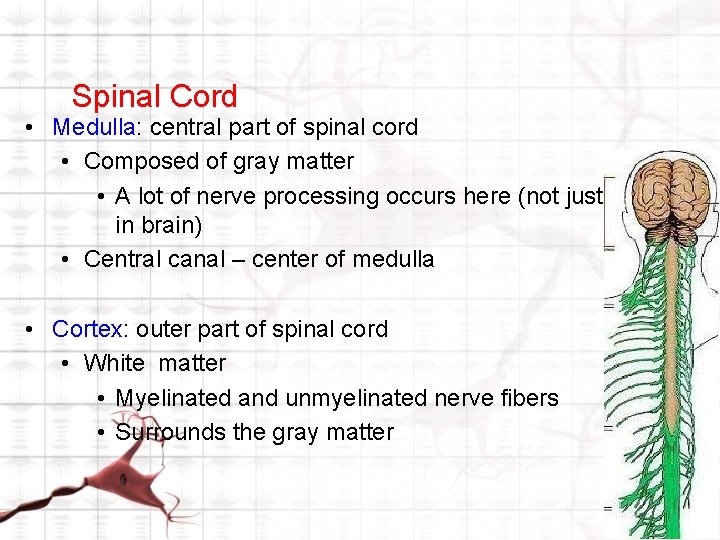
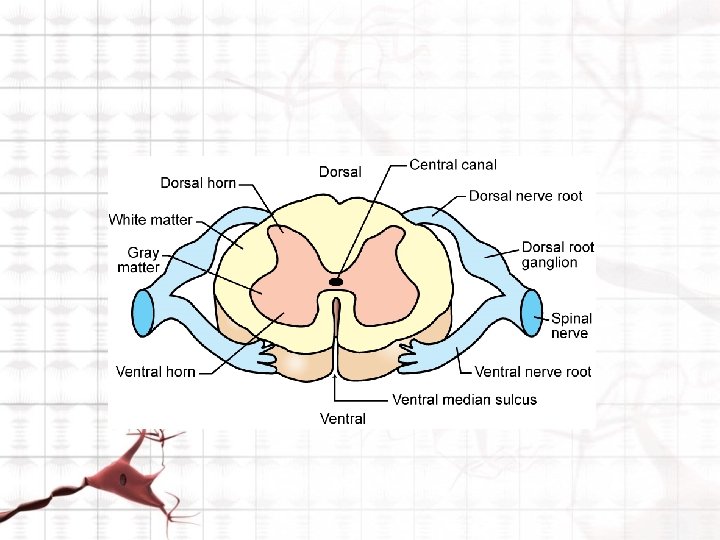
Spinal Cord • Medulla: central part of spinal cord • Composed of gray matter • A lot of nerve processing occurs here (not just in brain) • Central canal – center of medulla • Cortex: outer part of spinal cord • White matter • Myelinated and unmyelinated nerve fibers • Surrounds the gray matter
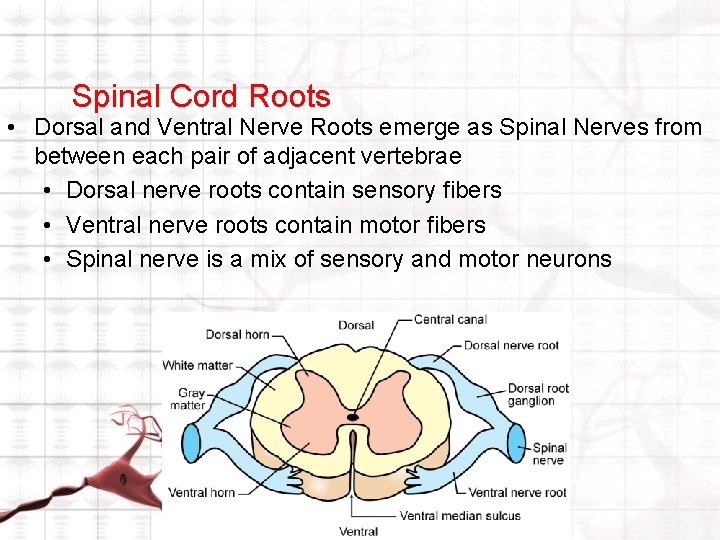
Spinal Cord Roots • Dorsal and Ventral Nerve Roots emerge as Spinal Nerves from between each pair of adjacent vertebrae • Dorsal nerve roots contain sensory fibers • Ventral nerve roots contain motor fibers • Spinal nerve is a mix of sensory and motor neurons
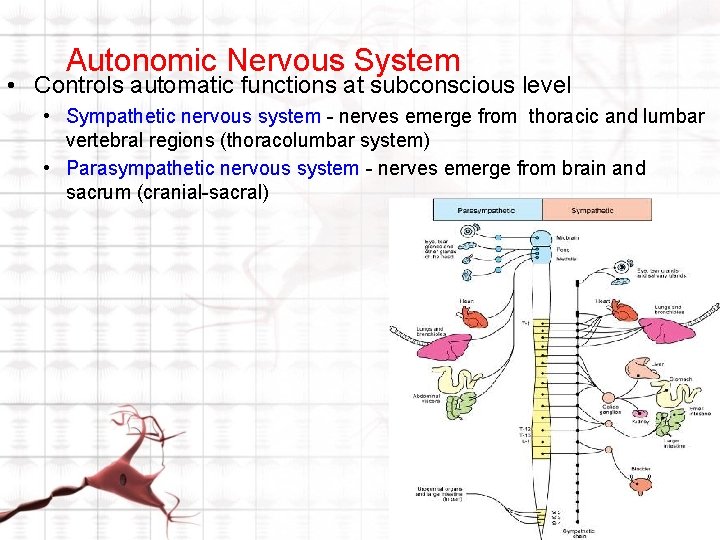
Autonomic Nervous System • Controls automatic functions at subconscious level • Sympathetic nervous system - nerves emerge from thoracic and lumbar vertebral regions (thoracolumbar system) • Parasympathetic nervous system - nerves emerge from brain and sacrum (cranial-sacral)
Neurotransmitters and Receptors • Sympathetic nervous system • Primary neurotransmitter—norepinephrine • Adrenergic neurons - neurons that release norepinephrine • Epinephrine/norepinephrine also released from adrenal medulla • To elicit an effect, effector organ must contain receptor for epinephrine/norepinephrine
Neurotransmitters and Receptors • Smooth/Cardiac muscles may constrict or dilate in response to epi/norepi 1. α 1 - adrenergic receptors – cause vasoconstriction of skin, GI tract, and kidney [don’t need to digest, make urine, or bleed profusely} 2. β 1 -adrenergic receptors - increase heart rate and force of contraction 3. β 2 -adrenergic receptors - cause bronchodilation (relaxation)
Neurotransmitters and Receptors • Parasympathetic nervous system • 1º neurotransmitter—acetylcholine • Cholinergic neurons - release acetylcholine • 2 types: • Nicotinic receptors • Muscarinic receptors
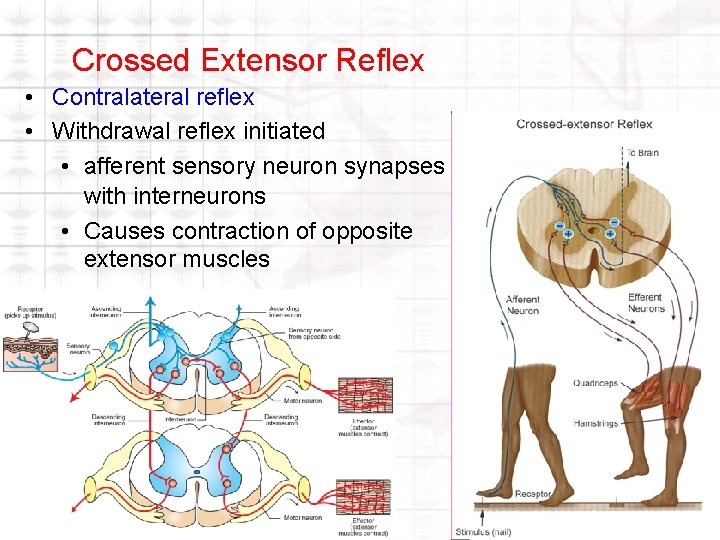
Reflexes • Somatic reflexes – • involve contraction of skeletal muscles • Autonomic reflexes – • regulate smooth muscle, cardiac muscle, and endocrine glands • Contralateral reflex – • starts on one side of body and travels to opposite side • Ipsilateral reflex – • stimulus and response are on same side of body
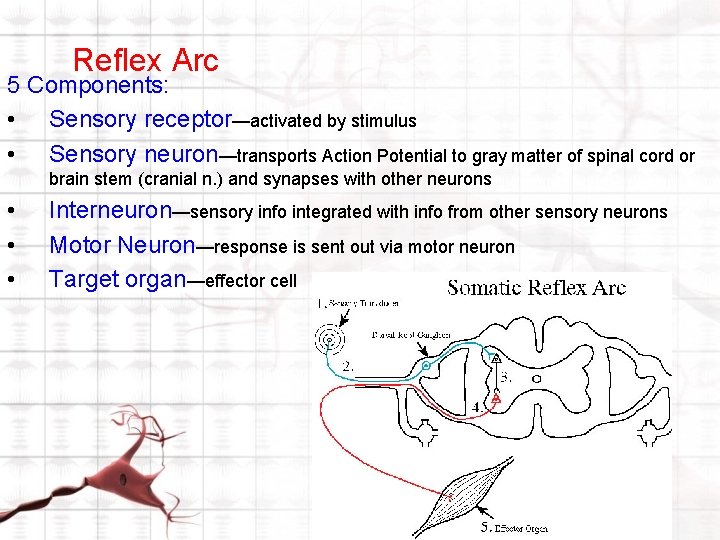
Reflex Arc 5 Components: • Sensory receptor—activated by stimulus • Sensory neuron—transports Action Potential to gray matter of spinal cord or brain stem (cranial n. ) and synapses with other neurons • • • Interneuron—sensory info integrated with info from other sensory neurons Motor Neuron—response is sent out via motor neuron Target organ—effector cell
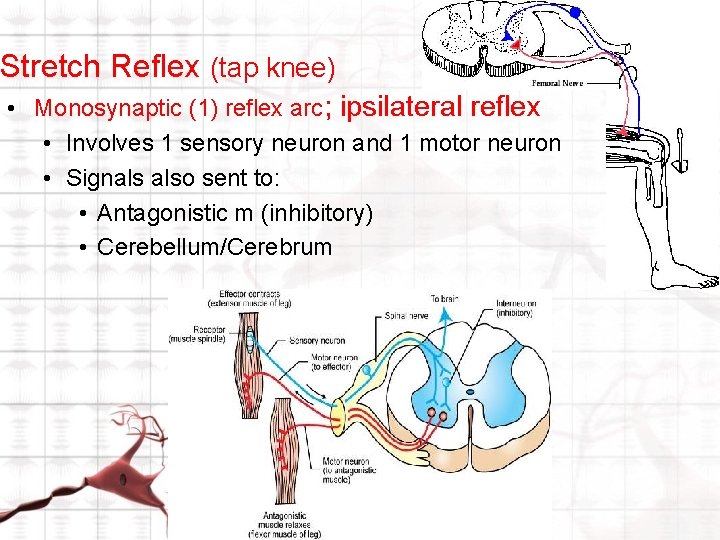
Stretch Reflex (tap knee) • Monosynaptic (1) reflex arc; ipsilateral reflex • Involves 1 sensory neuron and 1 motor neuron • Signals also sent to: • Antagonistic m (inhibitory) • Cerebellum/Cerebrum
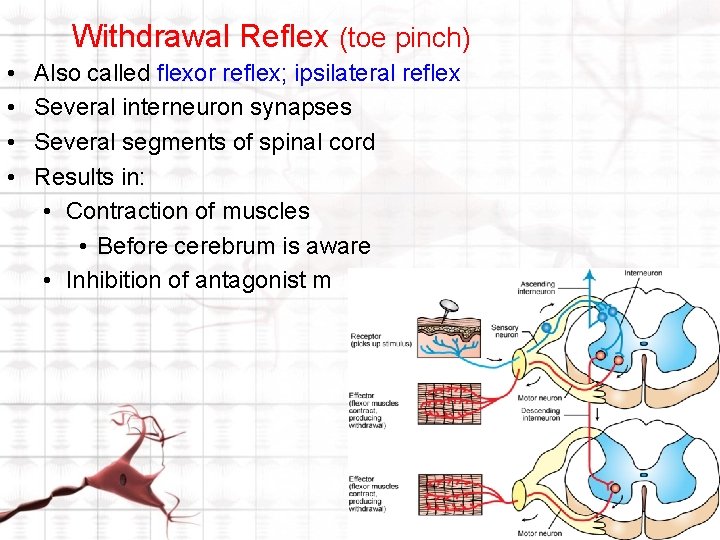
Withdrawal Reflex (toe pinch) • • Also called flexor reflex; ipsilateral reflex Several interneuron synapses Several segments of spinal cord Results in: • Contraction of muscles • Before cerebrum is aware • Inhibition of antagonist m
Crossed Extensor Reflex • Contralateral reflex • Withdrawal reflex initiated • afferent sensory neuron synapses with interneurons • Causes contraction of opposite extensor muscles
CNS Moderation of Reflexes • Upper CNS (brain) normally produces an inhibitory effect on the reflex arcs (muffled effect) • With injury, intact reflex arcs caudal to spinal cord trauma become hyperreflexive • Trauma to a portion of the reflex arc results in either hyporeflexive or absent reflexes